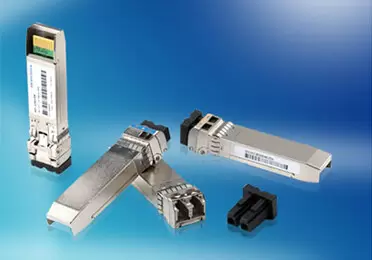
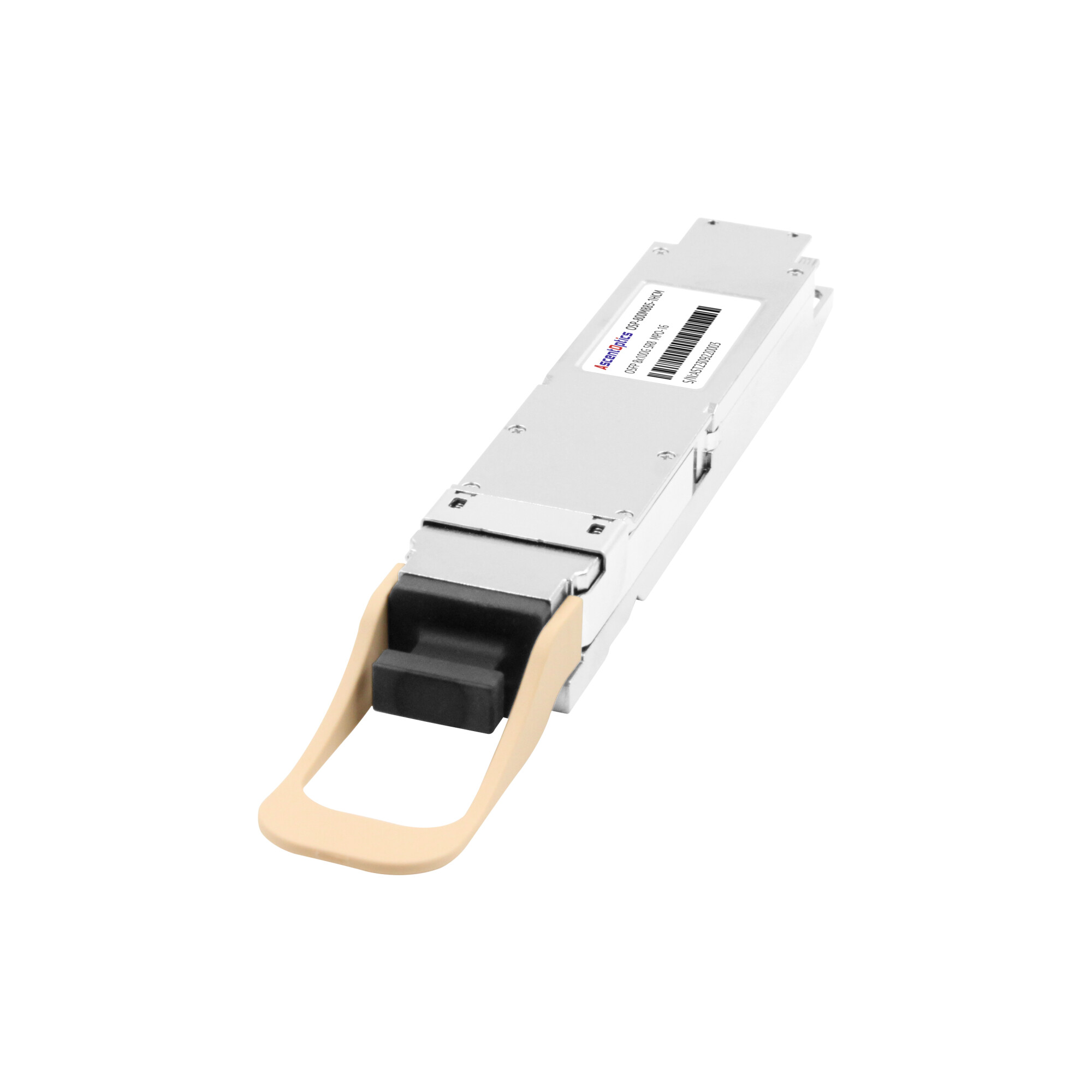
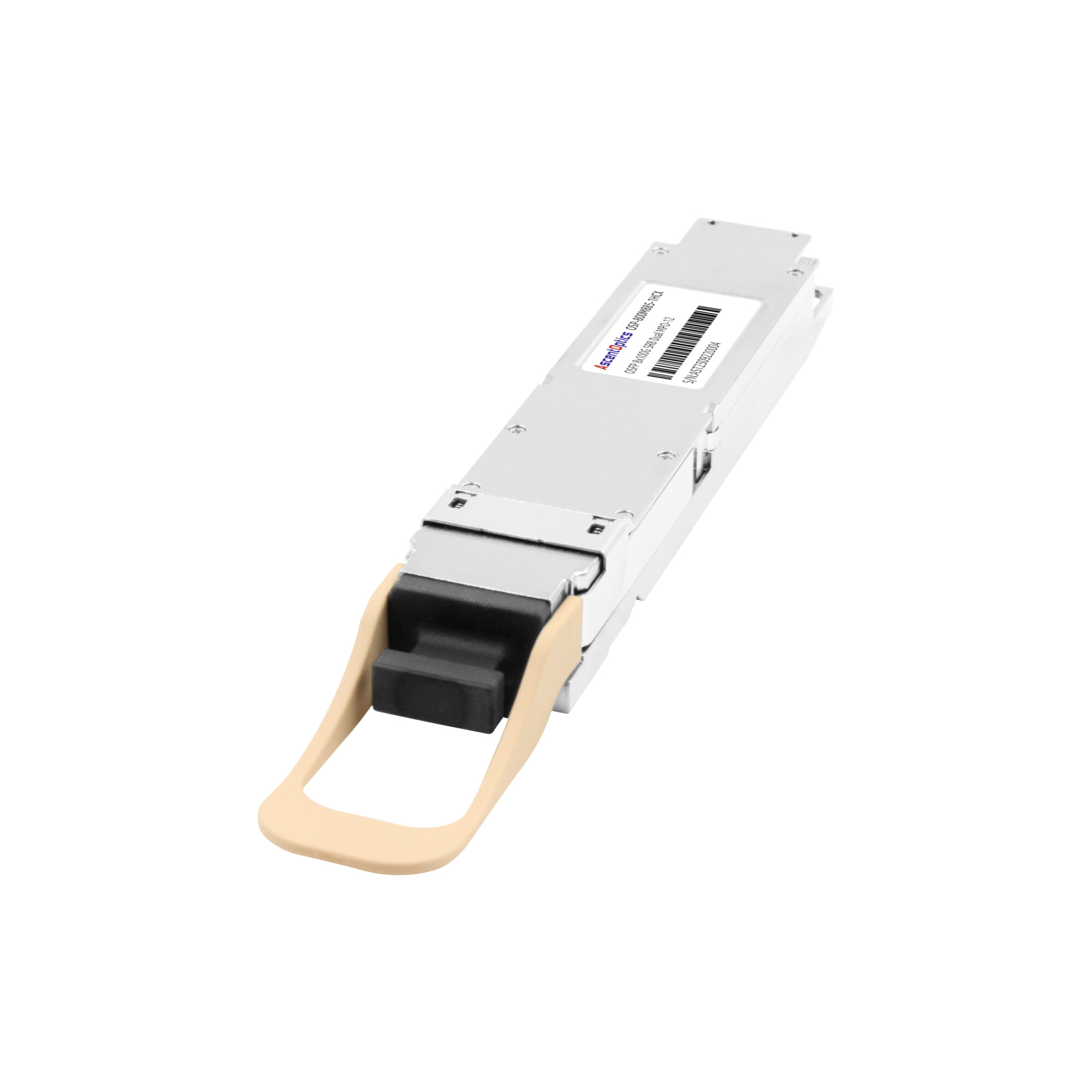
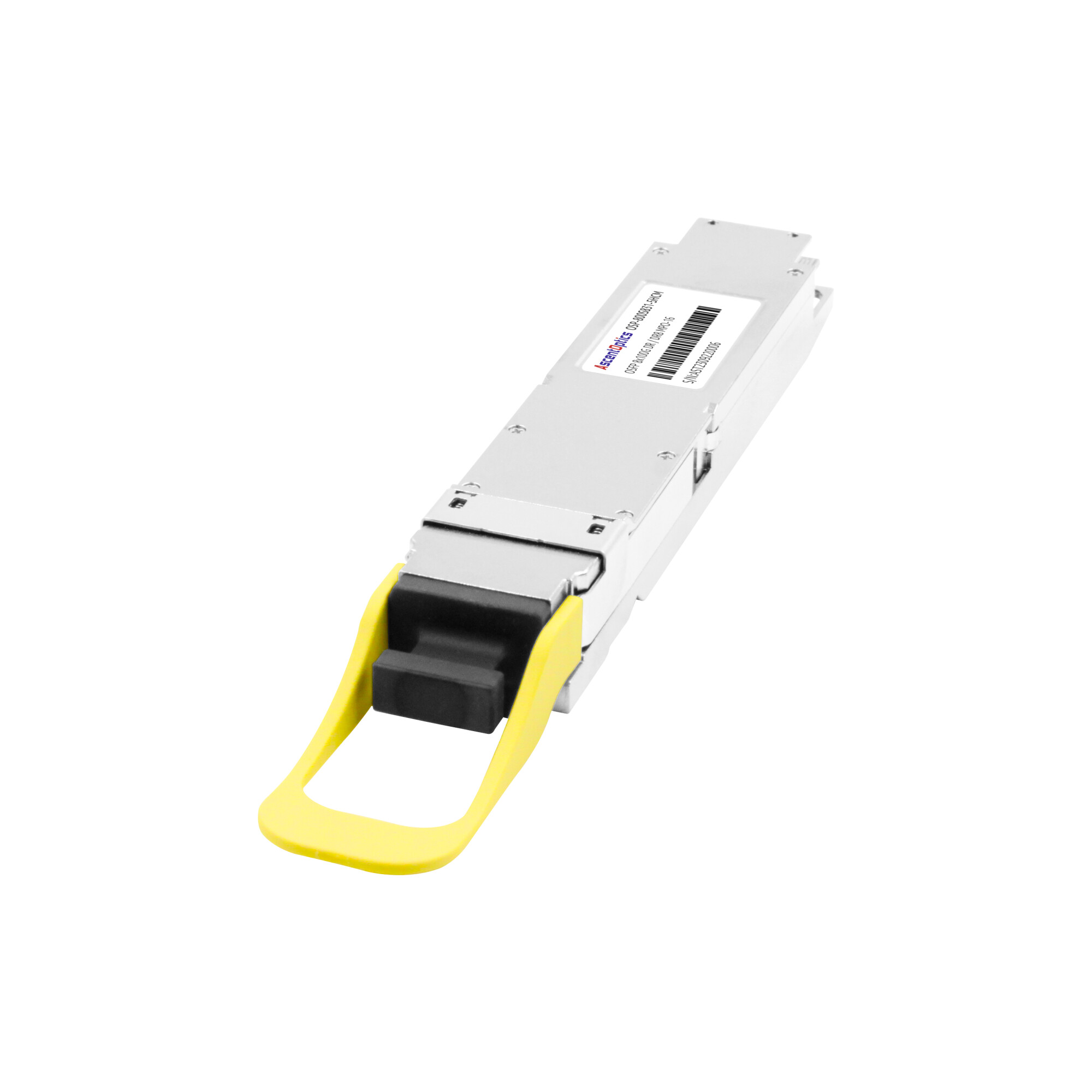
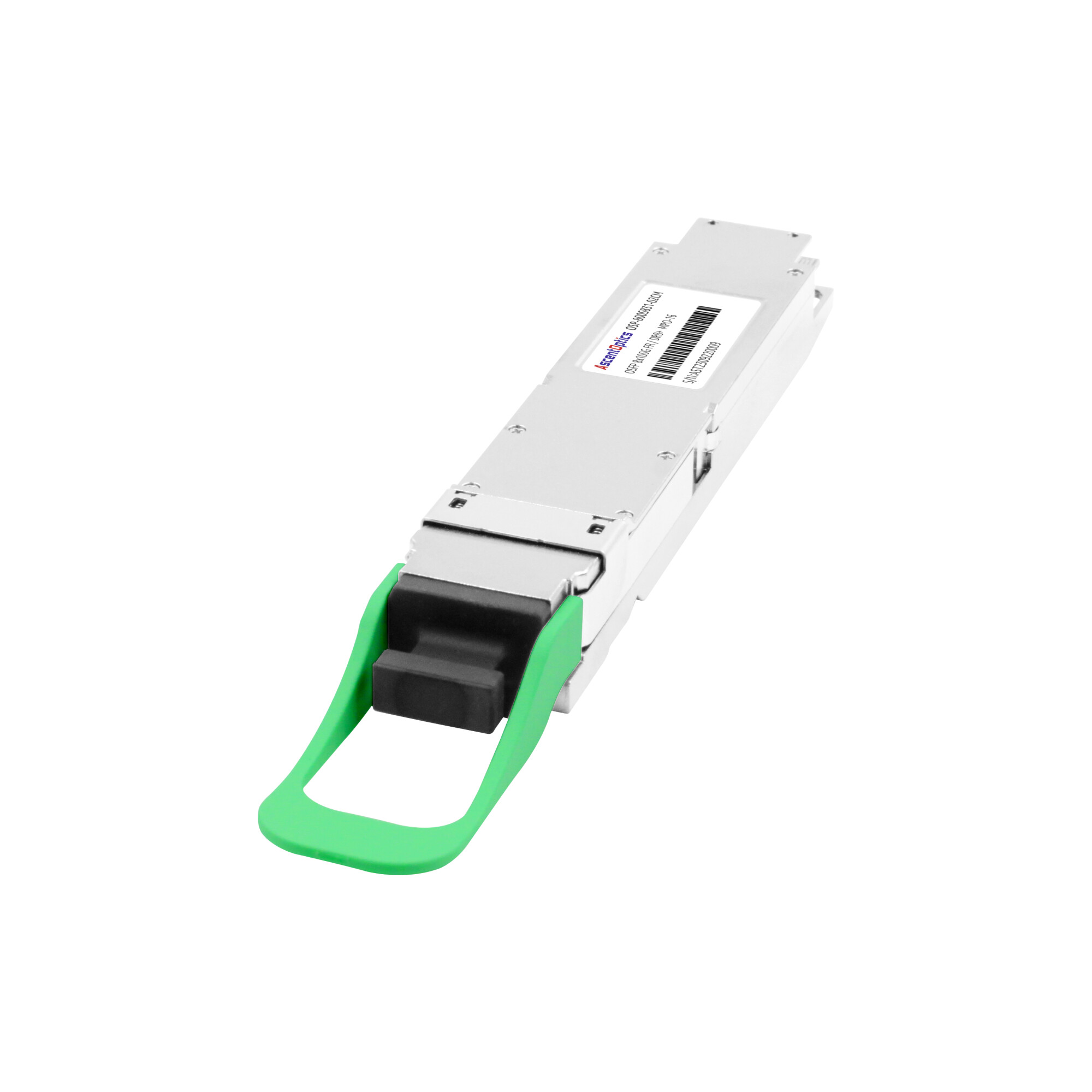
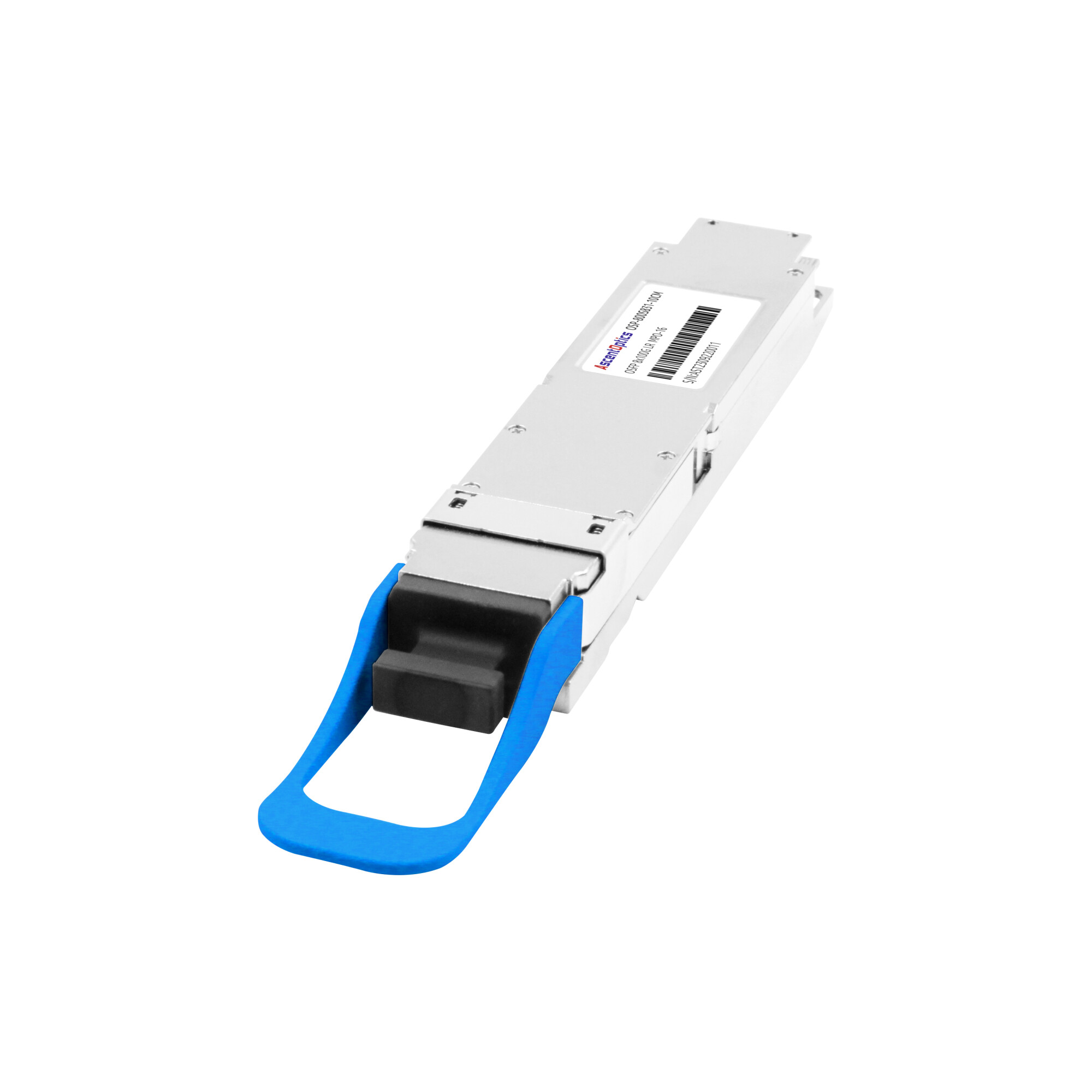
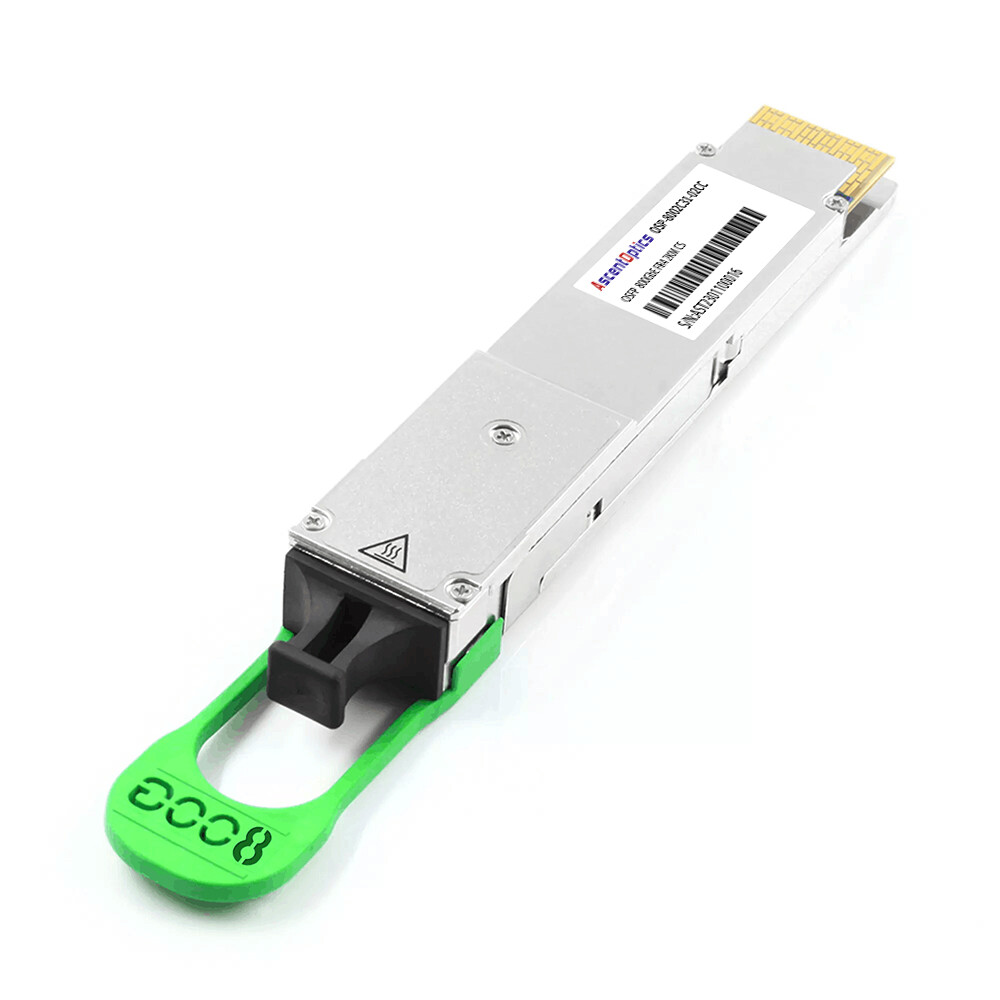
Selecting the right InfiniBand optical transceivers requires balancing bandwidth, transmission distance, power consumption, compatibility, and deployment requirements. As InfiniBand networks evolve from HDR and NDR to XDR, transceiver selection becomes increasingly important for AI clusters and high-performance computing (HPC) environments.
The key factors include data rate, form factor, optical reach, fiber type, connector, power consumption, and platform qualification. A suitable transceiver should not only meet the requirements of the current network but also fit the overall cabling architecture and future expansion plans.
What Is an InfiniBand Optical Transceiver?
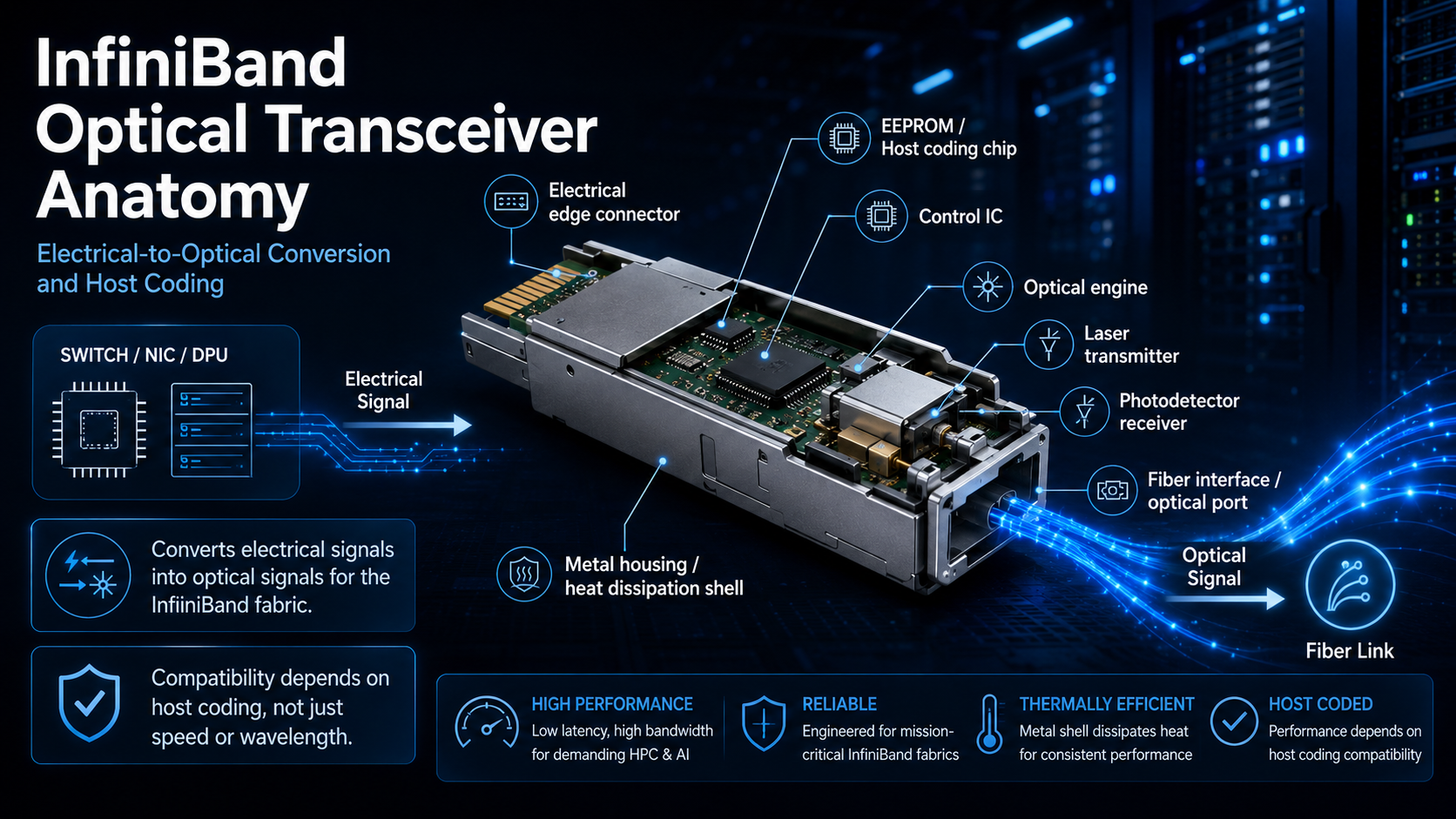
An InfiniBand optical transceiver is a hot-swappable module that converts electrical signals from a switch, NIC, or DPU into optical signals carried over fiber. An optical transceiver must be qualified for the target InfiniBand host platform. Even when two modules use the same form factor, speed, and optical specifications, differences in module coding, firmware, and host compatibility can prevent successful initialization.
The difference comes down to coding. Every module carries a small memory chip that reports its identity to the host. InfiniBand hosts read specific application codes that Ethernet hosts reject. An InfiniBand-coded module will not initialize in an Ethernet switch, and the reverse is true too. The optics may be identical, but the handshake is not.
That is why choosing a transceiver is never just a speed question. It is a question of form factor, reach, power, and protocol coding. Get any one of them wrong and the link stays dark.
InfiniBand Transceiver Form Factors: QSFP56, QSFP112, and OSFP
Form factor is where most InfiniBand deployments stumble, and the reason is that each generation settled on a different physical package. Match the module to the port, not to the speed.
| InfiniBand generation |
Port speed |
Common Form Factor |
Lane architecture |
| HDR |
200G |
QSFP56 |
4 × 50G PAM4 |
| NDR |
400G |
OSFP/QSFP112 |
4 × 100G-class PAM4 lanes |
| XDR |
800G |
OSFP |
8 × 100G-class lanes |
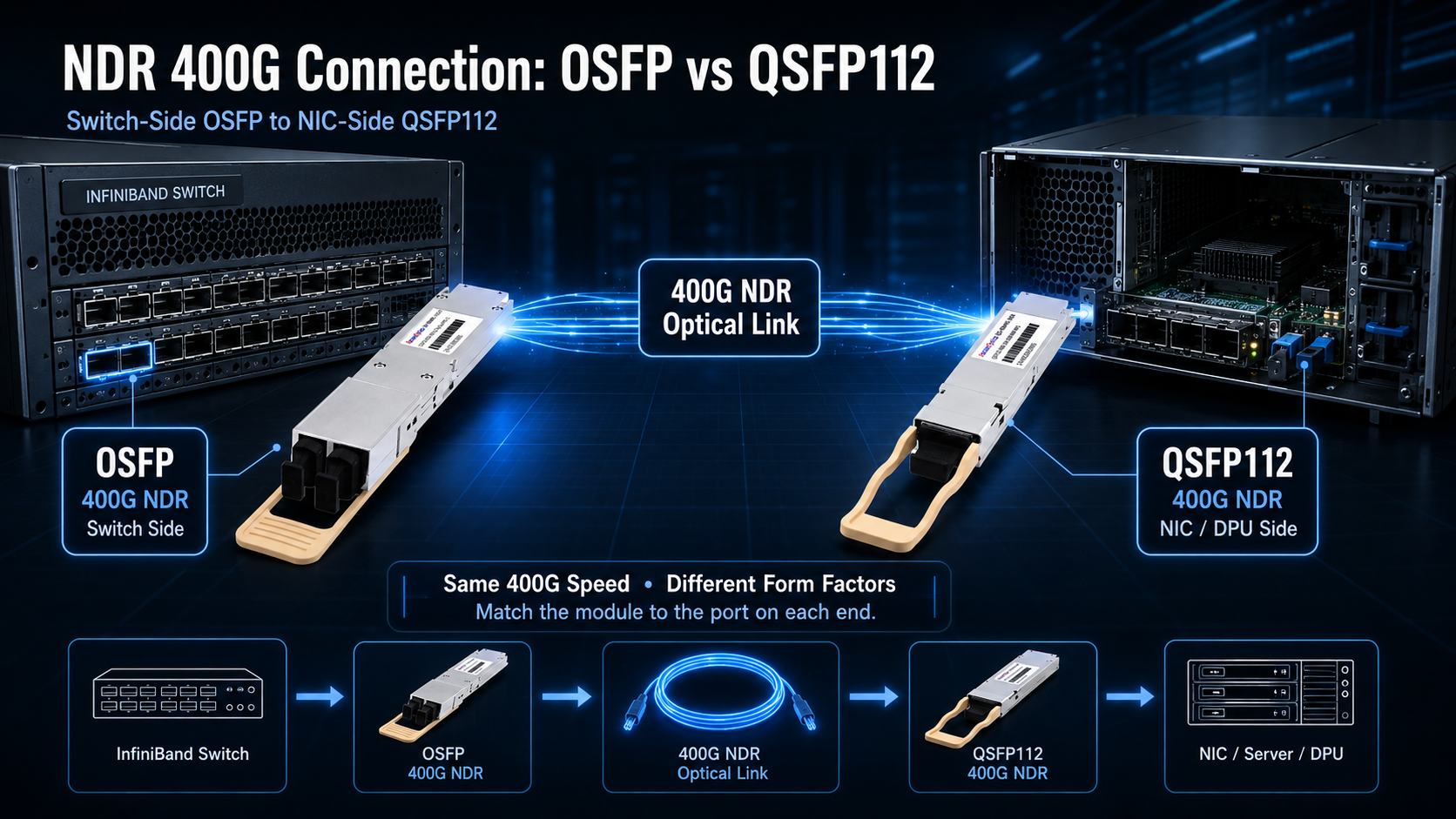
The table hides the real trap. In NDR fabrics, the switch and the NIC often use different form factors. A Quantum-2 switch takes OSFP modules, while a ConnectX-7 NIC in the same fabric takes QSFP112. The two modules look similar enough at a glance, and they share the same 400G speed, but they are not the same part.
QSFP56: HDR 200G
QSFP56 carries HDR traffic over four 50G PAM4 lanes. It uses the same mechanical footprint as the older QSFP28 and QSFP+ modules, but the signaling is different. A QSFP28 port will not drive a QSFP56 module at full speed, and compatibility must be verified at the signal level, not just the physical level.
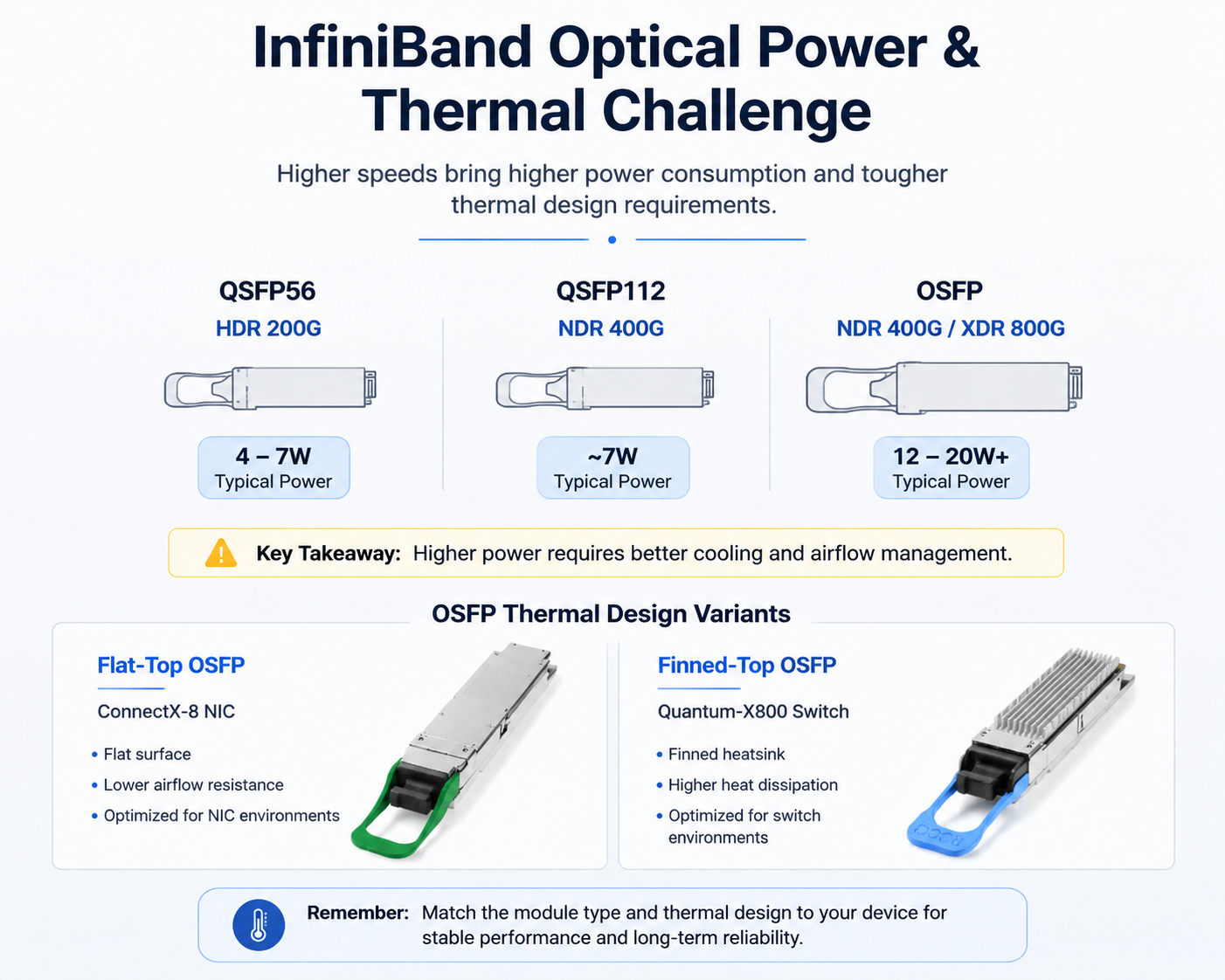
These modules draw roughly 4 to 7 watts, which keeps HDR fabrics easy to cool. HDR100 splits a single port into two 100G links, a useful option when connecting older nodes to a newer fabric.
QSFP112: NDR 400G on the NIC Side
QSFP112 squeezes four 100G PAM4 lanes into the classic QSFP body. It shows up most often on ConnectX-7 NICs and BlueField-3 DPUs, where the adapter handles less aggregate traffic than a switch. Typical power sits near 7 watts, a reflection of the four-lane architecture.
The naming confuses people because QSFP112 looks like QSFP56. QSFP112 is a QSFP-family form factor designed for 100G-class electrical lanes used in 400G applications. The “112” designation refers to the 112G-class electrical interface technology rather than the physical size of the module. Physically, it is the same QSFP package, which is exactly why ordering the wrong one is so easy.
OSFP: NDR 400G and XDR 800G on the Switch Side
OSFP is a larger form factor widely used for high-speed InfiniBand switches, including many NDR and XDR implementations. Its larger thermal envelope provides more room for high-speed optical and electrical components. It is wider and deeper than QSFP, and it exists because higher speeds need more thermal headroom. NDR modules draw 12 to 18 watts, and XDR modules can exceed 20 watts, which the QSFP package cannot shed.
OSFP brings one more variable that catches teams off guard: the heatsink. ConnectX-8 NICs use a flat-top OSFP variant, while Quantum-X800 switches use a finned-top variant.
For example, specific NVIDIA platforms may use different OSFP thermal configurations. Always verify the required heatsink or mechanical variant against the switch or adapter specification before ordering.
InfiniBand Transceiver Reach Variants: SR8, DR8, 2FR4, LR4, LR8
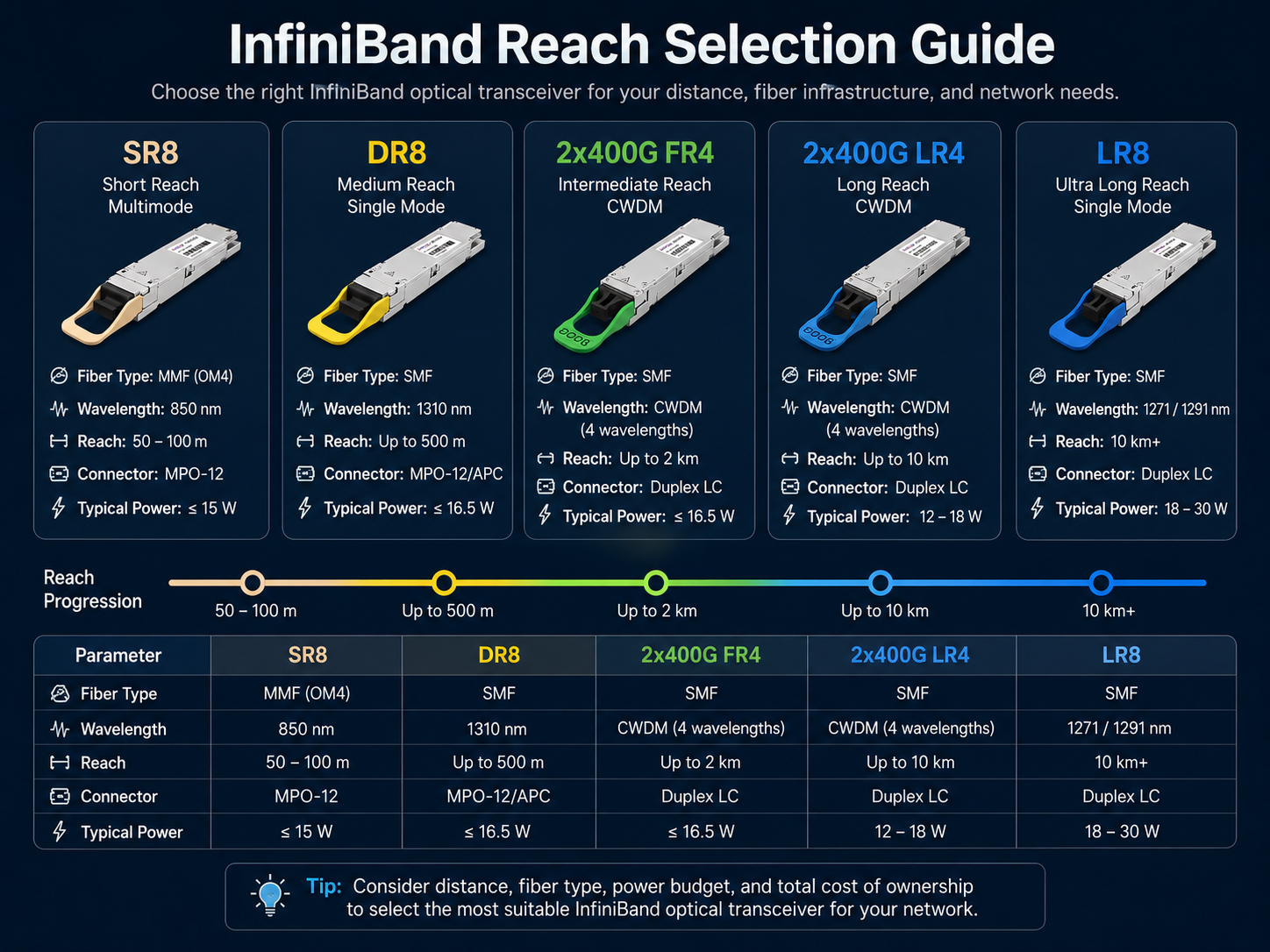
Once the form factor is right, reach is the next decision. InfiniBand modules split into short-reach multimode and longer single-mode options, each with its own fiber, connector, and cost profile.
| Module |
Fiber |
Wavelength |
Reach |
Connector |
Typical power |
| SR8 |
MMF OM4 |
850 nm |
50–100 m |
Dual MPO-12 |
≤15W |
| DR8 |
SMF |
1310 nm |
500 m |
Dual MPO-12/APC |
≤16.5W |
| 2FR4 |
SMF CWDM |
4 wavelengths |
2 km |
Dual LC |
≤16.5W |
| LR4/LR8 |
SMF CWDM |
multiple |
10 km |
Duplex LC |
12–30W |
SR8: Short-Reach Multimode
SR8 uses 850 nm VCSEL lasers over multimode fiber. It is the cheapest option and the default for GPU-to-switch links within a rack or across adjacent racks. Reach lands around 50 to 100 meters on OM4, which covers nearly every in-rack and same-row connection in a training cluster.
The trade-off is the fiber plant. SR8 needs eight fibers per direction at 400G and sixteen at 800G, so it works best where the cable runs are short and dense.
DR8: 500-Meter Single-Mode
DR8 moves to 1310 nm single-mode fiber and reaches 500 meters, enough for leaf-to-spine links across a data hall. DR8 deployments commonly use single-mode fiber and may use MPO/APC interfaces depending on the platform and module specification. Connector type, polish, polarity, and insertion-loss requirements should always be verified against the optical module and cabling specification.
2FR4: Two-Kilometer Single-Mode
2FR4 solutions typically use four CWDM wavelengths and duplex single-mode fiber. Depending on the implementation, the module may use duplex LC interfaces and support distances around 2 km. your existing LC patch panels work without modification. Two 400G FR4 engines bond to form an 800G link, or they break out into two independent 400G links.
2x400G LR4 and LR8: Ten-Kilometer Long-Reach
2x400G LR4 and LR8 extend InfiniBand links to ten kilometers for campus and metro connections. These modules use higher-power transmitters and draw the most power of the group, which is why they appear almost exclusively in the OSFP form factor where cooling is available.
One rule spans all reach variants. Breakout capability depends on the module architecture and platform configuration. Parallel-optics modules such as SR/DR designs can support specific breakout configurations, while WDM-based designs may also support multi-link configurations when the module is specifically designed for them. Always verify the supported breakout mode in the product specification.
InfiniBand Transceiver Power and Thermal Considerations
Power is the quiet budget item that scales with port count. An individual module seems trivial. A full switch does not.
An 800G SR8 module draws up to 15 watts, DR8 up to 16.5 watts, and 2FR4 up to 16.5 watts. A single 64-port XDR switch can therefore add more than 1,000 watts from optics alone, before the switch ASIC and fans are counted. That is real money in a facility that bills by the kilowatt-hour.
The thermal lesson that matters most, however, is the OSFP heatsink. There are two physical variants. ConnectX-8 NICs use the flat-top riding heatsink variant, where the host provides cooling. Quantum-X800 switches use the finned-top integrated heatsink variant, where the module cools itself in chassis airflow.
OEM vs. Third-Party Compatible InfiniBand Transceivers
NVIDIA’s LinkX line is the reference optics family for InfiniBand, and it is priced like a first-party part. Third-party compatible transceivers offer the same optical performance at a lower price, but they live or die on one thing: whether the coding matches your host.
Many InfiniBand platforms use module identification and coding information stored in the transceiver’s management memory to determine compatibility. The exact coding requirements depend on the host platform, firmware, and vendor implementation.
Every InfiniBand module advertises a host code in its memory. The switch or NIC reads that code during initialization and rejects anything it does not recognize. The codes for InfiniBand are distinct from Ethernet:
| Protocol |
Host code |
| InfiniBand EDR |
0x30 |
| InfiniBand HDR |
0x31 |
| InfiniBand NDR |
0x32 |
This is the source of the classic “module is dead on arrival” complaint. A module with the wrong code, or a code that does not match your switch OS, will fail to initialize even when the optics are flawless.
What to check when you evaluate a compatible transceiver supplier. First, confirm they code for your exact switch model and OS version, not just “InfiniBand” in general. Second, request per-module test data: transmit power, receiver sensitivity, and pre-FEC bit-error-rate curves. Third, verify they can re-code modules if you change platforms mid-deployment. A supplier that cannot answer all three is not a bargain; it is a risk.
How to Choose an InfiniBand Optical Transceiver
Selection is a sequence, and the order matters. Work through these six steps, and most mistakes disappear.
Determine the distance. Measure the actual cable run, not a guess. In-rack means SR8. Row-to-row means DR8. Between buildings means 2FR4 or LR.
Match the fiber and connector. SR8 needs MPO-12 multimode. DR8 needs MPO-12/APC single-mode. FR and LR use duplex LC. Your existing fiber plant may already decide this for you.
Confirm the speed and generation. HDR is 200G, NDR is 400G, XDR is 800G. The generation locks in the lane architecture and the signaling.
Match the form factor to both ends. Read the switch and NIC datasheets separately. NDR fabrics routinely pair OSFP on the switch with QSFP112 on the NIC, bridged by a breakout cable.
Budget the power. Add the module wattage across every port on every switch. Verify the OSFP heatsink variant before ordering, and remember that flat-top and finned-top are not interchangeable.
Choose OEM or third-party. Validate the host code, the coding match to your OS version, and the test data. Then run a burn-in on your production hardware.
Follow this order, and the transceiver stops being a source of surprise and becomes the most predictable part of the fabric.
Conclusion
The InfiniBand optical transceiver is the part of the fabric that engineers actually touch, and it carries more decisions than its Ethernet cousin. Form factor, reach, power, and protocol coding each have to be right, or the link stays dark.
Four takeaways matter most. First, match the form factor to both ends of every link, since QSFP56, QSFP112, and OSFP are not interchangeable. Second, treat reach as a fiber decision, not just a distance number, and remember that SR and DR break out while FR and LR do not. Third, budget power at the switch level, where a fully populated XDR switch adds over a kilowatt from optics alone. Fourth, validate the host code before you trust a compatible transceiver, and run a burn-in before you scale.
Frequently Asked Questions
What is an InfiniBand optical transceiver?
An InfiniBand optical transceiver is a pluggable module that converts electrical signals from an InfiniBand switch or adapter into optical signals for transmission over fiber.
What are the common InfiniBand optical transceiver form factors?
Common high-speed InfiniBand form factors include QSFP56 for HDR, QSFP112 for selected NDR adapter applications, and OSFP for many NDR and XDR switch platforms. Exact support depends on the device and vendor.
What is the difference between SR8 and DR8?
SR8 typically uses 850 nm multimode optics for shorter-distance connections, while DR8 typically uses 1310 nm single-mode optics for longer connections. The actual supported distance depends on the specific module and fiber specification.
What fiber is used for InfiniBand optical transceivers?
Short-reach modules generally use multimode fiber, while longer-reach modules generally use single-mode fiber. The correct fiber type should always be selected according to the transceiver’s optical specification.
Can QSFP112 and OSFP be used interchangeably?
No. QSFP112 and OSFP are different mechanical form factors. A transceiver or cable assembly must be specifically designed and qualified for the interfaces on both ends.
Do InfiniBand optical transceivers work in Ethernet networks?
Compatibility depends on the host platform, module coding, firmware, electrical interface, and vendor qualification. A module should not be assumed to work across InfiniBand and Ethernet simply because the data rate and optical specifications are similar.
What should I check before buying an InfiniBand optical transceiver?
Check the InfiniBand generation, data rate, form factor, transmission distance, fiber type, connector, optical budget, power consumption, breakout requirements, and compatibility with the exact switch or adapter model.
Are third-party InfiniBand transceivers reliable?
Third-party transceivers can be suitable when they are properly qualified for the target platform. Before purchasing in volume, verify optical performance, module coding, firmware compatibility, temperature specifications, and actual operation on the production hardware.
Post Views: 910