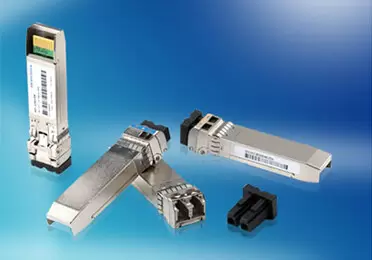
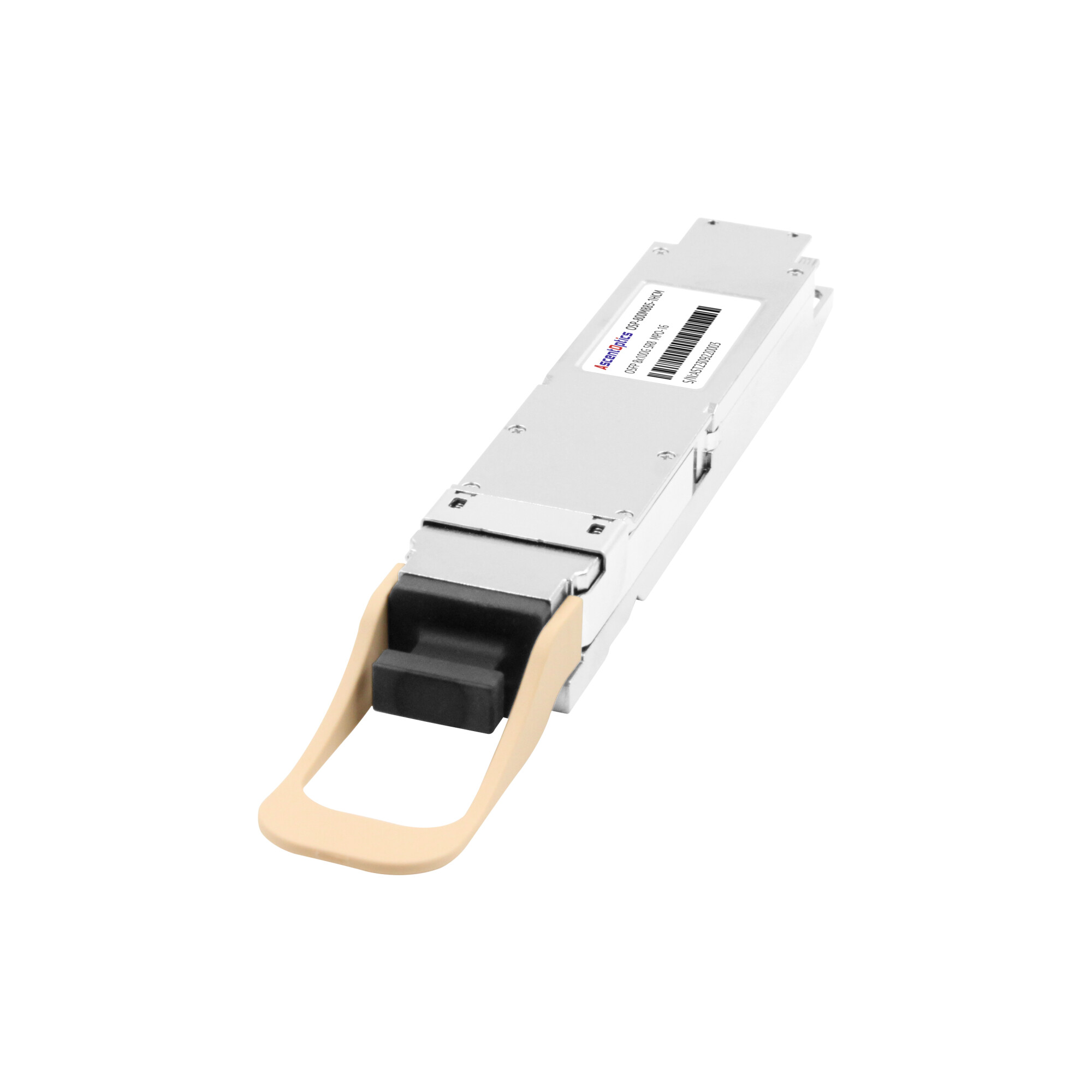
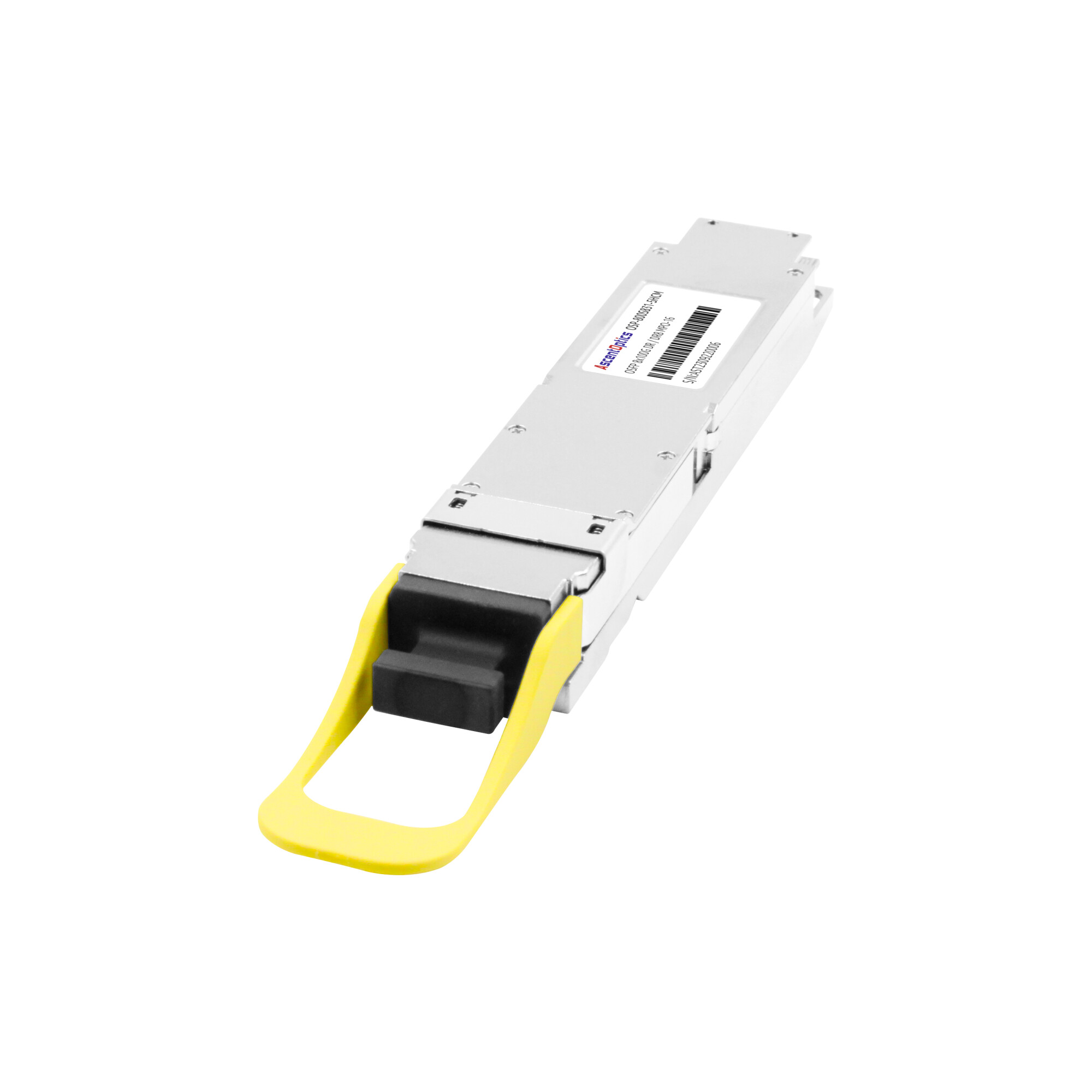
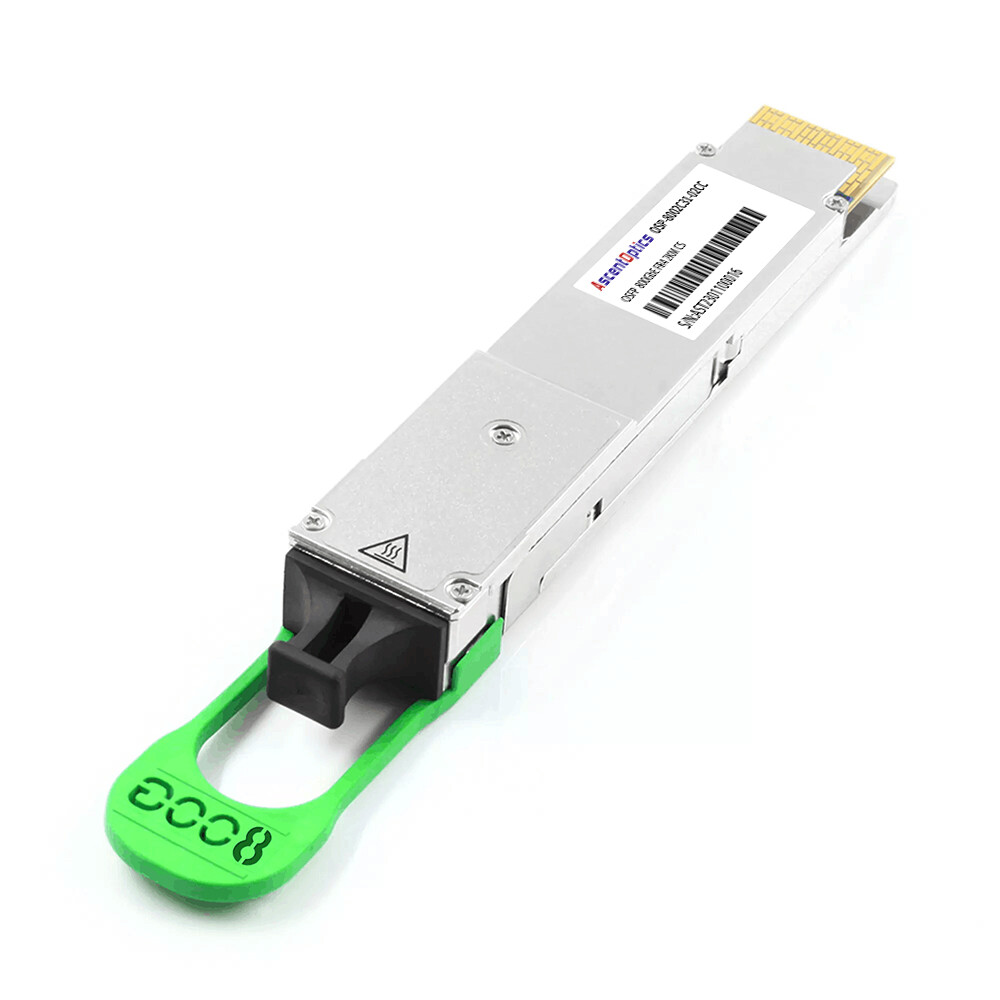
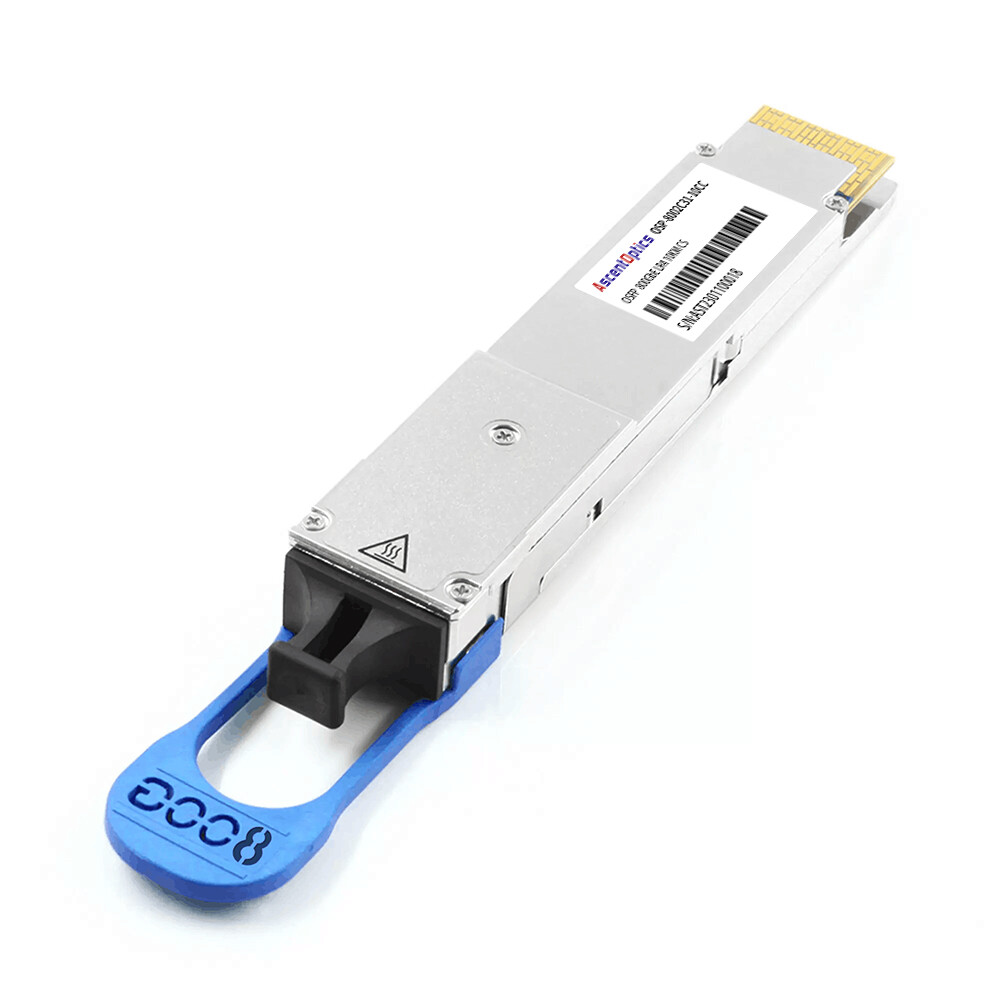
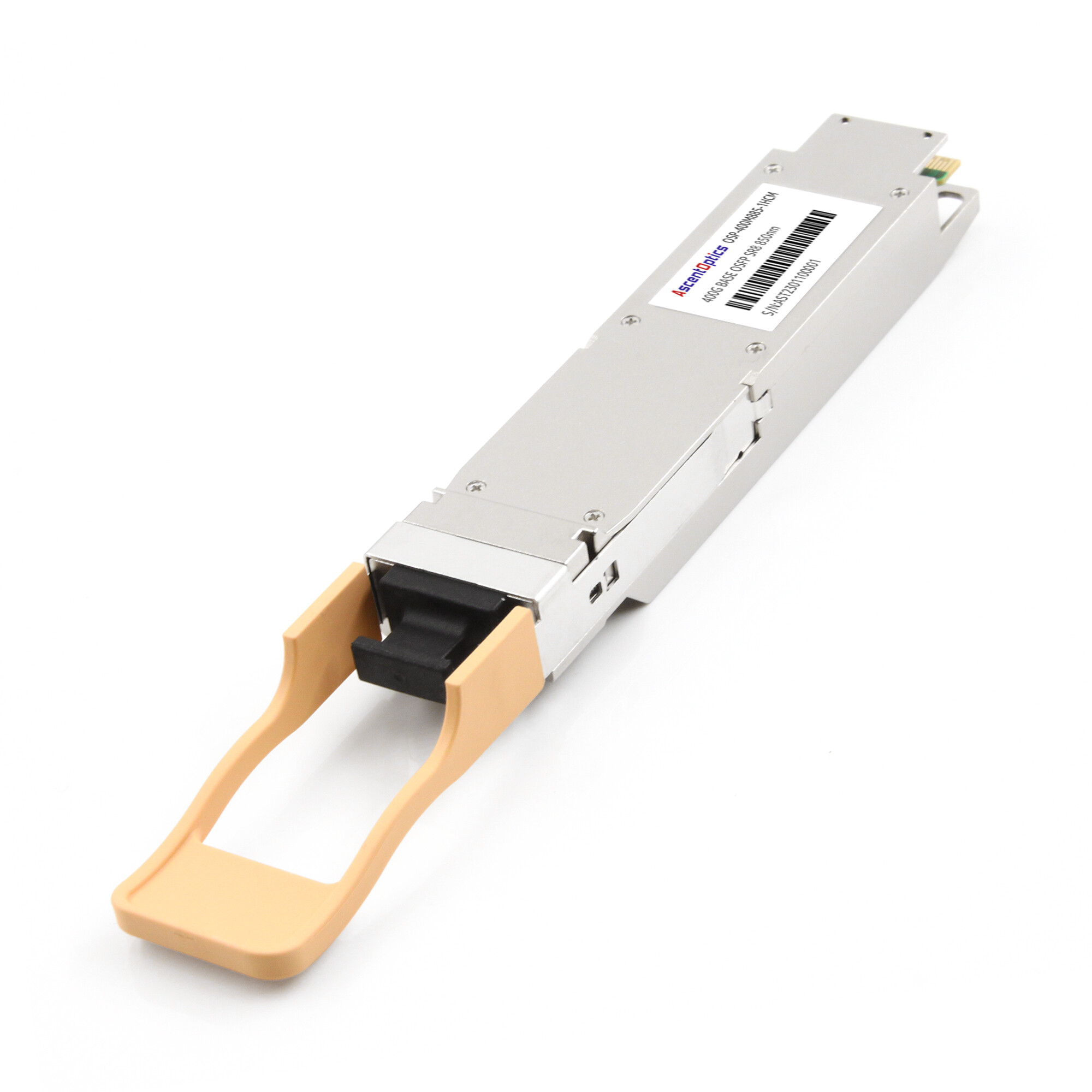
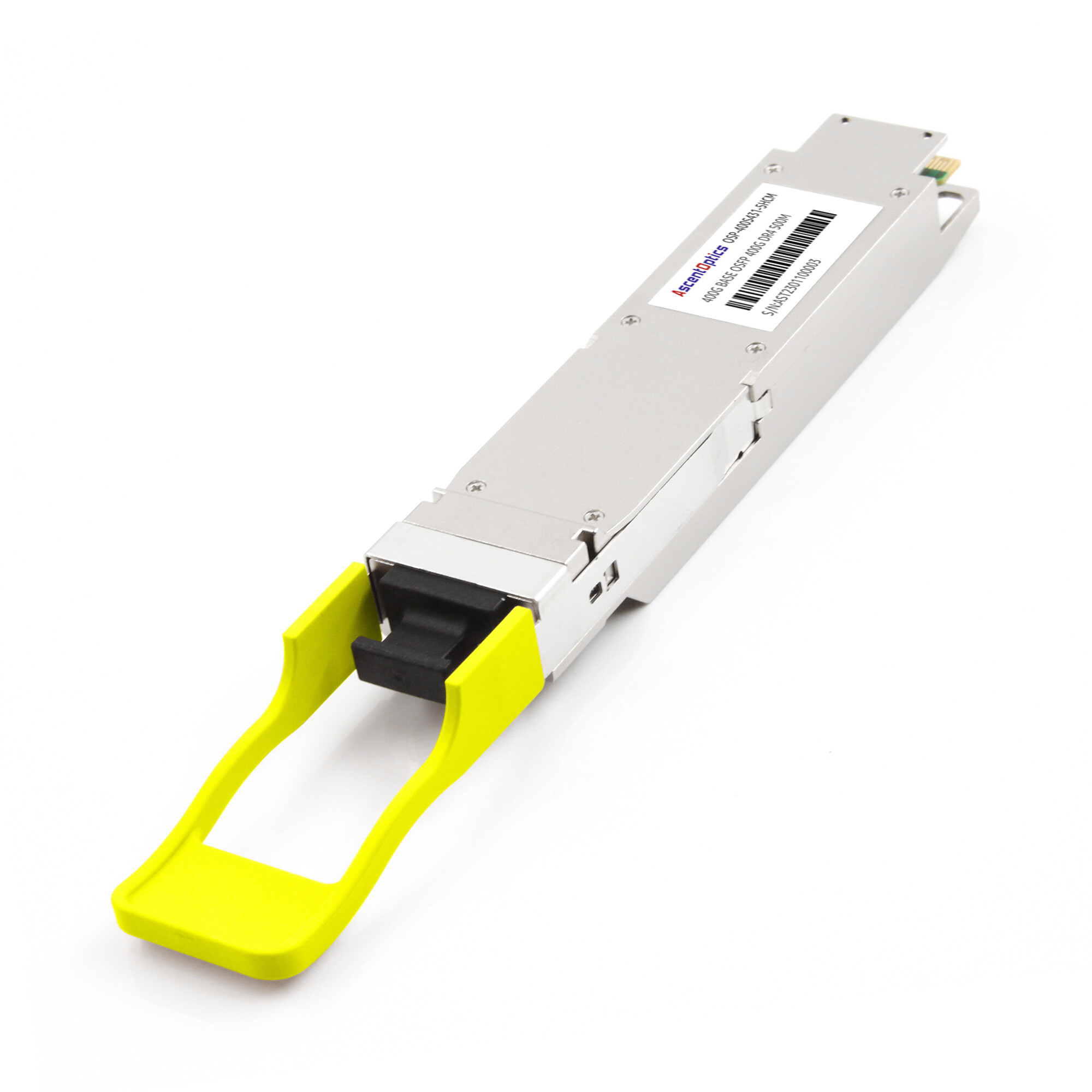
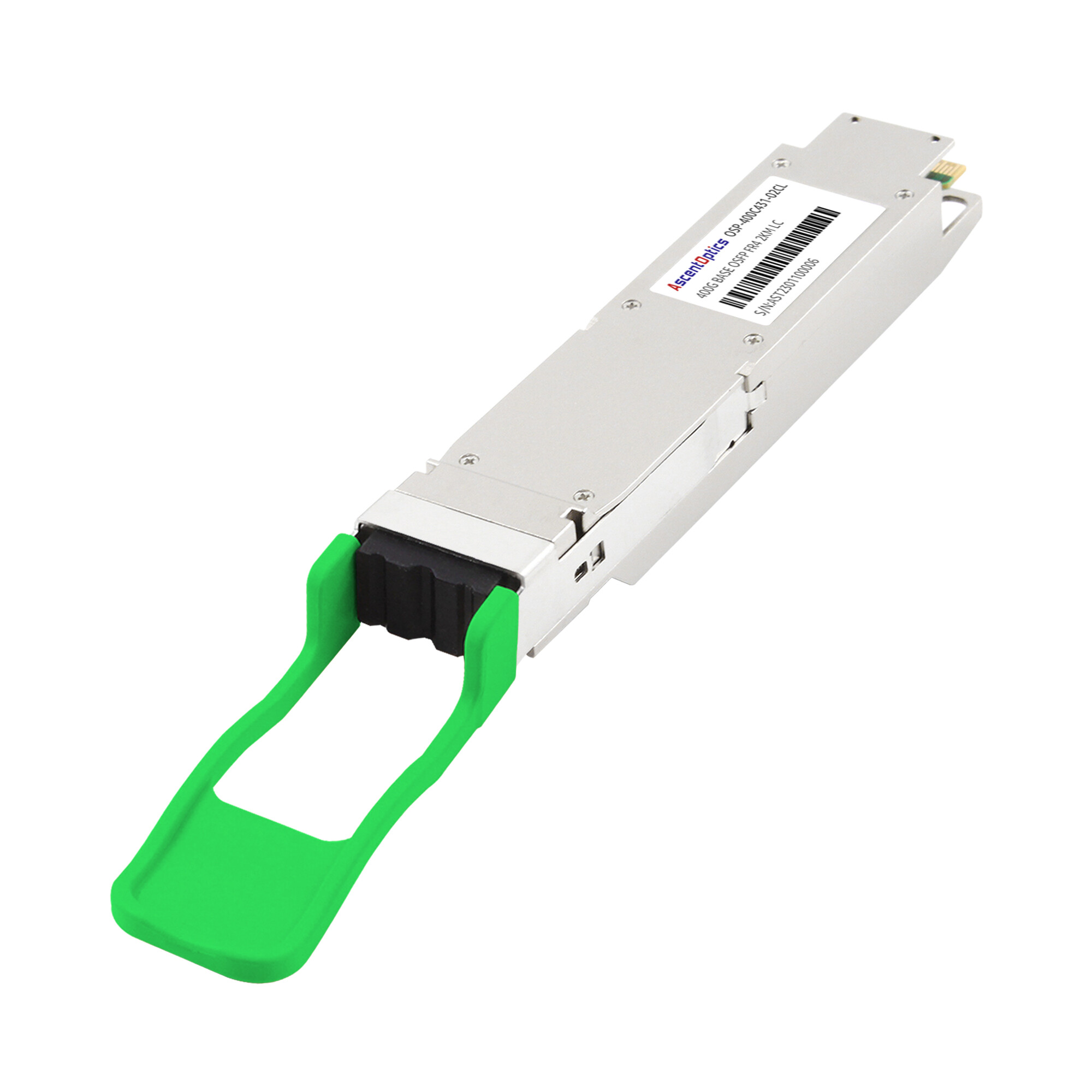
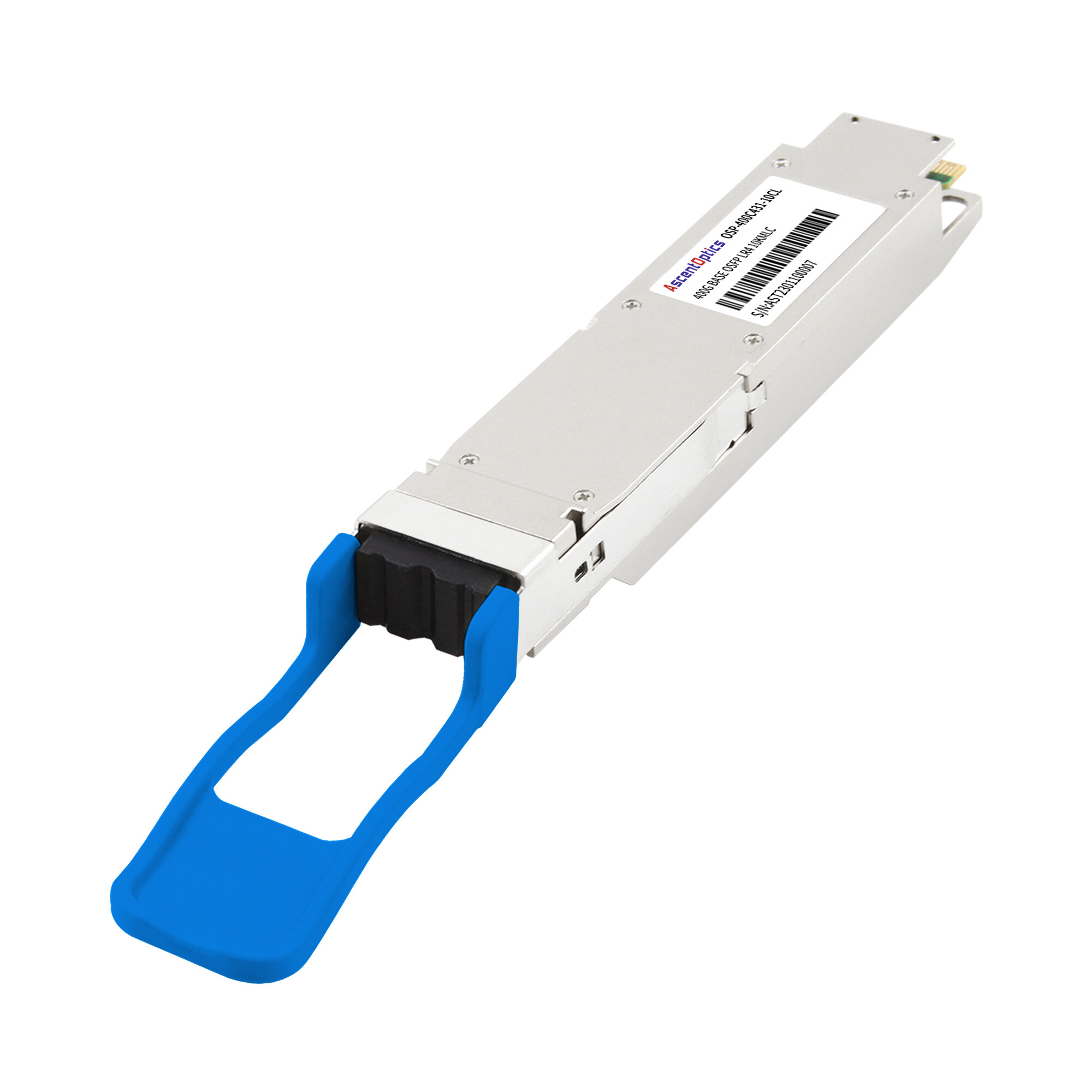
Key metrics for the power consumption of 800G optical modules include total wattage and energy efficiency (measured in pJ/bit). Traditional DSP-based 800G modules consume over 16W of power with an efficiency of approximately 18 pJ/bit; in contrast, modules utilizing LPO (Linear Drive Pluggable) technology reduce power consumption to 8–9W and improve efficiency to around 9 pJ/bit—a saving of nearly 50%. Cutting-edge products, such as the Adtran LiteWave800, have set new records with power consumption of just 0.8W and efficiency of 1 pJ/bit—representing a 6- to 10-fold improvement over first-generation LPO technology—thereby providing a critical pathway for scaling GPU clusters in AI data centers facing strict power and thermal constraints.
What Is 800G Power Consumption?
800G power consumption is the electrical power, measured in watts, that an 800G optical transceiver draws to transmit and receive data at 800 gigabits per second. It is usually listed on a datasheet as a typical value and a maximum value, and it varies widely depending on the module’s reach, form factor, and signal architecture.
Raw watts only tell part of the story. Network engineers increasingly measure efficiency in picojoules per bit (pJ/bit), which normalizes power against the delivered bandwidth. A module drawing 16 W at 800 Gbps works out to about 20 pJ/bit. A module drawing 8 W at the same speed is 10 pJ/bit. The second one costs you half as much to run for the same throughput, which is the number that matters at scale.
The single biggest variable is the digital signal processor, or DSP. In a conventional 800G module, the DSP handles signal equalization and error correction, and it alone can account for 40 to 50 percent of total module power. Strip that out, as linear pluggable optics does, and the power figure drops sharply.
What Factors Affect 800G Optical Module Power Consumption?
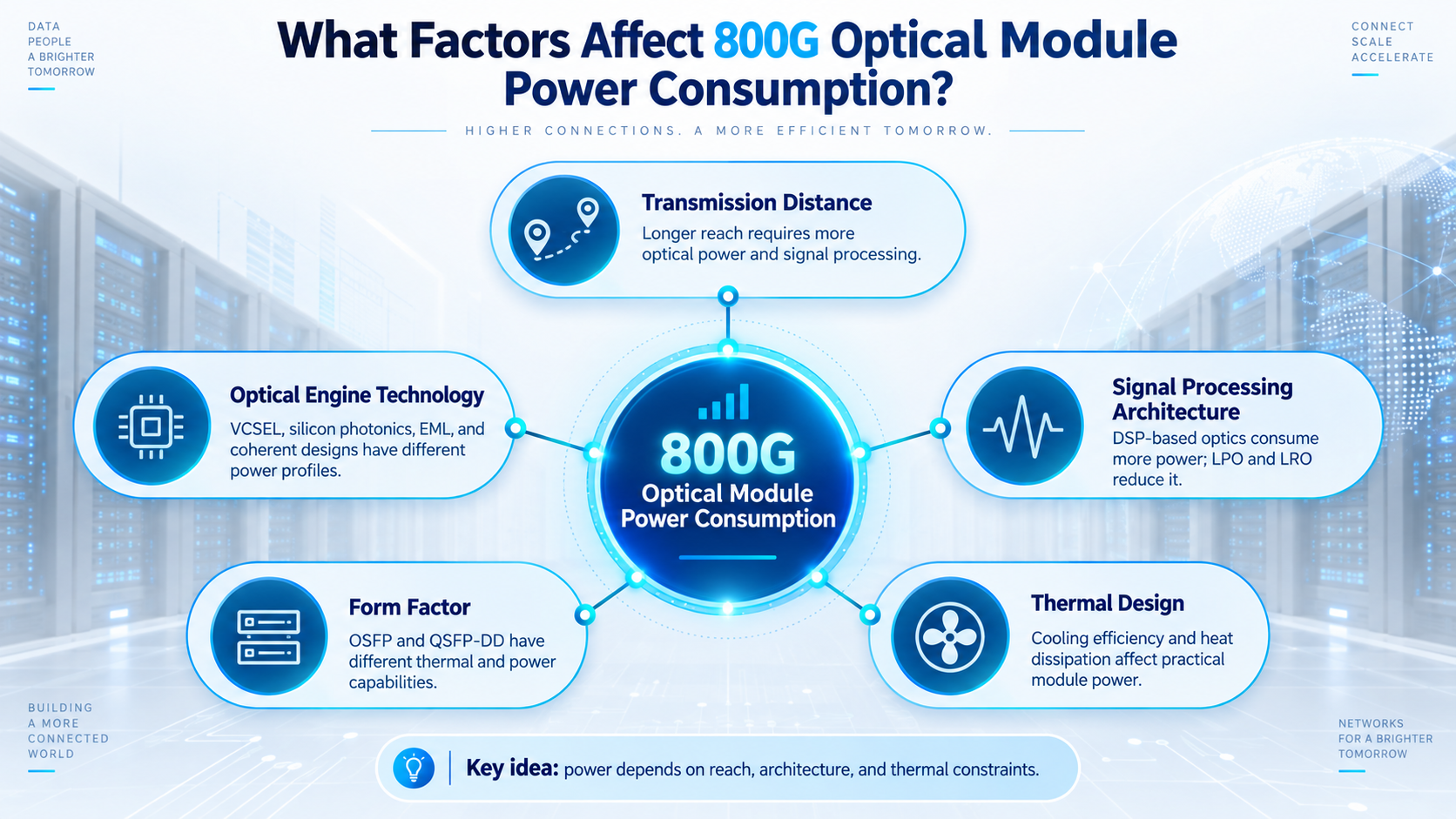
800G optical module power consumption is not determined by data rate alone. The actual power requirement depends on several factors, including transmission distance, optical engine technology, signal processing architecture, form factor, and thermal design.
Understanding these factors helps network operators select the right optical solution while balancing bandwidth, energy efficiency, and total cost of ownership.
Transmission Distance and Optical Complexity
Transmission distance is one of the most important factors affecting optical module power consumption.
Short-reach modules such as 800G SR8 typically consume less power because they use simpler optical components and multimode fiber for connections within the same rack or adjacent racks.
Longer-reach modules, including DR8, FR8, and LR8, require more advanced optical components, higher-performance lasers, and more complex signal processing to maintain signal integrity over longer distances.
Typical relationship:
| Module Type |
Reach |
Power Trend |
| 800G SR8 |
50–100m |
Lowest power |
| 800G DR8 |
500m |
Medium power |
| 800G FR8 |
2km |
Higher power |
| 800G LR8 |
10km |
Highest pluggable power |
For AI data center networks, selecting the shortest practical reach is one of the most effective ways to reduce optical power consumption.
Optical Engine Technology
The optical technology used inside the module also has a major impact on power efficiency.
Different optical architectures require different levels of electrical and optical processing:
VCSEL-Based Optics
VCSEL technology is commonly used for short-distance multimode applications because it offers low cost and low power consumption.
Silicon Photonics
Silicon photonics enables highly integrated optical engines and is increasingly used in 800G DR and FR-class solutions.
EML-Based Optics
Electro-absorption modulated lasers (EMLs) provide higher performance for longer-reach applications but typically require more power.
Coherent Technology
Coherent optics are designed for very long-distance transmission and require advanced DSP processing, resulting in significantly higher power consumption.
Signal Processing Architecture
The signal architecture is another key factor.
Traditional DSP-based pluggable optics use digital signal processors to perform functions such as:
- •Signal equalization
- •Clock recovery
- •Forward error correction
- •Signal conditioning
The DSP improves interoperability and transmission performance but contributes significantly to module power consumption.
New architectures such as LPO reduce power by removing the DSP from the optical module and allowing the host switch ASIC to perform signal processing.
The trade-off is that LPO requires:
- •Compatible switch ASICs
- •Optimized electrical channels
- •Careful system-level validation
Form Factor and Thermal Design
The physical form factor also influences power capability.
OSFP provides a larger mechanical envelope and generally offers greater thermal headroom, making it suitable for higher-power 800G and future 1.6T optical solutions.
QSFP-DD800 focuses on higher port density and backward compatibility with existing networking platforms, but its smaller size creates tighter thermal constraints.
When deploying high-density AI networks, thermal capability should be considered together with port count and bandwidth requirements.
800G Power Consumption by Module Type
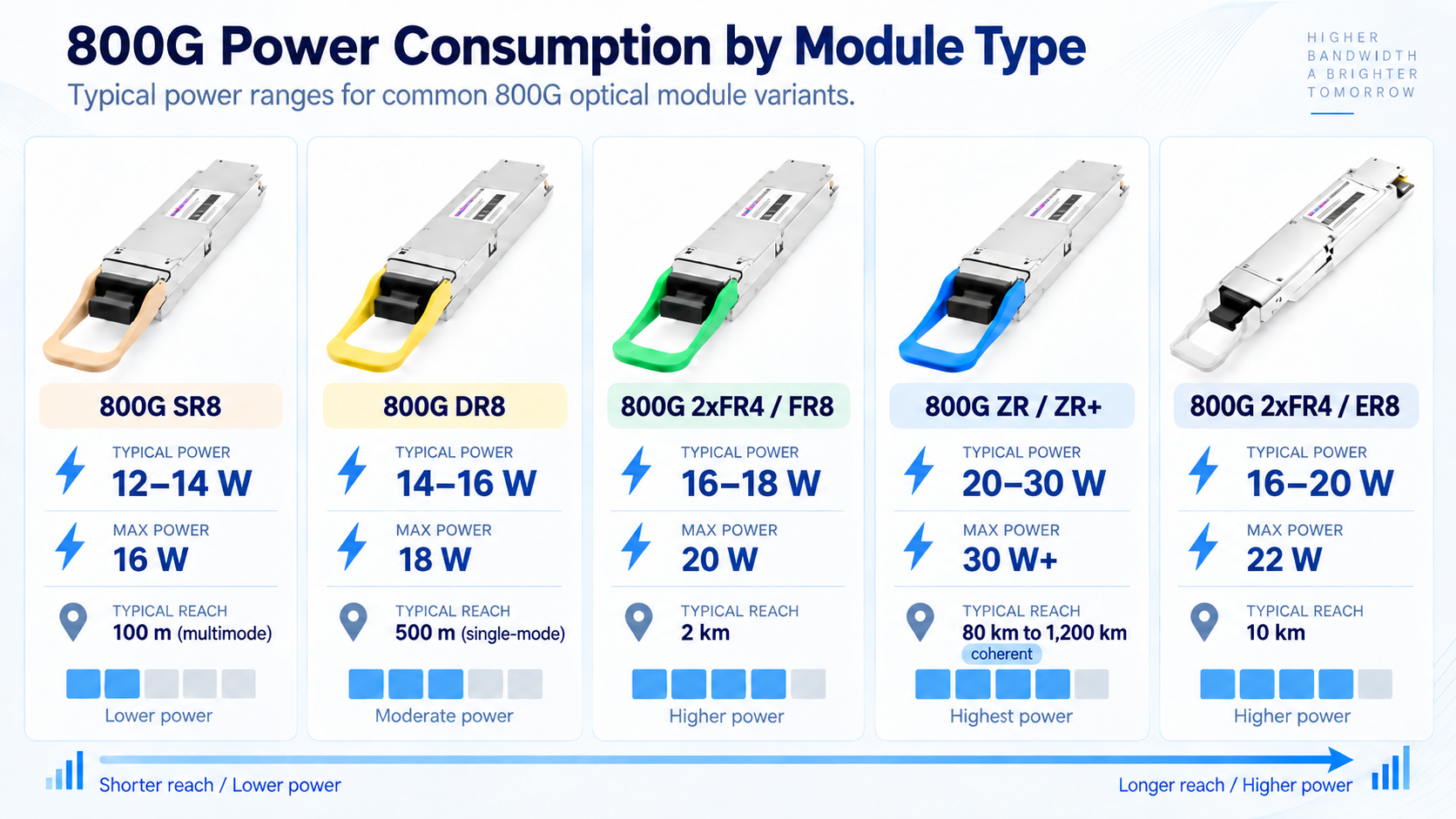
The reach of an 800G module is the best predictor of how much power it draws. Longer reach means higher-performance lasers, more complex optics, and more aggressive DSP work, all of which push wattage up.
| 800G Module Type |
Typical Power |
Max Power |
Typical Reach |
| 800G SR8 |
12 to 14 W |
16 W |
100 m (multimode) |
| 800G DR8 |
14 to 16 W |
18 W |
500 m (single-mode) |
| 800G 2xFR4 / FR8 |
16 to 18 W |
20 W |
2 km |
| 800G 2xLR4 / LR8 |
16 to 20 W |
22 W |
10 km |
| 800G ZR / ZR+ (coherent) |
20 to 30 W |
30 W+ |
80 km to 1,200 km |
Short-reach SR8 modules are the most efficient because they use low-cost vertical-cavity surface-emitting lasers (VCSELs) over multimode fiber. As you move to DR8 and FR8, you shift to single-mode silicon photonics or EMLs, and the DSP has to work harder to clean up the signal over longer fiber runs. Coherent ZR modules, built for metro and long-haul, are in a different class entirely, trading serious wattage for reach that spans hundreds of kilometers.
These figures are typical ranges from current vendor datasheets. A FiberMal technical guide to 800G OSFP transceivers publishes a similar breakdown, and you should always confirm the exact number on the module you are buying rather than relying on a category average.
800G Power Consumption: OSFP vs QSFP-DD
Form factor sets the ceiling on how much power a module can safely dissipate, which is why OSFP and QSFP-DD have different power profiles despite carrying the same 800G data rate.
OSFP is the larger package, and it uses that size for thermal headroom. It offers roughly 30 percent more heat-dissipation surface area than QSFP-DD, which lets it support modules rated at 15 to 20 W typical and up to about 24 W in the highest-power designs. That makes OSFP the default choice for long-reach and coherent optics and for AI clusters where modules run hot.
QSFP-DD is the denser, backward-compatible option. Its smaller footprint caps practical module power around 12 to 15 W, which is fine for short-reach SR8 and DR8 optics but leaves little room for coherent modules. Operators who need port density and compatibility with existing 400G QSFP-DD infrastructure often accept the tighter power ceiling.
800G vs 400G Power Consumption and Energy Efficiency
Here is the part that surprises people: an 800G module draws only about 10 to 20 percent more power than a 400G module while delivering double the bandwidth. On a per-gigabit basis, 800G is roughly 30 percent more efficient.
That efficiency shows up clearly in the pJ/bit numbers. A typical DSP-based 400G module runs at about 10 W, or roughly 25 pJ/bit. A DSP-based 800G module runs at 14 to 18 W, which is around 17.5 to 22.5 pJ/bit. You are moving more bits for less energy per bit, even though the absolute wattage is higher.
The TCO argument for 800G follows directly. To move 51.2 Tbps, you can use 128 ports of 400G at roughly 10 W each, or 64 ports of 800G at roughly 16 W each. The 800G approach uses half the ports and about 1,024 W of optics, versus 1,280 W for the 400G equivalent. Fewer modules also means fewer switch chips, fewer patch panels, and less to maintain. In a large deployment, that difference compounds into meaningful annual energy savings.
How 800G Optical Power Impacts AI Data Center Design
The rapid growth of AI workloads is driving higher bandwidth requirements inside data centers. As GPU clusters scale, optical interconnects become a significant part of overall network power consumption.
An 800G optical module typically consumes more power than a 400G module, but it delivers twice the bandwidth. Therefore, the key metric for large-scale deployments is not only module wattage, but also power efficiency per transmitted bit.
For example, supporting the same 51.2Tbps network capacity requires:
| Network Speed |
Port Count |
Impact |
| 400G |
More ports and optical modules |
Higher module count and cable complexity |
| 800G |
Fewer ports and modules |
Better bandwidth density and lower system complexity |
By reducing the number of optical ports, 800G networks can lower:
- •Optical module quantity
- •Switch interface requirements
- •Rack space usage
- •Cable management complexity
In large AI clusters with thousands of optical connections, even a small improvement in power efficiency per port can translate into significant reductions in operating costs.
When evaluating 800G deployments, network designers should consider the complete system power budget, including:
- •Optical module power
- •Switch ASIC power
- •Cooling requirements
- •Rack-level power density
The goal is not simply choosing the lowest-power optical module, but achieving the best balance between bandwidth, energy efficiency, and total cost of ownership.
How LPO, LRO, and CPO Reduce 800G Power
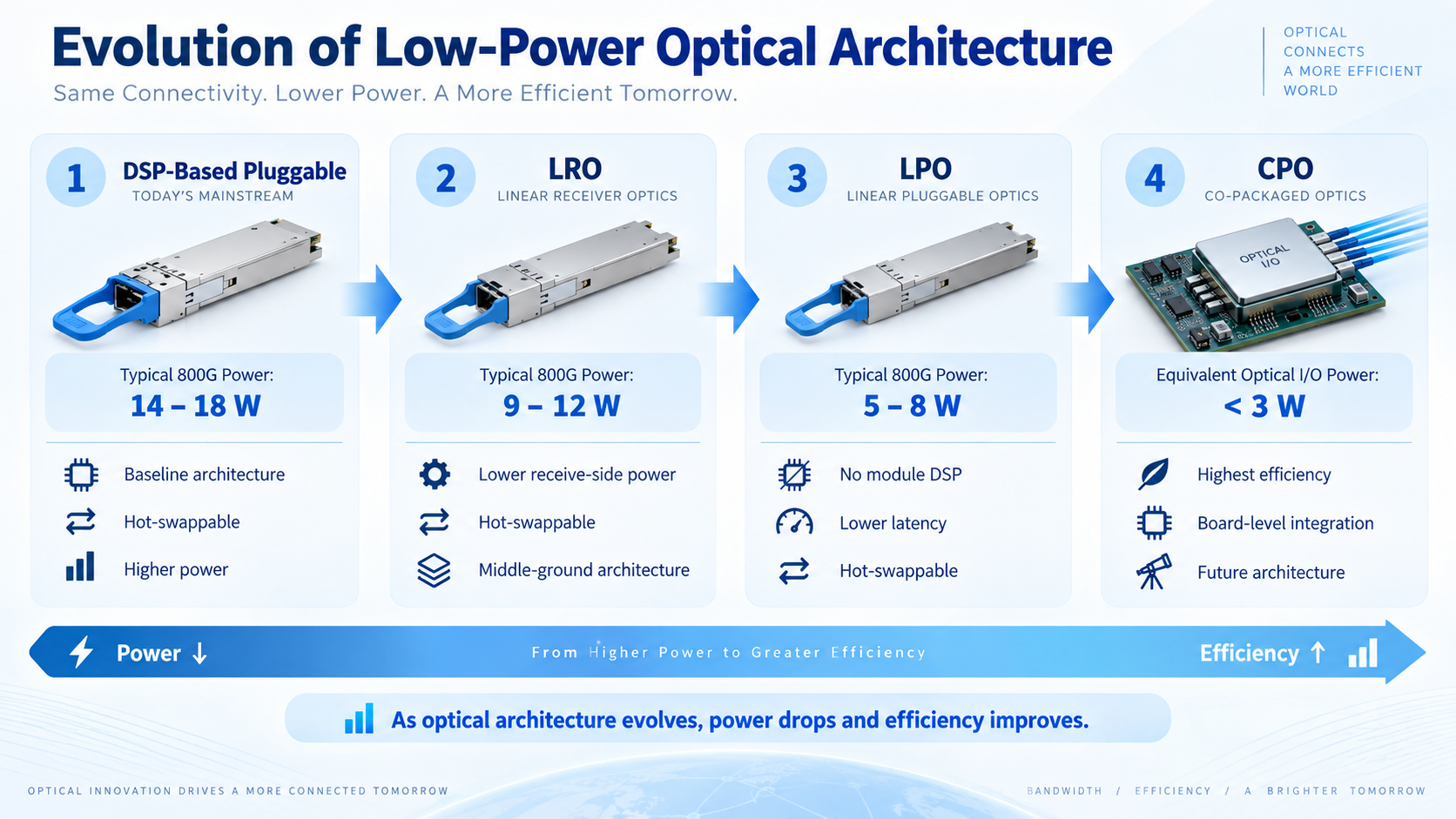
The most important shift in 800G power consumption is not a new module type but a different way of building the signal path. Three approaches are competing to cut the DSP out of the equation, or move it elsewhere.
Linear pluggable optics, or LPO, removes the DSP from the module entirely and lets the host switch ASIC handle equalization. The result is a 40 to 50 percent power reduction, bringing 800G LPO modules down to around 5 to 8 W. Latency drops as well, since the signal no longer passes through a retiming DSP. LPO keeps the hot-swappable pluggable form factor, which is why it is the pragmatic near-term choice for most AI clusters.
The efficiency ceiling for LPO keeps moving. Adtran’s LiteWave800, an 800G DR8 LPO module in OSFP form, achieves just 1 pJ/bit, or about 0.8 W, using single-mode VCSELs and in-house low-power electronics. That is 12 to 18 times lower than typical DSP-based optics, according to Adtran’s March 2026 announcement.
Linear receive optics, or LRO, is the middle path. It keeps a simplified DSP on the transmit side but uses linear receive, landing 800G power around 9 to 12 W. Co-packaged optics, or CPO, goes furthest by integrating the optical engine directly onto the switch ASIC package, cutting electrical path losses and delivering the lowest pJ/bit in the industry, under 3 W equivalent. CPO, however, sacrifices field serviceability and is still maturing for large-scale use.
| Architecture |
800G Power |
Relative Efficiency |
Serviceability |
| DSP-based pluggable |
14 to 18 W |
Baseline |
Hot-swappable |
| LPO |
5 to 8 W |
40 to 50% lower |
Hot-swappable |
| LRO |
9 to 12 W |
~25% lower |
Hot-swappable |
| CPO |
<3 W equivalent |
Up to 70% lower |
Board-level only |
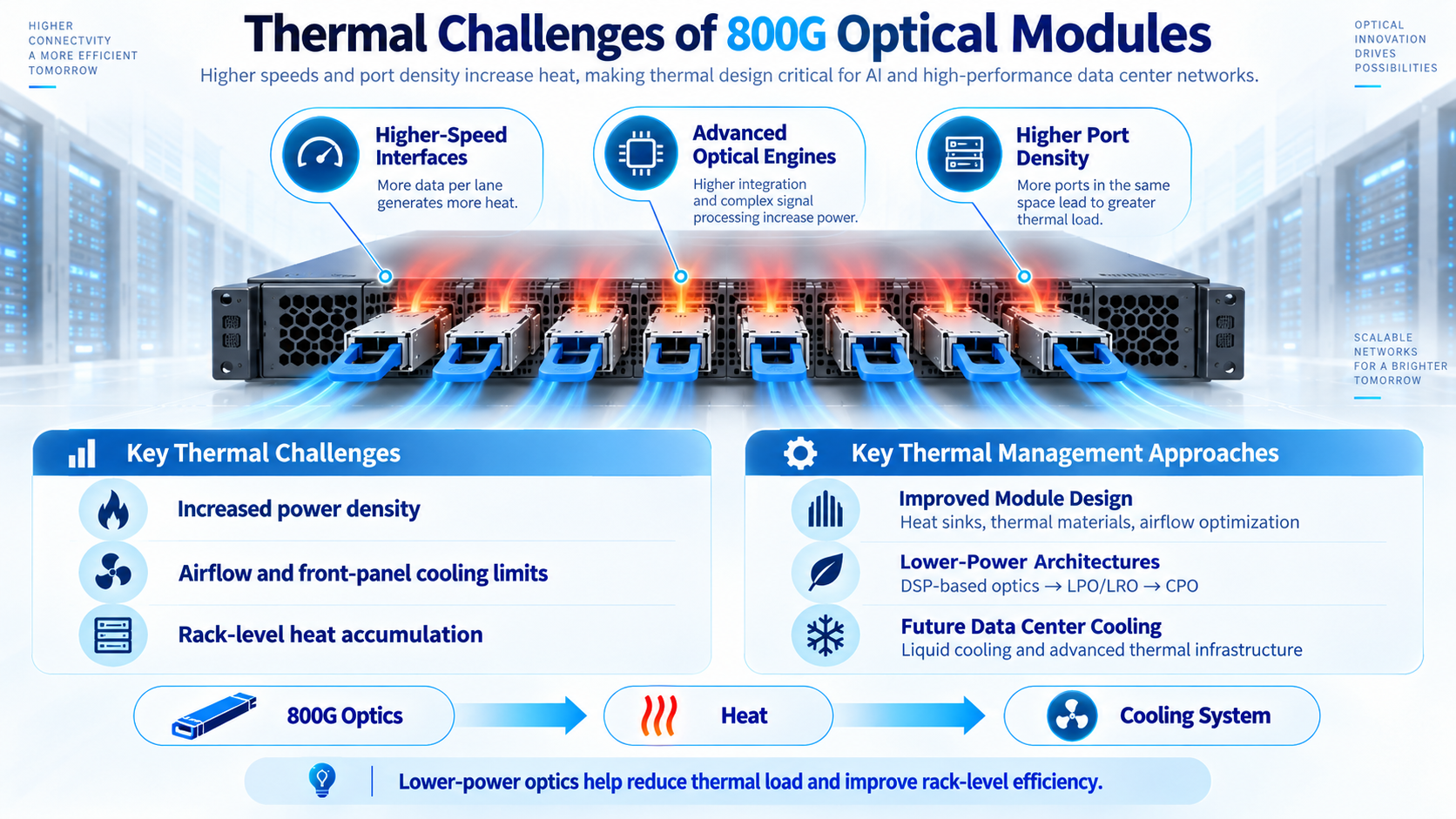
Thermal Challenges of 800G Optical Modules
As optical speeds increase, thermal management becomes one of the biggest challenges for high-density data center networks.
800G optical modules integrate higher-speed electrical interfaces, advanced optical engines, and signal processing components, which increase power density compared with previous generations.
In a fully populated AI networking system, dozens of 800G modules may operate simultaneously. The combined heat generated by these modules must be effectively removed through the switch cooling system.
Key Approaches to Thermal Management
Improved Module Design
Optical manufacturers continue to optimize:
- •Heat sink structures
- •Thermal materials
- •Airflow efficiency
- •Module packaging
These improvements help support higher-power optics within existing data center environments.
Lower-Power Optical Architectures
Reducing power consumption at the source is the most effective way to address thermal challenges.
The industry is moving from:
DSP-based pluggable optics → LPO/LRO → CPO
Each architecture reduces electrical losses and improves energy efficiency.
Future AI Data Center Cooling
As GPU clusters continue increasing in density, advanced cooling technologies such as liquid cooling will become increasingly important.
Lower-power optical modules help reduce thermal load, improve rack-level power efficiency, and provide more flexibility for future AI infrastructure expansion.
800G Power, Cooling, and Data Center OPEX
Module wattage is only the start of the cost story. Every watt an optical module draws has to be removed as heat, and that cooling load multiplies the facility power required.
A fully populated 32-port 800G switch draws 480 to 640 W from optics alone. Add 300 to 400 W for the switch ASIC, and you are past a kilowatt per switch before cooling. Depending on the facility, cooling can add 40 to 60 percent on top of the IT load, which is why planning guides frequently apply a 1.2 to 1.5 times multiplier when sizing power and cooling for optics. That multiplier shows up directly in your PUE and your monthly power bill.
The LPO payoff scales quickly here. A large AI cluster with 100,000 GPUs can have tens of megawatts of optical interconnect power in play. Cutting module power by 40 to 50 percent on that base does not just lower the optics line item; it reduces the cooling burden on top of it, unlocking thermal headroom and delaying expensive facility expansion.
Consider the math one more time. Reducing a single 800G module from 16 W to 8 W saves 8 W at the port. Multiply that by the 128 modules in a pair of fully loaded 64-port switches, and you save just over 1 kW before cooling, and roughly 1.4 kW after. Over a year of continuous operation, that is about 12,000 kWh per switch pair. Across a campus of switch pairs, the number becomes a line item the CFO cares about.
How to Choose Low-Power 800G Modules
Choosing the right 800G module is a sequence of decisions, and power should be considered at every step, not bolted on at the end.
Start with reach. Match the module to the actual fiber distance so you do not pay the wattage penalty for a longer-reach optic you do not need. A 500 m link should use DR8, not LR8, and certainly not a coherent ZR module.
Then choose the form factor. If you need density and 400G backward compatibility, QSFP-DD is the fit, but confirm your power ceiling. If you are building a high-power AI fabric or need coherent reach, OSFP gives you the thermal headroom to run it safely.
Finally, evaluate the signal architecture. For new short-reach AI deployments, LPO offers the best efficiency today, provided your switch vendor supports it. For mixed environments or where interoperability risk matters, DSP-based modules remain the safe default, and LRO is a useful middle ground.
When you review a datasheet, confirm three things. First, note the typical and maximum power, and design to the maximum, not the typical. Second, check the operating temperature range, since power and temperature move together. Third, verify MSA and IEEE compliance so the module will behave as rated inside your switches.
Conclusion
800G power consumption is the defining constraint of next-generation data center networks. Getting it right means matching module reach, form factor, and signal architecture to your actual thermal and cost envelope.
The key takeaways are straightforward. DSP-based 800G modules draw 12 to 18 W depending on reach, with coherent ZR optics going far higher. OSFP gives you more thermal headroom than QSFP-DD. On a per-bit basis, 800G is about 30 percent more efficient than 400G. And LPO, LRO, and CPO are pushing that efficiency further, with LPO cutting power by 40 to 50 percent today.
When you plan for 800G, design to maximum power, not typical power, and build the cooling multiplier into your numbers from day one.
Post Views: 68