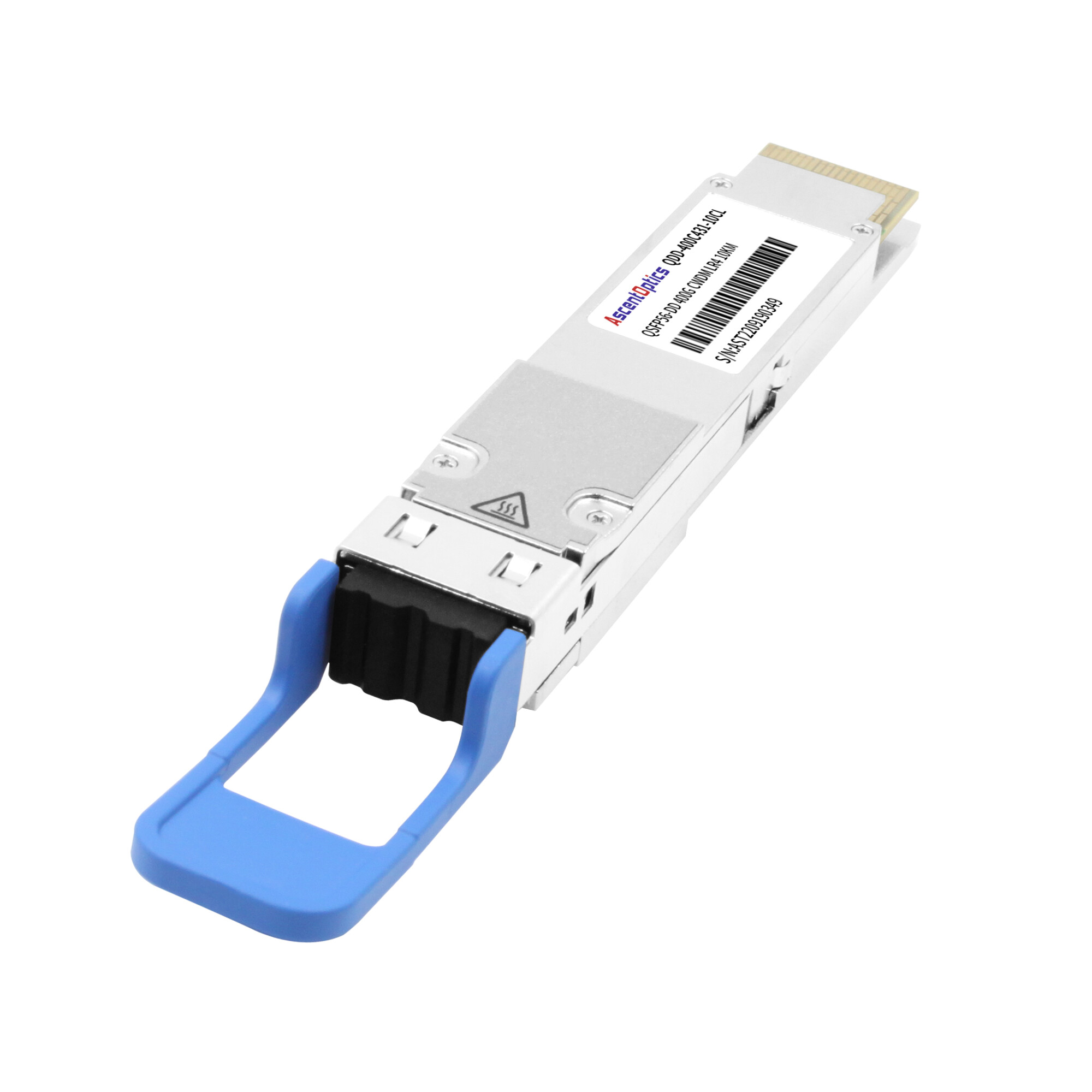
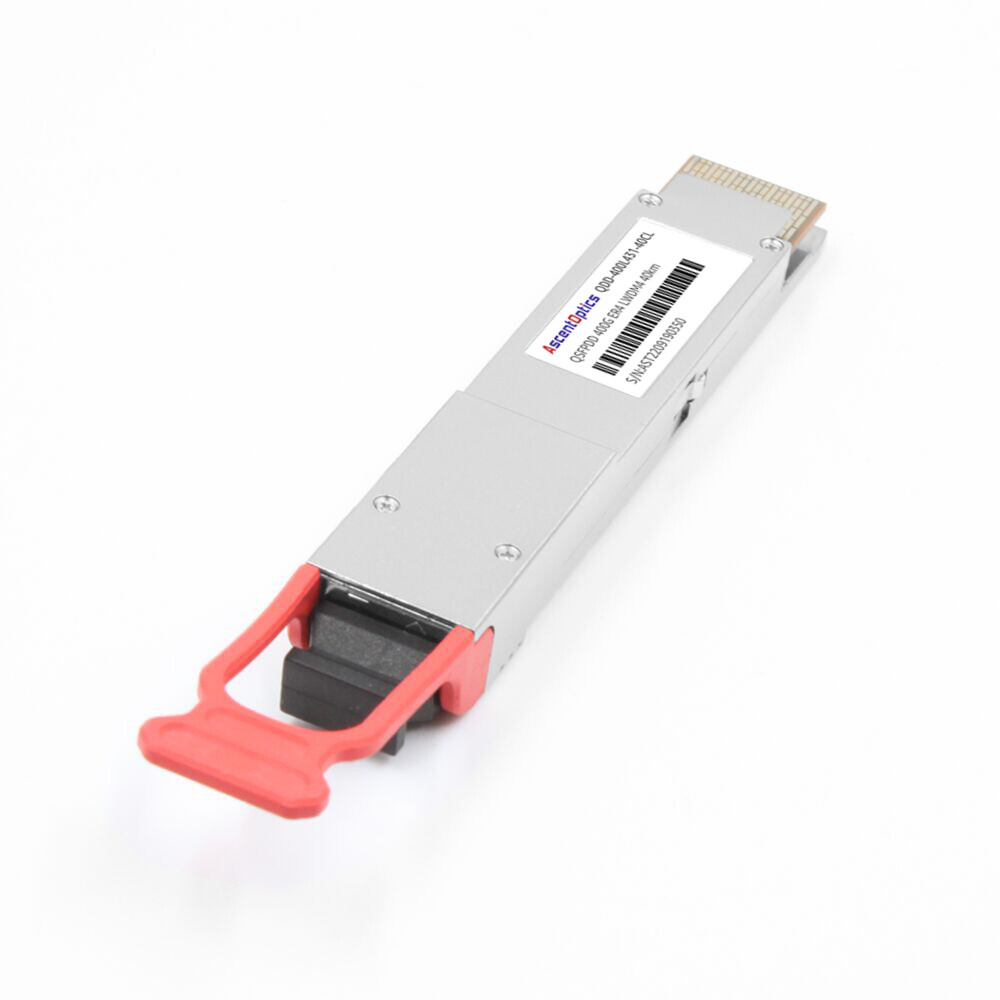
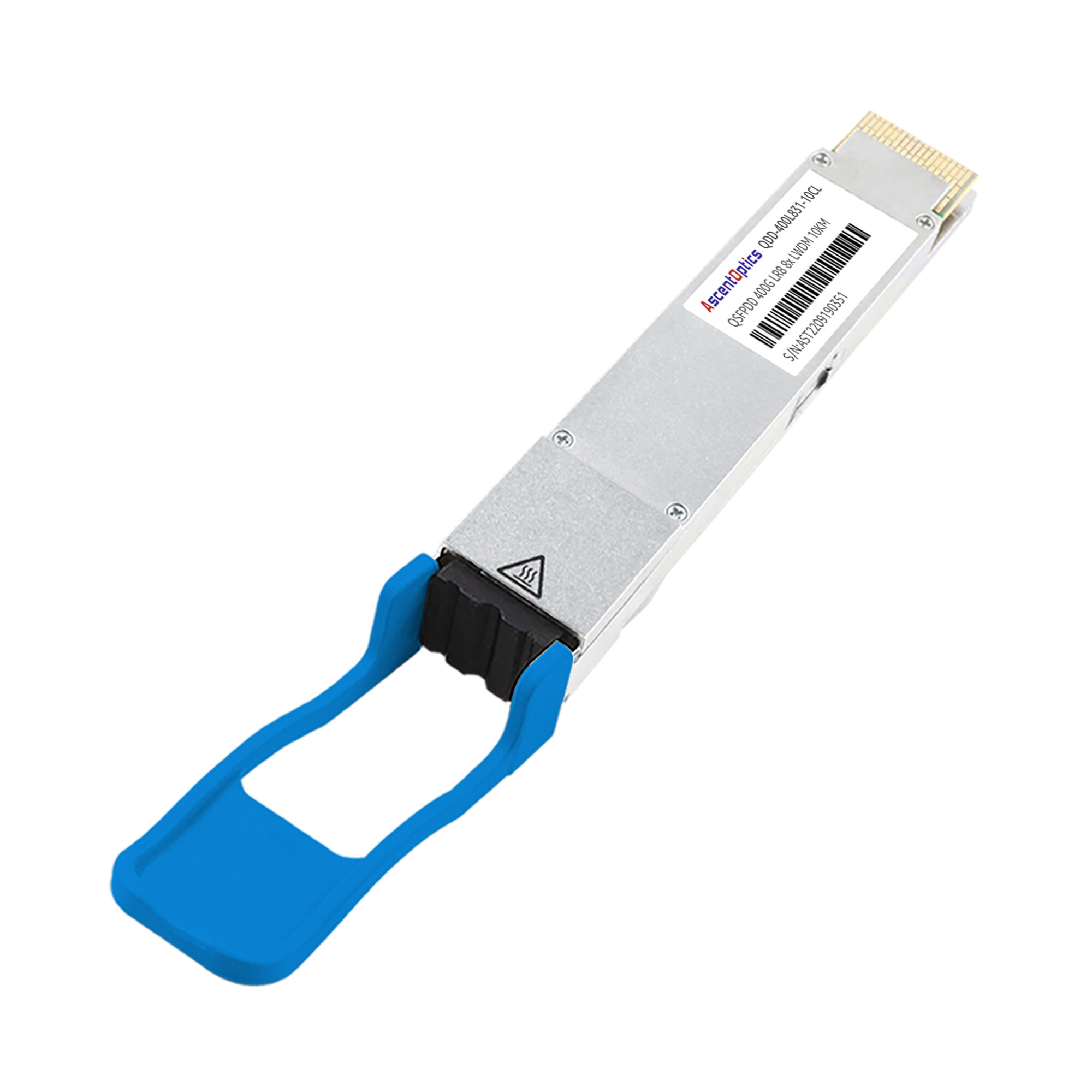
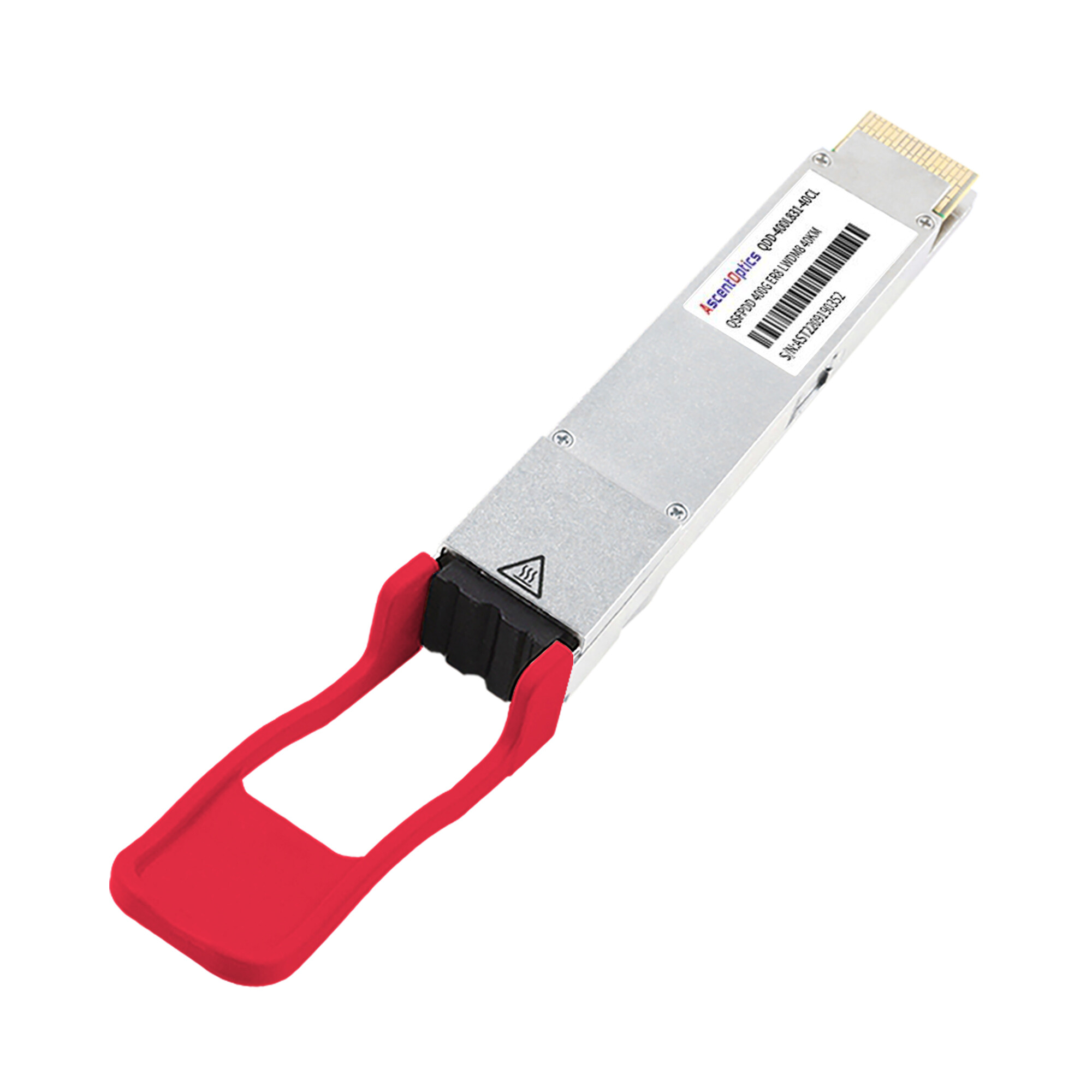
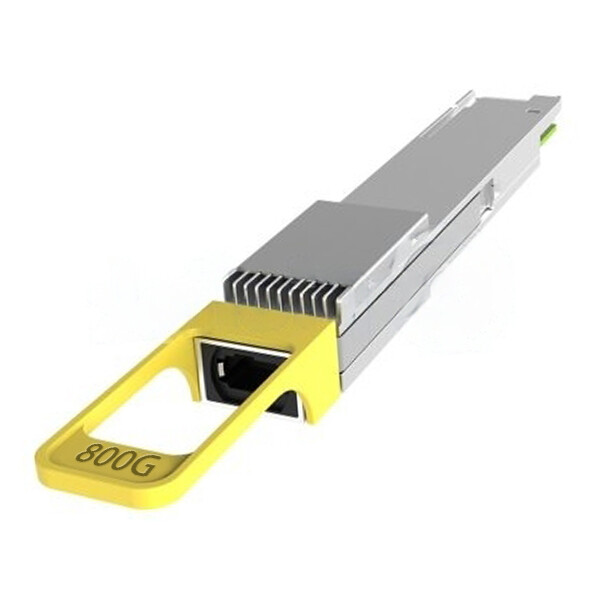
A single QSFP-DD port can move 800 Gbps in the same front-panel width as a 100G QSFP28 port. That kind of density is why hyperscale data centers, AI clusters, and telecom networks are standardizing on it. But the form factor’s flexibility also creates real engineering questions. What speeds does QSFP-DD actually support? Will it work with existing QSFP28 hardware? And which module type fits a given distance, fiber, and power budget?
What Is QSFP-DD?
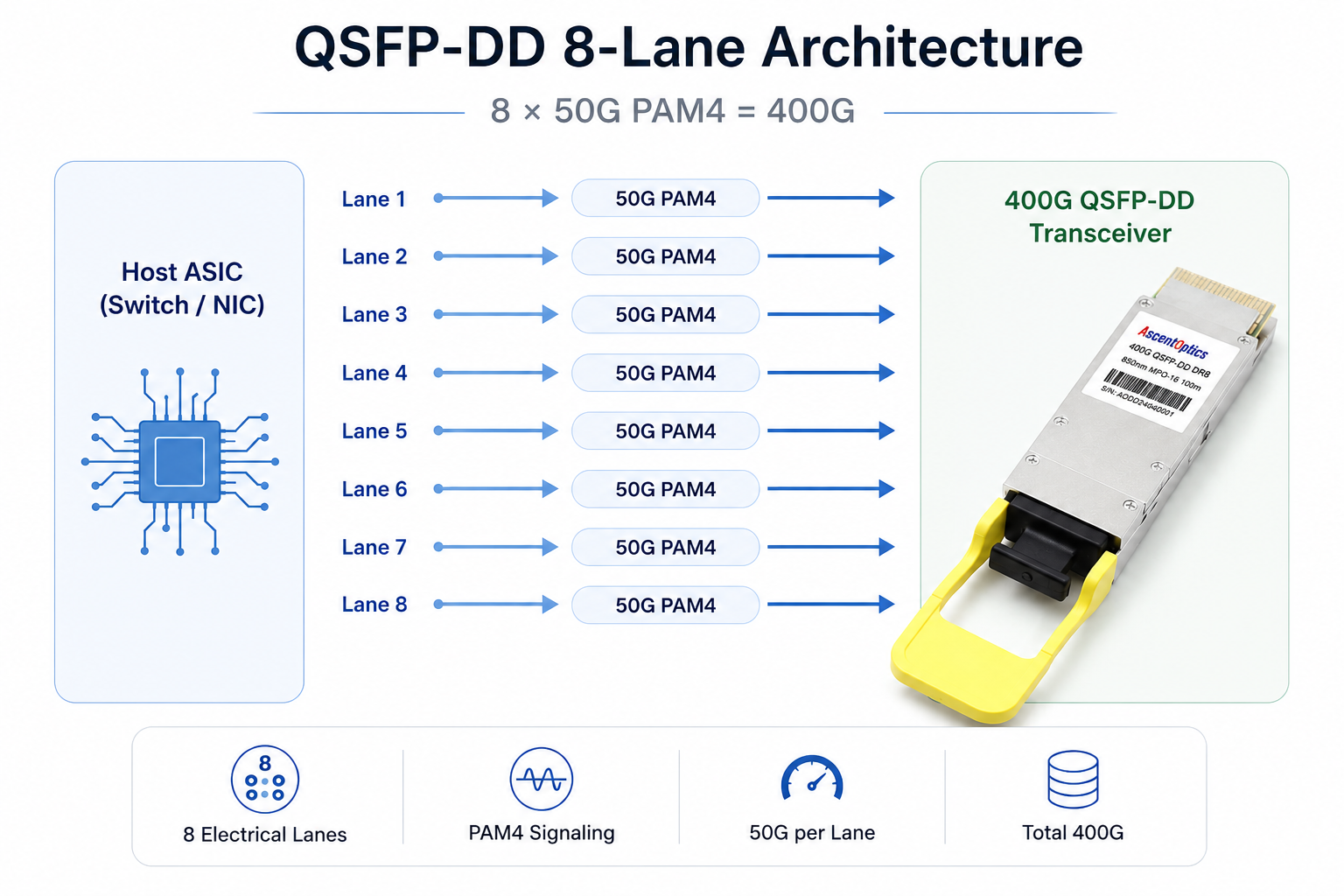
QSFP-DD stands for Quad Small Form-factor Pluggable Double Density. It is an optical transceiver module form factor designed to support 400G and 800G Ethernet in the same physical width as QSFP28. The “double density” refers to its electrical interface: eight high-speed lanes instead of the four found in earlier QSFP generations.
The key innovation is a second row of electrical contacts added behind the existing QSFP connector. This doubles the lane count without widening the module, so switch vendors can pack 400G or 800G ports into the same 1RU faceplates previously used for 100G. A QSFP-DD module is slightly deeper than QSFP28 to accommodate the extra contacts and signal routing, but the front-panel footprint stays at roughly 18.35 mm.
QSFP-DD is governed by the QSFP-DD MSA (Multi-Source Agreement) and related specifications such as SFF-8665 for mechanical dimensions and CMIS (Common Management Interface Specification) for module management. These standards ensure that modules from different vendors fit the same cage and can be managed consistently by host switches.
How QSFP-DD Works: Electrical Architecture
From Four Lanes to Eight Lanes
A QSFP28 module uses four electrical lanes to reach 100G: four lanes at approximately 25 Gbps each. QSFP-DD doubles that to eight lanes. At 400G, each lane runs at roughly 50 Gbps using PAM4 signaling. At 800G, each lane runs at roughly 100 Gbps, also using PAM4. At 800G, QSFP-DD800 typically uses eight 106.25 Gbps PAM4 lanes, providing an aggregate bandwidth of 800 Gbps.
This lane-scaling approach is what lets QSFP-DD reach higher data transmission rates without changing the front-panel width. It also means the host switch must have SerDes capable of supporting those lane rates. A switch designed only for QSFP28 cannot run QSFP-DD modules at 400G or 800G simply because the cage fits.
PAM4 Signaling and Lane Rates
Earlier QSFP generations used NRZ (Non-Return-to-Zero) modulation, which sends one bit per signal symbol. PAM4 sends two bits per symbol, doubling throughput at the same baud rate. That efficiency comes with a trade-off: PAM4 signals are more sensitive to noise and require stronger forward error correction.
| Generation |
Lanes |
Modulation |
Lane Rate |
Aggregate Rate |
| QSFP28 |
4 |
NRZ |
~25 Gbps |
100 Gbps |
| QSFP56 |
4 |
PAM4 |
~50 Gbps |
200 G |
| QSFP-DD |
8 |
PAM4 |
~50 Gbps |
400 Gbps |
| QSFP-DD800G |
8 |
PAM4 |
~100 Gbps |
800 Gbps |
FEC Requirements and Signal Integrity
At 400G and 800G, FEC (Forward Error Correction) is effectively mandatory. Most 800G links use RS(544,514) Reed-Solomon FEC, which adds overhead but compensates for the higher bit-error rates inherent to PAM4. Network engineers should not disable FEC in production environments unless the platform vendor specifically validates the link without it.
Signal integrity also depends on the host PCB, connector quality, and cable or fiber path. For 800G links, even small impedance mismatches or contaminated fiber connectors can push the bit error rate above acceptable thresholds.
QSFP-DD Backward Compatibility: What Really Works
Physical Compatibility Matrix
One of the strongest arguments for QSFP-DD is backward compatibility. A QSFP-DD cage can physically accept:
- •QSFP+ (40G)
- •QSFP28 (100G)
- •QSFP56 (200G)
- •QSFP-DD (400G)
- •QSFP-DD800 (800G)
This lets organizations deploy QSFP-DD switches now and run existing 100G QSFP28 modules during migration. When ready, they can swap in 400G or 800G QSFP-DD modules without replacing the switch.
However, the reverse is not true. A QSFP-DD module is deeper and has more electrical contacts than a QSFP28 cage can support. You cannot insert a QSFP-DD module into a standard QSFP28 port.
Electrical and Firmware Dependencies
Physical fit is only the first requirement. For a QSFP28 module to work in a QSFP-DD port, the host ASIC and firmware must support that mode. Most modern 400G/800G switches do support this backward compatibility, but it should always be verified in the platform’s hardware compatibility matrix.
Breakout modes add another layer. A 400G QSFP-DD port may support 4×100G breakout to QSFP28 or 2×200G breakout to QSFP56, but only if the switch ASIC and software support those configurations. Never assume breakout works based on the cage alone.
Common Compatibility Misconceptions
A common mistake is assuming that because QSFP-DD accepts QSFP28, any QSFP28 module will work in any QSFP-DD port. In practice, firmware revisions, vendor coding, and FEC settings can all block link-up. Another misconception is that QSFP-DD and OSFP modules are interchangeable. They are not. OSFP uses a larger form factor and has no native backward compatibility with QSFP28.
QSFP-DD Module Types and Applications
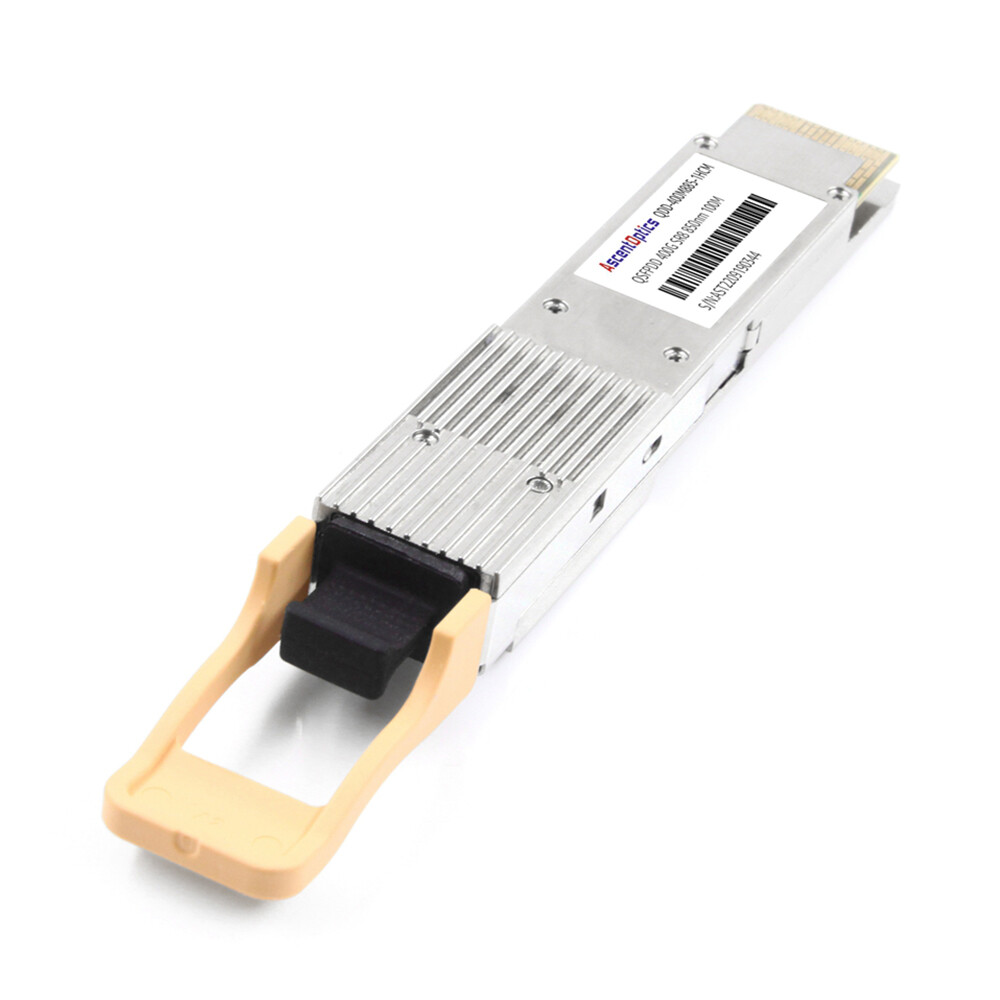
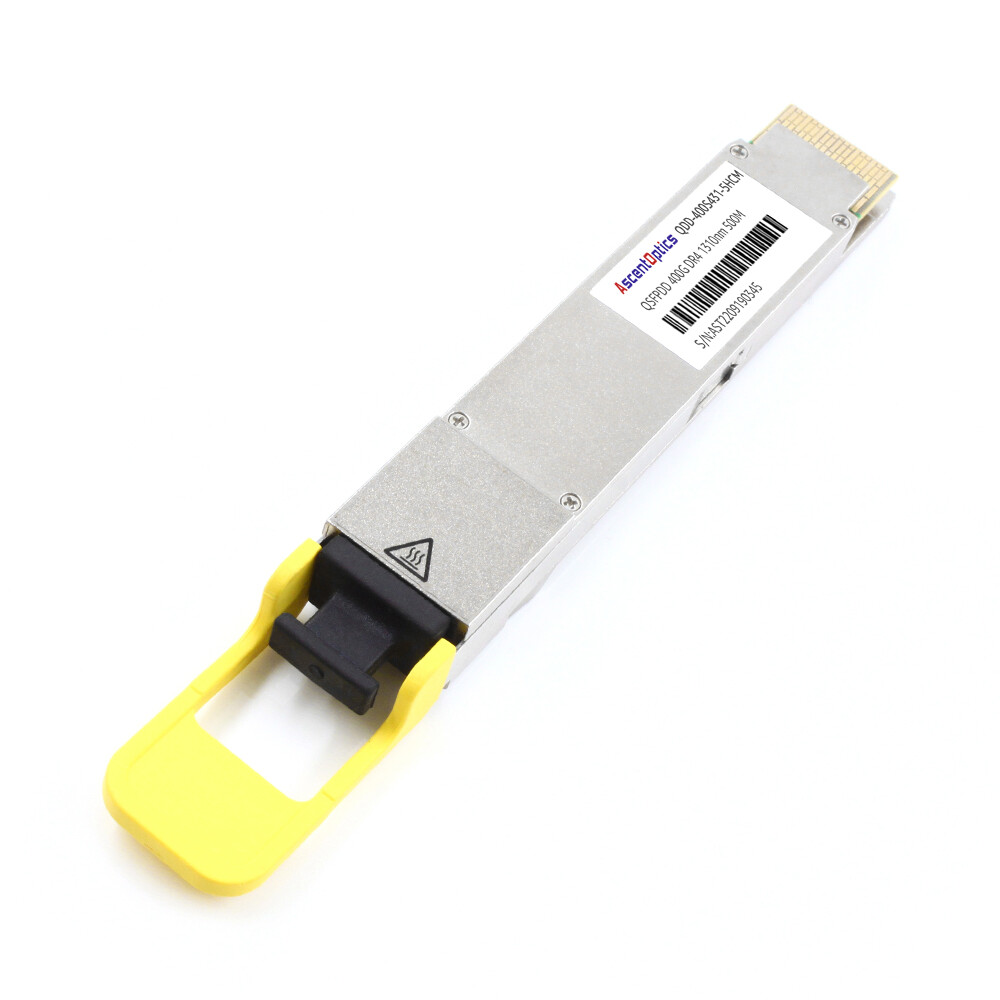
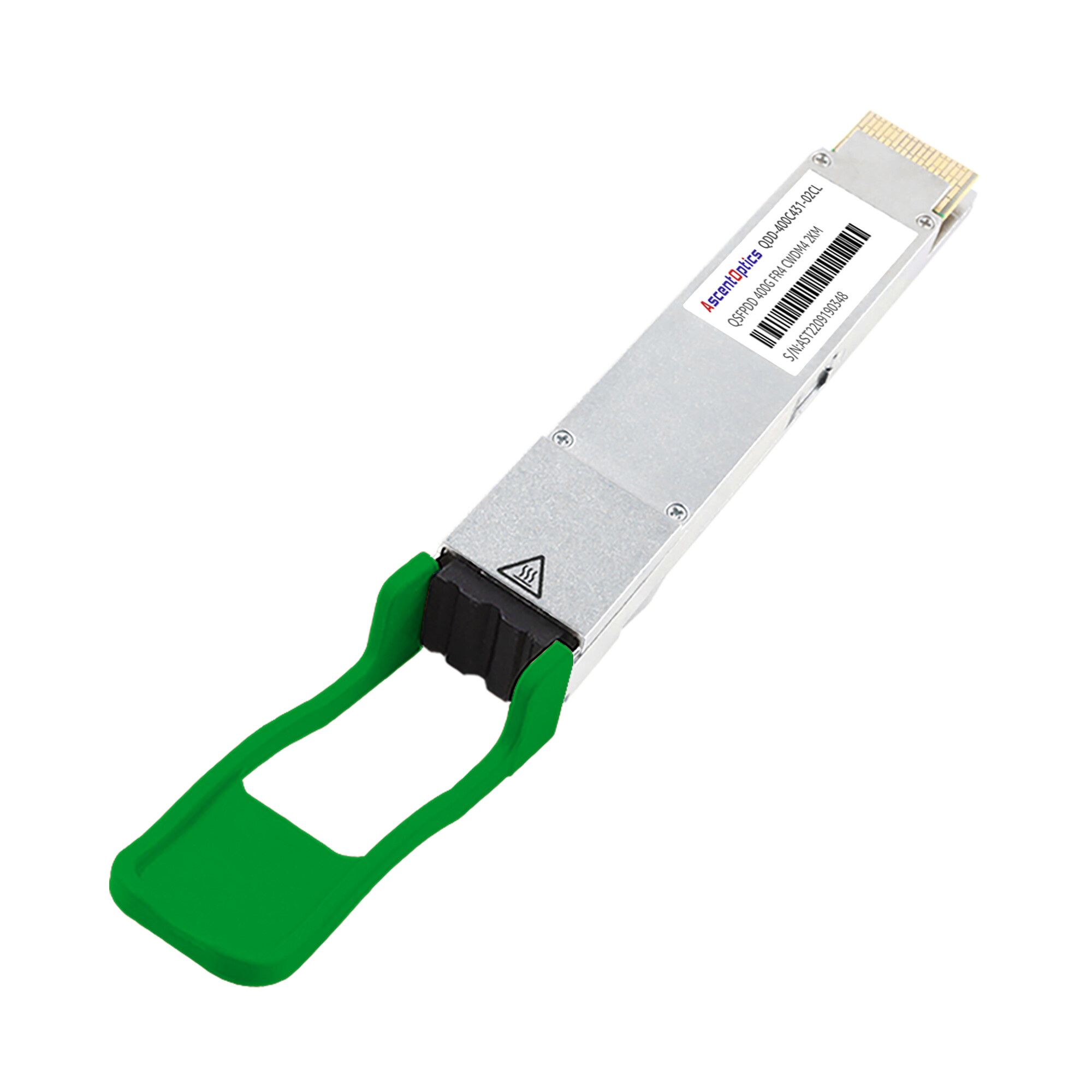
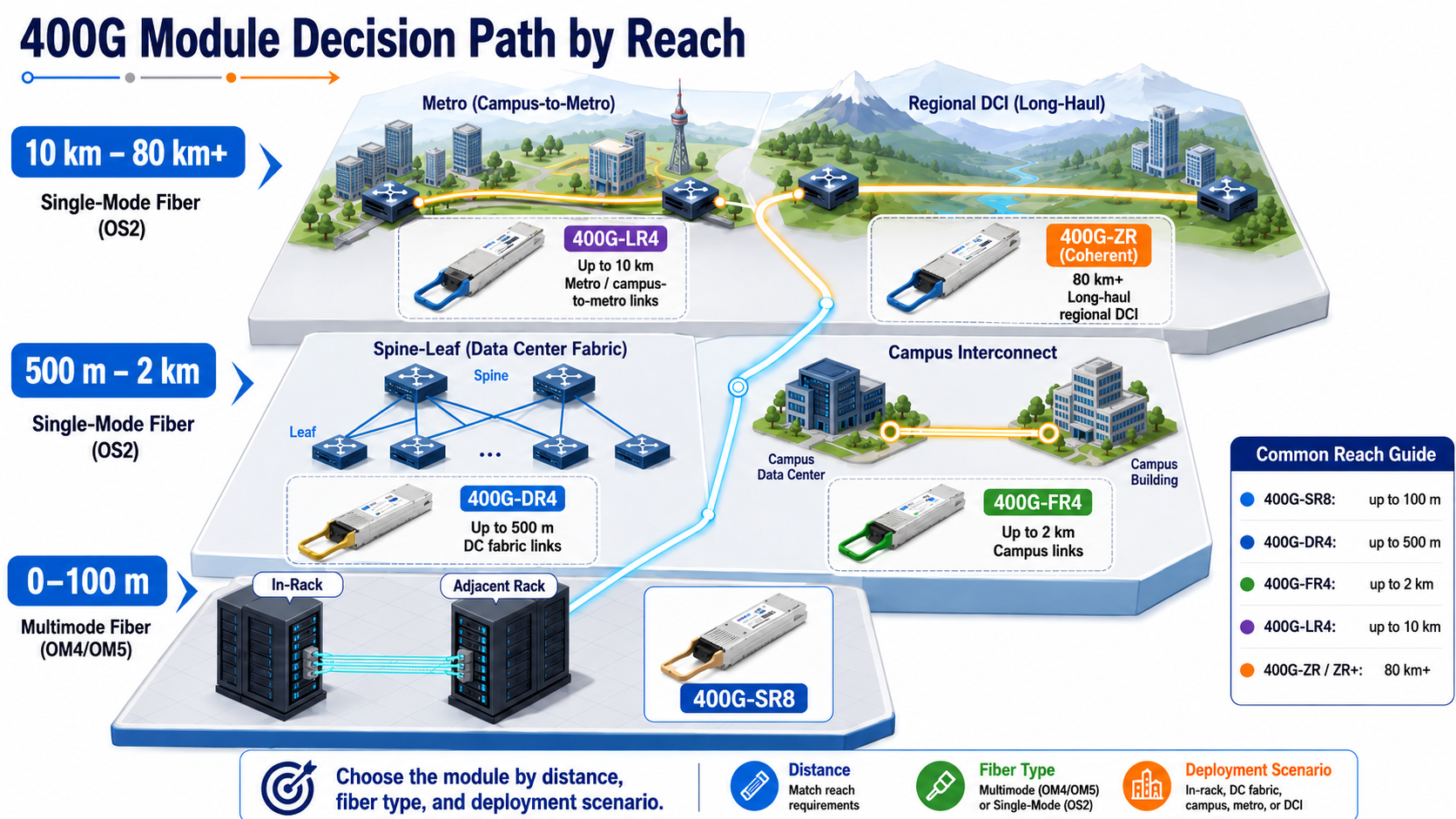
400G QSFP-DD modules are categorized by reach and fiber type, using naming conventions similar to other Ethernet optics:
| Module |
Reach
|
Fiber |
Connector |
Typical Use Case
|
| 400G-SR8 |
100 m
|
OM4/OM5 MMF |
MPO-16 |
In-rack or rack connections
|
| 400G-DR4 |
500 m
|
OS2 SMF |
MPO-12 |
Data center spine-leaf
|
| 400G-FR4 |
2 km
|
OS2 SMF |
Duplex LC |
Campus or metro DCI
|
| 400G-LR4 |
10 km
|
OS2 SMF |
Duplex LC |
Metro networks
|
| 400G-ER4 |
40 km
|
OS2 SMF |
Duplex LC |
Long-haul DCI
|
| 400G-ZR/ZR+ |
80–120+ km
|
OS2 SMF |
Duplex LC |
Coherent metro/regional
|
Choosing among these starts with distance and fiber inventory. Multimode SR8 is cost-effective for short links but cannot scale beyond 100 meters. Single-mode DR4 and FR4 dominate data center interconnects. LR4, ER4, and ZR serve telecom and DCI applications.
800G QSFP-DD800 Variants
QSFP-DD800 uses the same form factor but doubles the per-lane rate to 100 Gbps. Common variants include:
- •800G-SR8: short-reach multimode for in-rack GPU fabrics
- •800G-DR8 / 2×DR4: single-mode, supports 500 m and 800G-to-2×400G breakout
- •800G-2×FR4: dual 400G CWDM4, supports 2 km
- •800G-2×LR4: dual 400G LR4, supports 10 km
800G modules are becoming essential in AI clusters where multiple GPUs must exchange data at high throughput with minimal latency.
Coherent QSFP-DD for DCI and Telecom
Coherent QSFP-DD modules, such as 400G-ZR and ZR+, use digital signal processing to encode data in both phase and amplitude. This extends the reach to 80 km or more without dedicated transport hardware. Telecom operators use these for metro aggregation and data center interconnect, while enterprises use them to link geographically separated facilities.
Choosing the Right Module for Your Distance and Fiber
Start with the link distance. Under 100 m with multimode fiber: SR8. Between 100 m and 2 km with single-mode fiber: DR4 or FR4. Between 2 km and 10 km: LR4. Beyond 10 km: ER4 or ZR. Then confirm the switch supports the module’s power class and management interface.
QSFP-DD vs Other Form Factors
QSFP-DD vs QSFP28
QSFP28 and QSFP-DD share the same front-panel width, but QSFP-DD doubles the electrical lanes. A QSFP-DD port can run a QSFP28 module at 100G, but a QSFP28 port cannot accept a QSFP-DD module. For organizations migrating from 100G to 400G, QSFP-DD preserves existing optics investment while providing a path to higher speeds.
QSFP112 also supports 400G but uses four lanes at approximately 112 Gbps each instead of eight lanes at 50 Gbps. QSFP112 modules are physically similar to QSFP28 and consume slightly less power, but they have no native 800G upgrade path. QSFP-DD offers a clearer roadmap to 800G and beyond.
QSFP-DD vs OSFP
OSFP is a larger form factor designed for high-power 800G and future 1.6T modules. It offers more thermal headroom but no native backward compatibility with QSFP28. QSFP-DD trades some thermal capacity for compatibility and higher port density. The choice often comes down to whether the deployment is brownfield (QSFP-DD) or greenfield high-performance AI (OSFP may be preferred).
| Feature |
QSFP-DD |
QSFP28 |
QSFP112 |
OSFP |
| Max speed |
800G (QSFP-DD800) |
100G |
400G |
800G / 1.6T |
| Lanes |
8 |
4 |
4 |
8 |
| Lane rate |
50G/100G PAM4 |
25G NRZ/PAM4 |
112G PAM4 |
100G PAM4 |
| Width |
~18.35 mm |
~18.35 mm |
~18.35 mm |
~22.58 mm |
| Backward compat. |
QSFP+/28/56 |
QSFP+ |
QSFP28 |
None (adapter required) |
| Best for |
Brownfield 400G/800G |
100G legacy |
Greenfield 400G AI |
High-power 800G/1.6T |
Power, Thermal, and Mechanical Considerations
QSFP-DD Power Classes
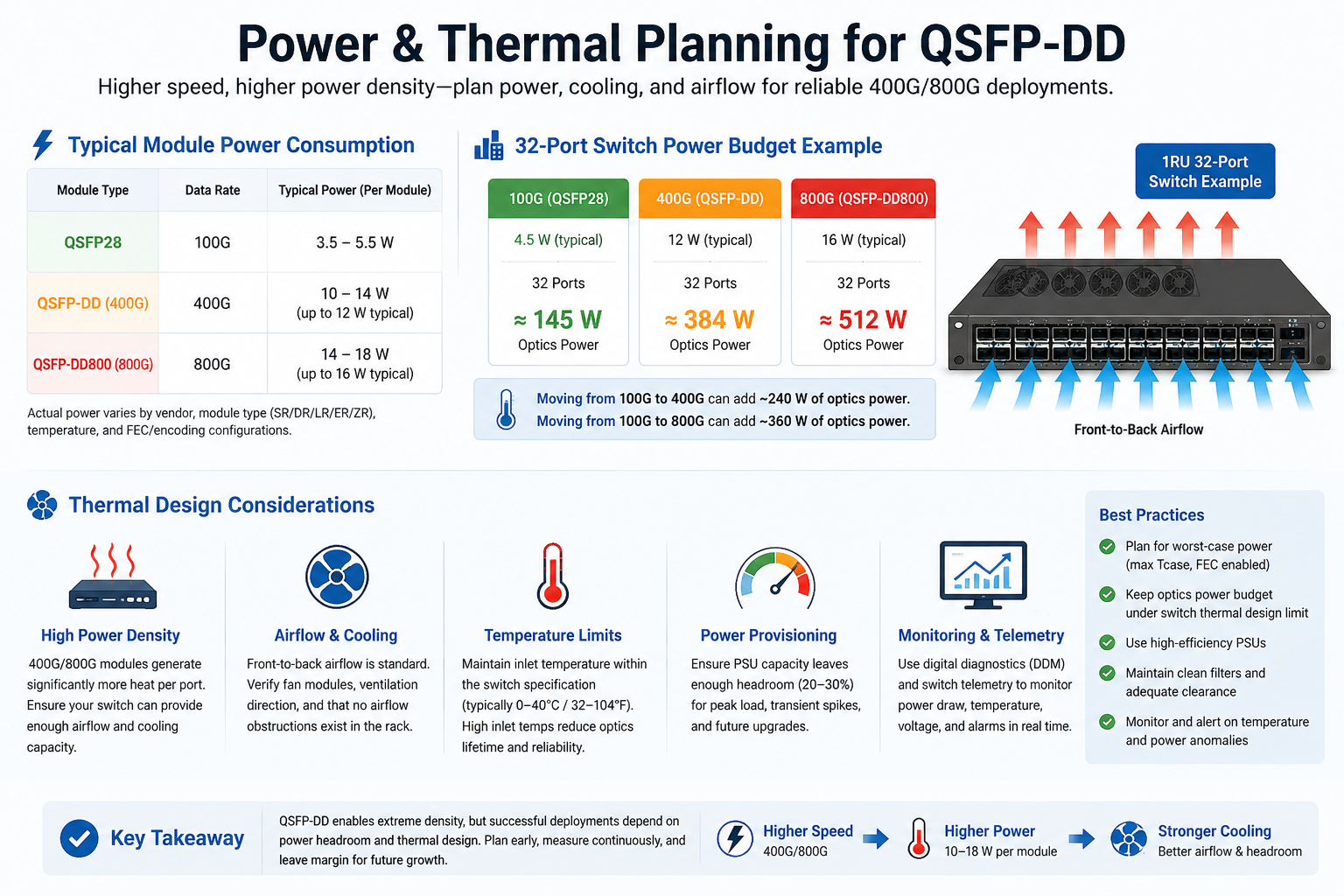
QSFP-DD modules are grouped into power classes that define maximum power draw:
- •Class 4: up to 8.5 W
- •Class 6: up to 10 W
- •Class 7: up to 12 W
- •Class 8: up to 15 W or higher
Standard 400G direct-detect modules typically fall into Class 6 or 7. Coherent ZR modules and 800G modules often require Class 8 or higher. Always check the switch platform’s power class support before ordering modules.
Rack-Scale Thermal Impact
Power adds up quickly at the switch level. A 32-port 400G switch loaded with 12 W modules can draw over 380 W for optics alone. At 800G with 16 W modules, the same switch exceeds 500 W. That does not include the switch ASIC, power supply losses, or cooling.
When planning a QSFP-DD deployment, thermal design must account for worst-case module power, not average. Data centers with limited rack power or airflow may need to limit port fill or choose lower-power variants.
Cooling and Airflow Requirements
Most QSFP-DD switches use front-to-back or back-to-front airflow. Modules with integrated heat sinks or finned tops improve thermal dissipation. In high-density deployments, blanking panels should cover empty ports to maintain proper airflow and prevent hot spots.
QSFP-DD Cabling and Breakout Options
DAC and AOC Cables
For short links under 3 meters, passive DAC cables are the lowest-cost, lowest-power option. Active DAC and AOC cables extend reach to 7–30 meters, depending on the type.
Fiber Cables and Connectors
QSFP-DD modules use several connector types:
- •MPO-16: common for 400G/800G SR8 multimode
- •MPO-12: used for DR4/DR8 single-mode
- •Duplex LC: used for FR4, LR4, ER4, and ZR coherent modules
Cable selection must match both the module and the fiber infrastructure already in place.
Breakout Configurations
Breakout cables let one high-speed port fan out to multiple lower-speed ports. Common QSFP-DD breakout options include:
- •400G QSFP-DD to 4×100G QSFP28: connects one 400G port to four 100G ports
- •400G QSFP-DD to 2×200G QSFP56: connects one 400G port to two 200G ports
- •800G QSFP-DD to 2×400G QSFP-DD: connects one 800G port to two 400G ports
Breakout is useful during migration, when new 400G switches must connect to existing 100G or 200G equipment. It is also useful in AI clusters where one 800G spine port feeds multiple 400G leaf switches.
Deployment Scenarios and Migration Strategy
Data Center Spine-Leaf Upgrades
In a spine-leaf fabric, QSFP-DD is typically used at the spine layer for 400G or 800G links between leaf switches. Leaf switches may remain at 100G or 200G during migration, connected to the spine via breakout cables. This staged approach lets operators upgrade capacity without replacing every device at once.
AI and HPC Cluster Interconnects
AI training clusters require high bandwidth between GPUs and between compute nodes. 800G QSFP-DD800 modules are increasingly used in these fabrics because they deliver the needed throughput in a form factor that fits existing 400G hardware plans. Low-power variants and linear pluggable optics (LPO) are also gaining attention for latency-sensitive training workloads.
Telecom and DCI Applications
Telecom operators use coherent QSFP-DD modules for metro aggregation and data center interconnect. A single 400G-ZR module can replace a dedicated transponder shelf for links up to 80 km or more, reducing equipment count and operational complexity.
Why QSFP-DD Matters for AI Networks
Modern AI training clusters generate massive east-west traffic between GPUs, storage systems, and accelerator fabrics. QSFP-DD enables 400G and 800G connectivity while preserving front-panel density, making it a preferred form factor for AI data centers built on Ethernet or InfiniBand architectures.
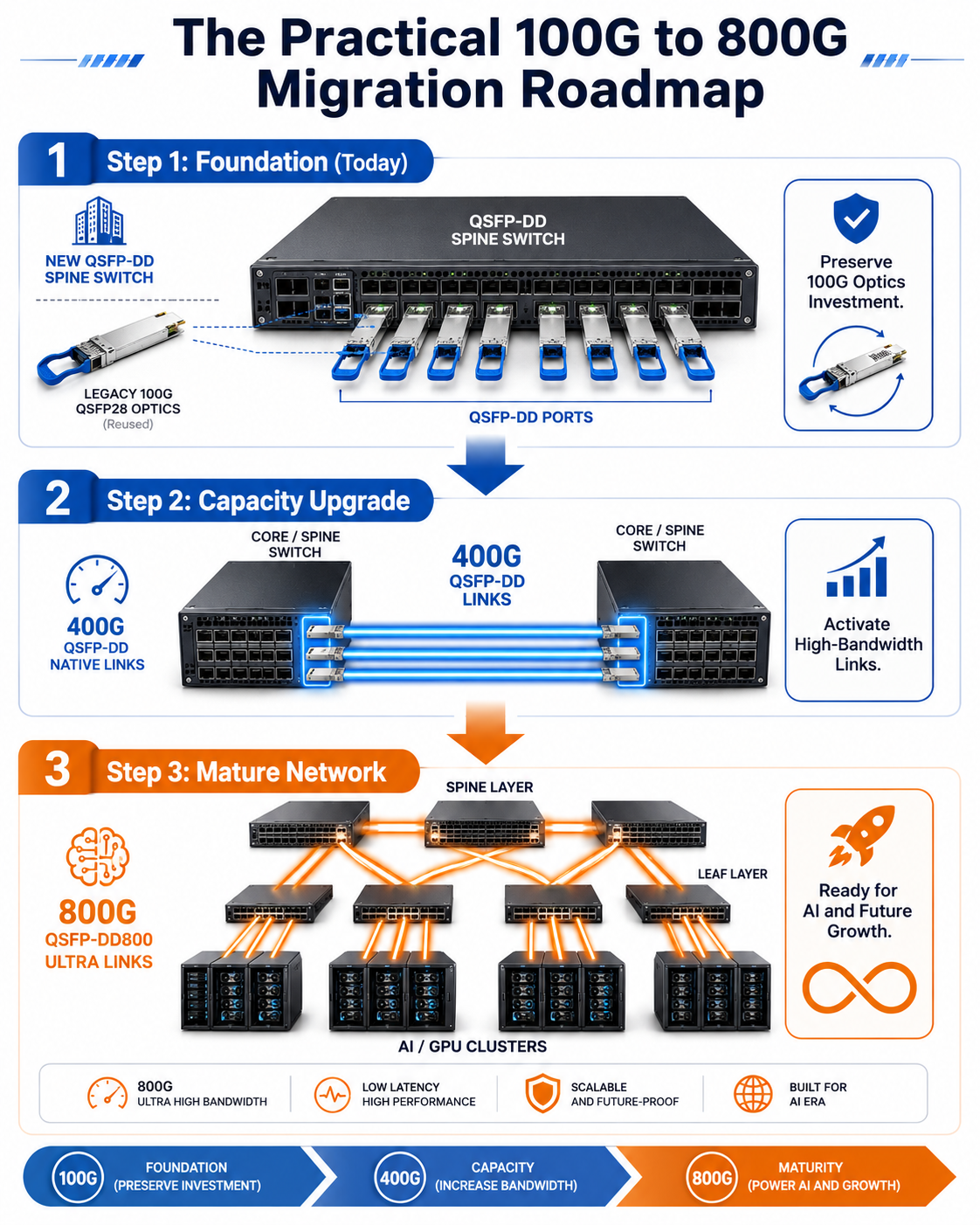
Migration from 100G/200G to 400G/800G
A practical migration path looks like this:
- 1. Deploy QSFP-DD switchesin the spine layer.
- 2. Run existing QSFP28 100G modules in QSFP-DD ports where needed.
- 3. Add 400G QSFP-DD links between spine switches first.
- 4. Upgrade leaf switches over time, using breakout cables to maintain connectivity.
- 5. Introduce 800G QSFP-DD800 when bandwidth and host ASIC support justify it.
QSFP-DD Deployment Best Practices
Verify Host Platform Support
Before ordering modules, confirm the switch or NIC supports the specific QSFP-DD variant, power class, and breakout mode. Vendor compatibility matrices are the authoritative source. MSA compliance helps, but host-specific firmware validation still matters.
Plan for Power and Cooling
Model optics power at full port fill and worst-case module power. Add headroom for future 800G upgrades. If the data center has strict per-rack power limits, plan port fill accordingly.
Test Before Full Rollout
Run validation tests on a small set of links before mass deployment. Check bit error rate, DOM/Digital Diagnostic Monitoring readings, and FEC corrected/uncorrected counters. Catches issues early before they affect production traffic.
Use Compatible Cables and Connectors
Mismatched fiber connectors or incorrect polarity in MPO cables are common deployment errors. Verify cable part numbers against module requirements and test cable continuity before installation.
Frequently Asked Questions
What is QSFP-DD?
QSFP-DD stands for Double Density Quad Small Form-factor Pluggable, which is the name of the specification of a double-density quad-channel small form factor pluggable optical transceiver. This technology has been developed by the QSFP MSA Alliance, and this latest technology comes up with twice as many channels as compared to the existing four channels of QSFP. QSFP-DD is the dominant form factor for 400G and 800G networking, while future 1.6T deployments are increasingly moving toward OSFP-XD and next-generation form factors.
Do the form factors of QSFP-DD and regular QSFP have the same form?
They are perfectly compatible physically and can be easily plugged into each other’s slots. They also increase the number of internal electrical paths by doubling because when the ordinary QSFP contains only 4 high-speed differential lanes, the QSFP-DD includes 8 high-speed lanes.
What are the bandwidths supported by mainstream QSFP-DD modules?
The two mainstreams are 400G QSFP-DD and 800G QSFP-DD, while the latest generation supports 1.6T QSFP-DD. From the perspective of channel modulation, it can be categorized as PAM4 and NRZ signaling systems.
How does 800G QSFP-DD get 800G bandwidth?
This is through 8-channel × 100G PAM4, with a single-channel PAM4 bandwidth of 100Gbps, and thus giving the total 800Gbps bandwidth of the eight channels. 400G has 8 channels × 50G PAM4.
Is a QSFP-DD able to fit in a regular QSFP switch port?
No. A QSFP-DD module cannot be inserted into a standard QSFP28 port because the QSFP28 cage lacks the required mechanical depth and electrical contacts.
Is QSFP-DD better than OSFP?
Neither is universally better. QSFP-DD offers superior backward compatibility and higher front-panel density, while OSFP provides greater thermal headroom for future 1.6T and AI networking applications.
Can QSFP-DD support InfiniBand?
Yes. QSFP-DD is used in both Ethernet and InfiniBand ecosystems. Modern NDR and XDR InfiniBand platforms use QSFP-DD-based optical modules and cables for high-bandwidth GPU interconnects.
What is the difference between QSFP-DD and QSFP112?
QSFP-DD uses eight electrical lanes and supports up to 800G, while QSFP112 uses four 112G PAM4 lanes and typically supports 400G operation.
Conclusion
QSFP-DD has become the dominant form factor for 400G and 800G optical networking because it combines high lane density with backward compatibility. The same port can run 100G QSFP28 during migration, 400G QSFP-DD as demand grows, and 800G QSFP-DD800 when the host platform supports it.
The key takeaways are simple but important. Match the module variant to your distance and fiber type. Verify host ASIC, firmware, and power class support. Plan rack-level thermal and power budgets for full port fill. And use breakout cables strategically during migration to avoid stranding existing equipment.
Post Views: 2,149