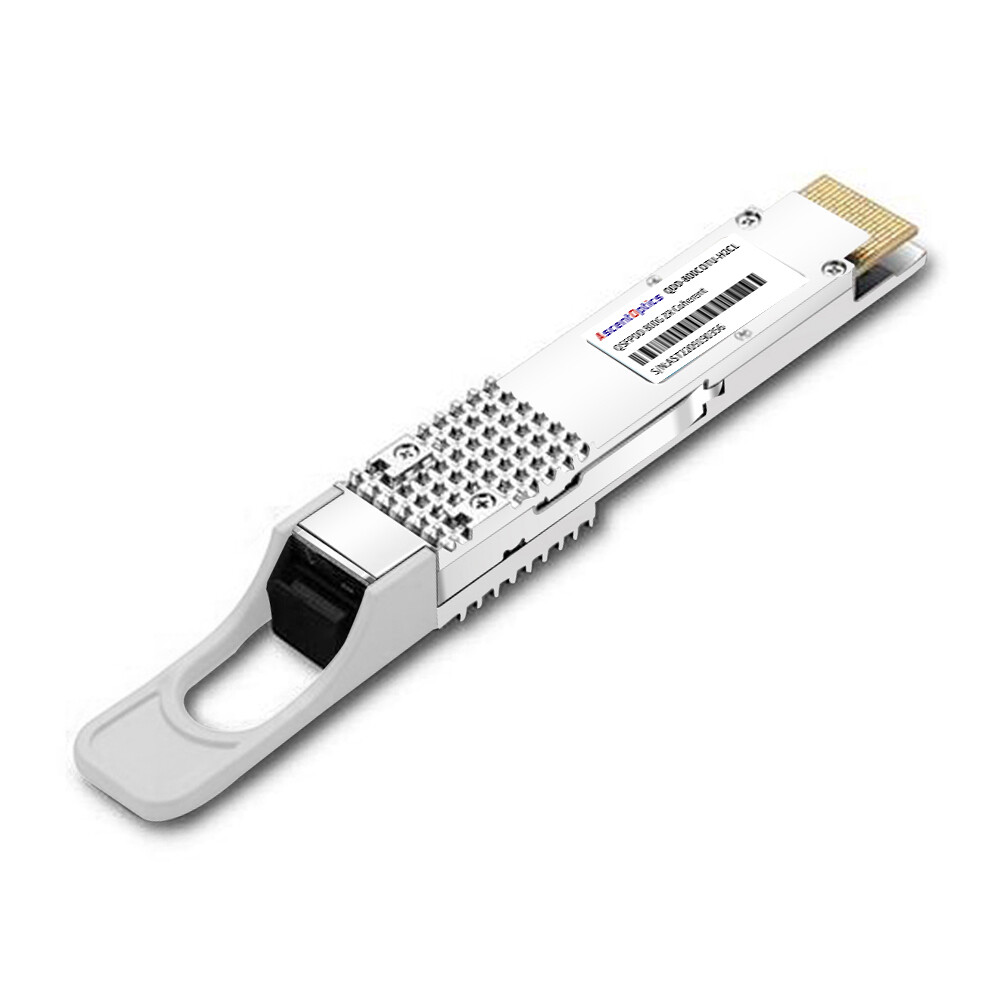
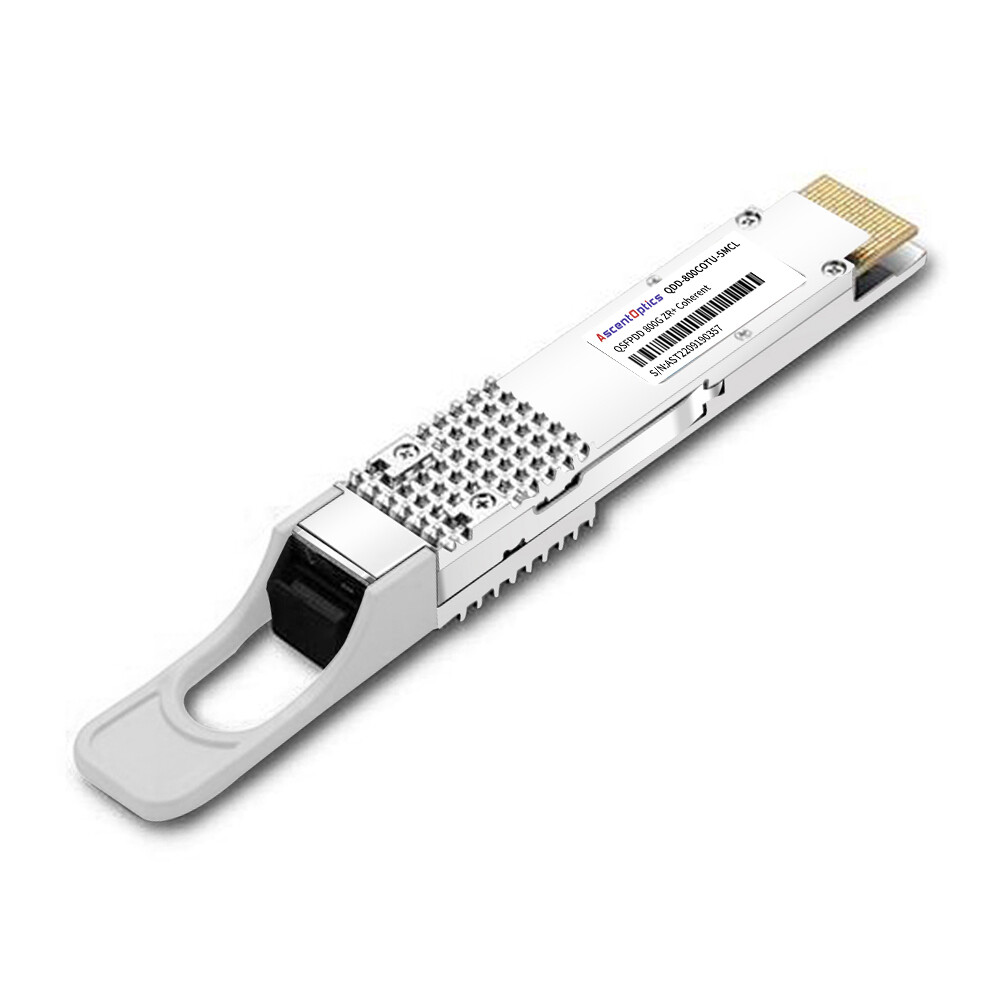
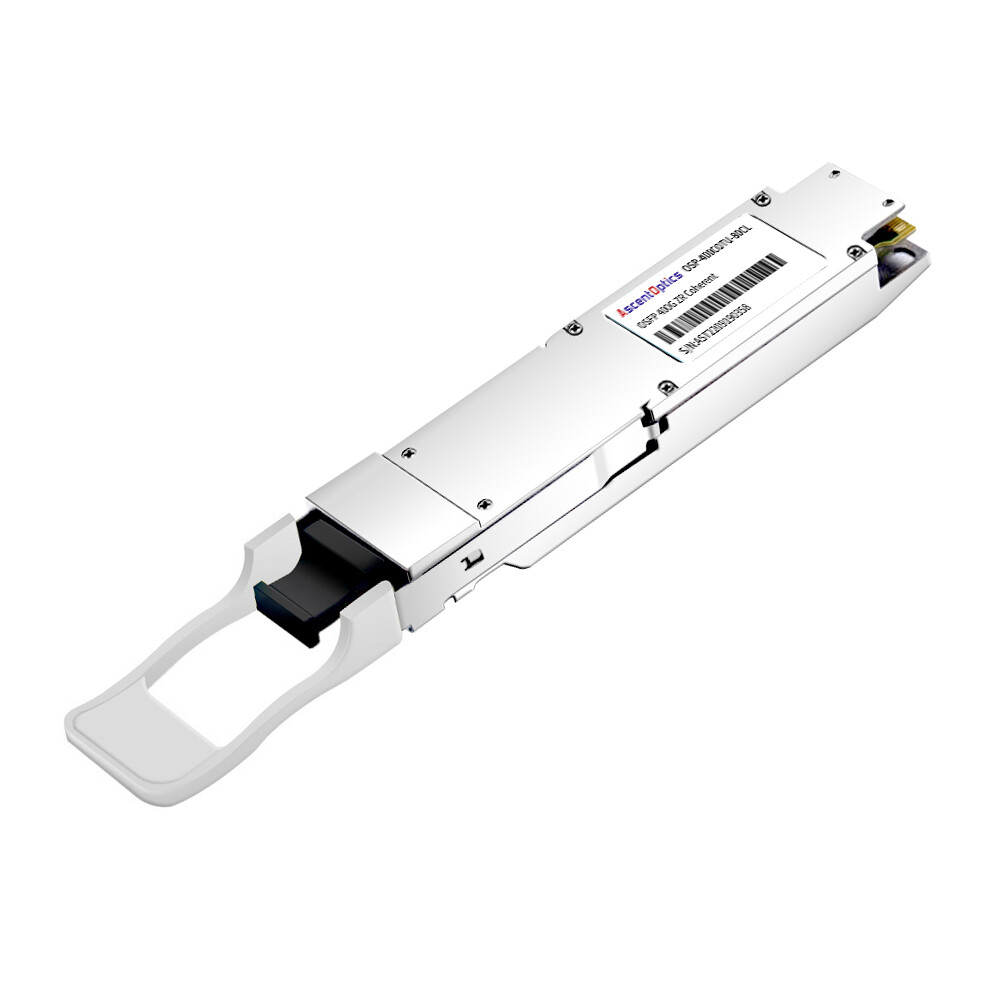
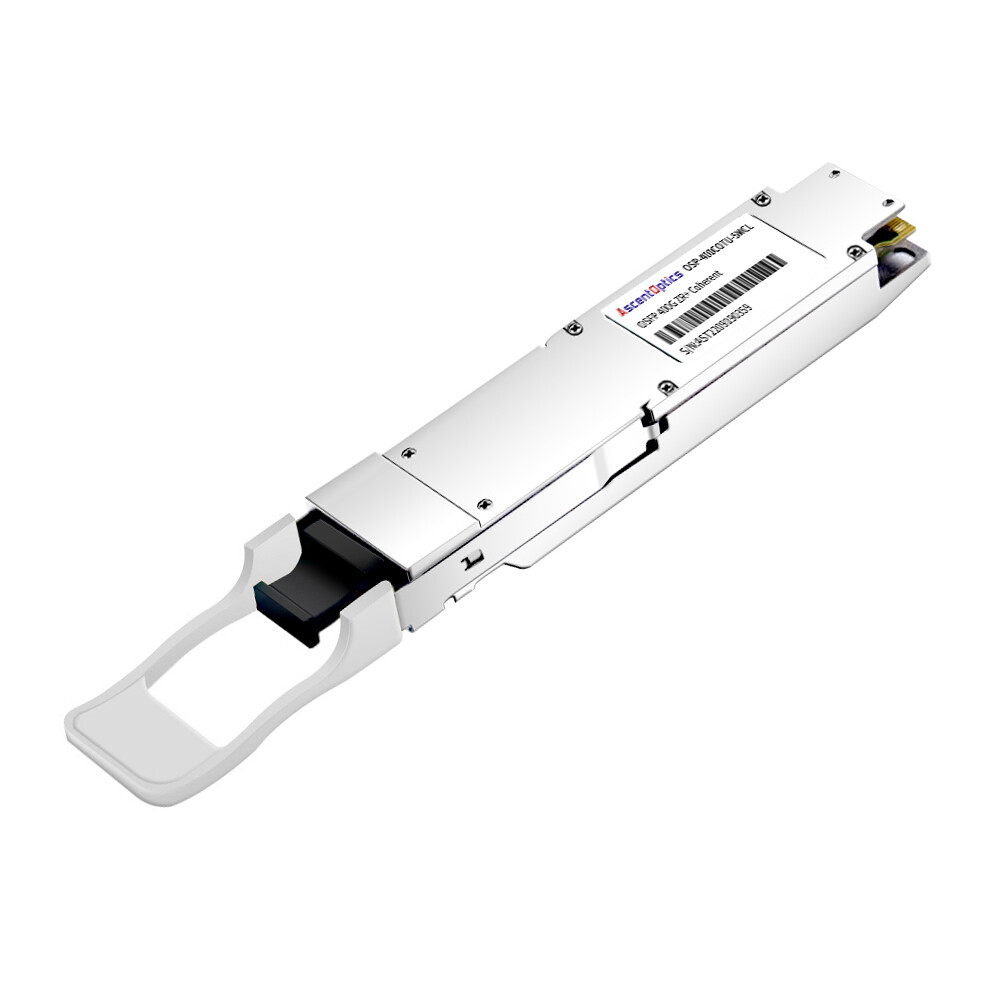
In 2026, driven by the surging demand for 800G/1.6T modules and the maturation of silicon photonics technology, coherent optical module pricing is exhibiting a divergent pattern: prices for high-end products remain firm, while those for mid-range products are trending downward.
As 400G ZR products continue moving toward wider adoption, pricing pressure is increasing due to higher production volumes and a more competitive supplier ecosystem. Meanwhile, next-generation 800G coherent modules remain positioned as premium solutions.
As the localization of supply chains accelerates, further disrupting traditional pricing structures. The expansion of global and regional suppliers is creating more competitive pricing dynamics in the coherent optics market. Meanwhile, the competition between pluggable and CPO (Co-Packaged Optics) technology paths is introducing new uncertainties regarding future price trends.
What Is a Coherent Optical Module?
A coherent optical module is a pluggable transceiver that uses coherent detection rather than simple intensity modulation. Instead of only switching light on and off, it encodes data onto the amplitude, phase, and polarization of the optical carrier. Modern coherent modules combine advanced modulation formats, high-speed ADCs, DSP-based compensation, and forward error correction (FEC) to overcome fiber impairments. A digital signal processor (DSP) at both ends compensates for impairments such as chromatic dispersion and polarization mode dispersion.
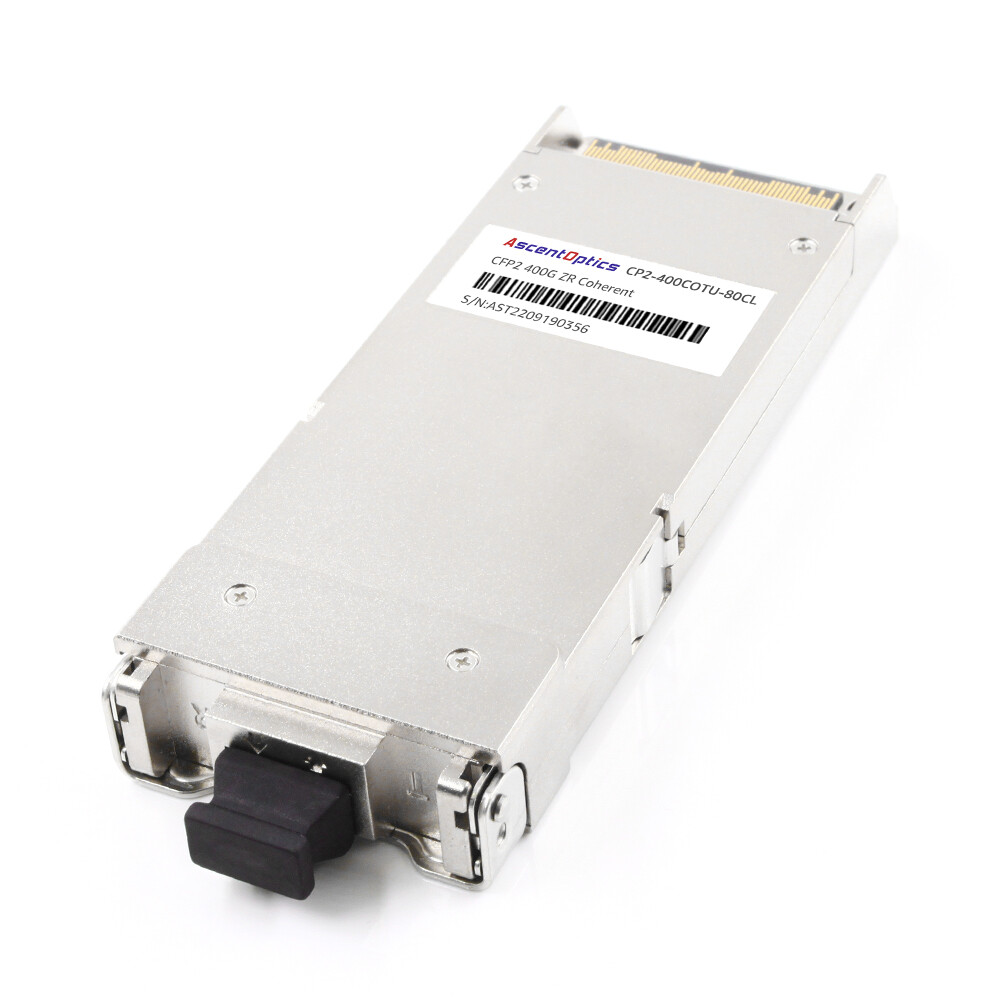
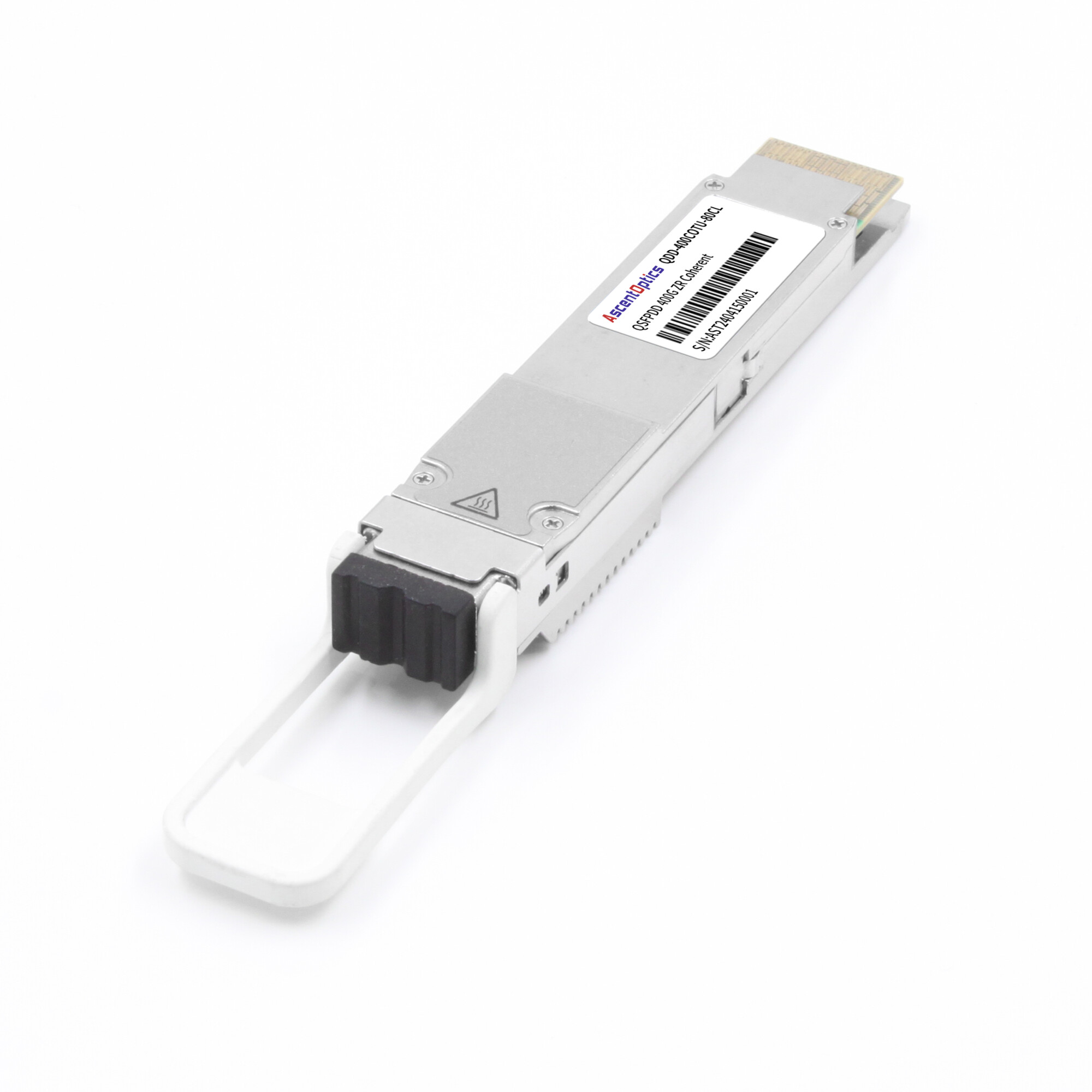
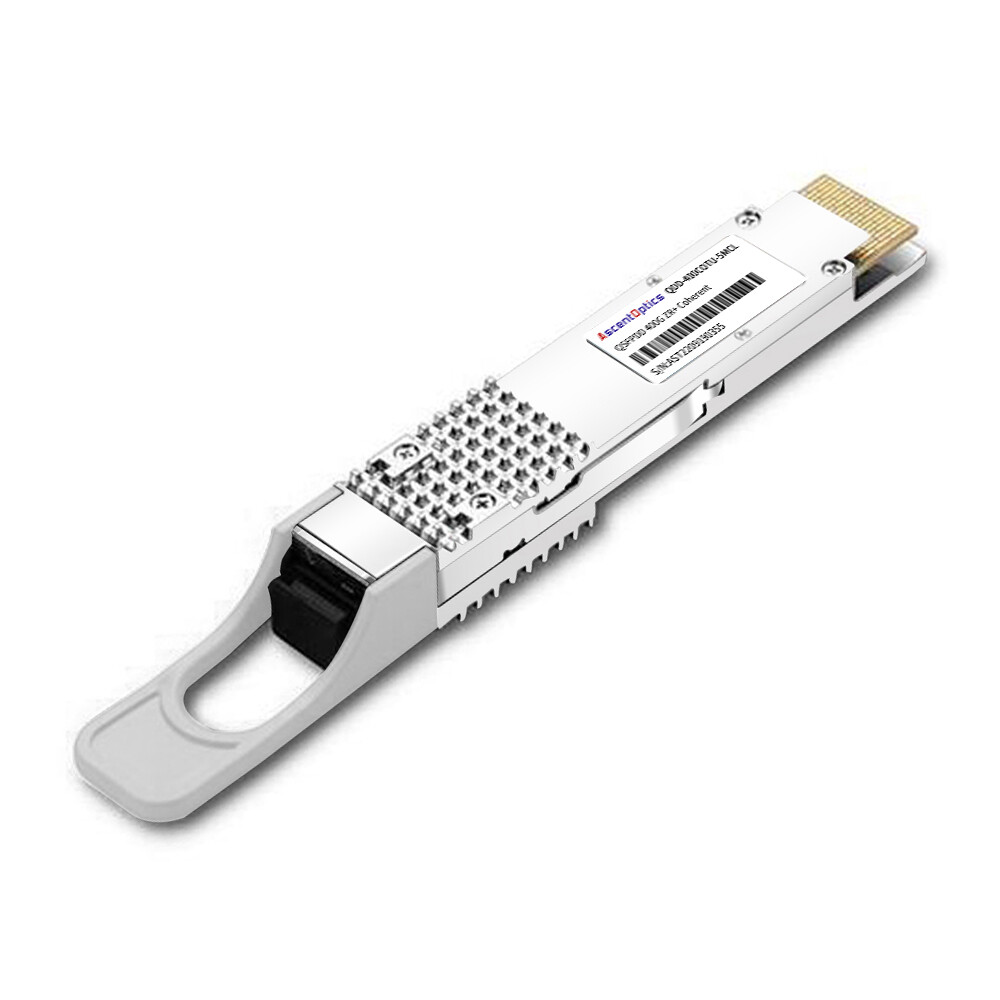
This approach makes coherent optics ideal for high-capacity, long-distance links. Common standards include 400ZR, OpenZR+, and the emerging 800ZR. Form factors range from CFP2-DCO for 100G/200G transport to QSFP-DD and OSFP for 400G/800G router and switch ports.
The key takeaway for buyers is this: coherent modules deliver 100G to 800G per wavelength over 80 km to more than 1,000 km. That performance comes at a premium over short-reach direct-detect optics, but the gap is not random. It is driven by specific components and manufacturing steps.
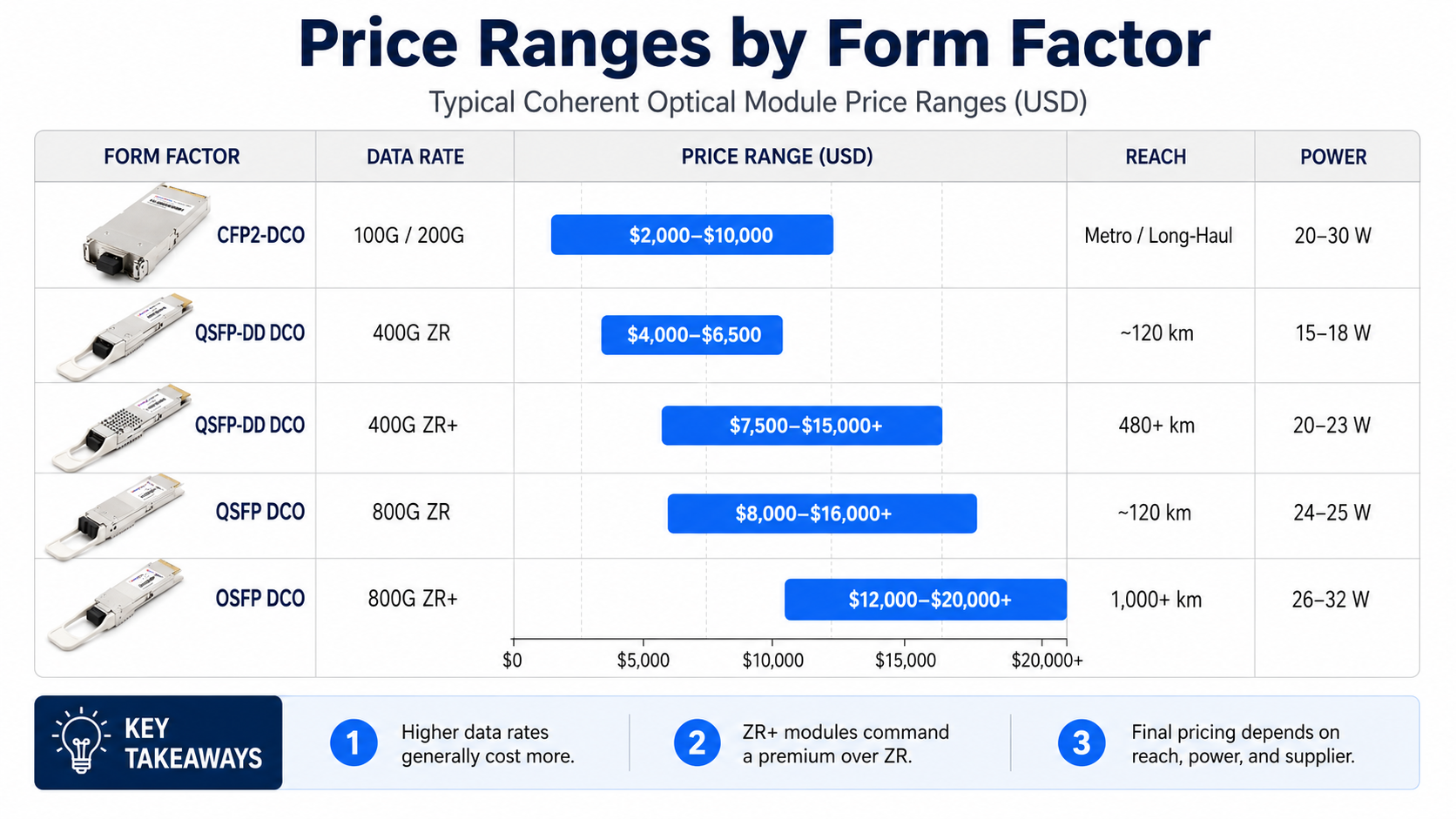
Coherent Optical Module Price Ranges by Form Factor
Public pricing for coherent optics is fragmented. Market research firms publish average selling prices, while distributors and compatible vendors list unit prices online.
| Form Factor |
Data Rate |
Typical Price Range |
Reach |
Power |
| CFP2-DCO |
100G/200G |
$2,000–$10,000 |
Metro/long-haul |
20–30 W |
| QSFP-DD DCO 400G ZR |
400G |
$4,000–$6,500 |
~120 km |
15–18 W |
| QSFP-DD DCO 400G ZR+ |
400G |
$7,500–$15,000+ |
480+ km |
20–23 W |
| OSFP DCO 800G ZR |
800G |
$8,000–$16,000+ |
~120 km |
24–25 W |
| OSFP DCO 800G ZR+ |
800G |
$12,000–$20,000+ |
1,000+ km |
26–32 W |
For procurement teams, the most useful comparison is usually not the average. It is the price for the exact form factor, reach, and standard your network requires. A 400G ZR module for an approximately 100 km DCI link is a very different purchase from a 200G CFP2-DCO module for a 500 km metro ring.
Why Coherent Optical Modules Cost More Than Direct-Detect Modules
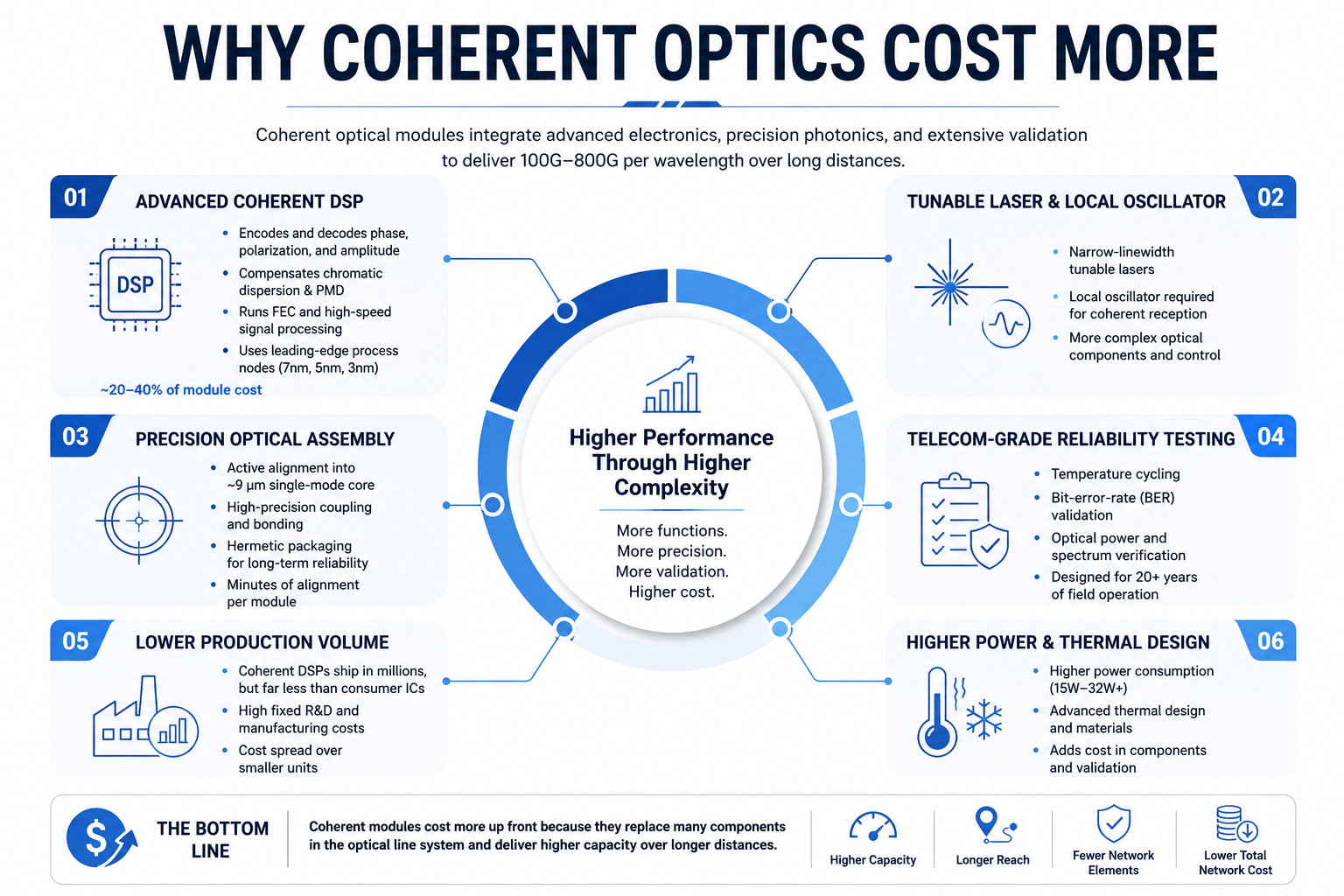
Coherent optical modules typically cost more than direct-detect modules because they integrate more advanced optical components, high-performance digital signal processors (DSPs), and complex signal-processing technologies.
Unlike direct-detect modules that mainly detect optical power variations, coherent modules use advanced modulation formats, coherent receivers, high-speed ADCs, and DSP algorithms to recover signals while compensating for optical impairments such as chromatic dispersion and polarization effects. These additional components significantly increase design complexity, manufacturing requirements, and testing costs.
This is the central pricing story of coherent optics. Unit cost is high because the module does more. The bill of materials includes:
- •Advanced DSP silicon: The DSP is one of the most expensive components in coherent modules, integrating high-speed signal processing, dispersion compensation, and FEC functions. Advanced semiconductor processes help improve performance and power efficiency.
- •Tunable laser and local oscillator: Coherent modules need narrow-linewidth tunable lasers and a local oscillator at the receiver. These optical components are more complex than the fixed lasers used in direct-detect optics.
- •Precision assembly: Coupling light into a single-mode fiber core roughly 9 microns wide requires active alignment and hermetic packaging. Each module spends minutes in alignment stations.
- •Reliability testing: Telecom-grade modules must operate for 20 years or more. Testing includes temperature cycling, bit-error-rate verification, and optical power validation.
- •Lower volumes: Coherent DSPs ship in millions of units annually, but that is small compared to consumer electronics. Fixed R&D and fab costs are spread across fewer units.
Power consumption also affects operating cost. A 400G ZR QSFP-DD module typically draws 15–18 W, while a ZR+ variant can reach 20–23 W. Direct-detect 400G modules often use 8–12 W. For large deployments, that difference shows up in cooling and power budgets.
OEM vs. Compatible Coherent Module Pricing
One of the biggest variables in coherent optical module price is where you buy. OEM list prices can be shockingly high, but they are not always what large customers actually pay. Third-party compatible modules offer a lower entry point, though they come with their own considerations.
| Source |
Example Part |
Listed Price (USD) |
Notes |
| Cisco (list) |
QDD-400G-ZR-S |
~$110,900 |
List price; partner discounts are common |
| NADDOD (compatible) |
Cisco QDD-400G-ZR-S Compatible |
~$6,499 |
≤40 km unamplified, ≤18 W |
| FiberMall |
QSFP-DD-400G-DCO-ZR |
Quote-based |
<16 W, DP-16QAM |
| Pivotal Optics |
QDD-400G-ZR-PO |
~$9,780 |
120 km unamplified |
| NADDOD |
Juniper QDD-400G-ZR-M Compatible |
~$7,499 |
OpenZR+, 21 W typical |
The Cisco list price above is not what most enterprises pay. List prices exist for catalog and partner discounting purposes. Real OEM pricing is negotiated based on volume, relationship, and support terms. Still, the gap between list and compatible pricing explains why procurement teams increasingly evaluate third-party options.
Compatible modules from established suppliers can deliver equivalent optical performance because many conform to the same MSA and IEEE standards as OEM parts. The trade-offs usually involve warranty terms, firmware support, and interoperability validation. For mission-critical transport networks, some buyers prefer the OEM support model. For cost-sensitive DCI and enterprise deployments, compatible modules often make sense.
Key question: Does your organization need the OEM’s full support ecosystem, or can a standards-compliant compatible module meet the same link budget under your own sparing and testing regime? Answering that question honestly will save more money than chasing the lowest unit price.
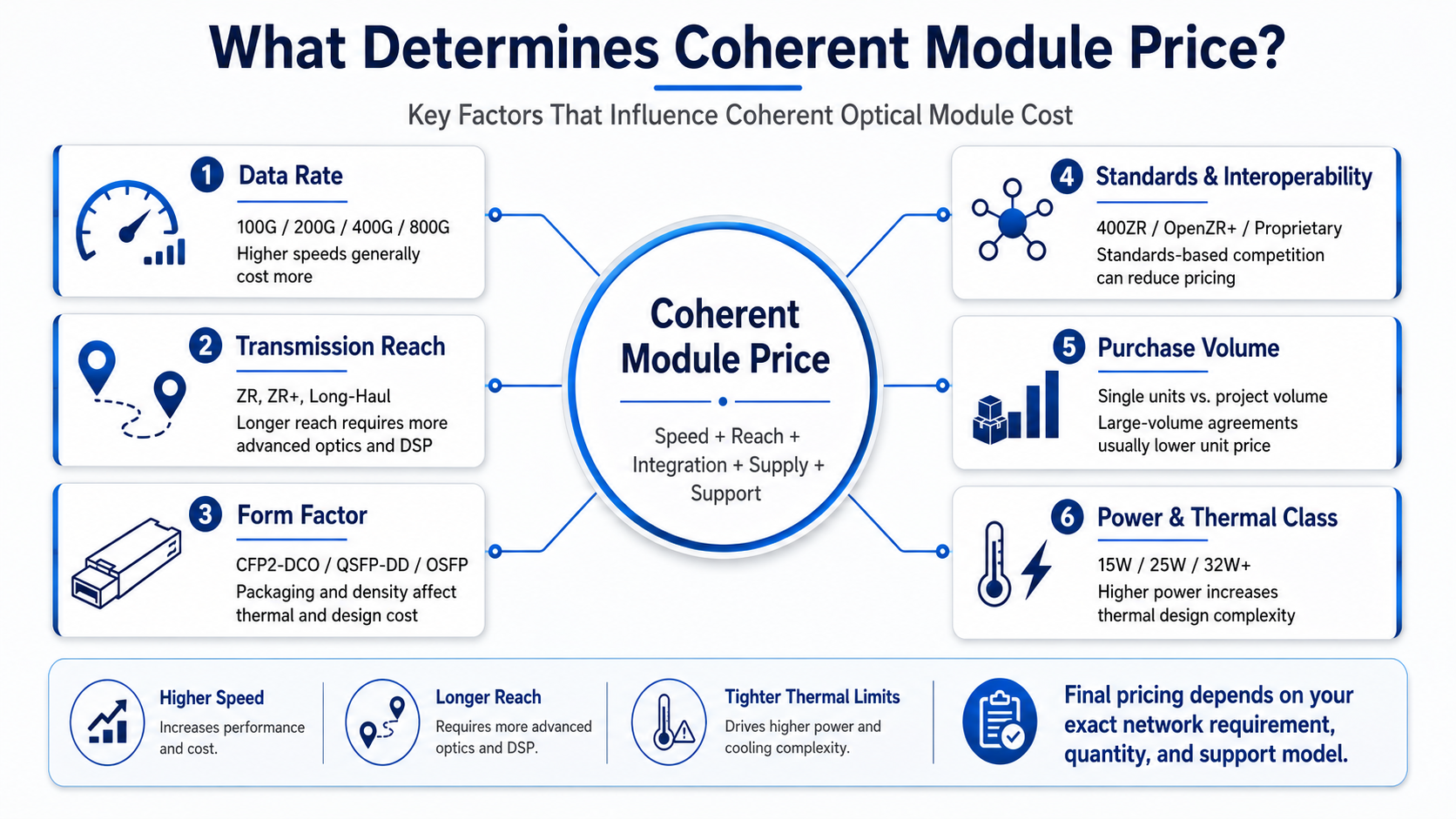
Key Factors That Affect Coherent Optical Module Price
Several variables move the price of a coherent module up or down. Understanding them helps you avoid over-specifying and overpaying.
Data Rate and Reach
Higher data rates cost more. A 200G CFP2-DCO module is generally less expensive than a 400G QSFP-DD DCO, which is less expensive than an 800G OSFP DCO. Within the same data rate, extended-reach variants command premiums. A 400G ZR+ module costs more than a 400G ZR because it supports amplified links over hundreds of kilometers.
Form Factor and Standards Compliance
CFP2-DCO modules dominate 100G/200G transport but are larger and more expensive per port than QSFP-DD. QSFP-DD and OSFP modules are designed for router and switch ports, so they trade higher density for slightly more complex thermal design. Standards-based modules such as 400ZR and OpenZR+ often cost less than proprietary coherent optics because they compete in a multi-vendor market.
Volume and Long-Term Agreements
Single-piece prices from online distributors are useful for budgeting, but they are not what hyperscalers and carriers pay. Large buyers negotiate long-term agreements, commit to forecasted volumes, and receive substantial discounts. If you are planning a multi-year rollout, talk to manufacturers early rather than buying one unit at a time.
Supply Chain and Component Availability
Coherent module prices are sensitive to DSP foundry capacity, CoWoS packaging availability, and indium-based component supply. Reports from 2025 and 2026 note tight supply of certain EML and CW lasers, which can keep near-term prices elevated even as volumes grow.
Power Consumption and Cooling
Higher-power modules increase not only electricity costs but also cooling infrastructure. In dense switch deployments, a 32 W 800G ZR+ module generates roughly twice the heat of a 15 W 400G ZR module. Data center operators must factor rack-level thermal design into their budget.
Total Cost of Ownership: Beyond the Module Price
The sticker price of a coherent optical module is only part of the story. A complete link budget includes amplifiers, mux/demux filters, ROADMs, fiber, installation, sparing, and ongoing power. The table below illustrates how unit price and total cost diverge for two hypothetical 100 km DCI links.
| Cost Item |
Direct-Detect 400G Link |
Coherent 400G ZR Link |
| Transceivers (2x) |
1,500–1,500–3,000 |
8,000–8,000–13,000 |
| Dispersion compensation |
2,000–2,000–5,000 |
$0 (DSP handles it) |
| Amplifiers/regenerators |
5,000–5,000–15,000 |
0–0–2,000 |
| Mux/Demux |
1,000–1,000–3,000 |
1,000–1,000–3,000 |
| Installation and testing |
2,000–2,000–4,000 |
1,500–1,500–3,000 |
| 5-year power and cooling |
1,500–1,500–2,500 |
2,500–2,500–4,000 |
| Total estimated 5-year TCO |
13,000–13,000–32,500 |
12,500–12,500–25,000 |
These are rough estimates. Actual numbers depend on fiber quality, amplifier spacing, labor rates, and energy costs. The point is that a coherent module’s higher unit price can be offset by eliminating other network elements. For longer links, especially those requiring DWDM capacity or avoiding multiple regeneration points, coherent optics often provides better total cost efficiency.
For shorter links, direct-detect modules remain the economical choice. The crossover point depends on reach, fiber type, and whether the route already has amplification infrastructure. A good rule of thumb: if your link is under 10 km and you do not need DWDM, evaluate direct-detect first. If your link is over 80 km or you need DWDM capacity, coherent is usually the better fit.
2026 Pricing Trends and Market Outlook
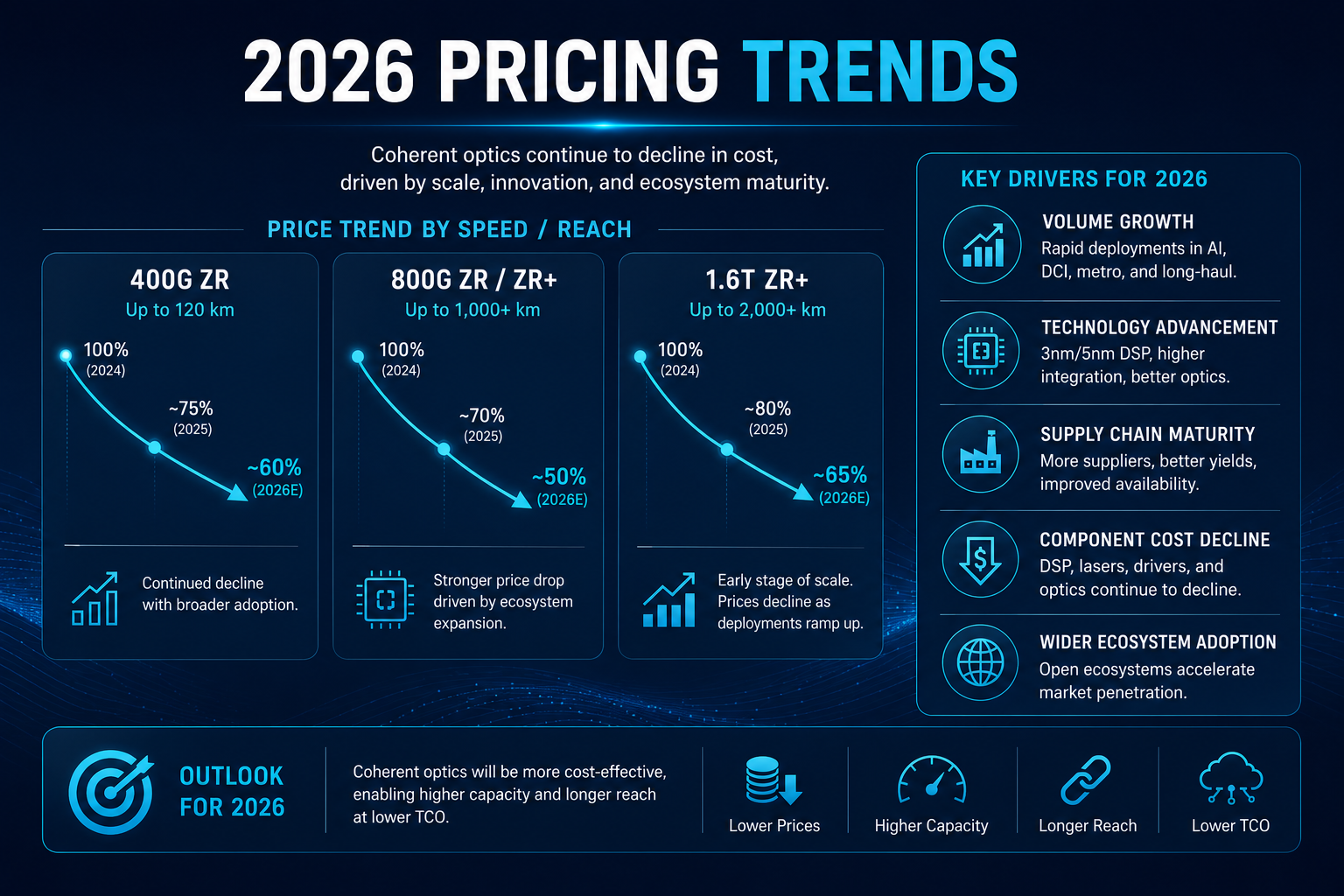
The market for coherent optical modules is growing rapidly. Industry analysts expect continued growth in coherent optics driven by AI infrastructure, cloud expansion, and increasing demand for high-capacity DCI networks.
Several trends are shaping prices in 2026:
- •Annual price erosion: Coherent module prices historically decline 8–12% per year as volumes scale, and DSP integration improves.
- •400G ZR commoditization: 400G ZR QSFP-DD modules are the most mature pluggable coherent segment, with the strongest downward price pressure.
- •800G ZR/ZR+ rollout: 800G coherent modules are still premium products. Early shipments carry a 15–20% price premium over 400G equivalents, though that gap is expected to narrow through 2026–2028.
- •AI-driven demand: For every dollar spent on AI compute hardware, roughly 0.15–0.15–0.20 now flows to networking and optical connectivity. AI cluster optics are projected to double from about 5billionin2024toroughly5billionin2024toroughly10 billion in 2026.
- •Supply constraints: Tight CoWoS capacity and DSP yield challenges could keep near-term prices from falling as fast as historical trends suggest.
The net effect is a buyer’s market for 400G ZR, a premium market for 800G ZR+, and continued pressure on older 100G/200G CFP2-DCO prices as operators migrate to higher data rates.
Conclusion
Coherent optical module prices in 2026 range from a few hundred dollars per gigabit at volume to thousands of dollars per unit for specialized long-haul modules. The key to smart procurement is looking past the sticker price. Form factor, data rate, reach, power consumption, and sourcing strategy all shape what you actually pay.
The most important takeaways are:
- •400G ZR QSFP-DD is the sweet spot for cost-sensitive DCI, with bulk prices often between 400and 400 and 500 and retail prices from 4,000 to 4,000 to 6,500.
- •800G ZR/ZR+ remains a premium segment, typically 8,000to 8,000 to 20,000+ depending on reach and power class.
- •OEM list prices can be misleading; real enterprise pricing is negotiated, and compatible modules can offer substantial savings.
- •Total cost of ownership often favors coherent optics for links beyond 80 km because they eliminate dispersion compensation and regeneration.
- •Supply chain and power constraints are keeping near-term prices from collapsing, even as volumes grow.
If you are planning a coherent optics deployment this year, start with a clear link budget and reach requirement. Then compare OEM and compatible options on equal terms. The right module is rarely the cheapest one. It is the one that delivers the required performance at the lowest total cost over the project lifetime.
FAQ About Coherent Optical Module Price
How much does a coherent optical module cost?
The price of a coherent optical module depends on the data rate, reach, form factor, and supplier. 400G ZR modules are generally more affordable than 800G coherent solutions, while extended-reach ZR+ modules typically cost more due to higher optical performance requirements.
Why are coherent optical modules expensive?
Coherent modules contain advanced DSPs, tunable lasers, high-speed optical components, and precision assembly processes, which increase manufacturing complexity.
Are 400G ZR and 800G ZR modules interchangeable?
No. 400G ZR and 800G ZR modules are designed for different data rates and network requirements. They typically use different host interfaces, power levels, and system architectures, so compatibility depends on the network equipment and platform specifications.
When should I choose a coherent optical module instead of a direct-detect module?
Coherent modules are typically used for longer-distance applications such as DCI, metro networks, and optical transport. For shorter data center links, direct-detect modules usually provide a lower-cost and lower-power solution.
What factors affect coherent optical module pricing?
Pricing is influenced by several factors, including transmission distance, modulation technology, DSP capability, optical components, production volume, and supplier support. Higher-speed and longer-reach modules generally require more advanced technology and have higher costs.
Is 800G coherent optics the future of DCI networks?
800G coherent optics are expected to play an important role in future DCI and metro networks where higher capacity and longer reach are required. However, 400G coherent solutions will continue to be widely deployed for cost-sensitive applications and existing network upgrades.
How can I reduce the cost of coherent optical deployments?
Reducing total cost requires evaluating more than the module price. Factors such as power consumption, fiber utilization, network scalability, compatibility, and long-term maintenance should also be considered when selecting a coherent optical solution.
Post Views: 3,560