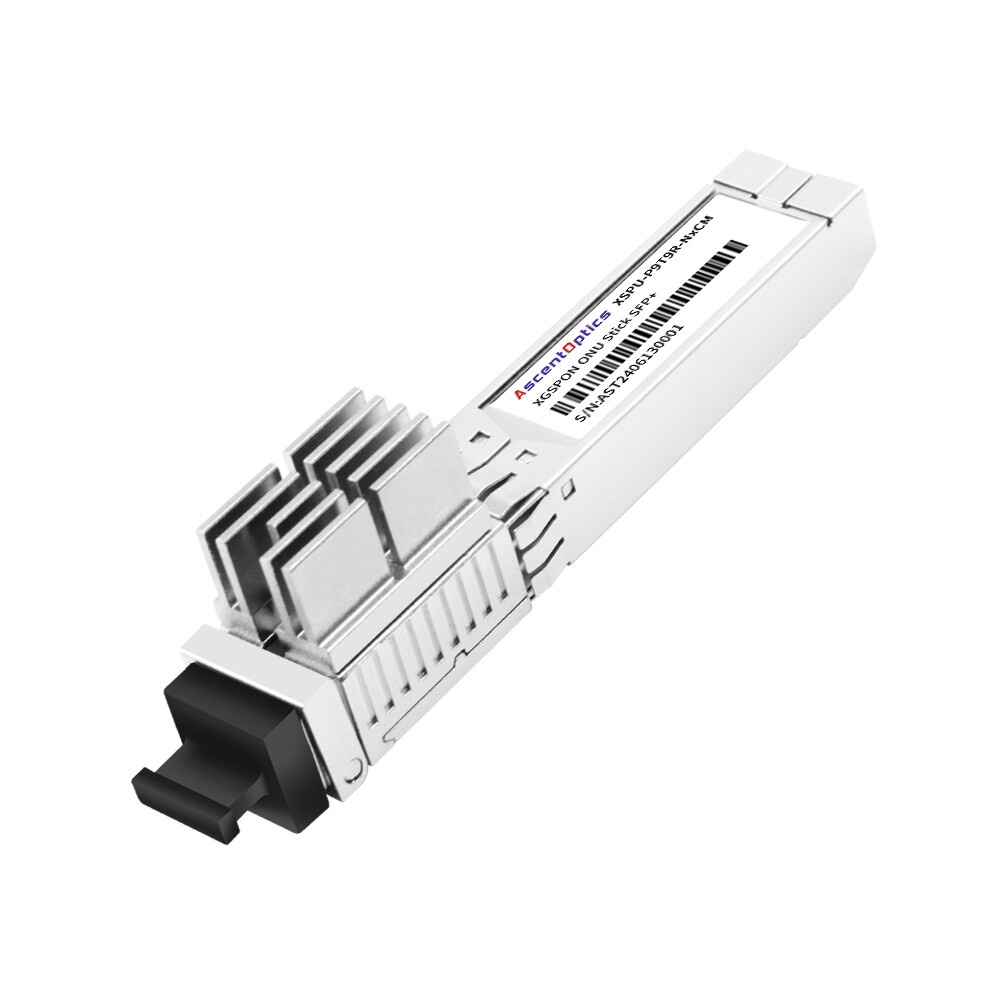
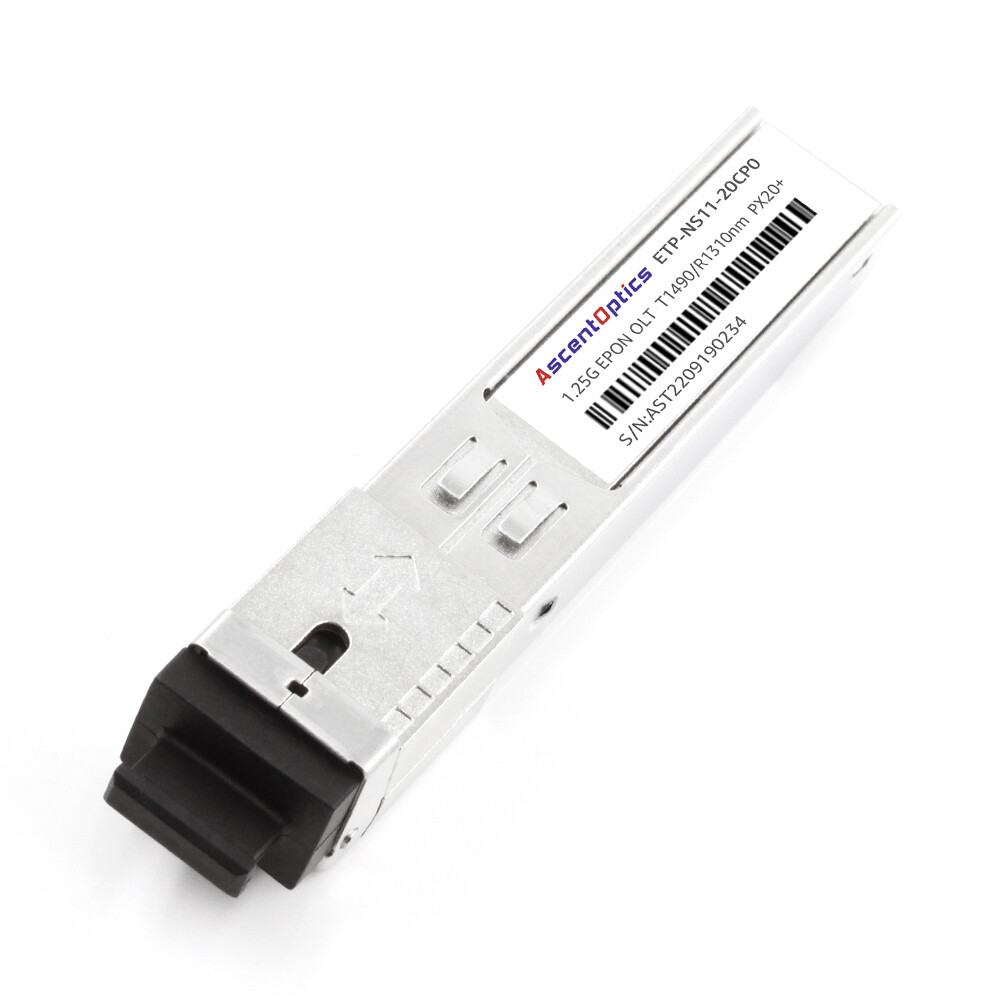
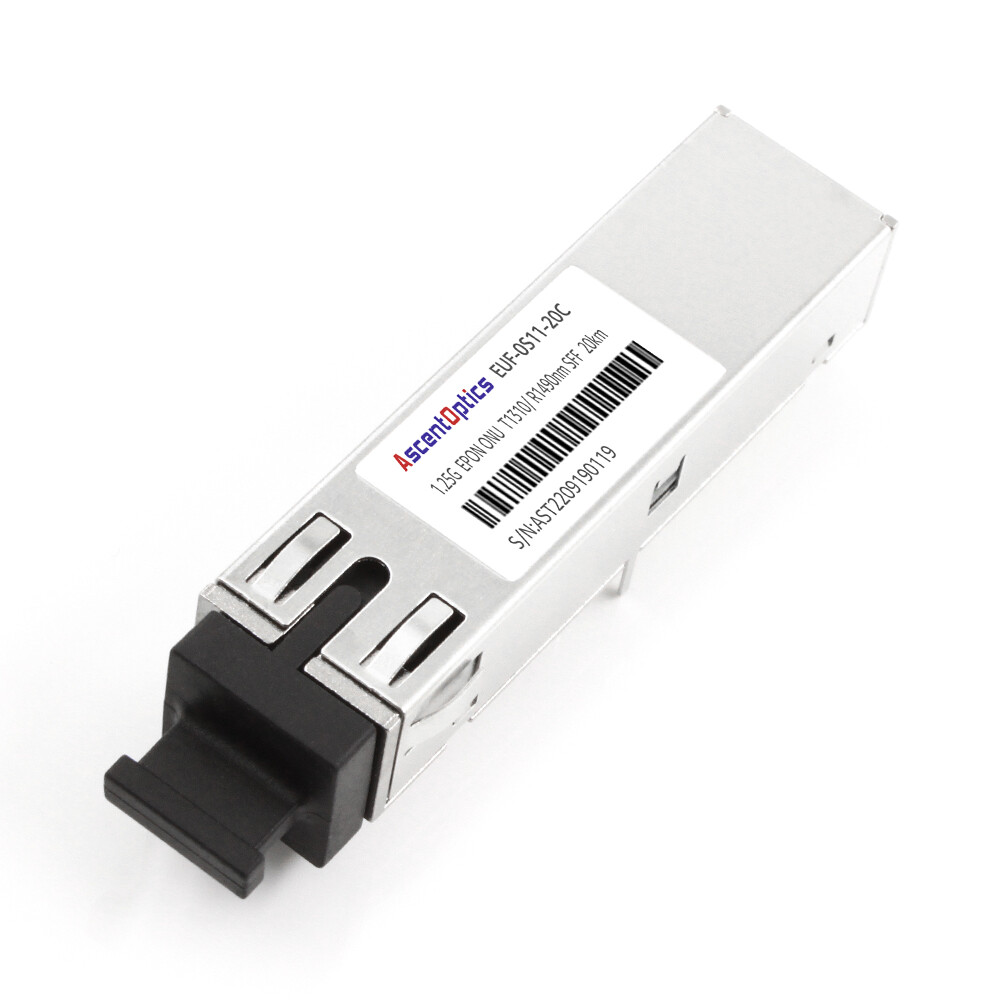
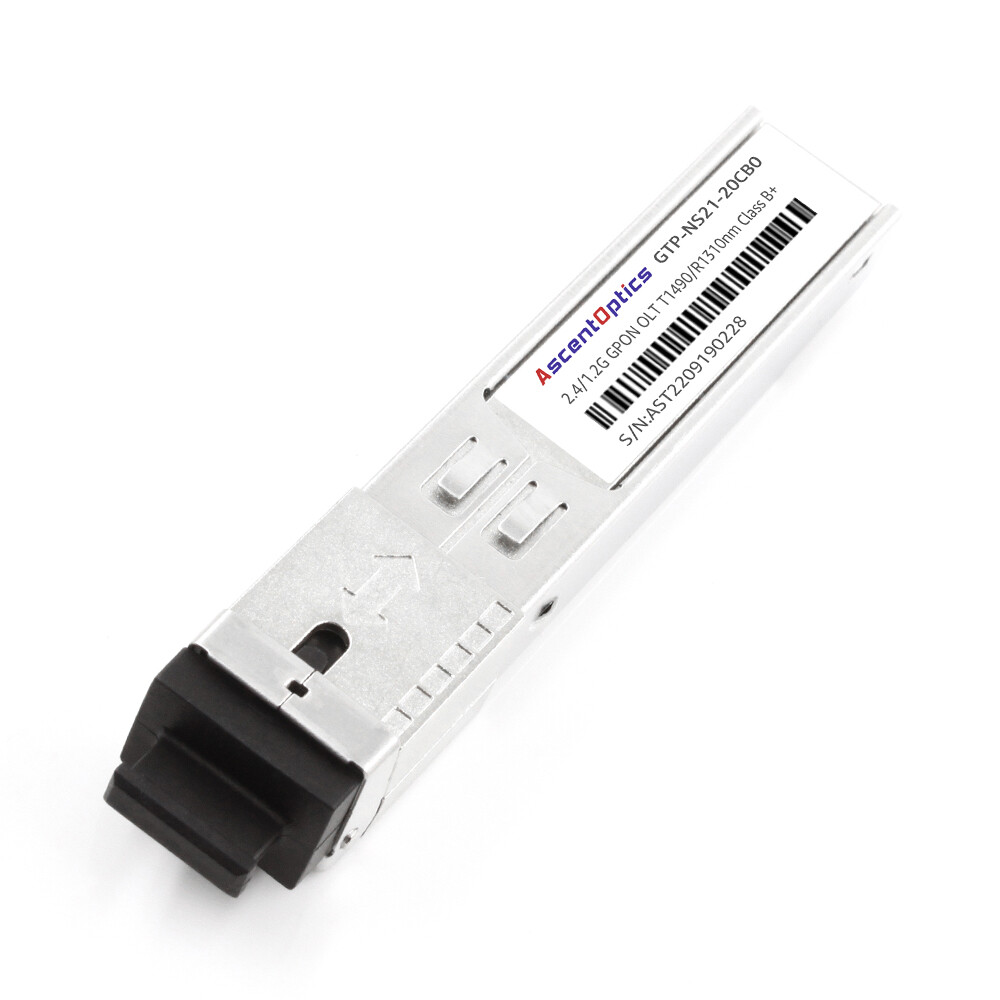
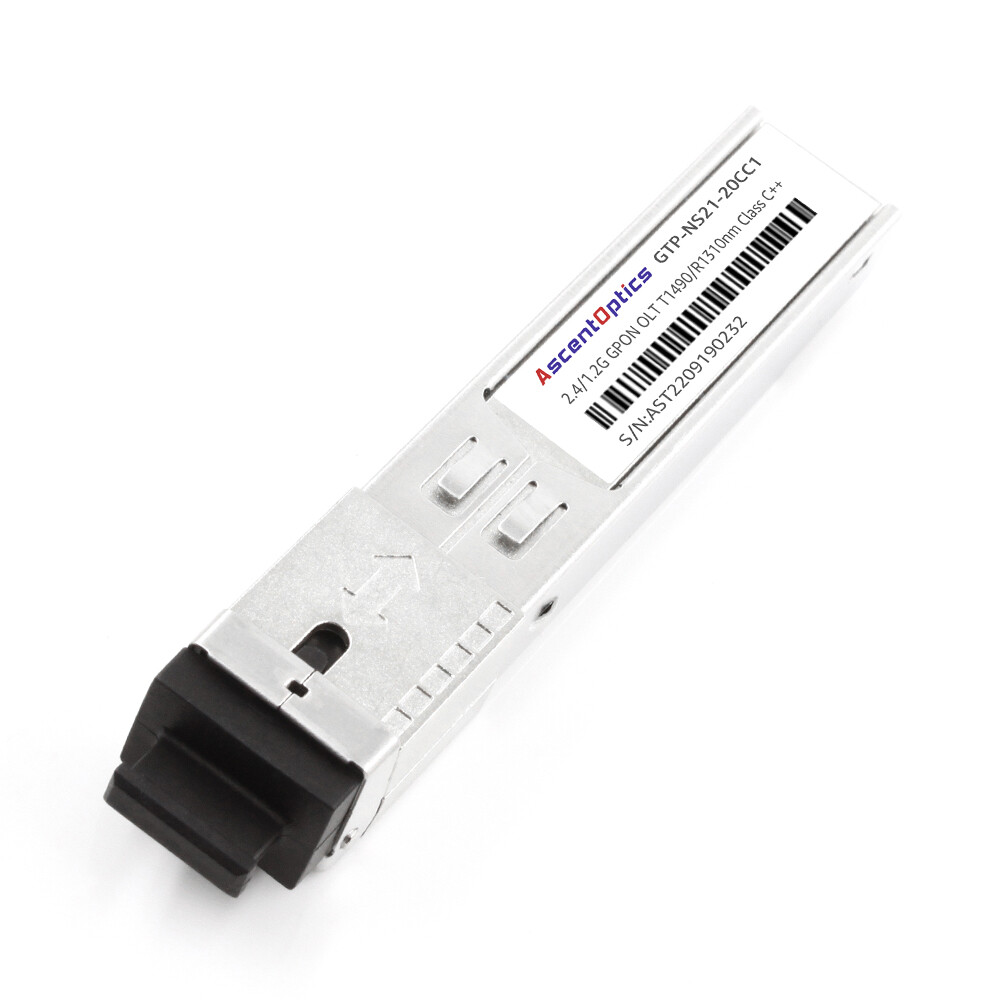
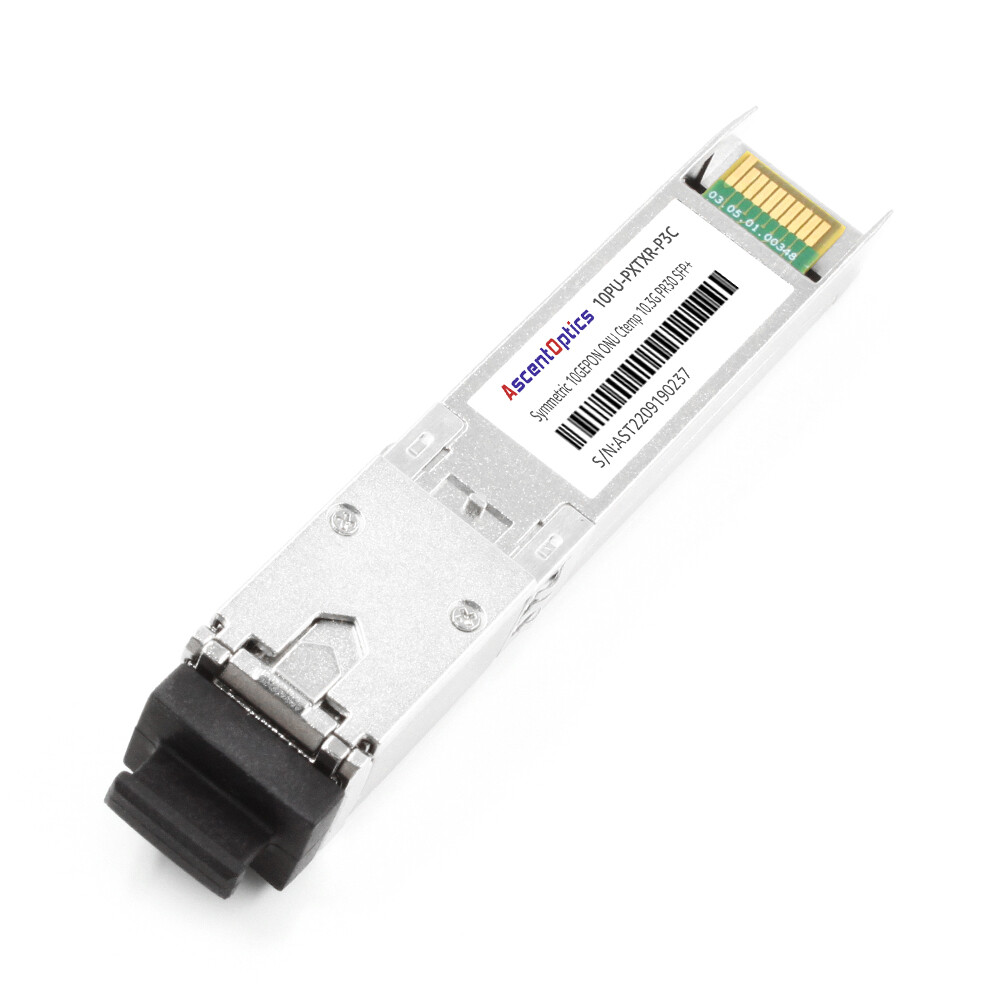
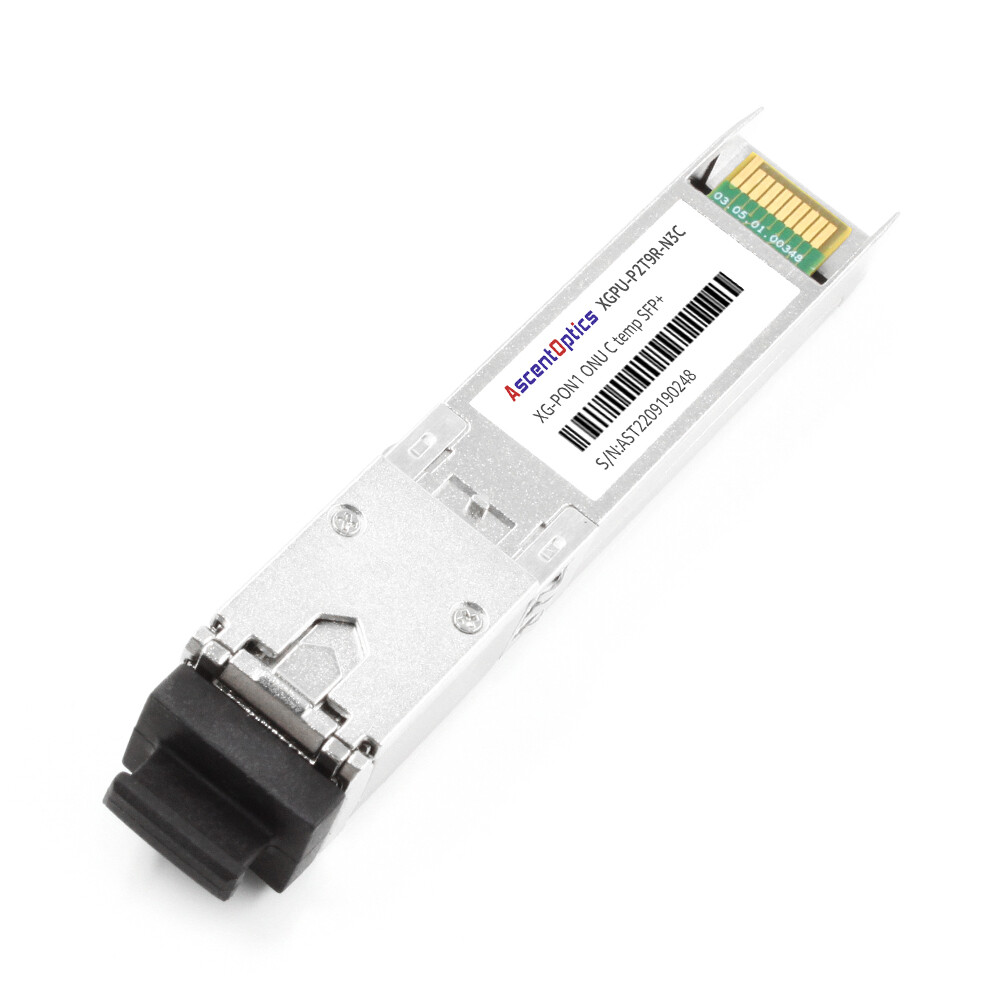
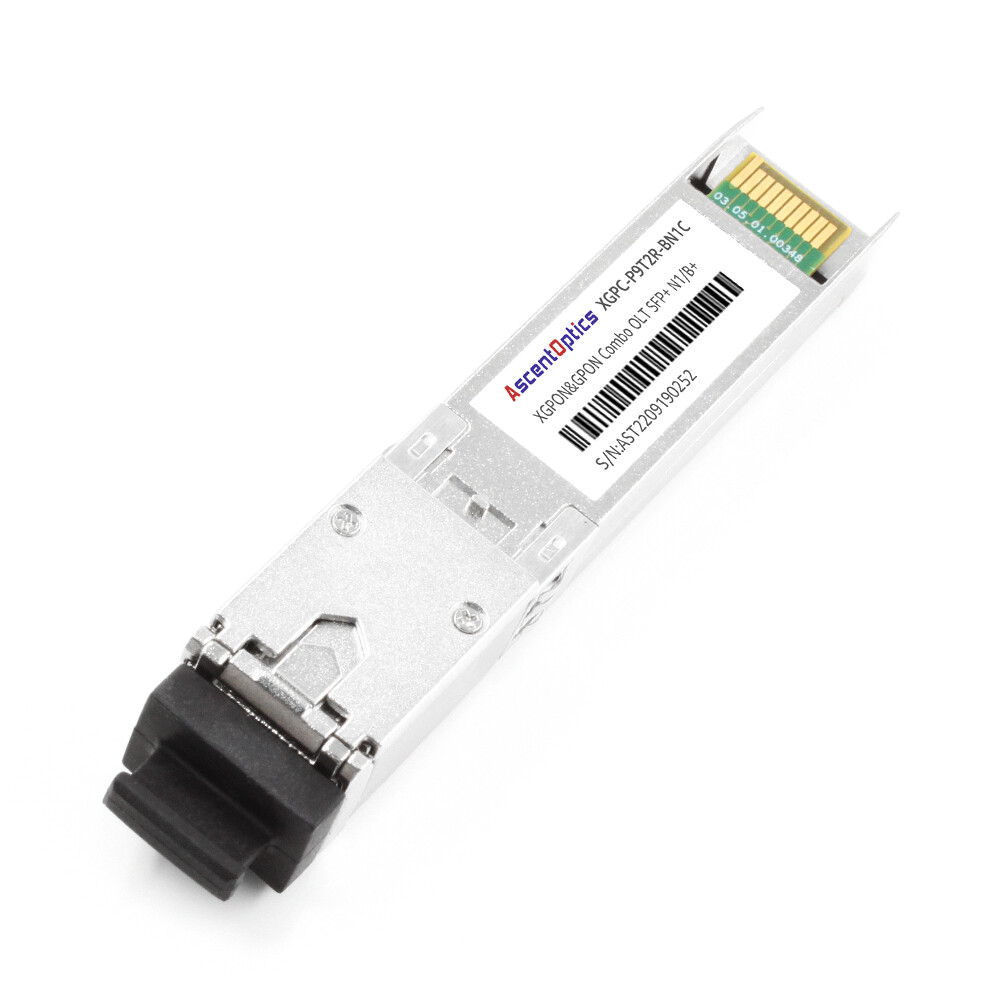
PON optical modules are core components of fiber-optic access networks, responsible for data transmission and reception between the OLT and ONU. EPON is based on Ethernet and offers low costs; GPON provides higher bandwidth and supports larger split ratios; and XGS-PON supports symmetrical 10G speeds, targeting access rates exceeding 1 Gbps. Together, these technologies illustrate the evolution of PON from 100 Mbps and 1 Gbps to 10 Gbps, and they are widely used in FTTH deployments and broadband network upgrades.
What Is a PON Optical Module?
A PON optical module is a bidirectional optical transceiver used in passive optical network (PON) access networks, the fiber-to-the-home (FTTH) technology that connects a service provider’s central office to subscriber premises. Unlike a conventional point-to-point Ethernet transceiver, a PON module operates in a point-to-multipoint architecture, where a single OLT port serves dozens of ONUs through passive optical splitters.
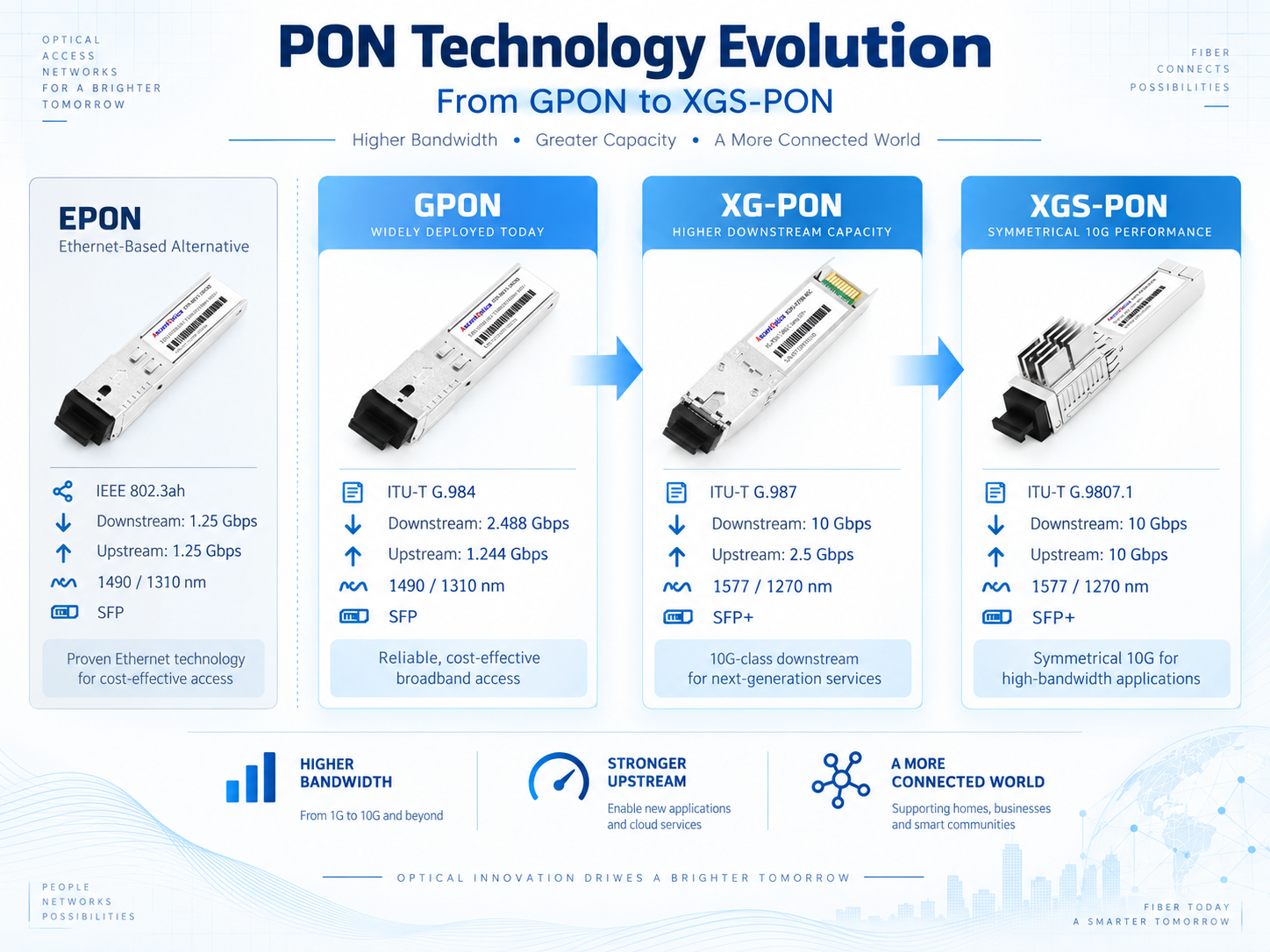
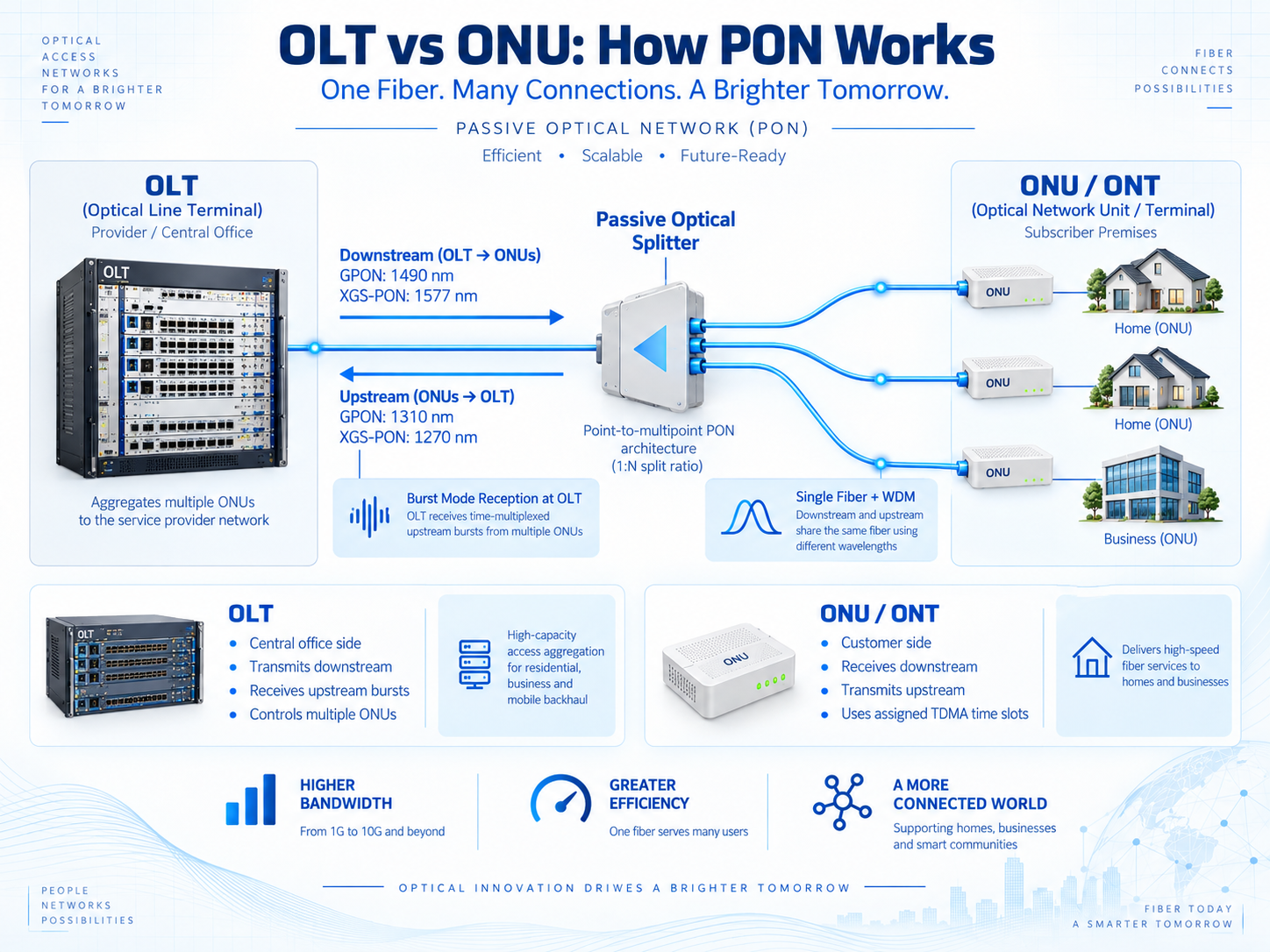
Every PON module transmits and receives on a single fiber using wavelength division multiplexing (WDM). In a GPON module, downstream traffic travels at 1490 nm while upstream traffic returns at 1310 nm. In XGS-PON, those wavelengths shift to 1577 nm and 1270 nm so that both standards can coexist on the same fiber. This single-fiber design is what lets providers light hundreds of homes without running a dedicated fiber pair to each one.
The key distinction from ordinary BiDi transceivers is that PON modules are built for burst-mode operation. The OLT side must receive upstream bursts from many ONUs at slightly different power levels and lock onto each one within microseconds. A regular Ethernet BiDi module cannot do this, which is why swapping in a standard SFP as a “cheaper” substitute quietly breaks the link.
PON Optical Module Types: GPON vs EPON vs XG-PON vs XGS-PON
Four main standards dominate today’s access networks. Each defines its own data rate, wavelength plan, and optical budget, and each requires a matching module.
| Standard |
Body |
Downstream |
Upstream |
Wavelengths (Down/Up) |
Form Factor |
| GPON |
ITU-T G.984 |
2.488 Gbps |
1.244 Gbps |
1490 / 1310 nm |
SFP |
| EPON |
IEEE 802.3ah |
1.25 Gbps |
1.25 Gbps |
1490 / 1310 nm |
SFP |
| XG-PON |
ITU-T G.987 |
10 Gbps |
2.5 Gbps |
1577 / 1270 nm |
SFP+ |
| XGS-PON |
ITU-T G.9807.1 |
10 Gbps |
10 Gbps |
1577 / 1270 nm |
SFP+ |
GPON remains the most widely deployed standard globally. Its 2.488 Gbps downstream and 1.244 Gbps upstream deliver ample capacity for residential triple-play services, and its GEM encapsulation natively carries data, voice, and video. This is the workhorse module you will encounter most often.
EPON is the Ethernet-flavored alternative defined by IEEE. It runs symmetric 1.25 Gbps and is popular in parts of Asia and China. Because it frames everything in standard Ethernet, it tends to be simpler and lower cost, though it offers shorter reach and lower split ratios than GPON.
XG-PON is the asymmetric 10G evolution of GPON, offering 10 Gbps down and 2.5 Gbps up. It suits download-heavy residential services. XGS-PON goes further with symmetric 10 Gbps in both directions, making it the preferred choice for business services, cloud access, video surveillance backhaul, and any application with heavy upstream traffic.
Combo PON modules bridge the migration. A combo OLT module carries both GPON and XGS-PON wavelengths in one package, letting a single OLT port serve GPON and XGS-PON subscribers at the same time. Providers use these to upgrade capacity incrementally without a forklift replacement of the OLT. Looking further ahead, early 50G PON modules are now entering trials, previewing the next jump in access speeds.
OLT vs ONU: Two Roles That Are Not Interchangeable
OLT and ONU modules share a form factor, but they point in opposite optical directions and cannot be swapped.
| Parameter |
PON OLT Module |
PON ONU / ONT Module |
| Location |
Central office/provider side |
Customer premises |
| Transmit wavelength |
1490 nm (GPON) / 1577 nm (XGS-PON) |
1310 nm (GPON) / 1270 nm (XGS-PON) |
| Receive wavelength |
1310 nm / 1270 nm |
1490 nm / 1577 nm |
| Burst mode |
Receives bursts from many ONUs |
Transmits in assigned TDMA slots |
| Coding |
Often vendor-specific EEPROM |
Subject to OLT whitelist |
The OLT (Optical Line Terminal) module sits at the provider’s central office. It connects through a passive splitter to up to 64 or more end users, and it must receive upstream bursts from all of them at varying power levels. This burst-mode receiver is the defining feature of an OLT module.
The ONU (Optical Network Unit) module, sometimes called an ONT, sits at the subscriber’s premises and plugs into a router, switch, or home gateway. It transmits upstream only during the time slots the OLT assigns. In most residential FTTH deployments, ONU and ONT are used interchangeably, though strictly an ONT serves a single end user.
A special variant worth knowing is the ONU stick, an entire ONU built into an SFP or SFP+ module. It plugs directly into a switch or router cage and replaces a standalone ONT box. ONU sticks are attractive for managed service deployments, but they add a compatibility wrinkle: the module must match the OLT’s expected serial number, password, or registration ID, which varies between Huawei, ZTE, and Nokia platforms.
Optical Power Budget Classes: B+ vs C+ vs C++
Once you know the standard and the role, the remaining choice is the optical power class. This is where many procurement decisions go wrong, because the classes describe power budget, not speed.
| Class |
Link Budget |
Typical Split |
Typical Reach |
Common Use |
| B+ |
~28 dB |
1:32 |
~20 km |
Urban FTTH |
| C+ |
~32 dB |
1:64 |
~20 km |
Rural, higher split |
| C++ |
~35 dB |
1:128 |
up to 40 km |
Extreme reach, high density |
The power budget is the difference between the transmitter’s output power and the receiver’s sensitivity. It determines how much total loss the link can tolerate before the signal becomes unreadable. That loss comes from fiber attenuation (roughly 0.35 to 0.4 dB per kilometer at 1310 nm), splitter loss (about 17 dB for a 1:32 split and more than 23 dB for 1:128), connectors, and splices.
The same logic runs in reverse. Using a C++ module on a short, low-loss link can push the received power above the receiver’s overload ceiling and saturate it. Choosing the right class is about matching the budget, not buying the highest number on the shelf.
How to Choose a PON Optical Module
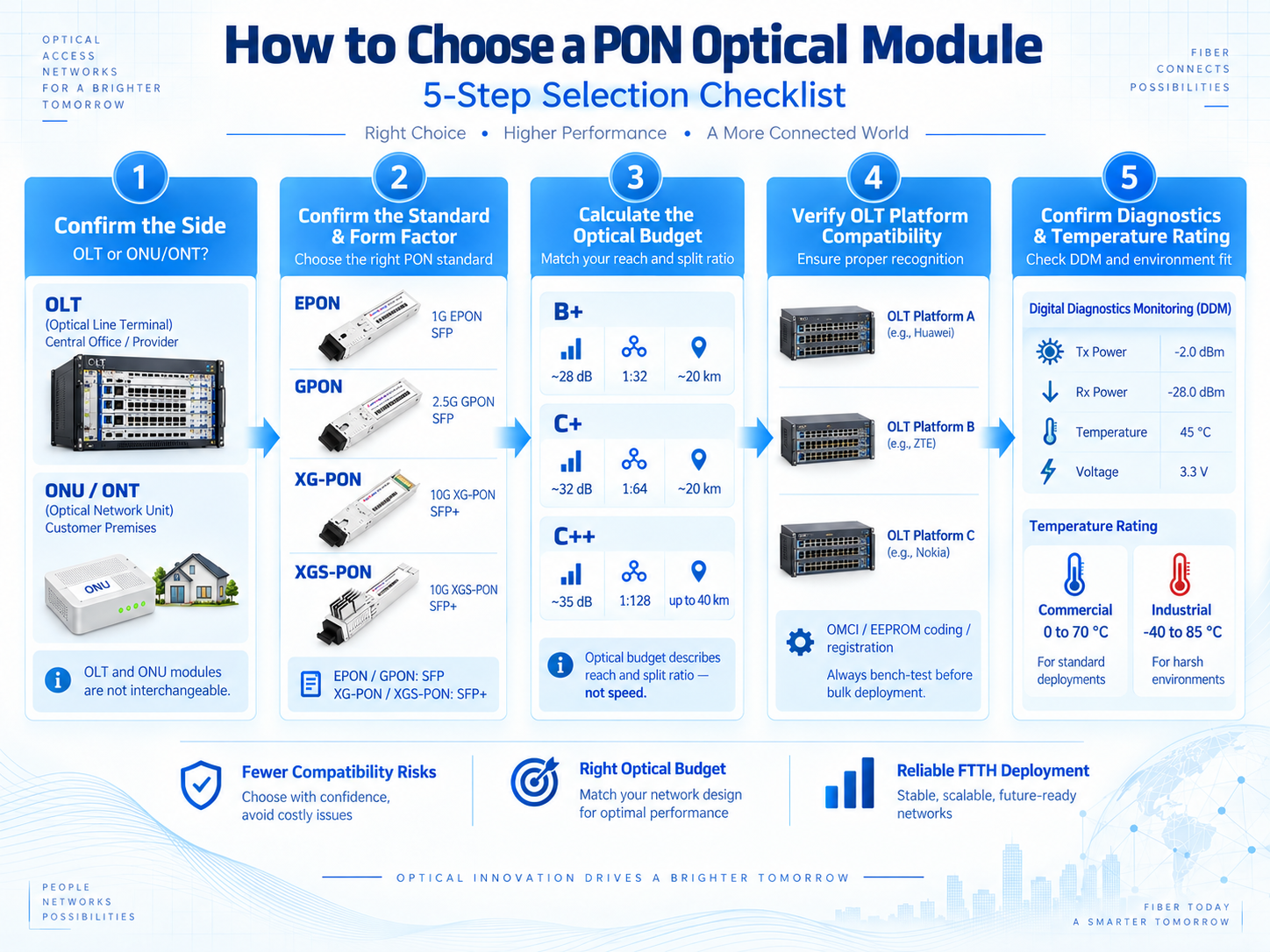
Selection reduces to a five-step checklist that works for any deployment.
- 1. Confirm the side.Are you equipping the OLT or the ONU? Get this wrong, and the link will not register, exactly as Daniel learned.
- 2. Confirm the standard and form factor.GPON and EPON use SFP with an SC connector; XG-PON and XGS-PON use SFP+. A 10G module will not run a GPON port.
- 3. Calculate the link budget.Add fiber attenuation, splitter loss, connectors, splices, and a maintenance margin. Then pick B+, C+, or C++ accordingly.
- 4. Verify OLT platform compatibility.Check the module’s EEPROM coding and OMCI behavior against the target OLT brand. Huawei, ZTE, and Nokia each have their own registration conventions.
- 5. Confirm diagnostics and temperature rating.Prefer modules with Digital Diagnostics Monitoring (DDM) for real-time transmit and receive power, and match the temperature grade to the deployment environment.
Ascent Optics manufactures the full PON lineup, from EPON and GPON to XGPON and XGS-PON modules, in both OLT and ONU variants.
PON Module Compatibility with Huawei, ZTE, and Nokia OLTs
PON standards are open, but real-world interoperability is not automatic. Each OLT vendor implements the ONT Management and Control Interface (OMCI), the protocol that manages ONUs, a little differently. Encryption key exchange, OAM frames, and registration sequences all vary.
Huawei OLTs are generally the most forgiving of third-party modules. Their MA5600 and SmartAX series tend to accept standards-compliant ONUs without special configuration, provided the module’s serial number and firmware align.
ZTE OLTs, particularly the C300 and C600 series, are stricter about OMCI. A common fix is enabling the “GPON interoperability mode” on the OLT or switching the port to auto-discovery rather than MAC binding when a third-party ONU fails to register.
Nokia OLTs, such as the 7360 ISAM, are often the pickiest. Many require the operator to enable a “third-party ONU” or “open ONU” mode before a non-Nokia module will be recognized at all.
The practical takeaway is to treat compatibility as a testing step, not an assumption. Reputable suppliers provide modules coded for specific OLT platforms, but a sample-unit bench test before a bulk order is the only way to be certain. When a network is being upgraded alongside the modules, pairing the right class with the right coding is what separates a clean cutover from a weekend of truck rolls.
Conclusion
A PON optical module is a small component with outsized consequences. Choose the wrong standard, side, or power class, and an otherwise healthy fiber plant goes dark.
The decisions that matter are few and knowable. Match the standard to your service, whether that is GPON for residential triple-play, EPON for Ethernet-native access, or XGS-PON for symmetric 10G. Separate OLT from ONU roles before you buy. And calculate your link budget before you pick a power class, because B+, C+, and C++ describe reach and split ratio, not speed.
Get those three choices right, and PON modules become one of the most predictable parts of an access network.
Frequently Asked Questions About PON Optical Modules
1. What is a PON optical module?
A PON optical module is a bidirectional optical transceiver used in passive optical networks. It enables communication between the OLT and ONUs over a shared fiber infrastructure using different wavelengths for upstream and downstream transmission.
2. What is the difference between GPON and EPON?
GPON is standardized by ITU-T and uses the GPON Encapsulation Method (GEM), while EPON is based on IEEE Ethernet standards. GPON provides nominal line rates of 2.488 Gbps downstream and 1.244 Gbps upstream, whereas traditional EPON operates at 1.25 Gbps in each direction.
3. What is the difference between GPON and XGS-PON?
GPON supports nominal line rates of 2.488 Gbps downstream and 1.244 Gbps upstream. XGS-PON supports symmetrical 10 Gbps line rates in both directions, providing greater shared capacity for high-speed broadband access.
4. Can GPON and XGS-PON coexist on the same fiber?
Yes. GPON and XGS-PON can coexist on the same optical distribution network because they use different wavelength plans. However, appropriate coexistence components, compatible OLT equipment, and proper network configuration are required.
5. What is the difference between an OLT and an ONU optical module?
An OLT module is installed on the service provider’s side and communicates with multiple ONUs. An ONU module is installed on the subscriber’s side and provides the optical connection to the PON. They have different transmission, reception, and operating requirements.
6. Can I use a standard Ethernet SFP in a PON network?
Not necessarily. PON modules must support the relevant PON standard, wavelength plan, and transmission mechanisms. A standard Ethernet SFP does not automatically support PON functions such as burst-mode reception and upstream scheduling.
7. How do I choose the right PON optical power class?
Calculate the total optical link loss, including fiber attenuation, splitter insertion loss, connector loss, and splice loss. Then select a module whose optical budget meets the network requirements while ensuring the received power remains within the receiver’s operating range.
8. Are third-party ONU modules compatible with Huawei, ZTE, and Nokia OLTs?
Compatibility depends on the specific OLT model, software version, ONU firmware, registration requirements, and management functions such as OMCI. Verify the supplier’s compatibility information and test a sample module on the target platform before large-scale deployment.
Post Views: 930