GPON and EPON are two widely deployed Passive Optical Network (PON) technologies used to deliver broadband services over shared fiber infrastructure.
GPON typically operates at 2.488 Gbit/s downstream and 1.244 Gbit/s upstream, while 1G EPON uses a 1.25 Gbit/s physical line rate in both directions. Because EPON applies 8B/10B line coding, its Ethernet data rate is 1 Gbit/s before Ethernet framing and other system overhead.
The two technologies also differ in protocol architecture, bandwidth allocation, optical power budgets, typical split ratios, interoperability, and upgrade paths. Understanding these differences is important when selecting an OLT platform, ONU/ONT, PON optical interface, or migration strategy.
What Are GPON and EPON?
A Passive Optical Network connects an Optical Line Terminal (OLT) at the service-provider side to multiple Optical Network Units (ONUs) or Optical Network Terminals (ONTs).
Between the OLT and subscribers is an Optical Distribution Network (ODN) composed mainly of optical fiber and passive optical splitters. Because the distribution network does not require powered switching equipment, PON can efficiently serve multiple subscribers from a single OLT port.
GPON, or Gigabit-capable Passive Optical Network, is standardized by the ITU-T G.984 series.
EPON, or Ethernet Passive Optical Network, was originally standardized in IEEE 802.3ah and is now incorporated into the IEEE 802.3 Ethernet standard.
GPON uses the GPON Transmission Convergence (GTC) layer and GPON Encapsulation Method (GEM), while EPON is built directly around Ethernet framing and the IEEE Multipoint Control Protocol (MPCP).
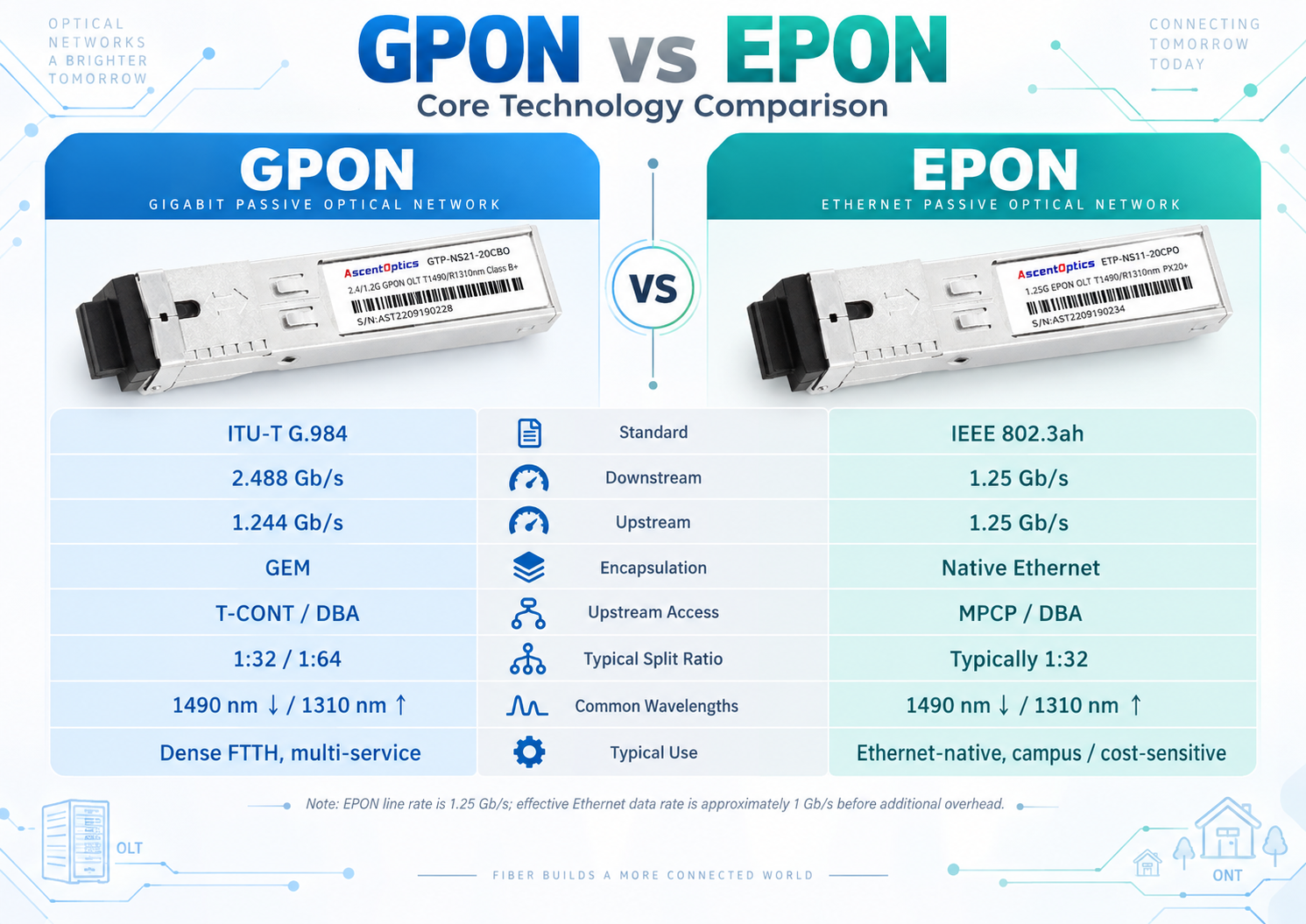
GPON vs EPON: Technical Differences
Data Transmission Rate
The commonly deployed GPON configuration provides:
- Downstream: 2.48832 Gbit/s
- Upstream: 1.24416 Gbit/s
1G EPON operates at a physical line rate of 1.25 Gbit/s in both directions. Because it uses 8B/10B line coding, the corresponding Ethernet data rate is 1 Gbit/s before normal Ethernet and PON protocol overhead.
Therefore, GPON provides substantially more downstream capacity per PON port, while GPON and 1G EPON have more comparable upstream capacity than their raw line-rate figures may initially suggest.
Actual subscriber throughput in either system is lower than the physical line rate and depends on protocol overhead, traffic conditions, DBA configuration, split ratio, and service profiles.
Split Ratio and Reach
GPON commonly uses split ratios such as 1:32 or 1:64.
ITU-T G.984 considers physical split ratios up to 1:64 practical for conventional GPON systems, while the transmission convergence layer supports addressing up to 1:128.
A higher logical split ratio does not automatically mean that every network can operate at that ratio. The achievable split is ultimately limited by the ODN optical loss budget, including:
splitter loss, fiber attenuation, connectors, splices, engineering margin, and operating wavelength.
EPON deployments commonly use up to approximately 1:32 within conventional IEEE 802.3ah optical budgets. Higher split ratios are possible in some implementations when the optical budget and network architecture allow them.
Both GPON and EPON are commonly designed around access distances of up to approximately 20 km, although actual reach depends on the optical interface class and total ODN loss.
Protocol and Bandwidth Handling
GPON uses the GTC layer together with GEM to transport Ethernet and other services.
In the upstream direction, GPON uses Transmission Containers (T-CONTs) together with Dynamic Bandwidth Allocation (DBA). Different T-CONT types allow the OLT to allocate bandwidth according to service requirements such as fixed, assured, non-assured, and best-effort traffic.
EPON transports Ethernet frames directly and uses MPCP for ONU discovery, registration, and upstream transmission control. GATE and REPORT messages coordinate upstream time slots between the OLT and ONUs.
EPON QoS should not simply be described as “VLAN-based.” VLAN tags and IEEE 802.1p priorities can be used for traffic classification, but scheduling and bandwidth allocation depend on the OLT/ONU queue architecture and DBA implementation.
Bandwidth Efficiency
GPON is generally considered more bandwidth-efficient at the transport layer because GEM introduces relatively low encapsulation overhead.
EPON’s 8B/10B coding means that 8 data bits are represented by 10 transmitted bits, giving a coding efficiency of 80% before considering Ethernet framing, guard intervals, MPCP messages, and other PON overhead.
However, it is misleading to assign one fixed efficiency percentage to either system because actual efficiency depends on packet size, traffic pattern, upstream burst scheduling, FEC configuration, and implementation.
Wavelength Plan
1G GPON and 1G EPON occupy very similar optical wavelength regions.
| Parameter |
GPON |
1G EPON |
| Downstream band |
1480–1500 nm |
1480–1500 nm |
| Common nominal downstream wavelength |
1490 nm |
1490 nm |
| Upstream band |
Approximately 1260–1360 nm, depending on optical option |
Approximately 1260–1360 nm |
| Common nominal upstream wavelength |
1310 nm |
1310 nm |
GPON also defines enhancement bands that can be used for additional services. For example, ITU-T G.984.5 defines a 1550–1560 nm band for video distribution applications.
The similarity between GPON and EPON optical wavelength plans can simplify the design of dual-mode optical hardware, but wavelength compatibility alone does not make the two protocols interoperable.
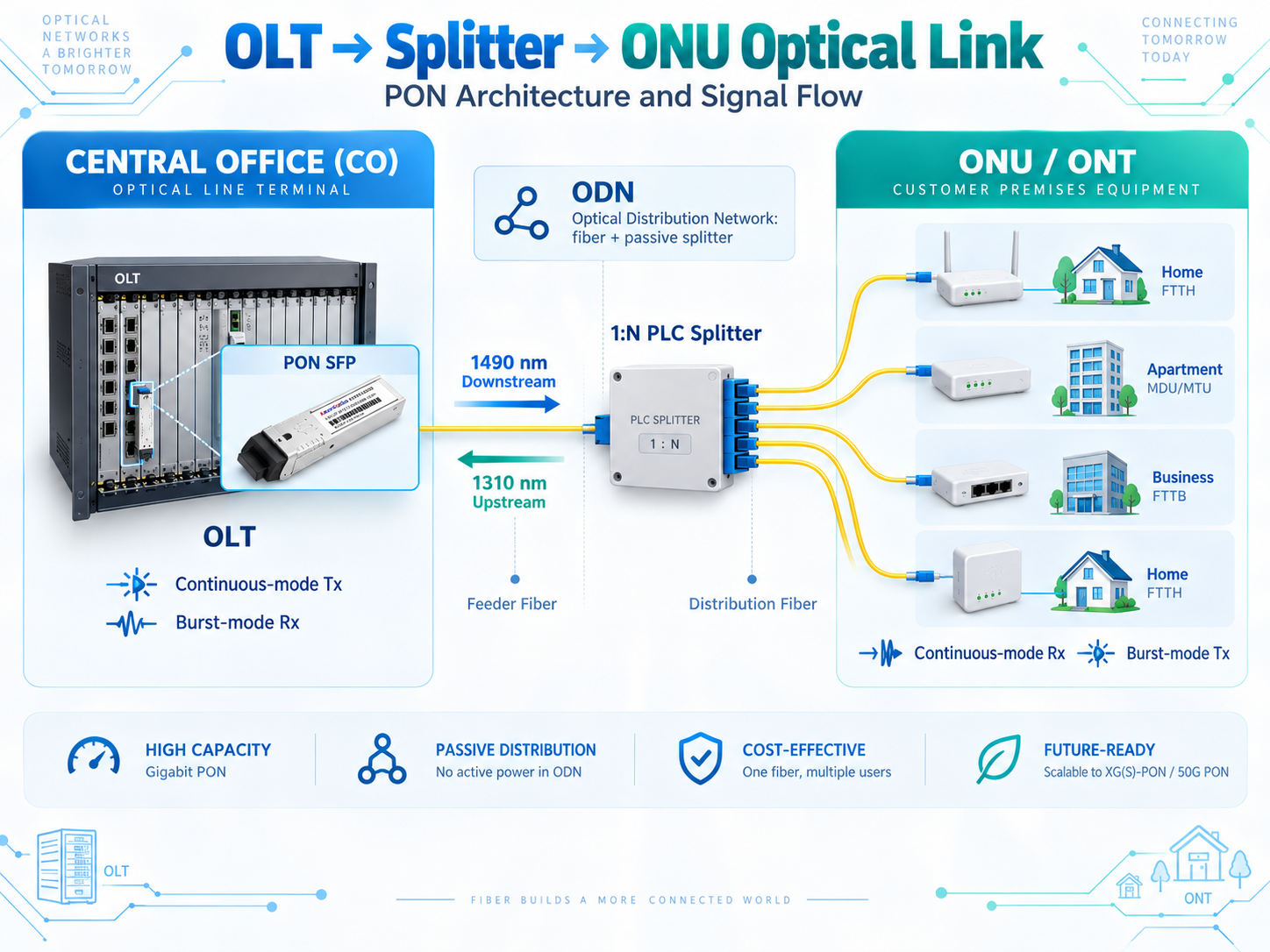
GPON vs EPON Comparison
| Factor |
GPON |
EPON |
| Standards family |
ITU-T G.984 |
IEEE 802.3 |
| Typical downstream line rate |
2.488 Gbit/s |
1.25 Gbit/s |
| Typical upstream line rate |
1.244 Gbit/s |
1.25 Gbit/s |
| Ethernet data rate after EPON line coding |
— |
1 Gbit/s |
| Encapsulation |
GTC / GEM |
Native Ethernet |
| Upstream access control |
T-CONT / DBA |
MPCP / DBA |
| Typical physical split |
1:32 / 1:64 |
Commonly up to 1:32 |
| Typical access reach |
Up to approximately 20 km |
Up to approximately 20 km |
| Downstream wavelength |
1480–1500 nm |
1480–1500 nm |
| Upstream wavelength |
O-band around 1310 nm |
O-band around 1310 nm |
| Management/interoperability |
OMCI and vendor platform support |
Ethernet OAM/MPCP plus vendor implementation |
| Cost |
Deployment-dependent |
Deployment-dependent |
GPON vs EPON: Speed, Split Ratio, and Cost
GPON’s main capacity advantage is its higher downstream line rate.
At 2.488 Gbit/s, one GPON port has considerably more downstream capacity than a 1G EPON port. However, the subscriber experience cannot be evaluated from port speed alone.
For example, increasing a GPON split ratio from 1:32 to 1:64 also increases the number of users sharing the available capacity. Network planners therefore need to evaluate both PON capacity and subscriber count rather than comparing line rates in isolation.
The same principle applies to cost.
It is no longer technically sound to state that EPON is always a fixed percentage cheaper than GPON. Equipment cost depends on the OLT and ONU supplier, regional ecosystem, subscriber volume, split architecture, management platform, interoperability requirements, and existing network infrastructure.
EPON’s Ethernet-native architecture can simplify integration in networks already standardized around EPON, while GPON’s higher supported split density can reduce the number of OLT ports required in some FTTH designs.
Total cost of ownership should therefore be calculated at the network level rather than inferred from the protocol alone.
Which Is Better: GPON or EPON?
Neither GPON nor EPON is universally better.
GPON may be attractive where higher downstream capacity, a mature GPON OLT/ONU ecosystem, higher subscriber density, or established OMCI-based provisioning is important.
EPON may be attractive where an operator already has an Ethernet/EPON infrastructure, established EPON operations and management systems, or a regional equipment ecosystem optimized around EPON.
For new deployments, the existing vendor ecosystem and future 10G migration path are often more important than the theoretical differences between the original 1G standards.
Regional Deployment Considerations
GPON and EPON have both been deployed at large scale, but their historical adoption differs by region.
GPON has been extensively deployed by telecommunications operators worldwide, while EPON developed particularly strong ecosystems in several Asian markets, including Japan, Korea, and China.
Exact market share changes over time, so regional adoption should not be used as the primary technical reason for selecting one technology.
More important factors include available OLT platforms, ONU interoperability, local support, network management systems, and the operator’s existing installed base.
From PON Standards to Optical Interfaces
PON optical interfaces differ significantly from conventional point-to-point Ethernet transceivers.
An OLT PON interface must support downstream continuous-mode transmission and upstream burst-mode reception from multiple ONUs operating in assigned time slots.
The optical module must therefore match not only the wavelength and data rate but also the required burst-mode characteristics, optical power budget, receiver sensitivity, timing behavior, and OLT platform design.
GPON Optical Classes
GPON defines several ODN optical budget classes. Class B+ is one of the most widely deployed GPON optical classes. A typical B+ interface supports an ODN loss range of approximately 13 to 28 dB.
For the downstream OLT transmitter, the standardized B+ mean launched power is approximately +1.5 to +5 dBm. Higher-budget classes such as C+ provide additional optical loss margin and can support more demanding ODN architectures. However, an optical class does not directly guarantee a specific combination such as “20 km plus 1:64 split.”
Engineers must calculate the complete ODN loss budget, including splitter insertion loss, fiber loss, connectors, splices, aging margin, and engineering reserve.
EPON Optical Interfaces
1G EPON uses IEEE 802.3 optical interface classes such as 1000BASE-PX.
Like GPON, EPON OLTs require burst-mode upstream receivers because multiple ONUs share the same upstream optical channel using TDMA. OLT and ONU compatibility therefore depends on more than wavelength and optical power.
MPCP behavior, OAM implementation, DBA, provisioning, and vendor-specific extensions can also affect interoperability.
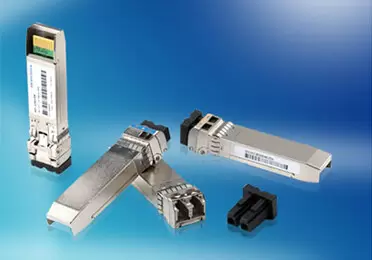
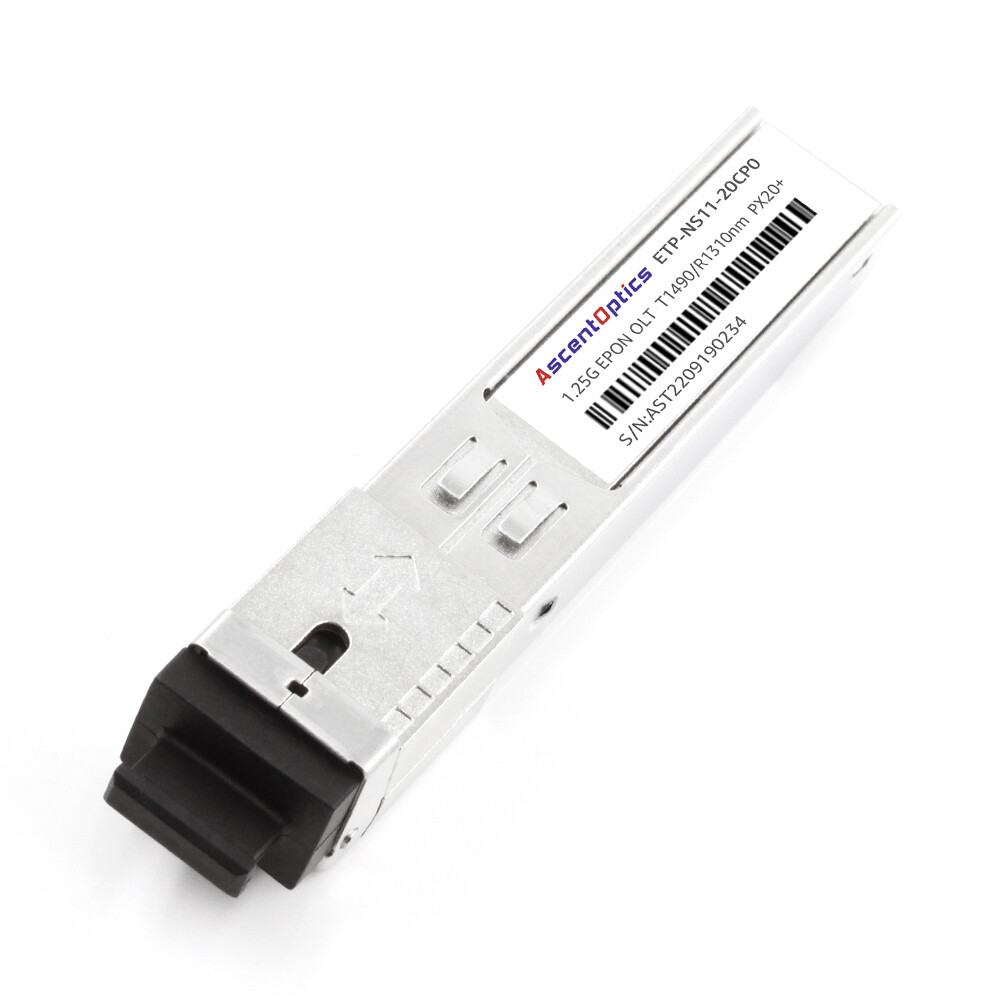
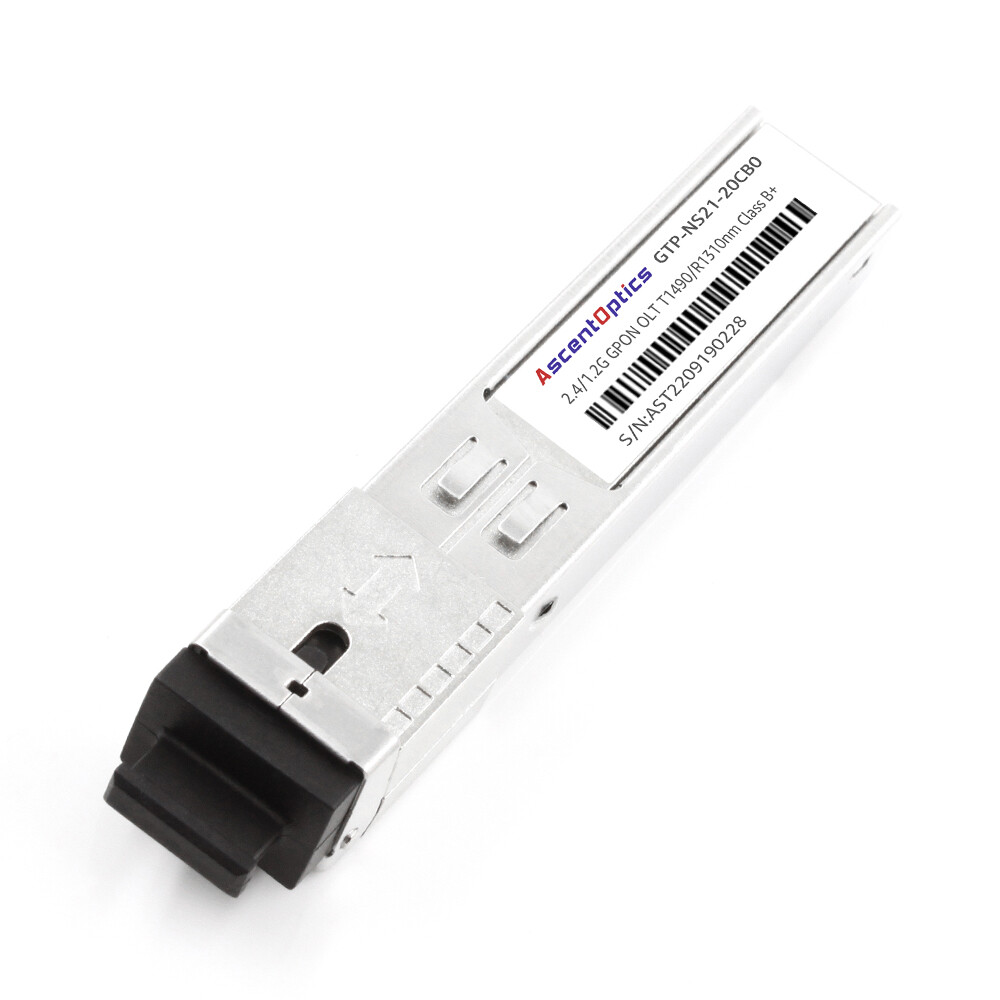
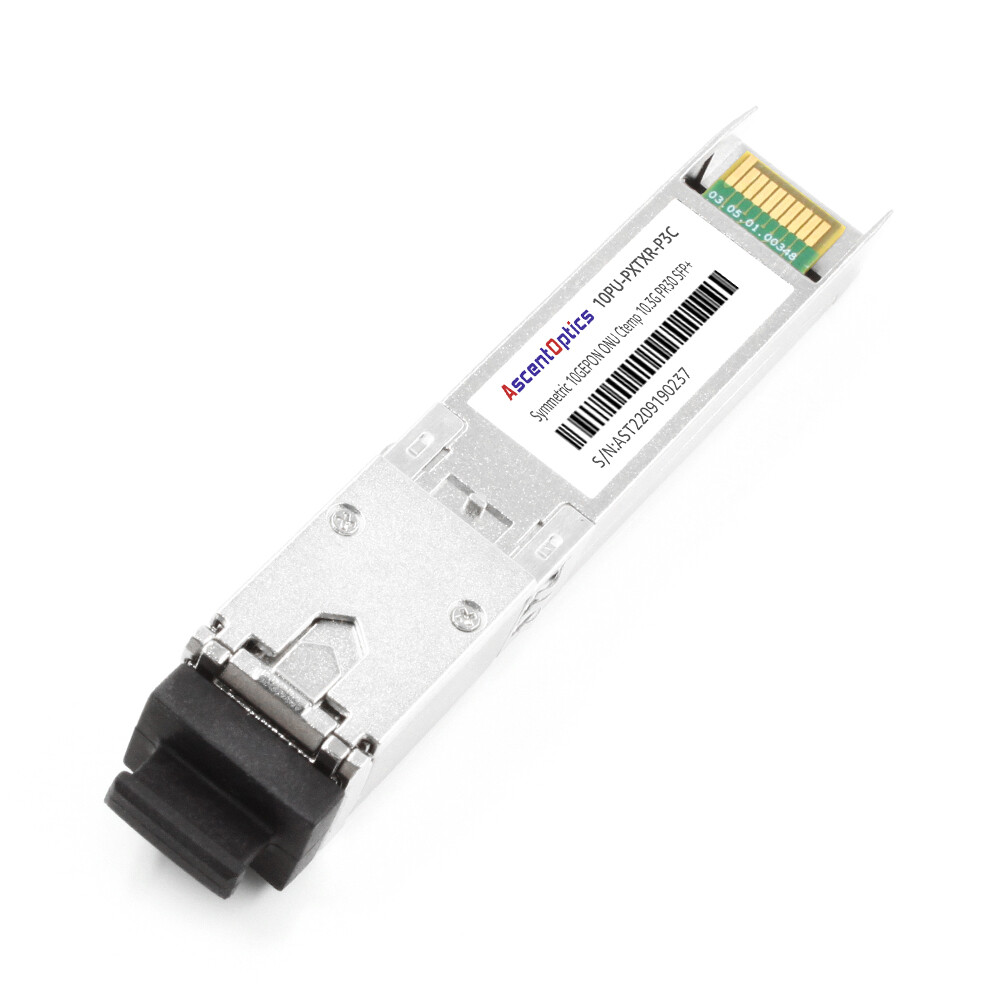
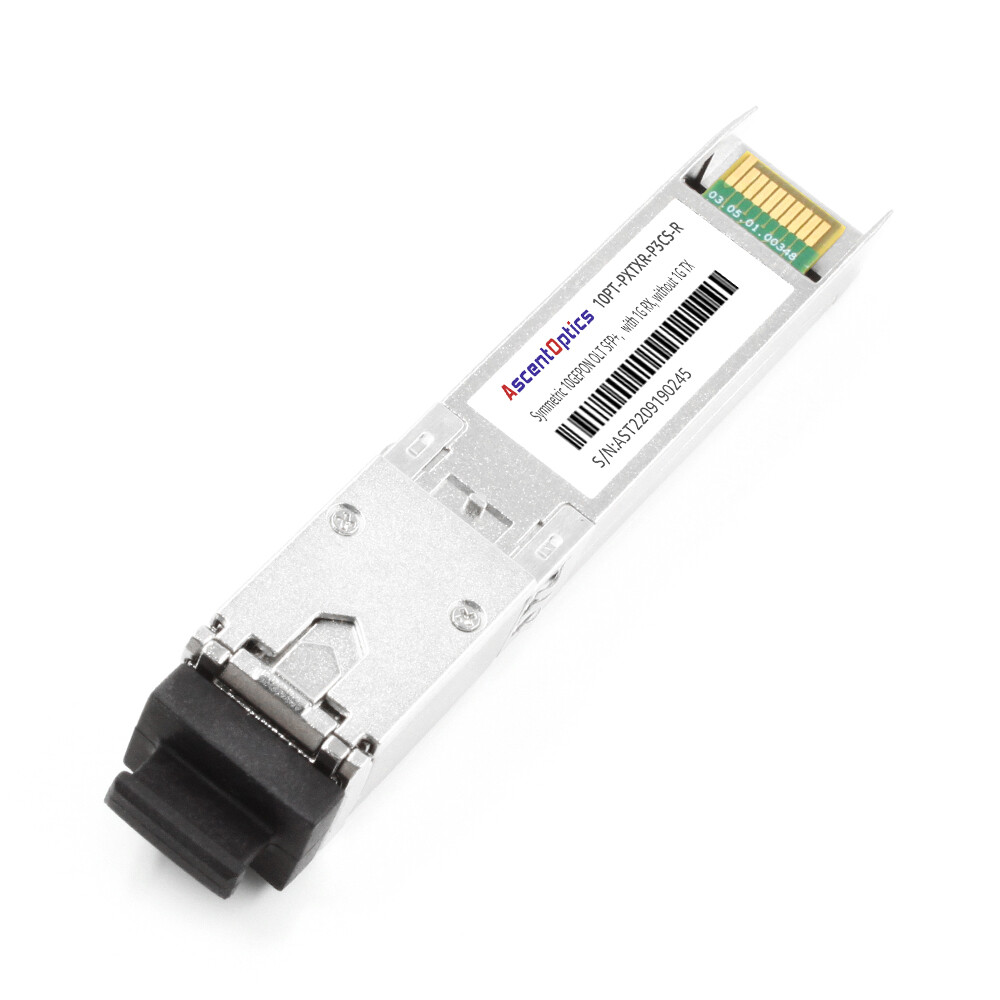
A Note About PON SFP Modules
A conventional Ethernet SFP is primarily a PHY/optical transceiver.
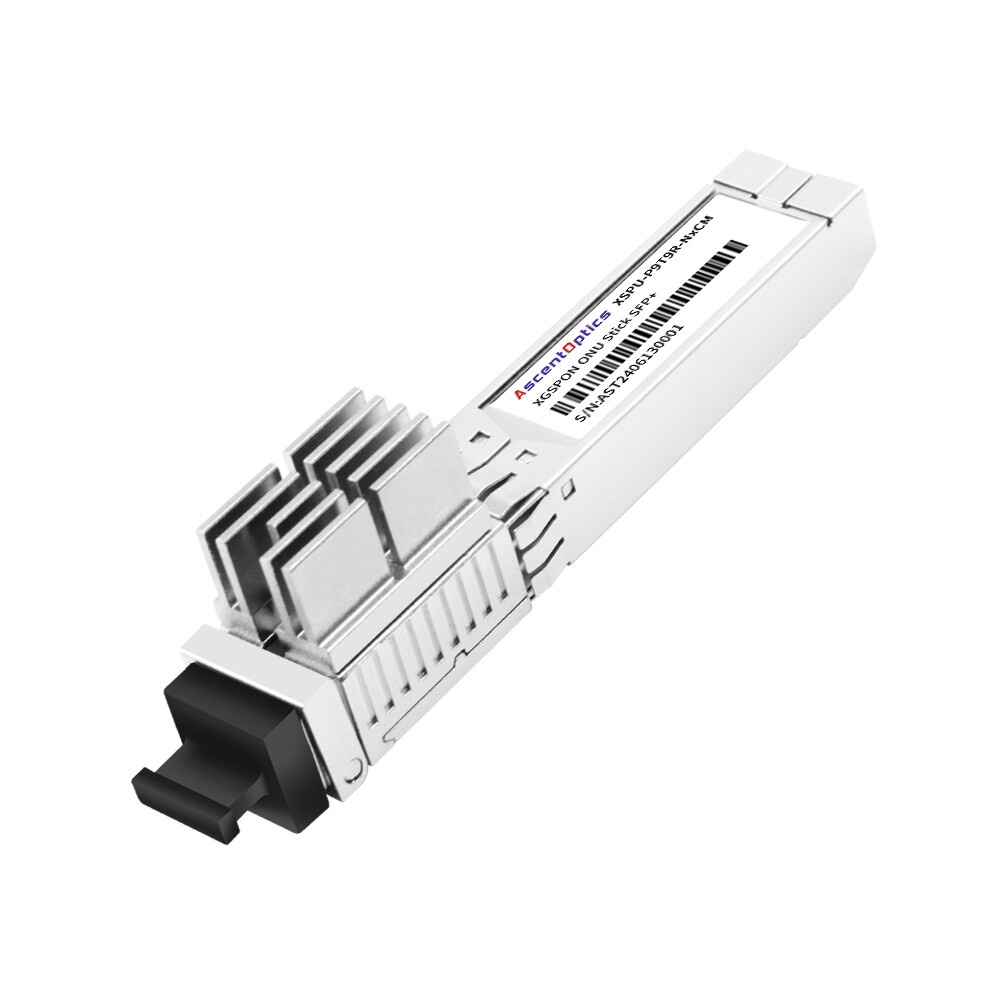
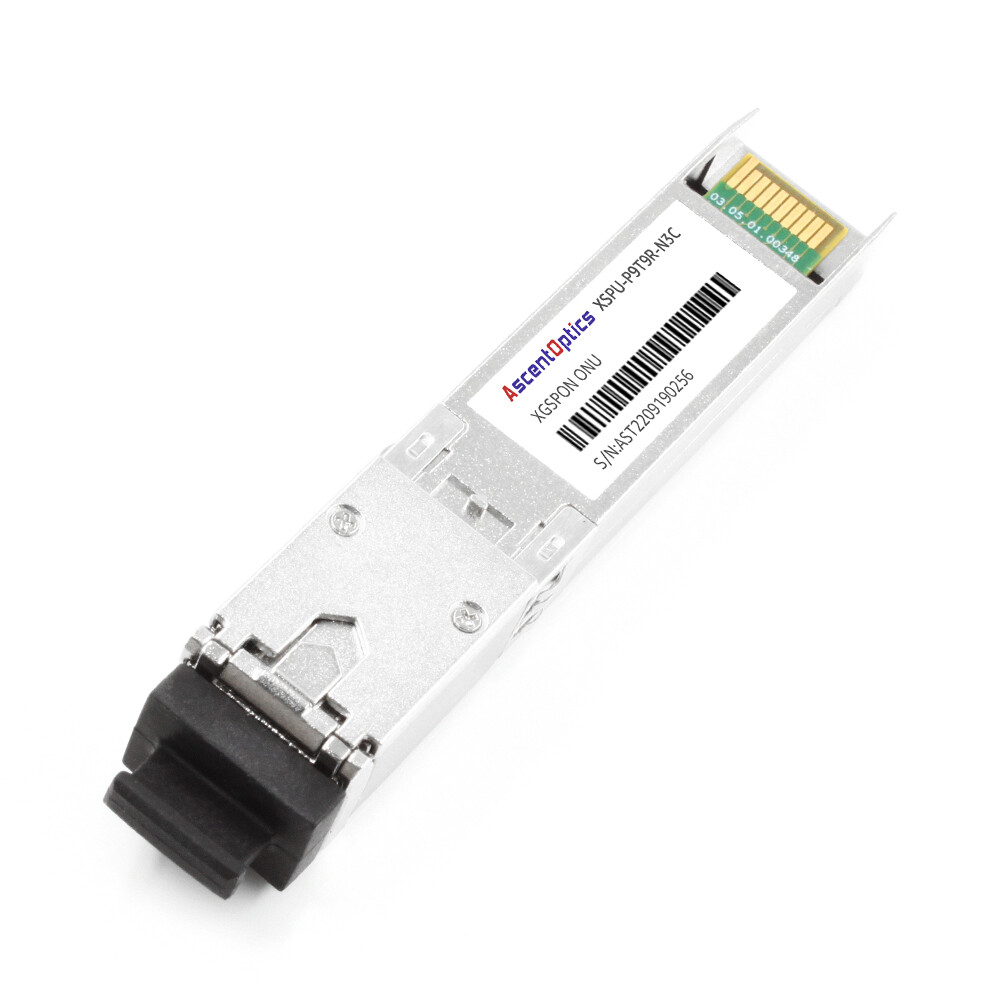
A GPON or EPON “ONU SFP,” sometimes called an ONU-on-a-stick, can be much more complex. Depending on the product, it may contain not only the optical transceiver but also PON MAC/TC processing, management functions, and ONU protocol logic.
For this reason, a GPON or EPON SFP should not be assumed to behave like an ordinary Ethernet optical module.
Compatibility must be verified against the OLT, host equipment, firmware, provisioning system, and required management protocol.
XPON Dual-Mode ONUs
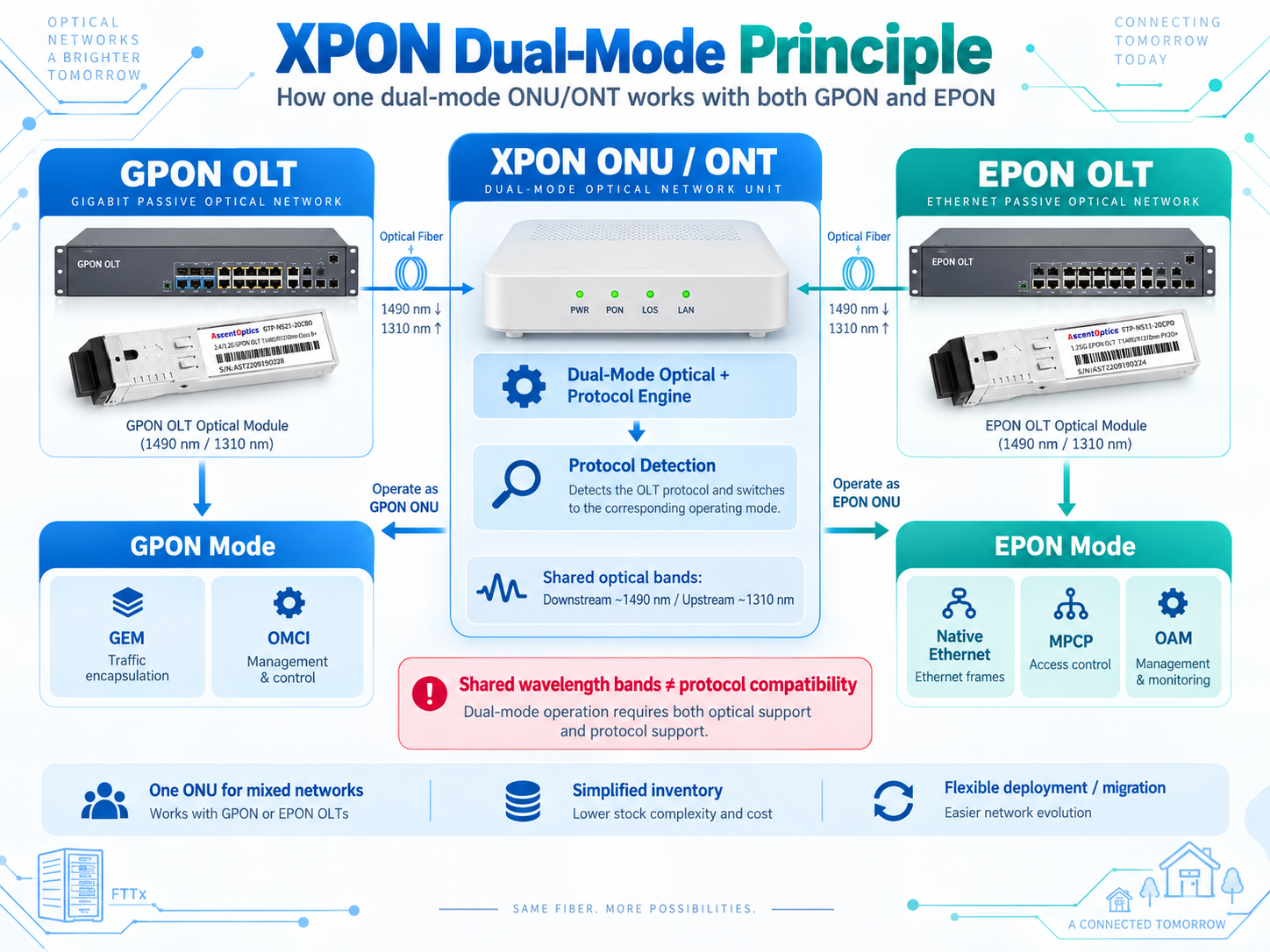
Products marketed as XPON commonly support both GPON and EPON operation.
The similar optical wavelength regions used by 1G GPON and 1G EPON make it possible for some devices to reuse much of the same optical front end.
However, automatic GPON/EPON detection is performed by dual-mode protocol hardware and software, not simply by detecting the optical wavelength.
A dual-mode XPON ONU typically identifies the PON protocol transmitted by the OLT and then operates using the appropriate GPON or EPON protocol stack.
Likewise, an OLT port must explicitly support the required PON mode. A standard GPON-only OLT port cannot become an EPON port merely by replacing the optical transceiver.
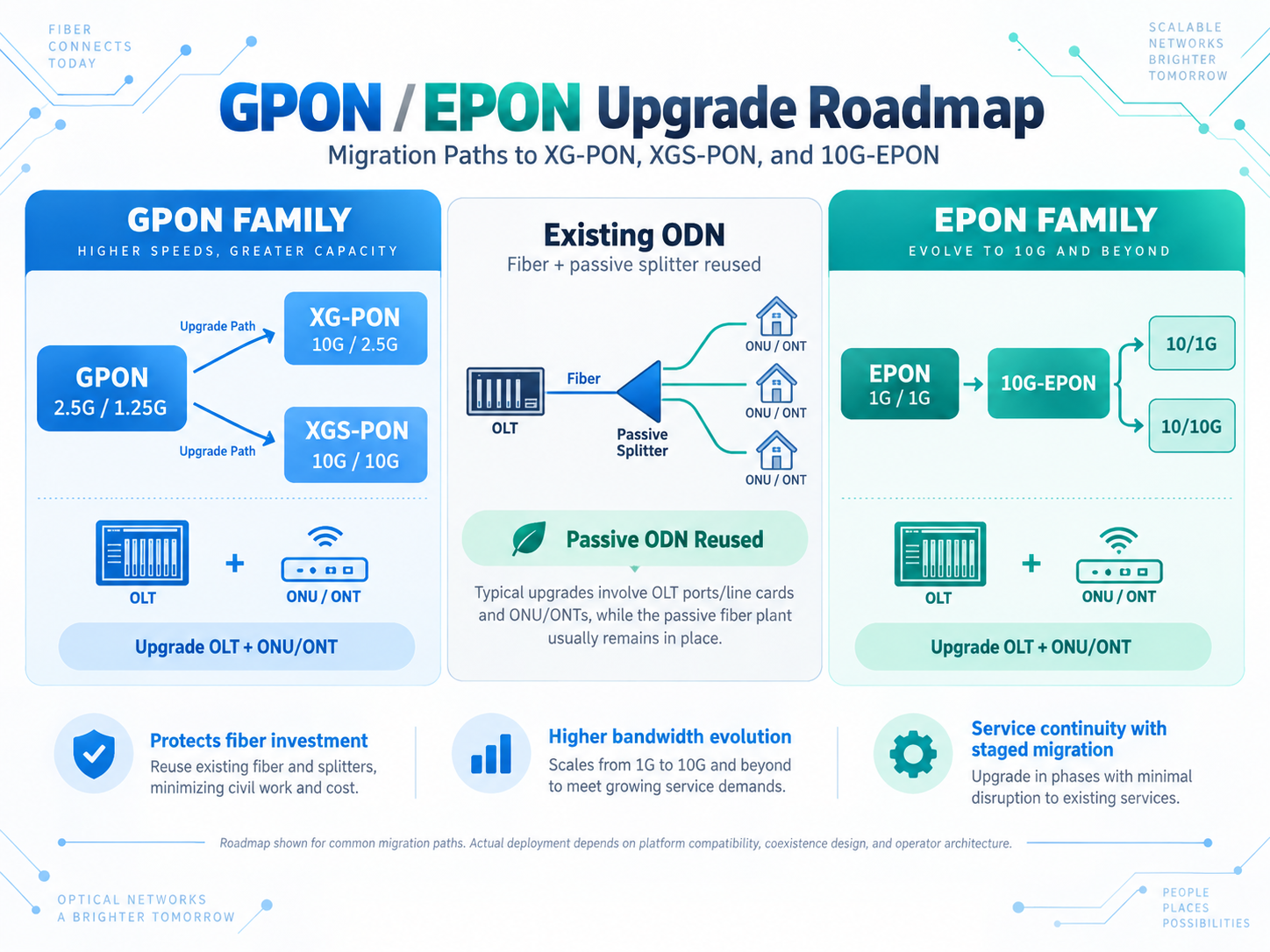
Next-Generation PON: XG-PON, XGS-PON, and 10G-EPON
The original GPON-versus-EPON comparison is increasingly being supplemented by their higher-speed successors.
XG-PON, standardized in the ITU-T G.987 series, uses approximately 9.953 Gbit/s downstream and 2.488 Gbit/s upstream. XGS-PON, standardized by ITU-T G.9807.1, provides approximately 9.953 Gbit/s in both directions. 10G-EPON, originally standardized in IEEE 802.3av and now part of IEEE 802.3, supports both:
10 Gbit/s downstream / 10 Gbit/s upstream symmetric operation, and 10 Gbit/s downstream / 1 Gbit/s upstream asymmetric operation. Its 10G physical channels use a 10.3125 Gbit/s line rate with 64B/66B coding.
Migration and Coexistence
An important advantage of both PON families is the ability to reuse existing optical distribution networks.
XGS-PON can coexist with legacy GPON infrastructure through standardized wavelength planning and coexistence architectures when the ODN and equipment meet the required specifications. 10G-EPON was similarly designed to support migration from 1G EPON. Its downstream wavelength is separated from 1G EPON, while upstream coexistence can use dual-rate operation.
This does not mean that operators simply replace one optical module. A typical migration may require new or upgraded OLT ports or line cards, new ONUs/ONTs, coexistence filters or Combo PON hardware, and corresponding management-system support.
The major asset that can usually be preserved is the passive ODN: the fiber, splitters, connectors, and outside plant.
How to Choose Between GPON and EPON
- 1. Check the installed ecosystem.
Determine which OLT platforms, ONUs, management systems, and technical support resources are already available.
2. Calculate the ODN rather than relying only on split ratio.
Verify fiber length, splitter loss, connector loss, splice loss, optical class, and engineering margin.
3. Compare service capacity.
Consider downstream and upstream traffic separately and model the number of subscribers sharing each PON port.
4. Verify interoperability.
Confirm OLT/ONU protocol, management, firmware, optical budget, and vendor compatibility instead of checking only wavelength and form factor.
5. Plan the next-generation migration.
For new networks, evaluate whether the platform provides a practical path toward XGS-PON, 10G-EPON, Combo PON, or other higher-speed PON technologies.
Conclusion
GPON and EPON both provide reliable broadband access over passive fiber networks, but they differ in speed, protocol architecture, split ratio, and deployment ecosystem.
GPON offers higher downstream capacity and is widely used in FTTH networks, while EPON provides native Ethernet operation and remains common in established EPON environments. In practice, the best choice depends on OLT/ONU compatibility, optical budget, subscriber density, cost, and the future migration path to XGS-PON or 10G-EPON.
FAQ
1. What is the main difference between GPON and EPON?
The main difference lies in their standards and protocol architecture. GPON is based on ITU-T G.984 and uses GEM encapsulation, while EPON is based on IEEE 802.3 and carries Ethernet frames directly.
2. Is GPON faster than EPON?
Yes, in downstream capacity. GPON typically provides 2.488 Gbit/s downstream and 1.244 Gbit/s upstream, while 1G EPON uses a 1.25 Gbit/s physical line rate in both directions.
After 8B/10B coding, EPON provides approximately 1 Gbit/s of Ethernet data capacity per direction before other protocol overhead.
3. Which supports a higher split ratio, GPON or EPON?
GPON commonly supports 1:32 or 1:64 split ratios, while conventional EPON deployments often use up to approximately 1:32.
However, the actual split ratio depends on the total ODN optical loss budget, including fiber attenuation, splitter loss, connectors, splices, and engineering margin.
4. Can GPON and EPON use the same fiber network?
In many cases, they can use similar passive fiber infrastructure because both operate around 1490 nm downstream and 1310 nm upstream.
However, GPON and EPON use different protocols, so GPON ONUs cannot normally operate directly on an EPON OLT, and vice versa, unless dual-mode XPON equipment is used.
5. What is an XPON ONU?
XPON generally refers to an ONU or ONT that supports both GPON and EPON.
The device uses dual-mode protocol hardware and software to detect the PON type provided by the OLT and then operate in the corresponding GPON or EPON mode.
6. Can a GPON optical module work in an EPON OLT?
Not necessarily.
Even if the wavelength, connector, and form factor are similar, GPON and EPON use different protocol, burst-mode timing, management, and upstream control mechanisms.
Compatibility should therefore be verified with the specific OLT platform rather than based only on optical specifications.
7. What are the upgrade paths for GPON and EPON?
GPON networks can typically migrate toward XG-PON or XGS-PON, while EPON networks can migrate toward 10G-EPON.
In many cases, the existing passive ODN—including fiber and splitters—can continue to be used, although OLT ports, line cards, ONUs/ONTs, and coexistence components may need to be upgraded.
Post Views: 759