Introduction
As demand for high-speed broadband continues to grow, network operators need access technologies that can provide greater bandwidth in both directions. GPON has been widely deployed for residential and business fiber access, but its asymmetric transmission rates can limit upstream capacity in bandwidth-intensive applications.
XGS-PON addresses this requirement by providing approximately 10 Gbps of downstream and upstream line rate over a passive optical network. It can also coexist with GPON on a shared optical distribution network when the wavelength plan, optical components, and equipment support coexistence.
This guide explains how XGS-PON works, compares it with GPON and XG-PON, and discusses the specifications and compatibility considerations involved in selecting XGS-PON optical modules.
What Is XGS-PON?
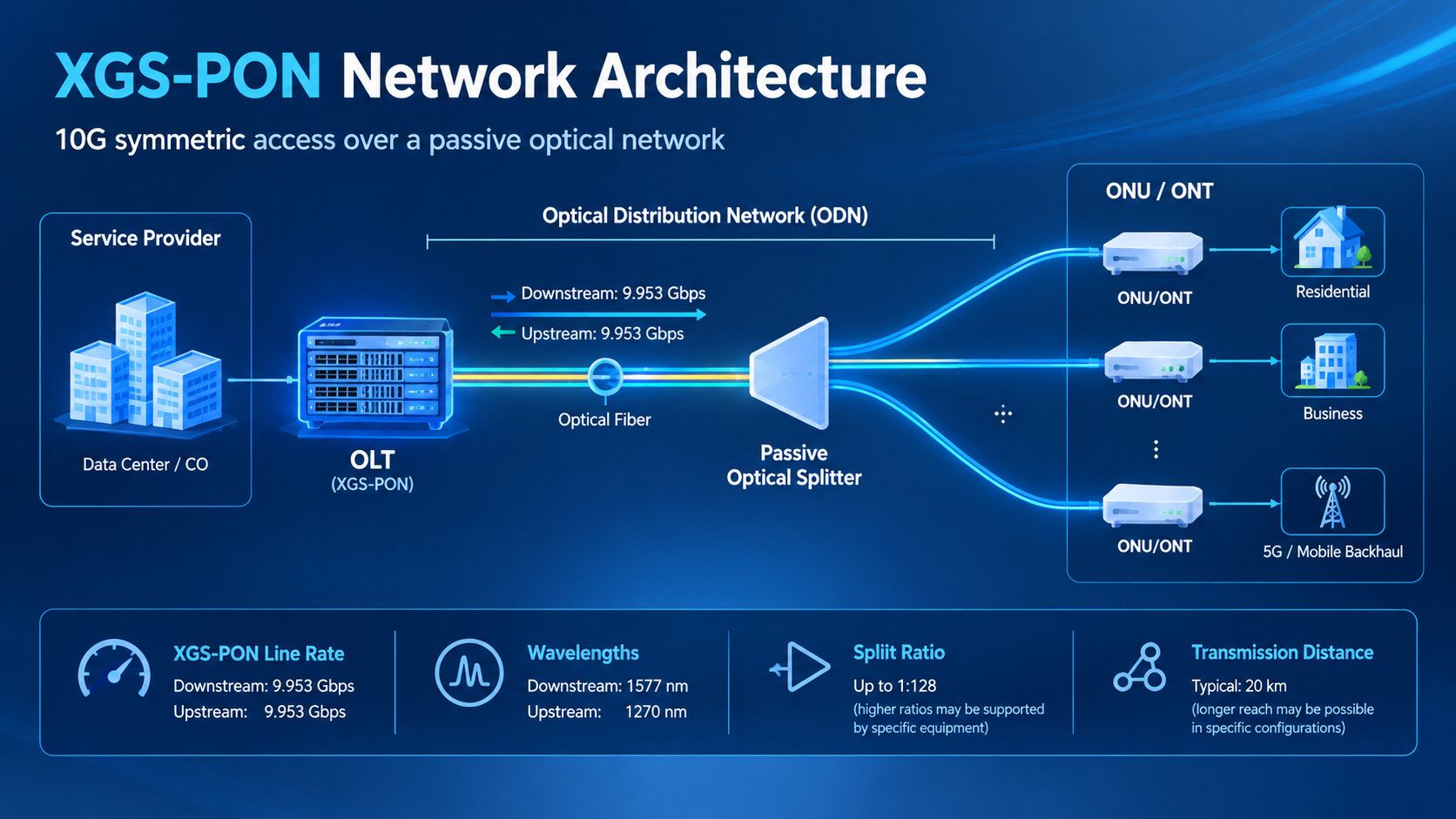
XGS-PON stands for 10-Gigabit-capable Symmetric Passive Optical Network. Defined by ITU-T Recommendation G.9807.1, it is a point-to-multipoint fiber access technology designed to provide approximately 10 Gbps downstream and 10 Gbps upstream line rates.
An XGS-PON system typically consists of an Optical Line Terminal (OLT) at the service provider’s central office, an Optical Distribution Network (ODN), and Optical Network Units (ONUs) or Optical Network Terminals (ONTs) at subscriber locations.
The ODN uses passive optical splitters to distribute optical signals among multiple subscribers. Because the distribution network does not require powered switching equipment, it can support a point-to-multipoint architecture with relatively simple outside-plant infrastructure.
The “S” in XGS-PON stands for symmetric, distinguishing it from XG-PON, which provides a higher downstream rate than upstream rate.
XGS-PON and XG-PON use the same nominal upstream and downstream wavelength bands. Their coexistence and interoperability depend on the equipment and network configuration; sharing a wavelength plan does not, by itself, guarantee that different generations of equipment can operate together.
XGS-PON vs. GPON: Key Differences
XGS-PON is often considered when operators need to increase access-network capacity while retaining as much of their existing fiber infrastructure as practical.
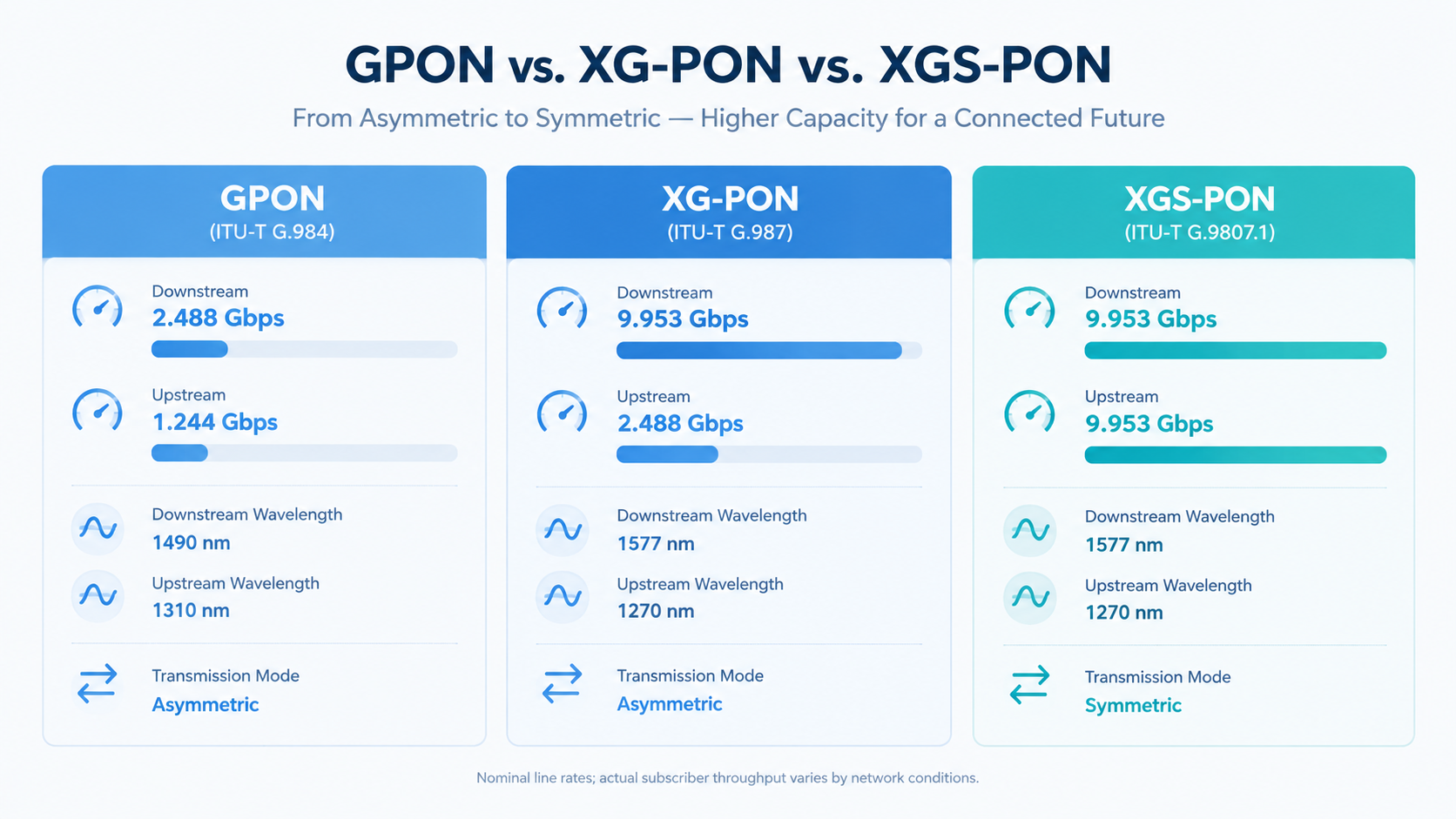
The following table summarizes the principal differences among GPON, XG-PON, and XGS-PON.
| Feature |
GPON |
XG-PON |
XGS-PON |
| ITU-T recommendation |
G.984 series |
G.987 series |
G.9807.1 |
| Downstream line rate |
Approximately 2.488 Gbps |
Approximately 9.953 Gbps |
Approximately 9.953 Gbps |
| Upstream line rate |
Approximately 1.244 Gbps |
Approximately 2.488 Gbps |
Approximately 9.953 Gbps |
| Nominal downstream wavelength |
1490 nm |
1577 nm |
1577 nm |
| Nominal upstream wavelength |
1310 nm |
1270 nm |
1270 nm |
| Transmission mode |
Asymmetric |
Asymmetric |
Symmetric |
Note: These are nominal line rates and wavelength values. Actual subscriber throughput depends on protocol overhead, service provisioning, network loading, and the capabilities of the deployed equipment.
Speed and Symmetry
The main difference between GPON and XGS-PON is the available line rate and the balance between downstream and upstream capacity.
GPON provides approximately 2.488 Gbps downstream and 1.244 Gbps upstream. XGS-PON increases these rates to approximately 9.953 Gbps in each direction.
This additional upstream capacity can benefit services such as cloud backups, video conferencing, content creation, enterprise connectivity, and certain mobile transport applications.
However, these are shared PON capacities rather than dedicated bandwidth guarantees for every subscriber. The throughput available to an individual user depends on the split ratio, traffic demand, DBA scheduling, service profiles, and other network conditions.
Wavelengths and Coexistence
GPON and XGS-PON use different nominal wavelength bands:
- •GPON: 1490 nm downstream and 1310 nm upstream.
- •XGS-PON: 1577 nm downstream and 1270 nm upstream.
This wavelength separation can allow both technologies to operate over a shared optical distribution network. A coexistence element, such as a wavelength-division multiplexing filter, can combine or separate the relevant optical signals.
The existing ODN may be reusable, but operators still need to verify splitter and filter characteristics, insertion loss, optical return loss, connector condition, and the compatibility of the OLT and subscriber equipment.
Therefore, an XGS-PON upgrade does not necessarily require replacing all outside-plant fiber and splitters, but the feasibility of reusing the existing infrastructure must be established through network design and optical-budget analysis.
XGS-PON Specifications: Wavelength, Split Ratio, and Power Budget
Understanding the optical specifications is essential when designing an XGS-PON network or selecting its optical modules.
Downstream and Upstream Wavelengths
XGS-PON uses different wavelengths for downstream and upstream transmission.
| Device |
Transmit wavelength |
Receive wavelength |
| OLT |
1577 nm |
1270 nm |
| ONU/ONT |
1270 nm |
1577 nm |
The nominal wavelength values are useful for identifying the transmission direction and checking module specifications. Actual compliant wavelength ranges and operating requirements should be confirmed against the applicable standard and the manufacturer’s datasheet.
Split Ratio and Reach
XGS-PON supports point-to-multipoint deployment through passive optical splitters. The practical split ratio depends on the OLT and ONU capabilities, optical link budget, ODN design, and service requirements.
A 1:64 split is a common planning example, while higher split ratios may be supported by particular equipment and network configurations. A higher split ratio introduces additional splitter loss, which reduces the optical margin available for fiber attenuation, connectors, splices, and other components.
A conventional XGS-PON deployment commonly uses a nominal reach of around 20 km. Extended-reach configurations may be possible, but they depend on the applicable specifications and the optical characteristics of the complete system. Operators should not assume that an extended reach or a particular split ratio is supported simply because an individual module advertises it.
Optical Link Budget Classes
The optical link budget describes the allowable optical path loss between the transmitter and receiver. It is a key factor in determining whether a PON can operate reliably over a particular ODN.
The following values are commonly associated with XGS-PON optical path loss classes:
| Class |
Minimum optical path loss |
Maximum optical path loss |
| N1 |
14 dB |
29 dB |
| N2 |
16 dB |
31 dB |
| E1 |
18 dB |
33 dB |
| E2 |
20 dB |
35 dB |
These values should be checked against the applicable version of ITU-T G.9807.1 and the specific OLT/ONU implementation before being used for engineering or procurement.
A higher maximum loss allowance can provide more flexibility for an ODN with greater attenuation. However, selecting a class also requires checking the minimum-loss requirement, receiver overload limits, transmitter characteristics, and other system constraints.
When comparing modules, review the specified optical class and the complete transmitter and receiver parameters rather than relying on a single advertised reach figure.
XGS-PON Optical Modules: ONU, ONT, and OLT SFP+
XGS-PON equipment may use pluggable optical modules to provide the optical interface between network electronics and the fiber plant. The module’s form factor and functionality vary according to the equipment architecture.
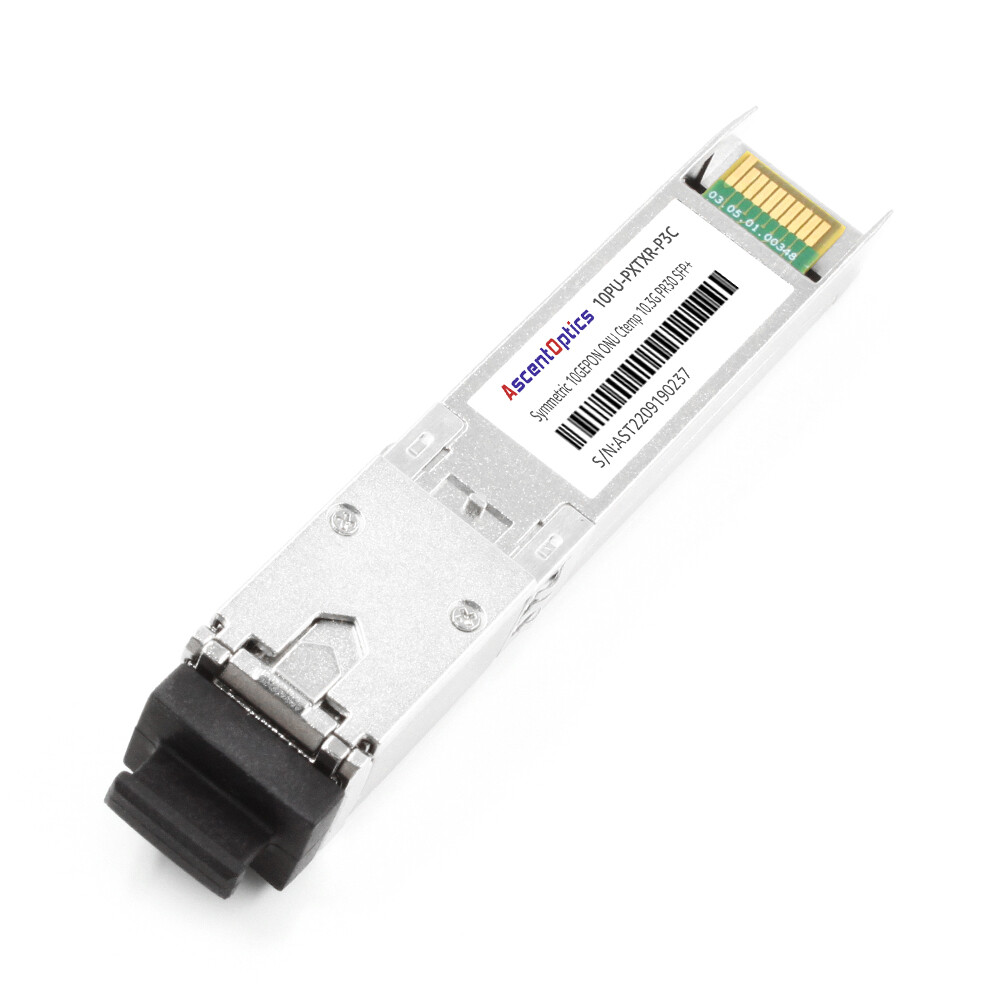
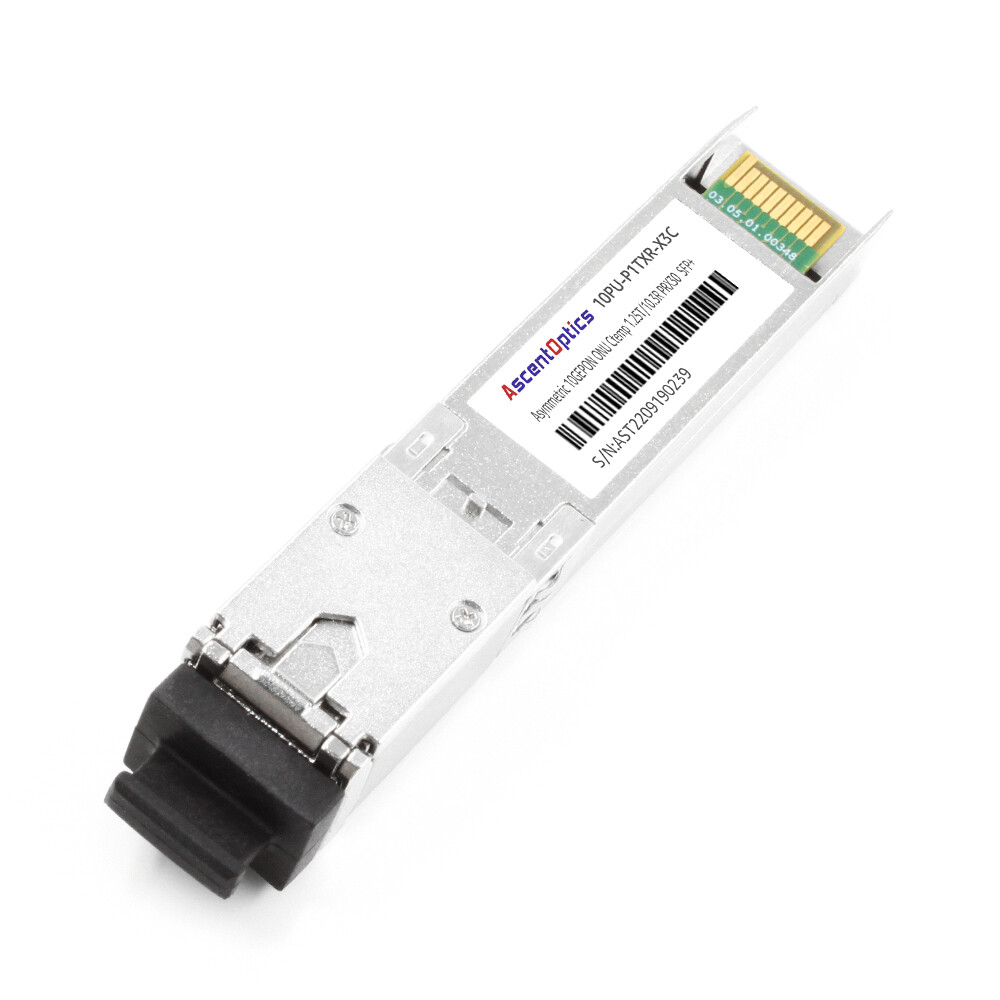
XGS-PON ONU and ONT SFP+ Modules
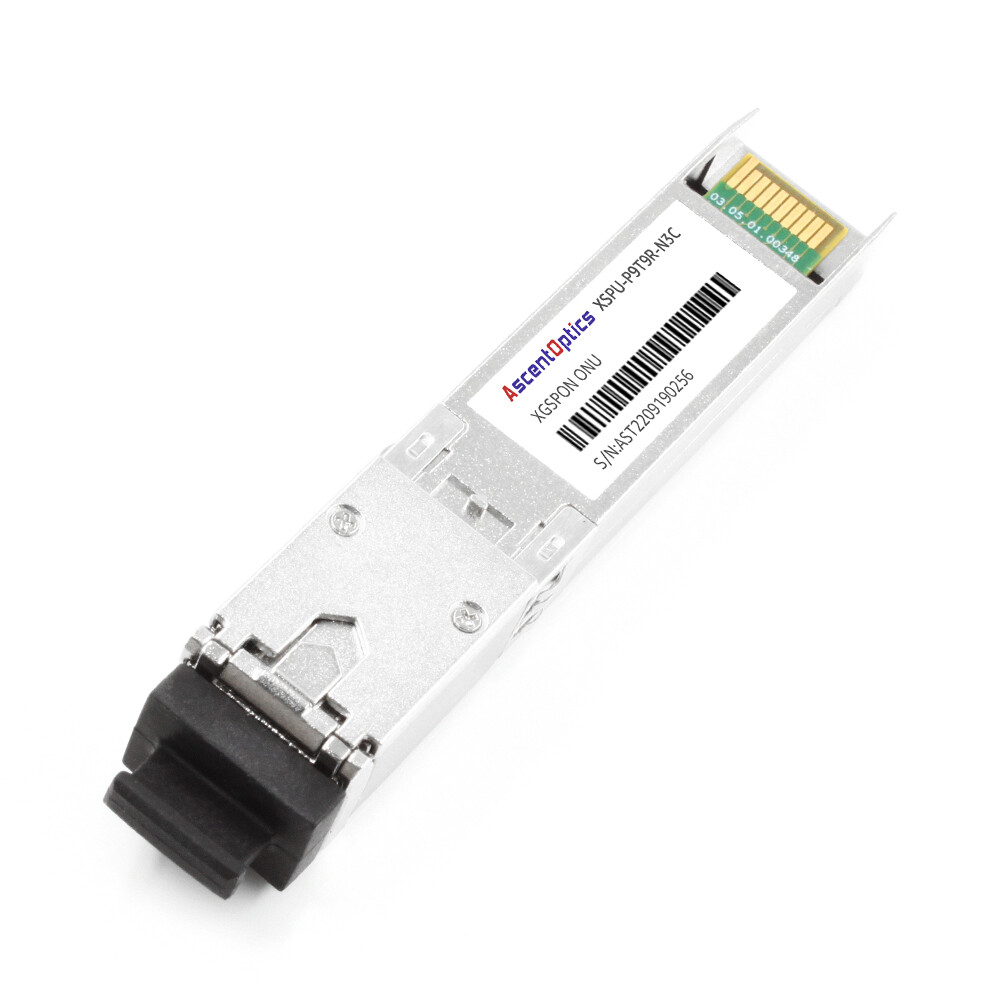
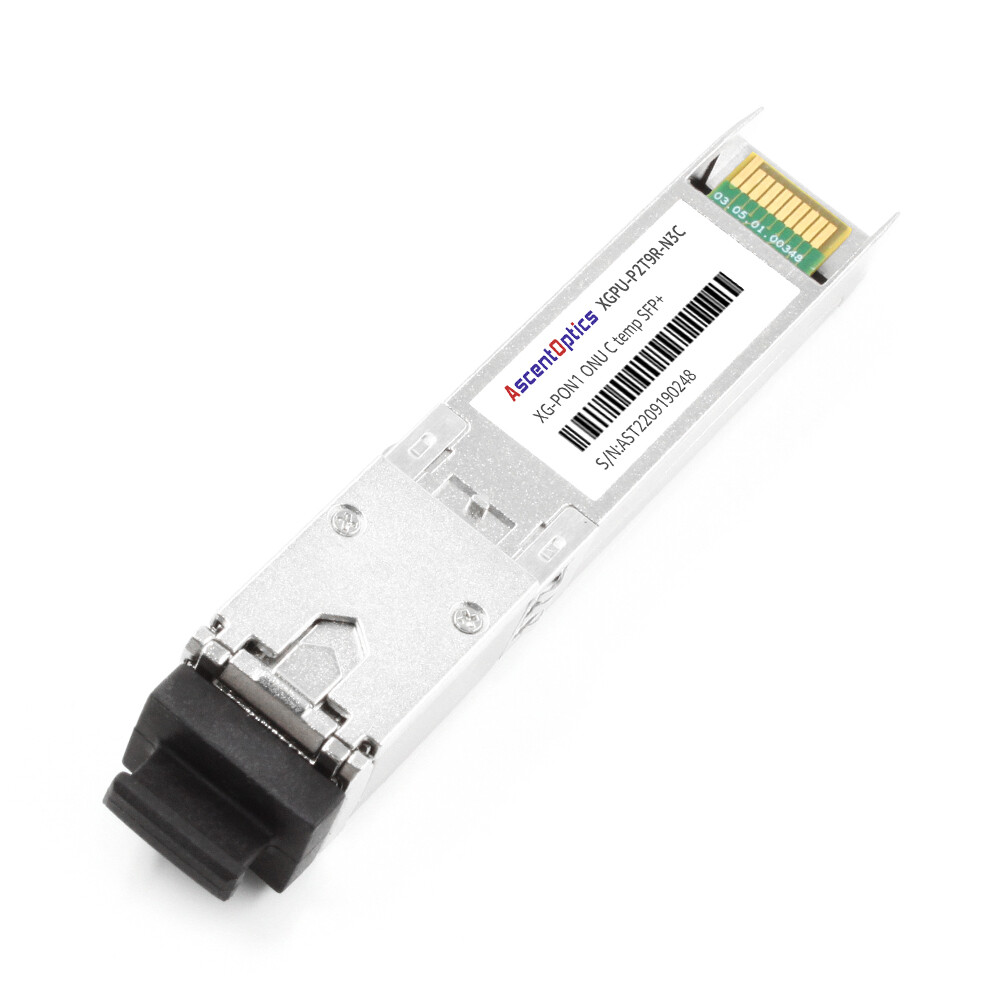
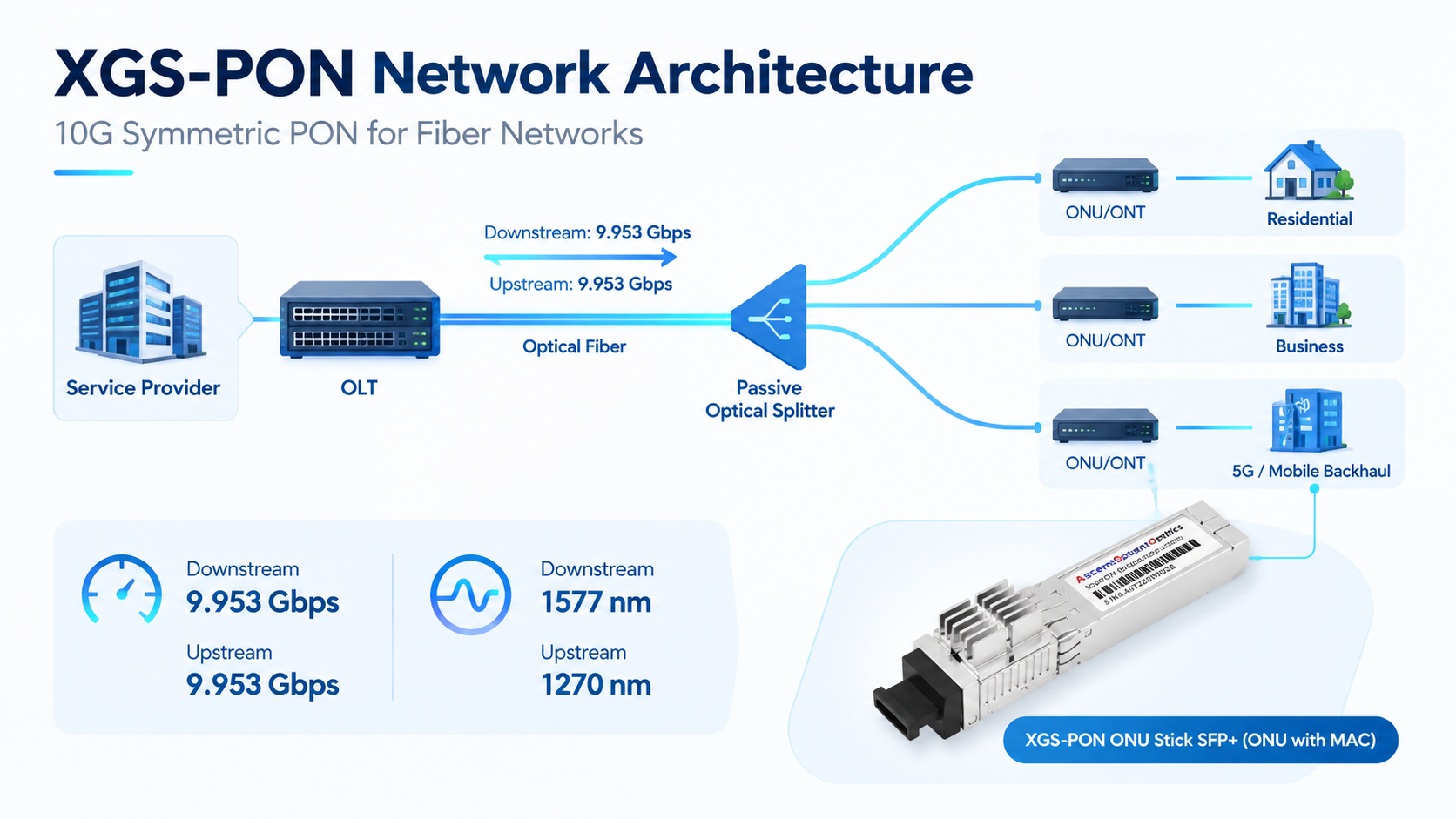
Some XGS-PON subscriber devices use an SFP+ module to integrate the optical interface into a router, gateway, or other host platform.
However, an SFP+ form factor does not automatically make a module a complete ONU. The module and host must collectively provide the required PON functions, including protocol processing, registration, and management.
Depending on the design, an implementation may require a host with dedicated PON MAC and protocol functionality, or it may use a module that integrates more of those functions internally.
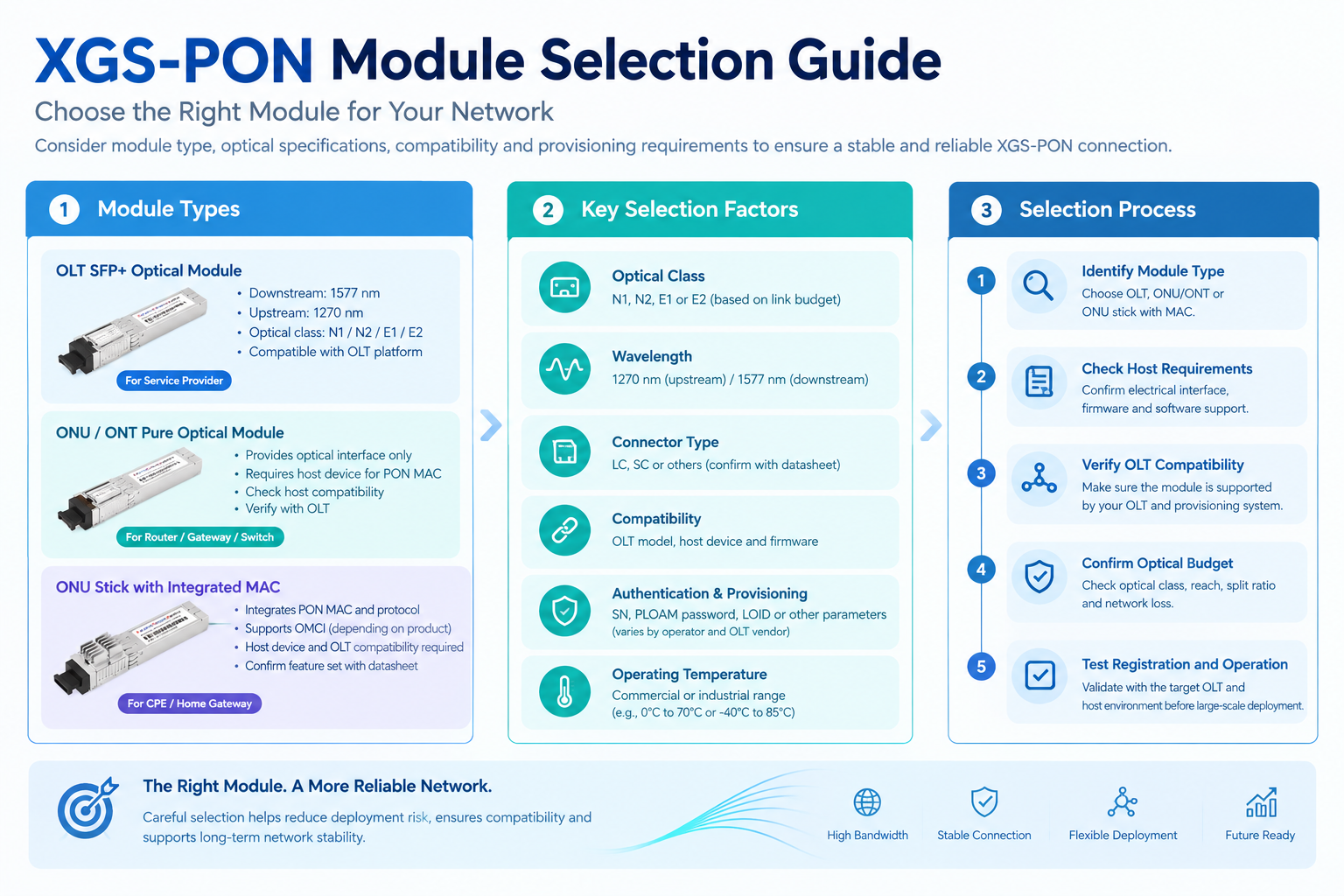
Before selecting a subscriber-side module, confirm:
- •Whether the module is a pure optical transceiver or an ONU-integrated device.
- •Whether the host provides the required PON MAC and protocol functions.
- •Whether the module supports the intended OLT and operator provisioning process.
- •The optical class, transmit power, receiver sensitivity, connector type, and power consumption.
- •The host’s electrical interface, firmware, and mechanical compatibility.
Optical specifications and supported features vary by product. Values such as transmit power, receiver sensitivity, power consumption, and connector type should therefore be taken from the exact module datasheet rather than generalized across all XGS-PON SFP+ products.
ONU Stick with MAC vs. Pure Optical ONU
XGS-PON SFP+ products may differ significantly in how much functionality they integrate.
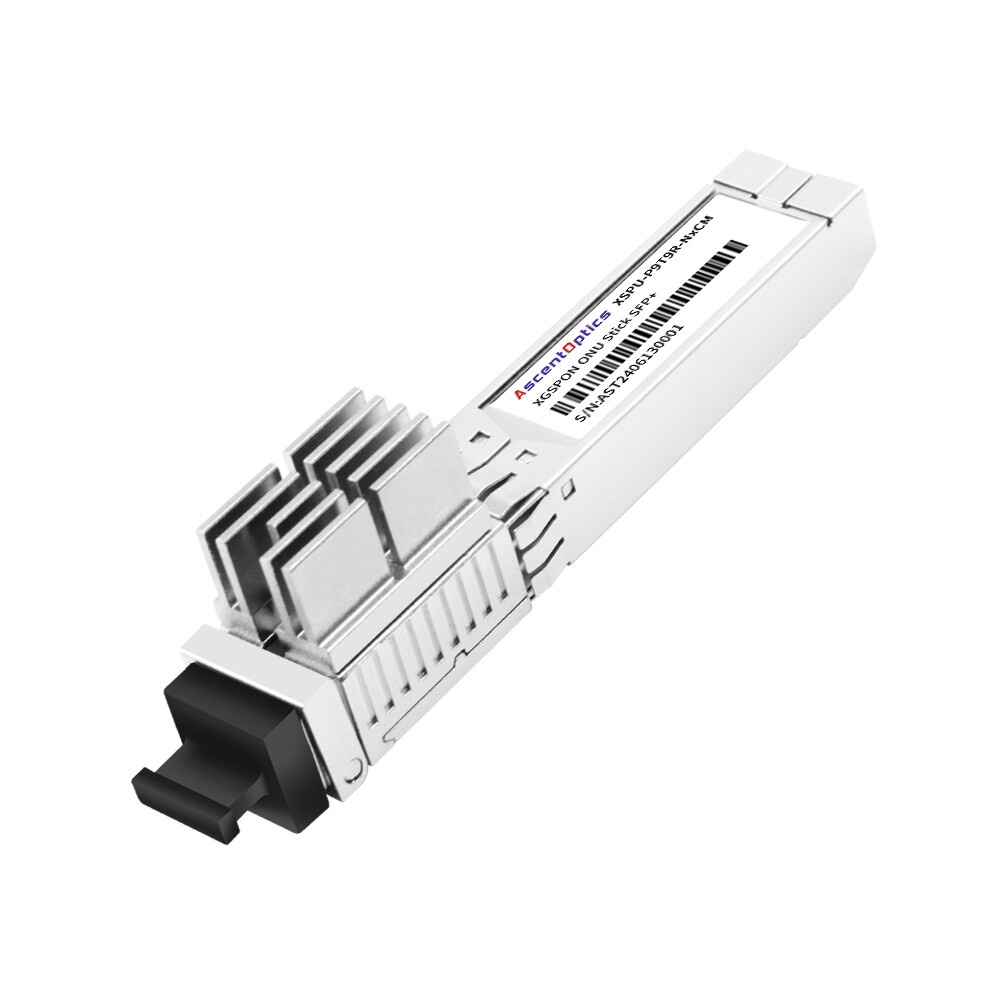
A pure optical module provides the optical interface but relies on the host equipment to provide the necessary PON MAC and protocol processing. It cannot be assumed to operate as a standalone ONU in an ordinary Ethernet SFP+ port.
An ONU stick with integrated MAC and protocol processing incorporates additional subscriber-side functionality into the module. Depending on the product, it may support management mechanisms such as OMCI, specified in ITU-T G.988.
Even an integrated ONU stick is not necessarily compatible with every router or switch. The host must support the module’s electrical interface and operating requirements, and the OLT may impose vendor-specific registration, authentication, or management requirements.
The key selection principle is to verify the complete module-host-OLT combination before deployment.
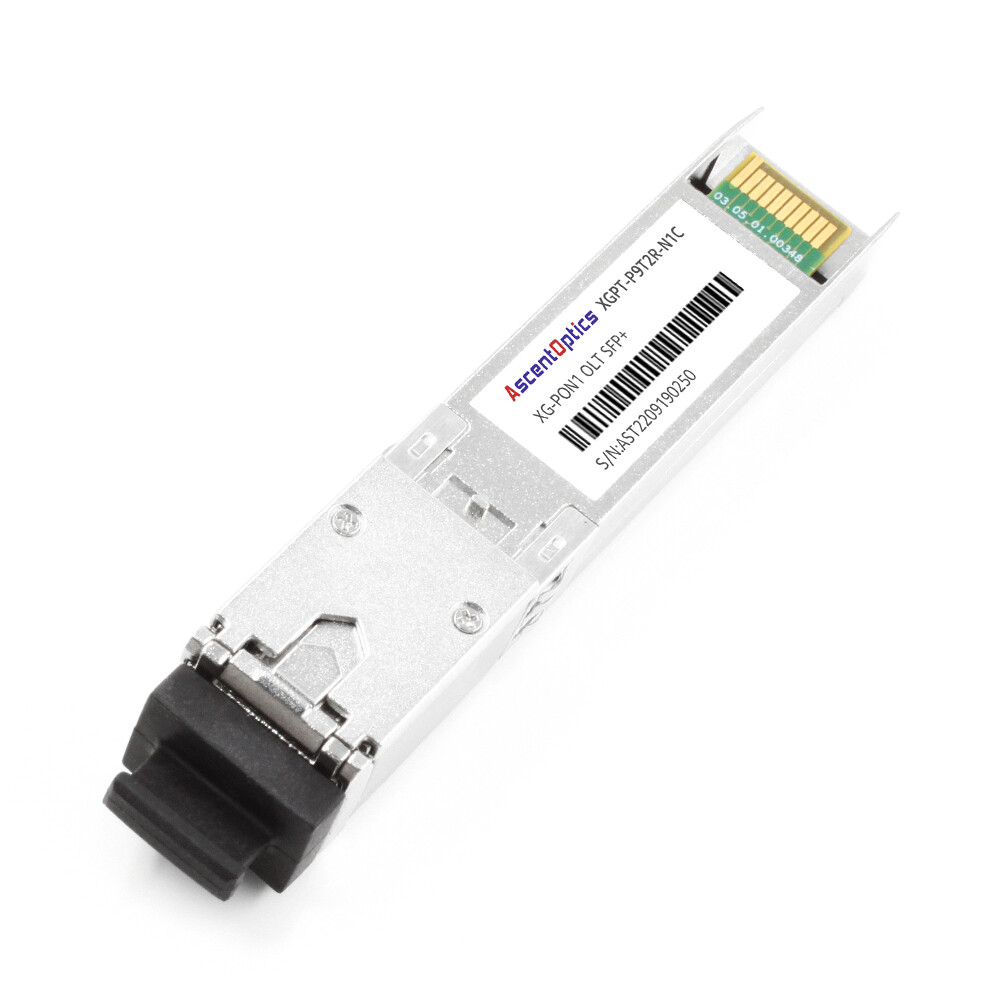
XGS-PON OLT SFP+ Transceivers
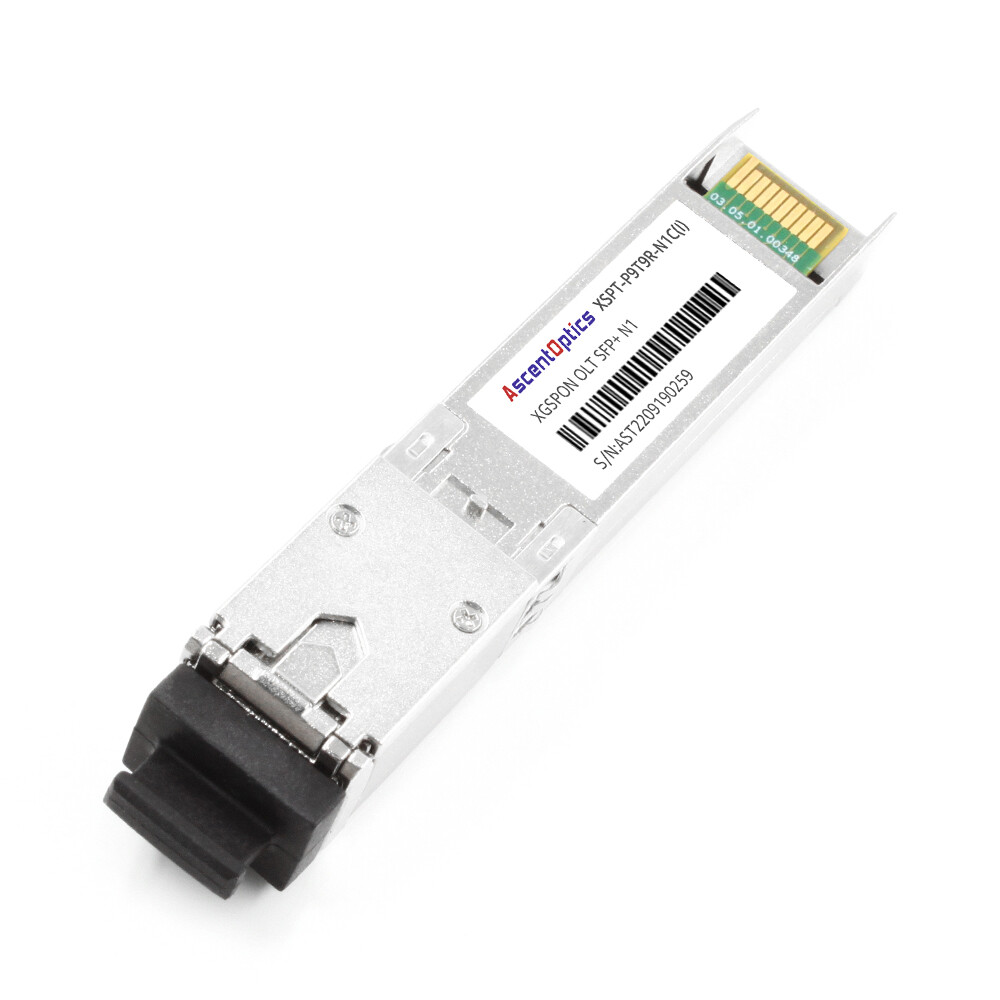
On the service-provider side, an XGS-PON OLT optical module provides the optical transmit and receive interface for the PON system.
The module typically transmits downstream at a nominal wavelength of 1577 nm and receives upstream at a nominal wavelength of 1270 nm.
The OLT platform performs the broader PON functions, including protocol processing, upstream scheduling, subscriber management, and service provisioning. The optical module alone does not terminate or manage the complete PON system.
When selecting an OLT module, operators should verify the supported optical class, transmit and receive specifications, OLT platform compatibility, temperature range, and vendor-specific requirements.
How to Choose an XGS-PON Module
Selecting an XGS-PON module requires more than matching the nominal data rate and wavelength. Compatibility with the OLT, host platform, and operator provisioning system is also essential.
OLT Registration: Serial Number, PLOAM Password, and LOID
An ONU generally needs to be discovered, registered, and authorized by the OLT before it can provide subscriber services.
Depending on the OLT vendor and operator configuration, provisioning may involve identifiers or credentials such as:
- •Serial number (SN): An ONU identifier that may be used during discovery and authorization.
- •PLOAM password: A password used by applicable PON authentication or registration procedures.
- •LOID: A Logical ONU ID used in some operator provisioning systems.
Not every network uses all three parameters, and their exact roles and configuration procedures vary. Operators should follow the documentation for the specific OLT and service-provider environment.
A module may have correct optical specifications and still fail to enter service because it is not supported by the OLT, its identity is not authorized, or its provisioning parameters are incorrect.
For this reason, test the exact module with the intended OLT and host configuration before placing a large order.
Compatibility and Quality Assurance
Optical compatibility requires the transmitter and receiver to operate within the limits of the complete link. The design should account for transmitter output power, receiver sensitivity, overload limits, fiber attenuation, splitter loss, connector loss, and other relevant impairments.
Environmental conditions also matter. A module must remain within its specified operating limits over the temperature range expected in the installation.
When evaluating a supplier, review the product datasheet, supported host platforms, temperature rating, compliance information, and available test documentation. Confirm which parameters are tested and whether testing is performed on every unit or by sampling.
A successful bench test under one set of conditions does not, by itself, establish compatibility across every OLT model or deployment environment.
What Comes After XGS-PON? NG-PON2, 25G PON, and 50G-PON
XGS-PON is part of a broader evolution in passive optical access. Several technologies provide alternative approaches to increasing capacity, and their suitability depends on network requirements, equipment availability, and deployment economics.
NG-PON2
NG-PON2 is defined by the ITU-T G.989 series. It uses multiple wavelength channels to increase aggregate capacity and supports a range of deployment and coexistence options.
Its architecture and optical requirements differ from those of XGS-PON. Operators evaluating NG-PON2 should consider the supported wavelength plan, tunability requirements, equipment ecosystem, and migration strategy.
25G PON
The term 25G PON is used for PON approaches offering a nominal 25 Gbps-class channel rate. The 25GS-PON MSA has developed specifications for this technology.
It is important not to treat every 25G PON implementation as interchangeable. Standards, MSA specifications, wavelength plans, optical interfaces, and equipment support need to be checked for the specific system under consideration.
50G-PON
50G-PON is addressed by the ITU-T G.9804 series. It is designed to increase access-network capacity beyond XGS-PON and introduces its own transmission and coexistence considerations.
Its deployment requirements should be evaluated using the applicable specifications and equipment documentation rather than assuming that it will provide a particular reach, cost, or upgrade path in every network.
Planning for Network Evolution
When planning an XGS-PON deployment, operators should consider their current capacity needs alongside future migration options.
Relevant factors include OLT platform flexibility, ODN loss and splitter architecture, coexistence requirements, subscriber equipment replacement, and the availability of compatible optical modules.
A clear migration plan helps operators understand which parts of the existing network may be reused and which components may need to be upgraded as access capacity increases.
XGS-PON Market Outlook
XGS-PON is used in fiber access networks that require higher symmetric bandwidth than GPON can provide. Adoption is influenced by broadband expansion, enterprise access requirements, network modernization, and operators’ decisions about how to increase capacity while managing deployment costs.
Market size and growth estimates vary according to the research firm’s definition of the market, the equipment categories included, geographic coverage, and forecast period. Any specific revenue figure or deployment forecast should therefore be accompanied by its source, publication date, and market definition.
For optical module suppliers and network operators, relevant market considerations include the installed base of PON equipment, OLT upgrade cycles, subscriber-premises equipment requirements, interoperability, and the transition toward higher-capacity PON technologies.
Conclusion
XGS-PON provides approximately 10 Gbps of downstream and upstream line rate, making it an important option for operators seeking greater symmetric capacity in fiber access networks.
Its use of a distinct wavelength plan from GPON can enable coexistence on a shared optical distribution network, provided the OLT, optical components, and network design support it. Actual reach and split ratio depend on the optical link budget and equipment capabilities.
When selecting XGS-PON optical modules, operators should check the optical class, transmitter and receiver specifications, host requirements, OLT compatibility, and provisioning process. They should also distinguish pure optical modules from devices that integrate ONU MAC and protocol functions.
A careful review of these factors helps reduce deployment risk and supports a more predictable migration to higher-capacity fiber access.
Frequently Asked Questions About XGS-PON
1. What is XGS-PON?
XGS-PON is a 10-Gigabit-capable symmetric passive optical network standard defined by ITU-T G.9807.1. It provides approximately 10 Gbps downstream and 10 Gbps upstream line rates over a passive optical network.
2. What is the difference between XGS-PON and GPON?
GPON provides approximately 2.488 Gbps downstream and 1.244 Gbps upstream, while XGS-PON supports approximately 9.953 Gbps in both directions. XGS-PON therefore offers substantially greater upstream and downstream capacity.
3. Can XGS-PON coexist with GPON on the same fiber?
Yes. XGS-PON and GPON use different wavelength bands, allowing them to coexist on a shared optical distribution network when compatible OLT equipment and wavelength multiplexing components are used.
4. What wavelengths does XGS-PON use?
XGS-PON uses a nominal wavelength of 1577 nm for downstream transmission and 1270 nm for upstream transmission. The OLT transmits downstream and receives upstream, while the ONU/ONT performs the reverse.
5. What is the typical transmission distance of XGS-PON?
A conventional XGS-PON deployment commonly uses a nominal reach of around 20 km. Longer reach may be possible in specific configurations, depending on the optical budget, network design, and equipment capabilities.
6. What is the maximum split ratio of XGS-PON?
The supported split ratio depends on the OLT, ONU, and optical distribution network. A 1:64 split is a common deployment configuration, while higher ratios may be supported by specific equipment. The optical link budget must be checked before selecting a split ratio.
7. What is the difference between an XGS-PON ONU stick and a pure optical module?
A pure optical module provides the optical interface and relies on the host device to provide the required PON MAC and protocol functions. An ONU stick with integrated functionality incorporates additional ONU processing into the module. Their host-device and OLT compatibility requirements may differ.
8. Can an XGS-PON SFP+ module work with any SFP+ port?
No. An SFP+ port does not automatically support XGS-PON functionality. Compatibility depends on the module’s design, the host device’s hardware and software, the required PON processing functions, and the OLT’s provisioning requirements.
Post Views: 1,300