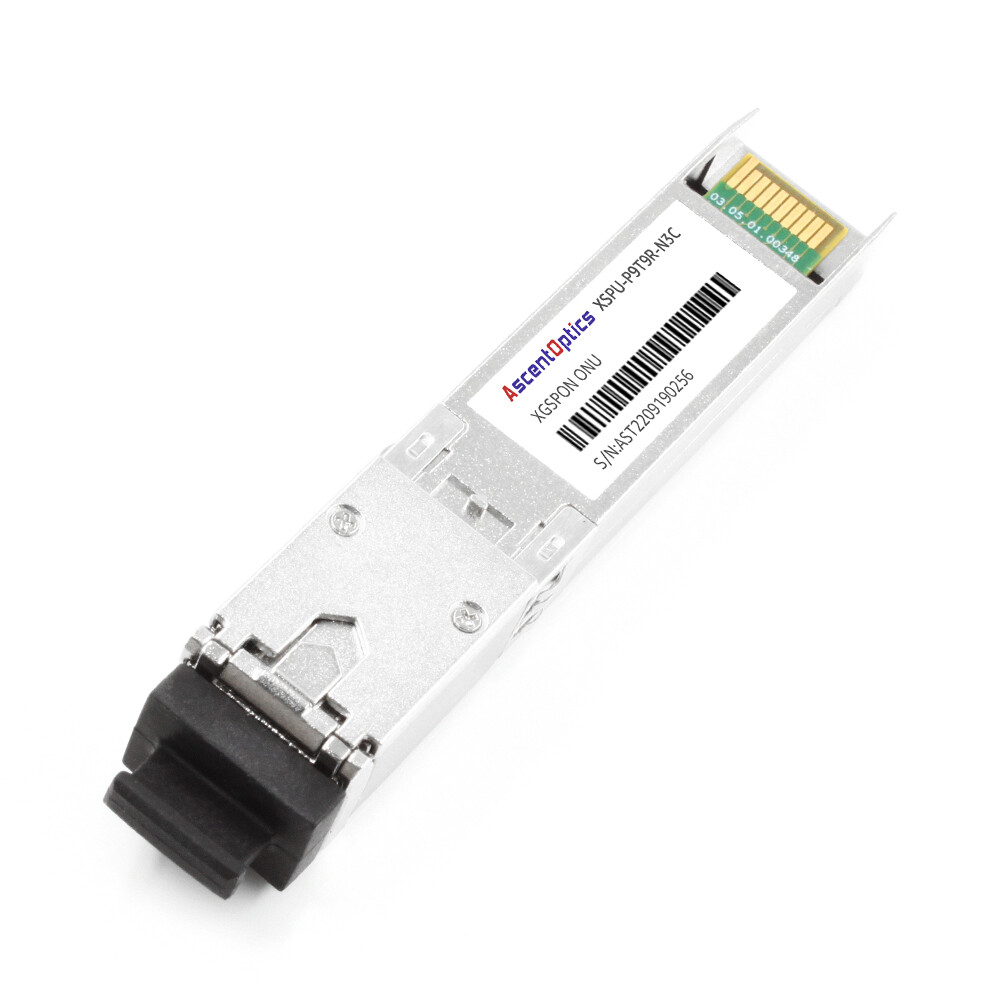
GPON (Gigabit Passive Optical Network) is a point-to-multipoint fiber-optic access technology. It utilizes an OLT, passive splitters, and ONUs to form a network, delivering downstream speeds of 2.488 Gbps and upstream speeds of 1.244 Gbps over a single fiber. Capable of supporting services such as broadband, IPTV, and voice with a coverage range of up to 20 kilometers, it offers the advantages of high bandwidth, low energy consumption, and easy scalability.
What Is GPON?
GPON stands for Gigabit Passive Optical Network. It is a fiber access technology defined by the ITU-T G.984 standard series, and it is the workhorse behind most fiber-to-the-home (FTTH) deployments around the world.
The “passive” part is the key to the whole idea. In a traditional copper network, powered equipment sits along the path to boost and route the signal. A GPON network has none of that between the provider and the subscriber. One fiber leaves a central office, runs through an unpowered optical splitter, and fans out to serve many homes at once.
That point-to-multipoint design is what makes GPON economical. One port on the provider side, plus one passive splitter, replaces dozens of dedicated fiber runs and dozens of powered nodes. The result is a network that costs far less to build and even less to operate.
GPON Architecture: OLT, Splitter, and ONT
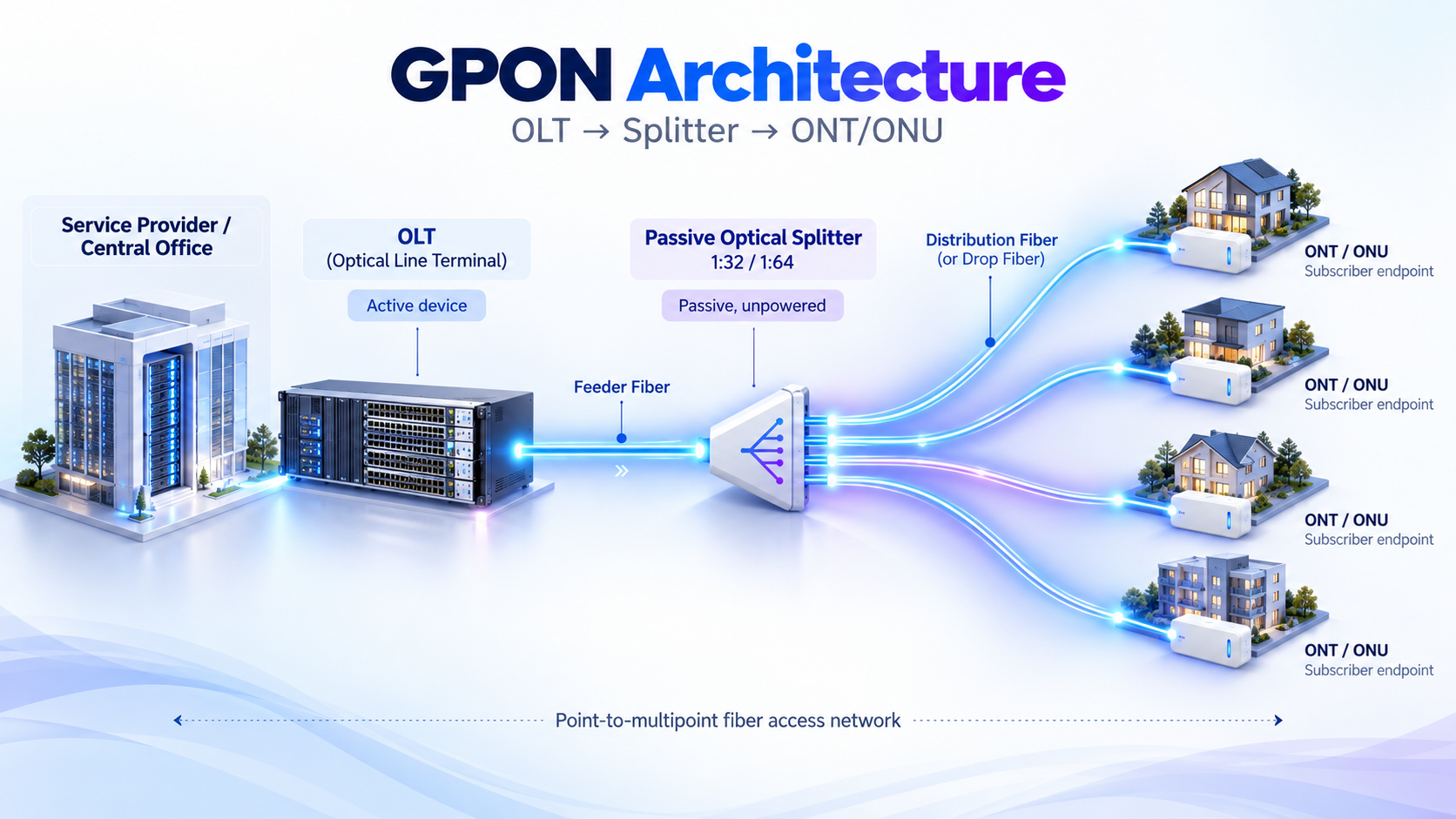
A GPON network has three main components, plus the fiber plant that connects them.
OLT: The Optical Line Terminal
The Optical Line Terminal (OLT) lives at the provider’s end, usually in a central office or a street cabinet. It is the active device that aggregates subscriber traffic and connects it to the wider network.
The OLT converts electrical signals from the core network into optical signals heading downstream, and it coordinates all the subscribers sharing each fiber. It also handles management, assigning bandwidth and time slots so that dozens of homes can share one strand without talking over each other.
The Passive Optical Splitter
The optical splitter is the component that makes GPON “passive.” It is an unpowered device that takes one incoming fiber and divides its light across multiple output fibers.
Splitters come in ratios like 1:32, 1:64, and up to 1:128. A 1:32 splitter lets one OLT port serve 32 homes. Because the splitter has no electronics, it has nothing to fail, nothing to power, and nothing to visit for maintenance. Typical commercial deployments commonly use 1:32 or 1:64 splits, while higher split ratios such as 1:128 require higher optical budgets.
ONT / ONU: The Subscriber Endpoint
The Optical Network Terminal (ONT) sits at the customer’s premises. It receives the optical signal, converts it back into electrical signals, and delivers internet, voice, and video to the home’s devices.
ONT is a type of ONU designed for customer premises. In FTTH deployments, the terms ONU and ONT are often used interchangeably, although ONT typically refers specifically to a subscriber-side unit. For a deeper look at how these roles differ, see our guide to PON OLT vs ONU architecture.
ODN: The Optical Distribution Network
The Optical Distribution Network (ODN) is the passive fiber infrastructure between the OLT and the ONT: the cables, connectors, and splitters. It contains no active electronics, which is the whole point.
How Does GPON Work? Upstream and Downstream
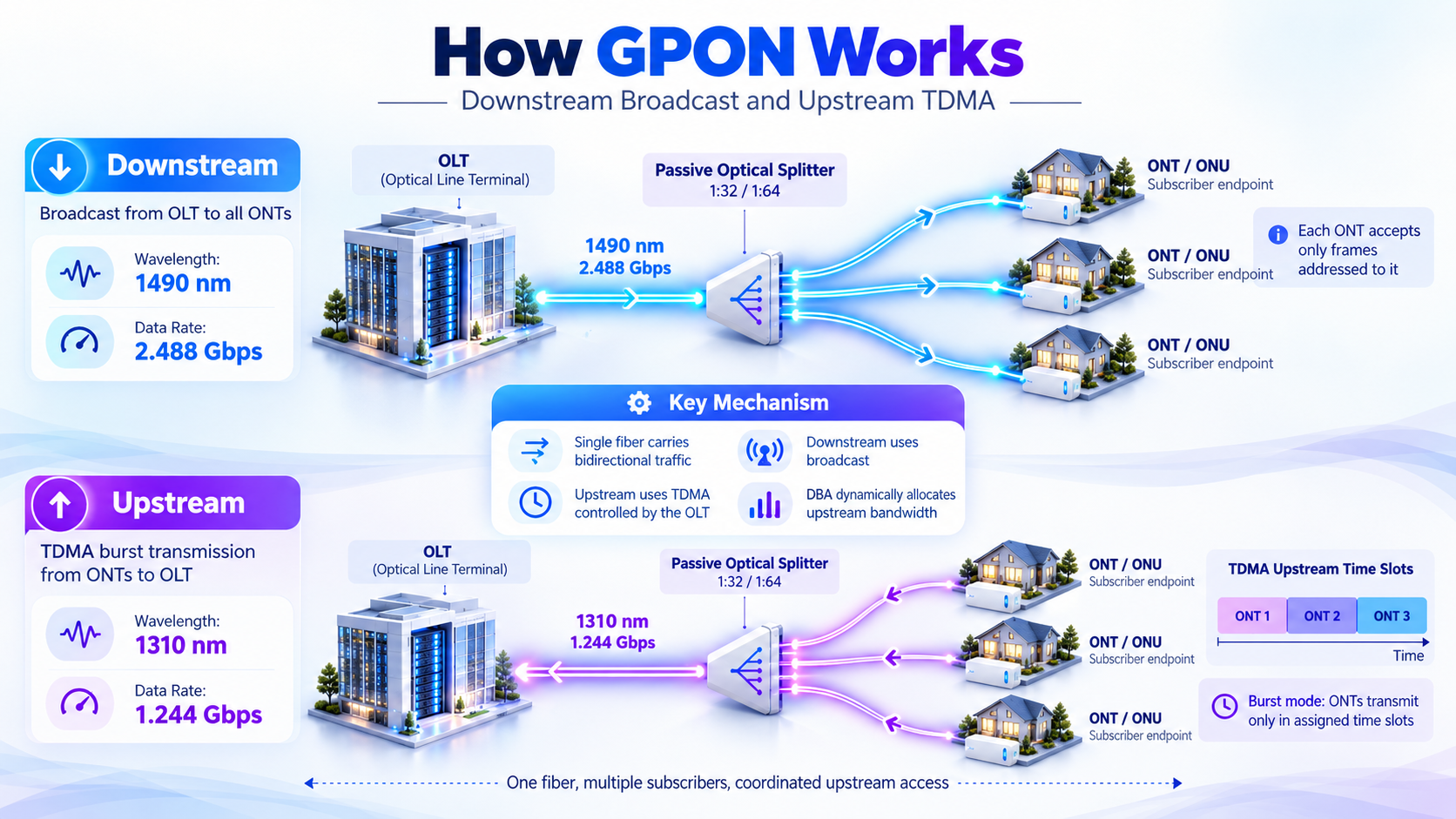
A single fiber carries traffic in both directions at once, but GPON treats the two directions differently. That asymmetry is central to how it works.
Downstream: Broadcast from the OLT
Downstream traffic travels at 1490 nm and runs at 2.488 Gbps. The OLT broadcasts every frame to every ONT on the fiber. Each ONT then accepts only the frames addressed to it and discards the rest.
This is simple and efficient. The OLT does not need to know the physical path to each home; it just sends everything downstream and lets each ONT filter by its own identifier.
Upstream: TDMA Time Slots
Upstream traffic travels at 1310 nm and runs at 1.244 Gbps. Here the problem is different: all the ONTs share one fiber, and if two of them transmit at the same time, the signals collide.
GPON solves this with Time Division Multiple Access (TDMA). The OLT assigns each ONT a specific time slot in which to transmit. Each ONT fires its laser only during its slot and stays dark the rest of the time. This burst-mode operation is why GPON ONU optics behave differently from the continuous-mode optics in a normal Ethernet transceiver.
Dynamic Bandwidth Allocation
Not every home needs the same share at the same time. Dynamic Bandwidth Allocation (DBA) lets the OLT adjust each ONT’s time slot based on live demand. A home streaming video in the evening can be given more upstream capacity than a neighbor who is mostly idle.
GEM Encapsulation and OMCI
GPON wraps user data in a format called GEM (GPON Encapsulation Method), which carries Ethernet frames and TDM voice traffic together efficiently. On top of that, OMCI (ONT Management and Control Interface) gives the provider a channel to configure and manage each ONT remotely.
Security is built in. GPON encrypts downstream traffic with AES encryption and applies forward error correction to keep the signal clean over distance.
GPON Speed and Capacity
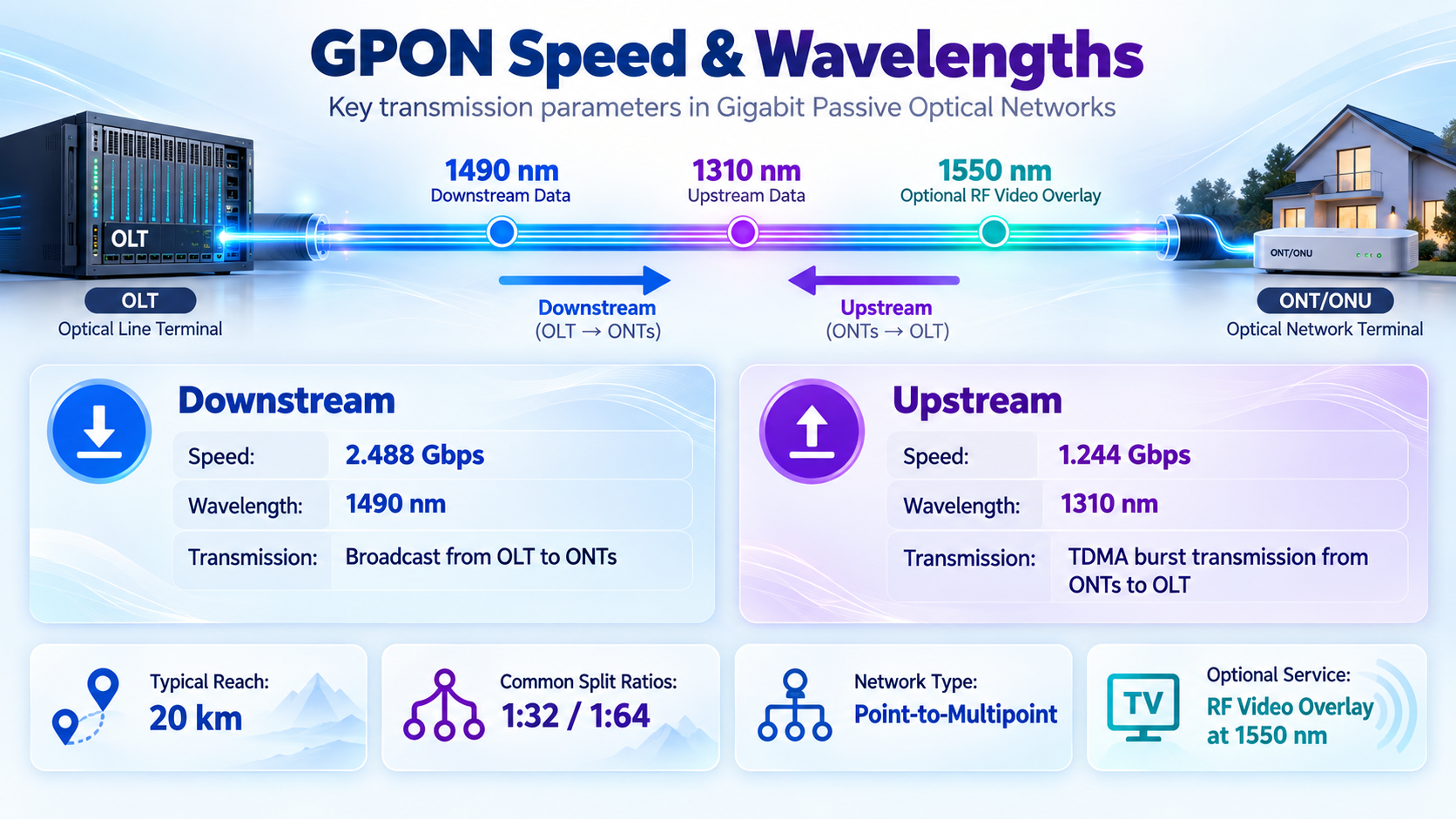
GPON delivers 2.488 Gbps downstream and 1.244 Gbps upstream, an asymmetric split that matches how most consumers actually use the internet: far more downloading than uploading.
That bandwidth is shared across every subscriber on the same splitter. A 1:32 split means 32 homes share the 2.488 Gbps downstream, which still works out to comfortable margins for typical usage because not everyone peaks at the same moment.
The wavelength plan is worth knowing because it recurs across PON standards:
- 1490 nm carries downstream data
- 1310 nm carries upstream data
- 1550 nm is reserved for an optional RF video overlay (cable TV)
Reach is typically 20 km between OLT and ONT, with logical reach extendable to around 60 km in some configurations. Split ratio and distance trade off against each other, which is where optical budget classes come in.
GPON Optical Modules: OLT, ONU, and Optical Budget Classes
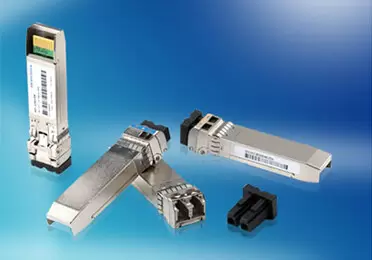
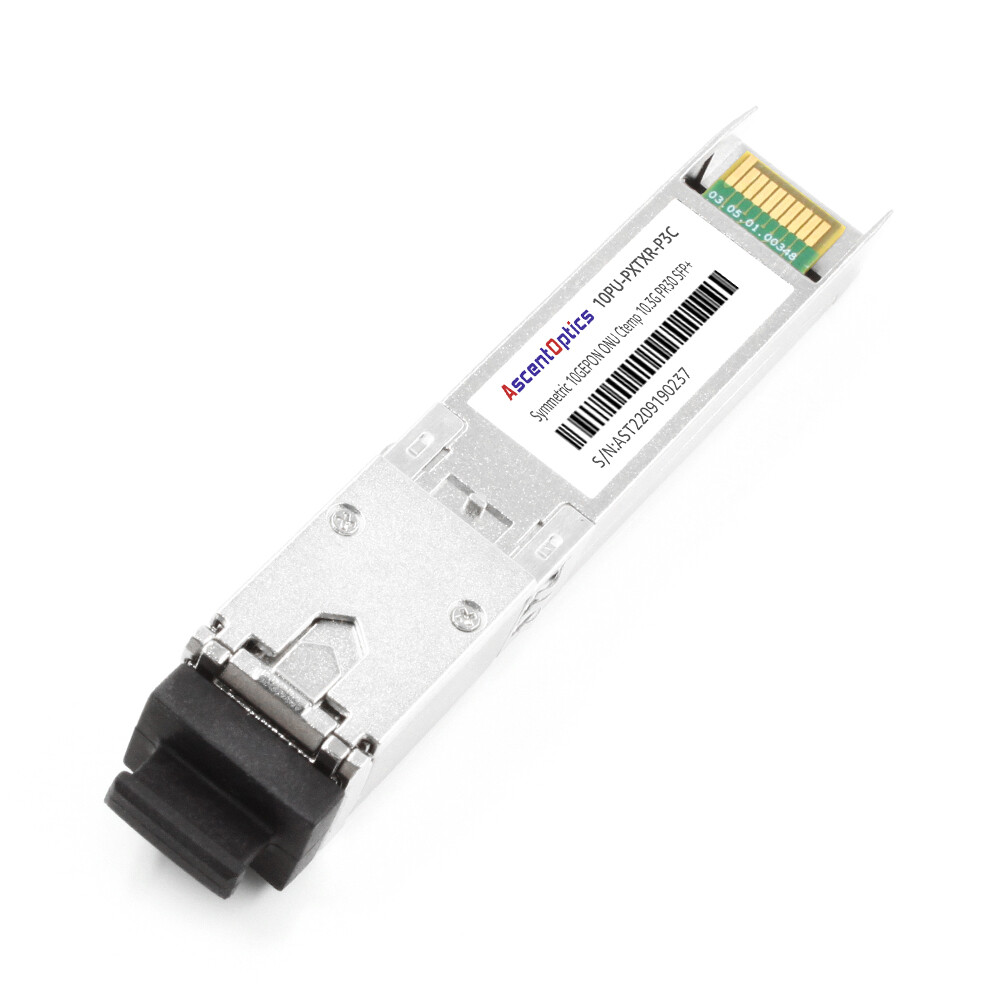
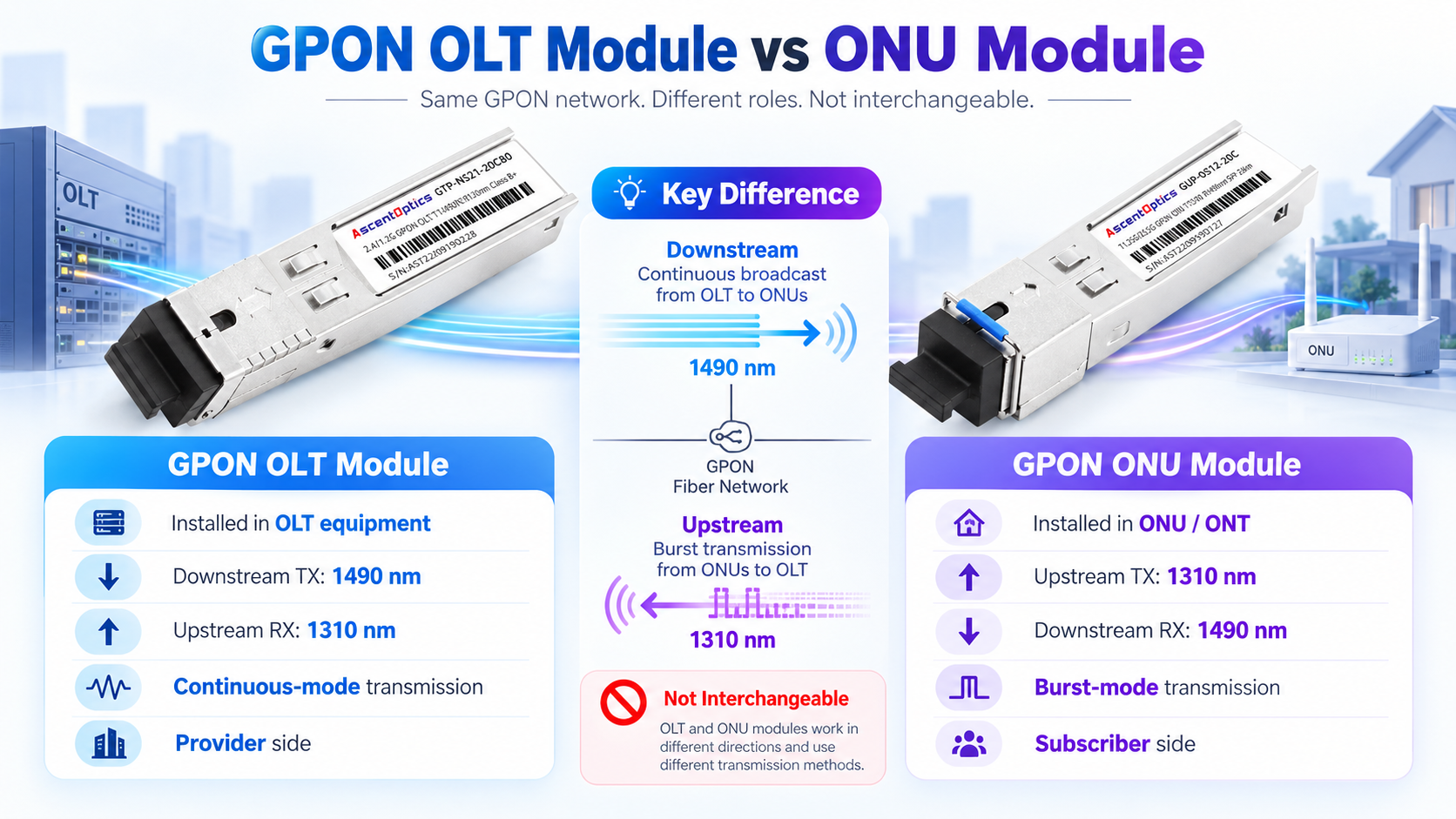
A GPON network relies on specialized optical transceivers installed at both the service provider side and subscriber side. Unlike standard Ethernet optical modules, GPON modules are designed specifically for passive optical networks, supporting different transmission modes, wavelengths, and optical budgets.
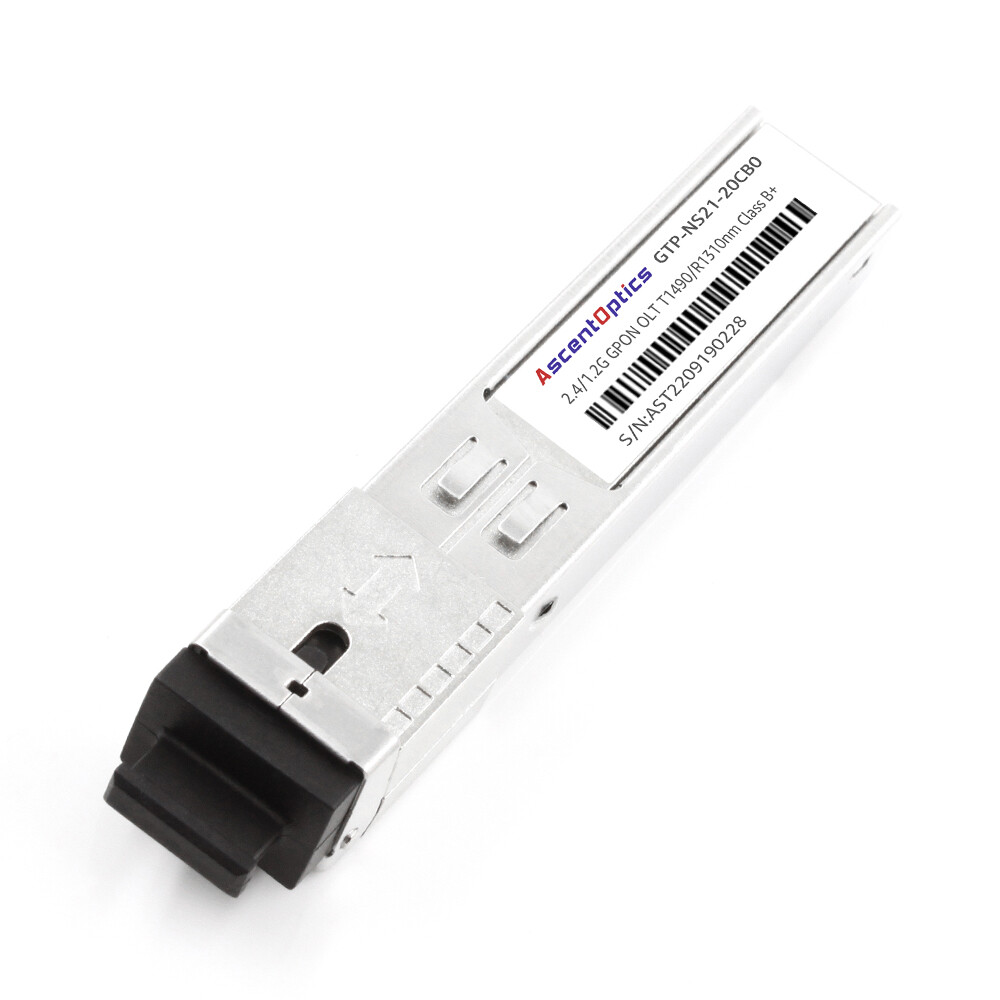
GPON OLT Optical Module
The GPON OLT module is installed on the Optical Line Terminal side, typically located in a central office, data center, or telecom cabinet. It connects the provider network to multiple subscribers through the passive optical distribution network (ODN).
Key characteristics include:
- Downstream transmission: 1490 nm continuous-mode optical transmission
- Upstream reception: 1310 nm burst-mode optical reception
- Function: Aggregates traffic from multiple ONTs/ONUs and manages bandwidth allocation through protocols such as DBA and OMCI
- Form factor: Commonly available in SFP format for GPON OLT equipment
Because the OLT side continuously broadcasts downstream data to multiple subscribers, the transmitter operates in continuous mode.
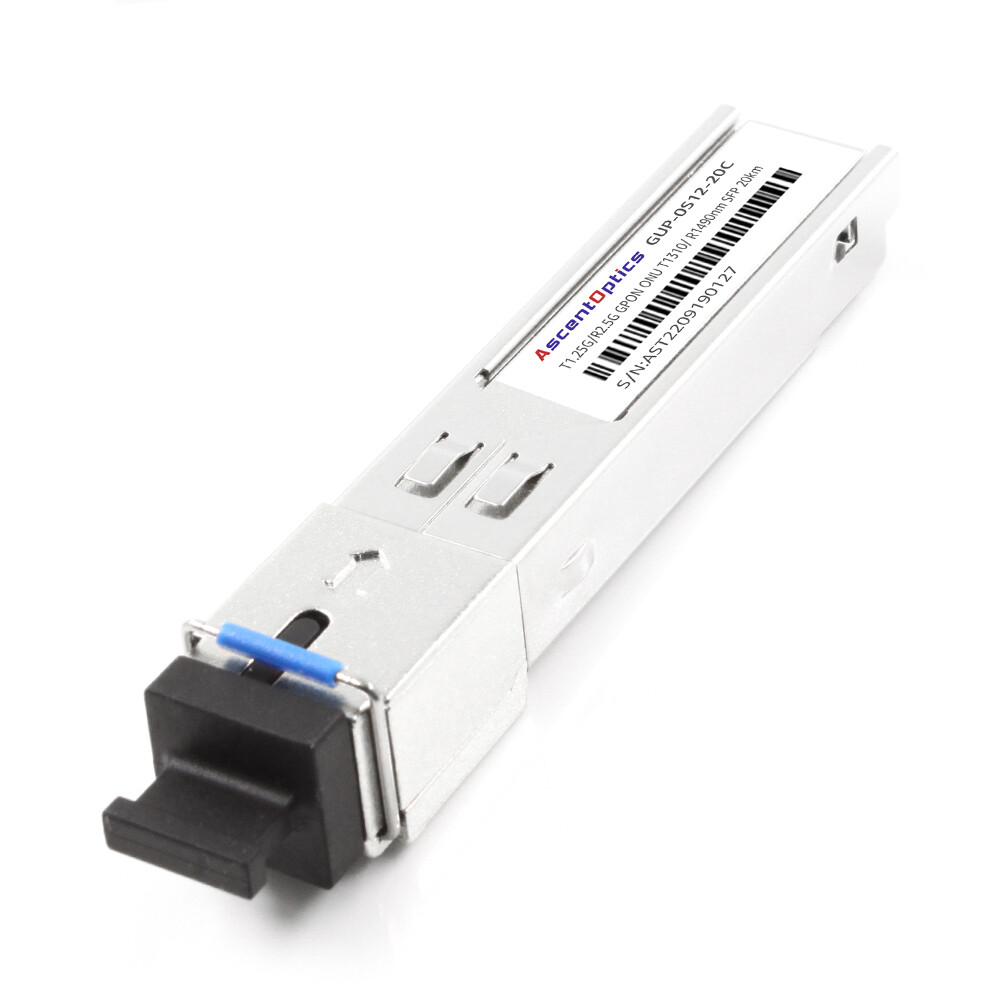
GPON ONU Optical Module
The GPON ONU module is installed at the subscriber side, either inside an ONT device or as a pluggable SFP ONU module. It converts optical signals from the PON network into electrical interfaces for customer equipment.
Key characteristics include:
- Upstream transmission: 1310 nm burst-mode optical transmission
- Downstream reception: 1490 nm continuous-mode optical reception
- Function: Provides subscriber access for services such as broadband internet, IPTV, and voice
- Special requirement: The transmitter must rapidly turn on and off according to the upstream TDMA time slots assigned by the OLT
Unlike traditional Ethernet transceivers that transmit continuously, GPON ONU transmitters use burst-mode operation to prevent collisions when multiple ONUs share the same fiber.
GPON Optical Budget Classes
GPON modules are also categorized by optical power budget, which determines the maximum allowable loss across fibers, connectors, and passive splitters.
| Class |
Optical Budget |
Typical Application |
| Class B+ |
28 dB |
Standard FTTH deployments with common split ratios such as 1:32 |
| Class C+ |
32 dB |
Higher split ratios or longer-distance access networks |
| Class C++ |
35 dB |
High-loss optical links requiring additional power margin |
The selection of GPON optical modules depends on several factors, including splitter ratio, fiber distance, connector loss, and overall optical power margin. A higher optical budget does not automatically guarantee longer reach, as the final network distance is determined by the complete optical link design.
Where Does GPON Fit? EPON, XGS-PON, and the Upgrade Path
GPON is not the only passive optical standard, and knowing where it sits helps explain why it dominates today.
EPON (IEEE 802.3ah) is the Ethernet-flavored alternative, delivering a symmetric 1.25 Gbps and remaining popular in parts of Asia. XGS-PON (ITU-T G.9807.1) is the 10 Gigabit successor, offering symmetric 10 Gbps at 1577 nm downstream and 1270 nm upstream.
Here is how the three compare at a glance:
| Standard |
Downstream / Upstream |
Down / Up Wavelength |
| GPON (G.984) |
2.488 / 1.244 Gbps |
1490 / 1310 nm |
| EPON (802.3ah) |
1.25 / 1.25 Gbps |
1490 / 1310 nm |
| XGS-PON (G.9807.1) |
10 / 10 Gbps |
1577 / 1270 nm |
Even as XGS-PON grows, GPON remains the installed-base volume leader. GPON ONT modules still represented roughly 67% of global ONT shipments in early 2025, because the technology is mature, proven, and inexpensive. XGS-PON is the natural upgrade path when a network needs symmetrical multi-gigabit capacity.
Frequently Asked Questions
What does GPON stand for?
GPON stands for Gigabit Passive Optical Network. It is a fiber access technology standardized by ITU-T G.984 that serves multiple subscribers from one fiber using passive splitters.
How fast is GPON?
GPON delivers 2.488 Gbps downstream and 1.244 Gbps upstream, shared among the subscribers on each passive splitter.
What is the difference between GPON and EPON?
GPON (ITU-T G.984) provides 2.488 Gbps down and 1.244 Gbps up, while EPON (IEEE 802.3ah) provides a symmetric 1.25 Gbps. GPON dominates globally, while EPON remains strong in parts of Asia.
What is the difference between GPON and XGS-PON?
XGS-PON (G.9807.1) delivers symmetric 10 Gbps, roughly four times GPON’s downstream and eight times its upstream, and uses different wavelengths so it can coexist with GPON on the same fiber.
What is a GPON ONT?
An Optical Network Terminal (ONT) is the subscriber-side device that converts the optical signal from the GPON fiber into electrical signals for the home’s devices.
Post Views: 64