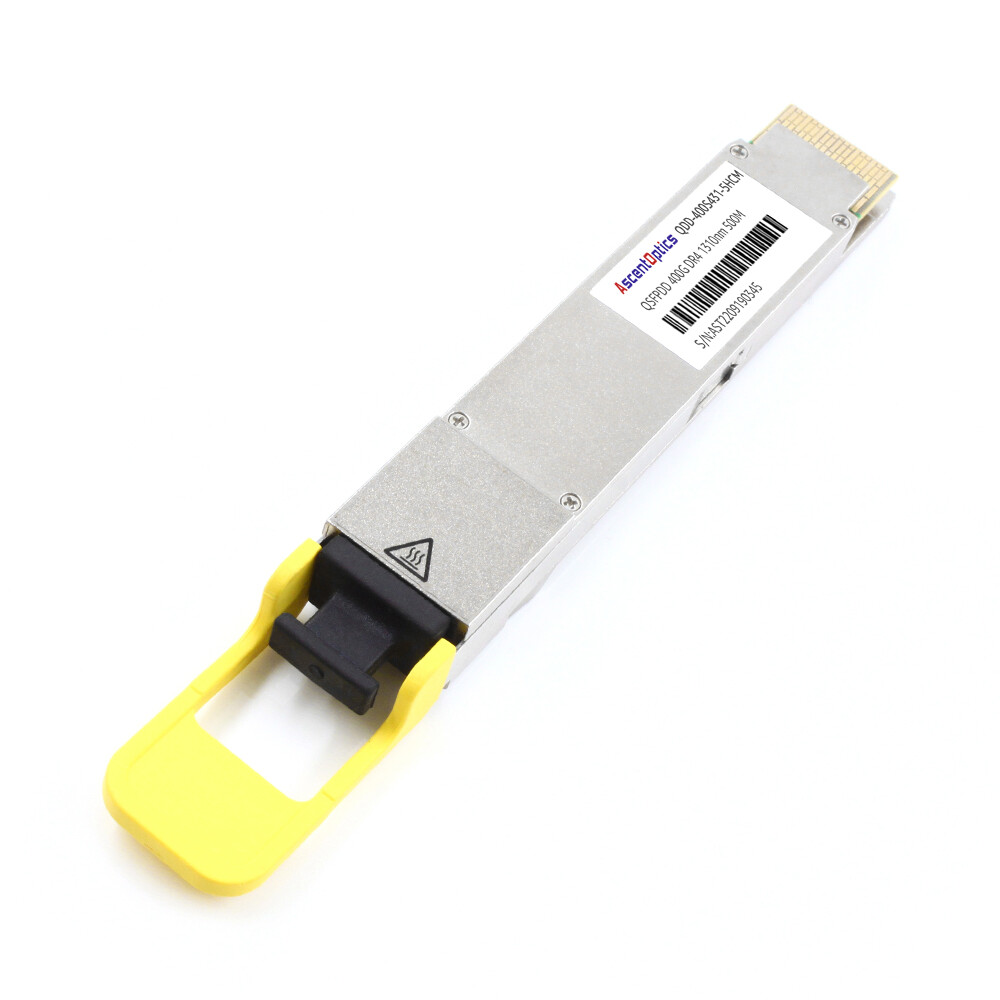
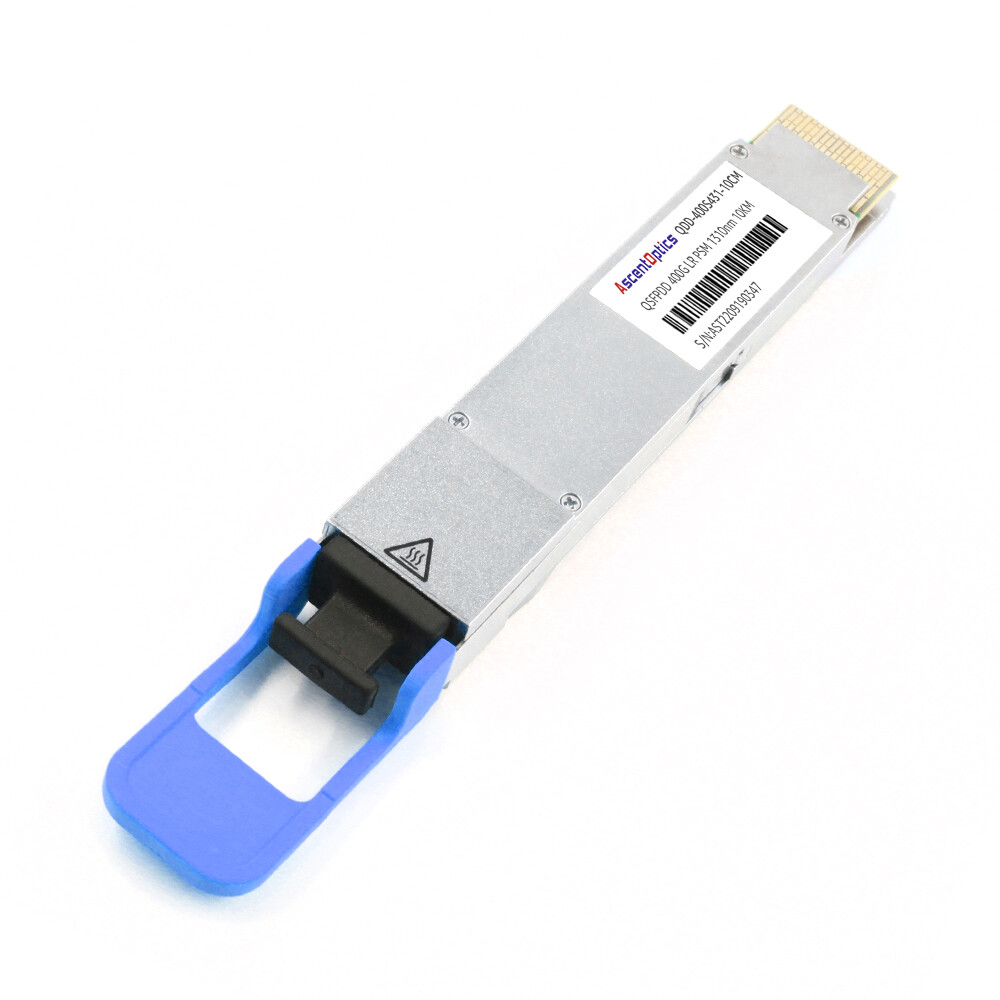
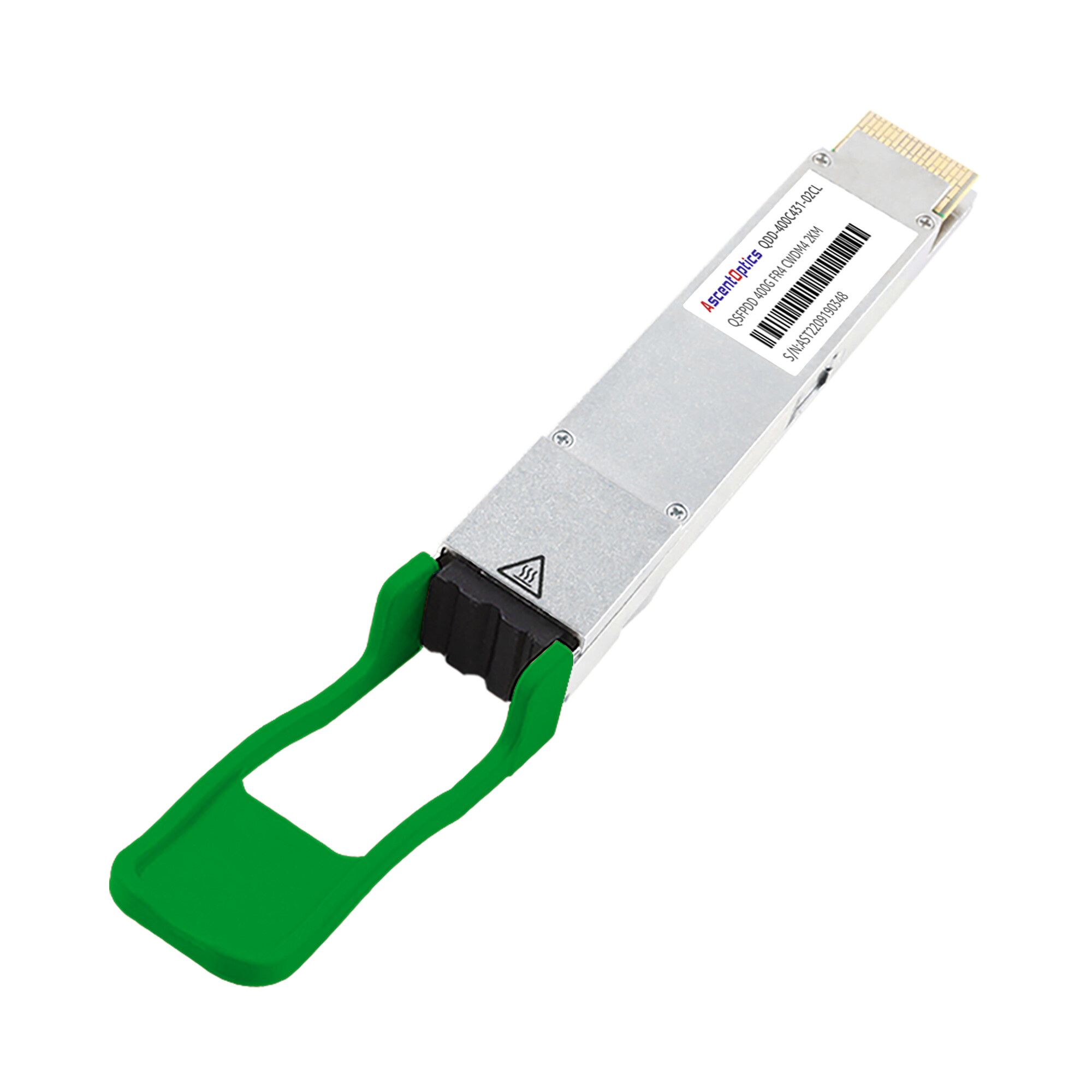
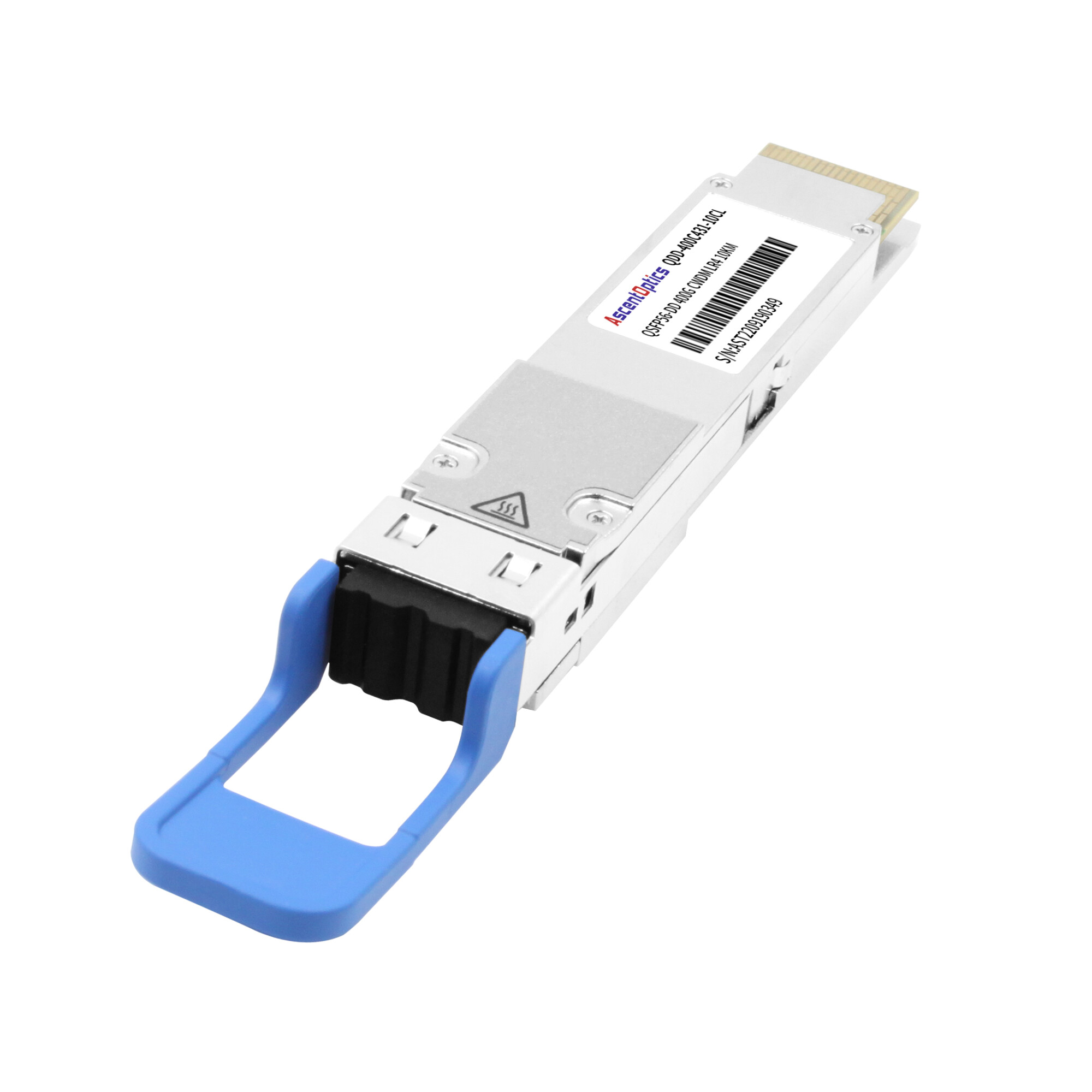
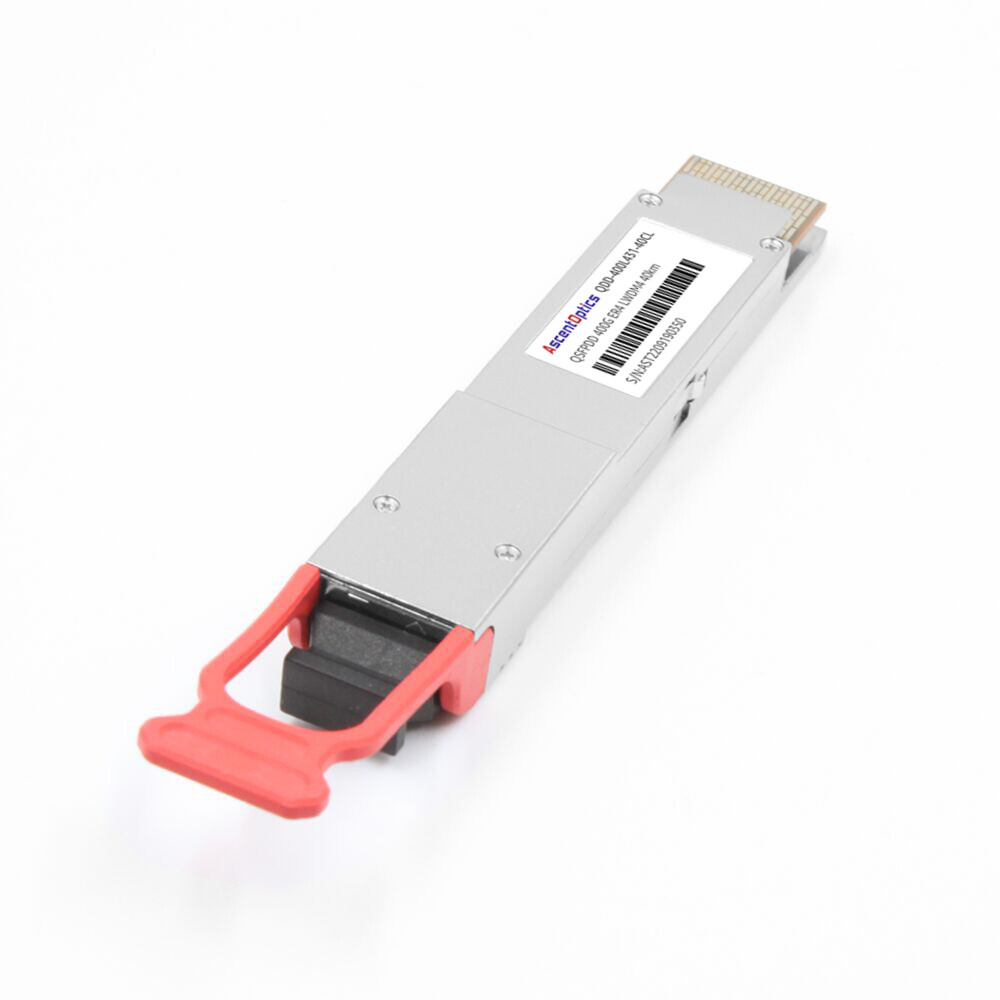
QSFP56 and QSFP-DD represent two major form factors for high-speed optical modules. The former utilizes 50G PAM4 modulation across four channels to achieve 200G speeds while maintaining compatibility with existing QSFP platforms; the latter employs eight channels to scale up to 400G, targeting next-generation high-density switching applications. Each involves specific trade-offs regarding power consumption, thermal management, and port layout, thereby addressing infrastructure requirements at different stages of bandwidth evolution.
What Is QSFP56?
QSFP56 stands for Quad Small Form-factor Pluggable 56. QSFP56 is a hot-pluggable optical transceiver form factor designed for four-lane electrical interfaces. It is most commonly used for 200GbE Ethernet by carrying four 50G PAM4 electrical lanes, while the same form factor is also used in 200G InfiniBand HDR applications.
The “56” in the name refers to the 56 Gbps electrical signaling rate per lane defined by the CEI-56G interface. In practice, this translates to 4 × 50 Gbps PAM4 lanes after encoding overhead. Because QSFP56 keeps the same mechanical footprint as QSFP28, it fits into the same front-panel cages and supports the same hot-pluggable operation.
200G Data Rate and PAM4 Modulation
QSFP56 doubles the per-lane speed of QSFP28 by using PAM4 modulation instead of NRZ. NRZ uses two voltage levels to represent one bit per symbol. PAM4 uses four voltage levels to represent two bits per symbol. This doubling allows QSFP56 to push 50 Gbps per lane without adding more lanes.
The trade-off is signal integrity. PAM4 has a smaller noise margin than NRZ, so QSFP56 modules rely on stronger forward error correction (FEC) and digital signal processing (DSP). The result is slightly higher power consumption and latency compared with a pure NRZ design, but the module remains compact and cost-effective for 200G links.
Network engineers typically choose from the following QSFP56 variants based on reach and fiber type:
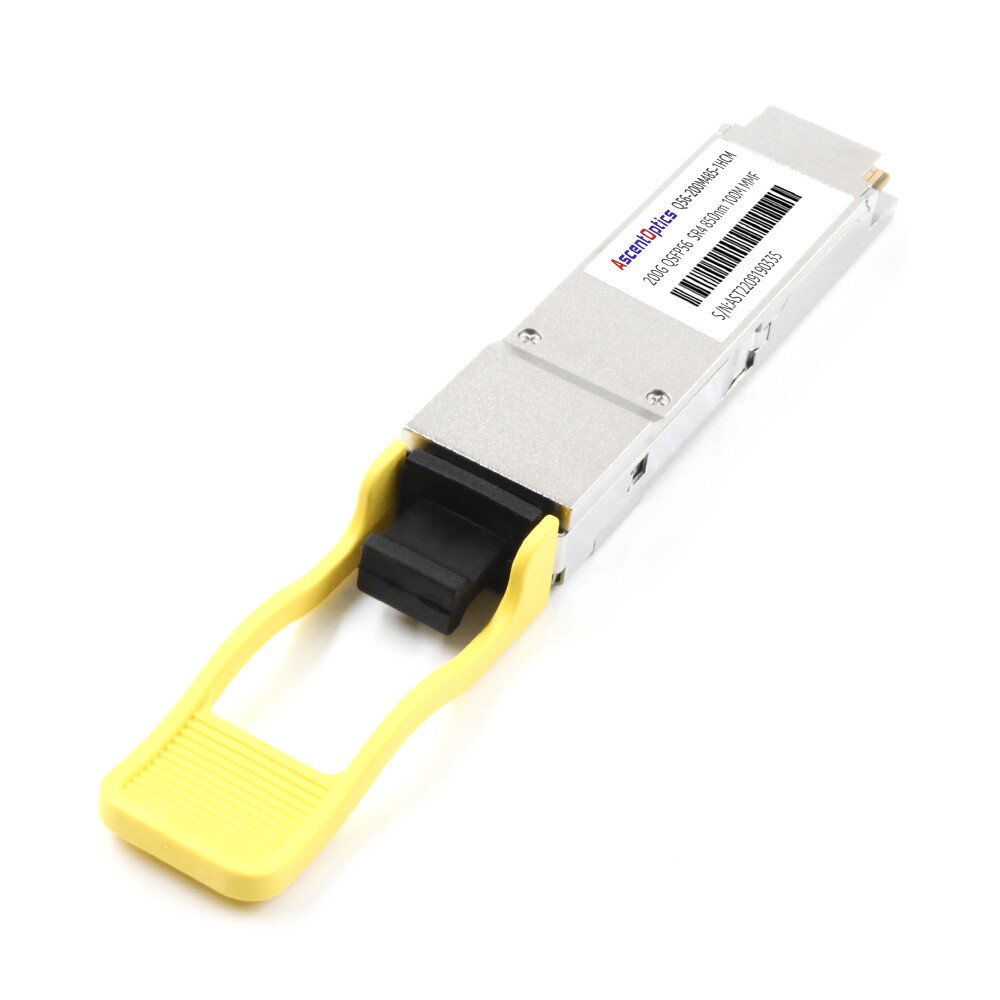
- QSFP56 SR4— multimode fiber, 850 nm, up to 100 m over OM4, MPO-12 connector. Ideal for intra-rack and row-level connections.
- QSFP56 DR4— single-mode fiber, 1310 nm, up to 500 m, MPO-12 connector. Common for spine-leaf fabrics.
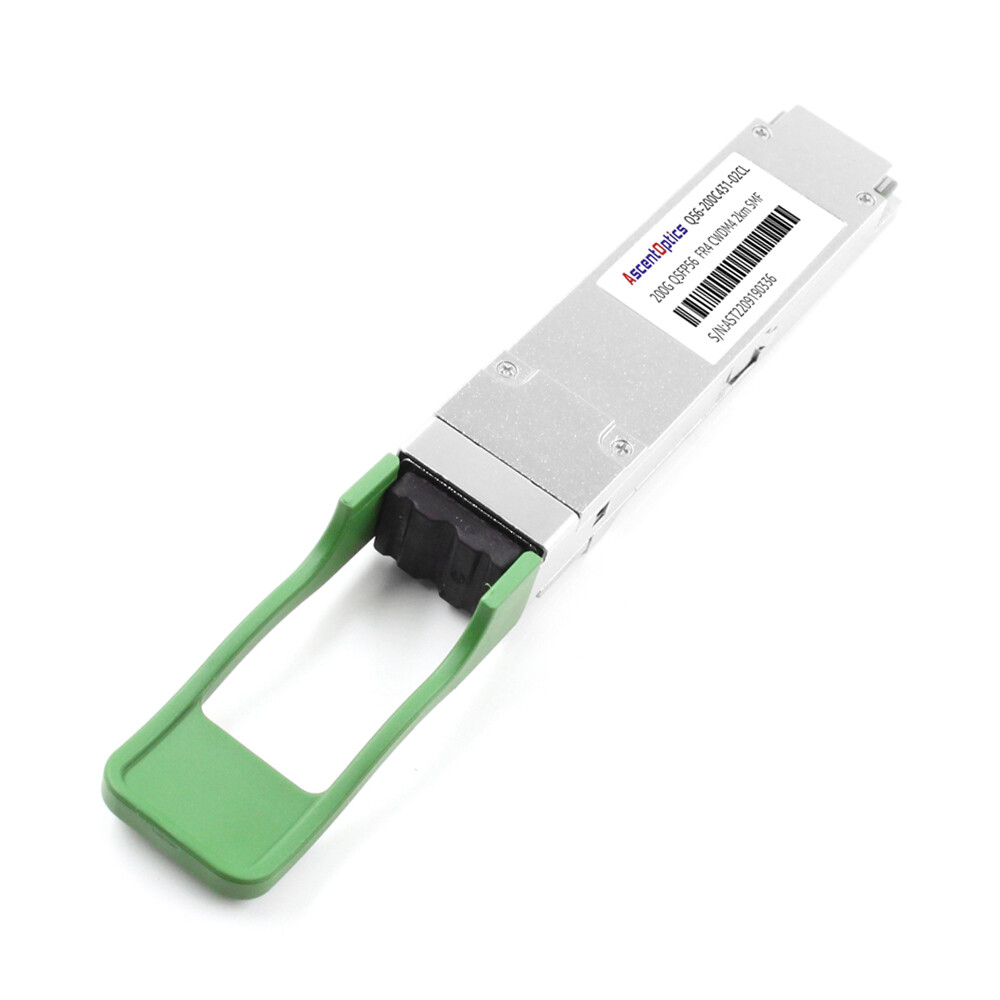
- QSFP56 FR4— single-mode fiber, CWDM wavelengths, up to 2 km, LC duplex. Used for data center interconnects.
- QSFP56 LR4— single-mode fiber, 1310 nm, up to 10 km, LC duplex. Suitable for metro and campus links.
- QSFP56 DAC/AOC— direct attach copper or active optical cable assemblies for short-reach switch-to-switch links, typically 1–50 m.
Backward Compatibility
QSFP56 modules are physically compatible with QSFP28 cages in many systems. A switch that supports QSFP56 can often accept QSFP28 modules at 100G, and some QSFP56 ports can run QSFP+ 40G modules. However, compatibility depends on the host ASIC, firmware, and vendor implementation. Always verify the switch compatibility matrix before assuming interoperability.
What Is QSFP-DD?
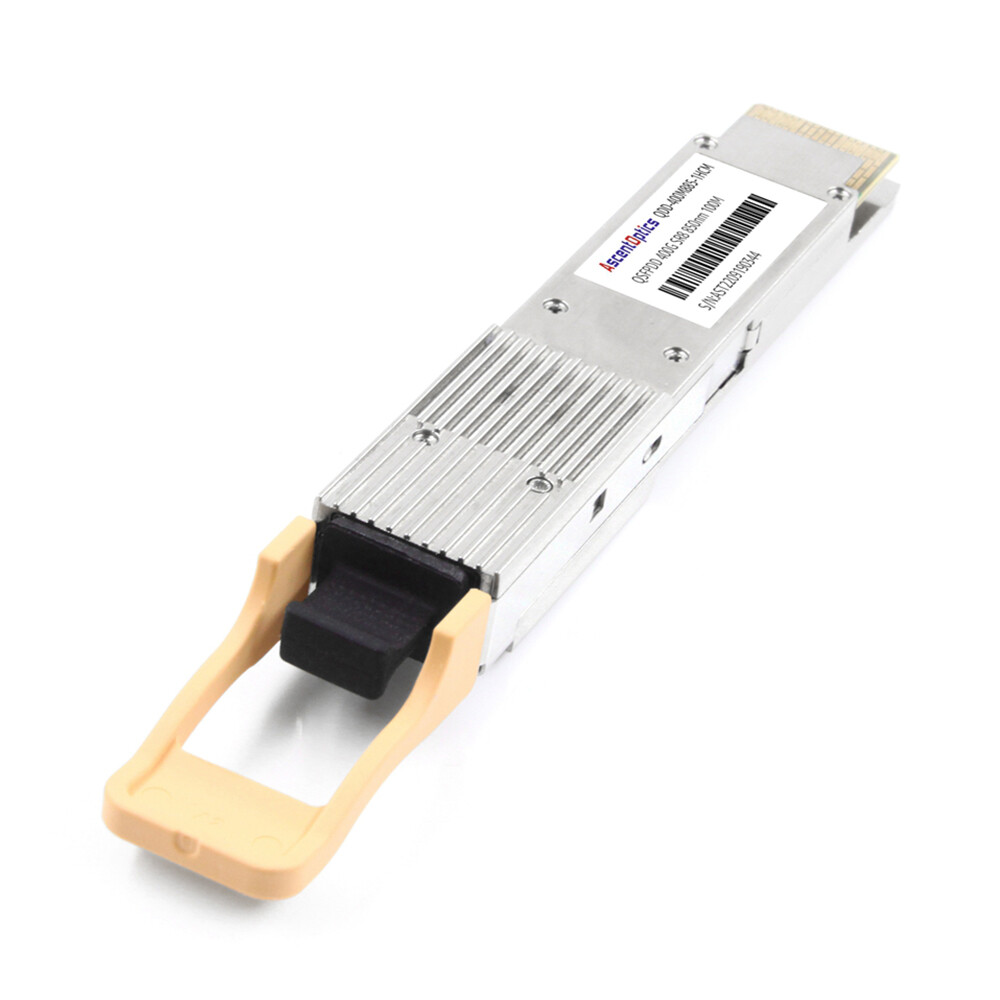
QSFP-DD stands for Quad Small Form-factor Pluggable Double Density. It is an 8-lane optical transceiver form factor that supports 200G, 400G, and 800G data rates within the same front-panel width as QSFP28.
The “double density” comes from adding a second row of electrical contacts behind the standard QSFP connector. This gives QSFP-DD 8 high-speed lanes instead of 4, doubling the bandwidth potential without changing the front-panel width. The module is slightly deeper than QSFP28/QSFP56 to accommodate the extra contacts and thermal management.
Double-Density Lane Architecture
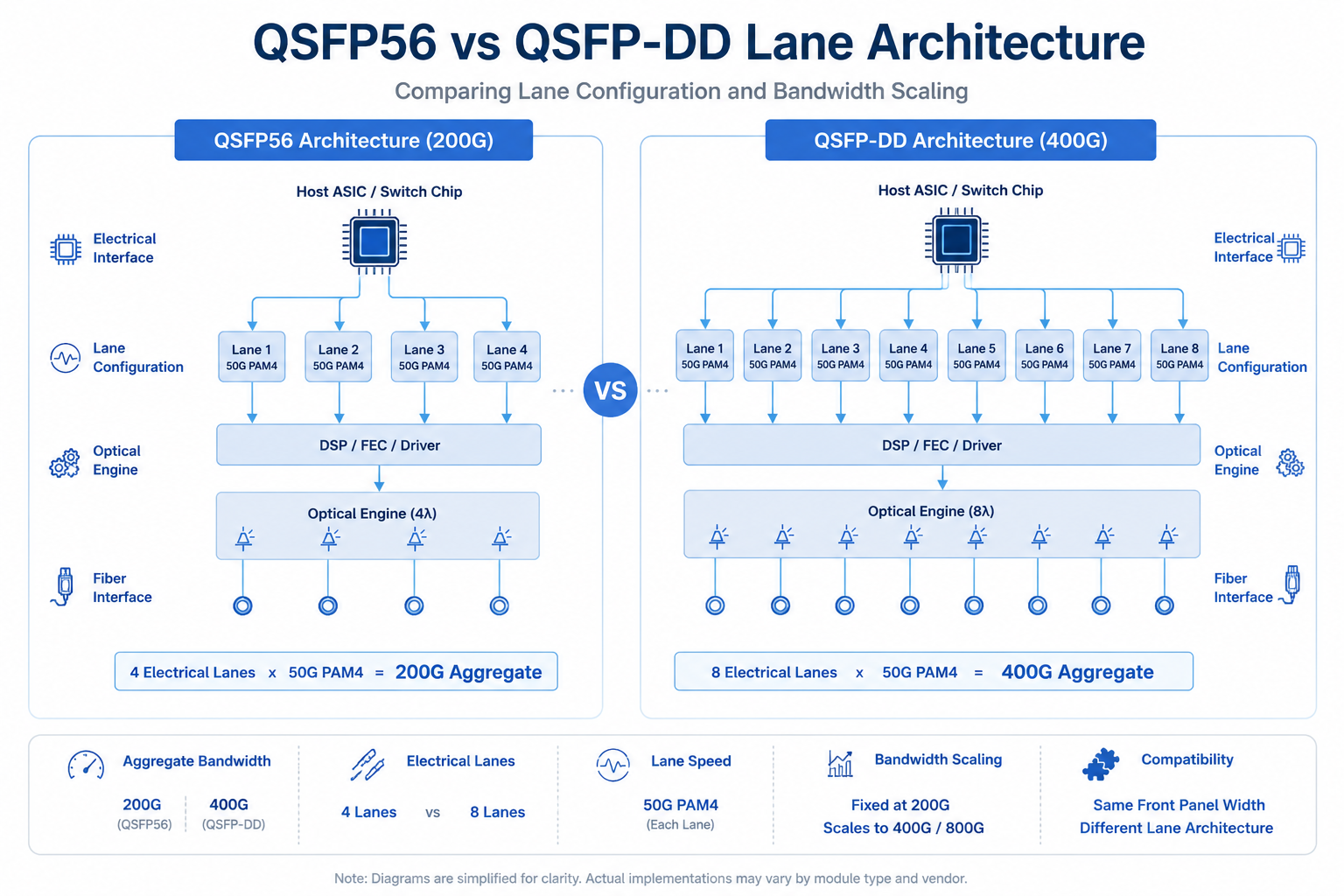
QSFP-DD uses 8 electrical lanes to scale bandwidth. The lane configuration determines the data rate:
- 200G QSFP-DD— 8 × 25 Gbps NRZ lanes.
- 400G QSFP-DD— 8 × 50 Gbps PAM4 lanes.
- 800G QSFP-DD800— 8 × 100 Gbps PAM4 lanes.
Because 200G QSFP-DD can use NRZ instead of PAM4, it offers better bit-error-rate performance and lower latency than QSFP56 at the same 200G speed. When the network needs 400G, the same QSFP-DD port supports the higher lane rate with PAM4.
Common QSFP-DD Module Types
QSFP-DD supports a broad range of optical interfaces:
- QSFP-DD SR8— multimode fiber, 850 nm, up to 100 m, MPO-16. Common for AI clusters and high-density intra-data center links.
- QSFP-DD DR8— single-mode fiber, 1310 nm, up to 500 m, MPO-16. Popular for 400G spine-leaf fabrics.
- QSFP-DD FR4— single-mode fiber, CWDM, up to 2 km, LC duplex. Used for data center interconnects.
- QSFP-DD LR4— single-mode fiber, 1310 nm, up to 10 km, LC duplex. Suitable for metro links.
- QSFP-DD ZR/ZR+— coherent single-mode modules for 80 km+ and amplified DWDM links.
Backward Compatibility
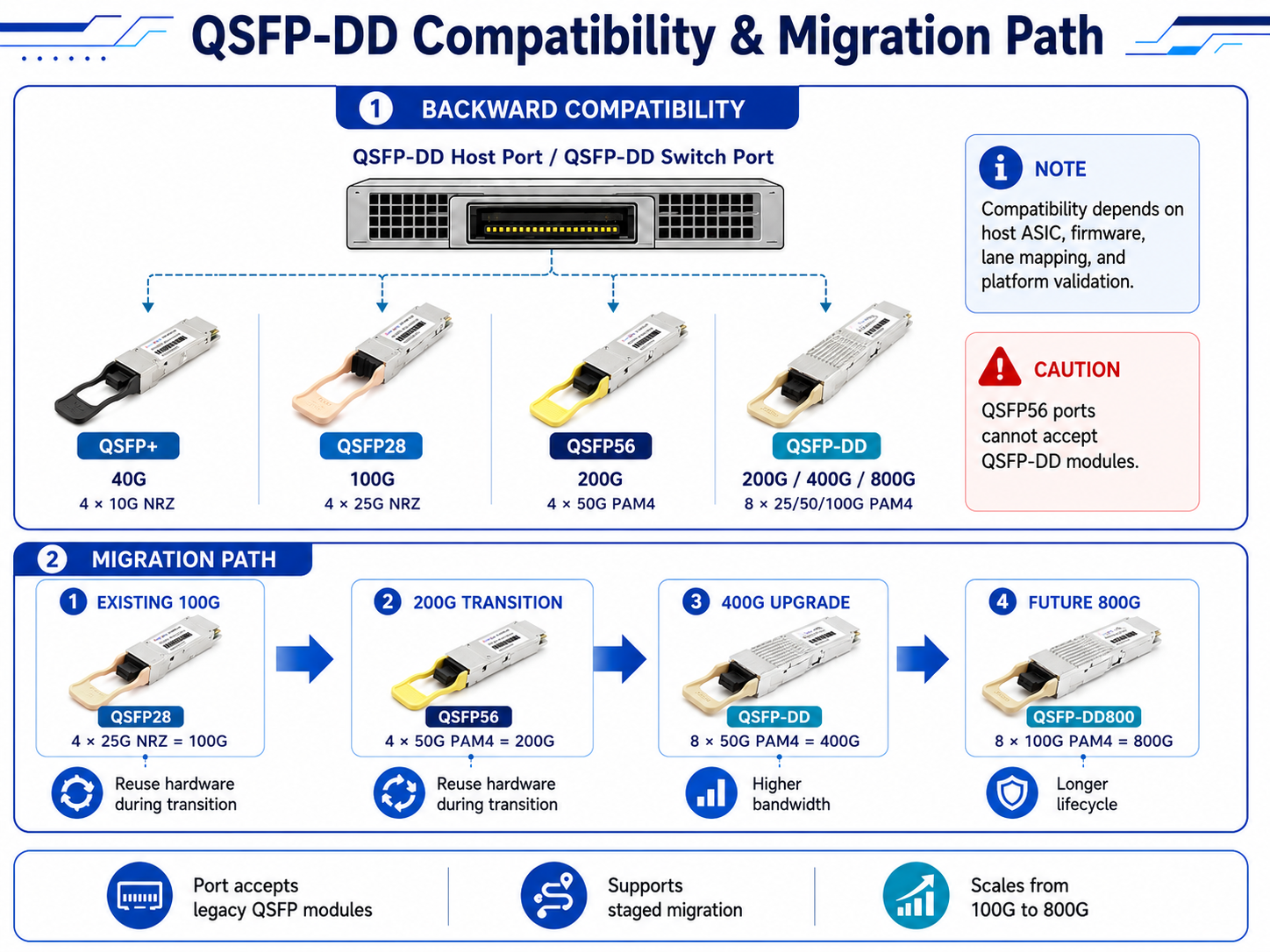
A QSFP-DD port can physically accept QSFP+, QSFP28, QSFP56, and QSFP-DD modules. This is one of its biggest advantages. You can install a QSFP-DD switch today, run existing QSFP28 100G or QSFP56 200G modules during the transition, and upgrade to 400G or 800G modules later.
The catch is host-side support. The switch ASIC, PCB routing, firmware, and management software must recognize the inserted module and negotiate the correct lane mapping. Not every QSFP-DD port supports every legacy module out of the box, so platform validation remains essential.
Although QSFP56 and QSFP-DD share the same front-panel width, QSFP-DD introduces an additional row of electrical contacts, making it electrically and mechanically distinct while maintaining backward compatibility for legacy QSFP modules.
QSFP56 vs QSFP-DD: Head-to-Head Comparison
The table below summarizes the key differences between the two form factors.
| Specification |
QSFP56 |
QSFP-DD |
| Full name |
Quad Small Form-factor Pluggable 56 |
Quad Small Form-factor Pluggable Double Density |
| Max data rate |
200 Gbps |
200G / 400G / 800G |
| Electrical lanes |
4 lanes |
8 lanes |
| Lane rate |
~50 Gbps per lane |
25 Gbps (NRZ) or 50/100 Gbps (PAM4) per lane |
| 200G modulation |
PAM4 |
NRZ or PAM4 |
| Typical power |
3–6 W |
8–14 W (400G); 12–25 W (800G) |
| Backward compatibility |
QSFP+, QSFP28 |
QSFP+, QSFP28, QSFP56 |
| Mechanical depth |
~72 mm |
~89 mm |
| Management |
CMIS 4.0 typical |
CMIS 4.0/5.0+ |
| Primary use case |
Cost-sensitive 200G upgrades |
200G/400G/800G scalable fabrics |
Data Rate and Lane Configuration
QSFP56 uses 4 lanes. QSFP-DD uses 8 lanes. That single difference drives most of the other trade-offs.
For 200G, QSFP56 pushes each lane to 50 Gbps PAM4. QSFP-DD can spread 200G across 8 lanes at 25 Gbps NRZ, which is electrically simpler and easier to cool. For 400G, QSFP-DD uses 8 × 50 Gbps PAM4. The standard QSFP56 form factor is designed primarily for 200G Ethernet and does not support standard 400G Ethernet implementations.
Modulation: PAM4 vs NRZ
At 200G, QSFP56 uses PAM4. QSFP-DD can use NRZ. NRZ is the simpler, lower-power, lower-latency option with a better noise margin. PAM4 packs more bits per symbol but requires more DSP and FEC.
If your application is latency-sensitive, such as high-frequency trading or certain AI training fabrics, a 200G NRZ QSFP-DD module may outperform a PAM4 QSFP56 module. For general data center links, the difference is usually smaller than the marketing materials suggest.
Power Consumption and Thermal Design
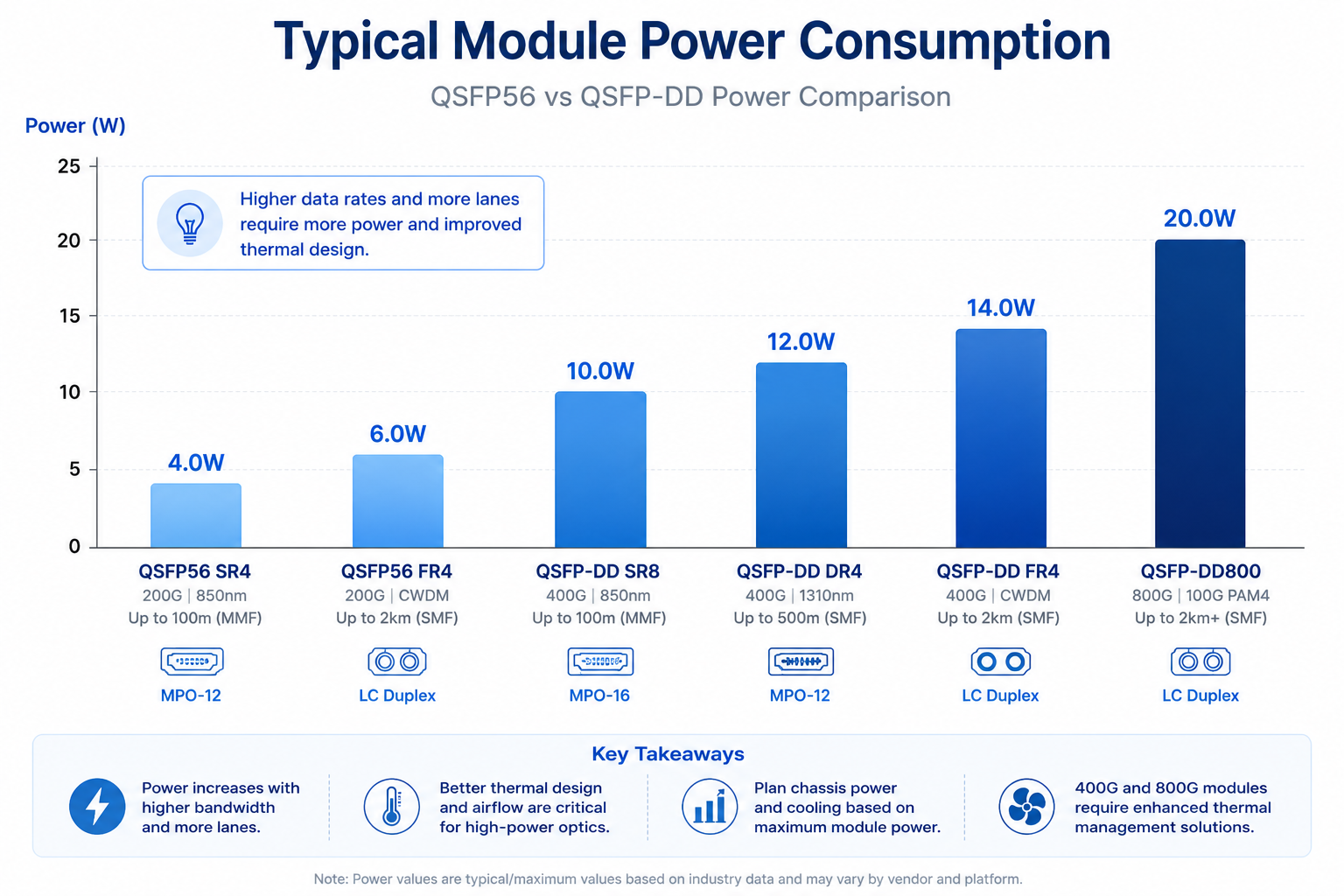
QSFP56 modules typically draw 3–6 W. QSFP-DD 400G modules draw 8–14 W, and 800G QSFP-DD800 modules can reach 12–25 W depending on reach and modulation format.
Higher power means more heat. QSFP-DD modules use enhanced thermal interfaces, including riding heatsinks and improved cage designs, to keep junction temperatures within spec. When you design a QSFP-DD deployment, budget switch power and cooling per port carefully. A 32-port 400G switch can consume over 400 W just for optics.
While QSFP-DD dominates many enterprise and cloud deployments, some AI platforms also adopt OSFP because it offers a larger thermal envelope for high-power 800G and future 1.6T optics.
Physical Dimensions and Connector Types
Both form factors share the same front-panel width, but QSFP-DD is deeper. This matters in shallow switches or compact enclosures where the deeper module may interfere with internal components or cable bend radius.
Connector choices differ too. QSFP56 typically uses MPO-12 or LC duplex. QSFP-DD 400G often uses MPO-16 for parallel optics or LC duplex for CWDM modules. Breakout cables may need different fan-out configurations, such as 400G QSFP-DD to 2 × 200G QSFP56 or 4 × 100G QSFP28.
Backward Compatibility and Migration Flexibility
QSFP-DD wins on migration flexibility. A QSFP-DD port accepts older QSFP modules, letting you deploy hardware once and upgrade optics later. QSFP56 is limited to the 200G lane rate and cannot accept QSFP-DD modules.
If your network refresh cycle is five to seven years, QSFP-DD gives you room to grow. If your refresh cycle is two to three years and you only need 200G, QSFP56 may be the more economical interim choice.
When to Choose QSFP56
QSFP56 makes sense in specific scenarios. Consider it when:
- Your immediate need is 200G only. You do not expect to move to 400G during the useful life of the switch.
- You are reusing QSFP28 switches. The platform supports QSFP56, and you want minimal hardware change.
- Power and cooling are constrained. QSFP56 draws less power per port than QSFP-DD 400G modules.
- Budget is tight. QSFP56 modules and the associated switch ports are generally less expensive than QSFP-DD alternatives.
- Latency requirements are moderate. Standard data center links tolerate the small additional latency of PAM4.
That said, QSFP56 is best viewed as an interim step. The optical transceiver market is moving quickly toward 400G and 800G in cloud and AI data centers, and 200G-only hardware may have limited resale value later.
When to Choose QSFP-DD
QSFP-DD is the better choice when future bandwidth growth is part of the plan. Choose it when:
- You need 400G now or within 24–36 months. QSFP-DD is the smallest widely adopted 400G form factor.
- You want backward compatibility. A QSFP-DD switch can run legacy QSFP28 100G and QSFP56 200G modules during the transition.
- You are building AI/ML clusters. GPU fabrics and high-performance computing environments increasingly use 400G and 800G QSFP-DD links.
- You need breakout flexibility. QSFP-DD supports 400G → 2 × 200G, 400G → 4 × 100G, and similar fan-out configurations.
- You prefer a longer hardware lifecycle. QSFP-DD800 extends the same form factor to 800G.
The global optical transceiver market is projected to grow from approximately USD 15.4 billion in 2025 to USD 36.2 billion by 2033, driven by increasing demand for AI, cloud computing, and high-speed data center networking. Within that growth, 400G QSFP-DD and OSFP form factors dominate new high-speed deployments, and 800G is capturing an increasing share of new builds.
Migration Path: From QSFP28 to QSFP56 or QSFP-DD
If you are currently running 100G QSFP28, your migration choice comes down to timing and traffic forecasts.
Upgrade Scenarios
- Short-term 200G need, no 400G plan→ QSFP56 on existing QSFP28-compatible hardware.
- 200G today with 400G within two to three years→ QSFP-DD hardware with 200G NRZ or 400G PAM4 modules.
- New build or greenfield AI cluster→ QSFP-DD or OSFP, depending on thermal requirements and vendor ecosystem.
Breakout Cable and AOC/DAC Considerations
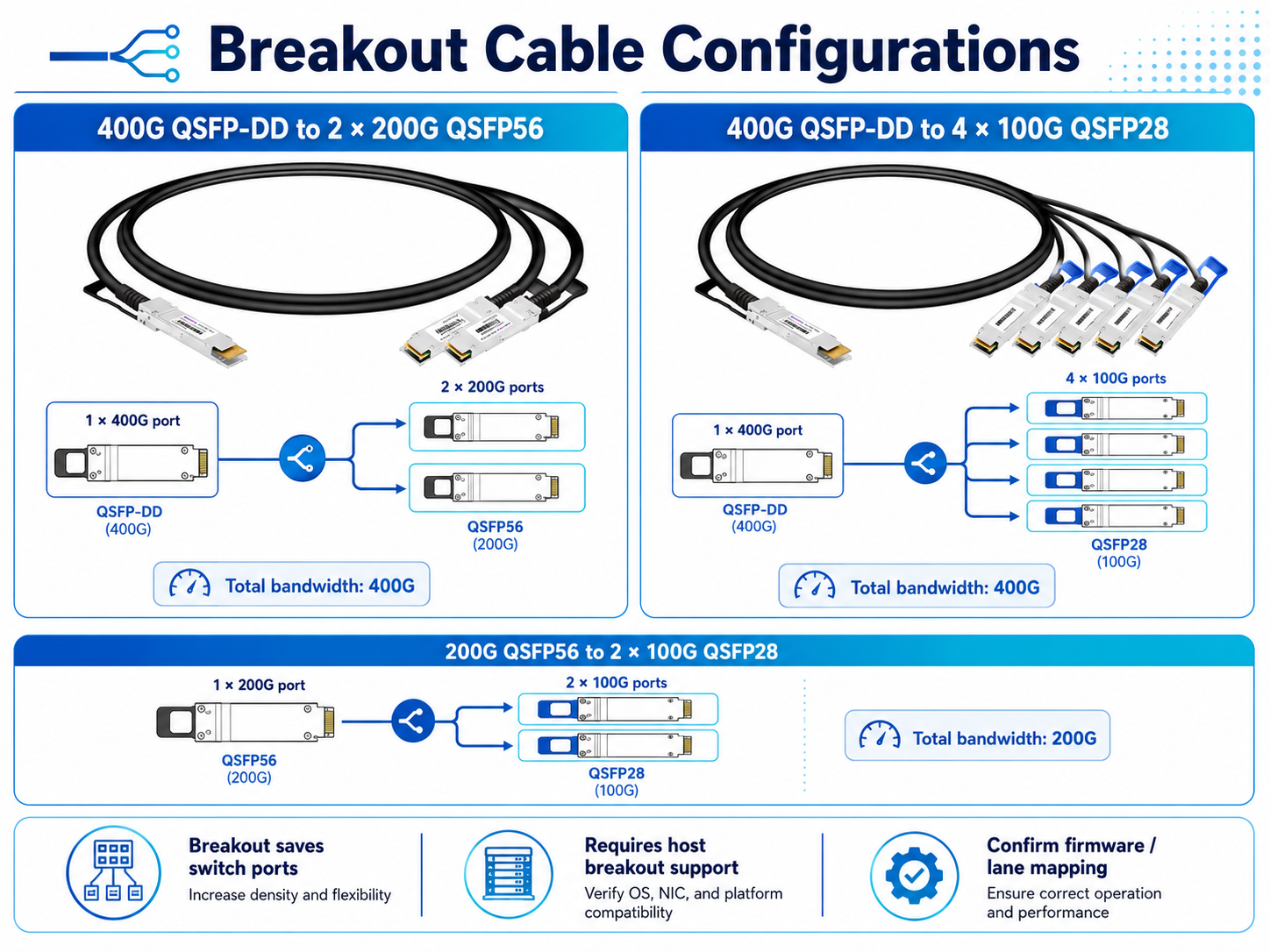
Breakout cables let you split a higher-speed port into multiple lower-speed links. Common options include:
- 400G QSFP-DD → 2 × 200G QSFP56 AOC or DAC
- 400G QSFP-DD → 4 × 100G QSFP28 breakout
- 200G QSFP56 → 2 × 100G QSFP28 breakout
These configurations are useful during migration, but they require the switch to support the correct breakout mode in firmware. Always confirm the breakout mapping before ordering cables.
Switch Firmware and Host ASIC Requirements
Backward compatibility is not automatic. The host ASIC must support the lane count and signaling rate of the inserted module. The firmware must recognize the module and configure the correct FEC and breakout settings. Before deployment, test your specific switch model with the exact module part number you intend to use.
At Ascent Optics, we validate our modules against major switch platforms and provide compatibility guidance to avoid surprises during rollout. If you are unsure whether your hardware supports a specific module, our engineers can review your BOM and switch specifications.
QSFP-DD800 and Future-Proofing Your Network
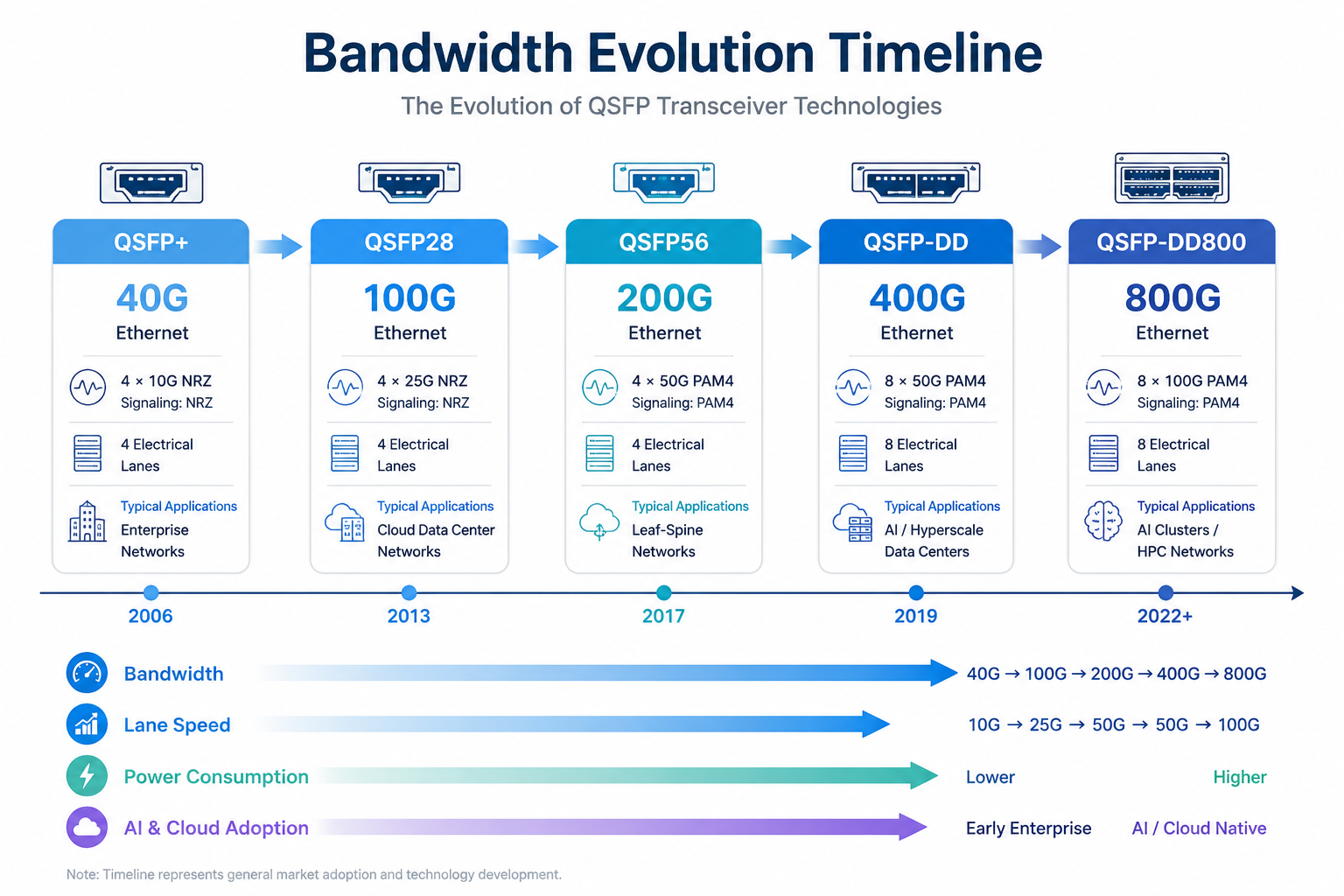
QSFP-DD800 is the next evolution of the QSFP-DD form factor. It uses the same mechanical package but doubles the per-lane rate to 100 Gbps PAM4, delivering 800 Gbps over 8 lanes.
The key requirements for QSFP-DD800 are host ASICs with 112G SerDes and CMIS 5.0+ management. Power consumption increases accordingly, with some 800G modules drawing 20 W or more. Thermal design becomes even more critical at these speeds.
For organizations building infrastructure today, QSFP-DD offers a practical path: deploy 400G-capable switches and cables now, then upgrade to 800G modules later without replacing the entire fabric. This staged approach protects capital investment and reduces operational disruption.
Common QSFP56 vs QSFP-DD Questions
Is QSFP-DD backward compatible with QSFP56?
Yes, in the right direction. A QSFP-DD host port can physically accept a QSFP56 module in many systems. However, a QSFP-DD module cannot be inserted into a QSFP56 port because of the extra row of contacts and deeper mechanical interface.
Can QSFP56 support 400G?
No. QSFP56 is a 200G-only form factor. For 400G, use QSFP-DD, QSFP112, or OSFP.
Does QSFP-DD consume more power than QSFP56?
At equivalent 200G speeds, QSFP-DD NRZ can be comparable to or slightly higher than QSFP56. At 400G and 800G, QSFP-DD consumes significantly more power per module. Always use vendor maximum power specs for chassis thermal and power-supply design.
What is the difference between QSFP-DD and QSFP56-DD?
These terms are often used interchangeably. QSFP56-DD is another name for QSFP-DD, emphasizing that the module builds on the QSFP56 electrical signaling rate. The official form factor name from the MSA is QSFP-DD.
Which is better for AI clusters: QSFP56 or QSFP-DD?
For most AI clusters, QSFP-DD is the better long-term choice because it scales to 400G and 800G. GPU fabrics and high-performance computing networks are rapidly adopting these higher speeds, and QSFP-DD provides a migration path that QSFP56 cannot match. While QSFP-DD dominates many enterprise and cloud deployments, some AI platforms also adopt OSFP because it offers a larger thermal envelope for high-power 800G and future 1.6T optics.
Post Views: 1,292