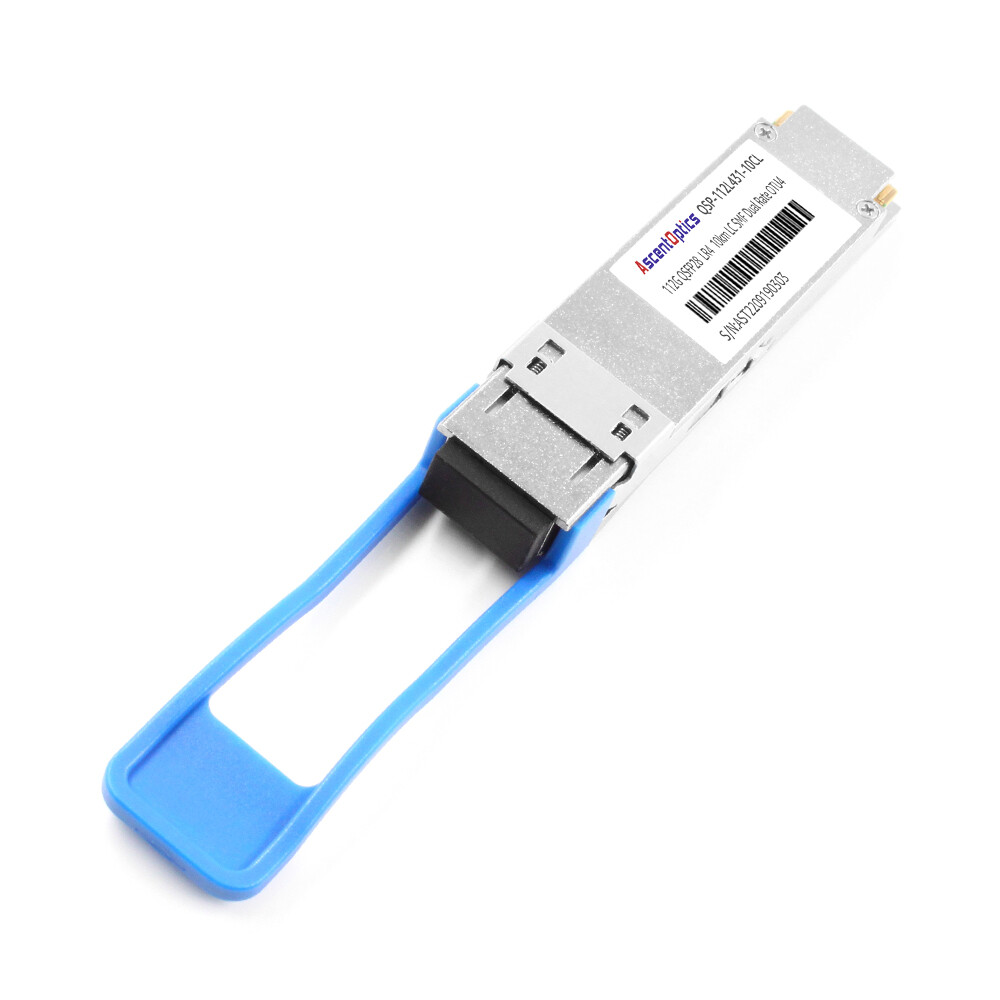
With the rapid growth of cloud computing, artificial intelligence, video streaming, 5G backhaul, and enterprise digital transformation, network bandwidth demands are increasing dramatically. Over the past decade, Ethernet speeds have evolved from 10G to 40G and 100G, while leading data centers are now deploying 400G and even 800G at scale. In the mid- to long-reach optical module segment (typically up to 10 km), 40G QSFP+ LR4 and 100G QSFP28 LR4 are two of the most frequently compared solutions.
Both operate over single-mode fiber (SMF) with duplex LC interfaces, competing directly in scenarios such as enterprise campuses, metro networks, and regional data center interconnect (DCI). This article provides a comprehensive comparison to help network engineers, IT managers, and procurement teams determine which option best fits their current needs and future plans.
Need help selecting 100G QSFP28 Modules? Explore Ascent Optics’ QSFP28 connectivity solutions or contact our engineers for a free compatibility review.
What Is 40G QSFP+ LR4?
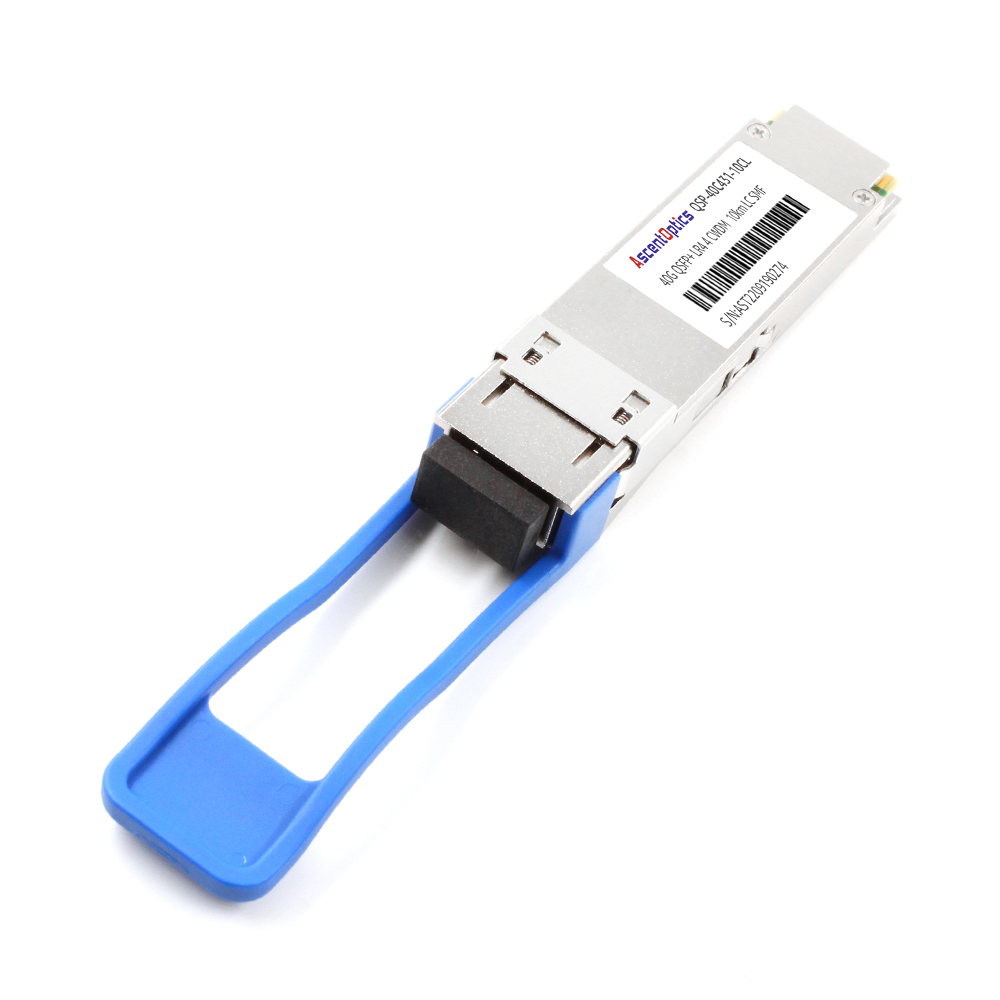
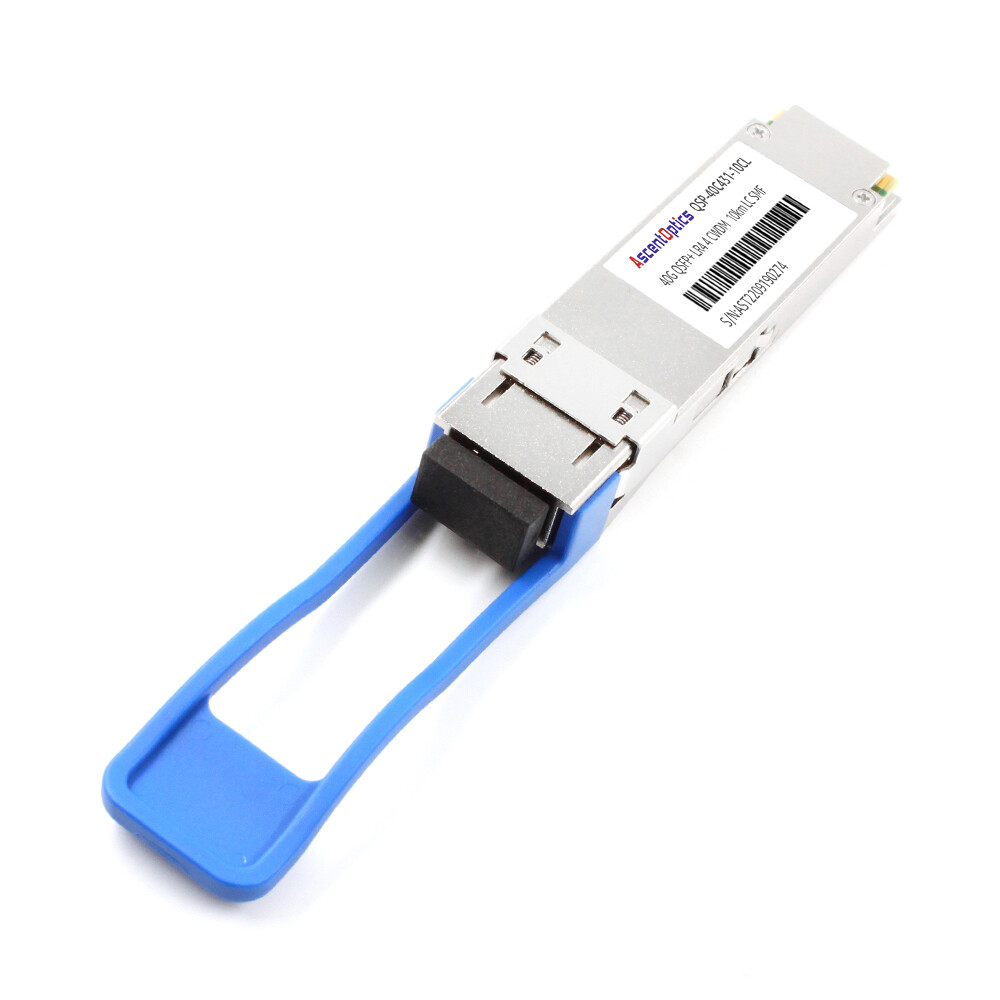
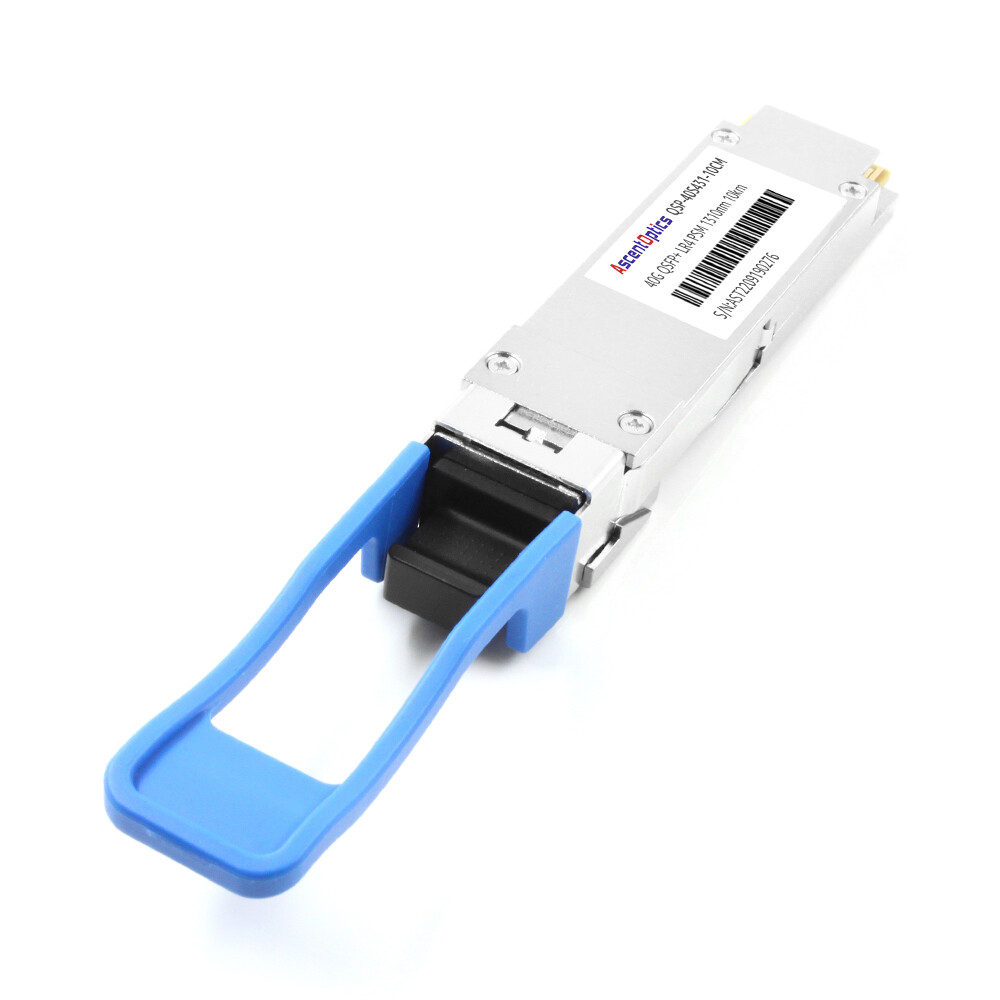
The 40G QSFP+ LR4 is a long-reach optical transceiver designed to support 40 Gigabit Ethernet transmission over single-mode fiber (SMF). It is based on the QSFP+ form factor, a compact and hot-pluggable interface widely used in 40G networking environments for its high port density and operational flexibility.
The module achieves a total data rate of 40 Gbps by transmitting four independent 10 Gbps optical signals over four different wavelengths. Using CWDM (Coarse Wavelength Division Multiplexing) technology, these wavelengths are combined and transmitted through a single pair of fibers, allowing efficient long-distance communication while minimizing fiber usage.
A typical 40G QSFP+ LR4 module supports transmission distances of up to 10 kilometers via a duplex LC connector, making it suitable for applications such as data center interconnect (DCI), enterprise campus backbone networks, and inter-building connectivity.
Thanks to its mature technology, stable performance, and compatibility with existing single-mode fiber infrastructure, 40G QSFP+ LR4 remains a practical solution for organizations upgrading from 10G networks or maintaining established 40G deployments.
What Is 100G QSFP28 LR4?
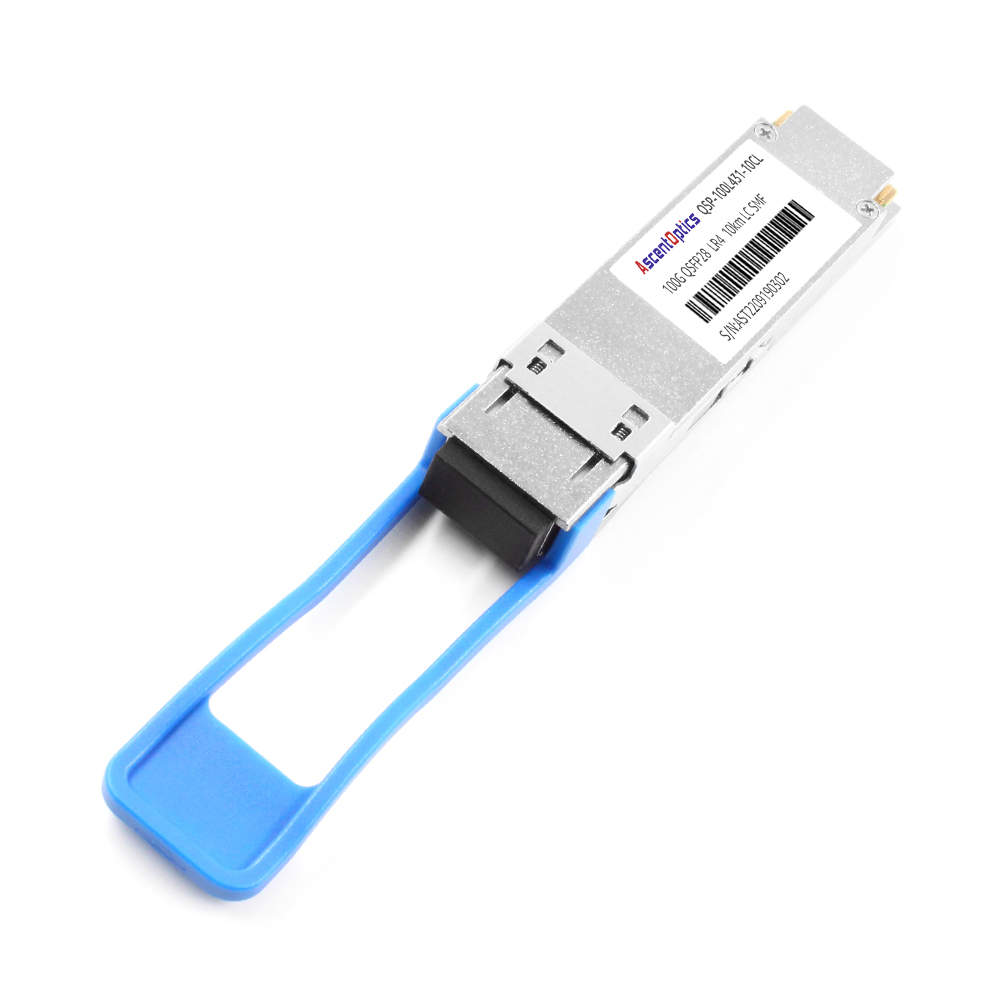
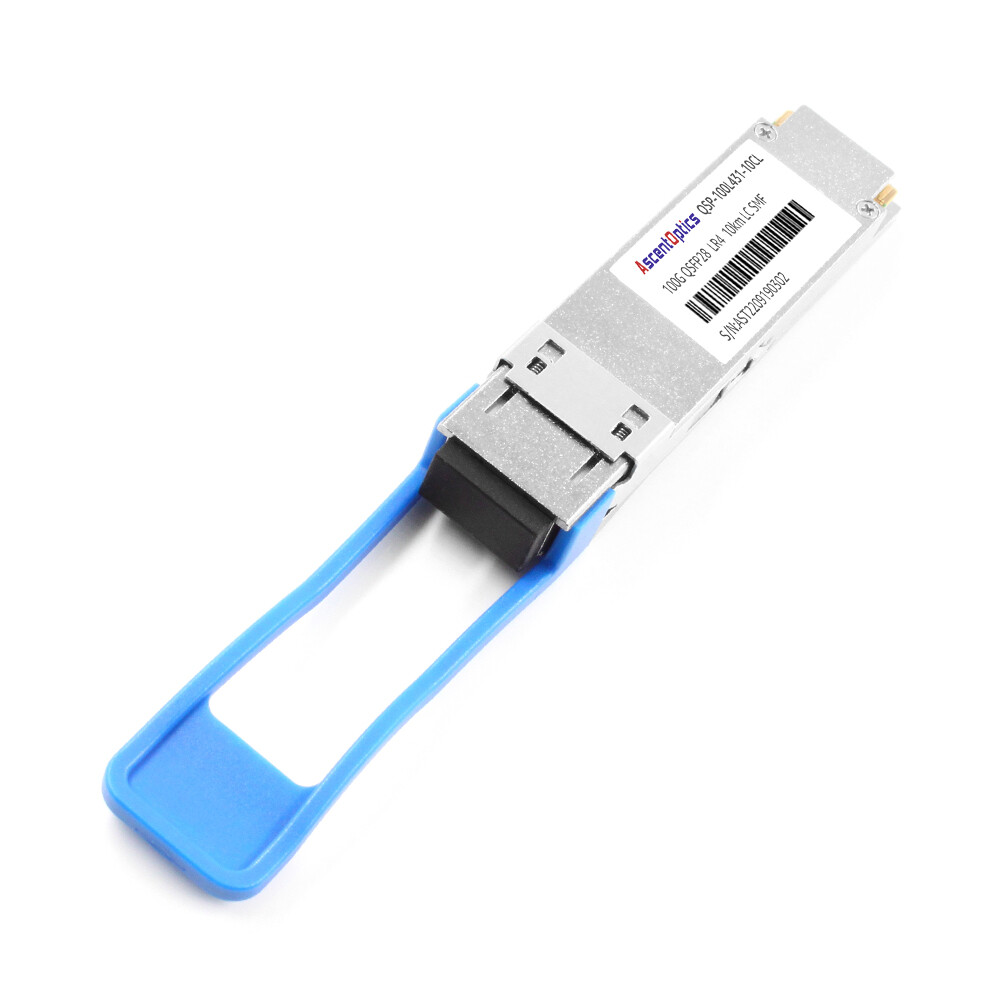
The 100G QSFP28 LR4 is a higher-speed optical transceiver designed to deliver 100 Gigabit Ethernet connectivity over single-mode fiber. It uses the QSFP28 form factor, which maintains the same physical dimensions as QSFP+ modules but supports significantly higher data rates through improved electrical and optical performance.
Unlike the 40G LR4 module, which uses four 10 Gbps lanes, the 100G QSFP28 LR4 transmits data using four 25 Gbps optical lanes. These signals are multiplexed onto four CWDM wavelengths and transmitted over a duplex LC fiber pair, enabling transmission distances of up to 10 kilometers while maintaining high signal integrity.
The increased bandwidth capacity makes 100G LR4 particularly suitable for cloud data centers, large-scale enterprise networks, and high-traffic aggregation layers where growing workloads demand higher throughput and improved network efficiency.
In addition to higher speed, QSFP28 LR4 modules typically offer improved spectral efficiency and better scalability, allowing network operators to increase capacity without expanding fiber infrastructure. As a result, 100G LR4 has become a key building block in modern data center architectures and a common upgrade path from 40G networks.
For a deeper look at 100G QSFP28 module types, see our QSFP28 module types guide.
Key Differences Between 40G QSFP+ LR4 and 100G LR4
Although 40G QSFP+ LR4 and 100G QSFP28 LR4 appear similar in form factor and transmission reach, they differ significantly in bandwidth capacity, technology architecture, and deployment positioning. Understanding these differences helps network planners select the most suitable solution.
Data Rate and Bandwidth Capacity
The most obvious difference is transmission speed. The 40G QSFP+ LR4 delivers 40 Gbps bandwidth, while the 100G QSFP28 LR4 supports 100 Gbps—offering 2.5 times higher capacity. This enables improved traffic handling and reduced congestion in high-bandwidth environments.
Form Factor and Interface
The 40G LR4 uses the QSFP+ form factor, whereas the 100G LR4 adopts QSFP28. Although both share identical physical dimensions, QSFP28 provides enhanced electrical performance to support higher data rates.
Optical Architecture and Lane Design
The 40G QSFP+ LR4 uses a 4×10 Gbps optical lane design, while the 100G QSFP28 LR4 operates with 4×25 Gbps lanes. Both rely on CWDM technology, but the higher lane rate enables significantly greater overall bandwidth in 100G modules.
Power Consumption and Efficiency
Because of the increased data rate, 100G LR4 modules generally consume slightly more power than 40G LR4. However, in terms of power per gigabit, 100G solutions typically offer better energy efficiency for high-density deployments.
Cost and Deployment Positioning
40G LR4 modules typically offer lower upfront costs, making them suitable for existing 40G infrastructures or budget-sensitive deployments. In contrast, 100G LR4 requires higher initial investment but provides better scalability for future bandwidth growth.
Application Scenarios: When to Choose Each
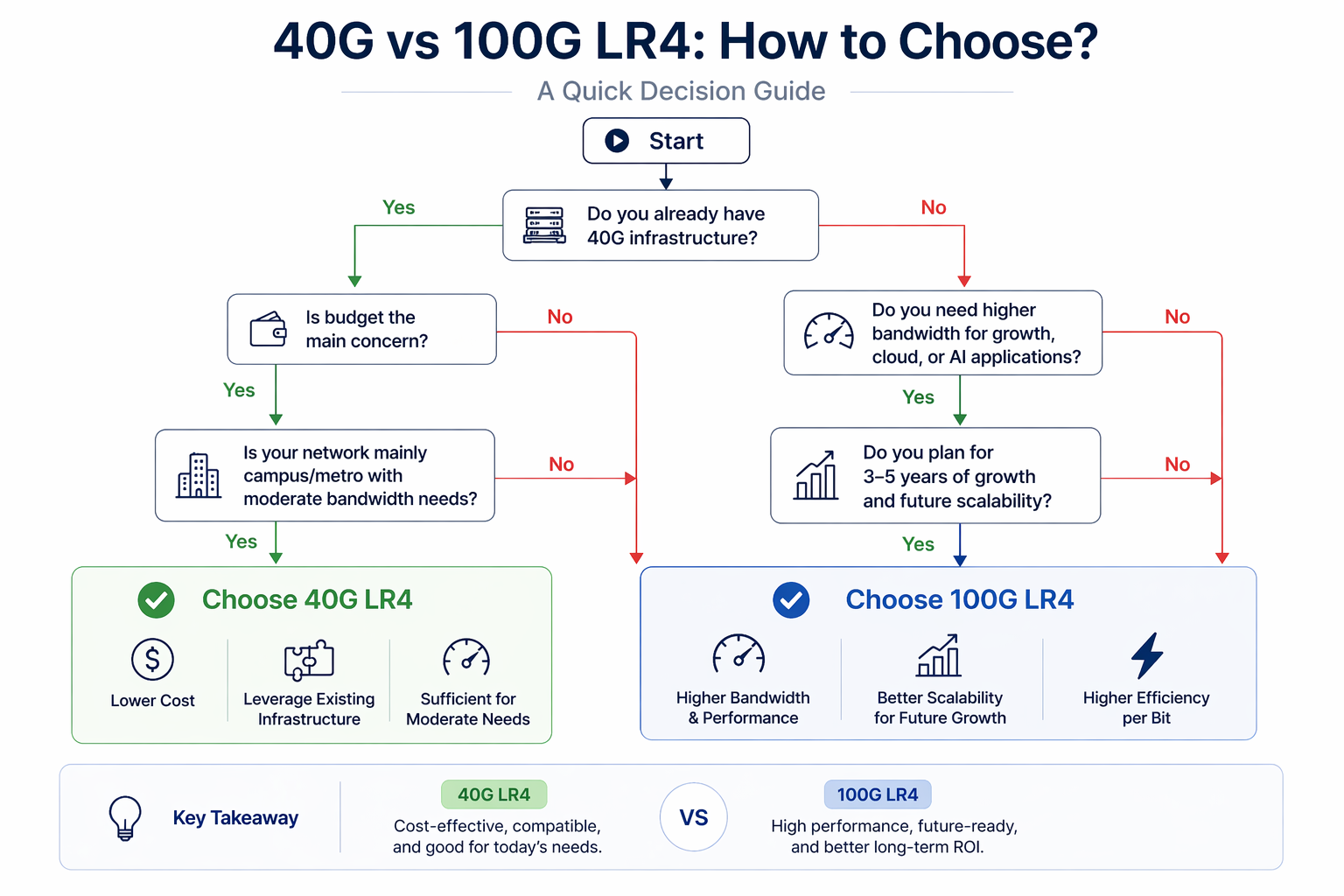
Choosing between 40G LR4 and 100G LR4 is not just about speed—it depends on your existing infrastructure, bandwidth requirements, and long-term scaling strategy. Below are the typical scenarios where each option makes more sense.
When 40G LR4 Is the Better Choice
Existing 40G Infrastructure
If your network is already built around QSFP+ 40G platforms, 40G LR4 is the most practical option. It allows you to reuse existing switches, line cards, and optical interfaces without major upgrades, avoiding compatibility issues and minimizing deployment risk.
Budget-Sensitive Upgrades
For projects with tight budgets, 40G LR4 offers a lower upfront investment:
- •Lower module cost
- •Lower switch upgrade cost
- •Reduced immediate CapEx
This makes it ideal for incremental upgrades where cost control is more important than maximizing bandwidth.
Enterprise Campus Networks
Many enterprise environments do not require 100G bandwidth.Typical use cases include:
- •Campus backbone links
- •Building-to-building interconnects
- •Medium-scale aggregation layers
In these scenarios, 40G provides sufficient capacity while keeping power consumption and costs under control.
Stable and Predictable Traffic Environments
If your traffic patterns are relatively stable and not growing rapidly, 40G LR4 is a low-risk, proven solution that meets current needs without over-provisioning.
When 100G LR4 Is the Better Choice
Cloud-Scale Data Centers
In hyperscale and cloud environments, bandwidth demand grows rapidly. 100G LR4 enables:
- •Higher port density
- •Reduced number of physical links
- •More efficient spine-leaf architectures
This is the standard for modern data center interconnects (DCI).
High-Bandwidth Applications
Applications such as:
- •AI / machine learning clusters
- •Big data analytics
- •High-frequency trading
- •Video streaming platforms
require significantly higher throughput and lower latency. 100G LR4 ensures the network does not become a bottleneck.
Future-Ready Deployments
If you are designing for 3–5 years of growth, 100G is the safer choice. Advantages include:
- •Avoiding early upgrades
- •Supporting traffic growth
- •Aligning with industry trends (100G → 400G migration path)
In many cases, deploying 40G today may lead to higher total cost due to future replacement.
Higher Efficiency per Bit
100G LR4 provides better power efficiency per Gbps compared to 40G:
- •Fewer modules required
- •Lower watts per bit
- •Reduced cabling complexity
This becomes critical in high-density environments where power and cooling are constrained.
Upgrade Considerations: From 40G to 100G
As bandwidth demands continue to grow, many organizations are evaluating the transition from 40G infrastructure to 100G networks. Compared with larger generational jumps, moving from 40G to 100G is considered a relatively smooth and manageable upgrade path. However, successful deployment requires careful planning in terms of compatibility, cabling, port capacity, and migration strategy.
Compatibility Planning
During the upgrade process, equipment compatibility should be evaluated first. Most switches released after 2020 feature QSFP28 ports that typically support backward compatibility with 40G QSFP+ LR4 modules, making phased upgrades easier to implement. However, implementation details may vary among vendors.
Therefore, it is recommended to review the switch manufacturer’s official documentation before deployment to confirm support for auto-negotiation or forced speed configuration.
Cabling Reuse (SMF Advantage)
One major advantage of upgrading from 40G QSFP+ LR4 to 100G QSFP28 LR4 is that both operate over duplex LC single-mode fiber (SMF). In most cases, existing fiber infrastructure can be reused, significantly reducing upgrade costs and installation complexity. For networks already built on SMF, this compatibility makes the transition from 40G to 100G one of the most cost-effective upgrade paths.
Switch Port Requirements
At the port level, upgrading to 100G typically requires switches equipped with QSFP28 ports. Existing 40G QSFP+ ports cannot directly support 100G speeds, so hardware replacement or expansion may be necessary. Additionally, as link bandwidth increases, switching capacity at the aggregation and core layers should be carefully evaluated to prevent performance bottlenecks during peak traffic periods.
Migration Strategies
In practice, organizations often adopt a phased migration approach. For example, 100G links may first be deployed at the core or aggregation layer while maintaining 40G at the access layer, enabling a gradual transition. Another option is to use breakout configurations for flexible bandwidth allocation in specific scenarios. Regardless of the approach, upgrade timelines should align with traffic growth projections and budget planning.
For migration planning, see our 40G to 100G migration guide.
Conclusion
In summary, both 40G QSFP+ LR4 and 100G QSFP28 LR4 deliver reliable 10 km transmission over duplex single-mode fiber, but they serve different stages of network evolution.
40G LR4 remains a practical and cost-effective solution for existing infrastructures and stable traffic environments. In contrast, 100G LR4 provides significantly higher bandwidth, better long-term scalability, and stronger alignment with modern data center architectures.
For organizations planning future growth, upgrading to 100G often represents the more strategic investment—especially when existing SMF cabling can be reused. Ultimately, the right choice depends on current traffic demands, budget planning, and long-term expansion goals.
For broader 100G guidance, read our QSFP28 transceiver guide. And if you are planning a migration from 40G, see our 40G to 100G migration guide.
Post Views: 2,627