What Is QSFP112?
QSFP112 Architecture and Specifications
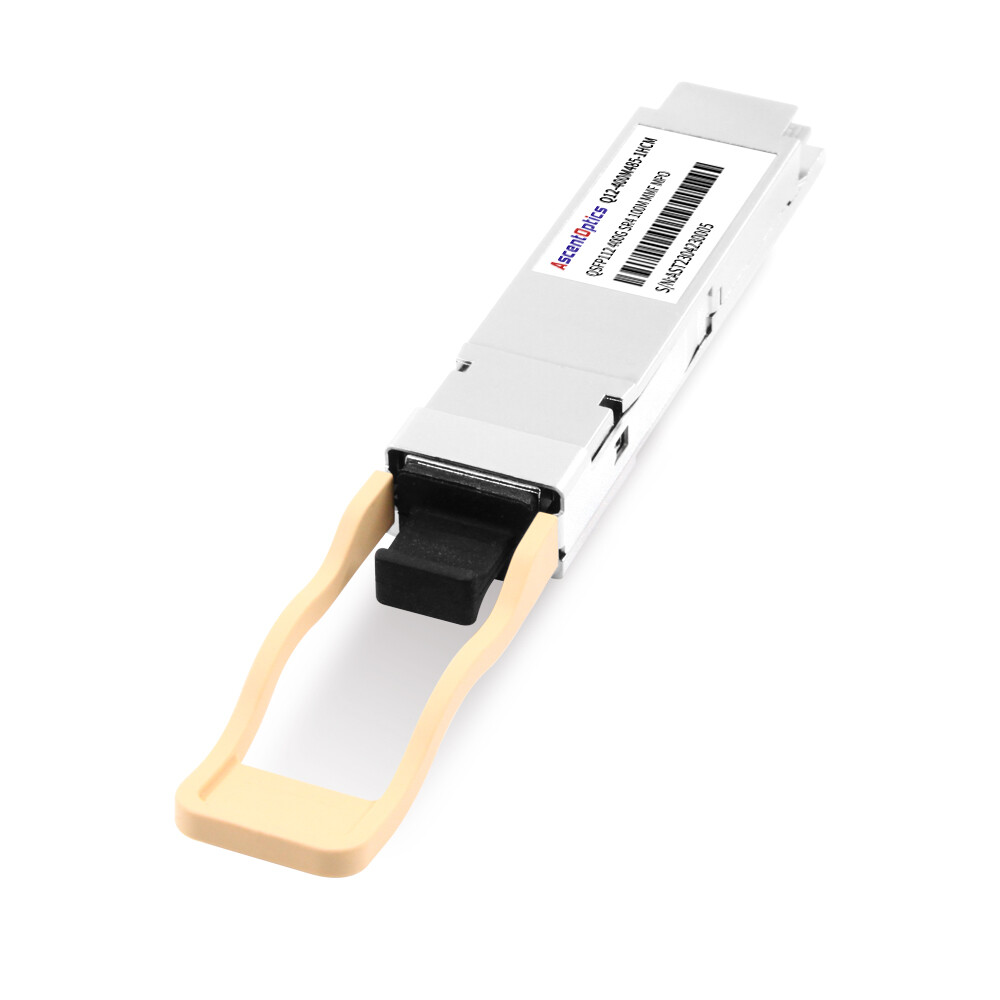
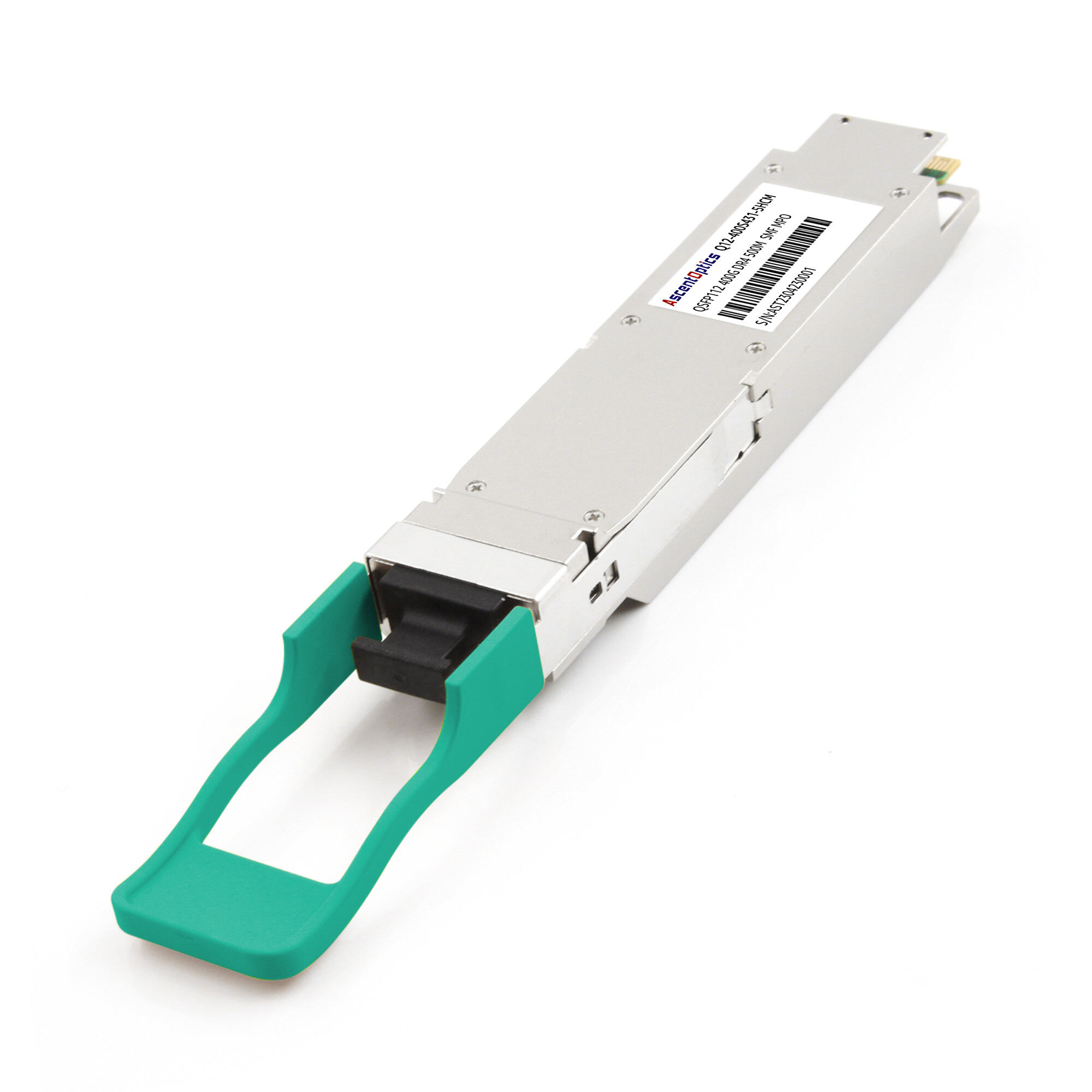
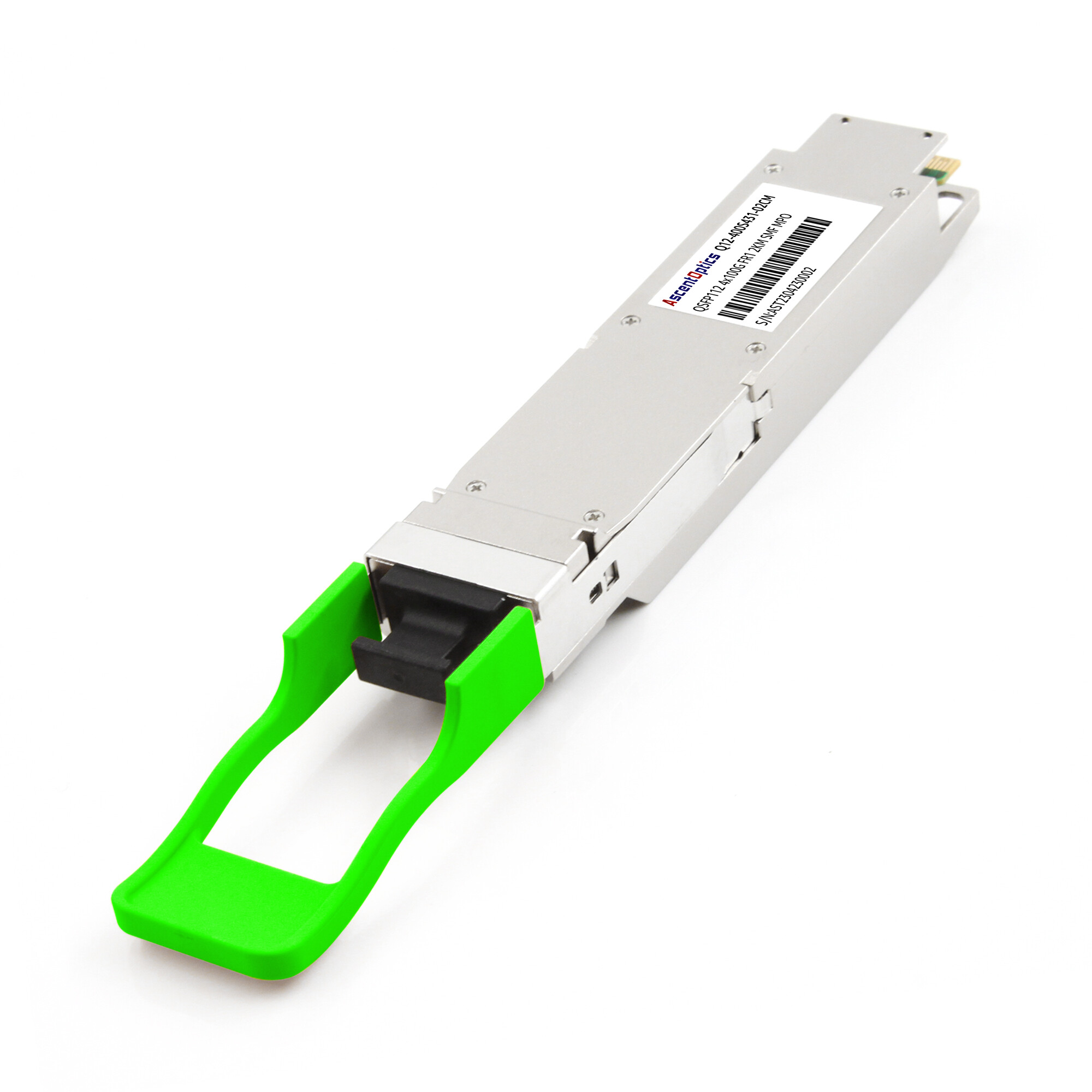
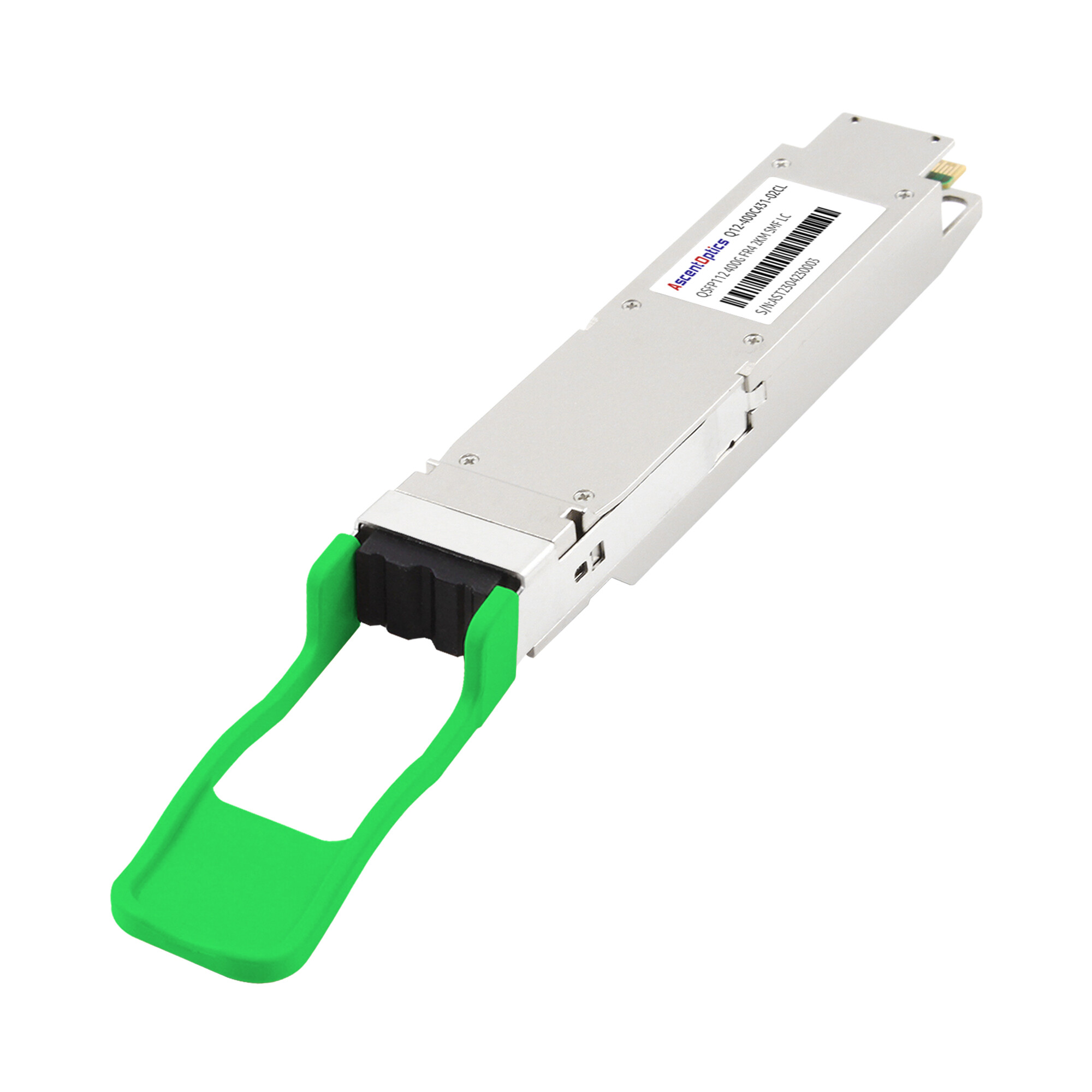
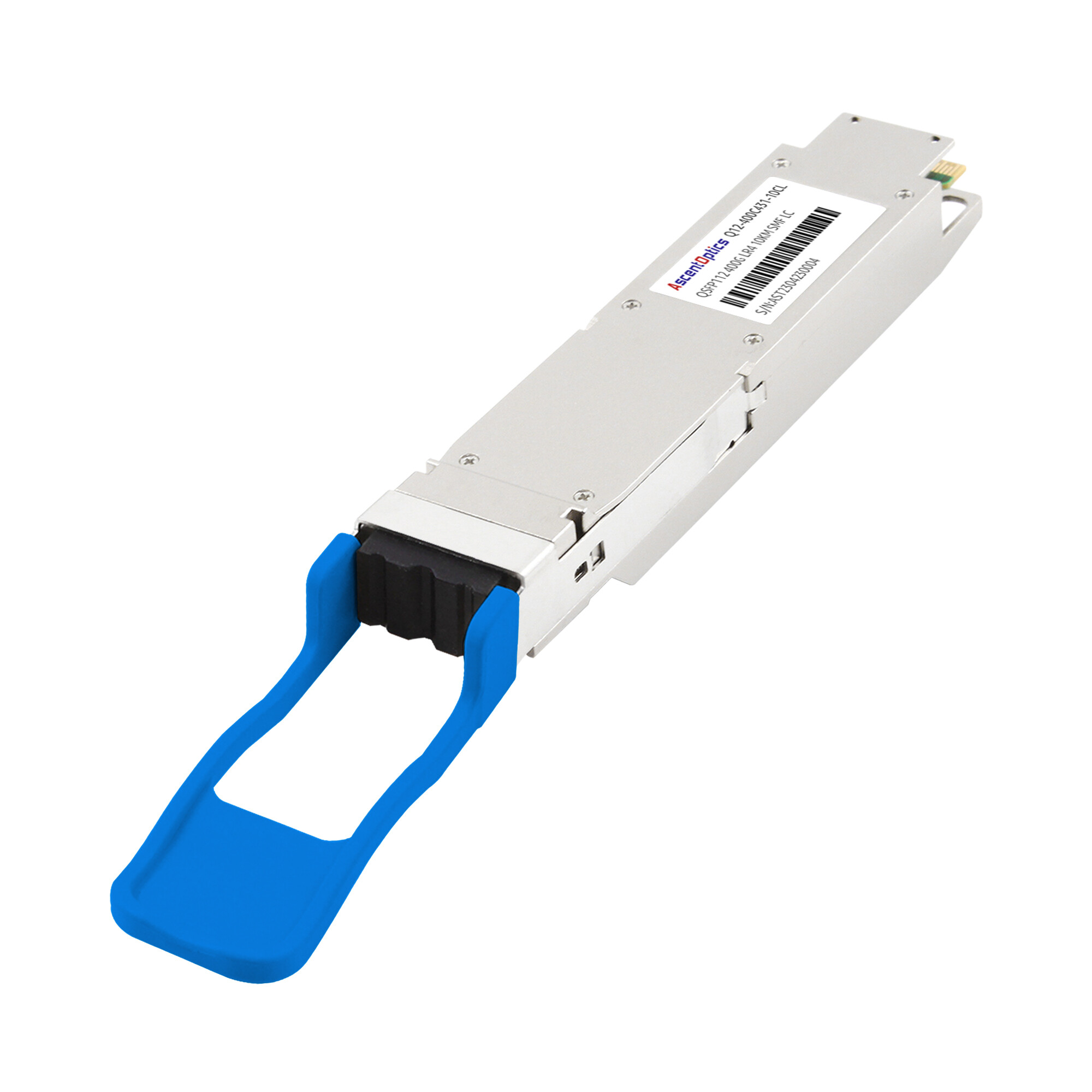
QSFP112 is a compact optical transceiver form factor that delivers high-speed data transmission using four electrical lanes operating at 112 Gbps PAM4 signaling. It is part of the established QSFP family, which means it maintains the same physical dimensions as QSFP28 and QSFP56 modules. This continuity is one of its strongest selling points for brownfield deployments.
The module uses a 38-pin electrical interface and supports CMIS (Common Management Interface Specification) for unified management. QSFP112 modules are designed for 400G and 800G Ethernet applications, with the 800G implementation typically using two QSFP112 modules in a paired configuration or leveraging breakout modes to split one 800G signal into multiple lower-speed links.
For a deeper technical overview of this technology, see our QSFP112 vs QSFP-DD comparison, which explains how QSFP112 fits into the broader 400G and 800G form factor landscape.
QSFP112 Lane Configuration
QSFP112’s lane architecture is straightforward. Each of the four lanes runs at 112 Gbps PAM4, yielding an aggregate data transmission rate of 400G per module. For 800G applications, network engineers typically deploy dual QSFP112 ports or use breakout cables to fan out to multiple 100G or 200G links.
This 4x112G design aligns with the IEEE 802.3df standard and offers compatibility with existing QSFP cages. Organizations that have already deployed QSFP28 or QSFP56 infrastructure can often upgrade to QSFP112 without replacing switch faceplates or cages, which significantly reduces capital expenditure.
What Is OSFP?
OSFP Architecture and Specifications
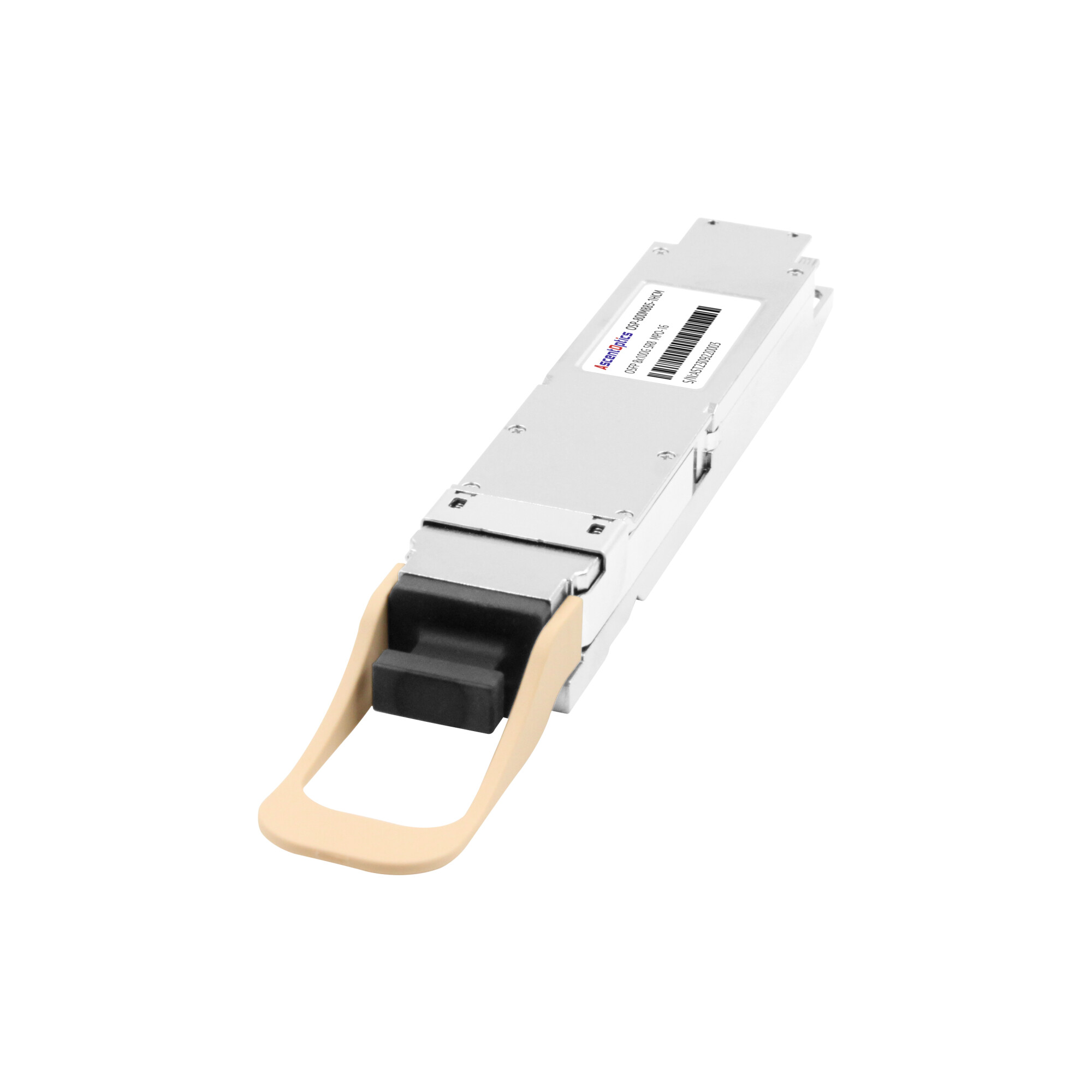
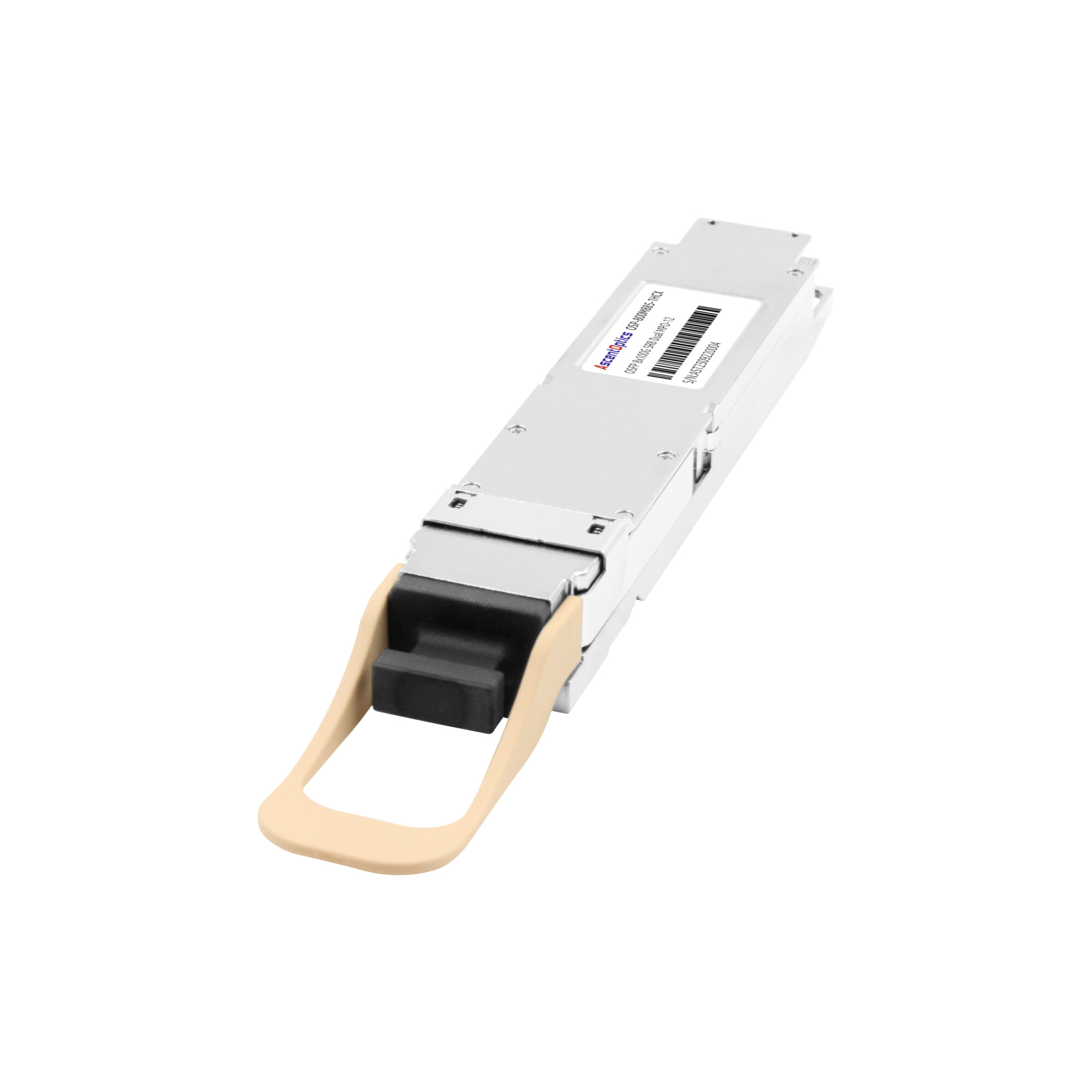
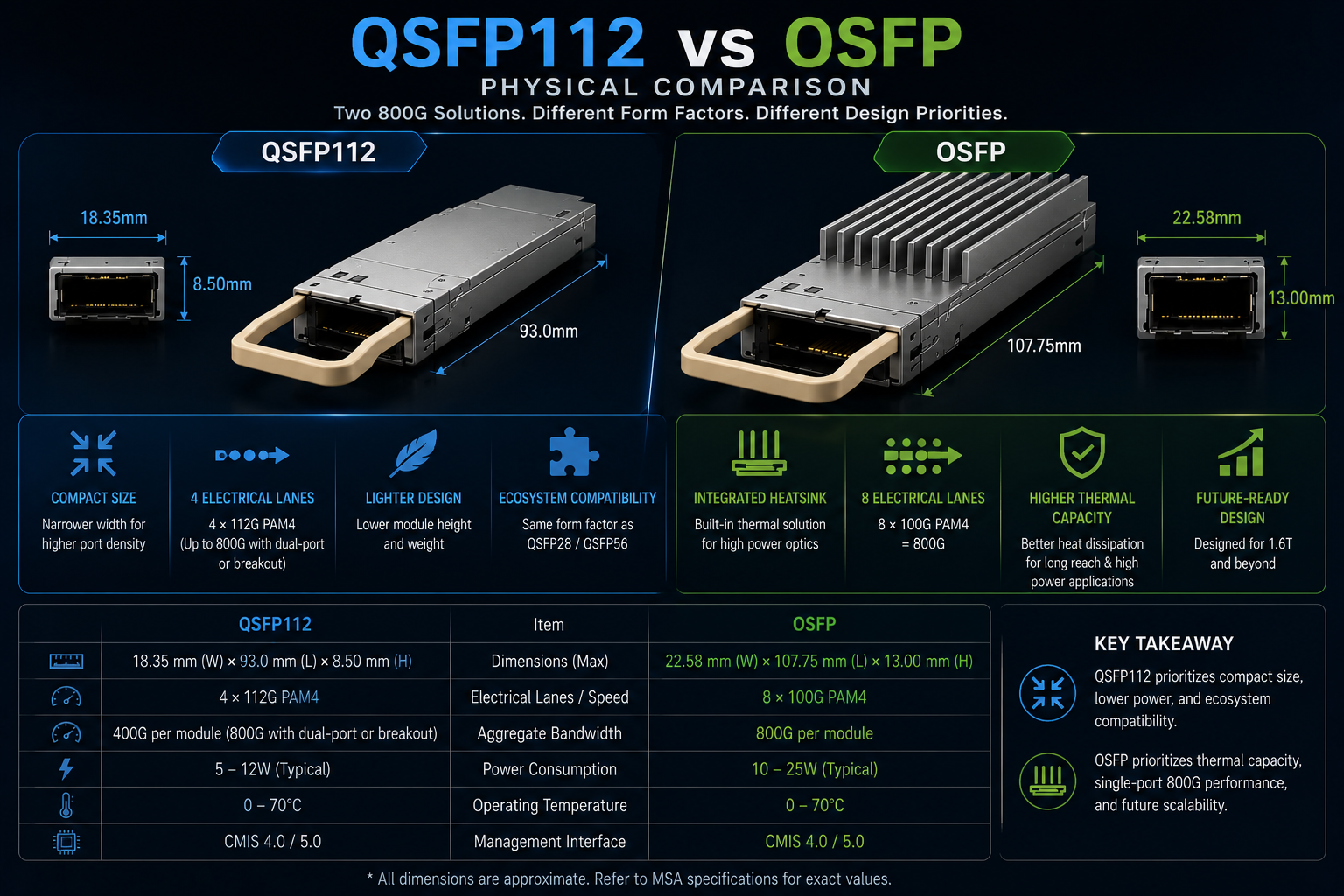
OSFP stands for Octal Small Form-factor Pluggable. As the name implies, it uses eight electrical lanes rather than four. Each lane operates at 100 Gbps PAM4, delivering a total bandwidth of 800G in a single module. The form factor is larger than QSFP112, measuring approximately 22.5mm wide compared to QSFP112’s 18.35mm, and it includes an integrated heatsink for improved thermal management.
The OSFP MSA (Multi-Source Agreement) defines the mechanical, electrical, and thermal specifications. The current standard, OSFP Rev 5.22, ensures interoperability across vendors and provides a clear roadmap for future speed increases.
OSFP vs OSFP-XD: The Next Evolution
The OSFP ecosystem is already evolving. OSFP-XD (eXtended Density), defined in OSFP-XD Rev 1.11, further increases faceplate density while maintaining the same electrical interface. This variant is designed for ultra-high-density 1.6T deployments where every millimeter of faceplate real estate matters.
OSFP-XD represents a key strategic advantage for the OSFP ecosystem. While QSFP112 is approaching its physical limits at 800G, OSFP’s larger form factor and robust thermal design provide a clearer path to 1.6T and beyond. Network architects evaluating long-term roadmap considerations should weigh this evolution carefully.
QSFP112 vs OSFP: Key Specifications Compared
Form Factor Dimensions and Port Density
Port density is one of the most visible differences in the QSFP112 vs. OSFP debate. QSFP112 maintains the classic QSFP width of approximately 18.35mm, enabling up to 36 ports per 1U switch faceplate. OSFP, at roughly 22.5mm wide, supports up to 32-36 ports per 1U, depending on the switch design, though the integrated heatsink consumes additional vertical space.
However, raw port count does not tell the complete story. OSFP’s integrated heatsink eliminates the need for additional thermal management components in the cage, which can actually improve effective density in thermally constrained environments.
Speed and Lane Architecture
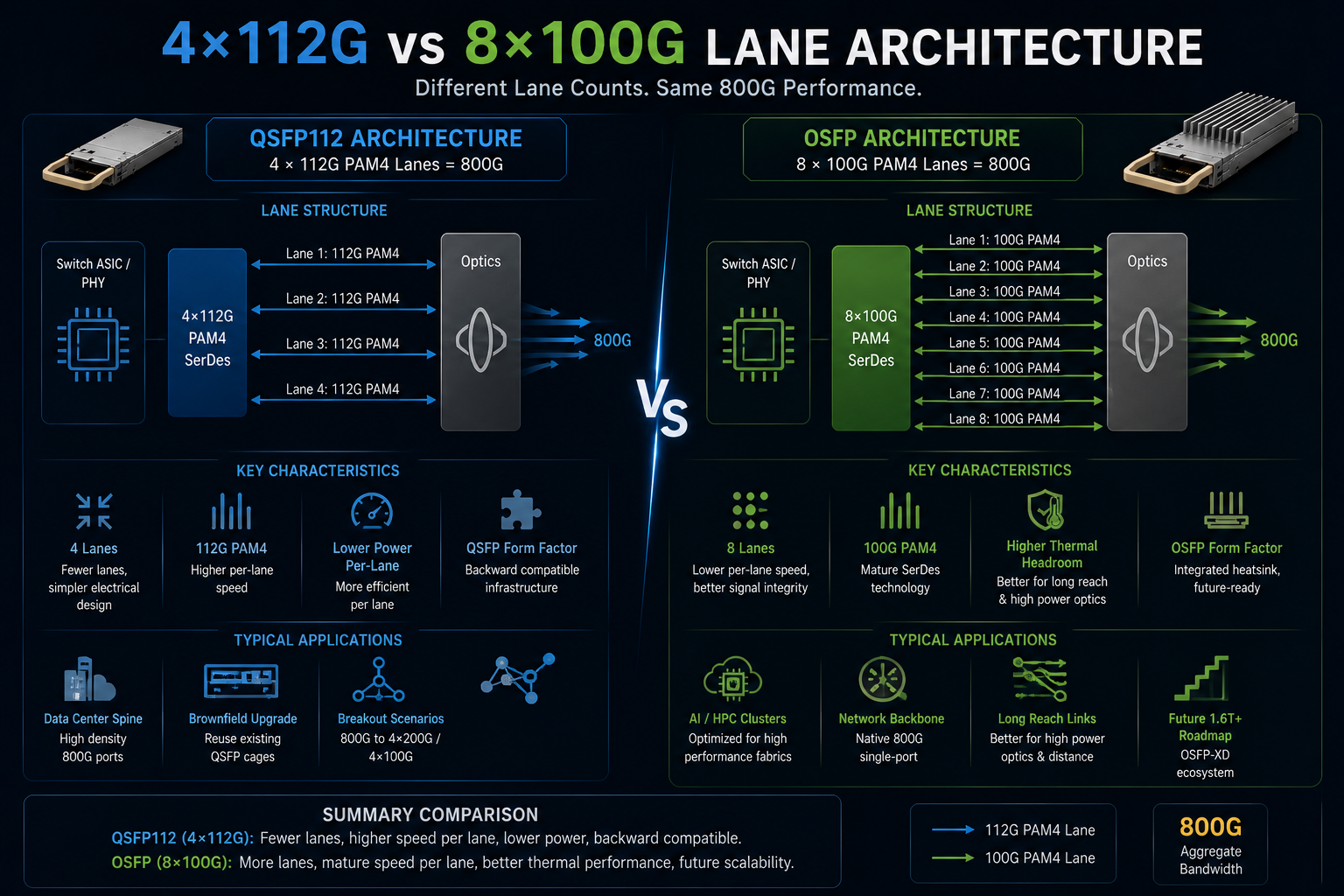
The fundamental architectural difference is lane count. QSFP112 uses 4 lanes at 112G PAM4. OSFP uses 8 lanes at 100G PAM4. Both deliver 800G aggregate bandwidth, but the implementation differs.
QSFP112’s approach maintains compatibility with the QSFP ecosystem but pushes the SerDes (serializer/deserializer) technology to its limits. OSFP’s 8-lane design distributes the electrical load more evenly and reduces the per-lane signaling rate, which can improve signal integrity and reduce error rates over backplane traces.
Power Consumption and Thermal Design
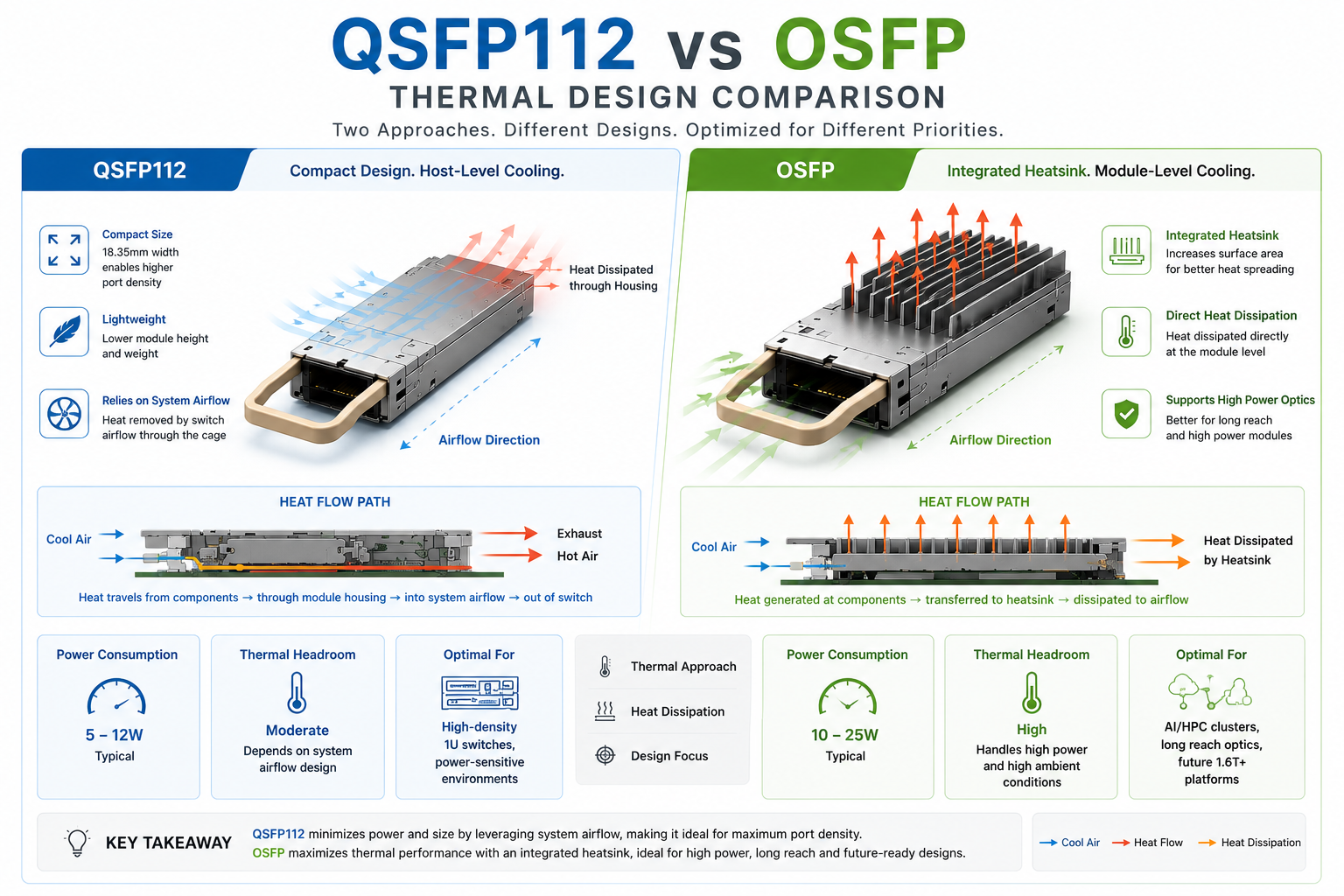
Power is where the QSFP112 vs. OSFP comparison becomes critically important for large-scale deployments. QSFP112 modules typically consume 5-12W depending on reach and implementation. OSFP modules typically draw 10-25W, with some long-reach variants pushing higher.
At first glance, QSFP112 appears more efficient. But at rack scale, the picture shifts. A 512-port 800G deployment using OSFP can consume approximately 8kW more than an equivalent QSFP112 deployment at the faceplate level. However, OSFP’s integrated heatsink reduces the thermal load on switch ASICs and cage components, which can lower overall system-level power consumption by 5-10%.
The thermal design also affects reliability. OSFP’s larger surface area and integrated cooling fins provide better heat dissipation, which can extend module lifespan in high-temperature data center environments.
Backward Compatibility
QSFP112 has a clear advantage here. Because it shares the QSFP form factor, QSFP112 modules can plug into existing QSFP cages with proper electrical support. This means organizations with QSFP28 or QSFP56 switches can often upgrade to QSFP112 without a full switch replacement.
OSFP is not backward compatible with QSFP cages. Adapters exist, but they add cost, complexity, and potential signal integrity issues. For brownfield deployments, this compatibility gap is a significant factor.
| Specification |
QSFP112 |
OSFP |
| Form factor width |
~18.35mm |
~22.5mm |
| Electrical lanes |
4x112G PAM4 |
8x100G PAM4 |
| Aggregate bandwidth |
400G-800G |
800G |
| Typical power consumption |
5-12W |
10-25W |
| Ports per 1U (typical) |
Up to 36 |
Up to 32-36 |
| Integrated heatsink |
No |
Yes |
| Backward compatibility |
QSFP family |
Not compatible with QSFP |
| CMIS management |
Yes |
Yes |
| Path to 1.6T |
Limited |
OSFP-XD defined |
QSFP112 vs OSFP for 800G Data Centers
Port Density and Faceplate Considerations
When Sarah Kim led the network design for a new hyperscale facility in Dallas, she faced a classic QSFP112 vs. OSFP density problem. Her team needed 800G at every spine switch port, and the 1U faceplate was the constraint. QSFP112’s narrower profile gave her 36 ports per switch. OSFP would have limited her to 32 ports without custom cage designs.
For her specific build, port density won. But the decision was not automatic. She also had to model cable management, airflow, and the thermal impact of 36 high-power ports in a single 1U chassis. In the end, her switch vendor’s QSFP112 platform had the most mature thermal design for 36-port configurations.
Switch ASIC Ecosystem
The switch ASIC ecosystem heavily influences form factor availability. Broadcom’s Tomahawk 5 and Trident 5-X12 support both QSFP112 and OSFP, but implementation varies by switch vendor. Marvell’s Teralynx 10 and Innovium-based platforms also offer flexibility, though vendor roadmaps tend to favor one form factor over the other.
Switch vendors like Cisco and Arista have historically standardized on QSFP form factors for enterprise and cloud data centers, making QSFP112 the natural evolution. Meanwhile, NVIDIA and Meta-driven designs have gravitated toward OSFP for AI-specific fabrics.
Rack-Level Power and Cooling Impact
At rack scale, power consumption differences compound. A fully loaded 48-port 800G switch using OSFP modules can draw 200-400W more than a QSFP112 equivalent. Across a 40-rack data hall, that delta becomes 8-16kW, which translates directly into cooling infrastructure costs.
However, OSFP’s superior thermal dissipation can reduce the load on the switch’s internal cooling systems. Some switch vendors report 10-15% lower fan speeds with OSFP due to the module-level heatsink handling more of the thermal load. The net effect depends on your specific switch platform and data center cooling architecture.
Ready to model power consumption for your specific deployment? Contact our optical networking experts to get a rack-level thermal and power analysis tailored to your infrastructure.
QSFP112 vs OSFP for AI and HPC Clusters
NVIDIA Ecosystem: ConnectX-7, ConnectX-8, and BlueField
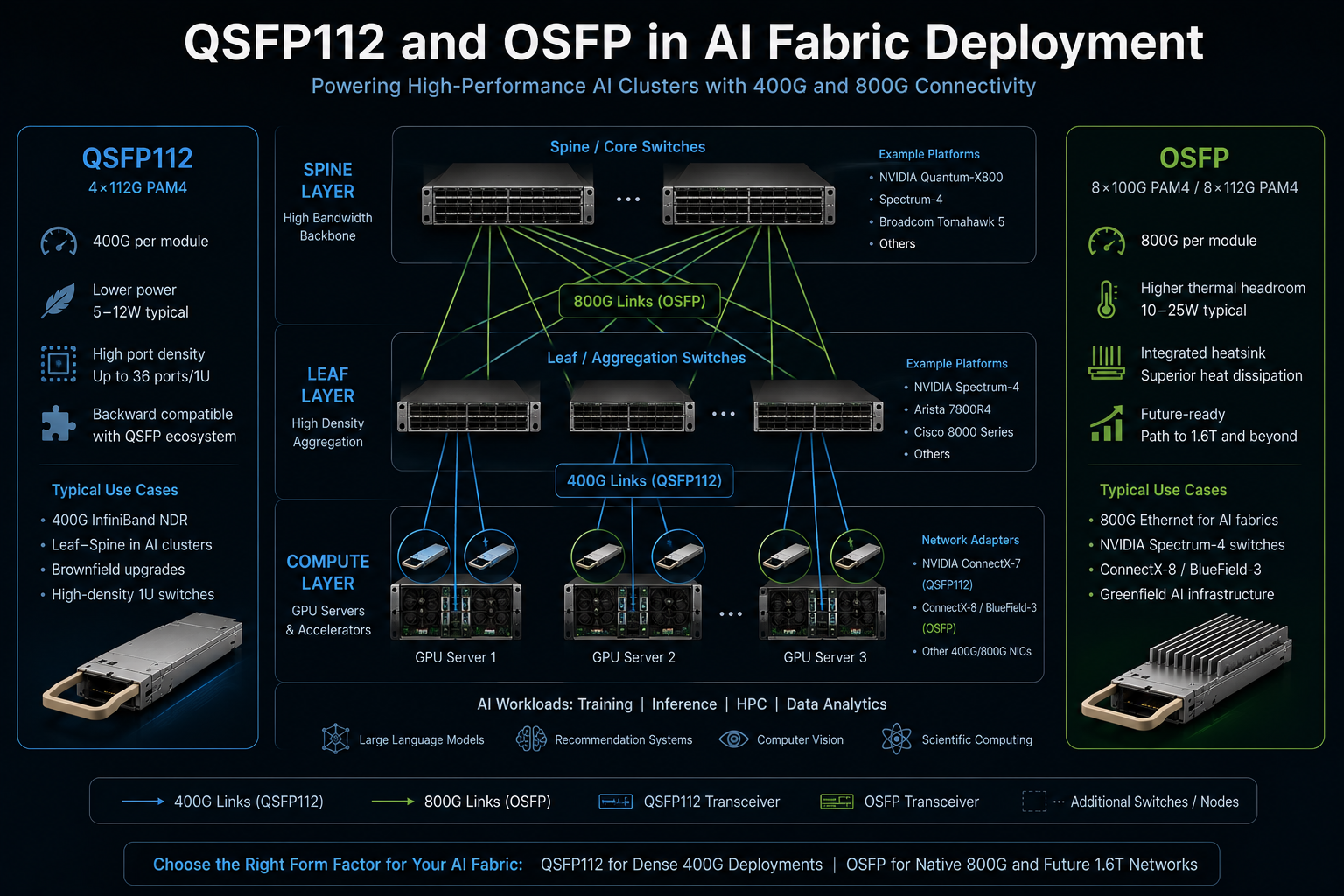
The AI infrastructure wave is reshaping the QSFP112 vs. OSFP landscape. NVIDIA’s ConnectX-7 adapters support both QSFP112 and OSFP, depending on the specific SKU. ConnectX-8 and BlueField-3 DPU platforms increasingly favor OSFP for 800G and 1.6T applications, particularly in DGX SuperPOD and similar GPU cluster designs.
For AI cluster architects, this creates a vendor-driven bias. If your infrastructure is built around NVIDIA’s reference architectures, OSFP is often the path of least resistance. NVIDIA Spectrum-4 switches and the associated ecosystem are optimized for OSFP’s thermal and electrical characteristics.
InfiniBand NDR and XDR Form Factor Requirements
InfiniBand NDR (400G) and XDR (800G) deployments add another layer of complexity. NVIDIA’s InfiniBand switch platforms for NDR/XDR predominantly use OSFP. The form factor’s thermal headroom is critical for maintaining signal integrity in the high-performance, low-latency environments that AI training workloads demand.
QSFP112 is not absent from the InfiniBand conversation, but it is less prevalent in NVIDIA’s reference designs. For organizations building GPU fabrics for large language model training or inference clusters, this ecosystem reality often drives the form factor decision more than raw specifications.
GPU Fabric Design Considerations
AI clusters require a different networking mindset than traditional data center fabrics. Latency sensitivity, all-to-all communication patterns, and the sheer volume of east-west traffic push thermal and power budgets to their limits.
OSFP’s integrated heatsink provides more thermal margin for sustained high-load operations, which is exactly what GPU fabrics experience during training runs. QSFP112 can perform well in these environments, but it requires more careful thermal management at the switch and rack levels.
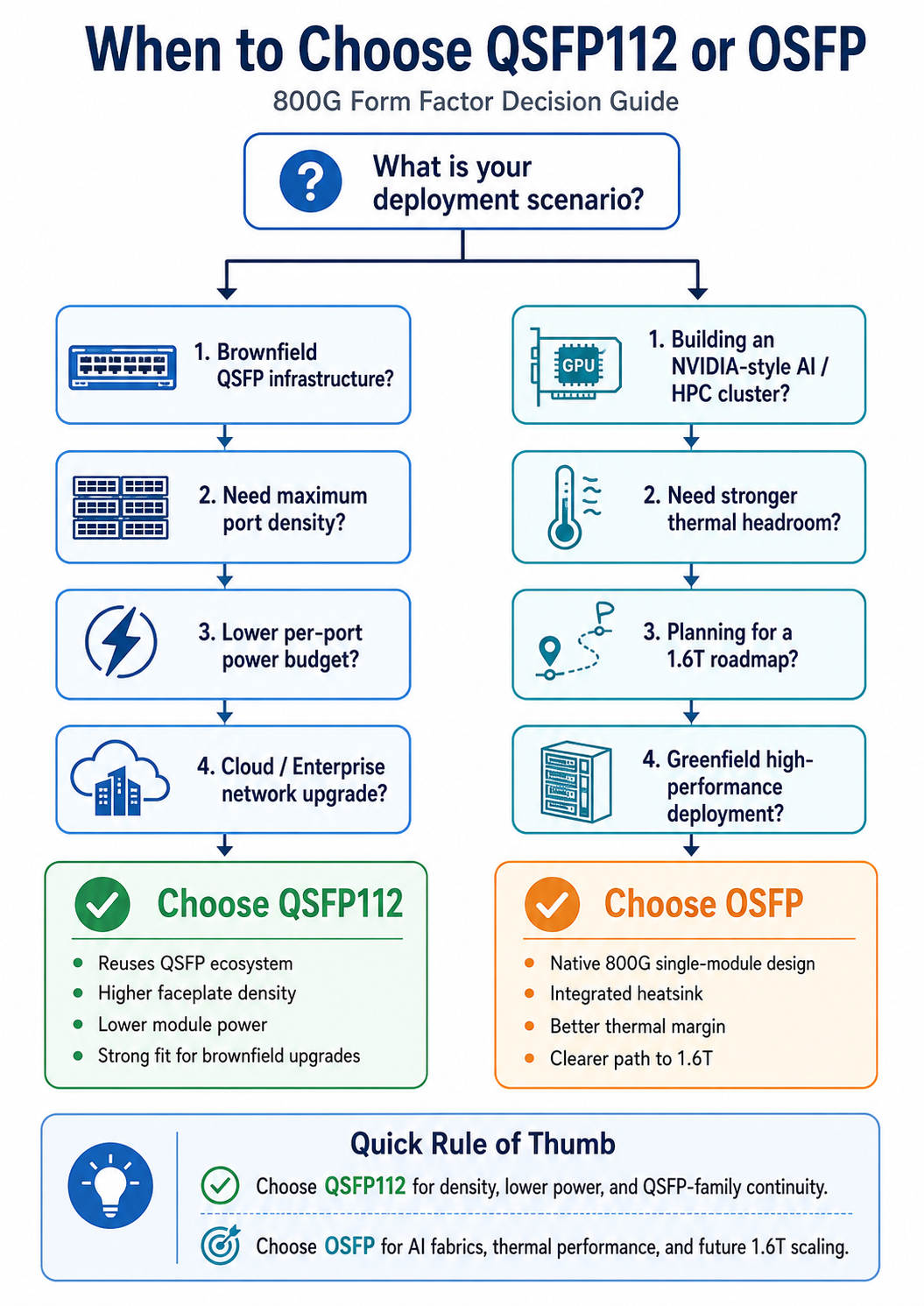
Decision-making framework: Choosing between QSFP112 and OSFP
When to Choose QSFP112
- 1. Brownfield upgrades from QSFP28/QSFP56: If your existing switches support QSFP112, it is the obvious path. Cage reuse saves capital and reduces deployment risk.
- 2. Maximum port density requirements: When you need 36 ports per 1U and your thermal modeling supports it, QSFP112 delivers more ports in the same space.
- 3. Lower per-port power budgets: For deployments where every watt matters and switch-level thermal management is sufficient, QSFP112’s lower power draw is advantageous.
- 4. Cisco or Arista-centric environments: These vendors have standardized on QSFP112, making it the lower-risk choice for their ecosystems.
- 5. Cost-sensitive 400G-to-800G transitions: QSFP112 modules and cables are currently more widely available and can be more cost-effective for standard reach applications.
When to Choose OSFP
- 1. NVIDIA GPU cluster builds: If you are deploying DGX SuperPOD or similar NVIDIA reference architectures, OSFP is the native form factor.
- 2. 6T roadmap requirements: Organizations planning 1.6T upgrades within the next 3-5 years should strongly consider OSFP and OSFP-XD for their forward compatibility.
- 3. Thermally constrained high-density environments: OSFP’s integrated heatsink provides better thermal margins for sustained high-load operations.
- 4. Greenfield AI data centers: New builds without legacy QSFP infrastructure can standardize on OSFP without backward compatibility concerns.
- 5. Long-reach 800G deployments: OSFP’s superior thermal performance supports higher-power long-reach and coherent optical modules more effectively.
Greenfield vs Brownfield Deployment Considerations
Greenfield data centers have the luxury of choosing either form factor without legacy constraints. In these scenarios, the decision should be driven by your primary workload. AI-centric facilities should lean toward OSFP. General-purpose cloud and enterprise data centers may find QSFP112 more flexible and cost-effective.
Brownfield deployments almost always favor QSFP112 unless there is a compelling reason to forklift upgrade. The cost of replacing switches, cages, and cables to adopt OSFP rarely justifies the benefits unless you are simultaneously moving to a new vendor ecosystem like NVIDIA’s AI infrastructure stack.
Need help mapping your existing infrastructure to the right 800G form factor? Request a quote for a customized migration assessment from our engineering team.
Total Cost of Ownership: QSFP112 vs OSFP at Scale
Module Pricing Trends
Module pricing fluctuates with supply and demand, but QSFP112 modules generally carry a slight cost advantage for standard reach applications due to higher production volumes and broader vendor support. OSFP modules, particularly long-reach and coherent variants, can cost 10-20% more.
However, pricing convergence is expected as OSFP volumes increase. By 2027, industry analysts predict near-parity for mainstream 800G SR and DR modules.
Power and Cooling Costs at Rack Scale
Power is where TCO diverges most significantly. Using the earlier example of a 512-port deployment, an 8kW faceplate power delta translates to approximately 7,000−7,000−10,000 per year in additional electricity and cooling costs at typical U.S. commercial power rates. Over a 5-year equipment lifecycle, that becomes 35,000−35,000−50,000 per deployment.
But OSFP’s system-level thermal advantages can offset part of this. In some high-density deployments, OSFP’s larger thermal envelope may allow more efficient cooling strategies, potentially reducing overall system cooling requirements. Net TCO depends heavily on your specific switch platform, data center PUE (Power Usage Effectiveness), and electricity rates.
Infrastructure and Cage Costs
For brownfield deployments, QSFP112’s cage compatibility eliminates retrofit costs. OSFP deployments in existing data centers may require new switch platforms or adapter modules, which add 50−50−200 per port in migration expenses. Greenfield builds to avoid this differential entirely.
Cable costs also vary. OSFP-to-OSFP DAC and AOC cables are currently priced at a slight premium compared to QSFP112 equivalents, though this gap is narrowing as production scales.
In high-ambient-temperature deployments such as telecom edge facilities and metro network sites, some operators have found that OSFP’s larger thermal envelope can improve long-term reliability and reduce maintenance requirements.
Conclusion
The QSFP112 vs. OSFP decision is not about finding a universal winner. It is about matching the right form factor to your specific deployment scenario, vendor ecosystem, and roadmap requirements. QSFP112 offers backward compatibility, lower per-port power, and maximum density in existing infrastructure. OSFP delivers superior thermal performance, a native 800G single-module design, and a clearer path to 1.6T.
As AI clusters continue scaling toward 800G and 1.6T interconnects, OSFP is expected to play an increasingly important role in next-generation network architectures, while QSFP112 remains highly relevant for 400G deployments that prioritize density, efficiency, and ecosystem maturity.
If you are upgrading brownfield infrastructure with Cisco or Arista switches, QSFP112 is likely your best choice. If you are building greenfield AI clusters around NVIDIA’s ecosystem, OSFP provides the thermal headroom and roadmap alignment you need.
Ready to choose the right 800G form factor for your network? Explore our optical transceiver solutions and talk to our engineers about QSFP112 and OSFP modules for your specific deployment. We offer both form factors with MSA-compliant designs, competitive pricing, and technical support to ensure your 800G upgrade succeeds from day one.
As data centers continue their transition to 800G and beyond, the network architects who make informed, scenario-driven form factor decisions today will build the most reliable and cost-effective infrastructure for the next decade.
Frequently Asked Questions
Q1: What is the difference between QSFP112 and OSFP?
A: QSFP112 and OSFP are high-speed optical transceiver form factors designed for different networking generations and deployment priorities. QSFP112 is primarily used for 400G applications based on four 112G PAM4 lanes, while OSFP is widely adopted for native 800G networking and future 1.6T platforms.
Q2: Can QSFP112 support 800G?
A: A single QSFP112 module provides up to 400G bandwidth. Networks can achieve 800G aggregate capacity by using multiple QSFP112 ports, but QSFP112 does not support native single-port 800G operation. Native 800G connectivity is typically implemented using OSFP or QSFP-DD800 form factors.
Q3: Which form factor does NVIDIA use for 800G?
A: NVIDIA primarily adopts OSFP for its latest 800G Ethernet and InfiniBand platforms, including Spectrum-4 switches and ConnectX-8 adapters. Earlier 400G NDR generations, such as Quantum-2 and ConnectX-7, continue to use QSFP112.
Q4: Is OSFP backward compatible with QSFP?
A: No, OSFP is not physically or electrically backward compatible with QSFP cages. Mechanical adapter solutions exist for certain platforms, but they do not provide full electrical backward compatibility. QSFP112 maintains backward compatibility with the QSFP form factor, making it the better choice for brownfield upgrades.
Q5: Which is more power efficient, QSFP112 or OSFP?
QSFP112 modules consume less power per port (5-12W typical) compared to OSFP (10-25W typical). However, OSFP’s integrated heatsink can reduce system-level cooling requirements. The most power-efficient choice depends on your specific switch platform and data center thermal design.
Q6: Is QSFP112 the same as QSFP-DD?
A: No. QSFP112 uses four electrical lanes operating at 112G PAM4, while QSFP-DD uses eight lanes. Although both can support high-speed networking applications, they target different system architectures and migration paths.
Q7: Which form factor is better for AI clusters?
For modern 800G AI fabrics, OSFP is generally preferred because it offers greater thermal headroom and supports native 800G connectivity. QSFP112 remains a strong choice for 400G AI and HPC environments, particularly in NVIDIA NDR InfiniBand deployments.
Post Views: 2,325