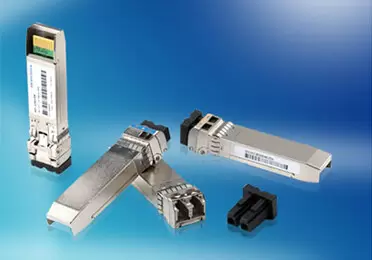
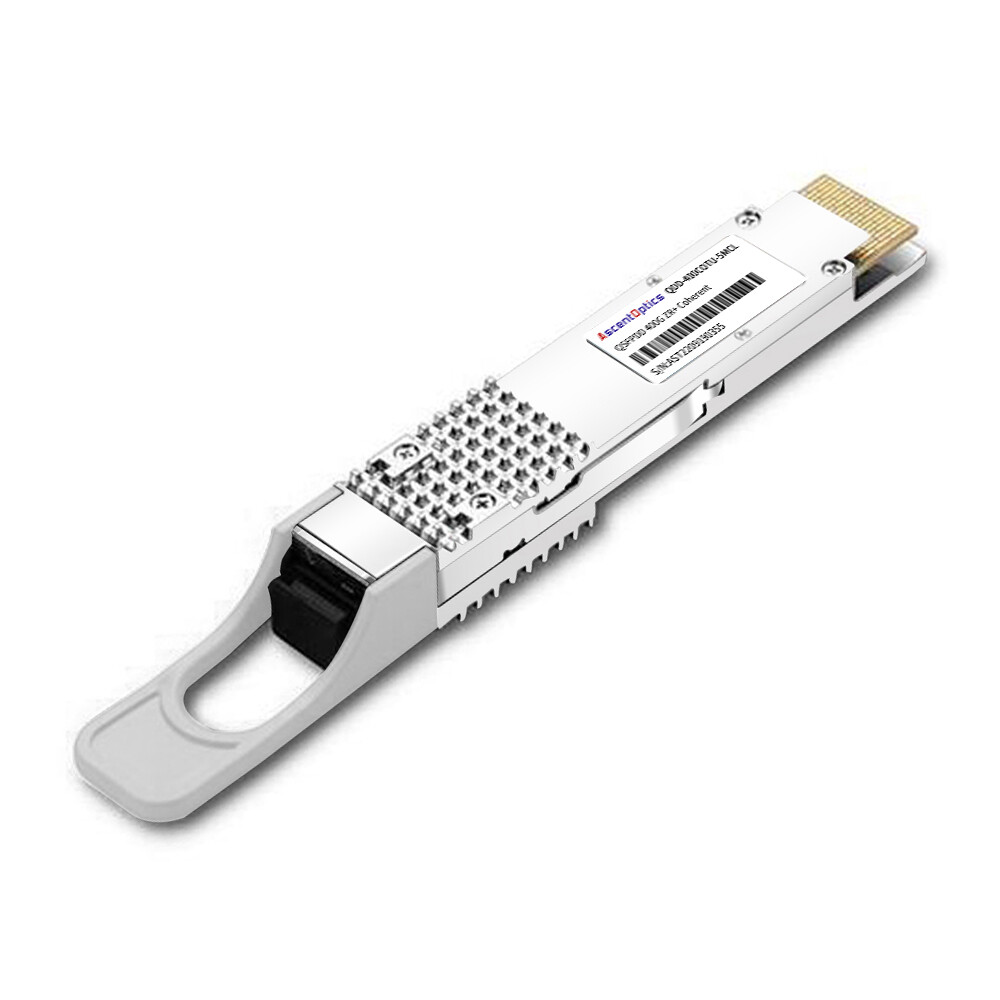
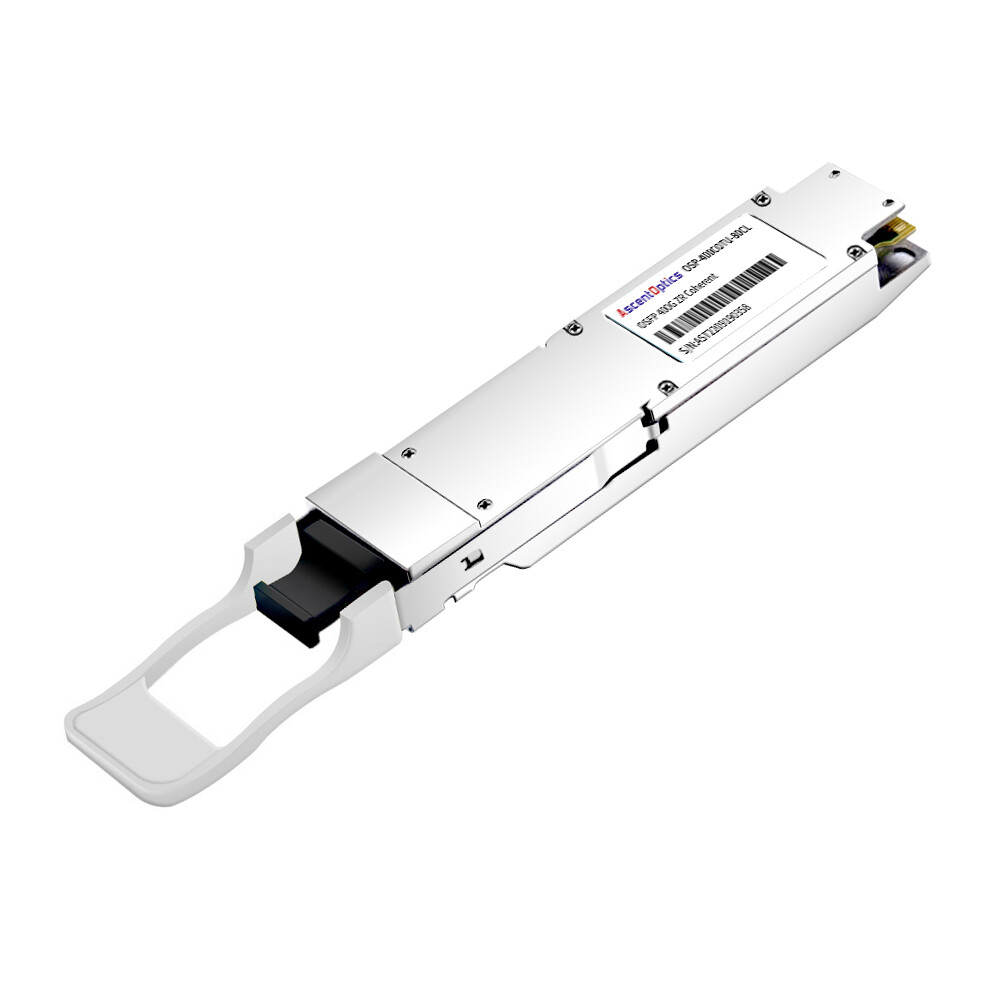
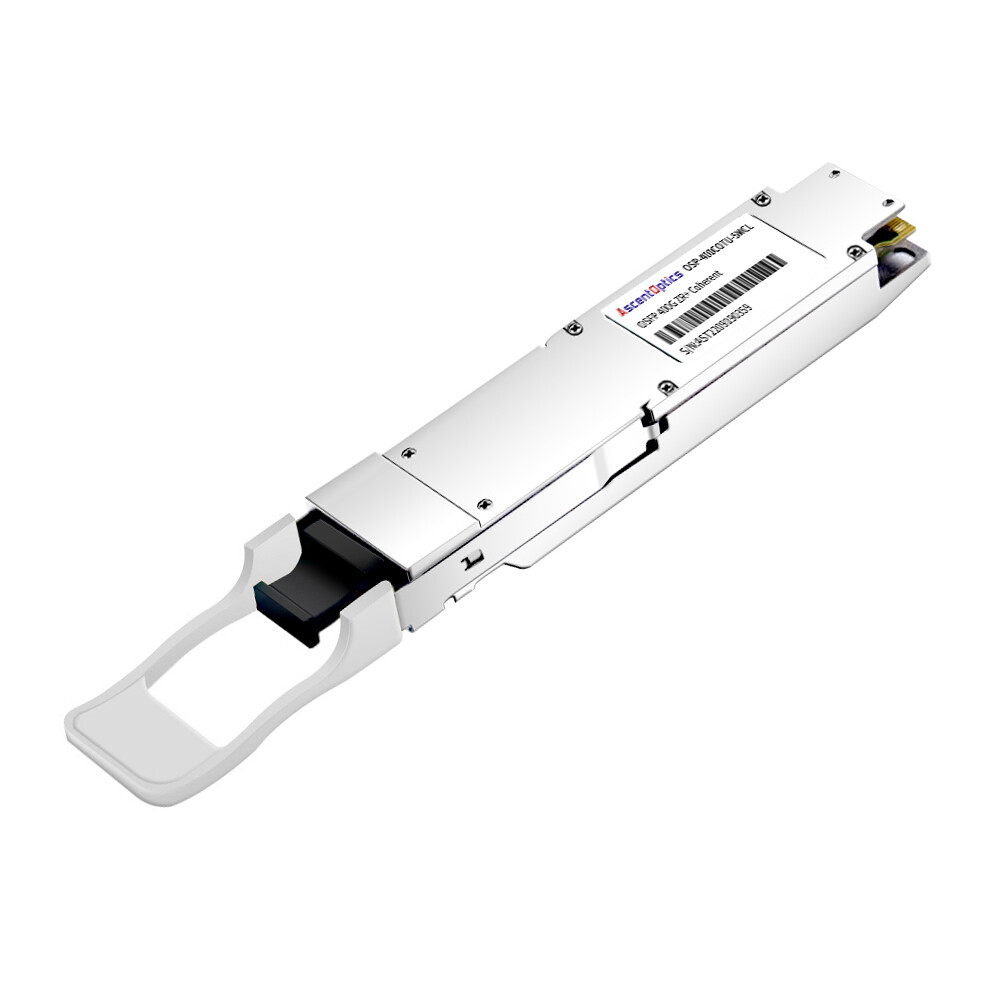
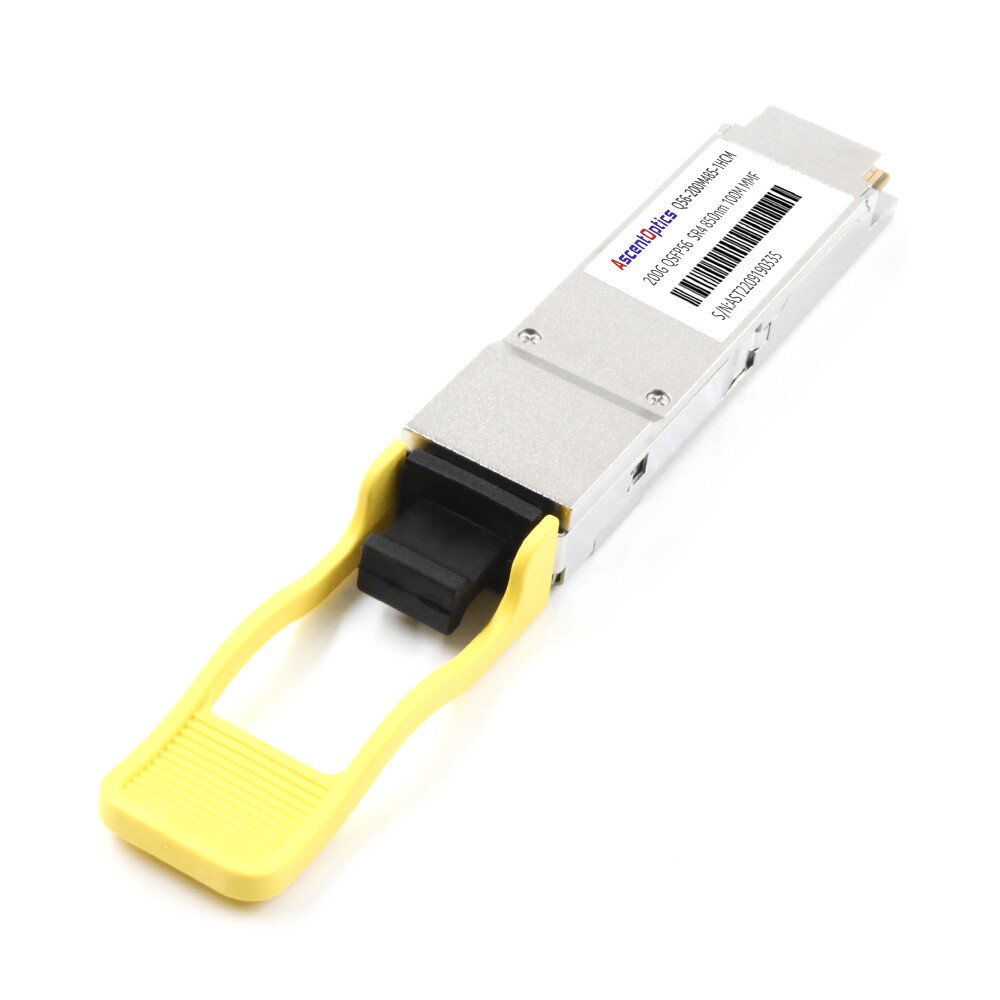
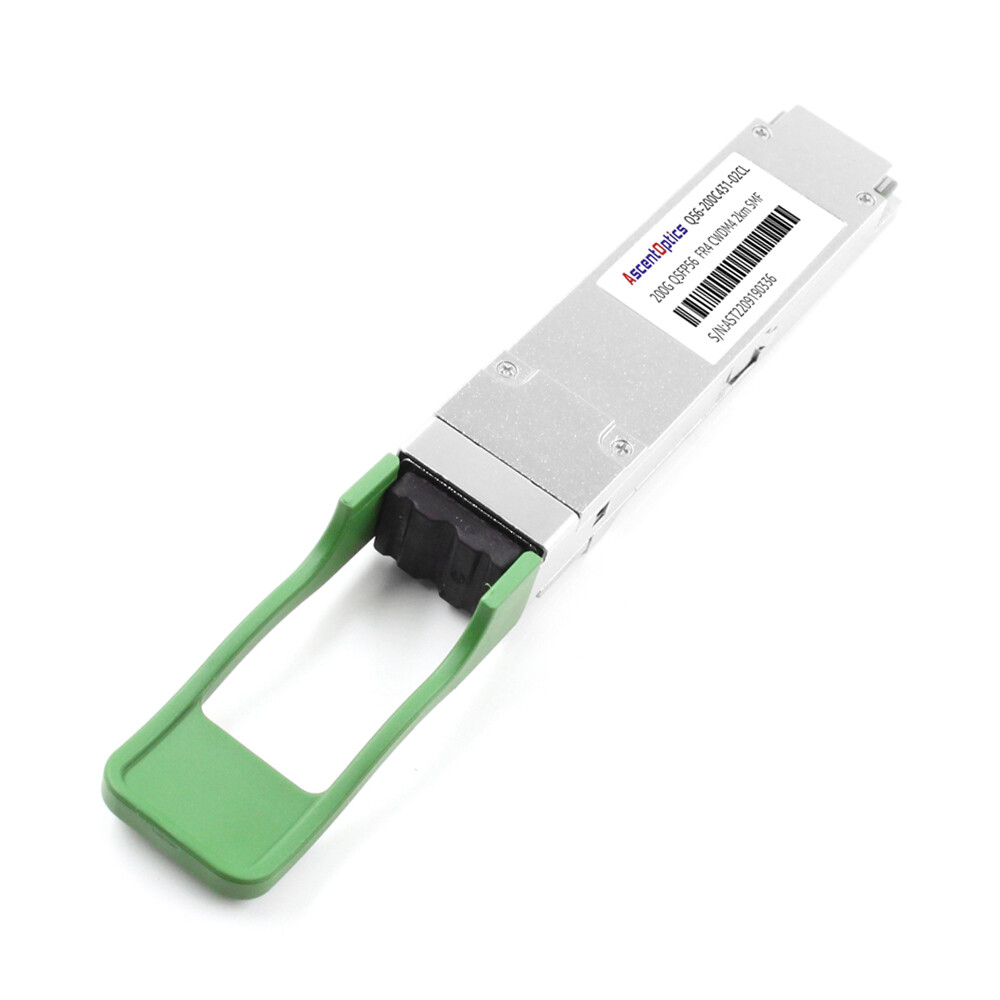
Specifically for high-performance data center interconnects and metro networks, the 200G coherent optical module is a key component for addressing the surge in bandwidth demand. It uses advanced DSP, coherent detection, and high-order modulation technologies to deliver 200Gbps transmission capacity with high spectral efficiency, making it suitable for metro networks, DCI, and long-distance optical transport applications.
Its core strengths lie in robust dispersion and polarization mode dispersion (PMD) compensation capabilities, which effectively mitigate link impairments and ensure reliable long-distance transmission. Compared to traditional solutions, it offers optimized power consumption and integration, making it an ideal choice for network upgrades and simplified operations and maintenance.
What Is a 200G Coherent Optical Module?
A 200G coherent optical module is a pluggable transceiver that transmits 200 Gigabits per second (Gbps) over single-mode fiber using coherent detection. Unlike direct-detection modules, which simply measure the intensity of light, coherent optics capture both the amplitude and phase of the optical signal. This allows the module to recover far more information from the received light and compensate for impairments that would destroy a direct-detect link.
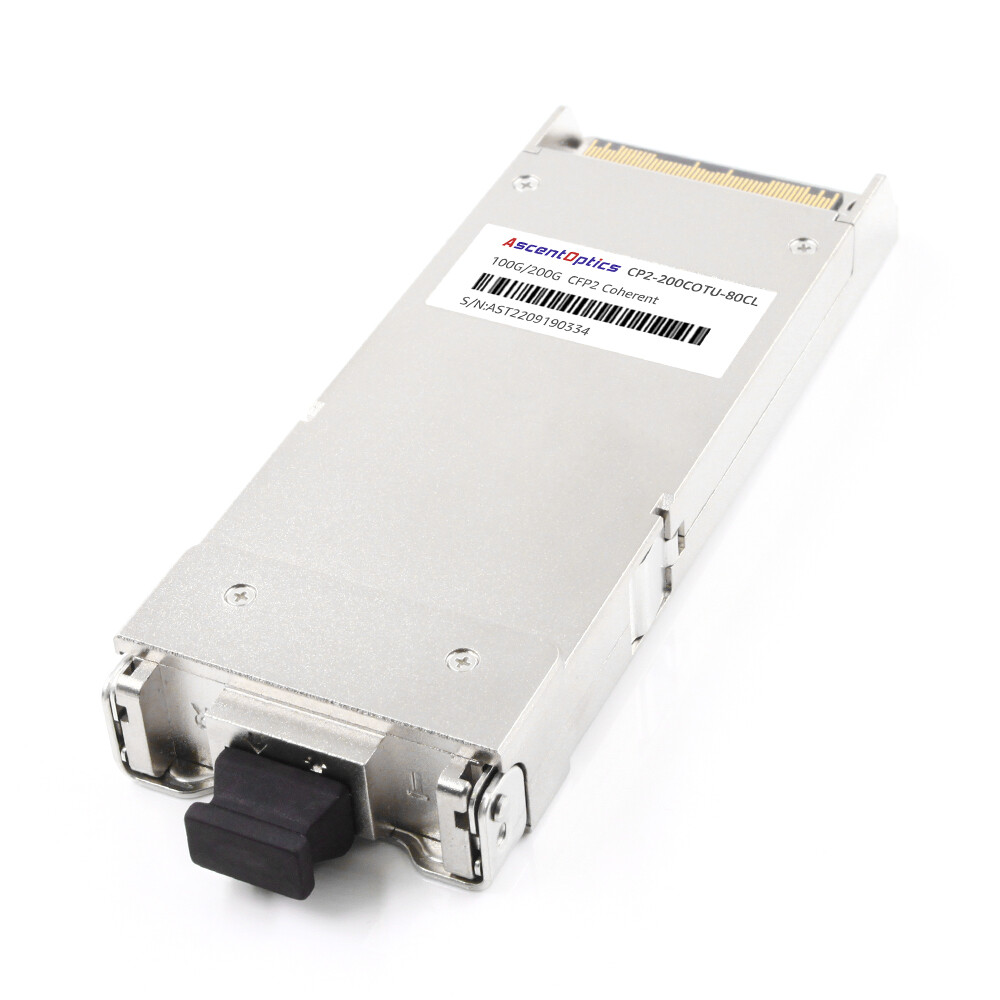
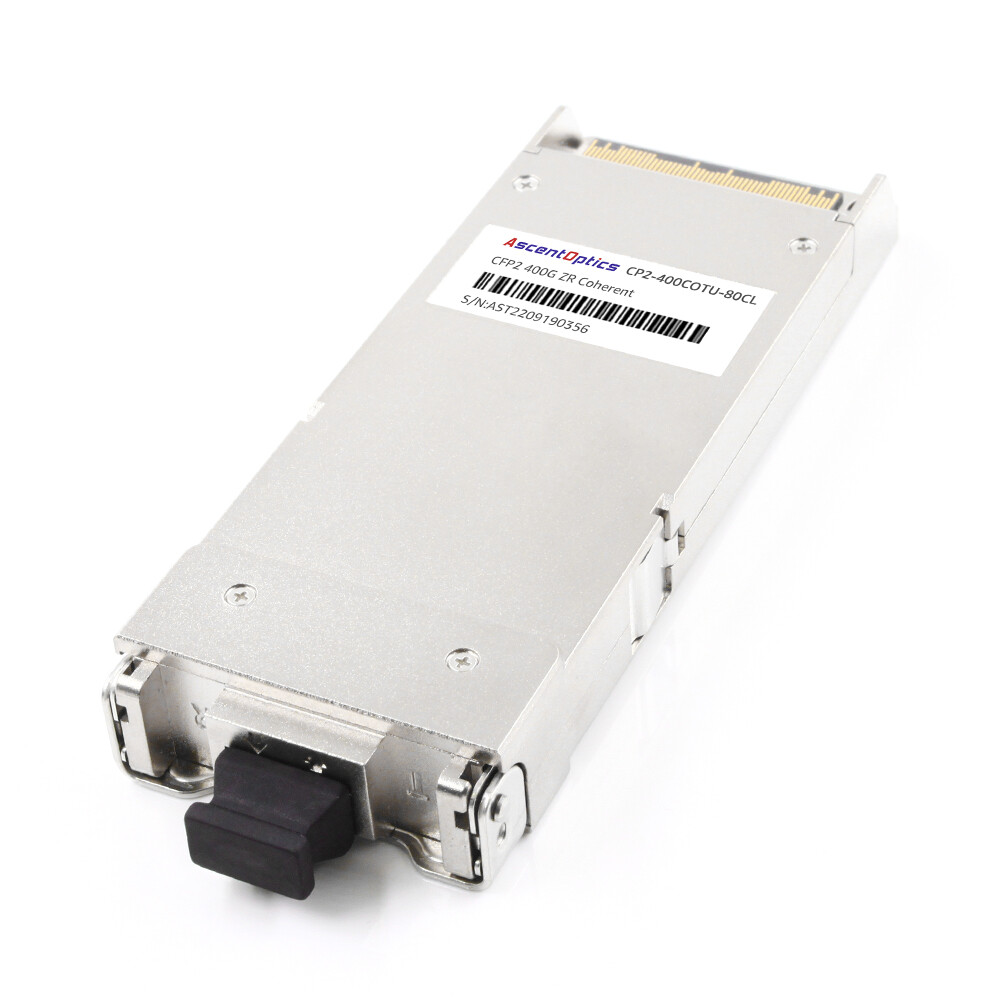
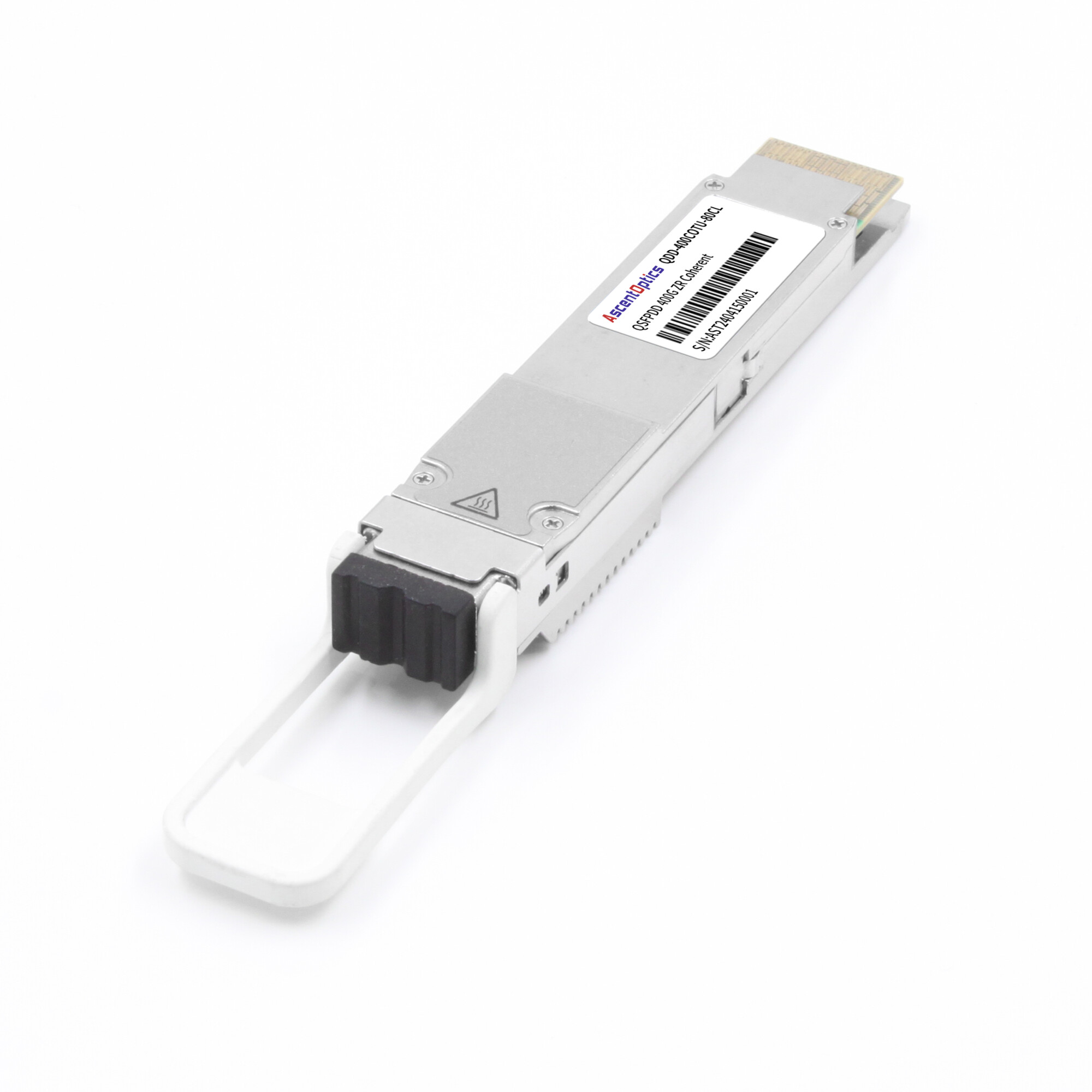
CFP2-DCO (CFP2 Digital Coherent Optics) is one of the most widely deployed form factors for 200G coherent applications, especially in transport and metro networks. CFP2-DCO modules integrate the digital signal processor (DSP), tunable laser, coherent receiver, and forward error correction (FEC) inside the pluggable module. Some newer platforms also support 200G coherent in QSFP-DD or OSFP form factors, often as part of multi-rate ZR/ZR+ pluggables.
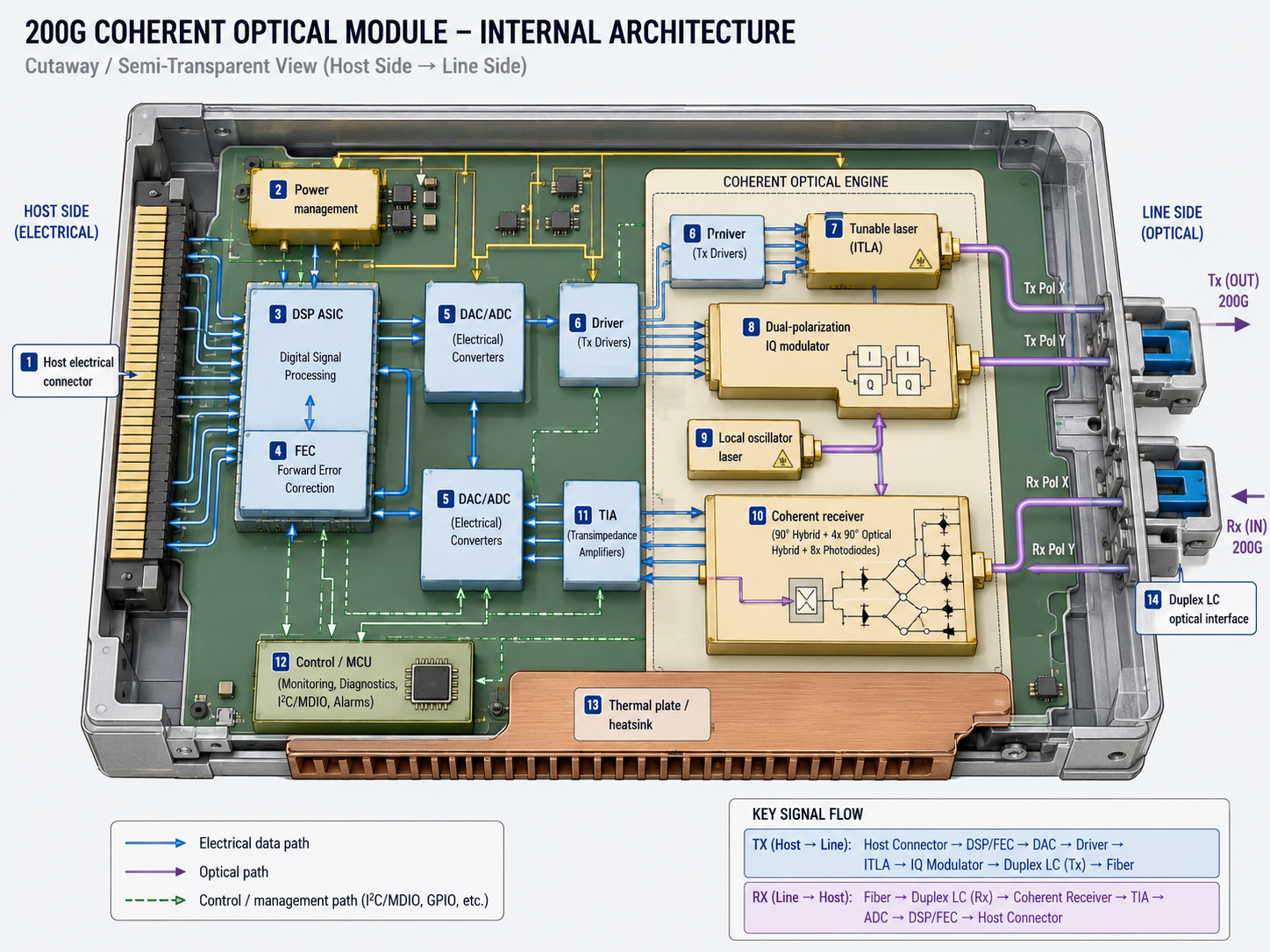
Core Components Inside a 200G Coherent Module
- •Tunable laser assembly (ITLA): Generates tunable C-band wavelengths and supports DWDM channel spacing such as 50 GHz grids depending on the module design.
- •Coherent modulator: Encodes data onto both phase and polarization states of light.
- •Coherent receiver: Mixes the incoming signal with a local oscillator laser to recover amplitude and phase information.
- •Digital signal processor (DSP): Compensates chromatic dispersion, polarization mode dispersion, and nonlinear effects.
- •Forward error correction (FEC): Recovers bit errors caused by long-distance transmission.
Because these components work together, a 200G coherent optical transceiver can reach hundreds or even thousands of kilometers over amplified fiber, something no direct-detect 200G module can achieve.
How 200G Coherent Optics Work
To understand why coherent optics reach so much farther, it helps to compare them with the simpler direct-detection approach used in most data center modules.
Direct-detect modules, such as 200G QSFP56 SR4 or FR4 variants, use PAM4 modulation. PAM4 encodes two bits per symbol by using four different amplitude levels. The receiver measures only the intensity of the light. This works well for short distances, but the signal degrades quickly over long fiber spans because chromatic dispersion and attenuation blur the amplitude levels.
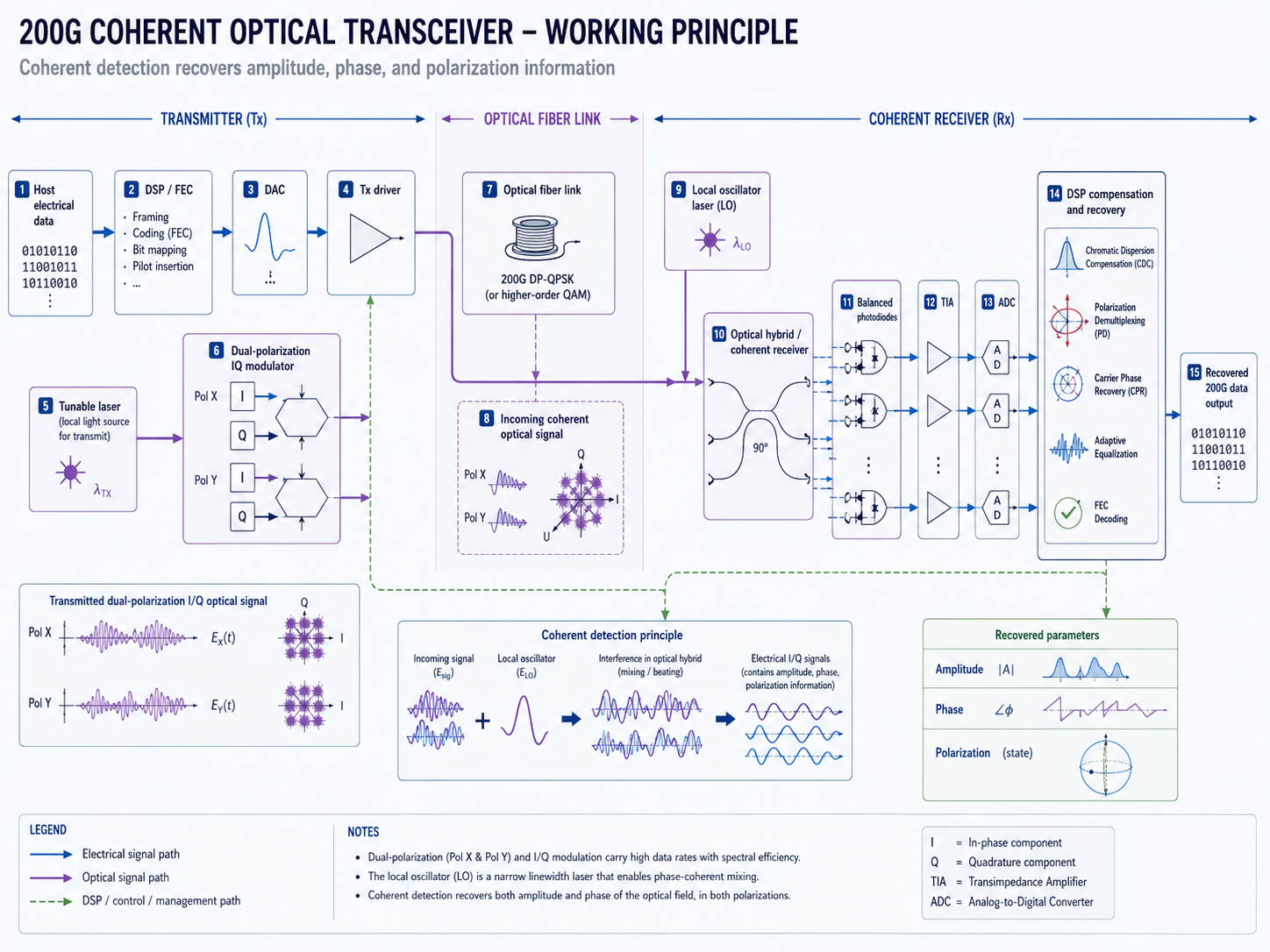
Coherent optics take a different approach. They modulate the amplitude, phase, and polarization of light. Depending on the target reach and optical performance requirements, 200G coherent modules may use modulation formats such as DP-16QAM for higher capacity or lower-order modulation such as DP-QPSK for extended reach.
The receiver uses a local oscillator laser to mix with the incoming signal, enabling the DSP to reconstruct the full optical field.
Why Coherent Detection Extends Reach
The DSP inside a 200G coherent optical module performs several critical functions:
- 1. Chromatic dispersion compensation: Corrects for pulse spreading caused by different wavelengths traveling at slightly different speeds.
- 2. Polarization mode dispersion compensation: Untangles signals transmitted on two orthogonal polarizations.
- 3. Carrier phase recovery: Tracks and corrects phase noise from lasers.
- 4. Adaptive equalization: Counteracts filter and fiber impairments in real time.
Depending on modulation format, FEC, and optical design, 200G coherent modules can support metro distances such as tens of kilometers without amplification and hundreds of kilometers or more with optical amplification.
200G Coherent Optical Module Specifications
Specifications vary by vendor and form factor, but the following table summarizes typical parameters for a 200G CFP2-DCO coherent optical module.
| Parameter |
Typical Value |
| Form factor |
CFP2-DCO (also QSFP-DD/OSFP ZR+ variants) |
| Data rate |
200 Gbps (multi-rate 100G/200G common) |
| Modulation |
DP-16QAM at 200G; DP-QPSK at 100G |
| Wavelength |
C-band tunable, 50 GHz ITU-T grid |
| Optical interface |
Duplex LC/UPC, single-mode fiber |
| Transmission distance |
10–80 km without amplification (depending on mode) |
| Long-haul reach |
Hundreds of kilometers to 1000+ km with amplification |
| Power consumption |
20–26 W typical for CFP2-DCO |
| Operating temperature |
Commercial 0°C to 70°C; industrial options available |
| FEC |
SD-FEC, oFEC, or CFEC depending on mode |
| Management |
MDIO or CMIS |
Power and Thermal Considerations
A CFP2-DCO module typically consumes 20 to 26 watts, roughly two to three times more than a direct-detect 200G QSFP56 module. This has real implications for rack-level power and cooling. Before deploying 200G coherent optical modules at scale, verify that your router or switch line cards can supply sufficient power and dissipate the heat.
Newer QSFP-DD and OSFP coherent solutions can achieve lower power consumption through advanced DSP processes, with typical power levels varying by reach and implementation. However, they may trade some reach or feature flexibility for that power savings.
Key Applications of 200G Coherent Modules
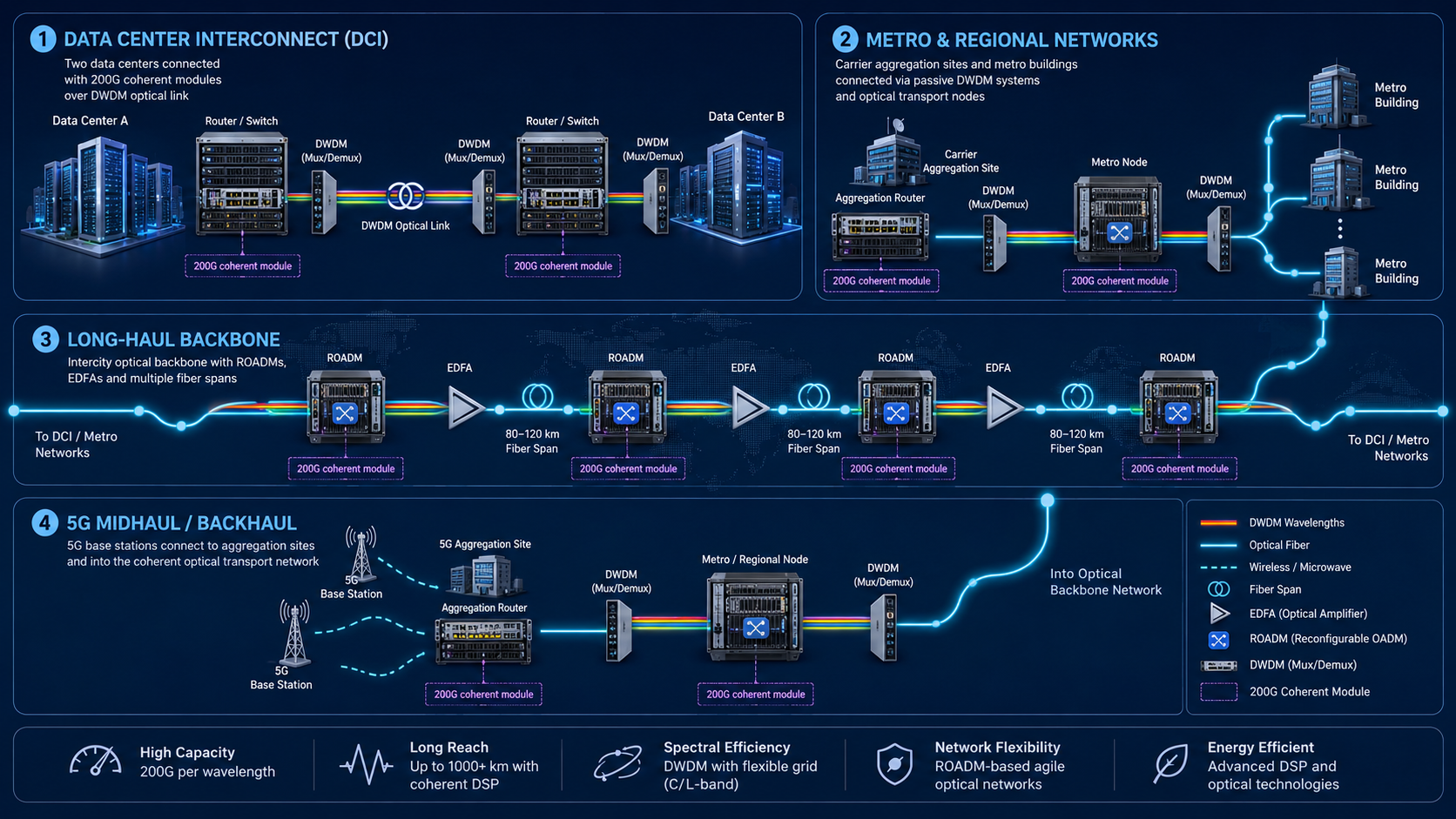
The dominant use case for 200G coherent optics is Data Center Interconnect (DCI), which accounts for more than 60% of 200G module demand according to recent market analyses. Beyond DCI, these modules appear in metro, regional, long-haul, and 5G transport networks.
Data Center Interconnect (DCI)
Hyperscale and enterprise operators use 200G coherent optical transceivers to connect data centers across a metro or regional area. When the distance exceeds the reach of direct-detect optics but traffic volume does not yet justify 400G, 200G coherent offers a practical middle ground.
Metro and Regional Networks
Telecom operators deploy 200G coherent modules in metro aggregation and regional rings. The ability to tune wavelengths across the C-band simplifies wavelength planning and allows operators to add capacity without deploying new fiber.
Long-Haul Backbone
At 100G mode using DP-QPSK, a CFP2-DCO module can reach 2,000 km or more with amplification. This makes 200G coherent hardware useful for long-haul networks that need flexible 100G/200G operation rather than fixed-rate higher-speed links.
5G Backhaul and Midhaul
Mobile operators use 200G coherent modules to aggregate traffic from cell sites back to the core network. The high capacity and long reach support 5G midhaul and backhaul requirements where fiber distance and bandwidth density both matter.
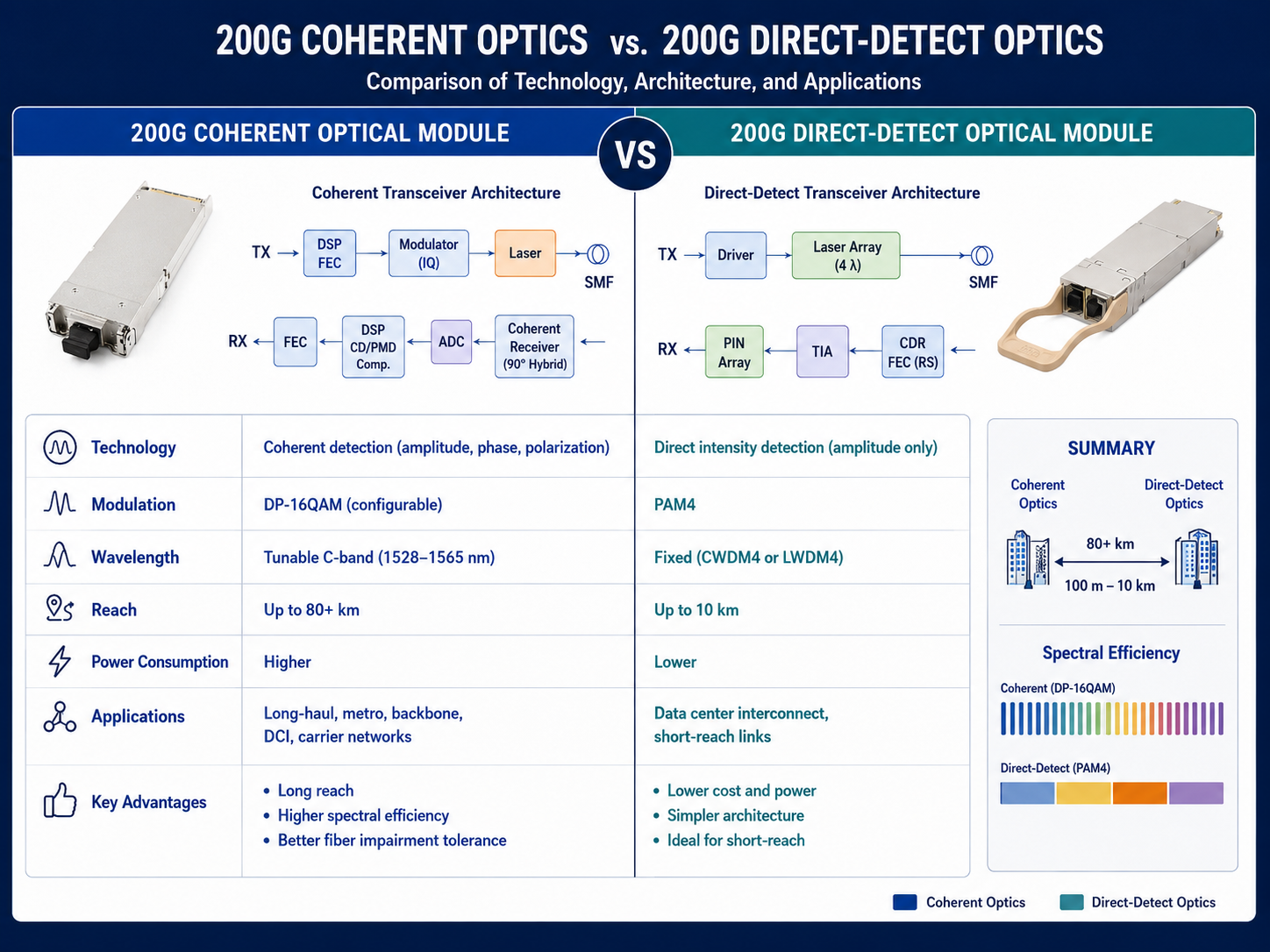
200G Coherent vs. Direct-Detect 200G: When to Choose Which
Not every 200G link needs coherent optics. Direct-detect 200G modules, such as QSFP56 SR4, DR4, FR4, and LR4, remain the right choice for many data center and campus applications.
| Factor |
200G Coherent (CFP2-DCO) |
200G Direct-Detect (QSFP56/QSFP-DD) |
| Detection method |
Coherent with DSP |
Intensity modulation, direct detection (IM-DD) |
| Modulation |
DP-16QAM, DP-QPSK |
PAM4 |
| Typical reach |
80 km unamplified; 1,000+ km amplified |
100 m to 10 km |
| Wavelength |
Tunable DWDM C-band |
Fixed CWDM or LAN-WDM |
| Power consumption |
20–26 W |
7–12 W |
| Cost per module |
Higher |
Lower |
| Best use case |
DCI, metro, long-haul |
Data center, campus, short DCI |
Decision Framework
Choose a 200G coherent optical module when:
- •The link exceeds ~10 km and direct-detect reach is insufficient.
- •You need DWDM wavelength agility or ROADM compatibility.
- •You want a single module type that supports both 100G and 200G rates.
- •Fiber cost or availability makes long-reach optics necessary.
Choose a direct-detect 200G module when:
- •The link is inside a data center or campus under 10 km.
- •Power and cost per port are the primary constraints.
- •You do not need DWDM tuning or amplified long-haul performance.
Form Factor Considerations: CFP2-DCO, QSFP-DD, and OSFP
The form factor you choose affects port density, power, reach, and platform compatibility.
CFP2-DCO
CFP2-DCO is the most mature and widely deployed form factor for 200G coherent. It offers:
- •Proven long-haul performance: The largest installed base of coherent pluggables.
- •Flexible client interfaces: Support for 100GbE, 200GbE, OTU4, and OTN variants.
- •Higher power budget: Accommodates higher-performance DSPs and optics.
The trade-off is size. CFP2 modules are larger than QSFP-DD or OSFP, so they deliver lower port density per line card.
QSFP-DD and OSFP Coherent
QSFP-DD and OSFP coherent modules are newer options, often designed for ZR/ZR+ applications. They offer:
- •Higher density: More ports per switch or router faceplate.
- •Lower power: Typically 15–22 W for 200G operation.
- •Simplified IP-over-DWDM: Direct pluggability into standard router ports.
However, reach and feature flexibility can vary. Some QSFP-DD/OSFP coherent modules are optimized for shorter DCI distances and may not match the long-haul performance of a full CFP2-DCO module.
Selecting the Right Form Factor
When selecting a 200G coherent optical transceiver form factor, consider:
- 1. Switch or router platform support: Not every chassis accepts every form factor.
- 2. Reach requirement: Long-haul and ultra-long-haul often still favor CFP2-DCO.
- 3. Port density targets: High-density DCI may favor QSFP-DD or OSFP.
- 4. Thermal and power budget: Verify line card specifications before ordering.
- 5. Standards compliance: Look for OIF, OpenZR+, OpenROADM, or MSA compatibility as needed.
200G Coherent Module Market Outlook
The market for 200G optical modules is growing steadily. The demand for coherent optical modules continues to grow as cloud computing, AI workloads, and DCI networks require higher bandwidth and longer transmission distances.
Several trends are shaping demand for 200G coherent optical modules:
- •AI and cloud scaling: Hyperscale data centers continue to build metro and regional DCI capacity.
- •5G transport upgrades: Mobile operators are modernizing backhaul and midhaul networks.
- •ZR/ZR+ adoption: OpenZR+ and 400ZR standards are pushing coherent pluggables deeper into router and switch ports.
- •Silicon photonics and advanced DSPs: Smaller process nodes are reducing power and cost, making coherent optics viable in more platforms.
How to Select a 200G Coherent Optical Module
Choosing the right 200G coherent optical module requires matching technical requirements to the correct product. Use the following checklist:
Define the reach and fiber plant:
- •Measure actual fiber distance and loss.
- •Determine whether amplification is available or required.
- •Characterize dispersion and other impairments on older fiber.
Choose the data rate mode:
- •Will the link run at 200G, or do you need a fallback 100G mode for longer reach?
- •Multi-rate modules provide operational flexibility.
Match the form factor to your hardware:
- •Confirm whether your platform supports CFP2, QSFP-DD, or OSFP coherent modules.
- •Check power and thermal limits per port.
Verify wavelength and grid requirements:
- •Ensure the module tunes across the required DWDM channels.
- •Confirm compatibility with existing multiplexers and ROADMs.
Evaluate standards and interoperability:
- •Determine whether you need OIF-400ZR, OpenZR+, OpenROADM, or proprietary modes.
- •Ask your vendor for interoperability test results with your switch or router platform.
Consider vendor support and supply chain:
- •Look for stable manufacturing capacity and technical support.
- •Verify warranty, firmware update policy, and replacement timelines.
Conclusion
A 200G coherent optical module is the practical choice when your network needs more than 100G of capacity and more reach than direct-detect optics can provide. With integrated DSP, tunable DWDM wavelengths, and flexible 100G/200G operation, these modules power metro DCI, regional rings, long-haul backbones, and 5G transport networks around the world.
Key takeaways:
- •Coherent detection captures amplitude and phase, enabling much longer reaches than PAM4 direct detection.
- •CFP2-DCO remains the dominant 200G coherent form factor, while QSFP-DD and OSFP ZR+ options are growing for high-density DCI.
- •200G coherent modules typically support 80 km unamplified and 800–1,000+ km amplified reach.
- •Direct-detect 200G is still the better choice for short-reach data center links where power and cost matter most.
- •Selecting the right module requires matching reach, form factor, wavelength plan, and standards to your specific network.
As networks continue to scale, 200G coherent optics will remain a workhorse technology for the middle ground between high-density short-reach pluggables and next-generation 400G/800G coherent systems. If your next project needs reliable long-distance 200G connectivity, start by defining your reach and power constraints, then choose a module that matches both your hardware and your traffic growth plan.
FAQ About 200G Coherent Optical Modules
What is a 200G coherent optical module?
A 200G coherent optical module is a high-speed optical transceiver that uses coherent detection technology and advanced DSP processing to transmit 200Gbps data over single-mode fiber. Unlike direct-detect modules that only analyze optical intensity, coherent modules recover both amplitude and phase information, enabling longer transmission distances and better compensation for fiber impairments.
How does a 200G coherent optical module work?
A 200G coherent optical module uses a tunable laser, coherent receiver, high-performance DSP, and FEC to process optical signals. The transmitter encodes data using advanced modulation formats, while the receiver combines the incoming signal with a local oscillator to recover the complete optical field. The DSP then compensates for chromatic dispersion, polarization effects, and other transmission impairments.
What is the typical reach of a 200G coherent optical module?
The transmission distance depends on the modulation format, FEC, optical power budget, and network conditions. In typical deployments, 200G coherent modules can support metro-scale links without amplification and extend to hundreds of kilometers or more when used with optical amplification.
What is the difference between 200G coherent optics and 200G direct-detect optics?
The main difference is the detection technology. 200G coherent modules use coherent detection with DSP to process amplitude, phase, and polarization information, making them suitable for longer-distance applications. Direct-detect 200G modules use PAM4 modulation and are optimized for shorter links such as data center interconnects and campus networks where lower power and cost are priorities.
What form factors are available for 200G coherent optical modules?
The most common 200G coherent form factor is CFP2-DCO, which is widely used in transport and metro networks. Newer coherent pluggable solutions are also available in QSFP-DD and OSFP form factors, providing higher port density and better compatibility with modern routers and switches.
Why are CFP2-DCO modules still widely used for 200G coherent applications?
CFP2-DCO modules provide a mature solution with strong optical performance, flexible client interfaces, and support for long-distance transmission. Their larger form factor allows integration of higher-performance DSPs and optical components, making them suitable for metro, regional, and transport networks.
Can 200G coherent modules support both 100G and 200G operation?
Yes. Many 200G coherent modules support multi-rate operation, allowing them to run at 200G for higher capacity or 100G using lower-order modulation formats for longer reach requirements. This flexibility helps operators optimize network capacity and upgrade paths.
What are the main applications of 200G coherent optical modules?
200G coherent modules are mainly used in data center interconnect (DCI), metro networks, regional transport networks, long-haul networks, and 5G backhaul or midhaul applications. They are especially useful when network distances exceed the capability of direct-detect optical modules.
How much power does a 200G coherent optical module consume?
Power consumption depends on the form factor and implementation. CFP2-DCO modules typically consume more power than direct-detect 200G modules because they integrate advanced DSP and coherent optical components. Newer QSFP-DD and OSFP coherent solutions can provide lower power operation with higher port density.
When should I choose a 200G coherent module instead of a direct-detect module?
A 200G coherent module is a better choice when the link requires longer transmission distances, DWDM wavelength flexibility, ROADM compatibility, or enhanced tolerance against fiber impairments. For short-distance data center links where cost and power efficiency are the main considerations, direct-detect 200G modules are usually more suitable.
Post Views: 1,164