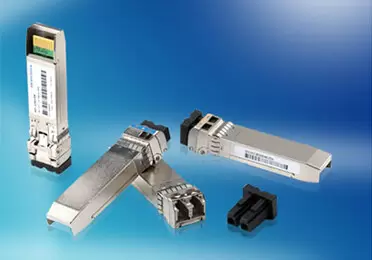
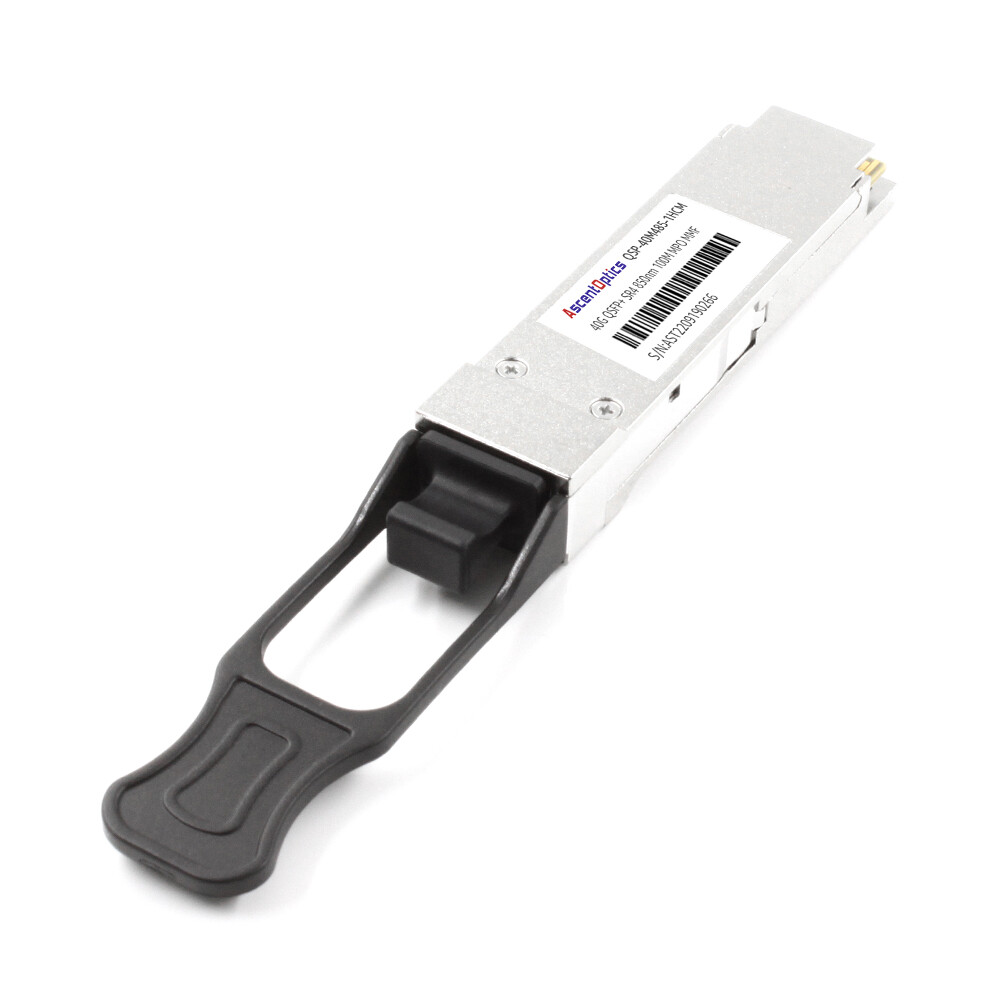
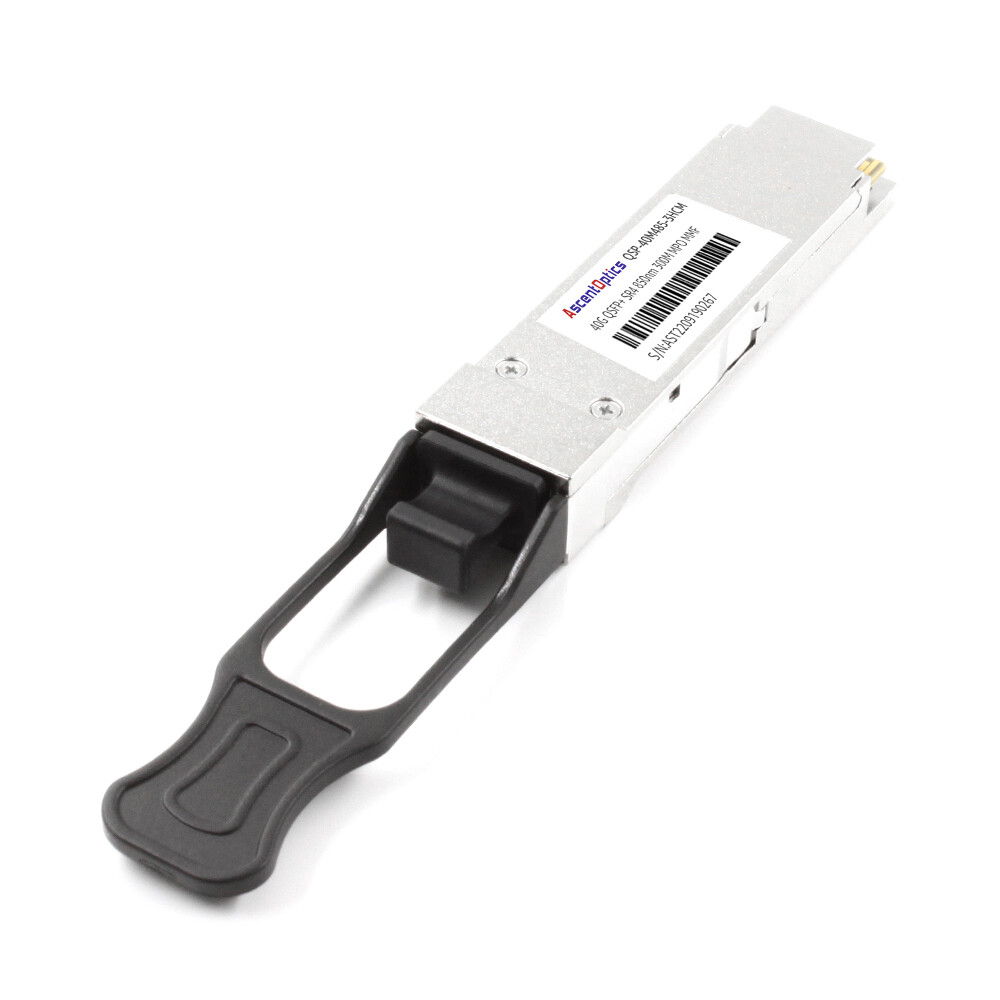
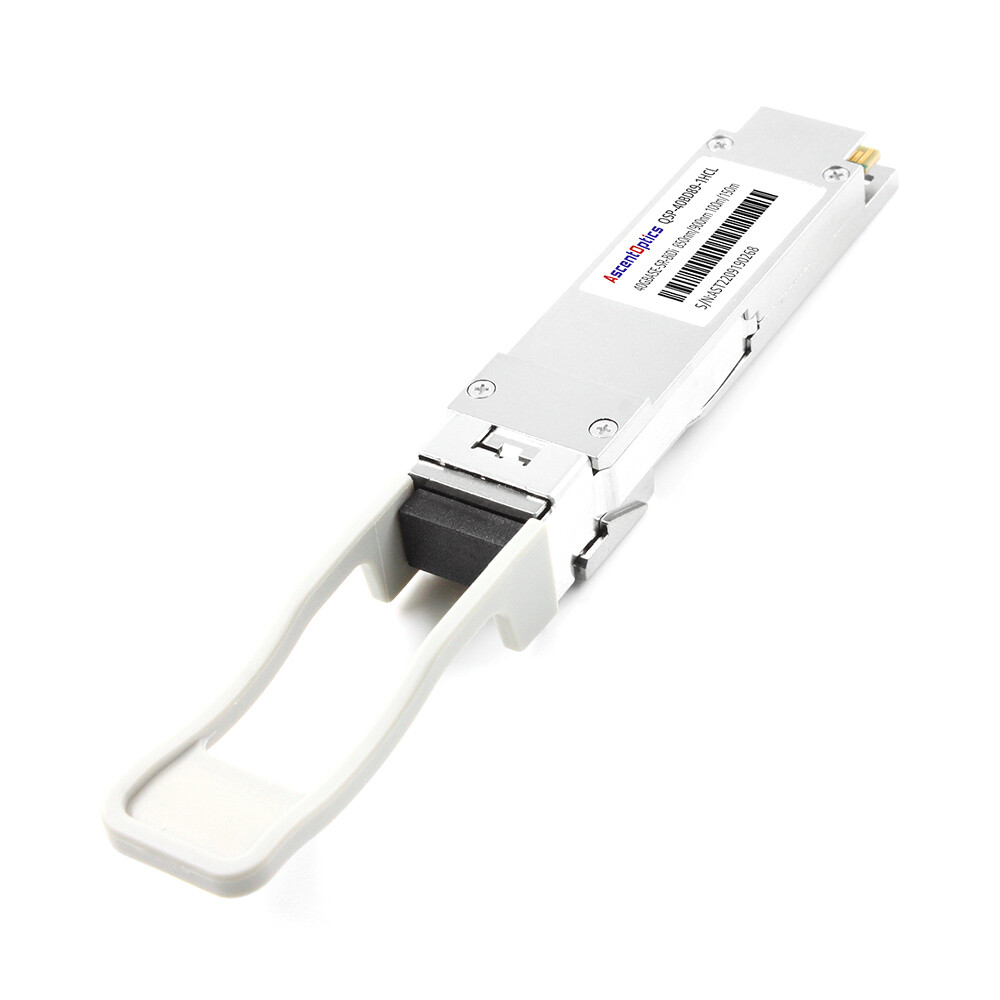
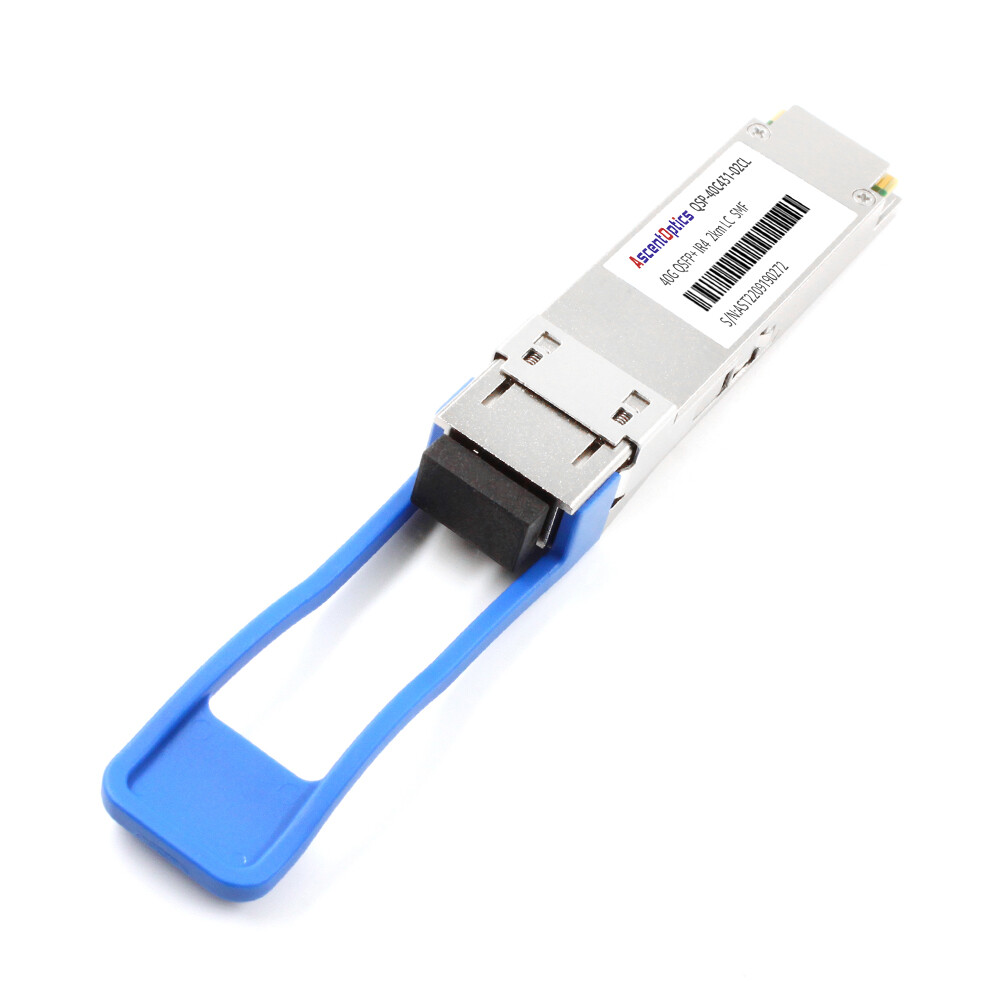
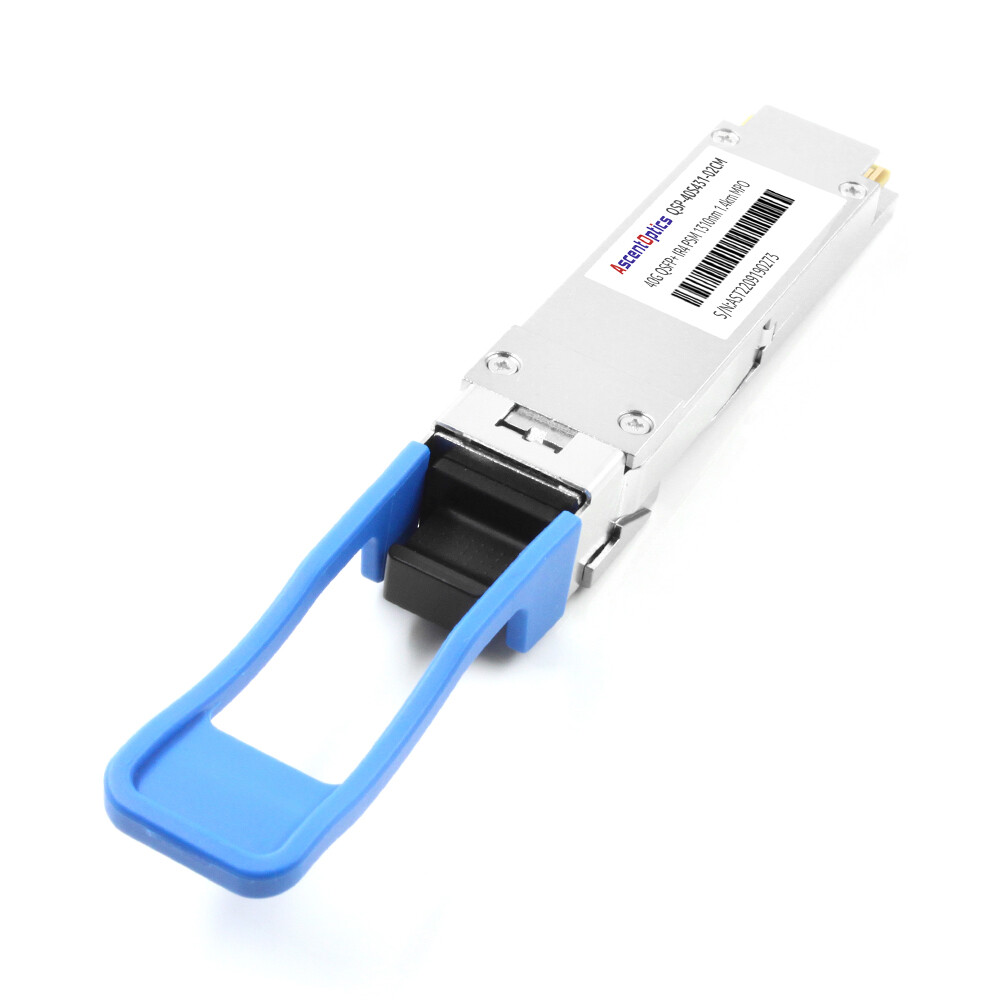
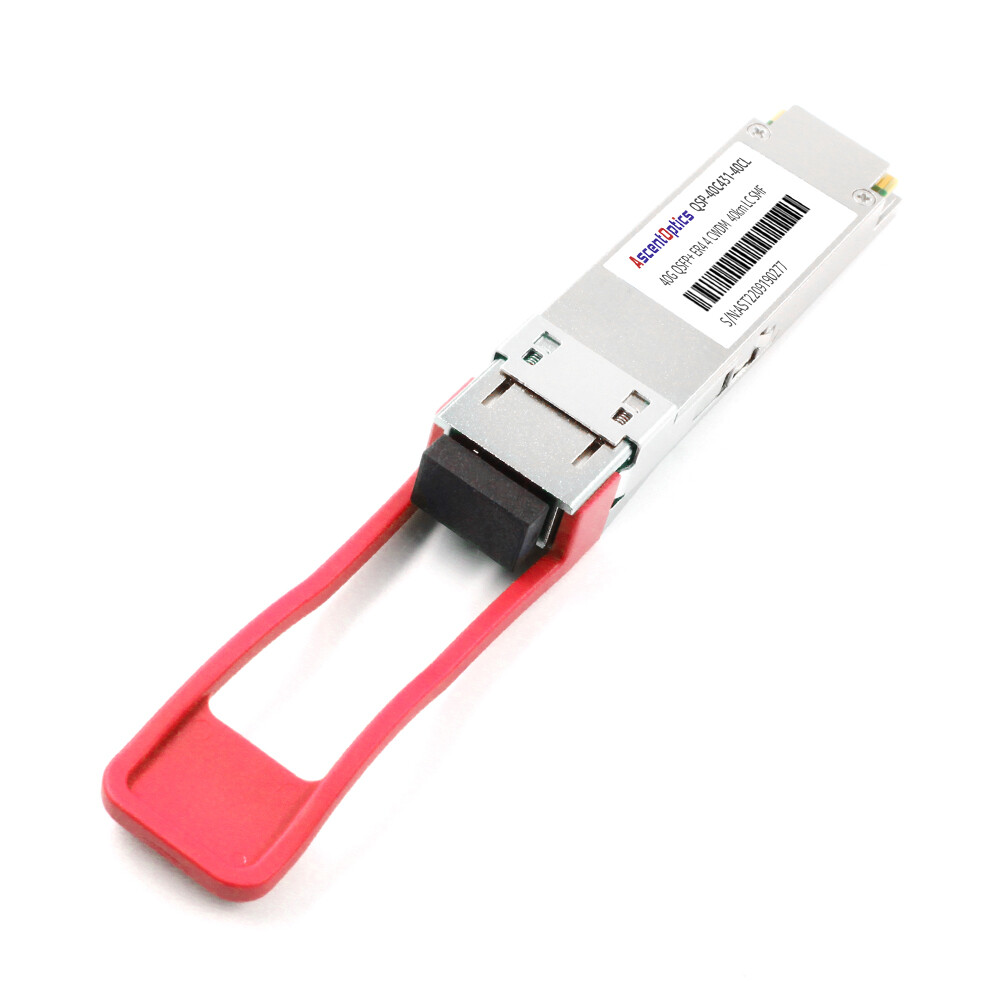
As an important step in the evolution from 10G to higher-speed networking, 40G Ethernet remains widely deployed in enterprise and data center environments.
The 40G QSFP+ LR4 optical transceiver is designed for long-reach connectivity, supporting transmission distances of up to 10 km over single-mode fiber. With its mature technology and broad compatibility, it remains a practical solution for data center interconnects and campus backbone networks.
This article provides a comprehensive overview of 40G QSFP+ LR4, including its basic concepts, working principles, key features, and typical applications, helping readers better understand its role in modern optical networks.
What Is 40G QSFP+ LR4?
The 40G QSFP+ LR4 is a long-reach optical transceiver designed to deliver 40 Gigabit Ethernet connectivity over single-mode fiber. It is commonly deployed in data centers, enterprise backbone networks, and metropolitan area networks where stable, high-speed transmission over extended distances is required. Built on the QSFP+ (Quad Small Form-factor Pluggable Plus) platform, the module provides a compact, hot-pluggable solution that supports high port density and efficient network scalability.
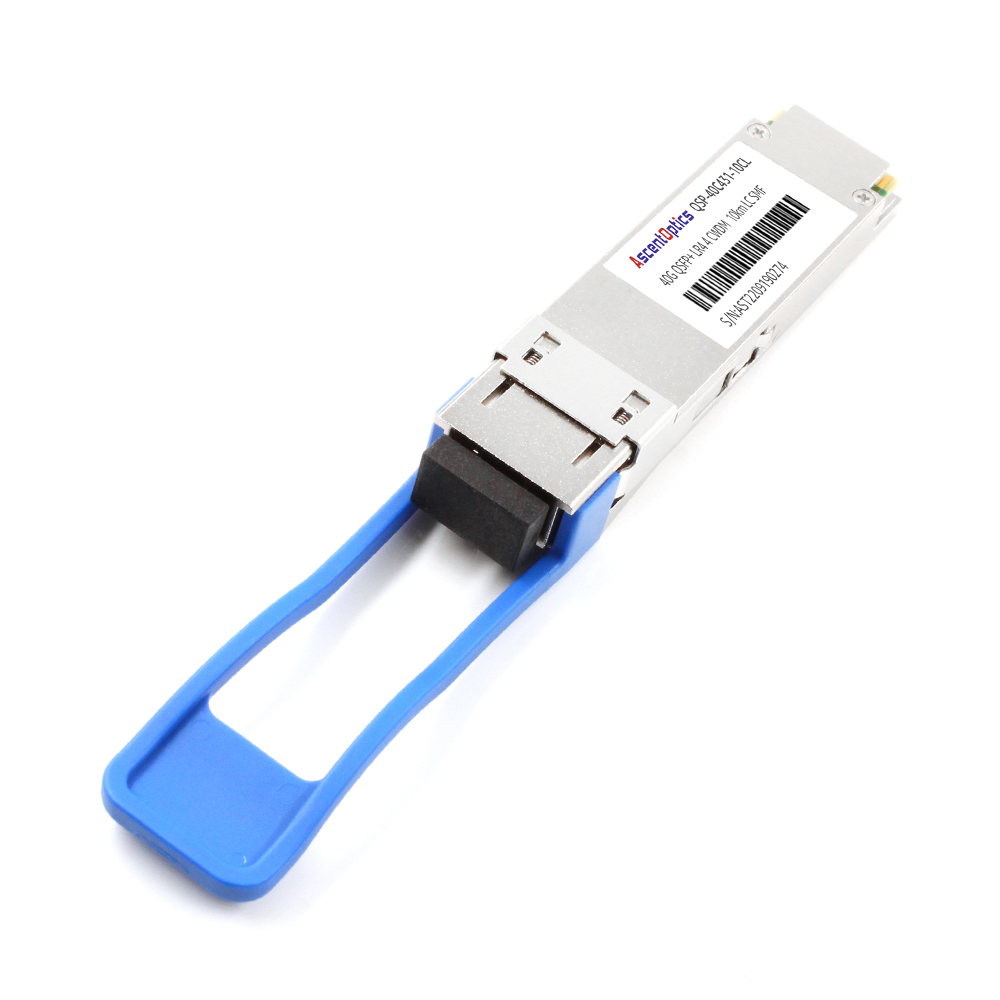
The designation 40G QSFP+ LR4 describes the module’s core characteristics:
1.40G indicates an aggregate data rate of 40 Gbps, implemented through four parallel 10 Gbps channels.
2. QSFP+ refers to the industry-standard four-lane pluggable form factor widely used in 40G networking environments.
3. LR4 (Long Reach 4) signifies long-distance transmission achieved using four optical wavelengths.
Unlike short-reach modules such as QSFP+ SR4, the LR4 transceiver operates over duplex single-mode fiber (SMF) and supports transmission distances of up to 10 km. This capability makes it particularly suitable for data center interconnect (DCI), campus connectivity, and inter-building network links.
By transmitting multiple wavelengths over a single fiber pair, the 40G QSFP+ LR4 minimizes fiber requirements while maintaining reliable long-distance performance, making it a practical and widely adopted solution for modern optical networks.
How Does a 40G QSFP+ LR4 Transceiver Work?
The 40G QSFP+ LR4 operates using Wavelength Division Multiplexing (WDM) technology, allowing multiple data signals to be transmitted simultaneously over a single pair of single-mode fibers.
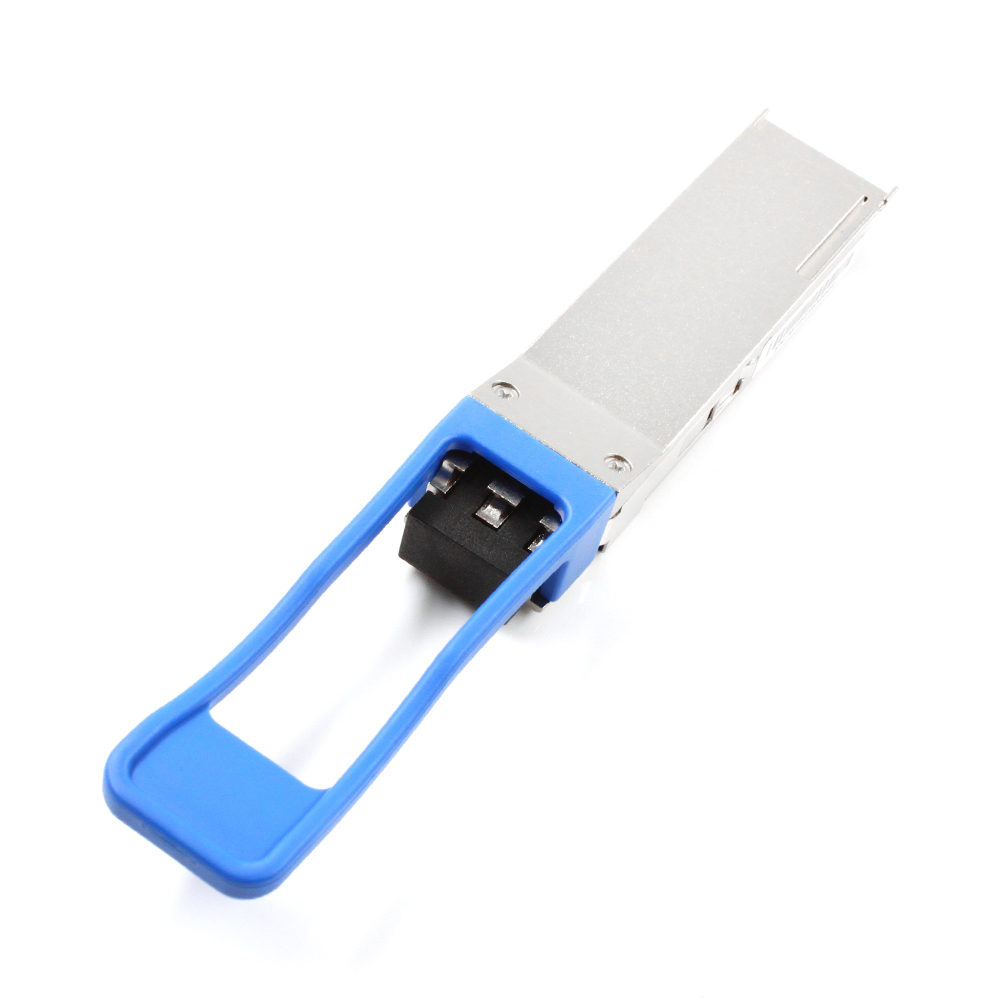
CWDM Technology
The module uses Coarse Wavelength Division Multiplexing (CWDM) to transmit four independent data channels on four different wavelengths. Each wavelength carries approximately 10 Gbps of data. At the transmitter side, these wavelengths are combined into one optical signal, and at the receiver side, they are separated back into individual channels.
This approach reduces the number of required fibers compared to parallel optical solutions, making LR4 more efficient for long-reach applications.
Signal Transmission Process
The transmission workflow is straightforward:
1.Electrical signals from the switch are converted into optical signals at different wavelengths.
2.The optical signals are multiplexed and transmitted over single-mode fiber.
3.At the receiving end, the wavelengths are separated and converted back into electrical signals.
This process enables reliable 40G data transmission while maintaining signal integrity across long distances.
Duplex LC Interface
The 40G QSFP+ LR4 uses a duplex LC connector, requiring only one pair of single-mode fibers for transmit and receive functions. Compared with MPO-based parallel optics, this design simplifies cabling and allows seamless integration with existing single-mode fiber infrastructure.
Key Features and Specifications of 40G QSFP+ LR4
The 40G QSFP+ LR4 transceiver is designed to provide reliable long-distance connectivity while maintaining high performance and interoperability across networking platforms. Its specifications are defined by industry standards, ensuring consistent operation in enterprise and data center environments.
Core Specifications
The main technical characteristics of a typical 40G QSFP+ LR4 module include:
| Data Rate |
40 Gbps aggregate bandwidth |
Form Factor |
QSFP+ |
| Fiber Type |
Single-Mode Fiber |
Connector Type |
Duplex LC |
| Optical Technology |
CWDM (4 wavelengths) |
Operating Standard |
IEEE 802.3ba 40GBASE-LR4 |
| Power Consumption |
Typically 3.5W max |
Transmission Distance |
Up to 10km |
| Operating Temperature |
Commercial (0–70°C) or industrial ranges depending on model |
Key Performance Advantages
Several features make the 40G QSFP+ LR4 particularly suitable for long-reach applications:
Extended transmission distance over standard single-mode fiber
Reduced fiber infrastructure requirements compared with parallel optics
High port density enabled by the compact QSFP+ form factor
Hot-pluggable design for easy deployment and maintenance
Broad interoperability with mainstream networking equipment
These characteristics make LR4 a practical choice for organizations seeking a balance between performance, scalability, and deployment simplicity.
40G QSFP+ LR4 vs Other 40G Optical Modules
Choosing the right 40G optical transceiver depends largely on transmission distance, fiber infrastructure, and deployment requirements. Among various 40G module types, LR4, SR4, and ER4 are the most commonly compared options, each designed for different networking scenarios.
40G QSFP+ LR4 vs SR4
The main difference between LR4 and SR4 lies in transmission distance and fiber type. The QSFP+ SR4 module is optimized for short-range connections using multimode fiber (MMF), typically supporting distances up to 100–150 meters. In contrast, QSFP+ LR4 is designed for long-distance transmission over single-mode fiber, reaching up to 10 kilometers.
SR4 modules use MPO connectors and parallel optics, requiring multiple fiber strands, while LR4 modules use duplex LC connectors and wavelength multiplexing, significantly reducing fiber usage for long links.
40G QSFP+ LR4 vs ER4
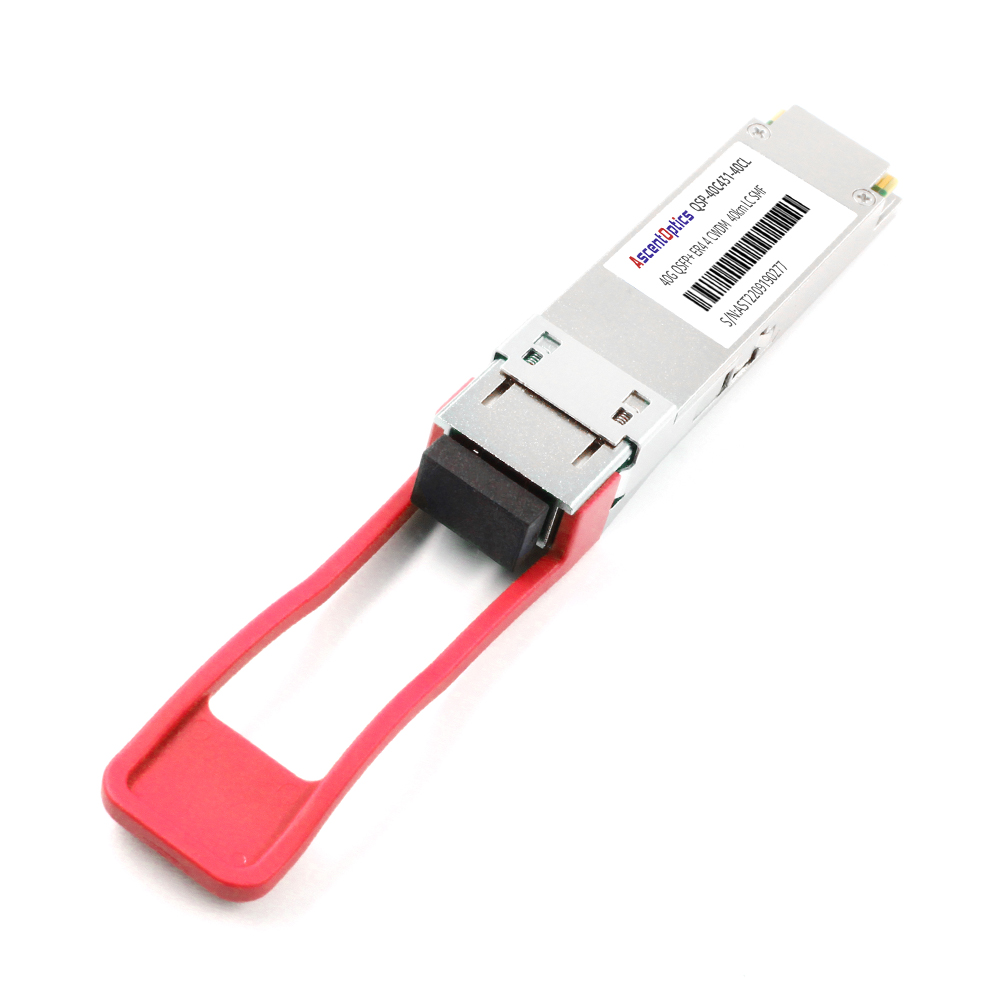
Both LR4 and ER4 are designed for single-mode fiber transmission, but they target different reach requirements. LR4 supports distances up to 10 km, while ER4 extends transmission reach to approximately 40 km.
ER4 modules typically require higher optical power and more complex components, resulting in higher costs and power consumption. Therefore, LR4 is generally preferred for campus or metro connections where 10 km coverage is sufficient.
Applications of 40G QSFP+ LR4
Thanks to its long transmission reach and efficient fiber utilization, the 40G QSFP+ LR4 transceiver is widely deployed in network environments that require stable high-speed connectivity over extended distances. It plays an important role in enterprise, data center, and telecommunications infrastructures.
Data Center Interconnect (DCI)
One of the most common applications of 40G QSFP+ LR4 is data center interconnect. As organizations increasingly operate multiple data centers, reliable high-bandwidth links between facilities become essential.
With transmission distances of up to 10 km over single-mode fiber, LR4 modules enable efficient interconnection between nearby data centers without requiring complex optical amplification systems. This makes them a cost-effective solution for metro-area DCI deployments.
Enterprise Campus Backbone Networks
Large enterprise campuses often consist of multiple buildings or network zones separated by significant distances. The 40G QSFP+ LR4 provides high-capacity backbone connectivity between core switches, aggregation switches, and data centers across campus environments.
Its duplex LC interface allows easy integration with existing single-mode fiber infrastructure commonly used in enterprise networks.
Metropolitan Area Networks (MAN)
In metropolitan networks, service providers and enterprises require stable medium-distance transmission to connect offices, edge facilities, or aggregation sites. LR4 modules offer sufficient reach and bandwidth for these scenarios while maintaining lower deployment complexity compared with longer-reach optics.
Telecom Aggregation Networks
Telecommunications operators use 40G LR4 modules in aggregation layers to handle growing traffic from access networks. The module supports reliable data transmission between aggregation routers and core network equipment, helping improve overall network efficiency.
Switch-to-Switch Long-Distance Links
The LR4 module is also widely used for long-distance switch-to-switch or router-to-router connections within large-scale networks. It provides a stable upgrade path from legacy 10G infrastructure while supporting higher bandwidth requirements.
Conclusion
The 40G QSFP+ LR4 is a mature and reliable long-reach optical solution that offers a strong balance between performance, transmission distance, and deployment cost. For enterprise networks and data centers requiring medium- to long-distance connectivity, it continues to provide a stable and cost-effective option.
Although networks are gradually transitioning toward 100G and 400G technologies, 40G LR4 still plays an important role in existing infrastructures and phased upgrade strategies, and will remain a valuable connectivity solution in hybrid-speed networks for years to come.
Post Views: 2,160