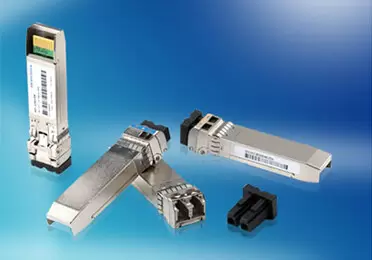
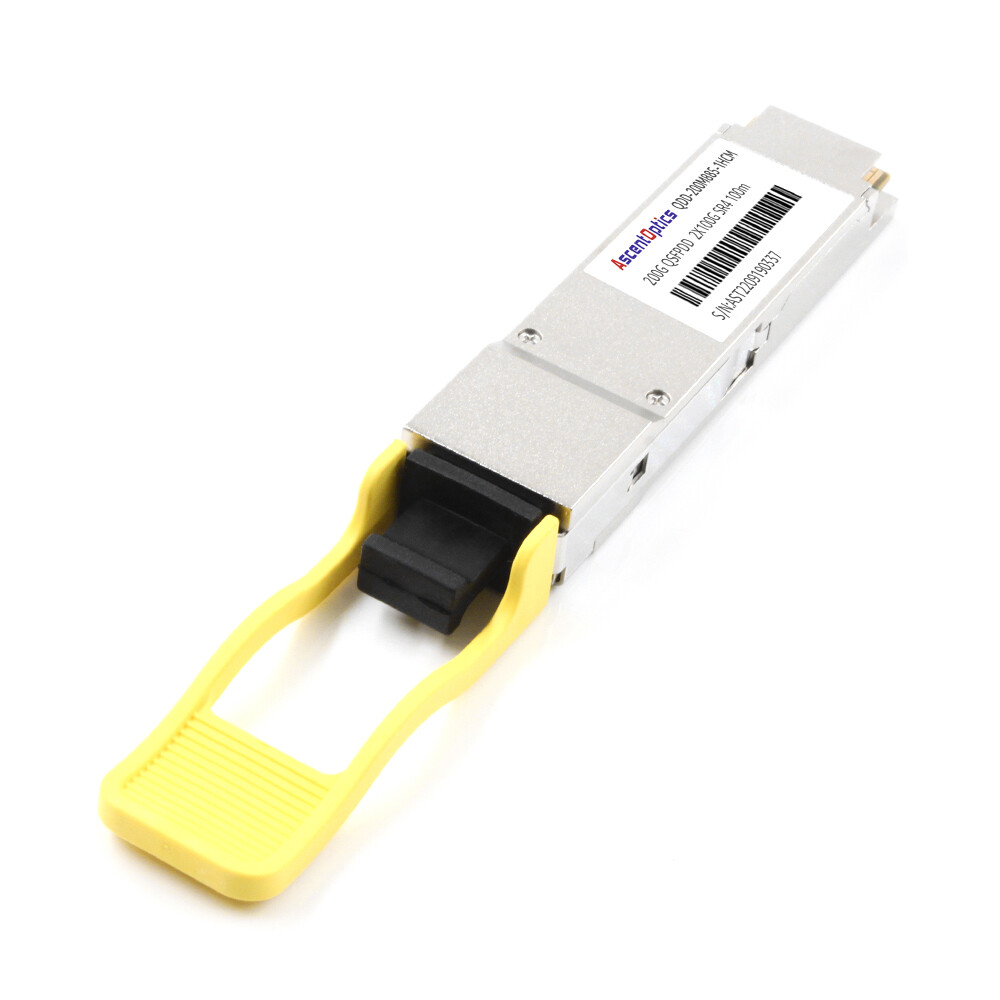
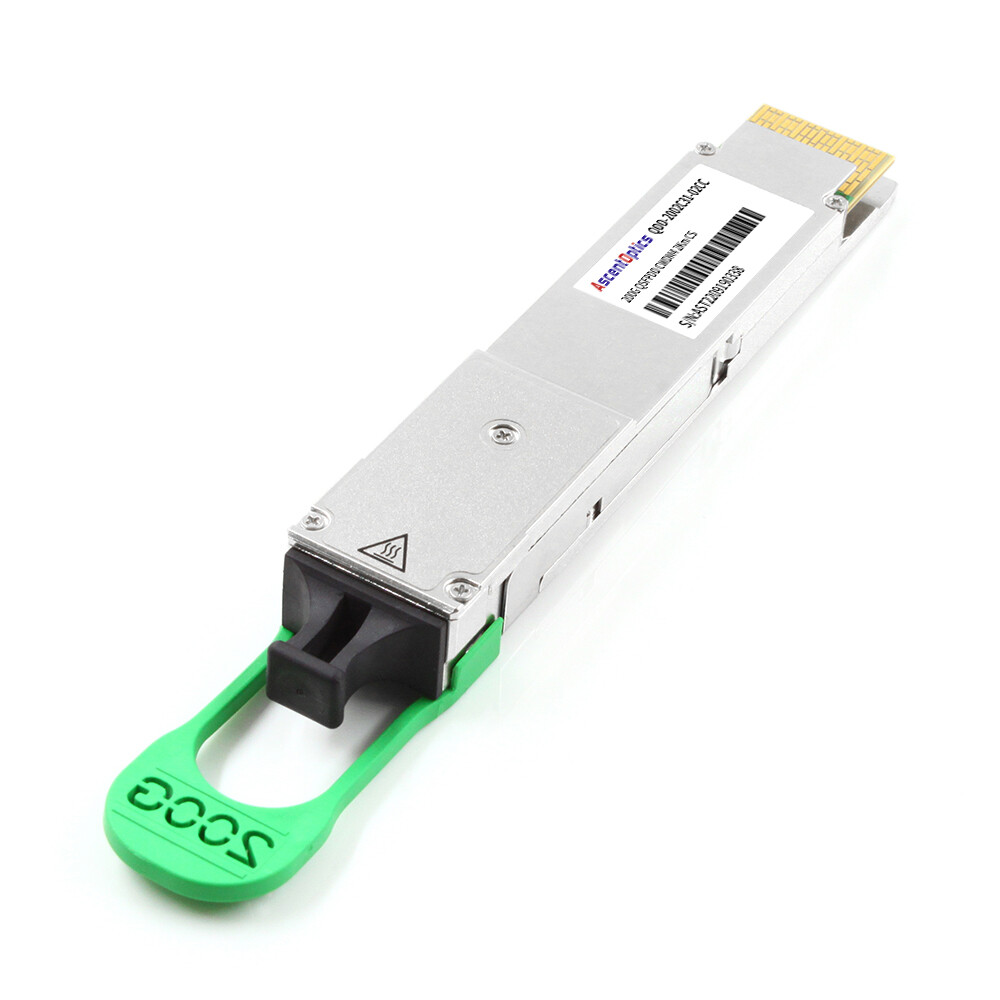
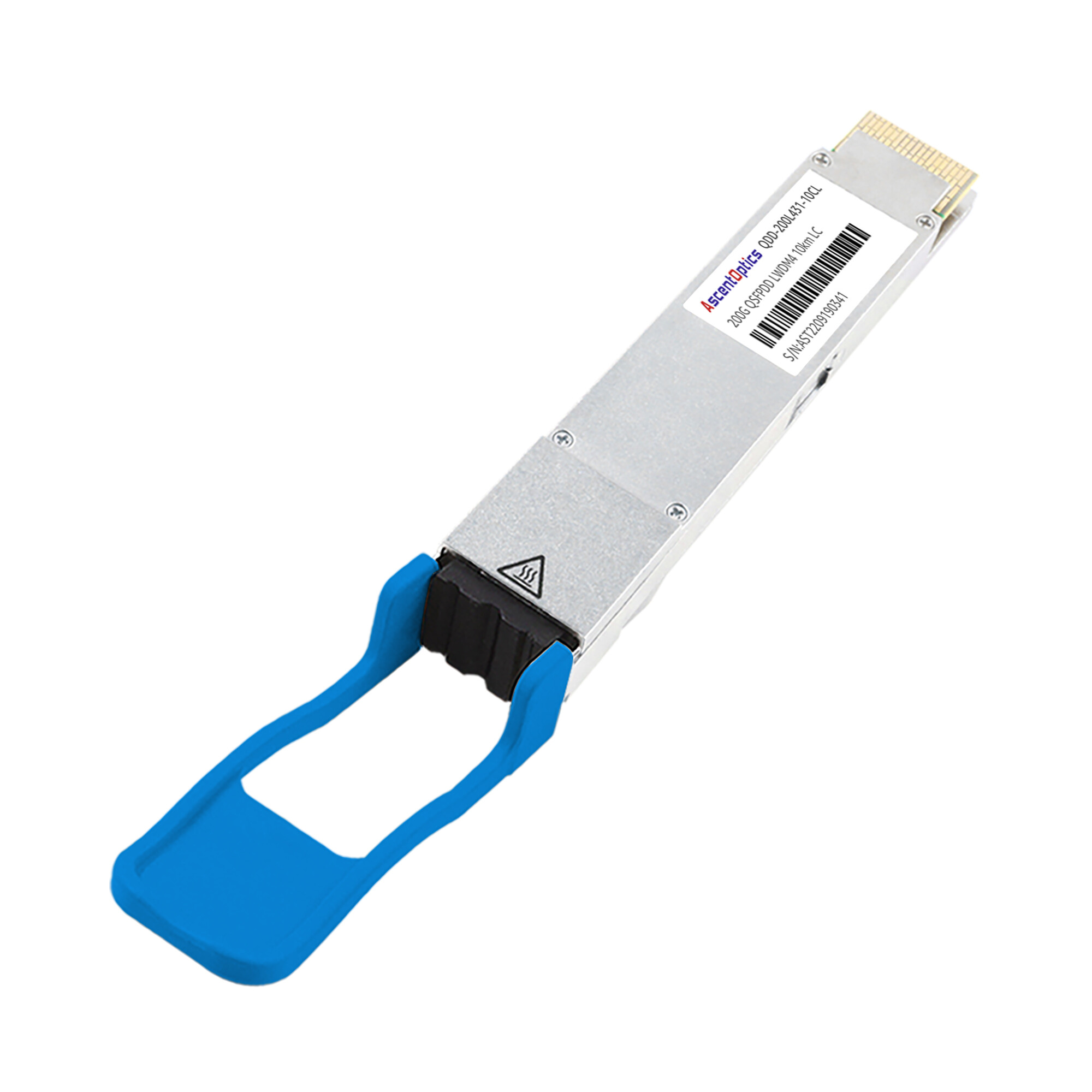
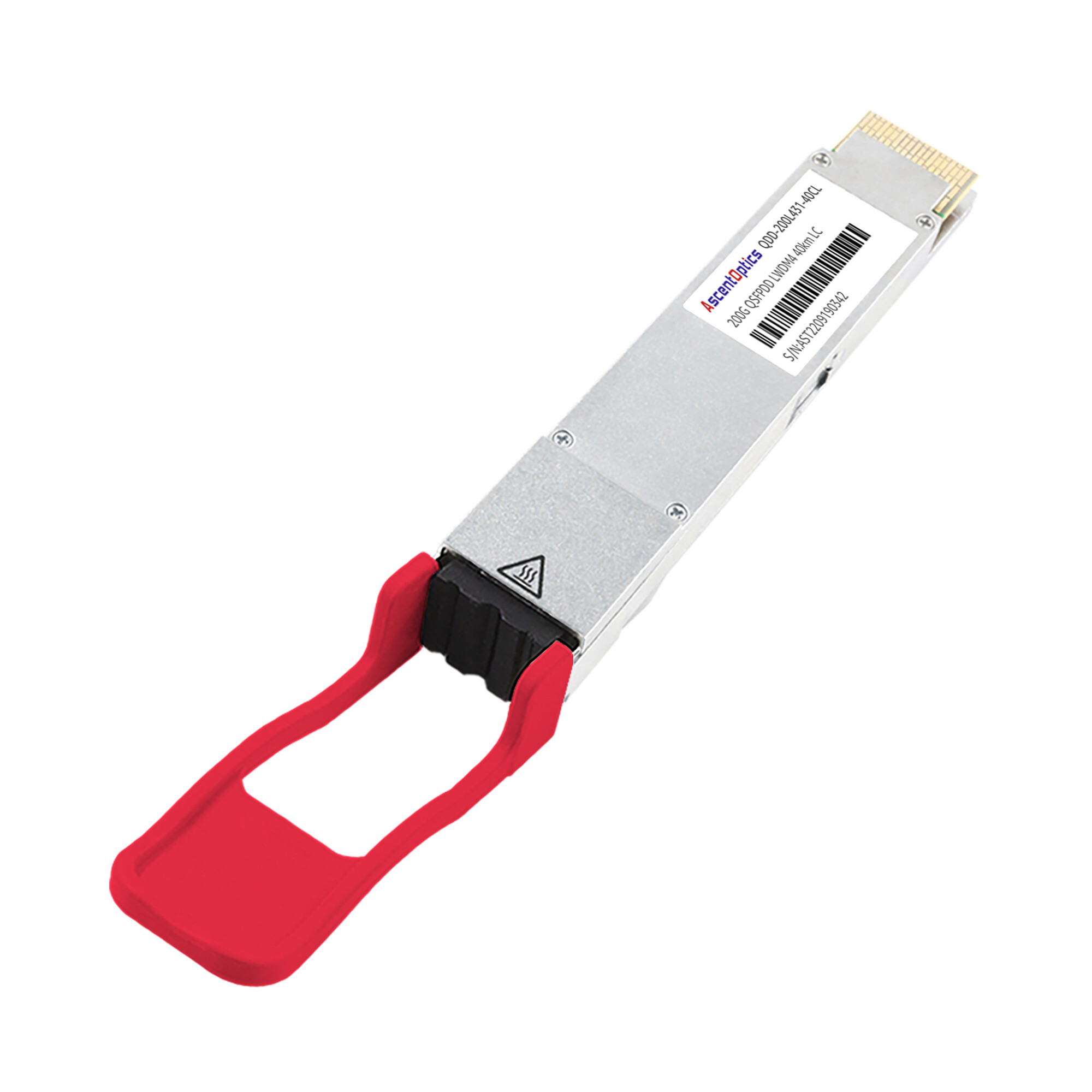
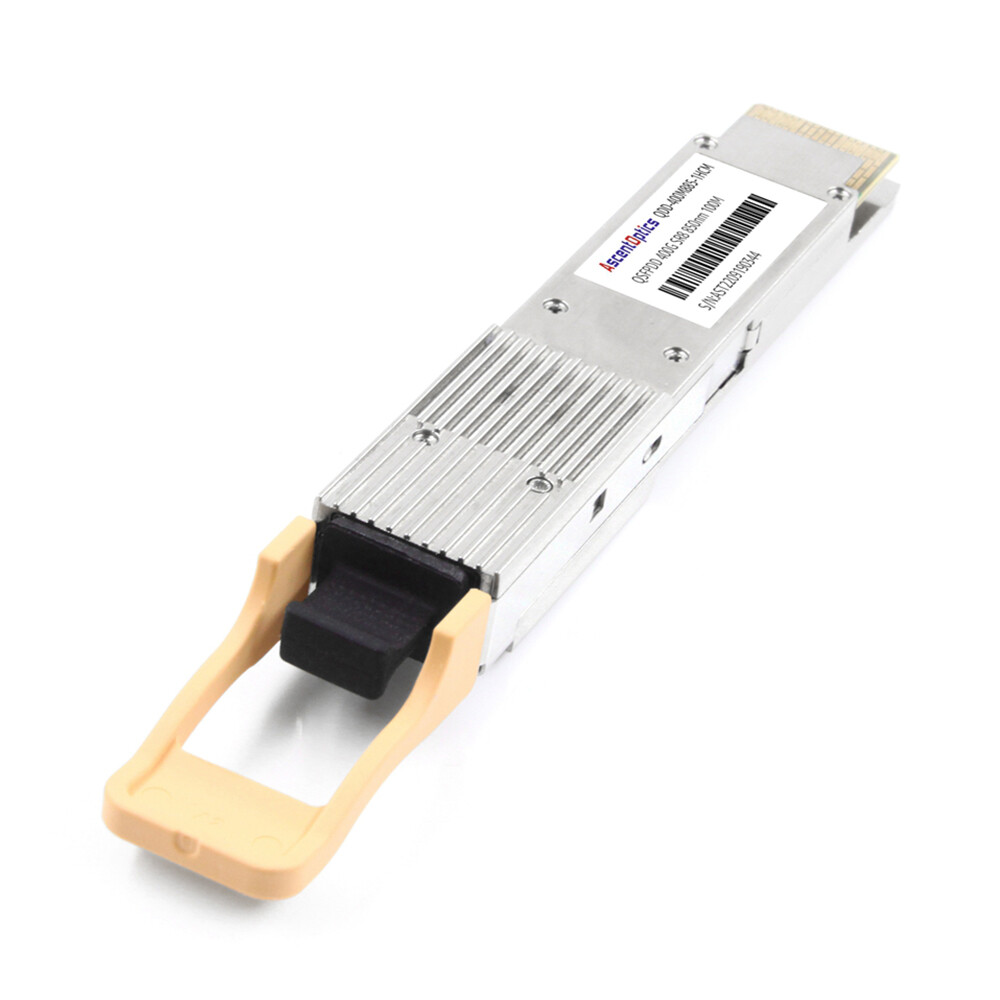
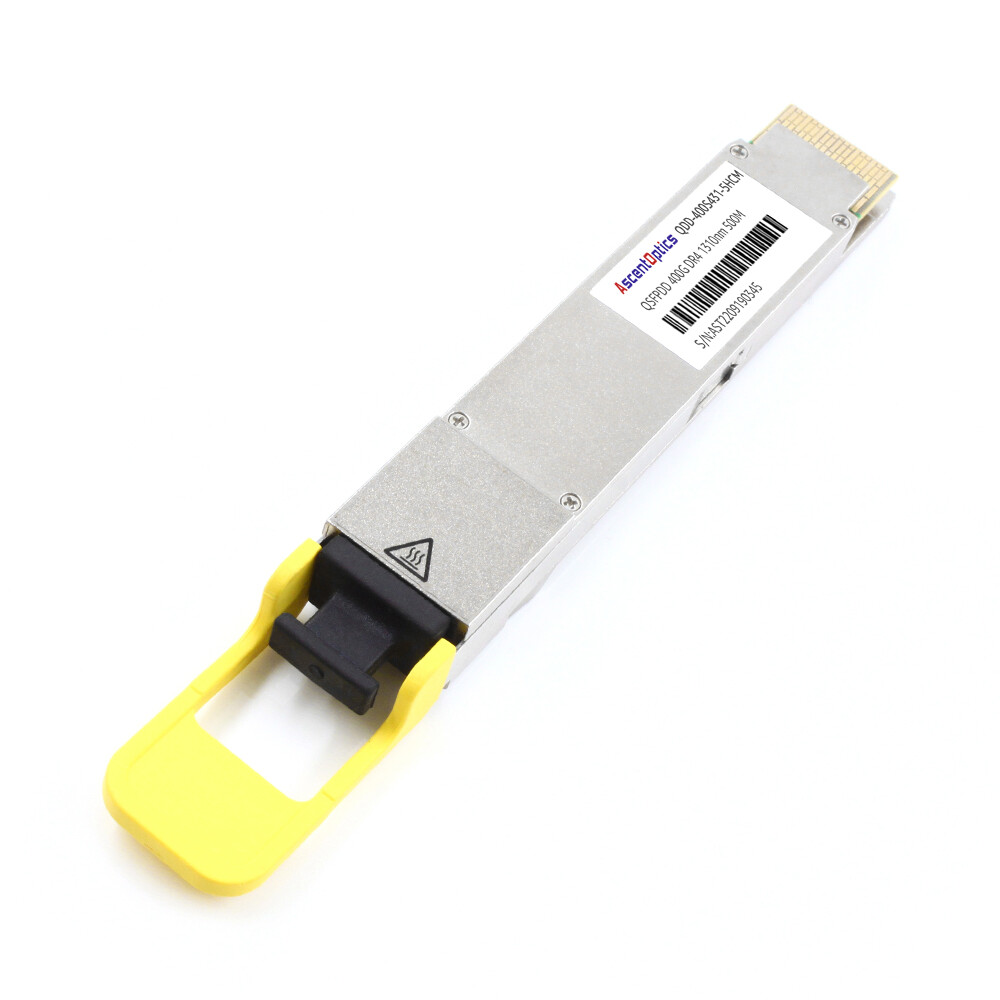
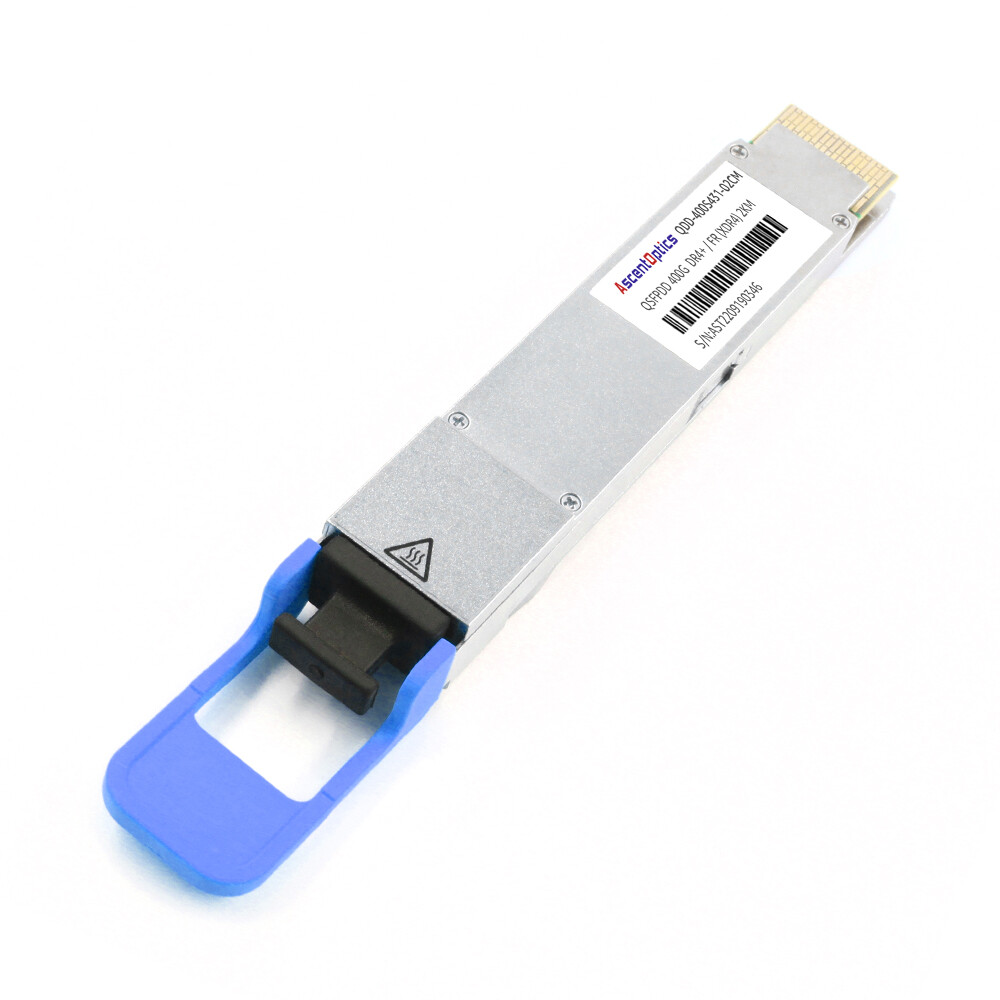
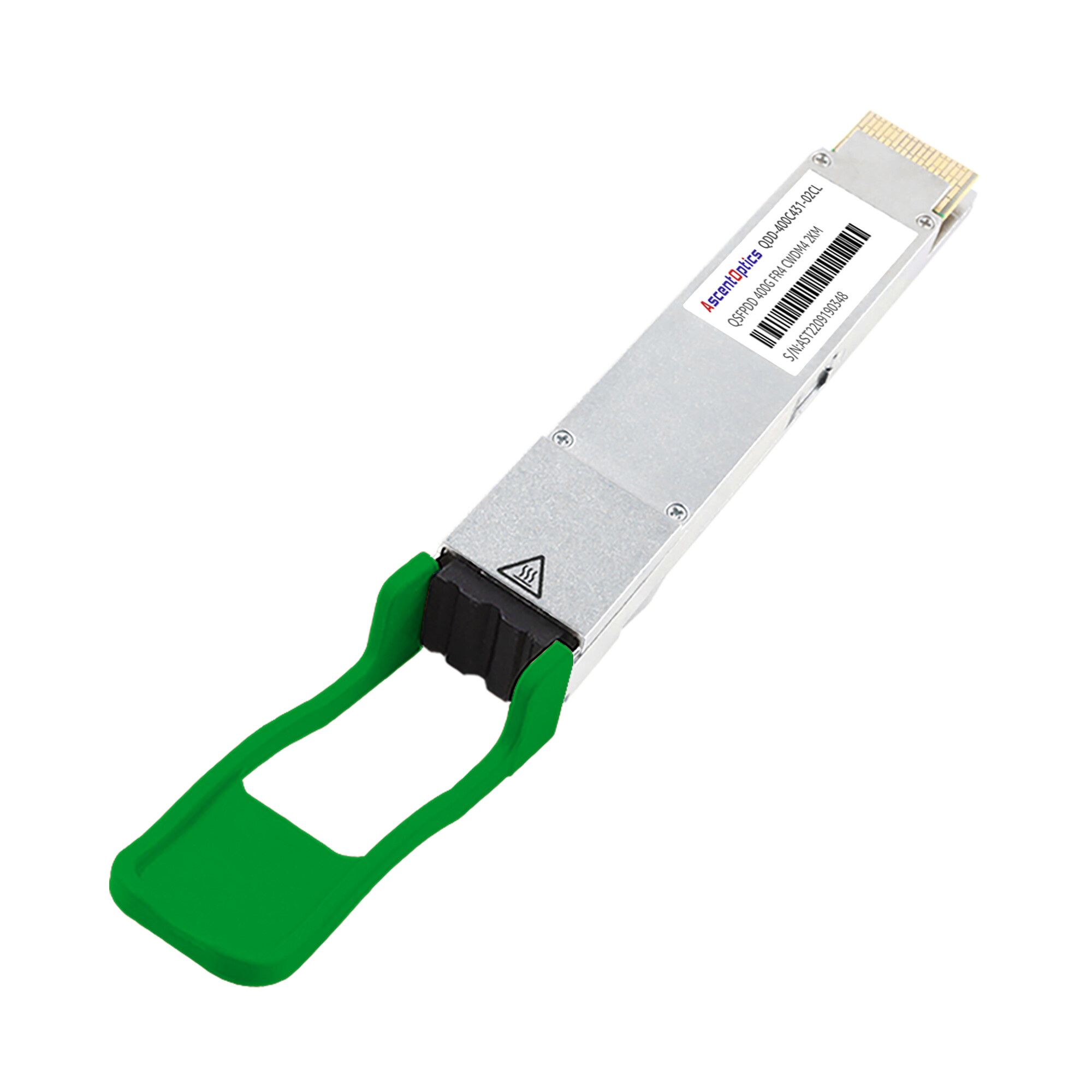
QSFP-DD is one of the most important optical transceiver form factors for modern high-speed networks. As cloud platforms, AI clusters, high-performance computing systems, and carrier networks move from 100G to 400G and 800G, the module provides a practical way to increase bandwidth while preserving high front-panel port density.
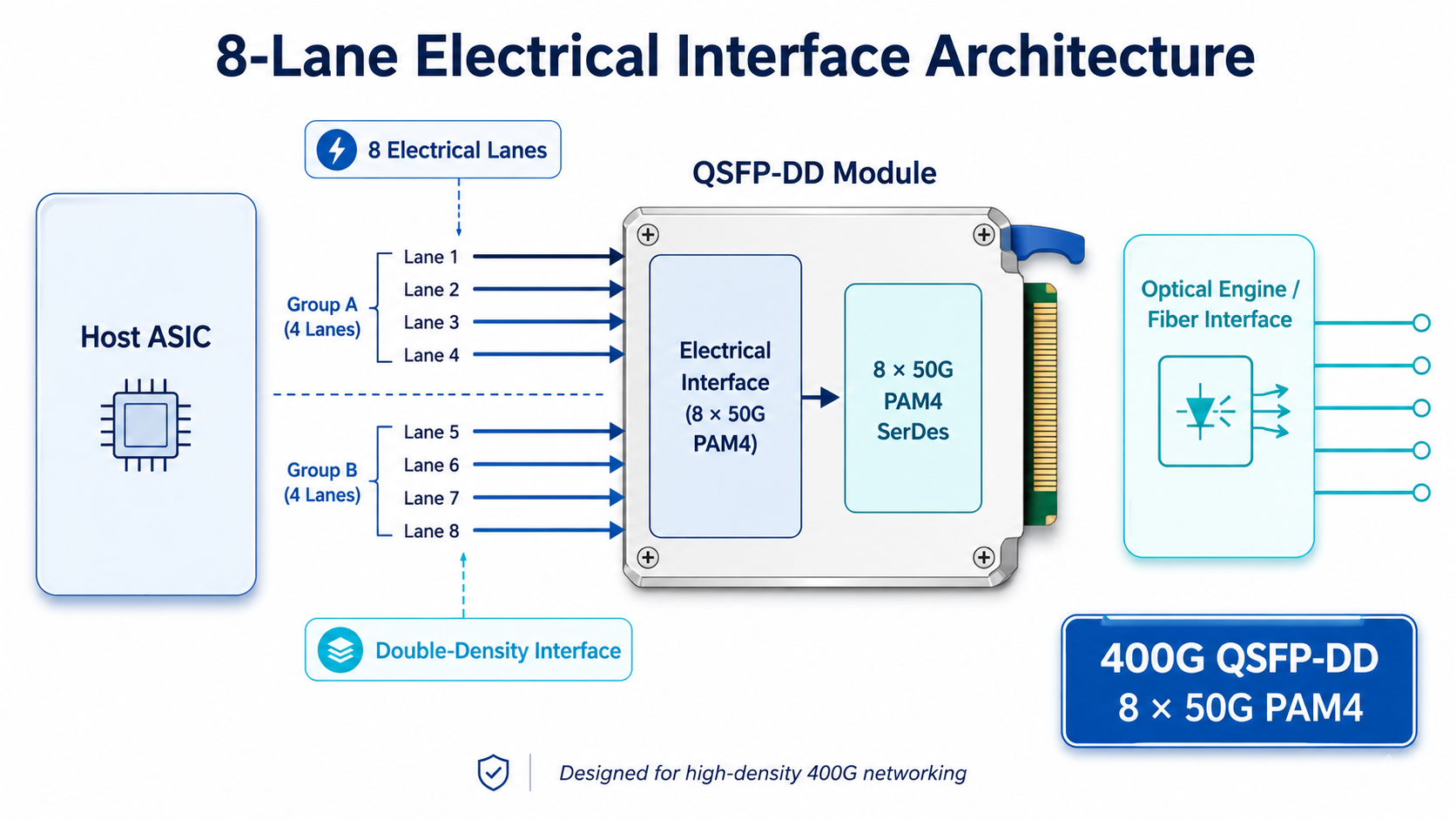
QSFP-DD stands for Quad Small Form Factor Pluggable Double Density. The “double density” design adds a second row of electrical contacts and expands the traditional QSFP architecture from four high-speed electrical lanes to eight. This enables 400G operation using 8 × 50G PAM4 electrical lanes and 800G operation in QSFP-DD800 implementations using 8 × 100G PAM4 electrical lanes.
This guide explains what QSFP-DD is, how it works, how it compares with QSFP28, QSFP56, and OSFP, and how to choose the right QSFP-DD optical module or cable for data center, AI, telecom, and enterprise network deployments.
What Is QSFP-DD?
QSFP-DD is a high-density pluggable transceiver form factor used for 200G, 400G, and 800G networking. It keeps a compact QSFP-style footprint but doubles the electrical lane count from four lanes to eight lanes. This makes it possible to support much higher aggregate bandwidth in a space-efficient front-panel design.
The QSFP-DD Multi-Source Agreement (MSA) defines the mechanical form factor, cage and connector system, pinout, thermal requirements, and management interface for the module. The optical transmission specifications, such as 400GBASE-DR4 or 400GBASE-FR4, are defined by Ethernet or optical standards bodies and industry agreements.
In real networks, QSFP-DD is widely used in high-density switches, routers, network interface cards, and AI/HPC interconnect environments where bandwidth, density, and upgrade flexibility are critical.
How Does QSFP-DD Work?
QSFP-DD works by using eight high-speed electrical lanes between the host device and the pluggable module. Each lane carries transmit and receive signals, and the aggregate bandwidth is created by combining the lanes.
For 400G QSFP-DD, the common host-side architecture is 8 × 50G PAM4. For 800G QSFP-DD800, the host-side architecture moves to 8 × 100G PAM4. PAM4, or 4-level pulse amplitude modulation, carries two bits per symbol, allowing higher data rates than NRZ within similar bandwidth constraints. The tradeoff is that PAM4 has smaller noise margins, so it depends on stronger signal integrity design, equalization, and forward error correction.
Inside the optical module, the DSP or retimer may handle functions such as clock recovery, equalization, gearbox conversion, FEC-related signal processing, and optical lane mapping. The exact design depends on whether the module is SR8, DR4, FR4, LR4, ZR, DAC, AOC, or another implementation.
Key Specifications
| Specification |
QSFP-DD / QSFP-DD800 Overview |
| Form factor |
Quad Small Form Factor Pluggable Double Density |
| Electrical lane count |
8 transmit lanes + 8 receive lanes |
| Common 400G host interface |
8 × 50G PAM4 |
| Common 800G host interface |
8 × 100G PAM4 in QSFP-DD800 implementations |
| Typical applications |
400GbE, 800GbE, data center switching, AI/HPC clusters, DCI, telecom transport |
| Management interface |
CMIS for modern high-speed pluggable modules |
| Media options |
Multimode fiber, single-mode fiber, DAC, AOC, ACC/AEC depending on link distance and equipment |
| Backward compatibility |
QSFP-DD host cages can accept QSFP+/QSFP28/QSFP56 modules when the host platform supports the relevant speed and electrical interface |
Understanding the QSFP-DD Form Factor
The key design change in QSFP-DD is the double-density connector. Compared with a standard QSFP connector, QSFP-DD adds an additional row of contacts to support twice the number of high-speed electrical lanes. This allows switch vendors to increase bandwidth without doubling faceplate area.
For operators, the form factor matters because front-panel density directly affects rack space, cabling strategy, airflow, and upgrade economics. A 32-port 400G QSFP-DD switch can provide 12.8 Tbps of front-panel bandwidth, while 800G QSFP-DD800 platforms can further increase density where power and thermal design allow.
Thermal design is especially important. 400G and 800G modules may dissipate significantly more power than 100G optics, so the host system must provide sufficient airflow, heat sinking, and power delivery. Not every switch port supports every optical type or power class, even if the form factor appears to match.
PAM4 vs NRZ: Why QSFP-DD Enables Higher Speeds
| Signaling |
How It Works |
Where It Fits |
| NRZ |
Uses two signal levels and carries one bit per symbol. |
Common in earlier 25G-per-lane designs such as 100G QSFP28. |
| PAM4 |
Uses four signal levels and carries two bits per symbol. |
Enables 50G-per-lane and 100G-per-lane architectures used in 400G and 800G networks. |
NRZ is simpler and more tolerant of noise, but it does not scale efficiently to the lane rates required by 400G and 800G Ethernet. PAM4 doubles the number of bits transmitted per symbol, which helps increase throughput without requiring a proportional increase in channel bandwidth.
Because PAM4 has closer voltage levels than NRZ, 400G and 800G designs require careful attention to channel loss, return loss, crosstalk, equalization, clock recovery, and FEC settings. This is one reason compatibility testing is essential before large-scale QSFP-DD deployment.
QSFP-DD vs QSFP28, QSFP56, and OSFP
| Form Factor |
Lane Architecture |
Common Port Speeds |
Main Advantage |
Key Limitation |
| QSFP28 |
4 × 25G NRZ |
100G |
Mature 100G ecosystem and low cost |
Limited bandwidth for 400G/800G upgrades |
| QSFP56 |
4 × 50G PAM4 |
200G |
Efficient upgrade path from 100G to 200G |
Still only four electrical lanes |
| QSFP-DD |
8 × 50G PAM4 |
400G |
High density and backward-compatible host cage design |
Thermal and signal integrity requirements are more demanding than 100G |
| QSFP-DD800 |
8 × 100G PAM4 |
800G |
Higher bandwidth in a familiar QSFP-DD-style form factor |
Requires next-generation host ASICs, 100G/lane electrical channels, stronger cooling, and strict interoperability testing |
| OSFP |
8-lane architecture |
400G / 800G / roadmap beyond |
Larger thermal envelope, common in 800G AI networking |
Not backward-compatible with QSFP modules |
The most important difference between QSFP28 and QSFP-DD is lane count. QSFP28 uses four 25G lanes for 100G, while QSFP-DD uses eight lanes to support 400G and 800G generations. QSFP56 also uses four lanes, but each lane runs at 50G PAM4, enabling 200G.
Compared with OSFP, QSFP-DD offers a strong advantage in backward compatibility and port-density continuity for operators already using QSFP-based infrastructure. OSFP, however, has a larger mechanical envelope and is often favored where higher thermal headroom is needed, especially in some 800G AI switching environments.
For a deeper form-factor comparison, read our dedicated QSFP-DD vs OSFP comparison.
Common 400G QSFP-DD Module Types
| Module Type |
Fiber Type |
Typical Reach |
Common Connector |
Best For |
| 400G QSFP-DD SR8 |
Multimode fiber |
70 m on OM3 / 100 m on OM4 |
MPO/MTP-16 |
Short-reach connections inside data centers |
| 400G QSFP-DD DR4 |
Single-mode fiber |
Up to 500 m |
MPO/MTP-12 |
Leaf-spine links and 4 × 100G breakout |
| 400G QSFP-DD FR4 |
Single-mode fiber |
Up to 2 km |
Duplex LC |
Data center interconnect and campus links |
| 400G QSFP-DD LR4 |
Single-mode fiber |
Up to 10 km |
Duplex LC |
Metro or longer campus connections |
| 400G QSFP-DD 400ZR |
Single-mode fiber |
Metro DCI ranges depending on system design |
Duplex LC |
Coherent data center interconnect |
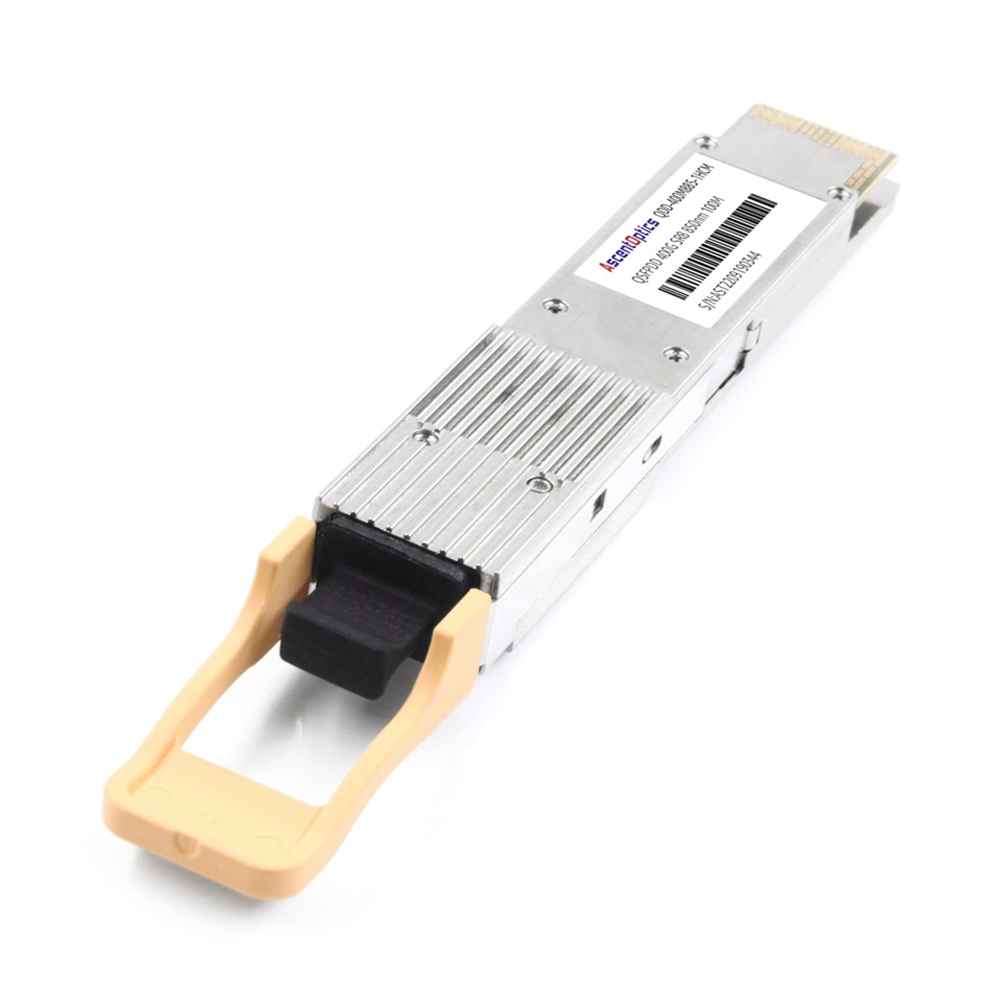
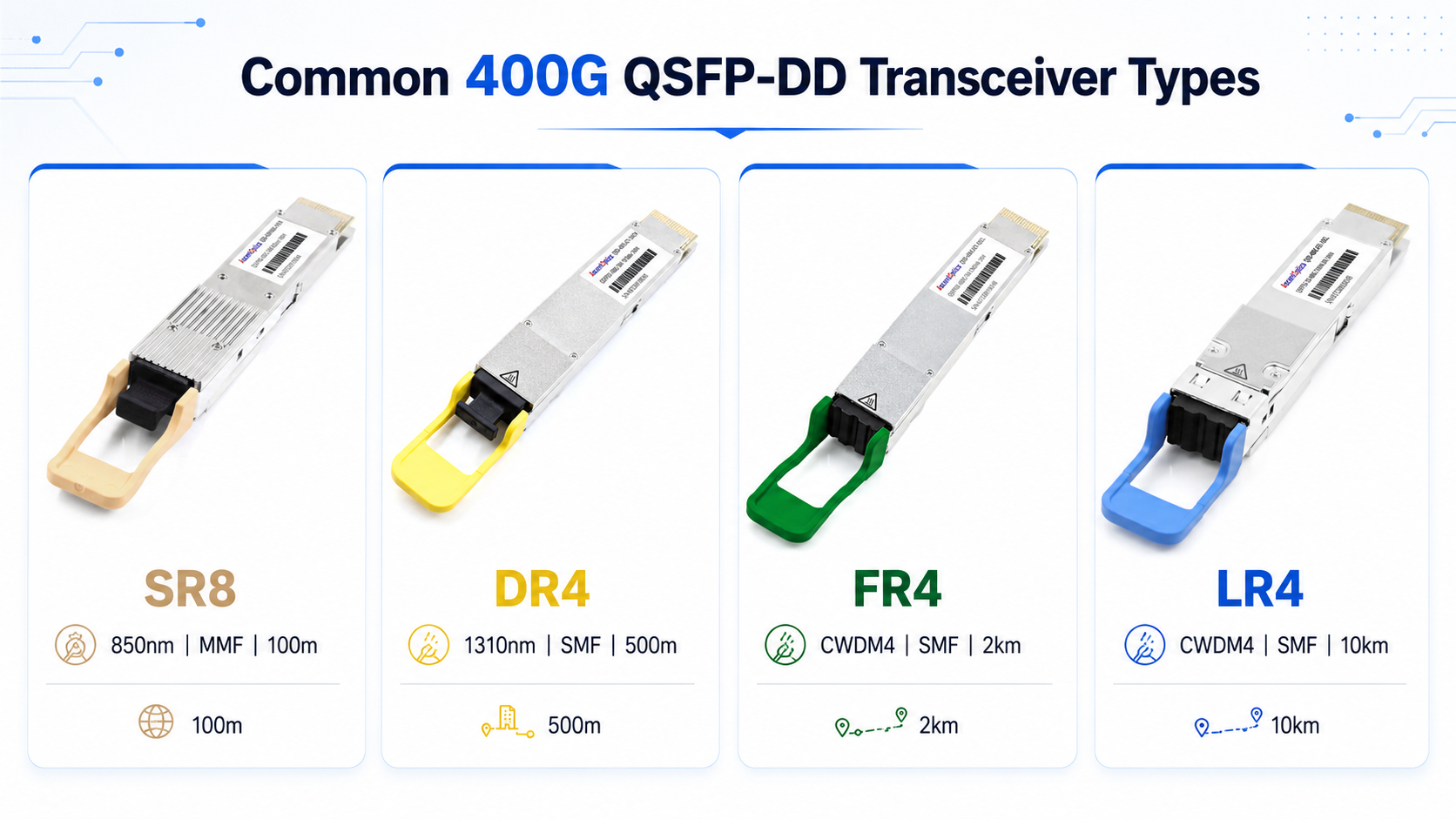
400G QSFP-DD modules are not all the same. SR8, DR4, FR4, LR4, and ZR modules differ in optical lane count, connector type, fiber type, reach, power consumption, and cost. Selecting the correct type depends first on distance and fiber plant, then on switch support, breakout requirements, and budget.
For a detailed breakdown of reach, connector, and use-case differences, see our 400G QSFP-DD SR8, DR4, FR4, and LR4 transceiver guide.
For example, DR4 is often chosen when operators need 400G links or 4 × 100G breakout over single-mode fiber. FR4 and LR4 are better suited for duplex LC-based links where operators prefer four-wavelength WDM transmission over two fibers.
Common 800G QSFP-DD Module Types
| Module Type |
Typical Reach |
Common Use Case |
Deployment Notes |
| 800G QSFP-DD SR8 |
Short-reach multimode fiber |
Intra-data-center links where MMF is already deployed |
Check MPO/MTP connector and host cooling requirements. |
| 800G QSFP-DD DR8 |
Up to 500 m single-mode fiber |
High-density leaf-spine and 8 × 100G breakout |
Requires careful breakout and fiber polarity planning. |
| 800G QSFP-DD 2×FR4 |
Up to 2 km single-mode fiber |
Two 400G logical links or high-capacity DCI |
Connector and lane mapping vary by vendor and module design. |
| 800G QSFP-DD 2×LR4 / LR8 |
Longer single-mode links |
Campus, metro, and high-capacity aggregation |
Power class, thermal margin, and compatibility testing are especially important. |
Cable Options: DAC, AOC, ACC, and AEC
Not every QSFP-DD connection requires an optical transceiver plus separate fiber patch cable. For short in-rack or adjacent-rack links, cable assemblies can reduce cost and power consumption.
| Cable Type |
Typical Distance |
Advantages |
Limitations |
| DAC |
Very short reach, often within a rack |
Lowest cost and low power |
Heavier cable, limited distance, signal integrity depends on length and host support |
| ACC |
Short reach |
Adds active equalization for improved signal quality versus passive DAC |
Higher cost and power than passive DAC |
| AEC |
Short to medium electrical cable reach |
Retimed electrical cable option for demanding high-speed channels |
Requires host and cable compatibility validation |
| AOC |
Longer short-reach links |
Lighter than DAC, easier routing, better reach |
Higher power and cost than DAC |
Benefits of QSFP-DD in Modern Networks
Higher Bandwidth Density
QSFP-DD doubles the lane count of traditional QSFP designs, allowing 400G and 800G bandwidth in a compact pluggable module.
Smoother Migration
A QSFP-DD host cage can support legacy QSFP modules when the host platform is designed for that mode, helping operators upgrade gradually instead of replacing everything at once.
Broad Ecosystem
QSFP-DD is widely supported across switches, routers, transceivers, DACs, AOCs, test equipment, and monitoring tools.
Flexible Reach Options
From short-reach SR8 to DR4, FR4, LR4, and coherent DCI modules, QSFP-DD supports many network distance requirements.
Operational Visibility
Modern QSFP-DD modules use CMIS-based management, allowing hosts to read module information, alarms, temperature, voltage, optical power, and other diagnostic data.
Where QSFP-DD Is Used
Hyperscale Data Centers
The module is widely used for high-radix 400G and 800G switch platforms where front-panel density and power efficiency are critical.
AI and HPC Clusters
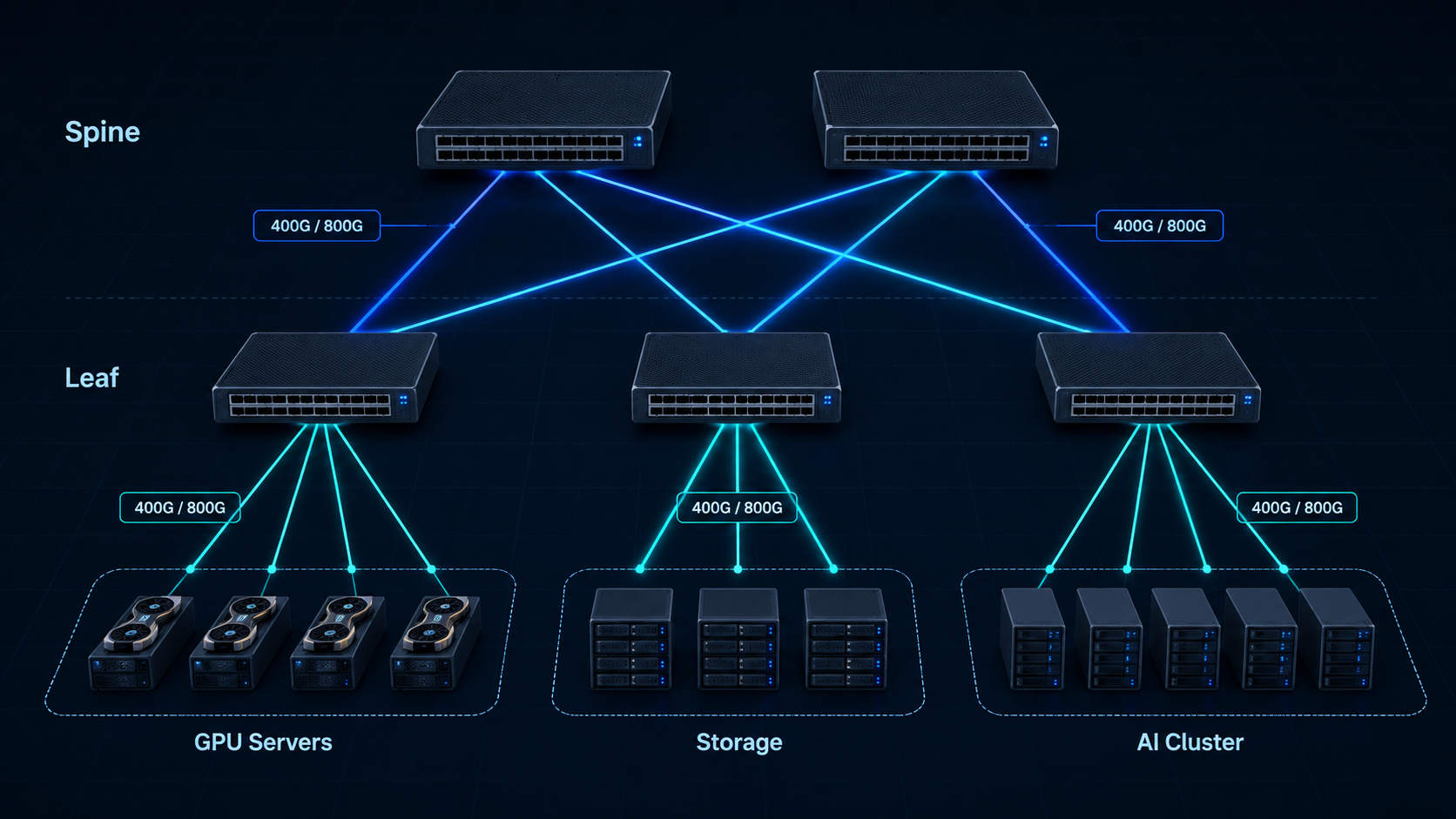
GPU clusters and distributed training environments require high-throughput, low-latency network fabrics. QSFP-DD links can provide the bandwidth needed for storage, aggregation, and cluster interconnect layers.
Cloud and Enterprise Spine-Leaf Networks
400G QSFP-DD is a common choice for spine-leaf uplinks, aggregation layers, and data center interconnect upgrades.
Telecom and Metro Networks
FR4, LR4, and coherent QSFP-DD modules can support longer-reach connectivity for metro aggregation and DCI applications.
How to Choose the Right QSFP-DD Module
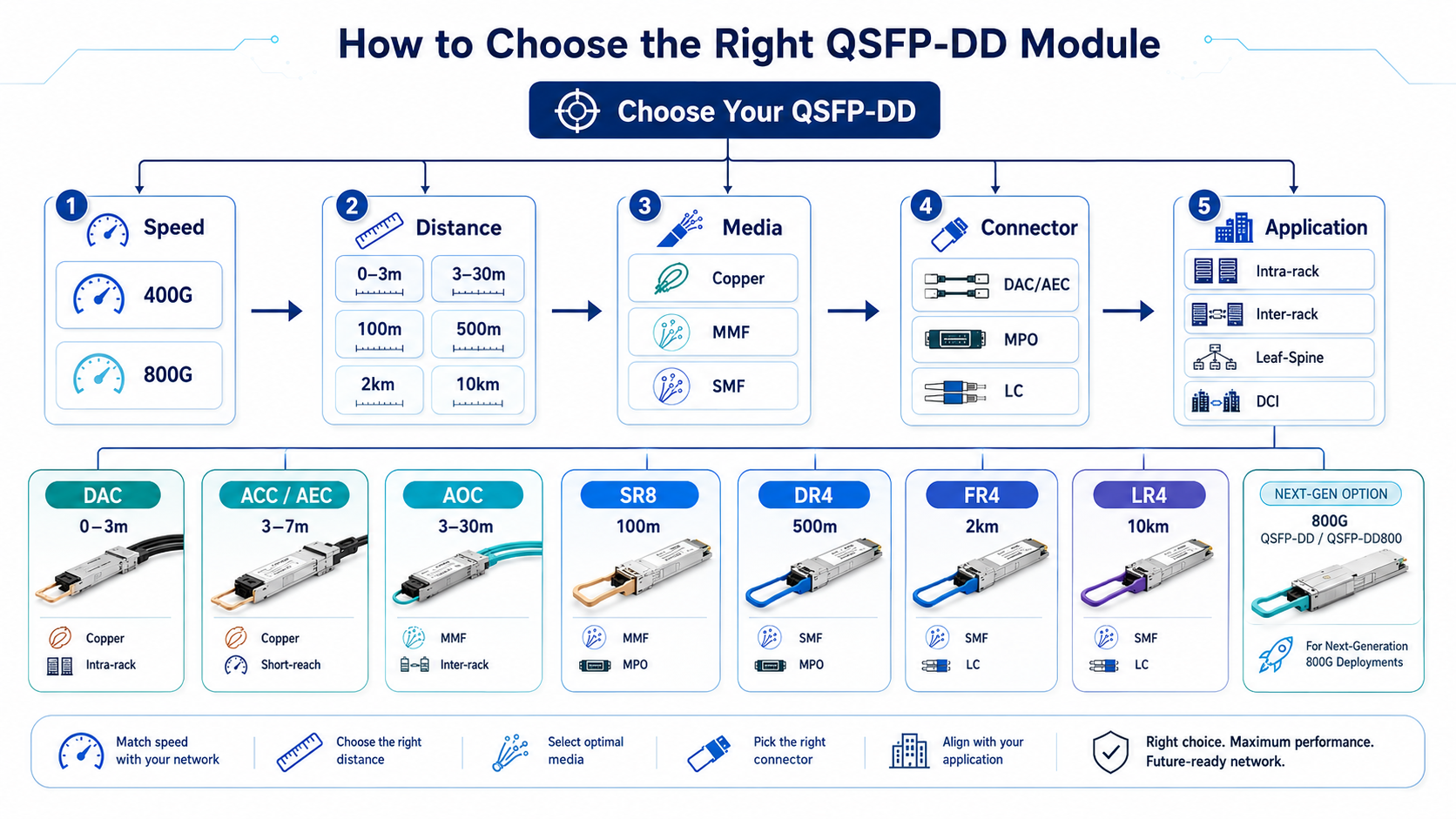
Choosing the right module depends on your network requirements, including transmission distance, fiber type, and future scalability.
For short-distance connections inside a data center, multimode modules are typically the most cost-effective option. For longer links, single-mode modules provide greater reach and reliability. It’s also important to ensure that the module matches your switch interface and existing cabling infrastructure.
If you’re planning future network upgrades, consider solutions that support higher bandwidth and improved power efficiency. Selecting the right module today can simplify future expansion while reducing deployment costs.
| Deployment Scenario |
Recommended Module |
| Short-distance data center links |
SR8 |
| Up to 500 m |
DR4 |
| Up to 2 km |
FR4 |
| Up to 10 km |
LR4 |
Tip: Before deployment, always verify compatibility with your switch, fiber type, and required transmission distance to ensure optimal performance. For a practical step-by-step buying workflow, read our guide on how to choose the right QSFP-DD module.
Conclusion
As data centers continue to evolve to support cloud computing, AI, and high-performance networking, selecting the right optical interconnect has become increasingly important. Understanding the capabilities, compatibility, and deployment scenarios of modern transceiver technologies helps organizations build networks that are both reliable and ready for future growth.
Whether upgrading an existing infrastructure or designing a new high-speed network, evaluating factors such as transmission distance, fiber type, and scalability will help ensure long-term performance and investment value. By following industry standards and choosing solutions that match your application requirements, you can simplify deployment while preparing for the next generation of Ethernet connectivity.
Frequently Asked Questions
Q: What does QSFP-DD stand for?
A: QSFP-DD stands for Quad Small Form Factor Pluggable Double Density. It is a high-density pluggable transceiver form factor with eight high-speed electrical lanes.
Q: What is the difference between QSFP and QSFP-DD?
A: Traditional QSFP modules use four high-speed electrical lanes. QSFP-DD doubles the lane count to eight while maintaining a compact QSFP-style form factor, enabling 400G and 800G networking.
Q: What is 400G QSFP-DD?
A: 400G QSFP-DD is a 400 Gigabit Ethernet module that uses the QSFP-DD form factor. Common variants include SR8, DR4, FR4, LR4, and 400ZR.
Q: What is 800G QSFP-DD?
A: 800G QSFP-DD, often called QSFP-DD800, is an 800G implementation based on 8 × 100G PAM4 electrical lanes. It is used in next-generation high-density data center and AI networking.
Q: Can QSFP-DD ports support QSFP28 modules?
A: A QSFP-DD host cage is designed to accept legacy QSFP modules, including QSFP28, when the host platform supports the required speed, protocol, and lane mapping. This does not mean the module can be inserted into a QSFP28 cage.
Q: What cables are used with QSFP-DD?
A: QSFP-DD links may use passive DAC, active copper cable, active electrical cable, active optical cable, or optical modules with separate multimode or single-mode fiber patch cables.
Q: Does QSFP-DD use PAM4?
A: Yes, modern 400G and 800G QSFP-DD links commonly use PAM4 signaling. PAM4 carries two bits per symbol and enables higher lane speeds than NRZ.
Post Views: 8,424