QSFP-DD vs OSFP: The Critical 400G/800G Form Factor Decision for Next-Generation Networks
March 25, 2026
This guide cuts through marketing claims and provides the technical clarity you need to make an informed QSFP-DD vs OSFP decision for your optical transceiver deployment. We examine specifications, real-world deployment scenarios, compatibility matrices, and future-proofing considerations to help you select the right form factor for your network infrastructure.
The optical networking industry rarely fragments when it comes to form factors. Historically, transitions from SFP to SFP+, then to QSFP+, followed relatively straightforward upgrade paths with broad industry consensus. However, the jump to 400G (and now 800G) created divergent engineering priorities that no single form factor could satisfy.
QSFP-DD evolved from the QSFP family with a clear priority: maximum backward compatibility. The “Double Density” designation reflects its design—eight electrical lanes instead of four—packed into a form factor that maintains mechanical compatibility with existing QSFP28 ports. This serves data center operators who need gradual migration paths and want to protect their QSFP28 switch investments.
OSFP, by contrast, takes a different approach. Developed by a consortium including Google, Arista, and others, OSFP prioritizes thermal headroom and forward-looking electrical signaling. Its larger physical envelope accommodates higher power budgets and more robust thermal management—critical for 400G/800G deployments, especially in high-power AI/ML clusters.
Market Adoption Reality
Both form factors have gained substantial industry traction, which complicates the decision further. Major switch vendors now offer products supporting one or both standards:
QSFP-DD Support: Broad adoption across Cisco, Juniper, Arista, Dell, and most traditional data center switch vendors. The backward compatibility argument resonates strongly with enterprise customers.
OSFP Support: Strong backing from hyperscale operators and newer switch platforms designed specifically for high-density AI/ML clusters. Arista, Cisco, and several white-box switch vendors now offer OSFP-native platforms.
The reality is that neither form factor is universally dominant. Both have legitimate use cases, and your optimal choice depends on specific infrastructure requirements rather than market momentum.
What is a QSFP-DD Transceiver?
Technical Specifications
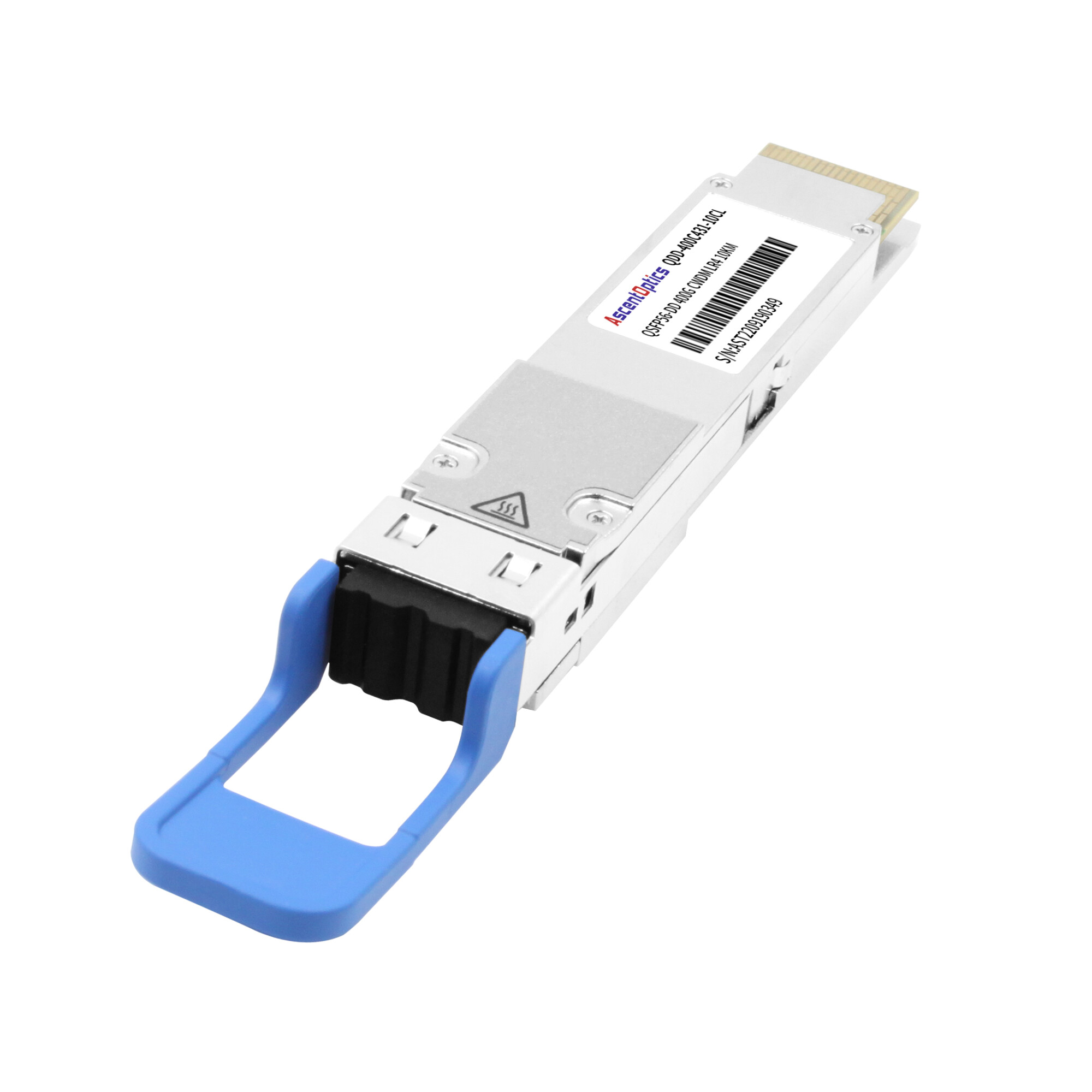
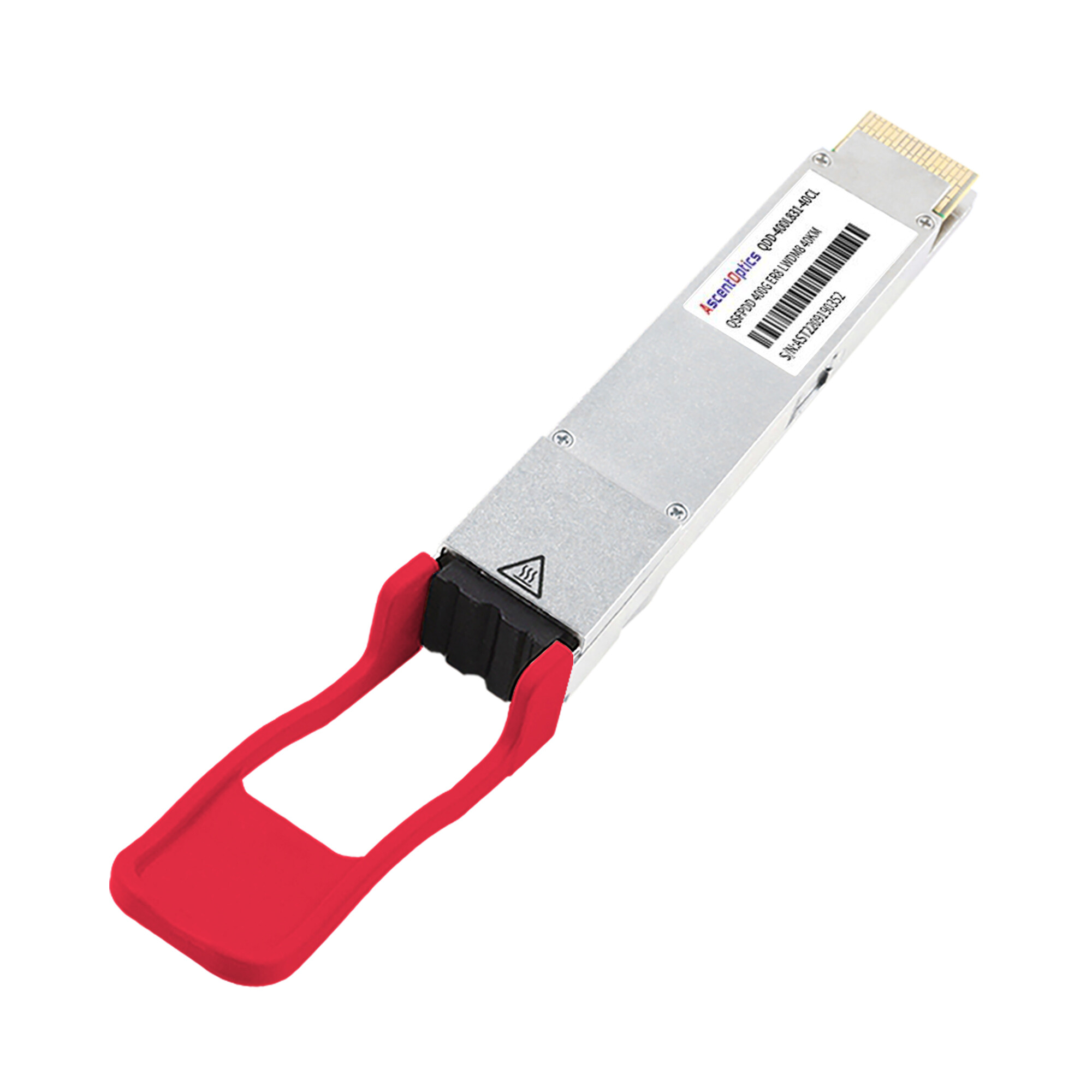
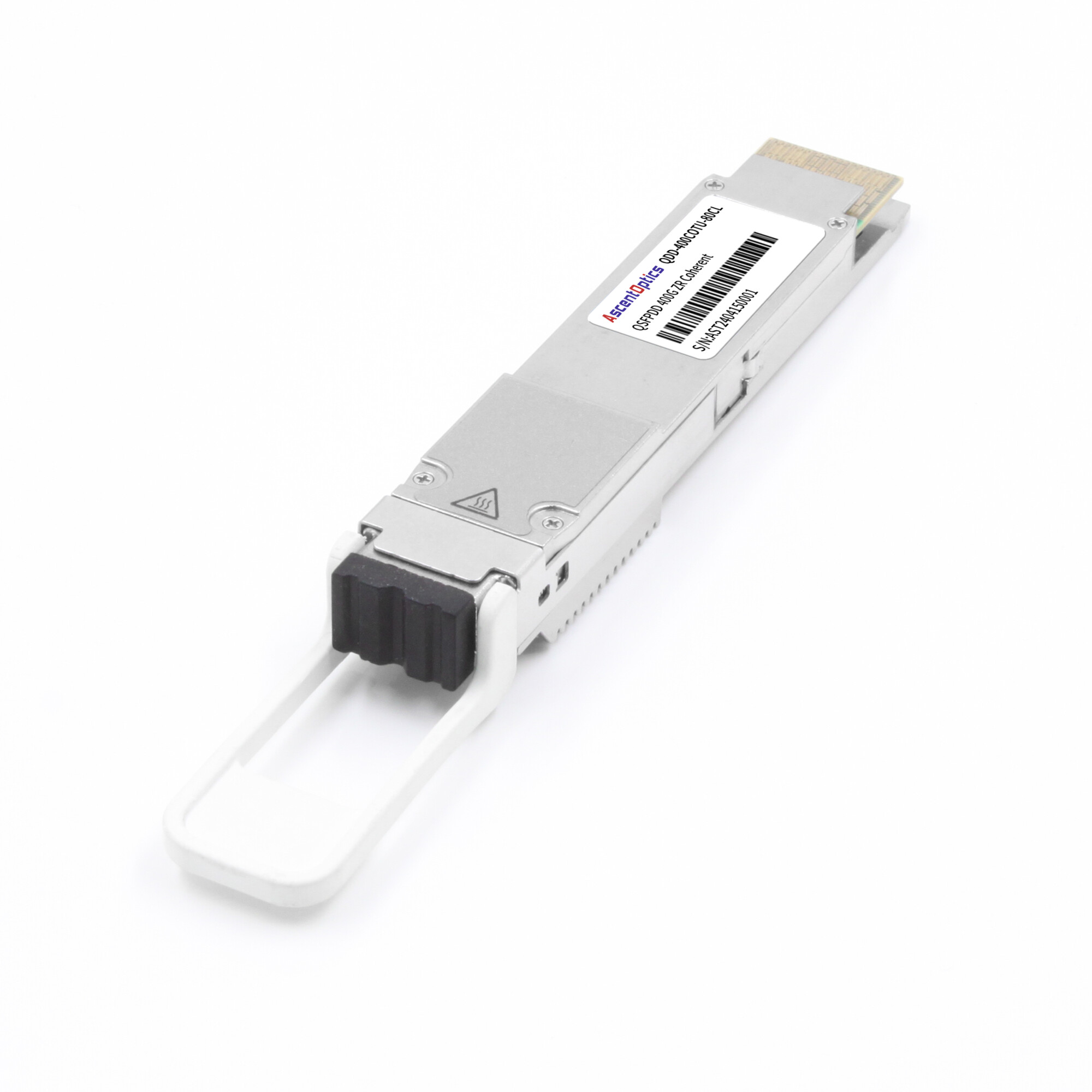
QSFP-DD (Quad Small Form-factor Pluggable Double Density) represents an evolutionary approach to the QSFP form factor family. Understanding its technical foundation helps explain both its advantages and limitations. The QSFP-DD MSA defines the official specifications for this form factor.
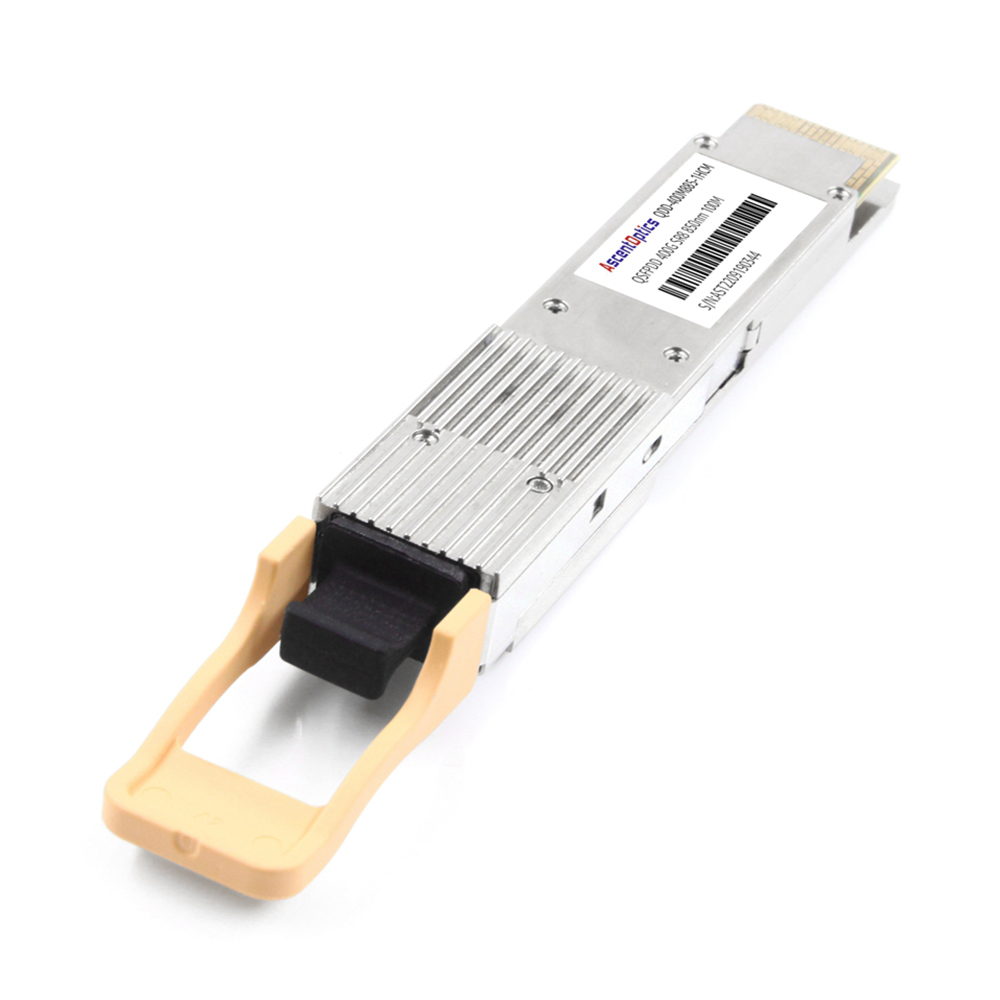
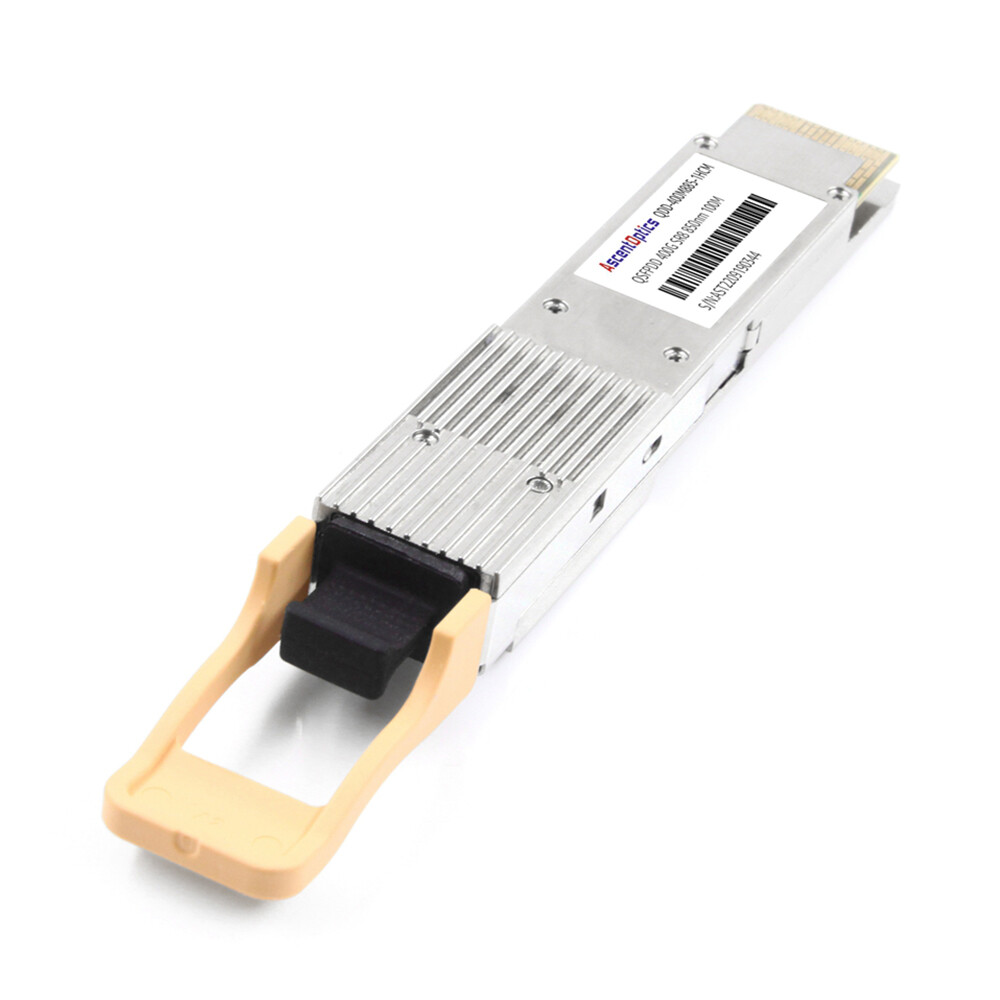
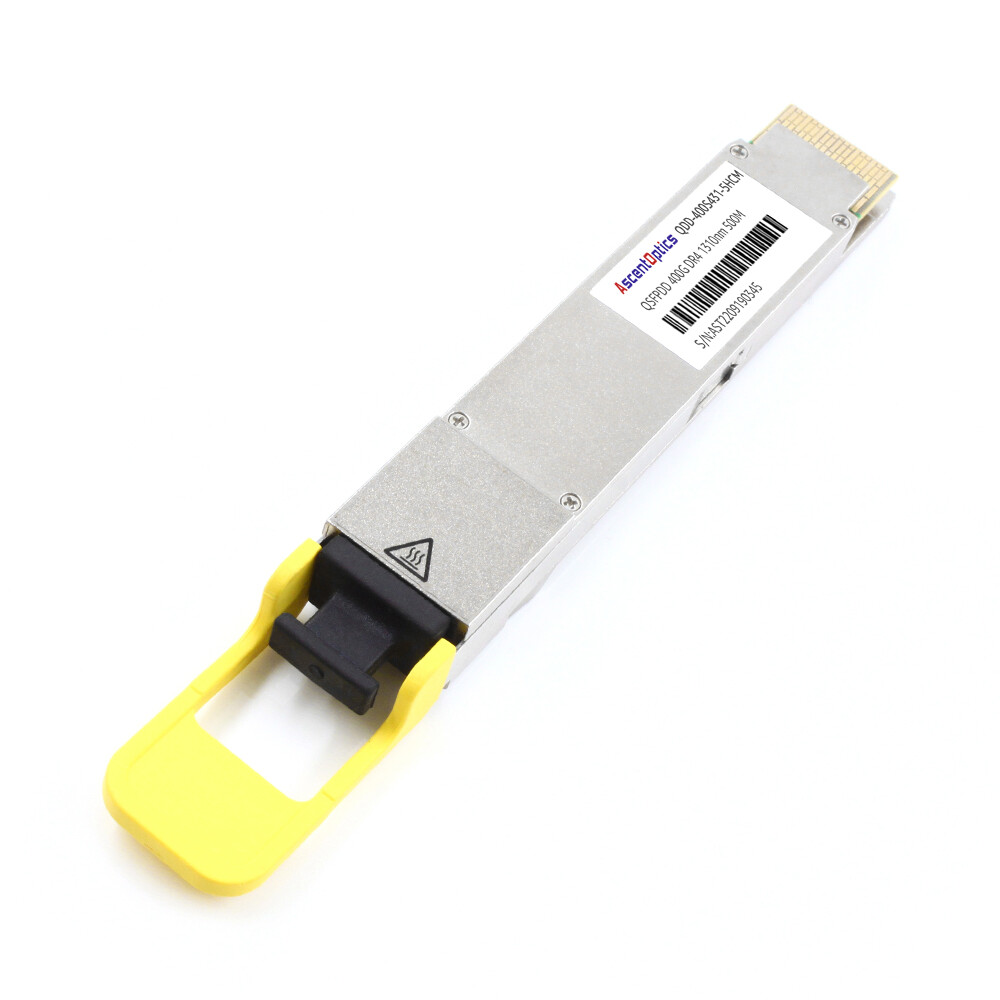
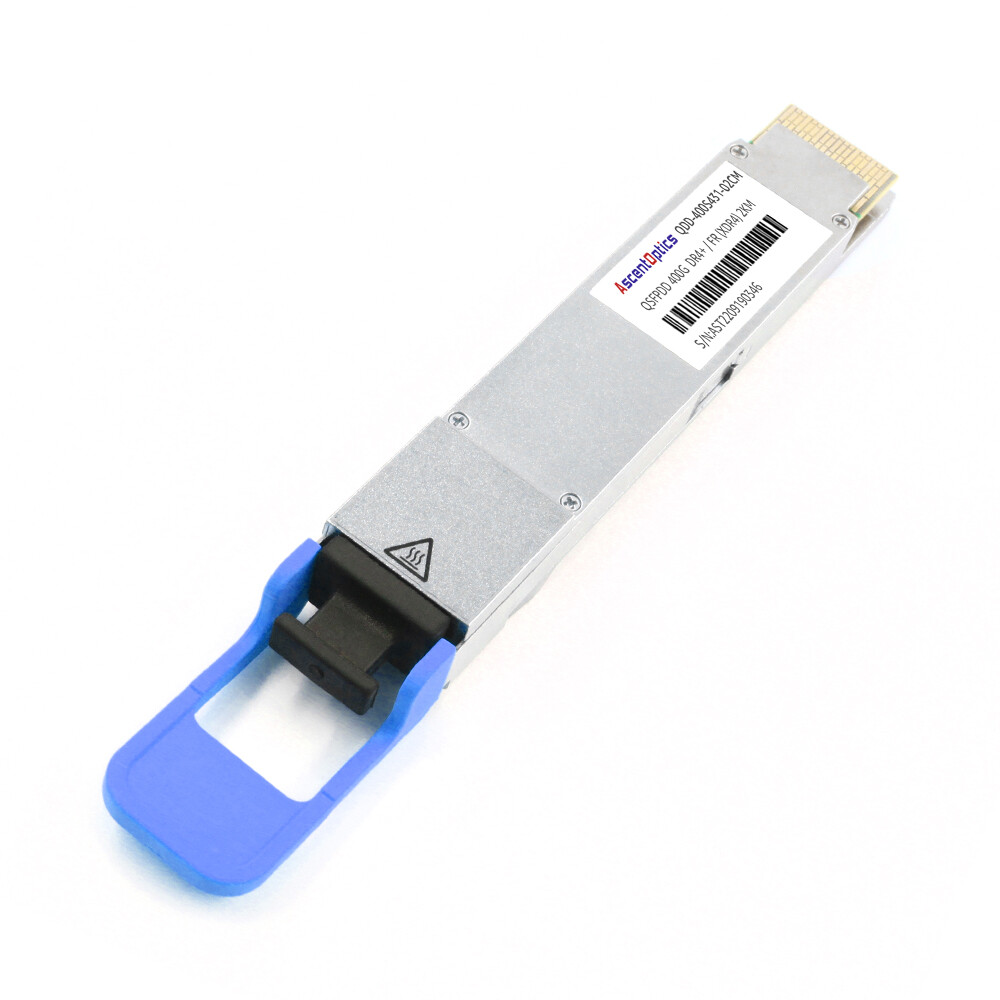
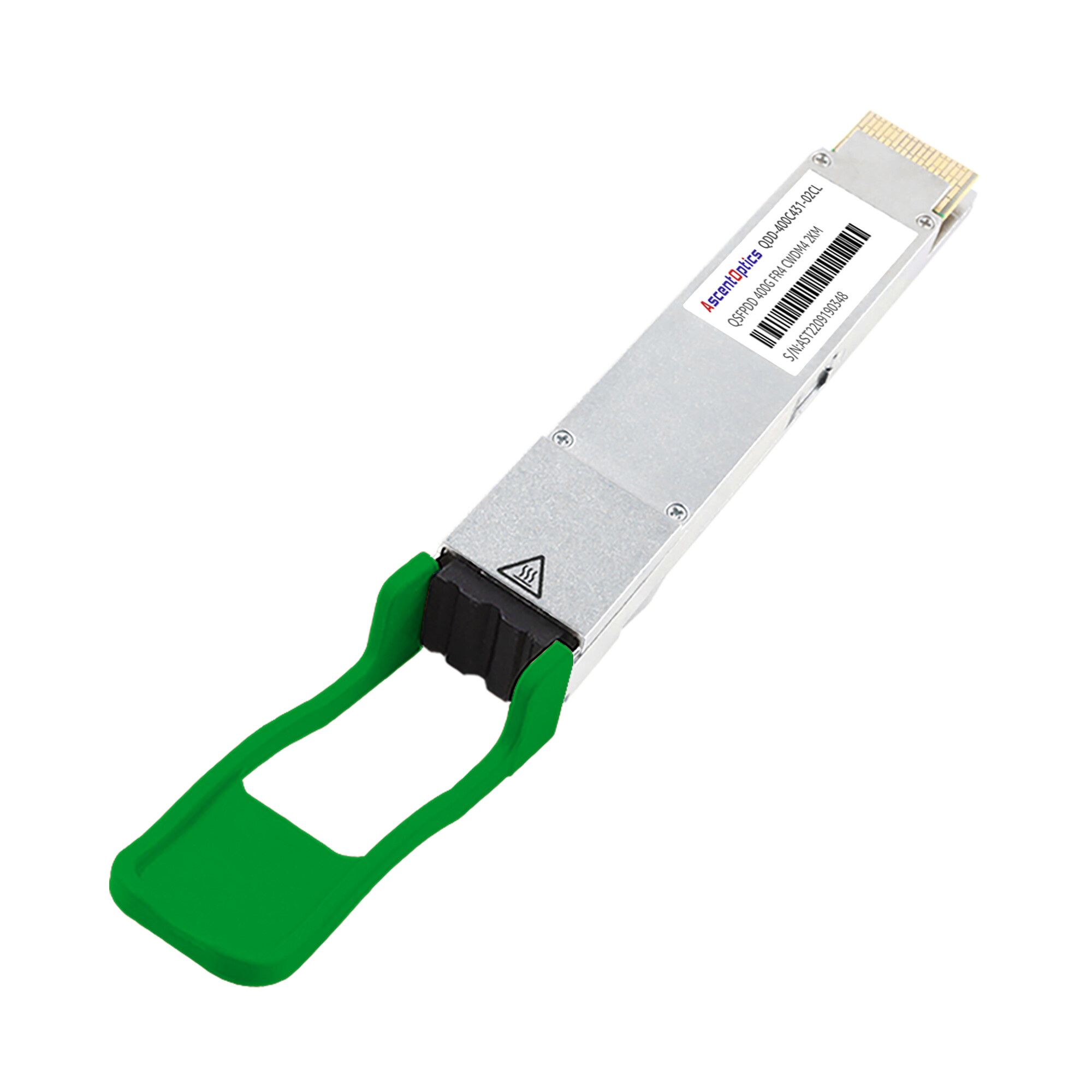
A QSFP-DD transceiver packs eight electrical lanes into a compact form factor, doubling the density of QSFP28 while maintaining backward compatibility.
400G QSFP-DD SR8
Physical Dimensions:
•Width: 18.35 mm
•Height: 8.5 mm
•Length: 89.4 mm
Electrical Interface:
•8 lanes at 50 Gbps PAM4 (400G) or 100 Gbps PAM4 (800G)
•Backward-compatible with 4-lane QSFP28 (100G/200G)
Power Specifications:
•Standard: Up to 12 W
•Extended variants: Up to 15 W (or higher in optimized designs)
The defining characteristic is the 8-lane electrical interface achieved while preserving mechanical compatibility with QSFP28 modules. This enables gradual migration: QSFP-DD ports can accept legacy 100G/200G modules and negotiate down to 4-lane operation.
Electrical: Switches negotiate down to 4 lanes when QSFP28 modules are installed.
This allows phased upgrades without forklift replacements—deploy QSFP-DD switches now, continue using existing QSFP28 optics where sufficient, and upgrade ports selectively to 400G/800G.
When QSFP-DD Excels
QSFP-DD typically represents the optimal choice in these scenarios:
1.Mixed-Speed Environments: When your network includes both 100G and 400G requirements, QSFP-DD enables unified switch platforms serving both speeds.
2. Enterprise Data Centers: Organizations with substantial QSFP28 infrastructure investments benefit from the protection this compatibility offers.
3. Port Density Critical Applications: The smaller form factor enables higher port counts per switch and per rack unit—often 36 or 64 ports of 400G in a 1RU switch.
4. Limited Thermal Budget: Data centers with constrained cooling capacity may prefer QSFP-DD’s lower power envelope and smaller thermal footprint.
What is an OSFP Transceiver?
Technical Specifications
OSFP (Octal Small Form-factor Pluggable) takes a clean-slate approach to 400G optical module design. The larger physical envelope reflects its design priorities. The OSFP MSA provides the official technical specifications.
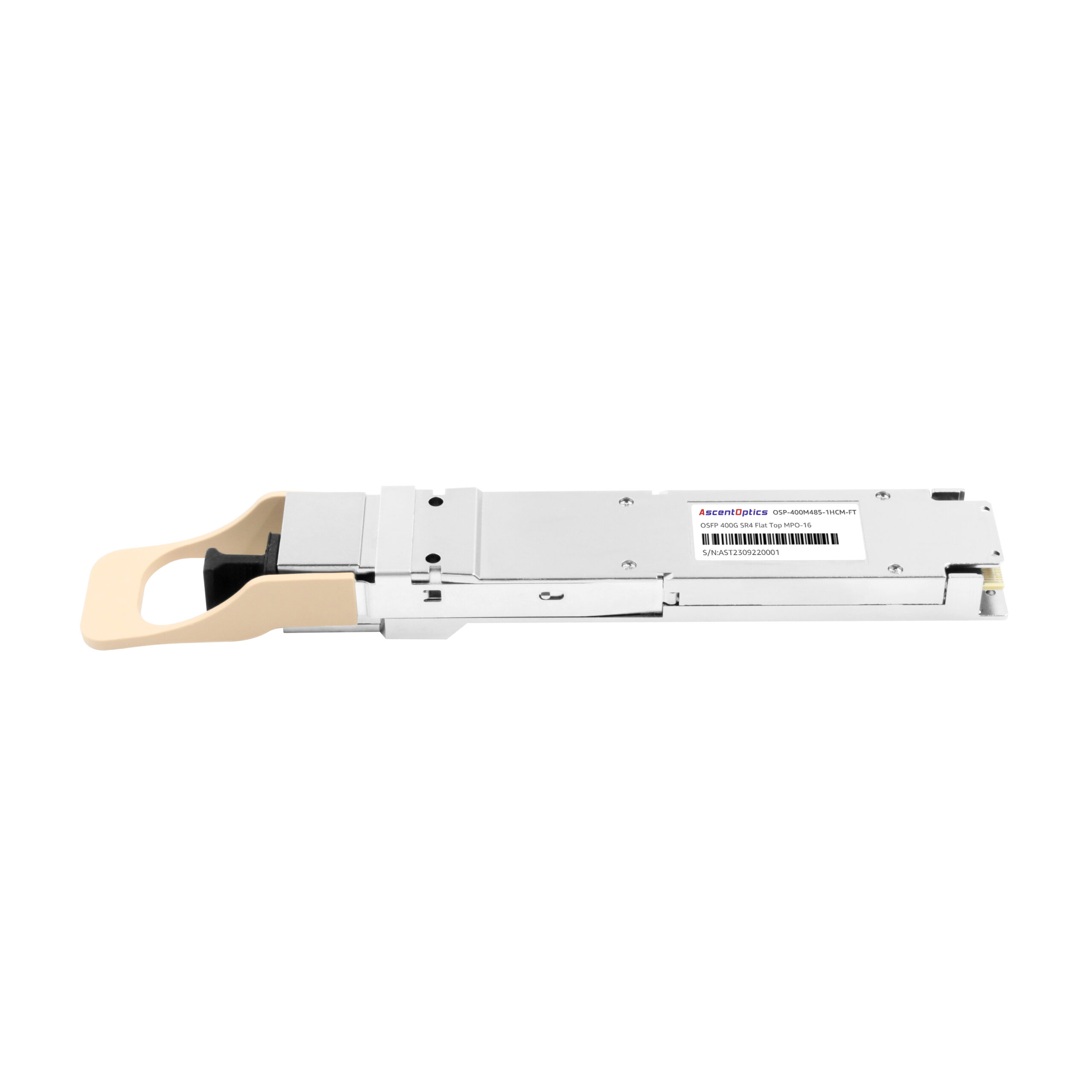
An OSFP transceiver provides more thermal headroom and power capacity than QSFP-DD, making it suitable for high-power 400G optical module applications.
400G OSFP SR4 Flat Top
Physical Dimensions:
•Width: 22.5mm
•Height: 13.0mm
•Length: 107.8mm
Electrical Interface:
• 8 lanes at 50 Gbps PAM4 signaling (same as QSFP-DD)
•400 Gbps aggregate bandwidth
•roadmap support for 800G
Power Specifications:
•Standard power: Up to 15W
•Extended variants: 20W+ capability
The approximately 30% larger physical size compared to QSFP-DD accommodates more robust thermal management and higher power budgets. This becomes increasingly important as optical modules approach power levels where thermal throttling can impact performance.
OSFP Form Factor Design Philosophy and Trade-offs
The OSFP form factor’s larger size reflects deliberate engineering trade-offs:
Thermal Headroom: The increased surface area and volume enable better heat dissipation. At 400G and beyond, thermal management becomes a primary concern. OSFP’s design provides more margin before thermal throttling occurs.
Higher Power Capability: Modern coherent optical modules and long-reach 400G optics often exceed 12W power consumption. OSFP’s 15W+ capability accommodates these high-power variants without special thermal solutions.
800G Roadmap: OSFP’s physical envelope and electrical interface were designed with 800G in mind from the start. The form factor supports 16 lanes of signaling (OSFP-XD) for future 800G and 1.6T applications.
The Compatibility Trade-off: These advantages come at a cost—OSFP lacks native backward compatibility with QSFP28. Migration to OSFP requires either adapter modules (which consume additional power and add failure points) or complete infrastructure replacement.
When OSFP Excels
OSFP typically represents the optimal choice in these scenarios:
Hyperscale and AI/ML Clusters: High-density computing environments where thermal management and 800G future-proofing outweigh backward compatibility concerns.
High-Power Optical Requirements: Applications requiring coherent optics, long-reach 400G ZR/ZR+ modules, or other high-power variants that approach or exceed QSFP-DD’s thermal envelope.
Greenfield Deployments: New data center builds without existing QSFP28 infrastructure where backward compatibility provides no advantage.
Thermal-Aggressive Environments: Facilities where cooling constraints make the additional thermal headroom valuable insurance against performance degradation.
Head-to-Head: QSFP-DD vs OSFP Comparison
Physical Size and Port Density Analysis
The most immediately apparent difference between these form factors is physical size—and this directly impacts port density.
Specification
QSFP-DD
OSFP
Width
18.35mm
22.5mm
Height
8.5mm
13.0mm
Length
89.4mm
107.8mm
Volume
~14 cm³
~31 cm³
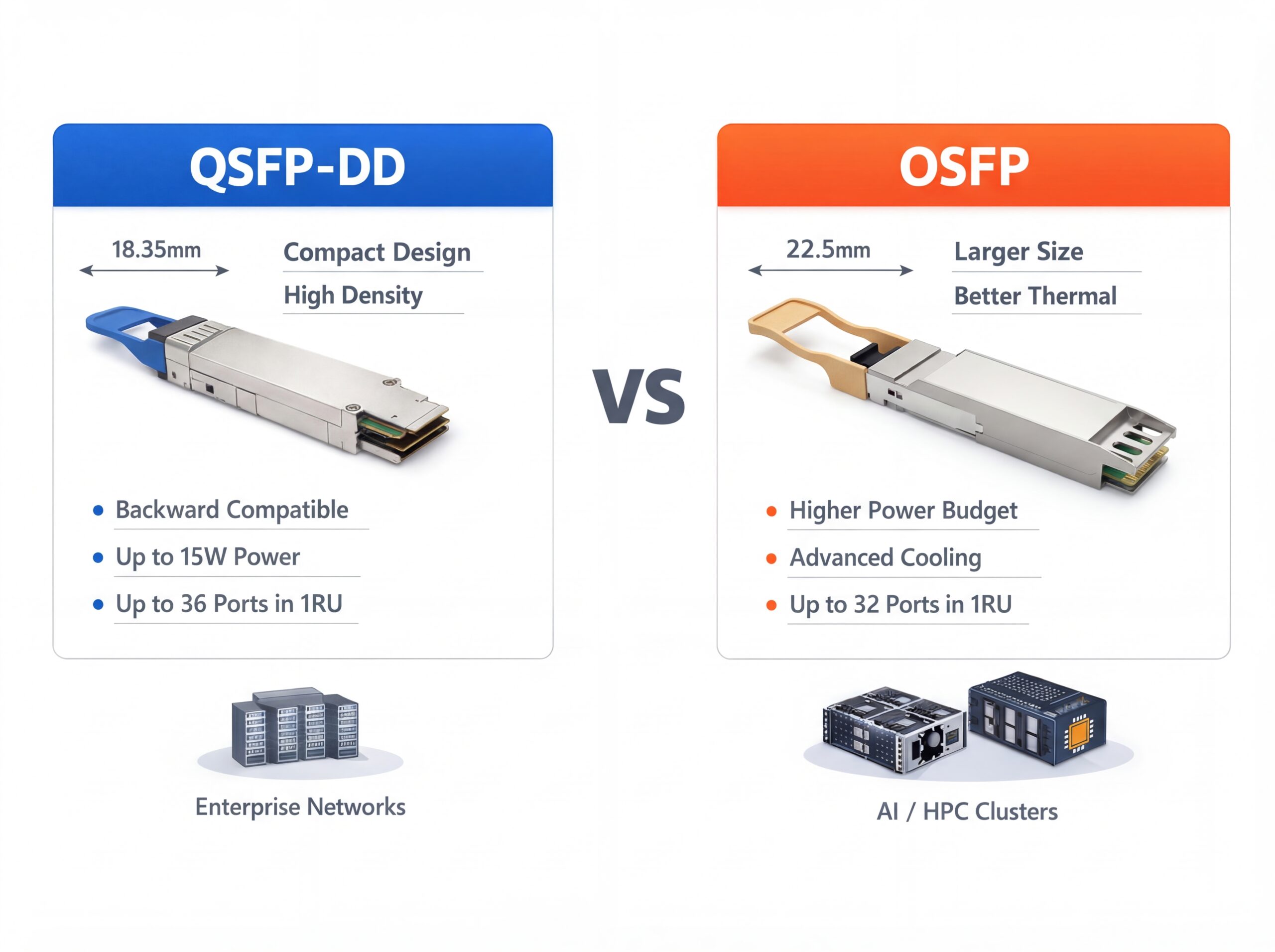
Port Density Implications: A standard 1RU switch faceplate accommodates approximately 36 QSFP-DD ports or 32 OSFP ports. This translates to 14.4 Tbps vs 12.8 Tbps of total switching capacity per rack unit. For massive scale-out fabrics where every rack unit matters, this 12% density advantage can compound across thousands of switches.
However, practical port density depends on thermal management as much as physical fit. A switch fully populated with high-power OSFP modules may require reduced port counts or additional cooling compared to a QSFP-DD equivalent.
Power Consumption and Thermal Considerations
Power and thermal characteristics increasingly dominate form factor selection decisions as optical module power consumption rises.
Standard Power Comparison:
•QSFP-DD: Up to 12W standard
•OSFP: Up to 15W standard
Extended Power Capability:
•QSFP-DD: Up to 15W (with extensions)
•OSFP: Up to 20W+
Real-World Thermal Impact: At maximum density, a 36-port QSFP-DD switch draws up to 432W in optical modules alone. An equivalent 32-port OSFP switch draws up to 480W—an 11% increase in thermal load. This affects:
Cooling system capacity requirements
Rack power distribution planning
Data center PUE calculations
Long-term operational costs
When Marcus’s team at a mid-sized cloud provider deployed their first 400G spine layer, they discovered their cooling infrastructure, designed for 100G optics, couldn’t handle the thermal load of fully populated 400g optical module switches. They had to either upgrade their cooling or reduce port density—either way, the true cost of 400G exceeded the switch and module prices.
Adapter Considerations: OSFP-to-QSFP28 adapters exist but add cost, power consumption, and potential failure points. They also consume additional space behind the switch faceplate—often problematic in dense deployments.
400G Performance Capabilities
Both form factors support identical 400G electrical signaling—eight lanes of 50 Gbps PAM4. Performance differences emerge in specific deployment scenarios:
Short-Reach Applications (SR8): Both form factors perform equivalently for data center interconnects up to 100 meters.
Long-Reach Applications (LR8, ER8): OSFP’s thermal advantages may provide more consistent performance in thermally challenging environments or with marginal cooling.
Coherent Optics (ZR/ZR+): OSFP’s higher power capability accommodates coherent 400G modules that may exceed QSFP-DD’s thermal envelope, though both form factors support these modules in well-cooled environments.
800G Evolution Path and Future-Proofing
The 800G transition timeline significantly impacts form factor decisions for infrastructure with 5+ year lifecycles.
QSFP-DD 800G Path: QSFP-DD800 extends the form factor to support 800G through 100 Gbps PAM4 signaling (8 lanes × 100 Gbps). This maintains backward compatibility with 400G and 100G modules in the same ports—an attractive gradual upgrade path.
OSFP 800G Path: OSFP-XD (eXtended Density) doubles lane count to 16 for 800G operation. This provides a clean 800G upgrade path but requires new switches and modules—the same infrastructure investment any form factor requires for 800G.
Strategic Consideration: If your infrastructure refresh cycle aligns with 800G availability, OSFP’s 800G advantages diminish. If you need 400G now and 800G in 3-4 years without switch replacement, QSFP-DD800’s backward compatibility may prove valuable.
Equipment Vendor Support and Optical Module Compatibility
Switch vendor support patterns influence practical deployment options. Understanding optical module compatibility across vendors helps clarify your equipment choices:
Cisco: Offers both QSFP-DD and OSFP platforms, with QSFP-DD dominating their enterprise portfolio and OSFP appearing in hyperscale-focused lines.
Arista: Strong supporter of OSFP for high-density platforms, though QSFP-DD options exist for mid-range deployments.
Juniper: Primarily QSFP-DD focused across their routing and switching portfolio.
White-Box Vendors: Split between the two, often offering platform choices supporting either form factor.
The practical reality: your preferred switch vendor may make the QSFP-DD vs OSFP decision for you based on platform availability.
Choosing the Right Form Factor: A Decision Framework
When to Choose QSFP-DD
Scenario 1: Gradual Migration from 100G Infrastructure
When you’ve invested heavily in QSFP28-based switches and need to add 400G capacity selectively, QSFP-DD enables a measured upgrade approach. Deploy QSFP-DD switches in locations requiring 400G, continue using QSFP28 where 100G suffices, and upgrade individual ports to 400G as bandwidth demands grow.
Scenario 2: Enterprise Data Center Environments
Enterprise environments typically value compatibility and gradual upgrade paths over maximum density. QSFP-DD’s backward compatibility reduces upgrade risk and enables incremental budget allocation rather than wholesale infrastructure replacement.
Scenario 3: Port Density Critical Applications
When maximum bandwidth per rack unit drives architecture decisions—such as in colocation facilities charging by rack space—QSFP-DD’s superior port density translates directly to cost efficiency.
Scenario 4: Thermal-Constrained Environments
Data centers operating near cooling capacity limits benefit from QSFP-DD’s lower power envelope and smaller thermal footprint. The difference between 12W and 15W per module compounds significantly at scale.
When to Choose OSFP
Scenario 1: Hyperscale and AI/ML Cluster Networks
When building new high-performance computing fabrics where 100G backward compatibility provides no value, OSFP’s thermal advantages and 800G roadmap align better with long-term requirements. Google’s infrastructure teams, for example, standardized on OSFP for their AI training clusters.
Scenario 2: High-Power Optical Requirements
Applications requiring 400G ZR coherent optics for data center interconnects over 80+ km often benefit from OSFP’s thermal headroom. These modules approach or exceed 15W—near QSFP-DD’s extended limits but comfortably within OSFP’s envelope.
Scenario 3: Greenfield Data Center Construction
New facilities without legacy optical infrastructure can standardize on OSFP without migration complexity. This “clean slate” approach often simplifies long-term capacity planning.
Scenario 4: Thermal-Resilient Design Priority
When operating environments include thermal variability—such as edge locations with less sophisticated cooling—OSFP’s thermal margin provides valuable operational insurance.
Key Decision Factors Summary
Factor
Choose QSFP-DD If
Choose OSFP If
Existing Infrastructure
Heavy QSFP28 investment
Minimal legacy optical
Upgrade Strategy
Gradual, phased migration
Greenfield or full replacement
Port Density
Maximum density critical
Density secondary to thermal
Power Budget
Constrained cooling
Ample thermal capacity
800G Timeline
Need backward-compatible path
800G via new infrastructure
High-Power Optics
Standard reach only
Coherent/ZR optics required
Market Trends and Investment Protection
Current Adoption Patterns
Market data from LightCounting and Omdia reveals split adoption patterns reflecting the use case divisions outlined above:
Enterprise and Cloud: Approximately 70% of 400G deployments in enterprise and traditional cloud environments use QSFP-DD. The backward compatibility story resonates strongly with these customers.
Hyperscale Operators: Major hyperscalers show more balanced adoption, with several—particularly those building AI/ML infrastructure—standardizing on OSFP for new deployments.
Telecom and DCI: Coherent optical requirements in telecom applications increasingly favor OSFP’s thermal capabilities, though QSFP-DD maintains strong presence in metro networks.
Long-Term Form Factor Viability
Industry consensus suggests both form factors will coexist through at least the 800G generation. Neither shows signs of market exit:
QSFP-DD Longevity: The QSFP family’s historical longevity (spanning 1G to 400G and now 800G) suggests continued industry support. The massive installed base creates economic incentives for ongoing module development.
OSFP Momentum: Growing hyperscale adoption and strong 800G roadmap support indicate OSFP will remain relevant, particularly for high-performance computing environments.
Practical Implication: Neither choice represents a “bet on the wrong horse” scenario. Both form factors have sufficient market presence and industry backing to ensure multi-year module availability and support.
Investment Protection Strategies
Regardless of form factor choice, several strategies protect infrastructure investments:
Platform Flexibility: Some switch vendors offer platforms supporting both form factors through different line cards or faceplate options. This flexibility hedges against future uncertainty.
Vendor Diversification: Maintaining relationships with multiple optical module suppliers ensures competitive pricing and supply security regardless of form factor standardization.
Documentation and Standards Compliance: Ensuring deployed modules follow MSA specifications rather than proprietary implementations preserves future sourcing flexibility.
When the engineering team at a European telecom operator selected their 400G form factor in 2023, they documented their decision criteria, vendor evaluation process, and migration assumptions. This documentation proved invaluable when their 2025 infrastructure review validated their choice—or identified when assumptions needed revisiting.
Conclusion
The QSFP-DD vs OSFP decision ultimately reflects broader infrastructure strategy rather than purely technical specifications. Your optimal choice depends on:
•Thermal and power constraintsin your operating environment
•Port density requirementsand rack space economics
•800G timelineand upgrade path preferences
•Vendor ecosystemalignment with your preferred switch platforms
Neither form factor represents a universally superior choice. QSFP-DD excels in backward compatibility and port density—ideal for gradual migrations and enterprise environments. OSFP delivers thermal headroom and 800G readiness—advantageous for hyperscale deployments and high-power optical applications.
The key is aligning your form factor choice with specific operational requirements rather than pursuing theoretical optimal specifications. Both technologies will support reliable 400G networking; the question is which better fits your infrastructure context.
For organizations evaluating their 400G optical strategy, Shenzhen Ascent Optics provides both QSFP-DD transceivers and OSFP transceivers compatible with major networking equipment. Our engineering team can help assess your specific infrastructure requirements and recommend the optimal form factor approach for your network architecture.
Explore our 400G optical transceiver solutions or contact our technical team to discuss your high-speed networking requirements.