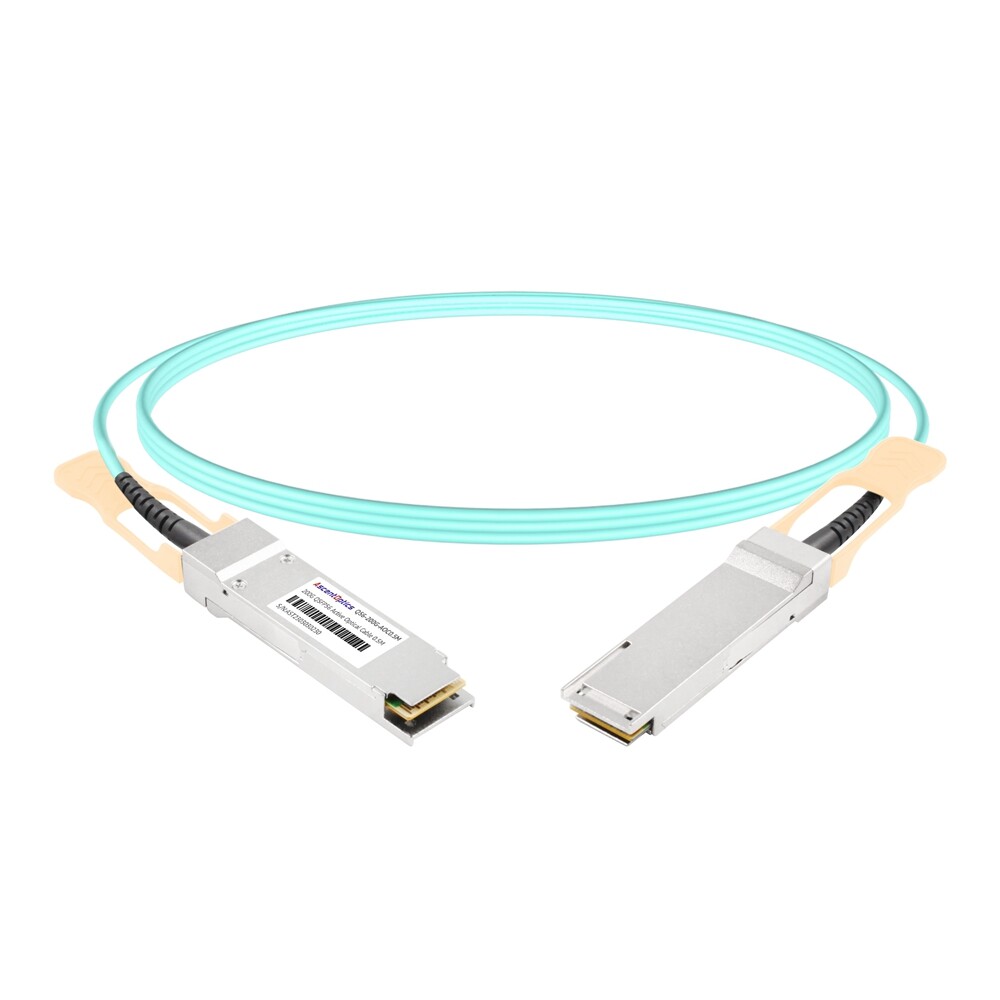
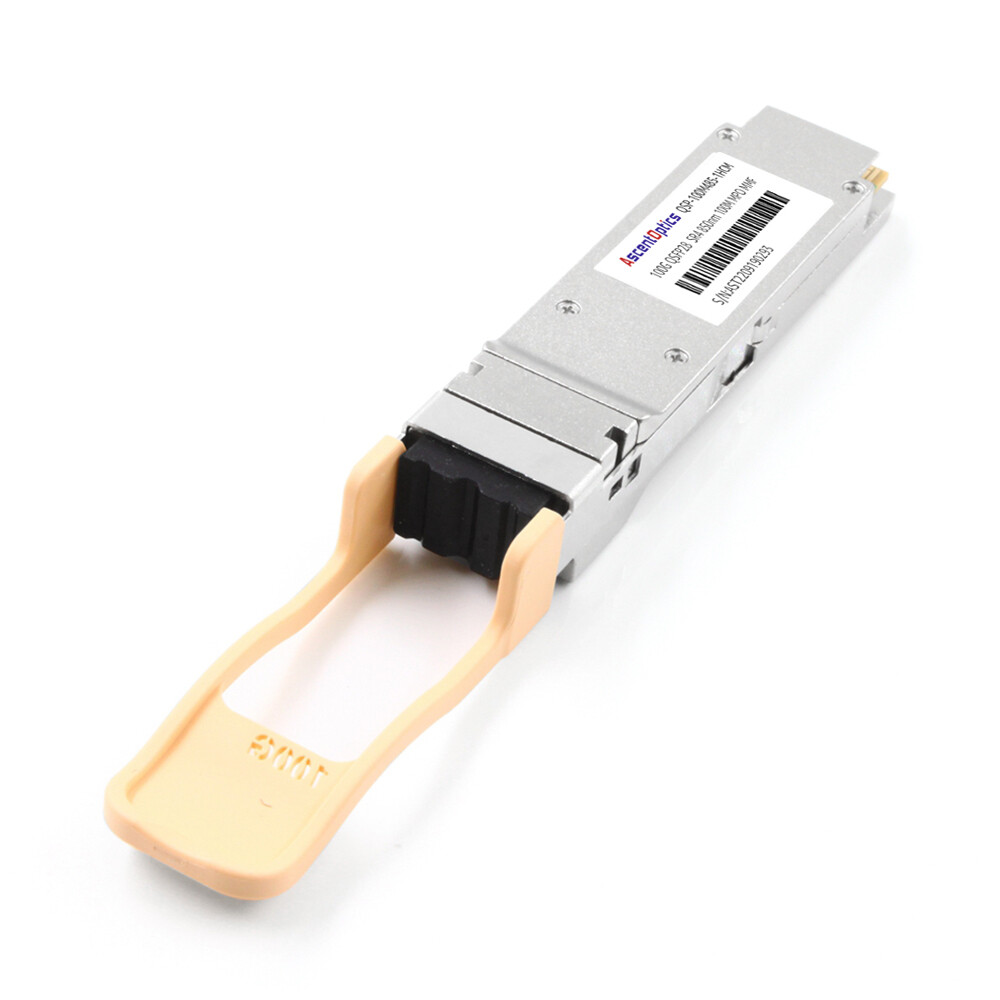
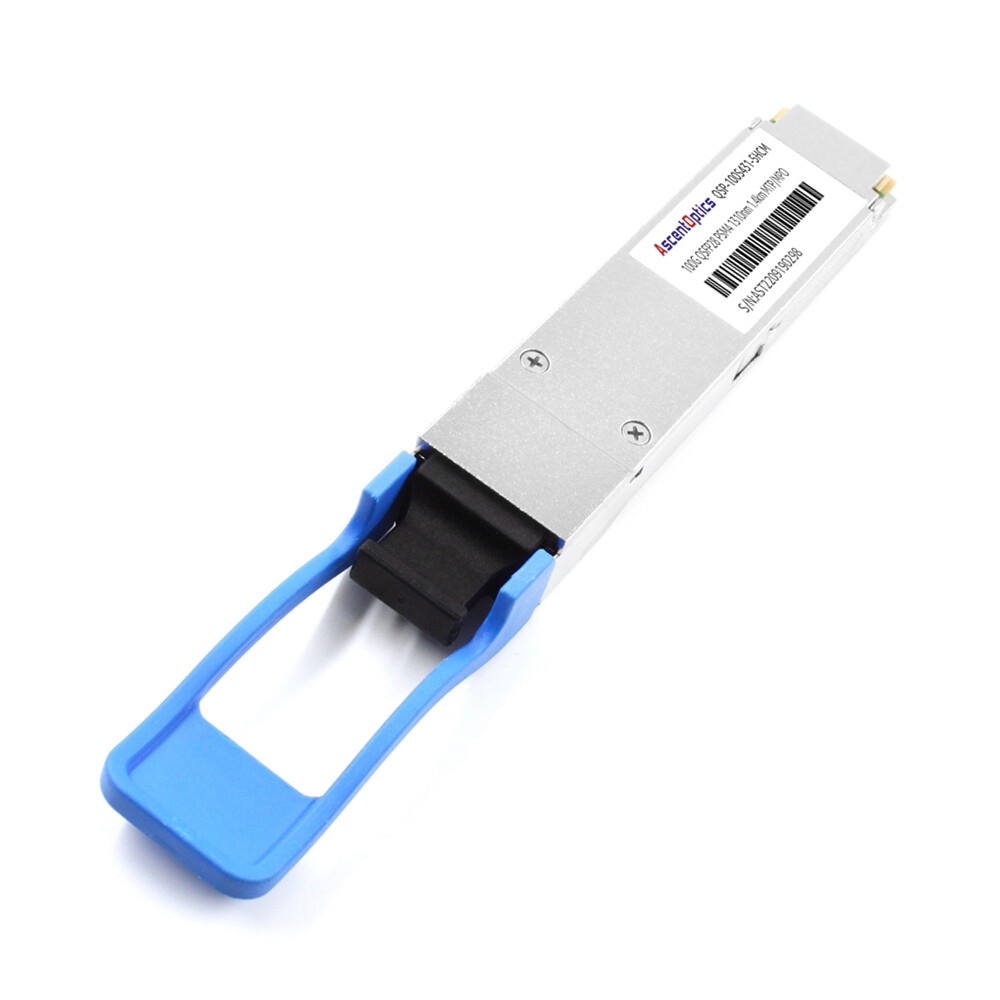
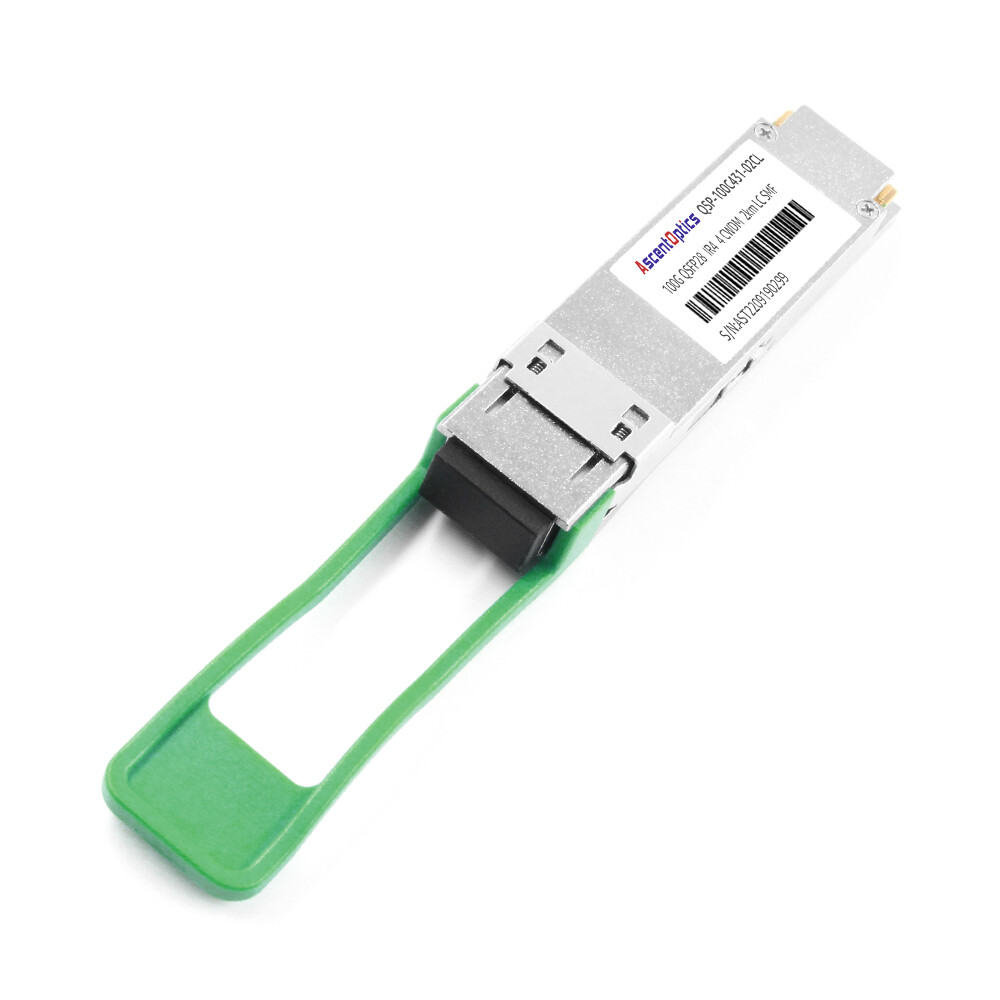
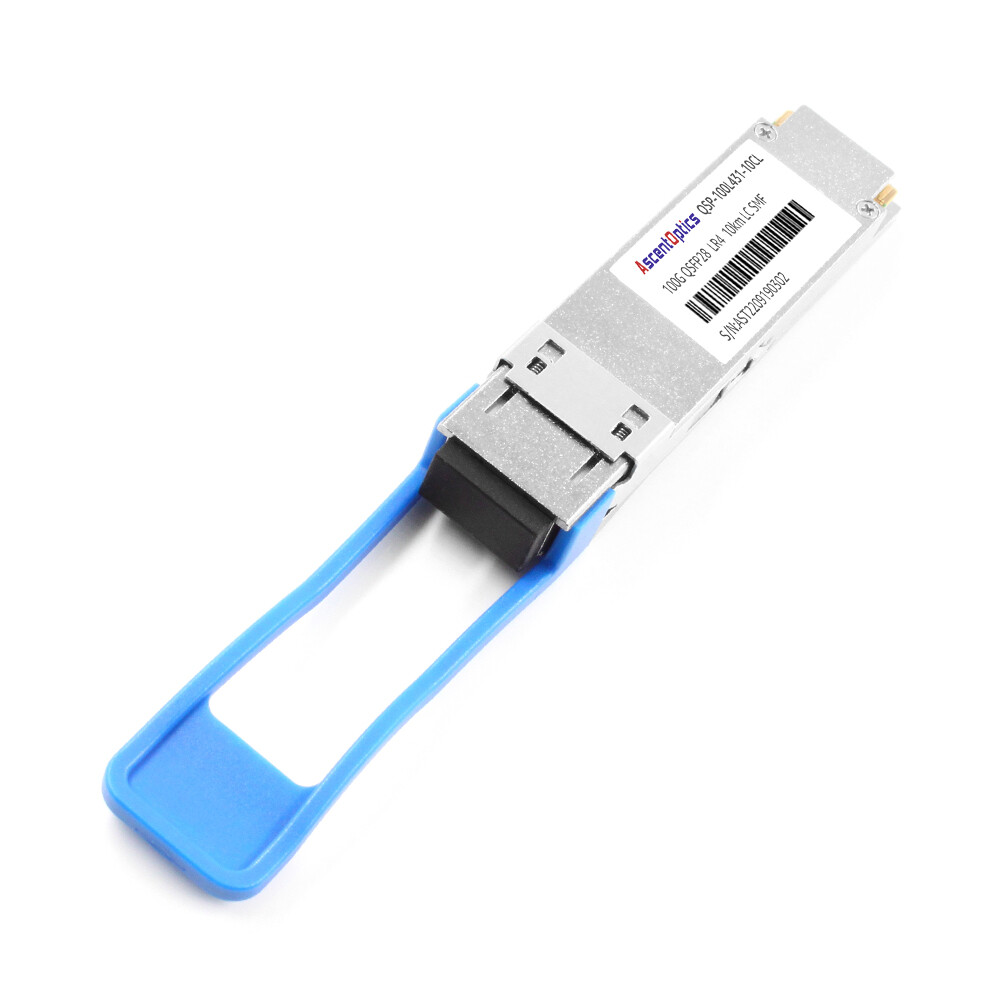
QSFP56 optical modules have become a popular choice for AI clusters because they provide high-bandwidth, low-latency 200G connectivity for GPU servers, storage systems, and high-performance switches. Their PAM4 signaling, DSP technology, and FEC capabilities help maintain reliable data transmission in demanding AI and HPC environments.
What Is QSFP56 and Why Does AI Need 200G?
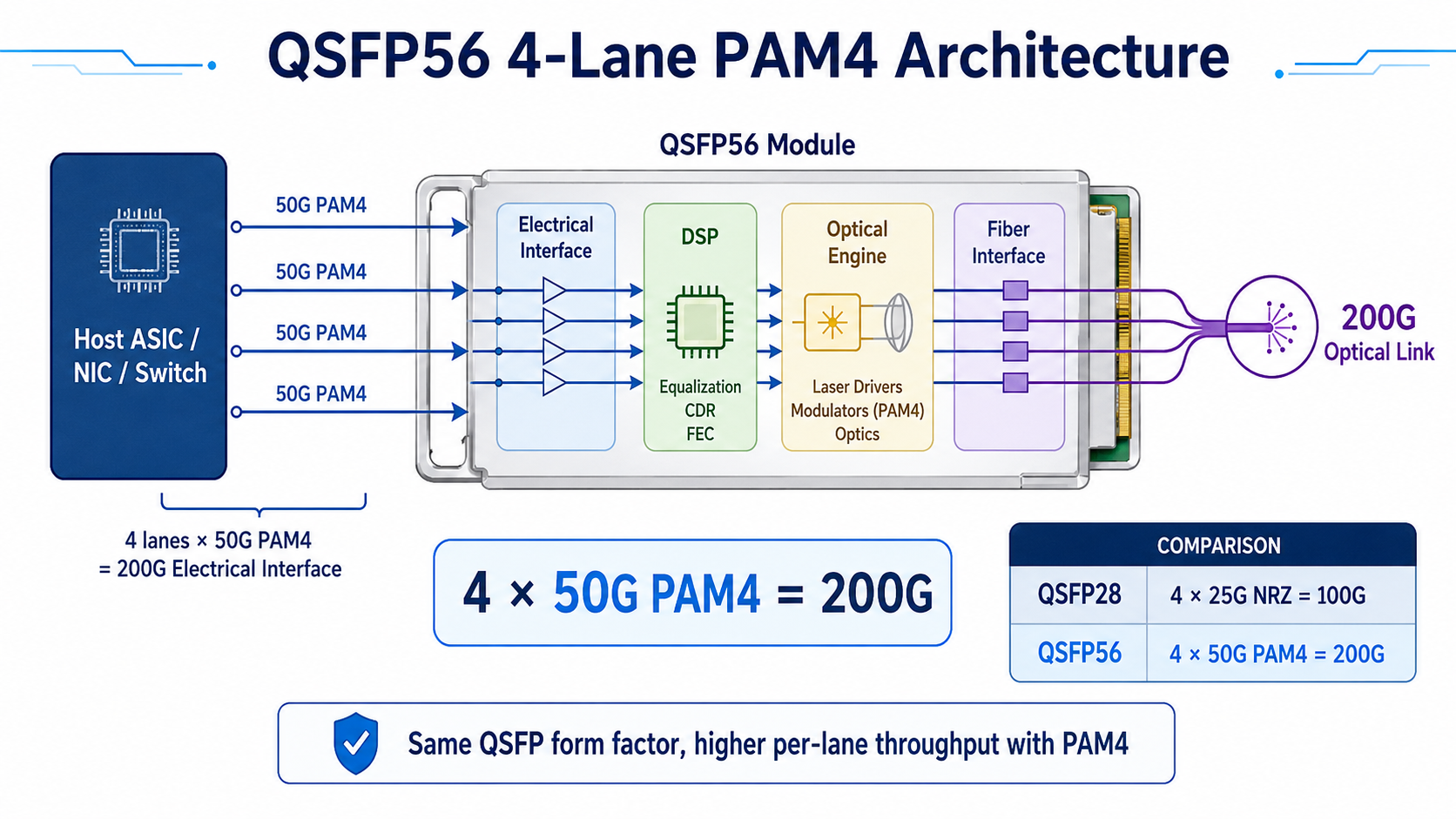
QSFP56 stands for Quad Small Form-factor Pluggable 56. It is a hot-pluggable optical transceiver form factor that delivers 200 Gbps over four electrical lanes running at 50 Gbps each using PAM4 modulation. The module keeps the same physical size as QSFP28, but the electrical interface is different. You cannot run a QSFP56 module at full speed in a QSFP28-only port, even though the connector may fit.
For AI and ML clusters, 200G matters because modern GPU servers generate enormous east-west traffic. According to industry analysis, 70–90% of traffic in AI training clusters moves laterally between GPUs, not north-south to the internet. An AI server equipped with multiple high-performance GPUs can generate several terabits per second of east-west traffic during distributed training. When that traffic hits 100G links, contention and latency accumulate fast.
QSFP56 solves this by doubling bandwidth per port without forcing a full jump to 400G. It uses the same QSFP-style cage many data centers already have, which simplifies upgrades. Network engineers can reuse switch hardware that supports 200G PAM4 SerDes while gaining the headroom AI training workloads demand.
Choosing the right form factor is one of the first decisions in an AI cluster build. The three most common options are QSFP28, QSFP56, and QSFP-DD.
| Feature |
QSFP28 |
QSFP56 |
QSFP-DD |
| Aggregate speed |
100 Gbps |
200 Gbps |
400 Gbps / 800 Gbps |
| Lanes |
4 |
4 |
8 |
| Lane rate |
25 Gbps NRZ |
50 Gbps PAM4 |
50 / 100 Gbps PAM4 |
| Typical power |
3.5–5 W |
4–6.5 W |
12–15 W |
| Best fit |
Mature 100G networks |
200G AI/HPC upgrades |
High-density 400G/800G fabrics |
| Backward compatibility |
Baseline |
QSFP-DD ports accept QSFP56 |
Forward-compatible cage |
QSFP28 remains a cost-effective choice for stable 100G leaf-spine links. However, it is increasingly a baseline rather than a growth path for AI clusters.
QSFP56 is the practical upgrade step. It doubles bandwidth in the same form factor and costs significantly less per port than 400G. For mid-scale AI clusters, it hits a sweet spot between performance and budget.
QSFP-DD is the right choice when you need maximum density and are designing for 400G or 800G end-to-end. Notably, many QSFP-DD switch ports can accept QSFP56 modules, giving you a forward-compatible migration path.
QSFP56 Module Types for AI Clusters
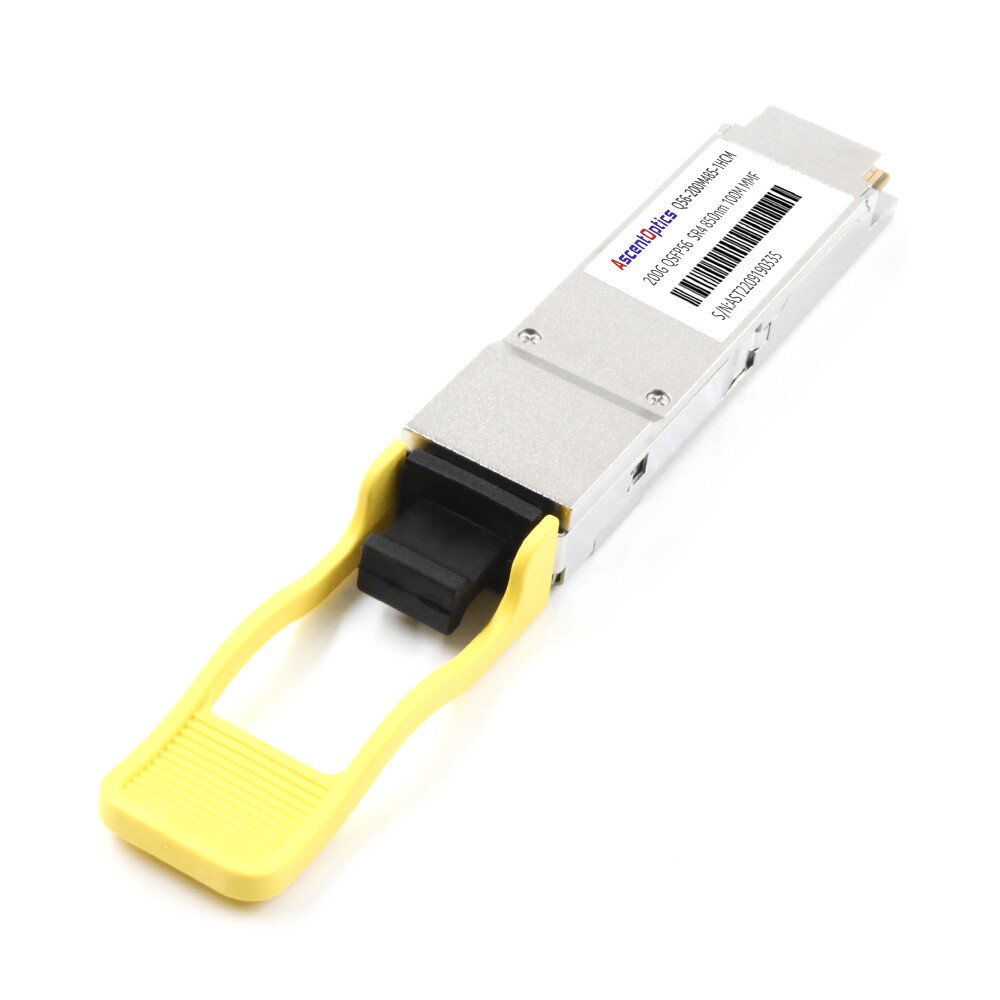
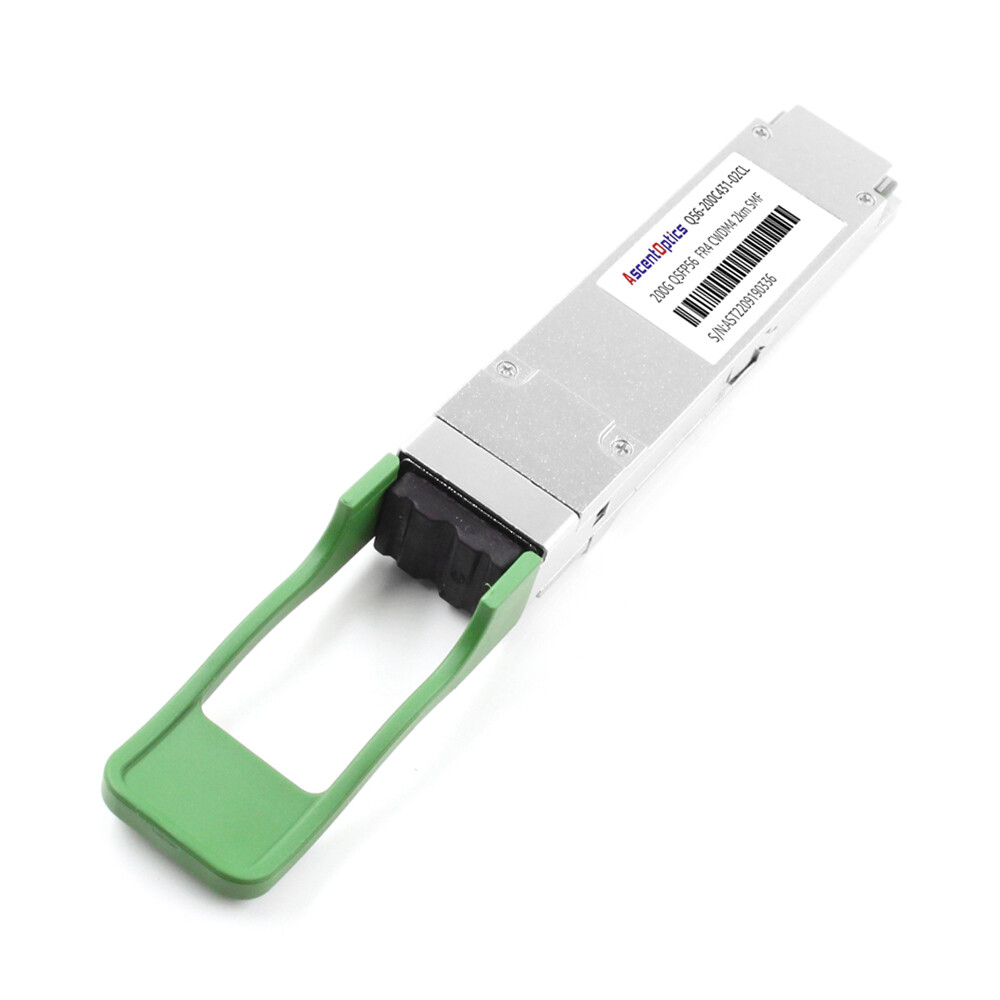
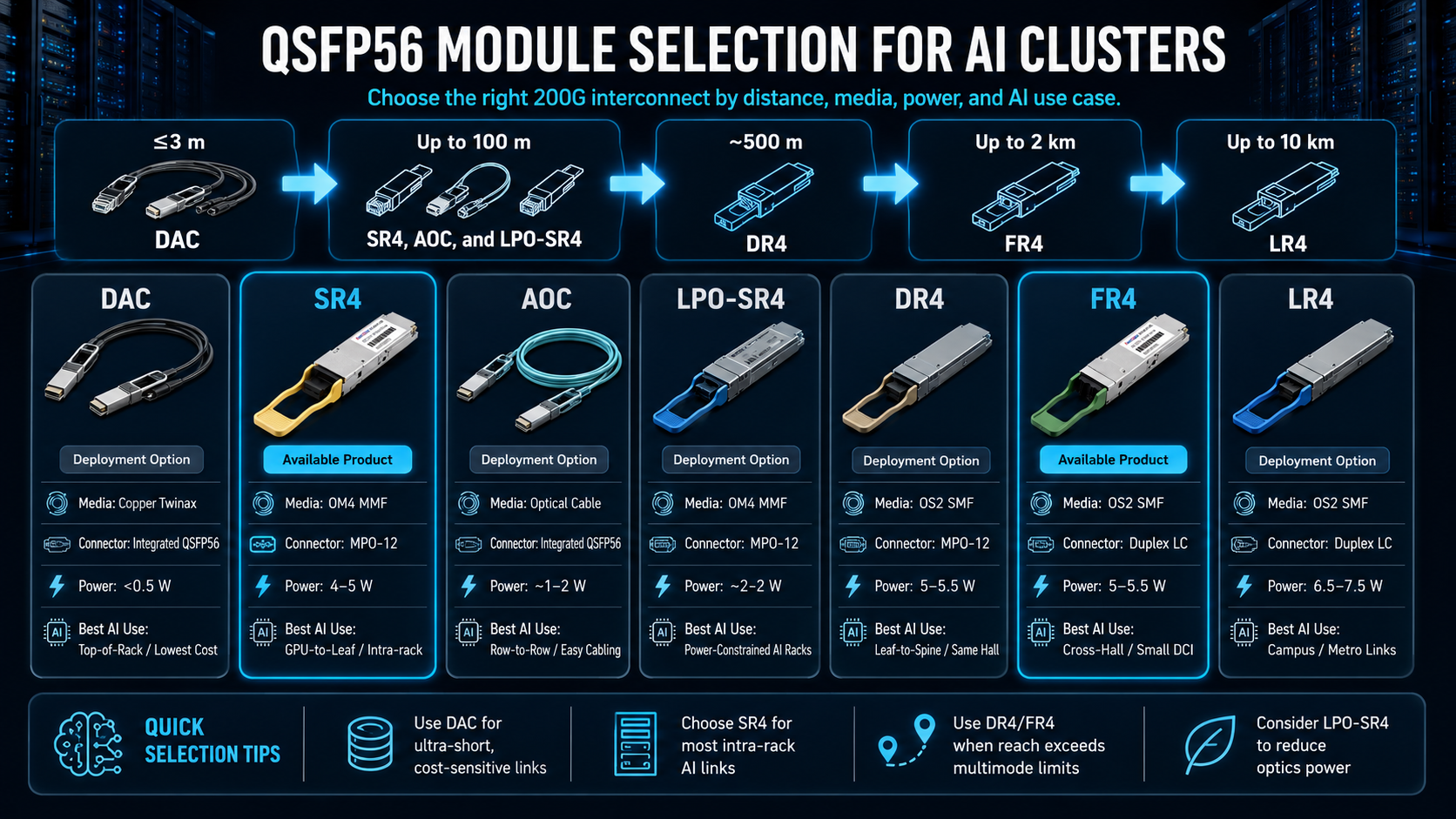
Selecting the right 200G QSFP56 module depends on distance, fiber type, and power budget. The most common variants for AI clusters are:
| Module |
Fiber |
Reach |
Connector |
Typical power |
Best AI use case |
| SR4 |
OM4 multimode |
Up to 100 m |
MPO-12 |
4–5 W |
Intra-rack GPU-to-leaf |
| DR4 |
Single-mode |
~500 m |
MPO-12 |
5–5.5 W |
Leaf-to-spine same hall |
| FR4 |
Single-mode |
Up to 2 km |
Duplex LC |
5–5.5 W |
Cross-hall or small DCI |
| LR4 |
Single-mode |
Up to 10 km |
Duplex LC |
6.5–7.5 W |
Campus or metro links |
| DAC |
Copper twinax |
≤3 m |
QSFP56 integrated |
<0.5 W |
Top-of-rack, cost-sensitive |
| AOC |
Optical cable |
Up to 100 m |
QSFP56 integrated |
~1–2 W |
Structured cabling between rows |
| LPO-SR4 |
OM4 multimode |
Up to 100 m |
MPO-12 |
~2.5 W |
Power-constrained AI racks |
For most AI clusters, SR4 is the workhorse. It covers intra-rack and adjacent-rack links at low cost. For many enterprise AI clusters, SR4 is the preferred choice for GPU-to-leaf connectivity because it offers the lowest cost per link while meeting the reach requirements of most data center deployments.
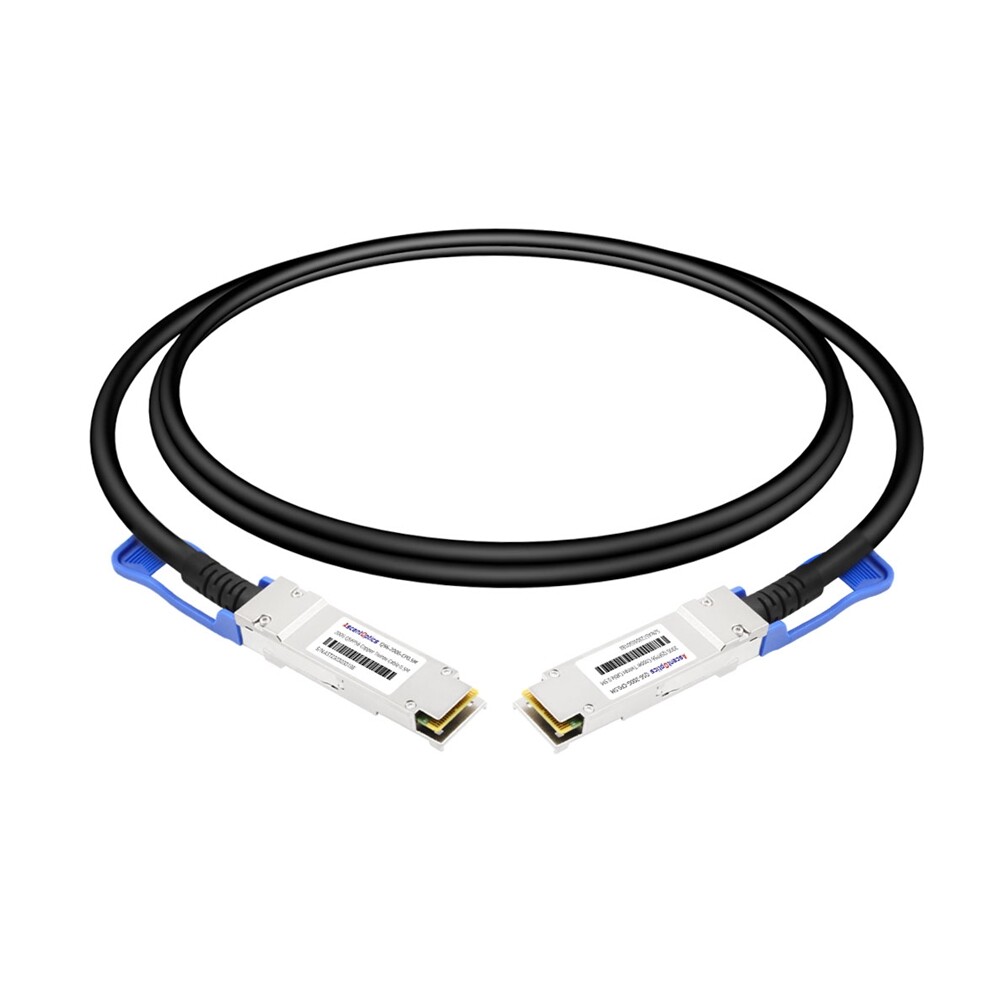
DR4 and FR4 become relevant when leaf and spine switches are in different halls or buildings. DAC and AOC are useful when you want to avoid separate transceivers and fiber jumpers entirely. A 200G QSFP56 module selection mistake we see often is choosing FR4 for a 30-meter link “just to be safe.” The extra cost and power add up across hundreds of ports.
LPO-SR4 is worth watching. Linear Pluggable Optics remove the DSP from the module, cutting power by roughly 30–50% compared with standard SR4. In a 1,000-rack AI deployment, that difference can save over 100 kW of optics heat alone.
Compatibility and Deployment Checklist for AI Clusters
Compatibility is where many AI cluster builds stumble. The module may seat correctly, and the LEDs may light, yet the link will not train because of a firmware, FEC, or ASIC mismatch.
Before you order hundreds of QSFP56 AI cluster optics, verify each of the following:
- 1. ASIC support for 50G PAM4 SerDes. The switch or NIC must explicitly support 200G PAM4. A QSFP56 module will not negotiate to 100G automatically in a QSFP28-only port.
- 2. Firmware and NOS version. Vendors often require a minimum software release for 200G PAM4, CMIS 4.0, and FEC support.
- 3. FEC end-to-end. Single-mode QSFP56 links generally require RS-FEC RS(544,514) on both ends. Mixed FEC settings are a common cause of link flapping.
- 4. CMIS 4.0 / DOM support. Confirm that digital diagnostics, temperature thresholds, and TX/RX power alarms report correctly through your switch OS.
- 5. Breakout configuration. If you plan to split 200G into 2×100G QSFP28, test the breakout cable and switch port configuration before bulk purchase.
- 6. Third-party optic support. Some OEM switches reject non-branded modules unless the vendor ID is coded correctly. Validate a sample in your actual hardware.
- 7. Verify switch airflow and power budget. High-density AI clusters can host dozens of QSFP56 modules per switch, making thermal design just as important as compatibility.
Typical QSFP56 AI Cluster Architecture
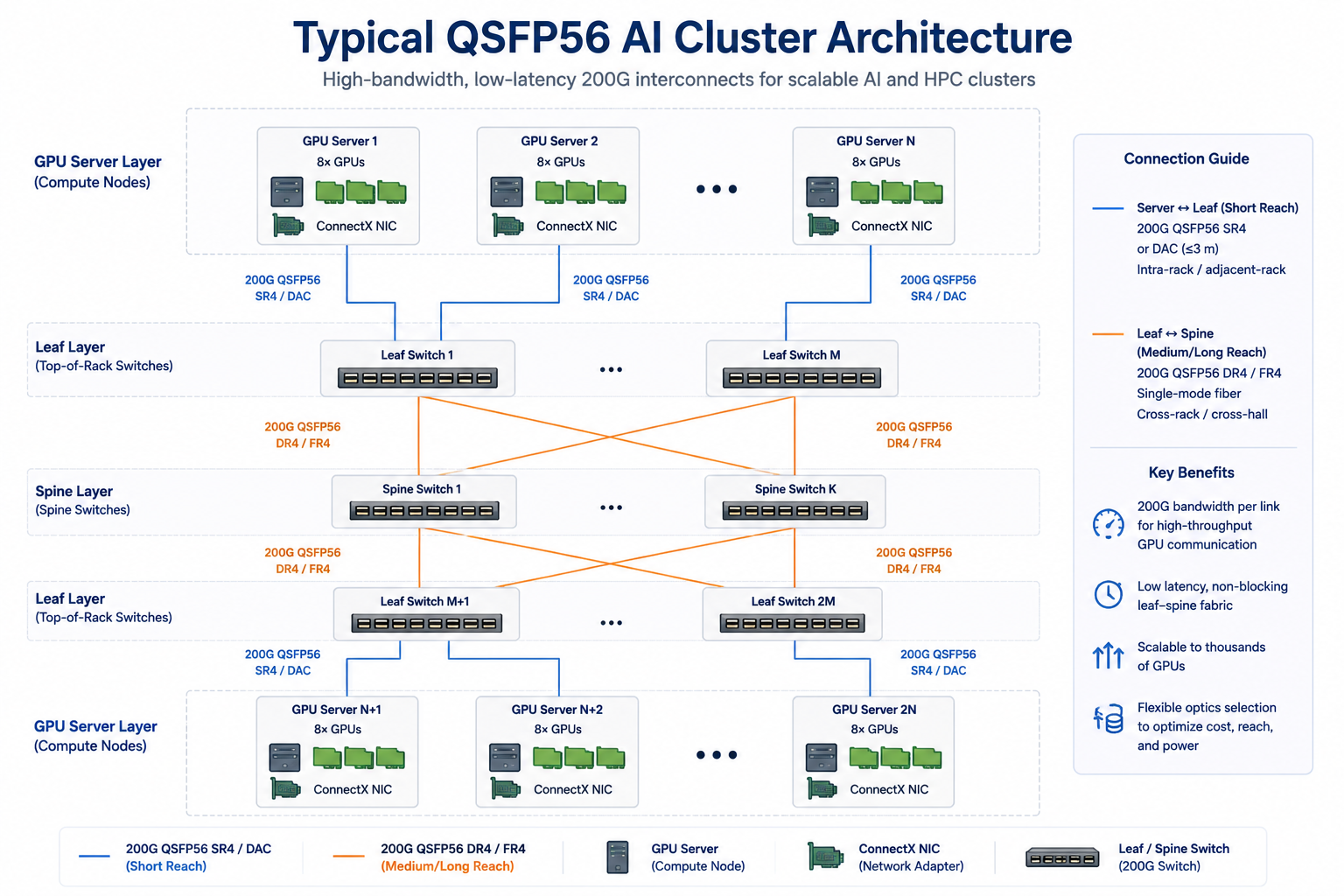
A typical 200G AI cluster follows a leaf-spine architecture designed to provide high bandwidth, predictable latency, and non-blocking communication between GPU servers. Each GPU server connects to a Top-of-Rack (ToR) leaf switch through one or more 200G QSFP56 links, while leaf switches are interconnected with spine switches to create a scalable network fabric.
For short-reach connections within a rack, QSFP56 SR4 modules or DAC cables are commonly used because they offer low cost, low latency, and simple deployment. As the distance increases between racks or equipment rows, QSFP56 DR4 or FR4 modules provide higher reach over single-mode fiber while maintaining the same 200G bandwidth.
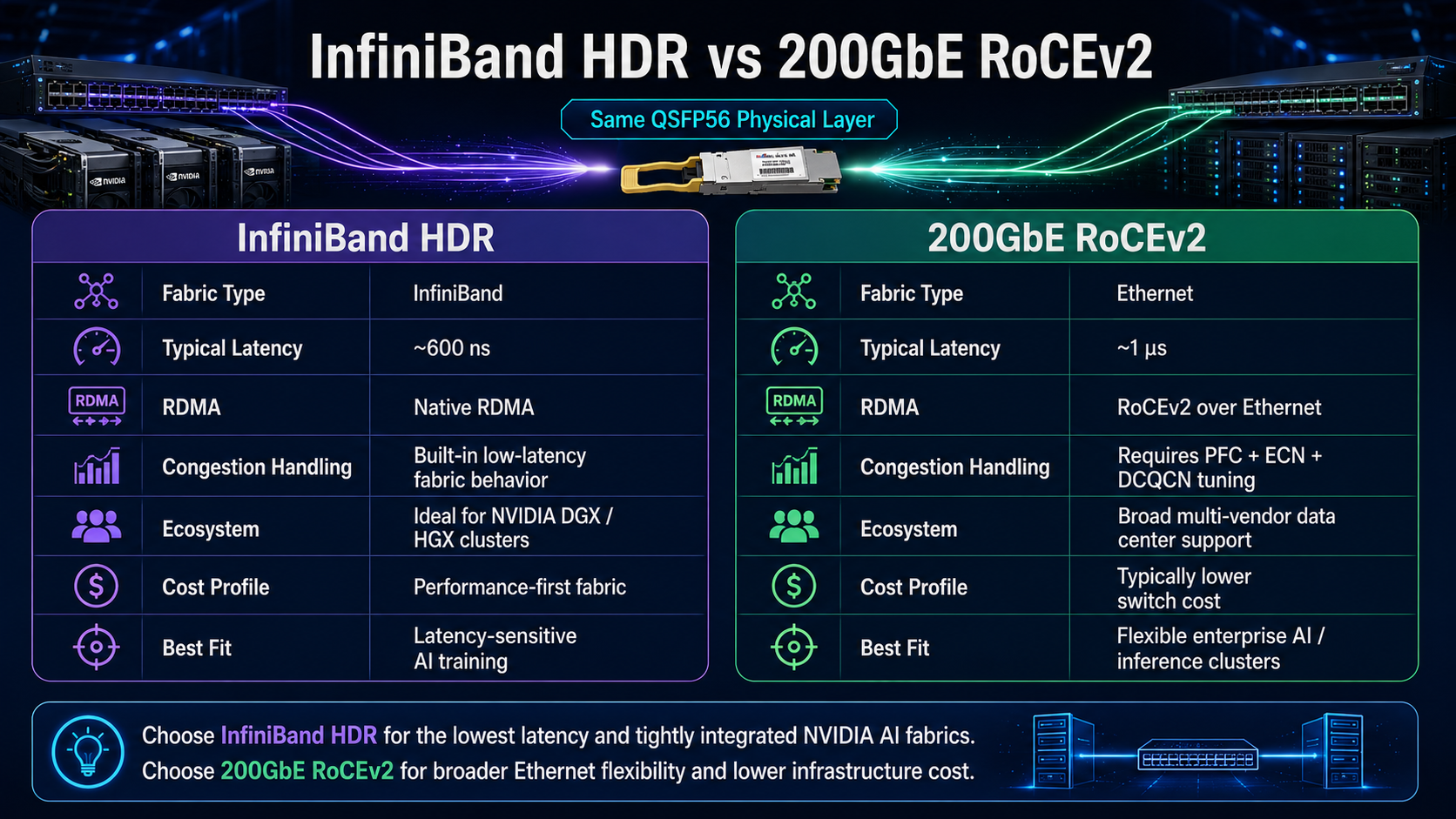
Depending on the cluster design, the network may operate over InfiniBand HDR or 200GbE with RoCEv2. Although the transport protocols differ, both architectures rely on compatible QSFP56 optics, 50G PAM4 signaling, and properly configured FEC to ensure stable, high-performance communication between GPU nodes.
As AI clusters continue to scale from dozens to thousands of GPUs, selecting the appropriate QSFP56 module type for each network segment helps balance performance, power consumption, and deployment cost while simplifying future upgrades.
Thermal, Power, and Sourcing Considerations
Power and heat are not afterthoughts in AI clusters. A dense GPU rack can host 64 or more QSFP56 modules. At 4–6.5 W per module, that is 250–400 W of heat from optics alone, before you count switch ASICs, GPUs, and power supply losses.
Here is how power breaks down by a typical AI cluster mix:
| Module type |
Power per module |
64-module rack total |
| LPO-SR4 |
~2.5 W |
~160 W |
| SR4 |
4–5 W |
256–320 W |
| DR4 / FR4 |
5–5.5 W |
320–352 W |
| LR4 |
6.5–7.5 W |
416–480 W |
Thermal design should assume worst-case loads. If your cluster starts with SR4 but may later use FR4 or LR4 for expansion, size airflow and cooling for the higher end of the range.
Power consumption becomes increasingly important as cluster size grows. Even a 1 W reduction per module can translate into hundreds of watts of savings across a large AI fabric.
When to Choose QSFP56 Over 400G for AI
Not every AI cluster needs 400G on day one. QSFP56 is the right choice when:
- Your GPU NICs and leaf switches are 200G, native.
- Your spine bandwidth does not yet require 400G per port.
- You want to reuse existing QSFP28 cages on switches that support 200G PAM4.
- Your budget is 2.5–3× lower per port than a 400G build.
- You want a forward-compatible path because QSFP-DD ports accept QSFP56 modules.
Choose 400G QSFP-DD or OSFP when you are designing a new hyperscale fabric from the ground up, when GPU density demands spine bandwidth beyond 200G, or when you want to minimize future forklift upgrades.
For most mid-scale AI clusters, QSFP56 is the practical 200G workhorse. It delivers enough bandwidth for current GPU generations while leaving the door open to higher-density optics later.
Conclusion
QSFP56 offers an ideal balance between performance, cost, and scalability for modern AI clusters. By providing 200G bandwidth in the familiar QSFP form factor, it enables organizations to upgrade GPU interconnects without immediately moving to 400G infrastructure. Whether deploying InfiniBand HDR or Ethernet RoCEv2, selecting the right module type, validating compatibility, and planning for power and thermal requirements are essential to building a reliable AI network. As AI workloads continue to grow, QSFP56 remains a practical solution for many enterprise and mid-scale HPC environments.
Frequently Asked Questions
What Is QSFP56? How Does It Function in AI Clusters?
The QSFP56, or Quad Small Form-factor Pluggable 56, is the standard format of a 200 G optical module, which uses 4 channels of the 50G PAM4 modulation to provide data transmission at 200 Gbps. In AI clusters, the QSFP56 becomes a central element of the physical layer of high-speed GPU interconnect and operates with the two most popular protocols, namely, InfiniBand HDR and 200GbE. This module helps to overcome the problem of bandwidth of 100G QSFP28 without spending much on a 400G solution.
Why are 200G connections needed for AI clusters?
AI training involves huge amounts of east-west traffic because the gradient synchronization operation is an all-to-all communication process that happens among GPUs. An individual server with 8 GPUs can send as much as 3.2 Tbps of data traffic into the network itself. As 100G ports cannot meet the requirements of large-scale distributed training, QSFP56 can double the throughput of single ports to 200G.
How are QSFP56 modules linked to GPU nodes in real-life scenarios?
Consider the case of NVIDIA DGX Systems, for instance, where every module comes with two QSFP56 ports that are driven using NVIDIA ConnectX-7 SmartNIC, wherein one QSFP56 port can provide full 200G bandwidth. Several DGX Systems modules can be used in conjunction with a 200G switch using 200G QSFP56 DAC (Direct Attach Copper) cables to establish a highly efficient AI Fabric. The system comprises a very straightforward structure and easy deployment without any network bottleneck among nodes.
InfiniBand or Ethernet for QSFP56 – which one to select for AI cluster implementation?
Both technologies possess some advantages. InfiniBand HDR technology has a latency of about sub-microsecond latency, supports the native RDMA protocol, and has automatic congestion management; all of these characteristics make it suitable for the deployment of NVIDIA clusters with maximum performance required. On the contrary, 200GbE RoCEv2 has a latency of low-microsecond latency and is more cost-effective; this technology works with major switch vendors, such as Cisco and Arista, and thus can be deployed in datacenters with an established Ethernet operations team.
Post Views: 1,466