100G QSFP28 Transceivers: Types, Applications and Selection Guide
June 18, 2025
As modern networks continue to handle rapidly increasing volumes of data, high-speed optical connectivity has become essential for cloud computing, AI infrastructure, enterprise networking, and telecommunications systems. Among the most widely adopted solutions for 100G networking is the 100G QSFP28 transceiver.
Combining high bandwidth, compact size, low power consumption, and broad interoperability, QSFP28 modules have become a standard choice for modern data center and carrier network deployments. Whether used for short-range server connectivity or long-distance data center interconnect (DCI), 100G QSFP28 optics provide the flexibility and scalability required for next-generation infrastructure.
This article explains what 100G QSFP28 transceivers are, explores the major module types, compares their specifications, and provides practical guidance for selecting the right transceiver for different deployment scenarios.
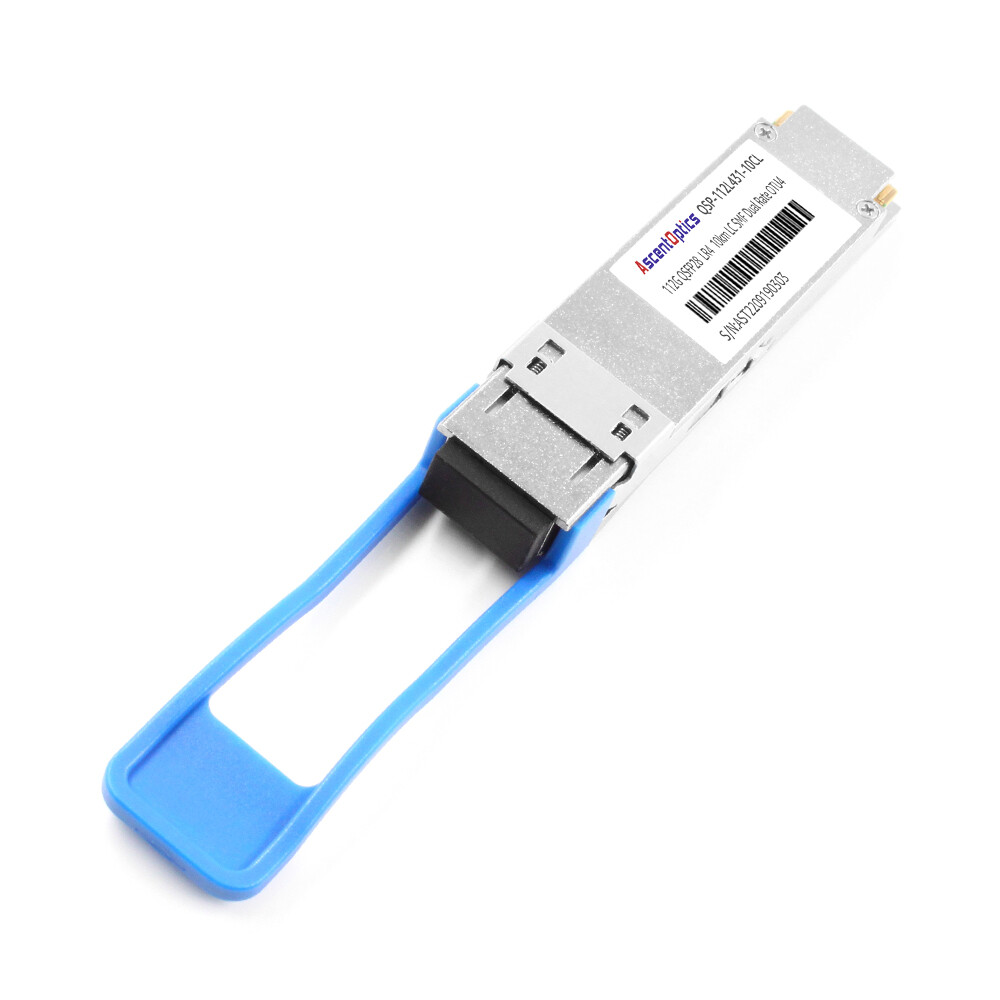
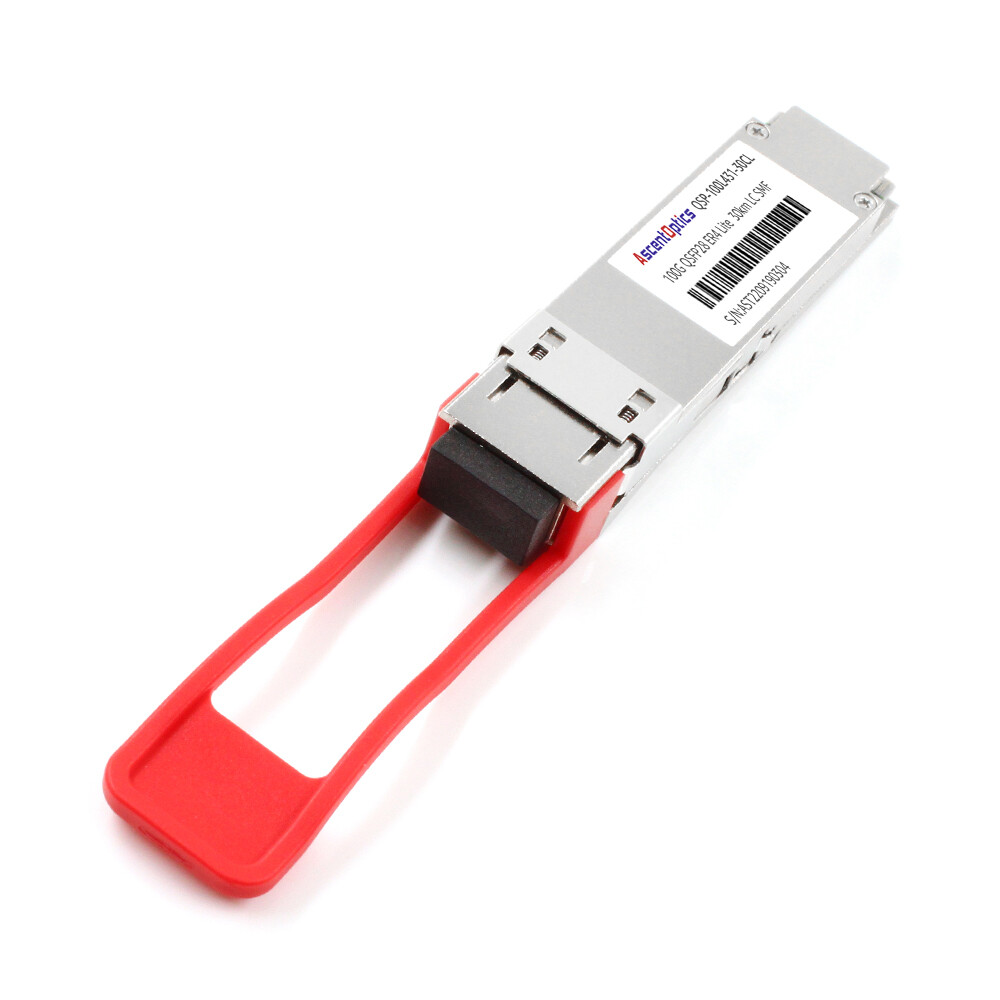
A 100G QSFP28 transceiver is a hot-pluggable optical module designed to transmit and receive data at speeds of 100 Gigabits per second (Gbps). The term QSFP28 stands for Quad Small Form-factor Pluggable 28, which refers to the compact form factor that integrates four high-speed electrical lanes.
Compared with earlier 40G QSFP+ modules, QSFP28 delivers significantly higher bandwidth while maintaining a similar physical form factor. This allows network operators to upgrade existing infrastructure to 100G without dramatically increasing rack space or power consumption.
100G QSFP28 transceivers are widely deployed in:
•Cloud and hyperscale data centers
•Enterprise core networks
•AI and HPC clusters
•Telecommunications infrastructure
•Data center interconnect (DCI)
•Storage area networks
Depending on the design and optical technology used, different QSFP28 modules support various transmission distances and fiber types, ranging from short-reach connections inside data centers to long-distance telecommunications links.
Key Features of 100G QSFP28 Transceivers
High Port Density
The compact QSFP28 form factor allows network devices to support more ports in the same physical space. This is particularly valuable in modern data centers where space and power efficiency are critical.
High Data Rate
With support for 100 Gigabit Ethernet, QSFP28 modules enable extremely fast data transmission. This helps reduce latency and improves overall network performance.
Low Power Consumption
Compared with older CFP form factors, QSFP28 modules typically consume significantly less power while delivering higher port density.
Hot-Pluggable Design
QSFP28 modules can be installed or replaced without shutting down network equipment, simplifying maintenance and reducing downtime.
MSA Compatibility
Most QSFP28 modules comply with Multi-Source Agreement (MSA) standards, ensuring interoperability with networking equipment from different manufacturers.
Optimized for High-Performance Networks
QSFP28 transceivers provide the bandwidth, reliability, and efficiency required for high-performance computing environments and large-scale cloud infrastructure.
Support for Multiple Protocols
QSFP28 modules can support:
•100 Gigabit Ethernet
•InfiniBand
•Fibre Channel
•High-performance computing protocols
What are the types of 100G QSFP28 transceivers?
In this section, we will cover 100G QSFP28 transceivers and their types available for market, along with their details to help you understand their encompassing features and advantages.
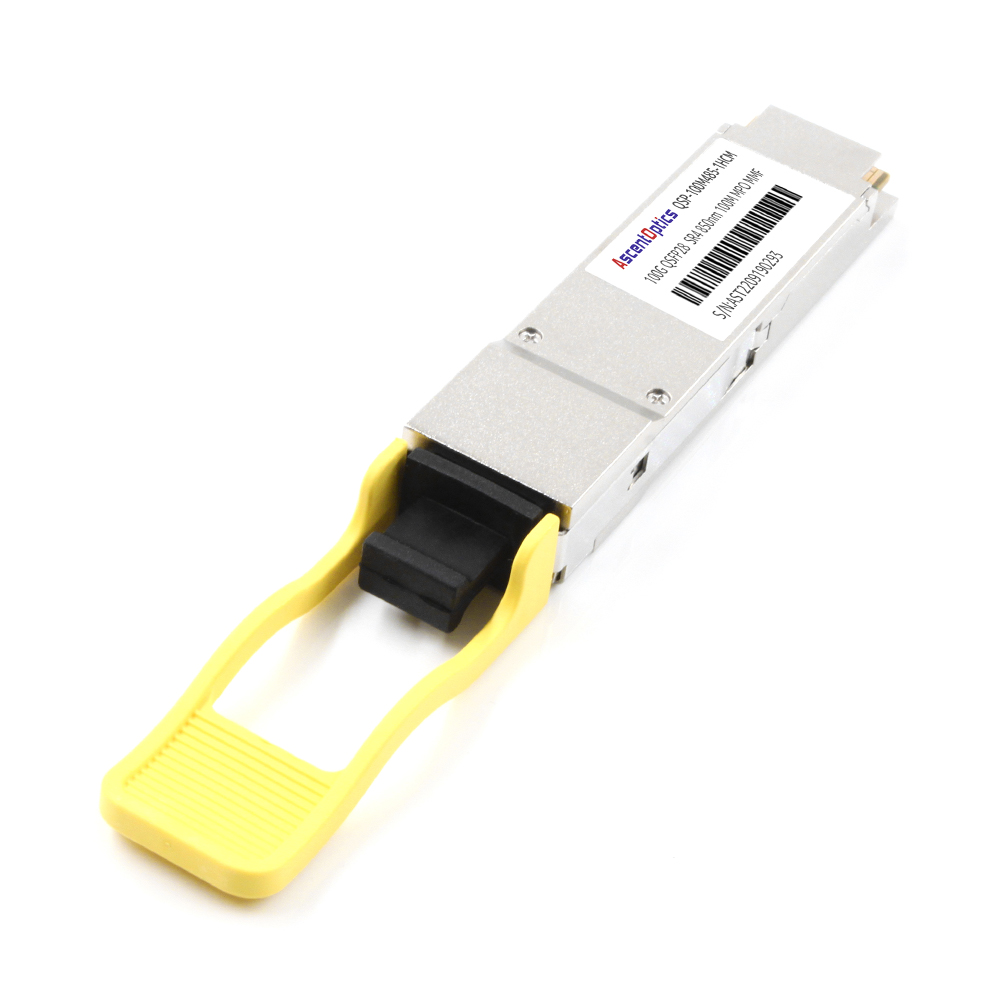
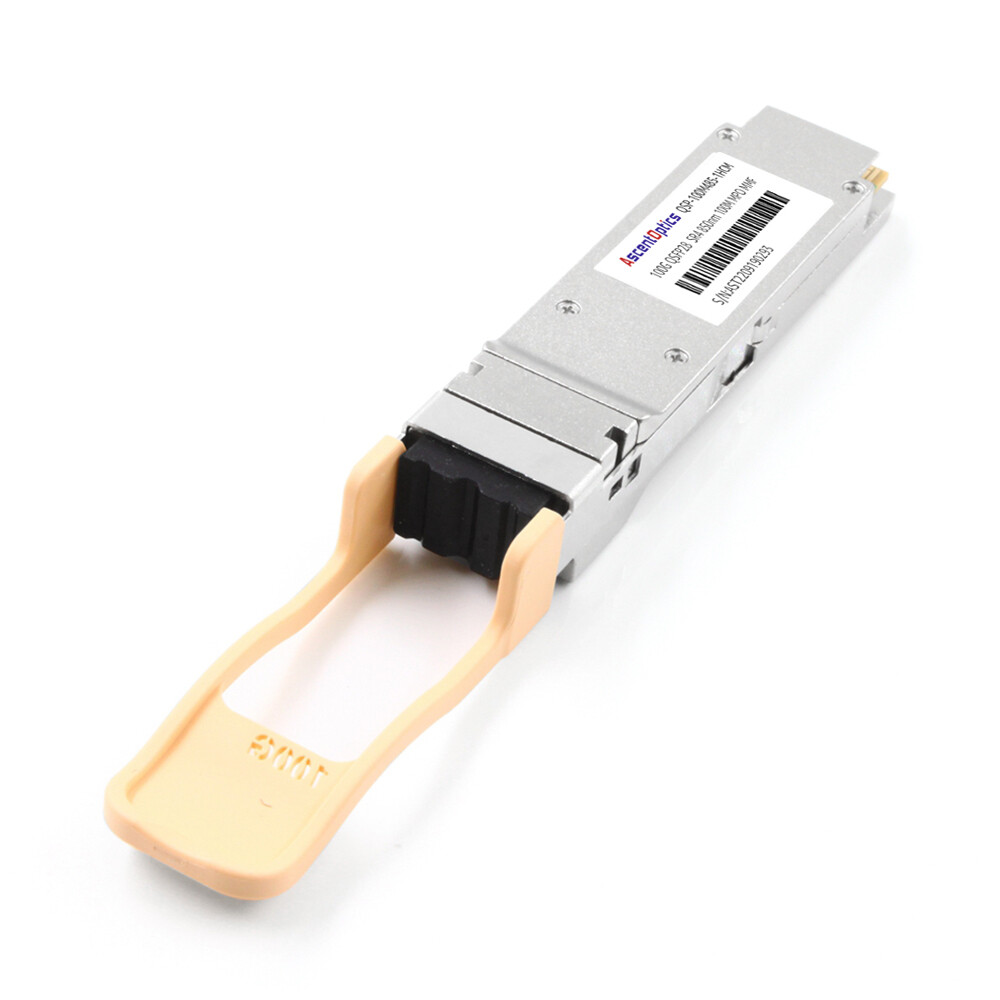
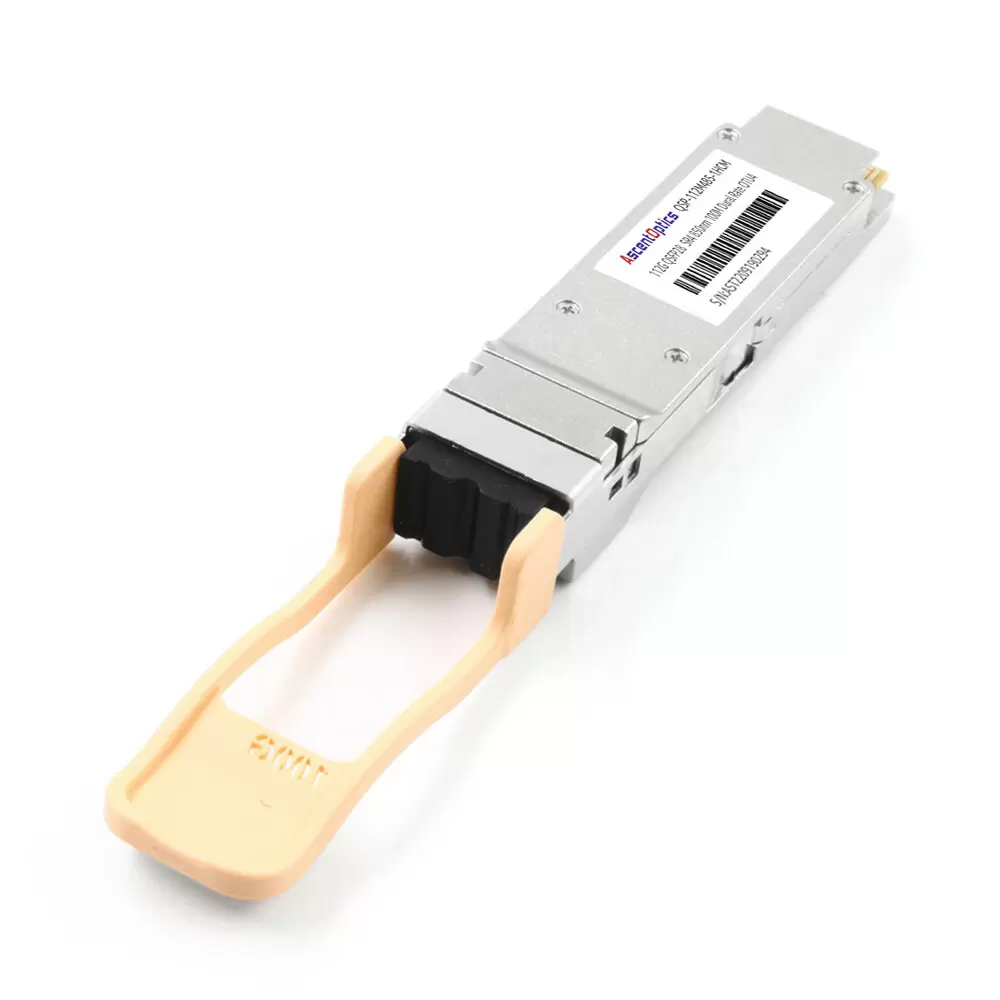
100G QSFP28 SR4 Transceivers
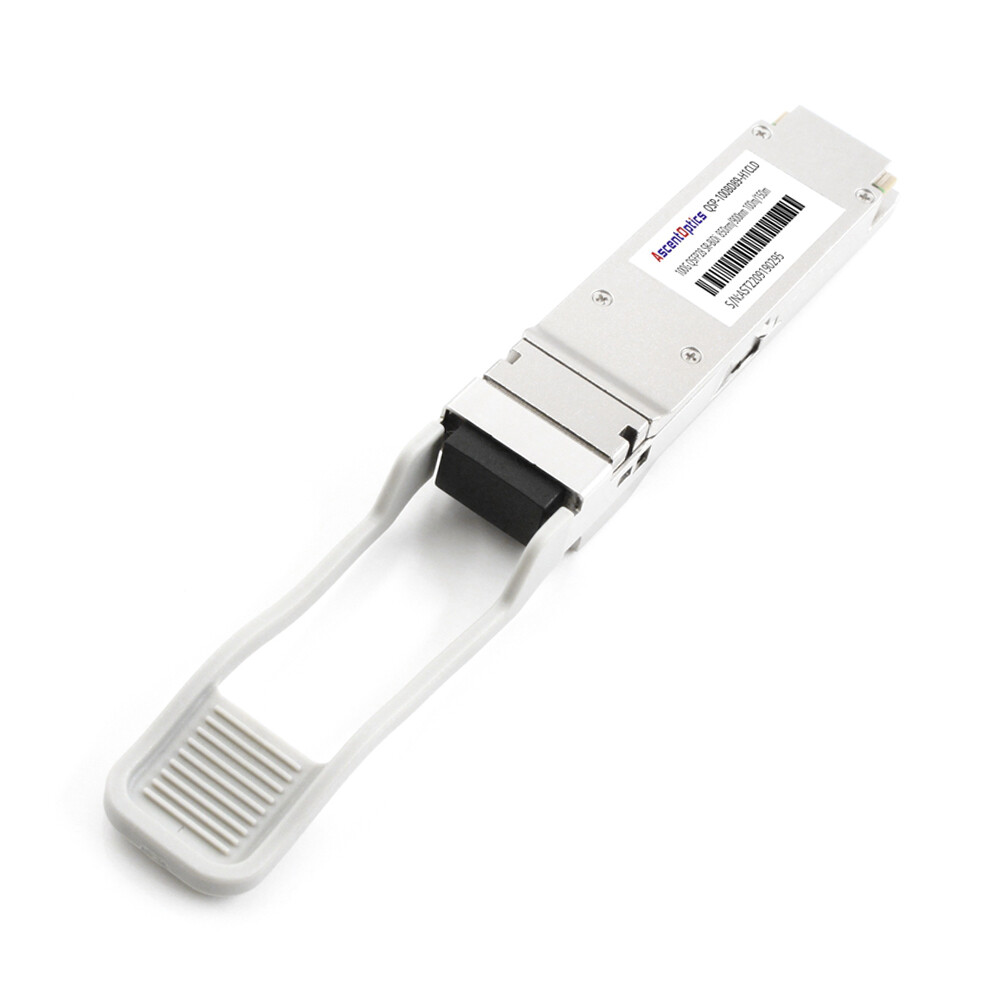
The 100G QSFP28 SR4 transceiver is a multimode optical module that works on four lanes of OM4 or OM3 fibre with a link length of up to 100 meters. It employs a 4x25G electrical interface and is commonly found in high-performance computing environments for short-reach data transmission.
The 100G QSFP28 SR4 transceiver is intended for short-reach applications, with a range of up to 100 meters on multimode fiber with parallel optics. It is used in data centers for switch-to-switch connectivities as well as server-to-switch applications. Four bidirectional lanes are able to transmit 25 Gigabits per second on each of the fiber pairs.
100G QSFP28 SR4 Transceivers
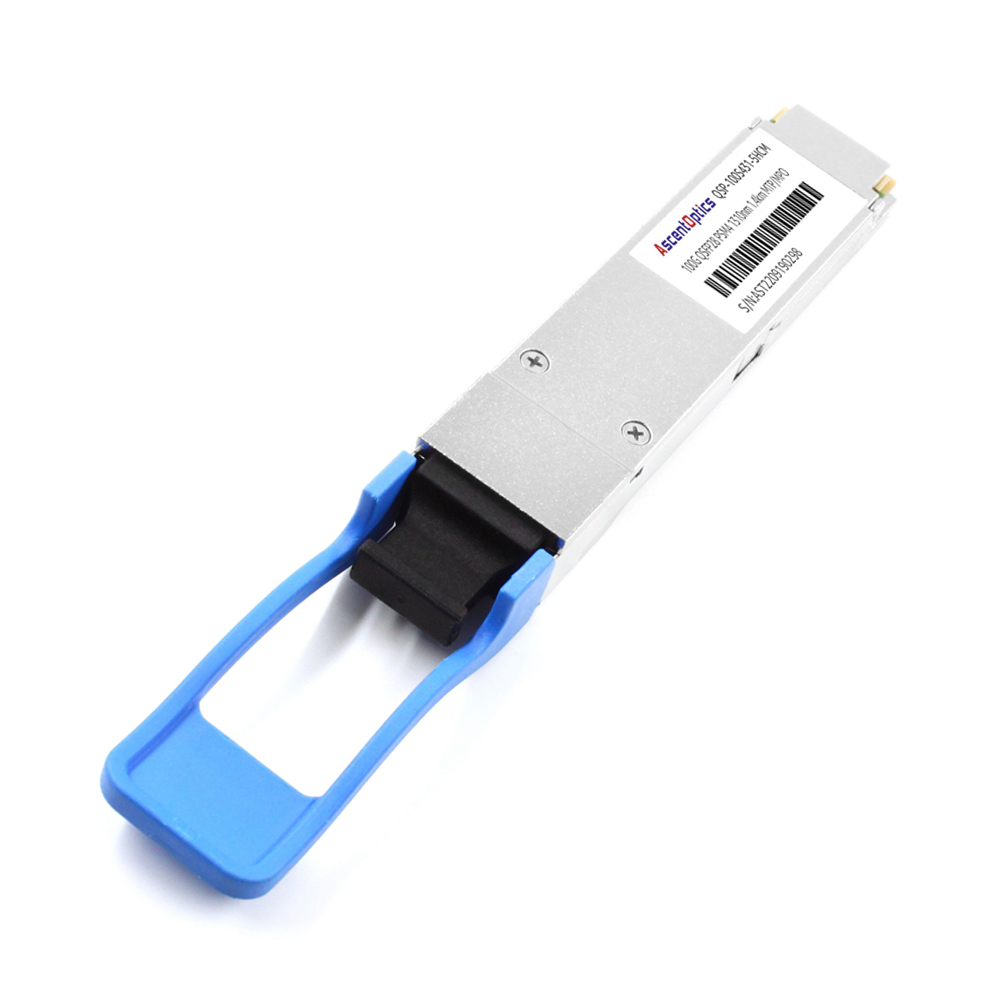
100G QSFP28 PSM4 Transceivers
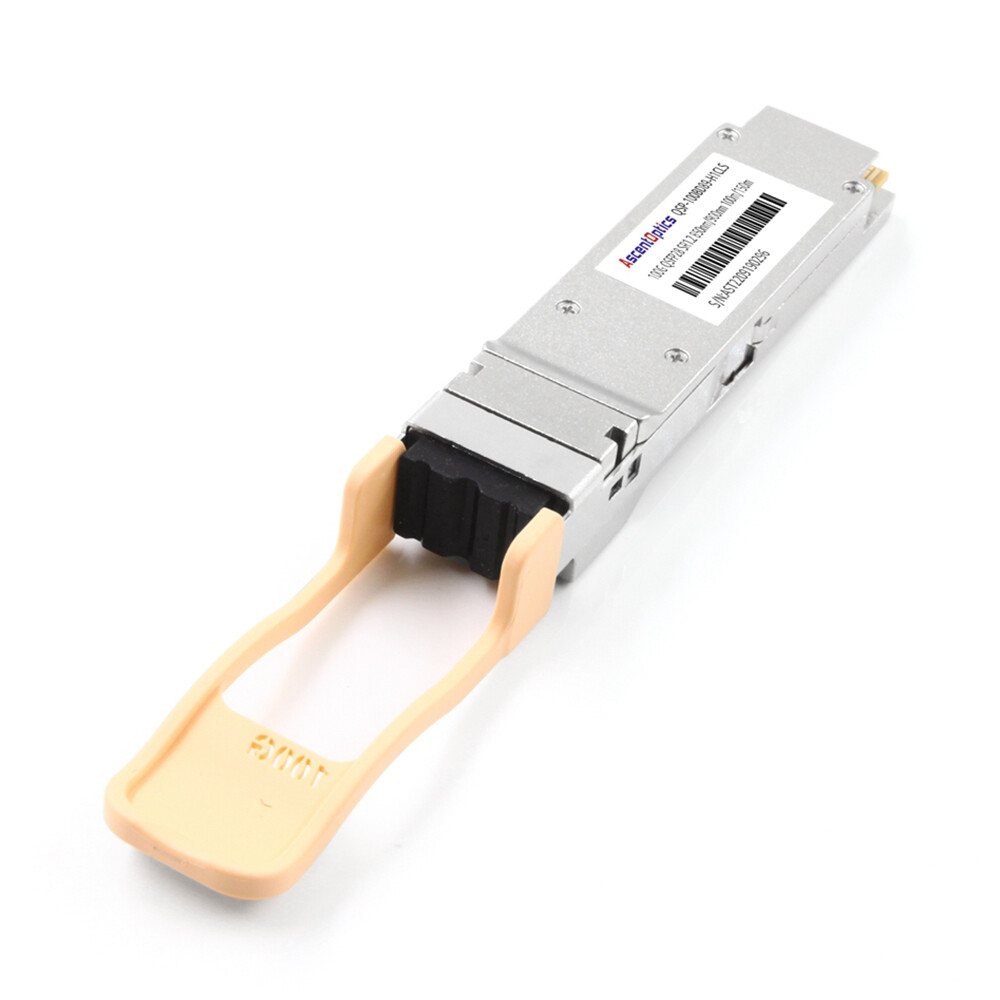
The 100G QSFP28 PSM4 transceiver is a parallel single-mode optical module that works on four fibre lanes with a link length of up to 500 meters. It operates with four channels each transmitting at a rate of 25Gbps. It employs a 4x25G electrical interface and is suitable for intra-rack and inter-rack data center applications that necessitate higher density with lower power consumption.
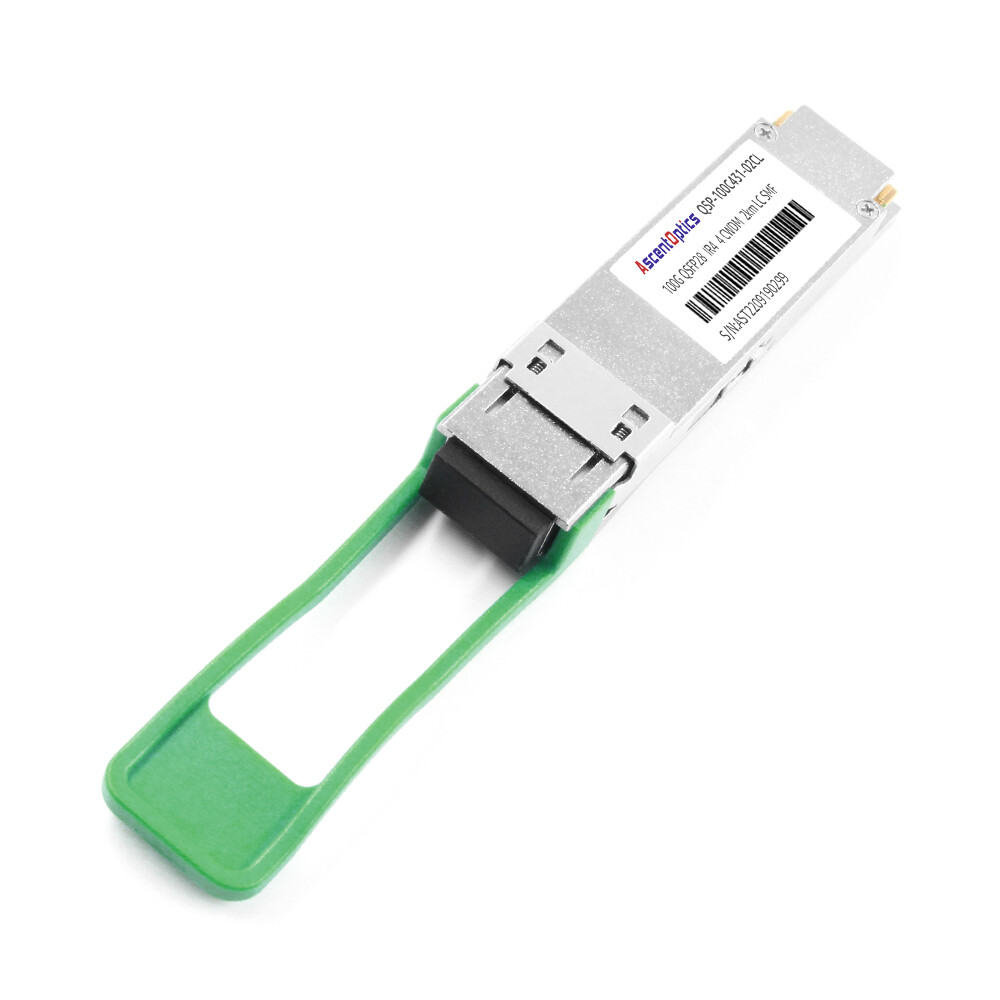
The 100G QSFP28 PSM4 transceiver is intended for extended reach applications with a single mode fiber distance of up to 2 kilometers. It is widely used in long-haul telecoms networks which LR4 cannot cover due to the distance limitations.
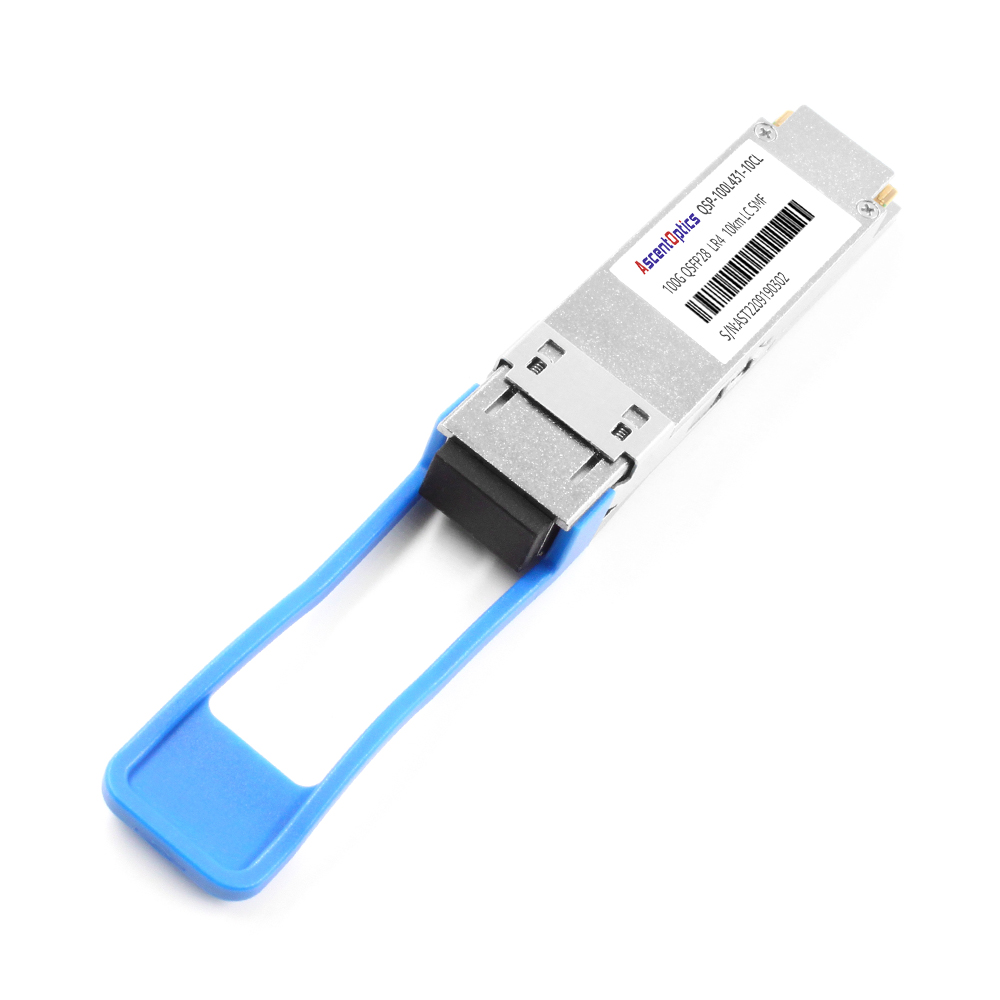
100G QSFP28 LR4 Transceivers
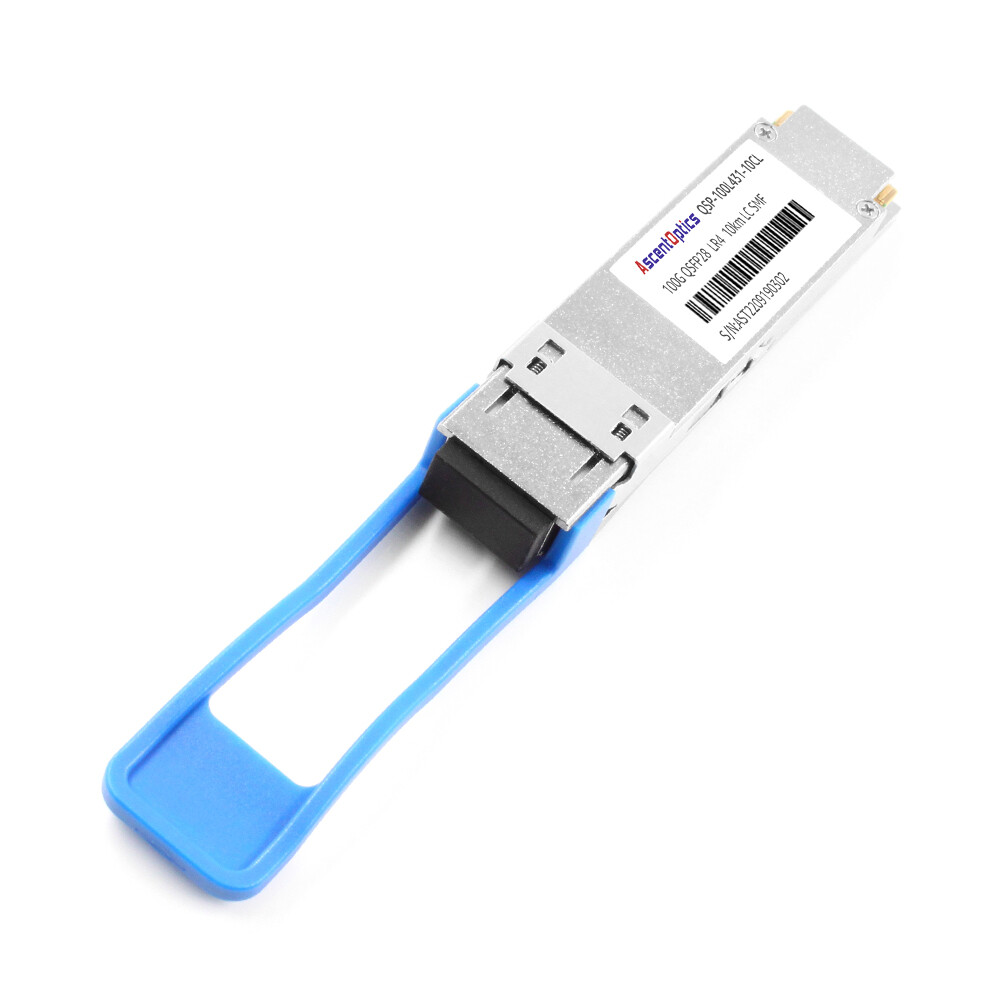
100G QSFP28 LR4 transceiver is a single-mode optical module that works on four fiber lanes with a link length of up to 10 kilometers. The 100G QSFP28 LR4 transceiver caters to long reach applications with a single mode fiber reach of up to 10 kilometers. It operates with four channels each transmitting at a rate of 25Gbps.
It employs a 4x25G electrical interface which is widely used in telecommunications and data center applications for long-reach data transmission. It’s primarily deployed in telecoms, metro networks and data center interconnects.
100G QSFP28 LR4
100G QSFP28 ER4 Transceivers
The 100G QSFP28 ER4 transceiver is an extended-reach module that operates on single-mode optical fiber with a maximum link length of 40 kilometers over four fiber channels. It employs a 4x25G electrical interface and is primarily used in long-haul telecommunications, where data is transmitted over long distances.
In summary, 100G QSFP28 transceivers are high-speed in operational modules that transmit and receive data via optical fibers with speeds as high as 100Gbps. They are available and tailored in various types for specific applications, including short-range, long-range, and extended reach. Knowing the different types of 100G QSFP28 Transceivers enables one to select the appropriate type and effectiveness of data transmission.
What are the applications of 100G QSFP28 transceivers?
Data Centers
100G QSFP28 modules are widely deployed in modern data centers to upgrade legacy 40G networks to 100G infrastructure. They enable high-speed connections between servers, switches, and routers while reducing latency.
100G Ethernet Networks
QSFP28 modules are essential components of 100G Ethernet deployments, supporting large-scale data transmission required by modern digital services.
Long-Distance Fiber Networks
When paired with single-mode fiber, certain QSFP28 modules can support transmission distances of up to 40 km or more, making them suitable for telecommunications and service provider networks.
Enterprise Networks
Large enterprise networks use 100G modules to connect core switches, aggregation layers, and data center resources, ensuring reliable and scalable network performance.
QSFP28 Breakout Connectivity
One major advantage of QSFP28 technology is breakout capability.
A single 100G QSFP28 port can be split into:
•4×25G SFP28 connections
This enables flexible network designs and gradual migration from lower-speed infrastructure.
Common Breakout Applications
•Spine-to-leaf connectivity
•Server aggregation
•TOR switch deployment
•High-density cloud networking
Breakout configurations are commonly implemented using:
•DAC breakout cables
•AOC breakout cables
•MPO fiber assemblies
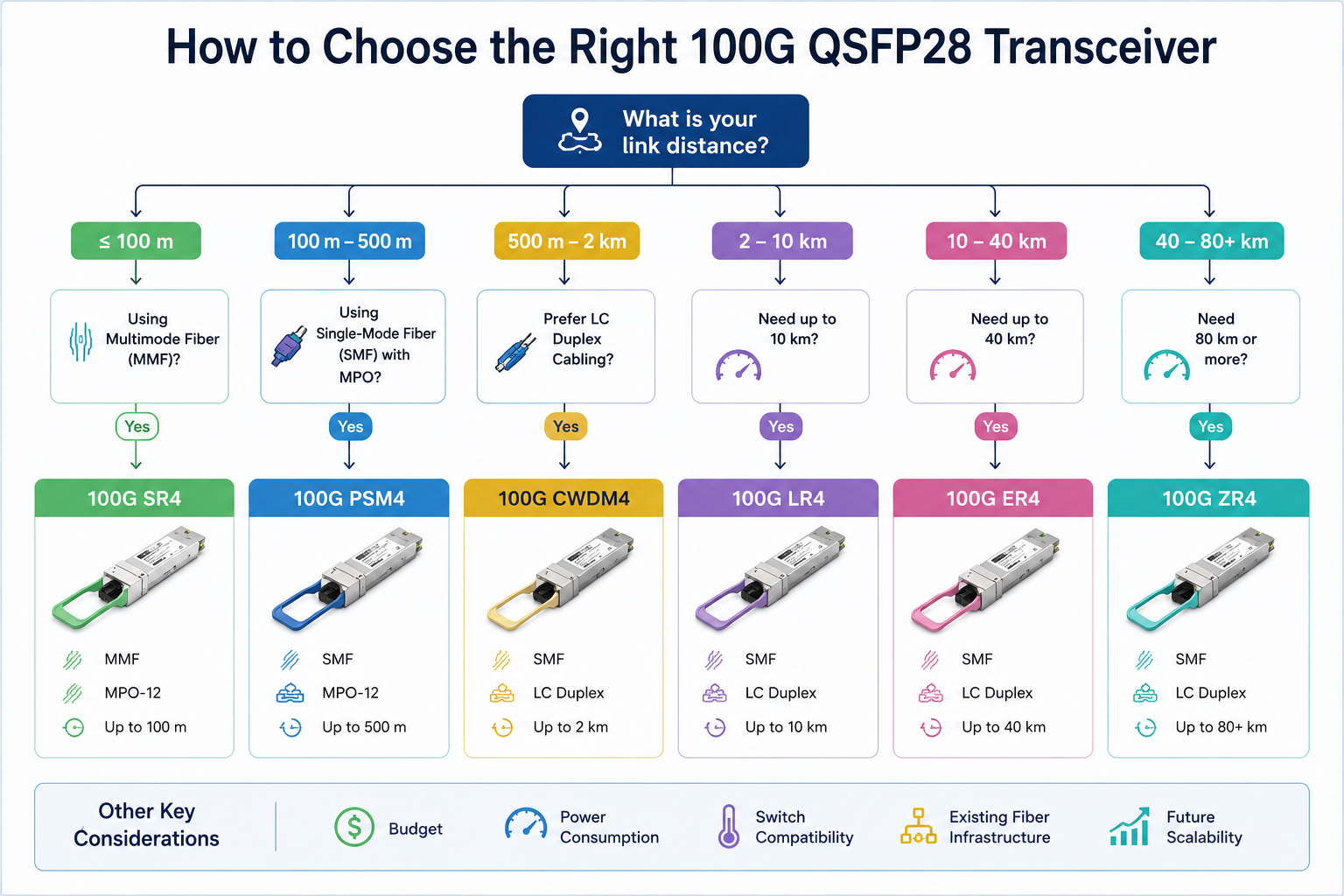
How to Choose the Right 100G QSFP28 Module
Selecting the correct QSFP28 transceiver depends on several important factors.
Transmission Distance
The required transmission distance is often the primary factor.
Although 400G and 800G technologies are rapidly expanding, 100G QSFP28 transceivers continue to play a major role in global network infrastructure.
Many organizations still rely on 100G connectivity because it offers:
•Proven reliability
•Lower deployment cost
•Mature ecosystem support
•Simpler migration paths
In AI clusters, enterprise networks, and telecom systems, QSFP28 optics remain a practical and cost-effective solution for high-speed connectivity.
Conclusion
100G QSFP28 transceivers have become a key component in modern high-speed networks. With their compact form factor, high bandwidth, and compatibility with multiple transmission standards, they provide a reliable solution for data centers, enterprise networks, and telecommunications infrastructure.
Different variants such as SR4, LR4, PSM4, and ER4 are designed for specific transmission distances and deployment scenarios. By understanding the characteristics of each type—such as fiber type, connector interface, and transmission range—network engineers can select the most suitable transceiver for their infrastructure.
As data traffic continues to grow and networks evolve toward higher speeds, 100G QSFP28 modules remain an essential technology for building scalable and efficient optical networks.
A: 100G QSFP28 transceivers are data center and high-performance computing networks’ use Optical Transceiver Modules with an astonishing data transfer rate of 100Gbps and above.
Q: What is the QSFP28 MSA?
A: The QSFP28 MSA is the Multi-Source Agreement set of specifications the outlines the optical, electrical, and mechanical design parameters of the constituent device, i.e. the QSFP28 Transceiver.
Q: What is the maximum transmission distance for 100G QSFP28 transceivers?
A: The transmission distance for 100G QSFP28 SR4 transceivers is 100m on OM4 MMF (Optical Multimode Fiber), 70m on OM3 MMF, and 10km for 100G QSFP28 LR4 transceivers on Single Mode Fiber. The constant range of 10km is the maximum achievable distance across all Single Mode Fiber types.
Q: What are the different types of 100G QSFP28 transceivers?
A: There are several types of 100g QSFP28 transceivers such as SR4 (short range 4 channel), LR4 long range 4 channel), PSM4 (parallel single mode 4 channel), CWDM4 (coarse wavelength division multiplexing 4 channel), ER4 (extended range 4 channel), ZR4 (zero dispersion-shifted fiber range 4 channel), BiDi (bidirectional) and SWDM4 (short wavelength division multiplexing 4 channel).
Q: Describe the IEEE 802.3bm standard.
A: The IEEE 802.3bm standard outlines a specification for the physical media dependent (PMD) layer pertaining to 100G Ethernet connections over optical fiber with support for different 100G QSFP28 transceiver styles.
Q: What is the form factor of 100G QSFP28 transceivers?
A: 100G QSFP28 transceivers are based on a smaller and more compact size that combines the features of the previous form QSFP called as QSFP28.
Q: What is the advantage of using 100G QSFP28 transceivers?
A: The advantage of adopting these 100G QSFP28 transceivers include provision of extreme high data rates, low power econsumption, and increased port density which is quite ideal for HPC computing clusters and advanced data center facilities.
Q: What optical signal modulation format is used by 100G DWDM QSFP28 PAM4 transceivers?
A: The optical signal modulation format for these 100G DWDM QSFP28 PAM4 transceivers is Pulse Amplitude Modulation 4 (PAM4) and all other steps PAM2 and PAM3 are skipped which means transmitting at least 2 times the data rate of common 100G NRZ and double data conversion is used.
Q: What functions does CDR serve in a 100G QSFP28 Transceiver?
A: In the case of 100G QSFP28 transceivers, CDR, or Clock and Data Recovery, plays the role of extracting the clock from the incoming data signal for further utilization, while outputting a coherent clock to the signal by helping it maintain proper data structure in order to minimize errors.