Marcus, a network engineer at a hyperscale data center, discovered the importance of OSFP thermal design during an 800G AI cluster deployment. His team accidentally ordered finned-top OSFP modules for switches that required flat-top OSFP-RHS modules. The modules could not be inserted correctly, forcing a replacement order and delaying deployment by several weeks. The experience highlighted a critical reality: OSFP flat-top and finned-top modules are not interchangeable.
If you are planning a 400G or 800G network upgrade, understanding the OSFP flat top vs finned top distinction is not optional. It is a mechanical compatibility requirement that directly affects deployment success, thermal stability, and long-term network reliability.
This guide explains the technical differences between flat-top and finned-top OSFP transceivers. You will learn how each thermal design works, which hardware platforms require which variant, and how to select the correct module for your data center, AI cluster, or enterprise network.
What Is OSFP and Why Thermal Design Matters
OSFP stands for Octal Small Form-factor Pluggable. It is a high-speed optical transceiver module standard designed to support data transmission rates of 400G, 800G, and upcoming 1.6T applications. The module uses eight electrical lanes, with each lane operating at 50 to 200 Gbps depending on the signaling generation. This architecture makes OSFP has become a leading form factor for high-density AI and hyperscale networking.
Compared to QSFP-DD, OSFP provides a larger thermal envelope than QSFP-DD, enabling support for higher-power optics. The larger physical envelope allows the module to dissipate more heat, which is essential as optical transceiver power consumption climbs from 12W in early 400G modules to over 30W in high-performance 800G and 1.6T variants.
For a detailed comparison of OSFP and other high-speed form factors, see our QSFP-DD vs OSFP guide.
Why Thermal Management Determines Reliability
Every optical transceiver module converts electrical signals to optical signals using lasers, modulators, and DSPs. These components generate heat. When internal temperatures exceed the specified operating range, the the module may experience increased bit error rates, unstable links, or thermal shutdown protection.
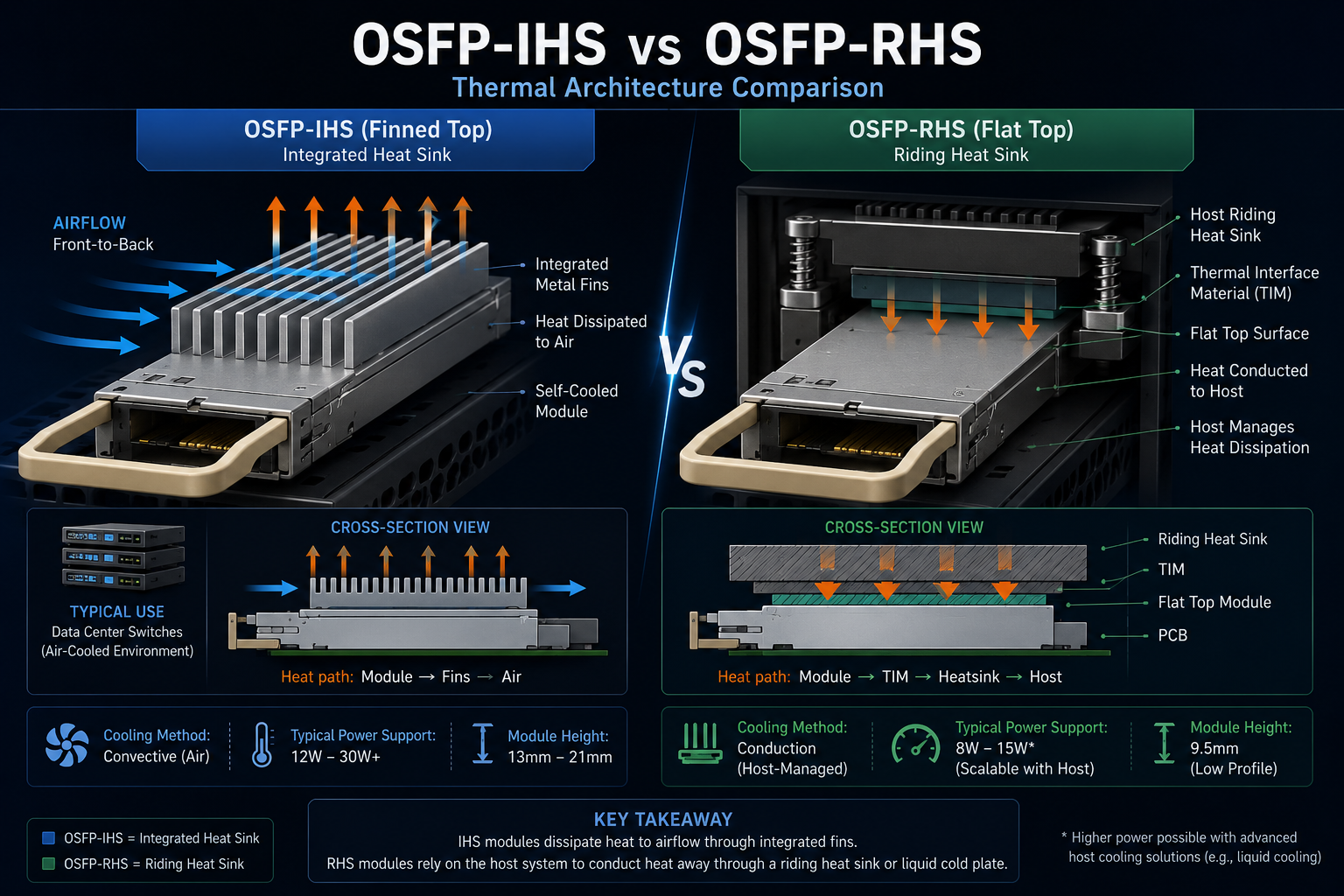
The OSFP MSA defines two primary thermal strategies to manage this heat: Integrated Heat Sink (IHS = module carries the heatsink) and Riding Heat Sink (RHS = host provides the heatsink). These strategies correspond to the finned-top and flat-top module variants, respectively. Selecting the wrong variant for your host platform does not just risk poor performance. It can prevent physical installation entirely.
Understanding Finned-Top OSFP (IHS)
Integrated Heat Sink Design
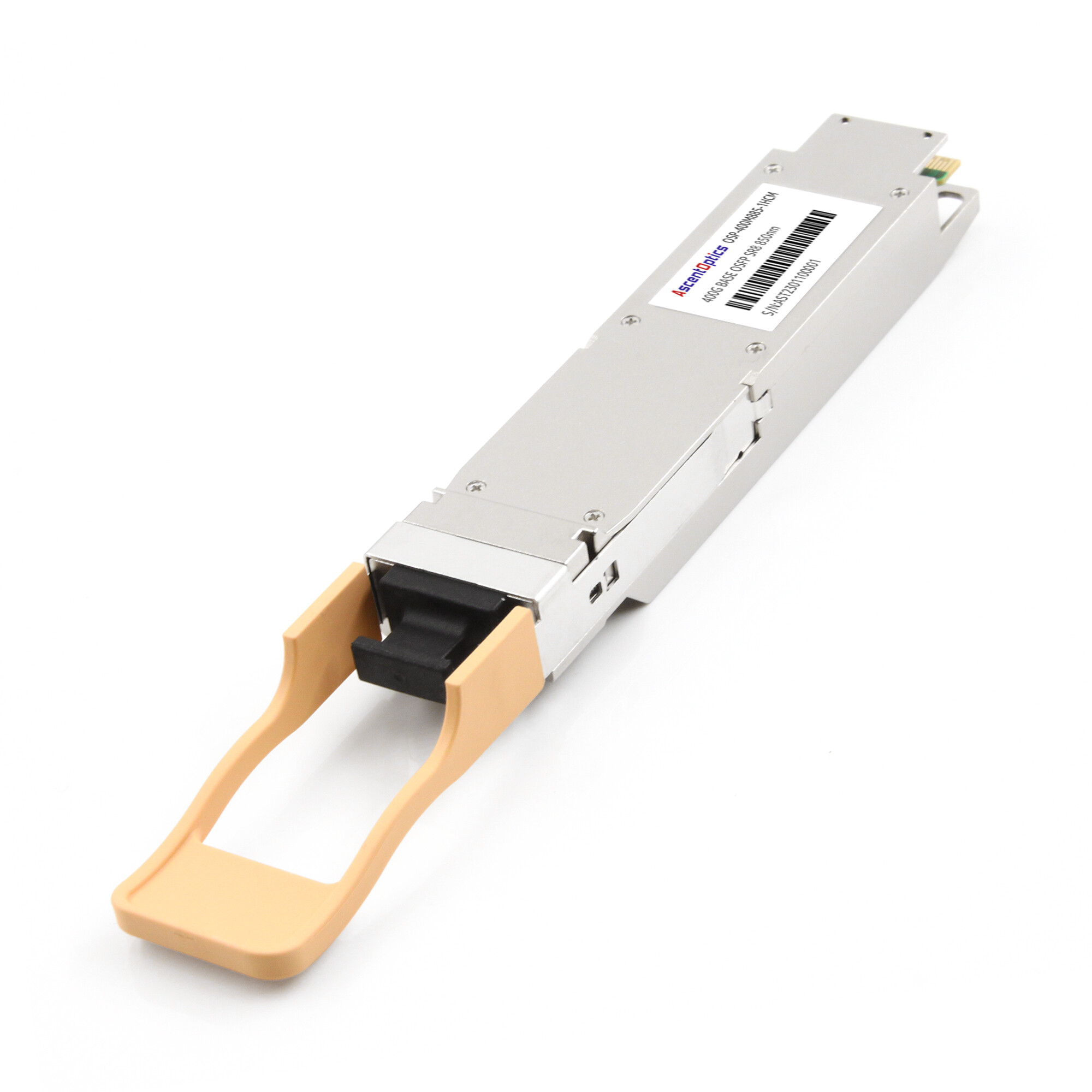
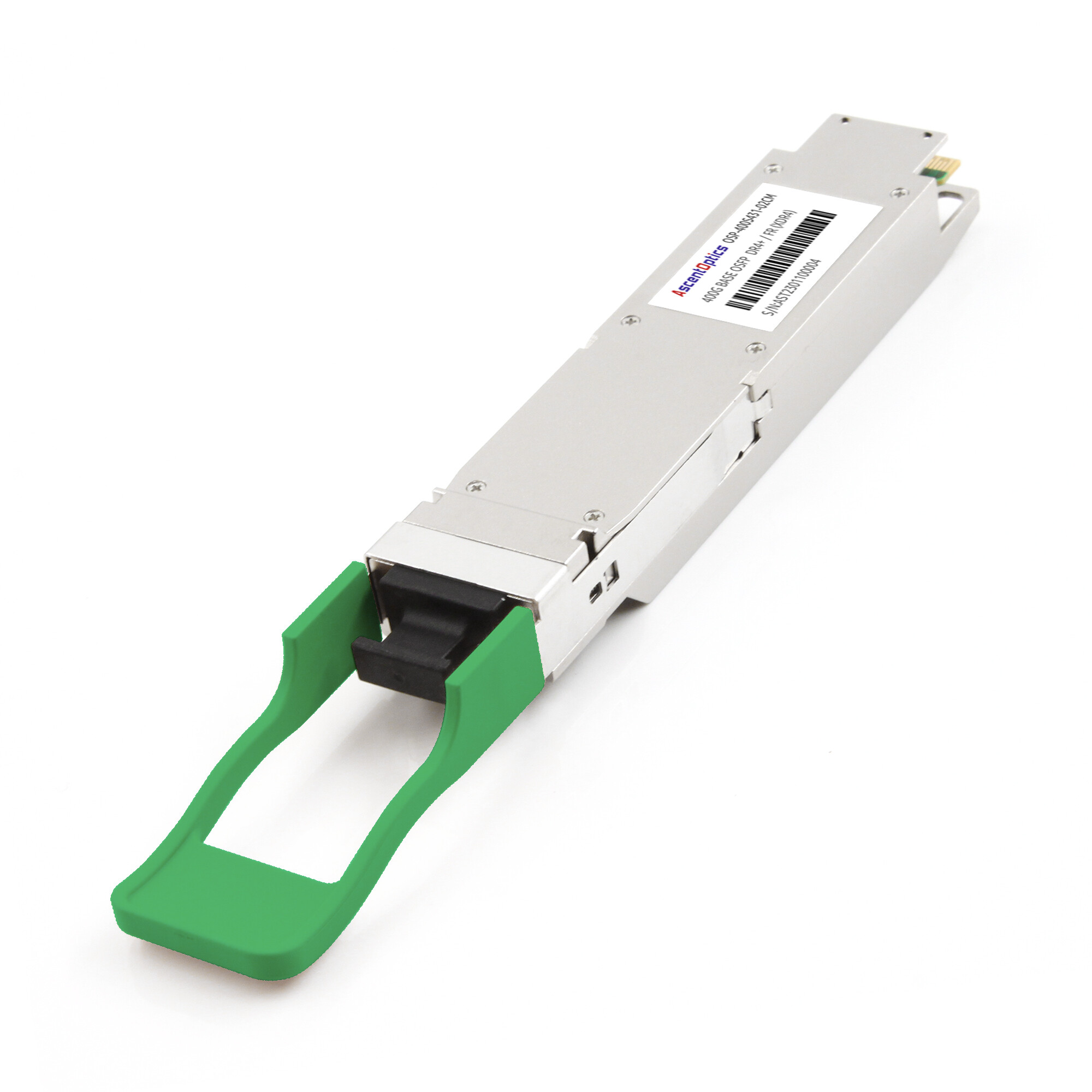
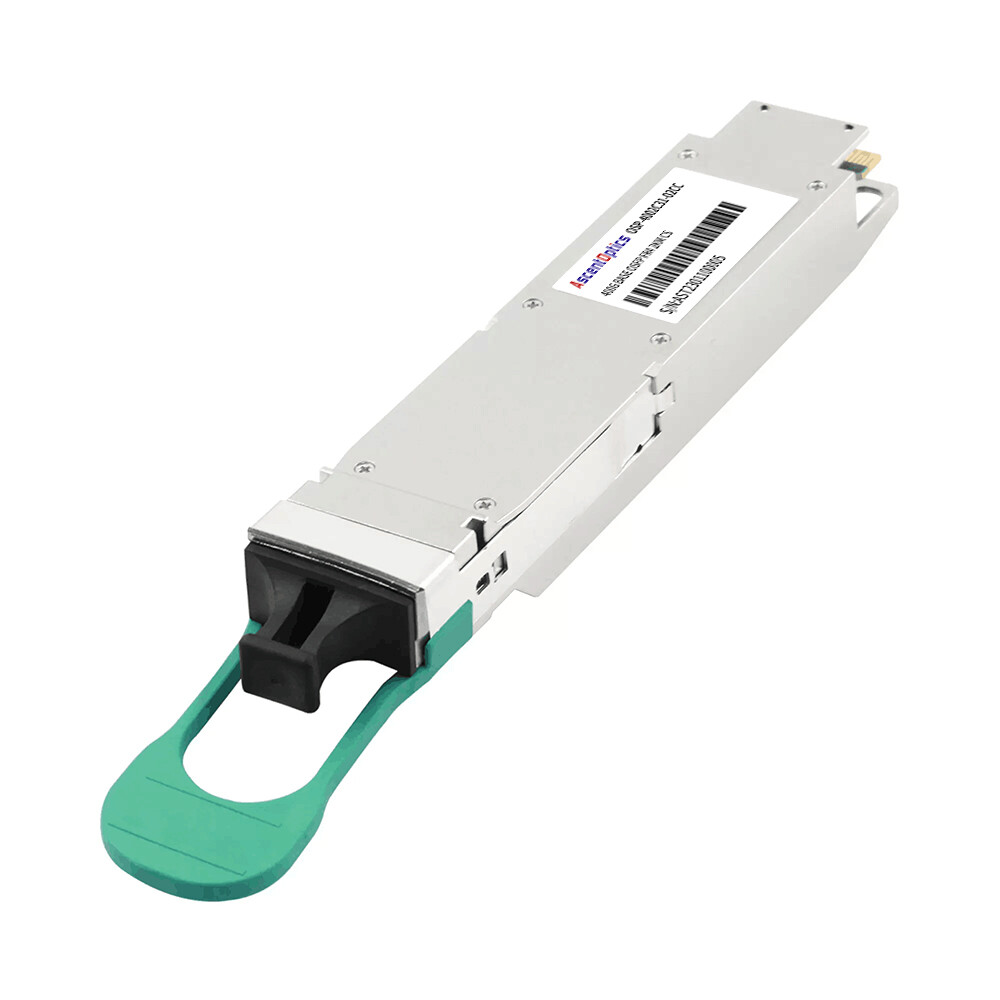
Finned-top OSFP modules, designated OSFP-IHS, integrate a heat sink directly into the module housing. The top surface features metal fins that increase surface area for convective heat transfer. Chassis airflow, typically moving front-to-back through the switch, flows across these fins and carries heat away from the module.
Two sub-variants exist within the finned-top category. Open finned-top modules expose the fins directly to airflow, maximizing convective cooling efficiency. Closed finned-top modules enclose the fins under a protective lid, which provides better mechanical protection and electromagnetic interference (EMI) shielding while still allowing air to flow through internal channels. The closed variant is more common in standard enterprise deployments.
The typical height of an OSFP-IHS module exceeds 13mm, with some high-power variants reaching up to 21mm depending on fin geometry and power class.typically higher than the standard flat-top profile
Power Handling and Thermal Performance
OSFP-IHS modules are self-cooled. They rely primarily on integrated heat-sink fins combined with chassis airflow for thermal dissipation. This makes them the default choice for high-density switch environments where dozens or hundreds of modules operate simultaneously and generate substantial aggregate heat.
Typical power handling breaks down as follows:
| Optic Type |
Power Range |
Recommended Thermal Design |
| 400G SR8 /
400G OSFP SR4(Flat Top) |
12-16W |
Finned-top or flat-top with adequate cooling |
| 400G FR4 / LR4 |
14-18W |
Finned-top preferred |
| 400G ZR / ZR+ |
20-25W |
host-validated thermal design required |
| 800G SR8 / DR8 |
16-20W |
Finned-top preferred |
| 800G 2FR4 |
18-22W |
Finned-top preferred |
| 800G ZR+ |
25-30W+ |
platform-specific thermal validation required |
Typical Applications
Finned-top OSFP modules are the standard for high-density data center switches. Air-cooled NVIDIA Quantum-2 switches use twin-port finned-top OSFP, while liquid-cooled variants require flat-top OSFP. These switches are designed with front-to-back airflow patterns that work in concert with the integrated fins.
Air-cooled environments with established chassis thermal design are the natural home for finned-top modules. The module manages its own thermal dissipation, reducing integration complexity for the network engineer.
Understanding Flat-Top OSFP (RHS)
Riding Heat Sink Design
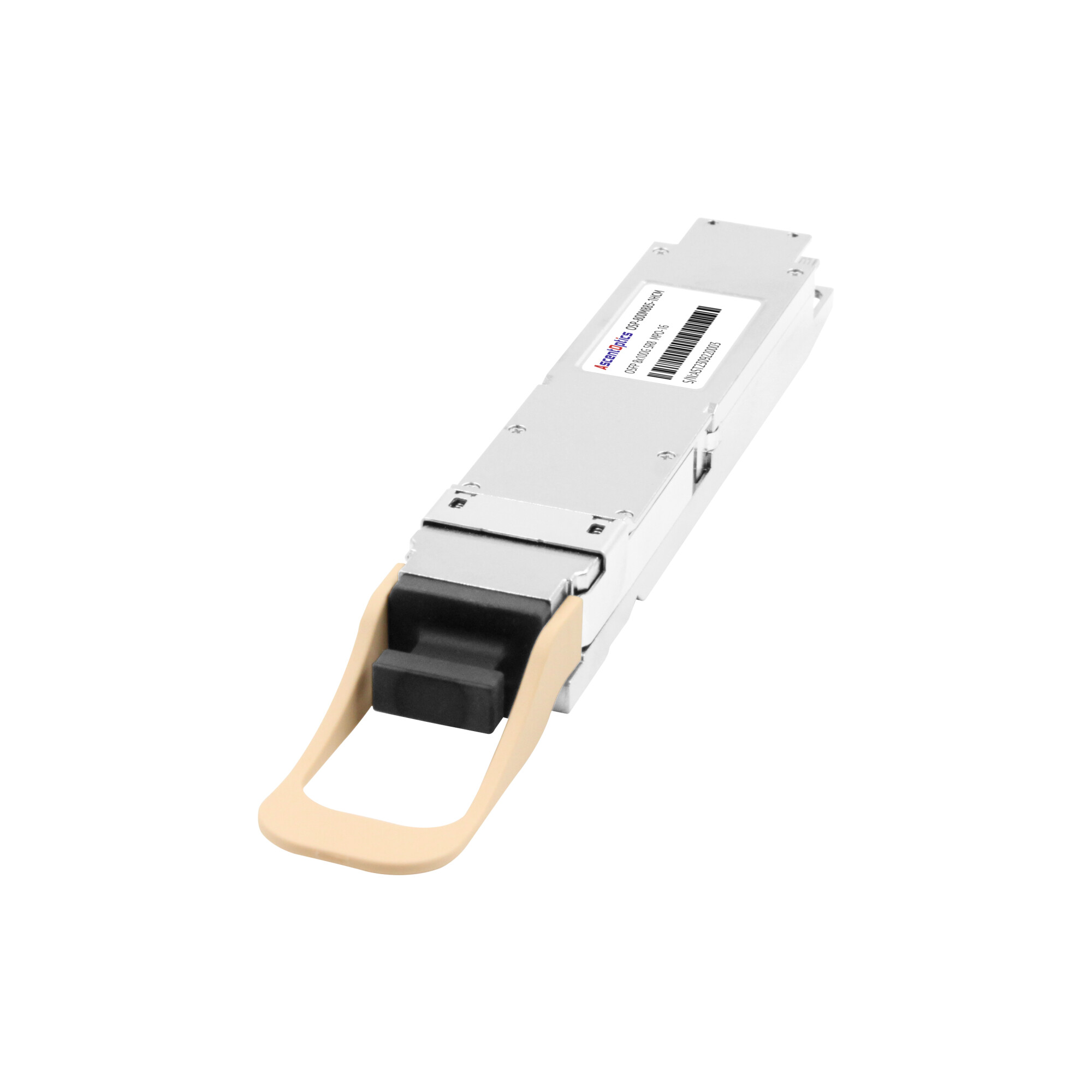
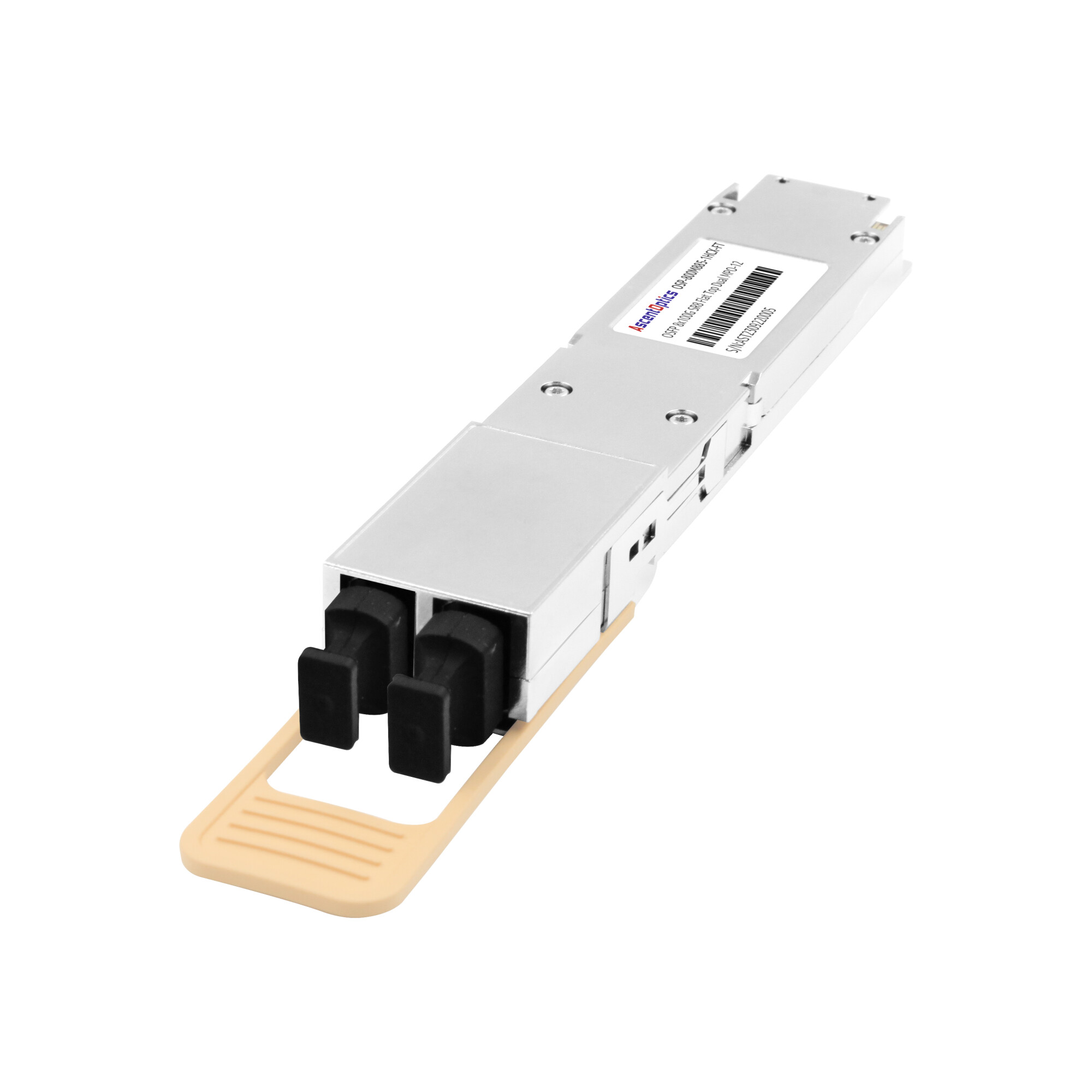
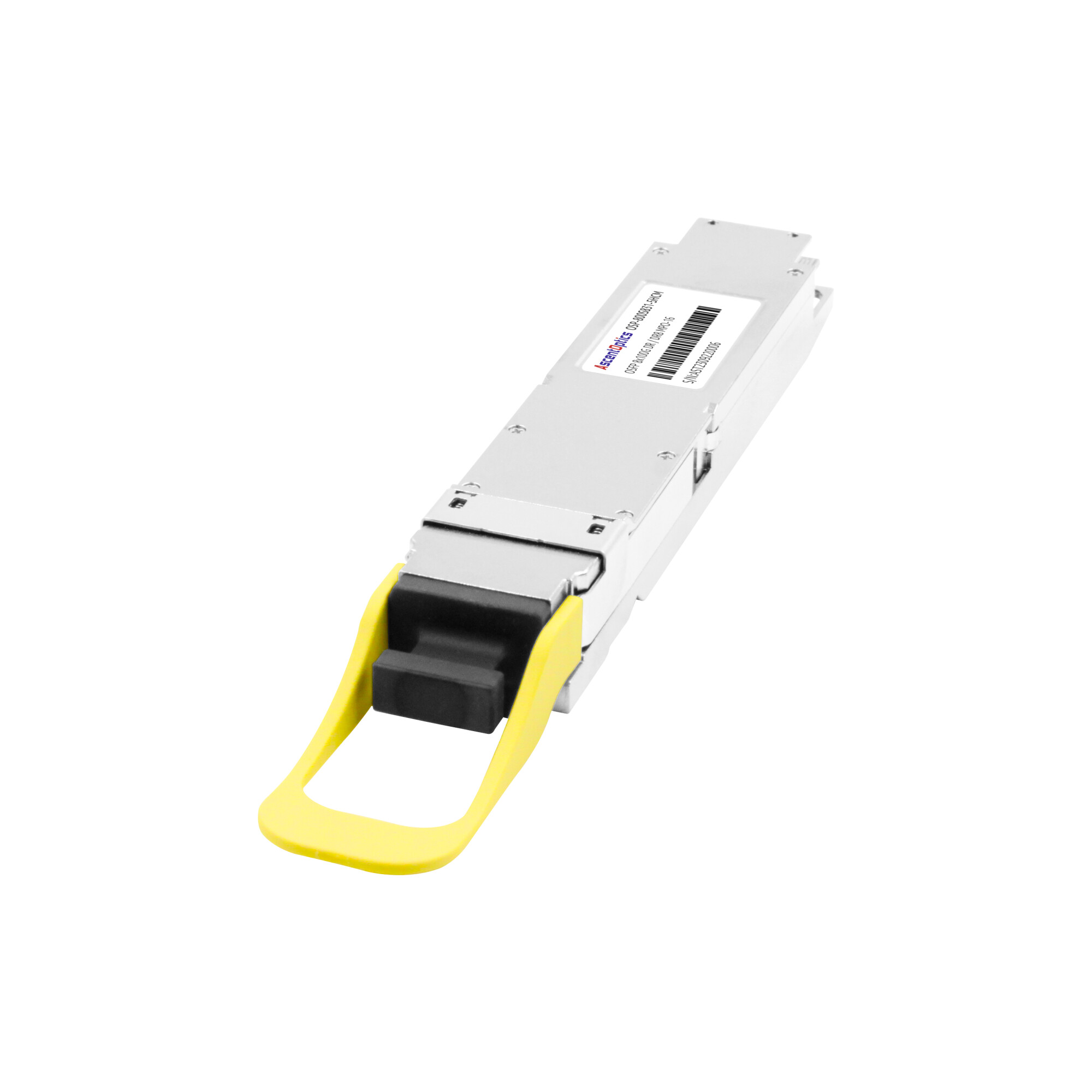
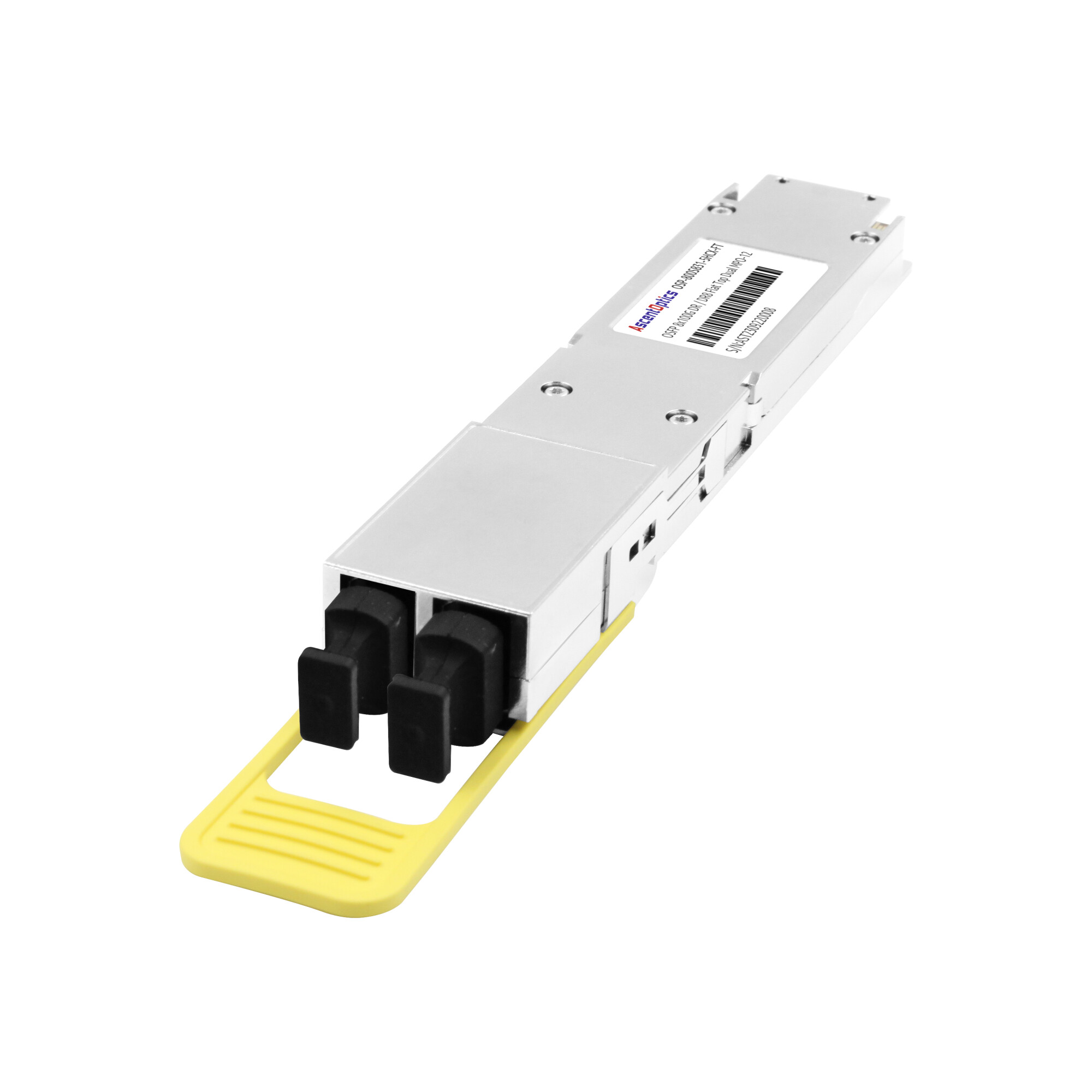
Flat-top OSFP modules, designated OSFP-RHS, present a smooth, low-profile metal surface with no integrated fins. Standard OSFP-RHS modules are commonly 9.5mm high, although custom-height RHS variants may exist. Instead of self-cooling through fins, the flat-top design relies on the host platform to provide thermal management.
When inserted into a compatible OSFP-RHS cage, a spring-loaded metal plate called a Riding Heat Sink presses down onto the flat top of the module. This host-provided heat sink draws heat away through conduction. In advanced systems, the flat surface can interface directly with a liquid cooling cold plate, enabling thermal management strategies that would be impossible with protruding fins.
The OSFP MSA specifies different mechanical keying and positive stops for RHS cages to prevent accidental insertion of an IHS module. In most standard implementations, IHS and RHS modules are mechanically incompatible.
Thermal Performance and Dependencies
Flat-top modules shift thermal responsibility to the host system. This dependency is both a limitation and an advantage. In a poorly designed host environment with insufficient airflow or inadequate riding heat sink pressure, a flat-top module will overheat. In a well-engineered system with centralized cooling or liquid cold plates, flat-top modules can achieve thermal performance that matches or exceeds finned-top designs.
For modules operating above 20W, the OSFP MSA recommends a surface flatness of 0.075mm or better and a surface roughness of Ra 0.8 micrometers or better on the thermally conductive flat-top area. These specifications ensure efficient heat transfer to the riding heat sink or cold plate through the Thermal Interface Material.
Typical Applications
Flat-top OSFP modules are the standard for Network Interface Cards (NICs) and Data Processing Units (DPUs). ConnectX-7 OSFP adapter configurations use RHS/flat-top OSFP. For ConnectX-8 and BlueField platforms, verify the exact adapter form factor because some use QSFP112 rather than OSFP. The NVIDIA BlueField-3 DPU also requires flat-top modules due to space constraints on the adapter card.
GPU servers, compact edge devices, and any platform transitioning to liquid cooling favor the flat-top design. The 9.5mm height enables higher port density in space-constrained form factors, and the flat surface provides the thermal interface needed for cold-plate integration.
Finned-Top vs Flat-Top: Technical Comparison
Side-by-Side Specification Comparison
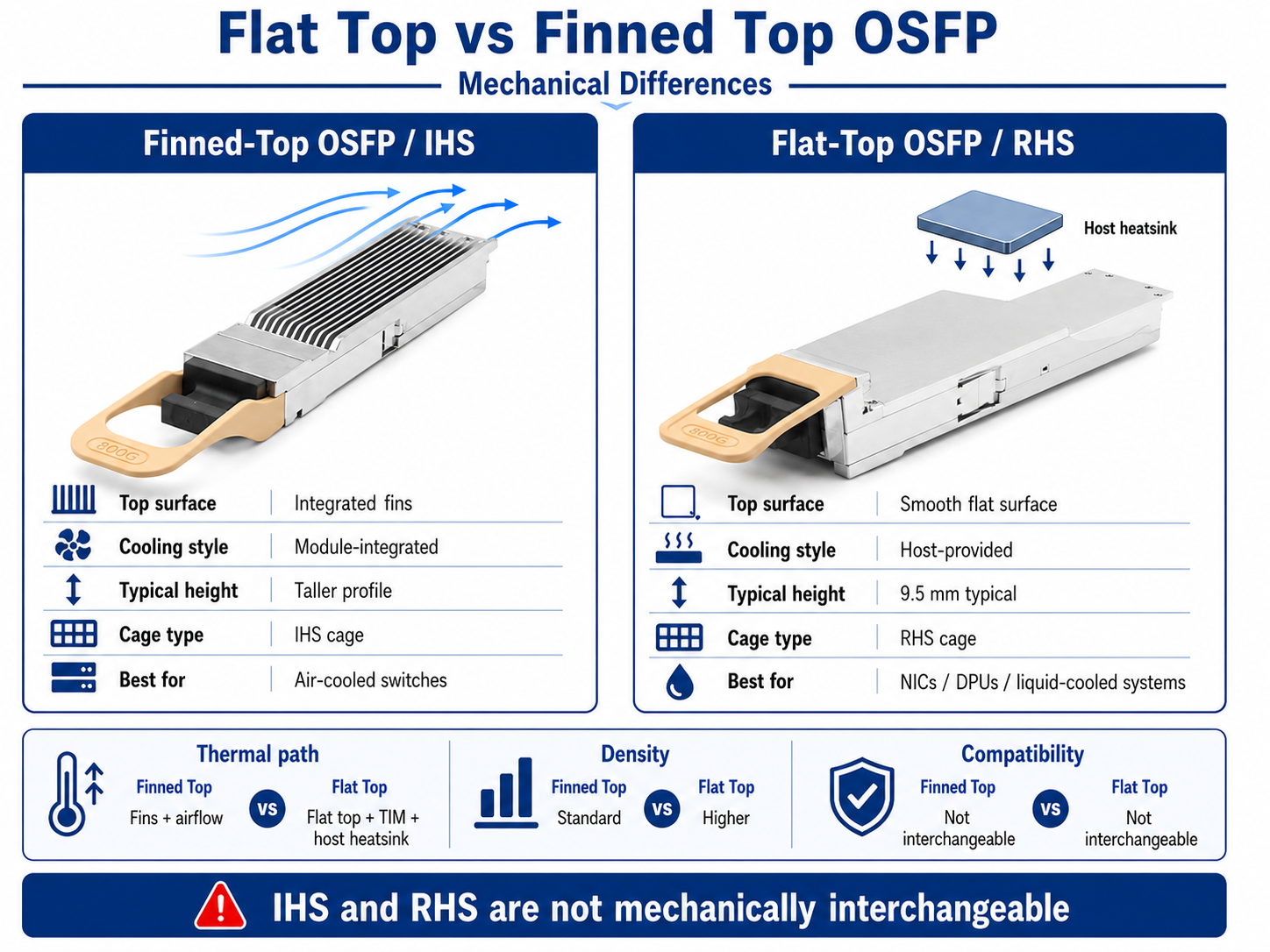
The following table summarizes the key technical differences between the two OSFP thermal designs:
| Specification |
Finned-Top (IHS) |
Flat-Top (RHS) |
| Module Height |
13mm to 21mm |
9.5mm |
| Cooling Method |
Self-cooled via integrated fins |
Host-provided riding heat sink or liquid cooling |
| Also Known As |
Open/closed finned-top, standard OSFP |
OSFP-RHS |
| Cage Requirement |
Standard OSFP-IHS cage |
OSFP-RHS cage with positive stop |
| Typical Power |
12W to 30W+ |
8W to 15W standard; scalable with host |
| Port Density |
Standard |
Higher due to lower height |
| Liquid Cooling |
Not compatible |
Compatible with cold plates |
| Common Switches |
NVIDIA Quantum-2, Spectrum-4 |
NICs/DPUs, also used in some liquid-cooled switch systems. |
| Common NICs/DPUs |
Not compatible |
NVIDIA ConnectX-7/8, BlueField-3 |
| Manufacturing Cost |
Higher (complex integrated heat sink) |
Lower (simpler housing) |
Mechanical Compatibility Warning
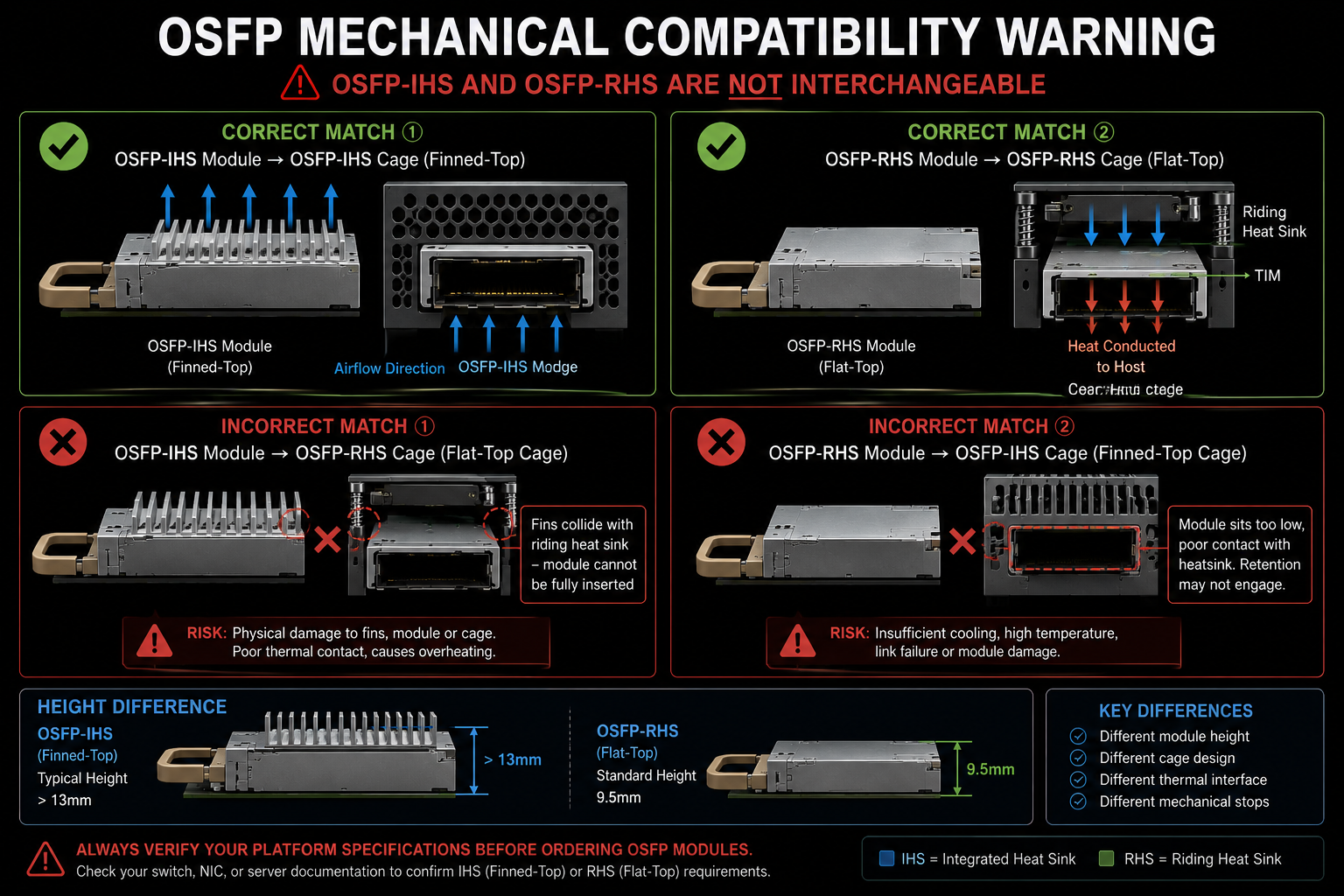
This point cannot be overstated: finned-top and flat-top OSFP modules are not interchangeable. The OSFP MSA intentionally designed them with different heights, cage keying, and positive stops to prevent cross-insertion.
Inserting a finned-top module into an RHS cage will result in physical damage to the cage, the module, or both. The module will not seat correctly, the electrical contacts may not mate properly, and the integrated fins will prevent the riding heat sink from making contact. The result which can lead to improper thermal contact, unstable operation, or overheating risks.
Conversely, inserting a flat-top module into an IHS cage is equally problematic. The module will sit too low, the retention mechanism may not engage, and the module will lack the integrated cooling it needs in an environment designed for self-cooled units.
Always verify your switch, NIC, or server documentation before ordering OSFP modules. The hardware vendor’s specification sheet will state whether the platform requires IHS or RHS modules.
Performance Under Thermal Stress
Under sustained high load, finned-top modules generally maintain more stable thermal performance because they control their own cooling. The integrated fins provide a predictable thermal path that does not depend on host engineering quality.
Flat-top modules can achieve equivalent or superior thermal performance, but only when the host platform delivers adequate cooling. In a well-designed system with proper riding heat sink pressure, high-quality Thermal Interface Material, and sufficient chassis airflow, flat-top modules operate reliably even at higher power levels. In a poorly designed system, they are the first component to overheat.
During a liquid-cooling upgrade project, a data center team transitioning from traditional air-cooled switches to GPU servers discovered that flat-top OSFP modules provided a better interface for cold-plate cooling. Their thermal engineers selected OSFP-RHS modules for the new AI cluster because the flat surface enabled more efficient heat transfer in the liquid-cooled environment.
How to Choose: Decision Framework
Selecting between finned-top and flat-top OSFP modules requires evaluating four factors in sequence.
Step 1 — Check Your Host Device Requirements
Start with your hardware documentation, not the module catalog. Your switch, NIC, or server vendor has already made the thermal design decision for you.
- Switches: High-density data center switches from vendors such as Cisco, Arista, Juniper, and Dell typically use OSFP-IHS cages. NVIDIA Quantum-2 and Spectrum-4 platforms require finned-top modules.
- NICs and DPUs: NVIDIA ConnectX-7, ConnectX-8, and BlueField-3 platforms use OSFP-RHS cages and require flat-top modules.
- Servers: Check the server manufacturer’s specification. Some GPU servers support both, but most newer AI-optimized platforms favor flat-top for liquid cooling compatibility.
If your documentation does not specify IHS or RHS, contact the hardware vendor’s technical support team before placing an optical module order.
Step 2 — Assess Power and Thermal Envelope
If your host platform supports both variants, use power consumption as the deciding factor.
Modules drawing 15W or less can often operate reliably in either design, assuming adequate host cooling for flat-top variants. Modules drawing more than 15W generally favor finned-top designs in air-cooled environments, unless the host platform provides an advanced riding heat sink or liquid cooling solution.
Consider your chassis airflow in cubic feet per minute (CFM). High-CFM switches with optimized front-to-back airflow can sometimes support higher-power flat-top modules. Always follow the host cage type first. If both variants are available, use the platform thermal guide to decide.
Step 3 — Consider Physical Constraints
In dense rack environments, every millimeter of vertical clearance matters. The 9.5mm height of flat-top modules enables tighter stacking and higher port density on adapter cards. If your deployment involves NICs, DPUs, or compact edge devices where vertical space is limited, flat-top is the only viable option.
Step 4 — Factor in Deployment Environment
Air-cooled data centers with traditional hot-aisle/cold-aisle designs favor finned-top modules for switch deployments. Liquid-cooled AI clusters, HPC environments, and next-generation data centers transitioning to direct liquid cooling favor flat-top modules for their cold-plate compatibility.
Vendor Compatibility Matrix
Switch Platforms
| Vendor / Platform |
OSFP Type Supported |
Notes |
| NVIDIA Quantum-2 |
IHS (finned-top) |
InfiniBand NDR switches |
| NVIDIA Spectrum-4 |
IHS (finned-top) |
Ethernet switches |
| Cisco 8000 Series |
IHS (finned-top) |
Verify specific line card |
| Arista 7800R3 |
IHS (finned-top) |
AI-optimized platforms |
| Juniper PTX10000 |
IHS (finned-top) |
Core routing platforms |
| Dell Z9664F-ON |
IHS (finned-top) |
Data center switches |
NIC and DPU Platforms
| Vendor / Platform |
OSFP Type Supported |
Notes |
| NVIDIA ConnectX-7 |
RHS (flat-top) |
400G/200G adapters |
| NVIDIA ConnectX-8 |
RHS (flat-top) |
800G adapters |
| NVIDIA BlueField-3 |
RHS (flat-top) |
DPU platforms |

AscentOptics OSFP Portfolio
AscentOptics manufactures both finned-top and flat-top OSFP optical transceiver modules across the full range of 400G and 800G applications. Our engineering team verifies compatibility with the switch and NIC platforms listed above during the product qualification process. Our guide to OSFP-compatible switches provides detailed platform-specific information.
Every optical transceiver module undergoes strict quality inspection to ensure stable performance in demanding network environments. We provide customized OSFP solutions for specific deployment requirements, including OEM and ODM manufacturing services.
Need help confirming compatibility for your specific switch or NIC model? Our engineers can review your hardware specifications and recommend the correct OSFP module variant. Contact our Optical Networking Experts for personalized guidance.
Future Trends: 1.6T and OSFP-XD
1.6T Thermal Requirements
The industry roadmap for optical networking points clearly toward 1.6T transceivers within the next two to three years. Some 1.6T and coherent variants may approach or exceed 30W, while short-reach or linear-drive designs may be lower. At these power levels, self-cooled finned-top designs face fundamental physical limits. The module envelope cannot accommodate enough fin surface area to dissipate 40W using air cooling alone.
This constraint is driving increased adoption of flat-top and OSFP-RHS designs even in switch applications that historically used finned-top modules. With a host-provided liquid cooling cold plate or advanced riding heat sink, flat-top designs are generally considered more suitable for future ultra-high-power liquid-cooled environments.
The OSFP-XD (Octal Small Form-factor Pluggable Extra Dense) is an OSFP MSA specification for higher-density modules and continues to evolve. OSFP-XD modules may incorporate dual-side cooling innovations, including future dual-side cooling innovations that supplement top-side thermal management with bottom-side heat dissipation.
These developments reinforce a key principle: thermal design is becoming the primary differentiator in high-speed optical module selection. Data rate and reach specifications matter, but the module’s ability to manage heat at 30W+ will determine whether it can operate reliably in production.
Conclusion
The osfp flat top vs finned top decision is fundamentally a compatibility and thermal management decision, not a performance decision. Both designs support identical data rates, protocols, and optical reaches. The difference lies in how each module manages heat and whether it fits your host platform.
Use finned-top OSFP-IHS modules for high-density data center switches in air-cooled environments where the module must manage its own thermal dissipation. Use flat-top OSFP-RHS modules for NICs, DPUs, GPU servers, and any platform transitioning to liquid cooling where the host system provides thermal management.
The most expensive mistake is not choosing the wrong thermal design. It is choosing a module without verifying your host platform’s cage specification first. Check your hardware documentation, confirm IHS or RHS requirements, and order the corresponding module variant.
Shenzhen Ascent Optics Co.,Ltd. provides high-speed optical modules designed to support reliable and scalable data center networks. Our 400G and 800G OSFP transceiver modules are compatible with major networking equipment brands and undergo strict quality inspection before shipment. For compatibility guidance, technical specifications, or a customized quote, Request a Quote today.
FAQ
Q:Can I use a finned-top OSFP module in a flat-top OSFP cage?
A:No. In most standard implementations, OSFP-IHS and OSFP-RHS modules are mechanically incompatible. Always verify the cage type before purchasing modules.
Q: Are flat-top OSFP modules only used for liquid cooling?
A:No. Flat-top OSFP modules can operate in both air-cooled and liquid-cooled systems. The key difference is that thermal dissipation is managed by the host platform rather than integrated module fins.
Q: Which OSFP type does NVIDIA ConnectX use?
A:NVIDIA ConnectX-7 and ConnectX-8 adapters primarily use OSFP-RHS (flat-top) implementations.
Q:Which OSFP type is commonly used in switches?
A:Most high-density data center switches use OSFP-IHS (finned-top) modules because they work efficiently with chassis airflow designs.
Q:Is flat-top or finned-top better for high-power 800G and 1.6T optics?
A:It depends on the cooling architecture. Finned-top modules perform well in traditional air-cooled switches, while flat-top designs are increasingly preferred for advanced liquid-cooled AI systems.
Q:Can I convert an OSFP-IHS platform to support RHS modules?
A:Usually no. OSFP-IHS and OSFP-RHS use different cage structures, thermal interfaces, and retention mechanisms. Converting between them is generally not practical.
Post Views: 919