With the rapid advancement of artificial intelligence (AI), high-performance computing (HPC), and cloud computing, data centers are facing increasing demands for higher bandwidth, lower latency, and greater reliability. InfiniBand HDR (High Data Rate), led by NVIDIA, has emerged as a leading high-speed interconnect standard with 200Gb/s full-duplex bandwidth, serving as the backbone for large-scale GPU clusters and supercomputers.
In this context, the 200G QSFP56 SR4 optical module plays a pivotal role as the key short-reach interconnect component in HDR networks. This article explores its technical features and value in accelerating InfiniBand HDR networks, while also briefly introducing how 100G QSFP28 Breakout DAC simplifies high-density network deployments.
Brief Introduction to 200G QSFP56 SR4
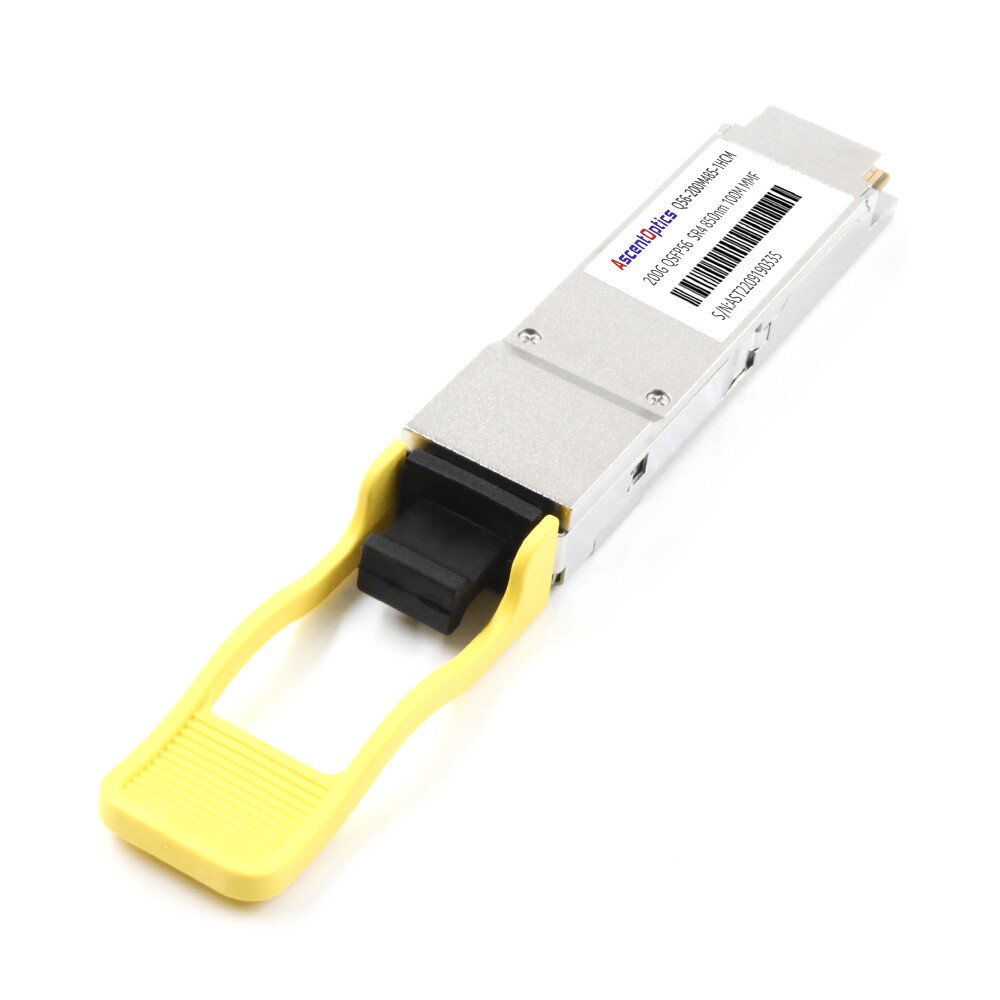
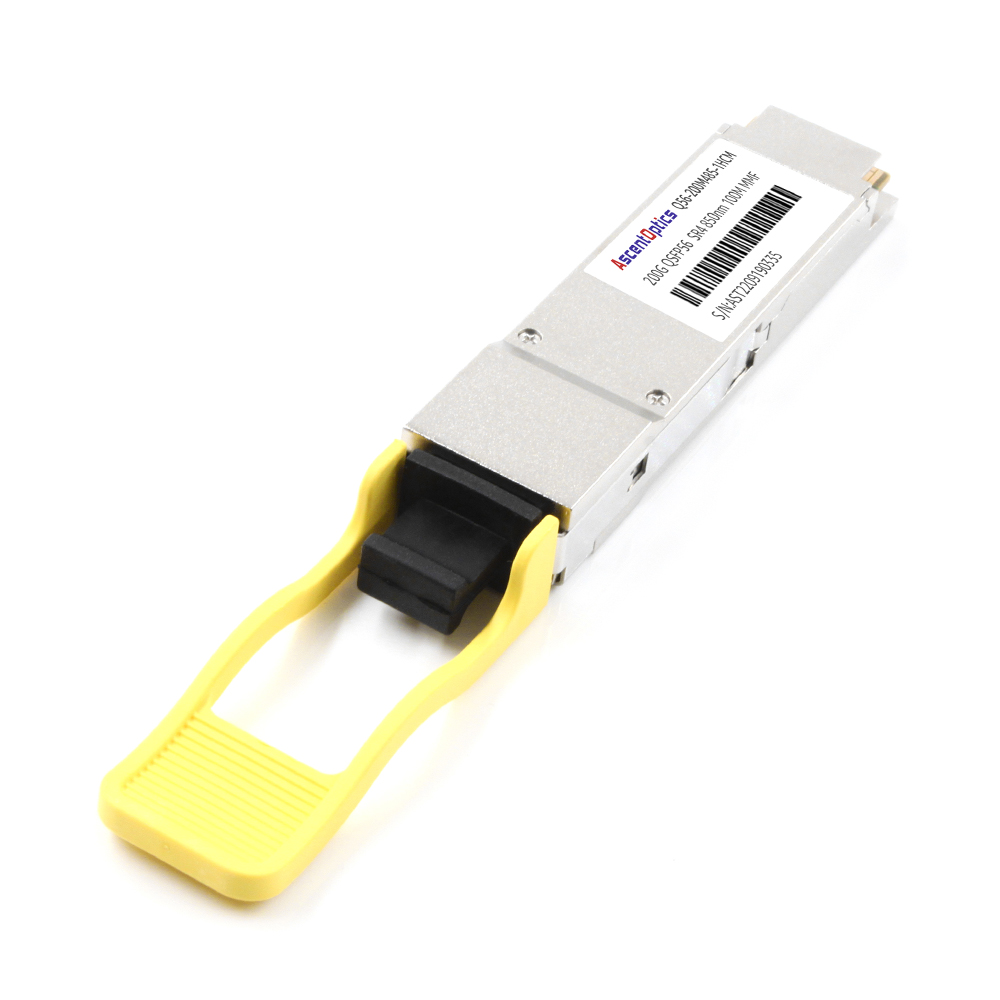
200G QSFP56 SR4 is a high-speed, short-reach multimode optical transceiver designed for data centers, primarily used for high-speed interconnections between servers and switches, as well as between switches. It is a common short-reach solution for data centers transitioning from 100G to 400G, offering low cost and low latency.
Key Technical Specifications
Data Rate: 200Gbps (4 lanes × 50G PAM4 modulation).
Type: Multimode parallel optics (SR4 stands for Short Reach 4-channel).
Wavelength: 850nm VCSEL.
Transmission Distance: Up to 70m on OM3 multimode fiber, up to 100m on OM4/OM5.
Connector: MTP/MPO-12.
Power Consumption: Typically <5W, with hot-pluggable low-power design.
Applications: Primarily for 200G Ethernet (200GBASE-SR4) and InfiniBand HDR networks, ideal for intra-rack interconnections in AI, HPC, and cloud data centers. Compatible with equipment from NVIDIA/Mellanox, Arista, Cisco, etc.
Key Features:
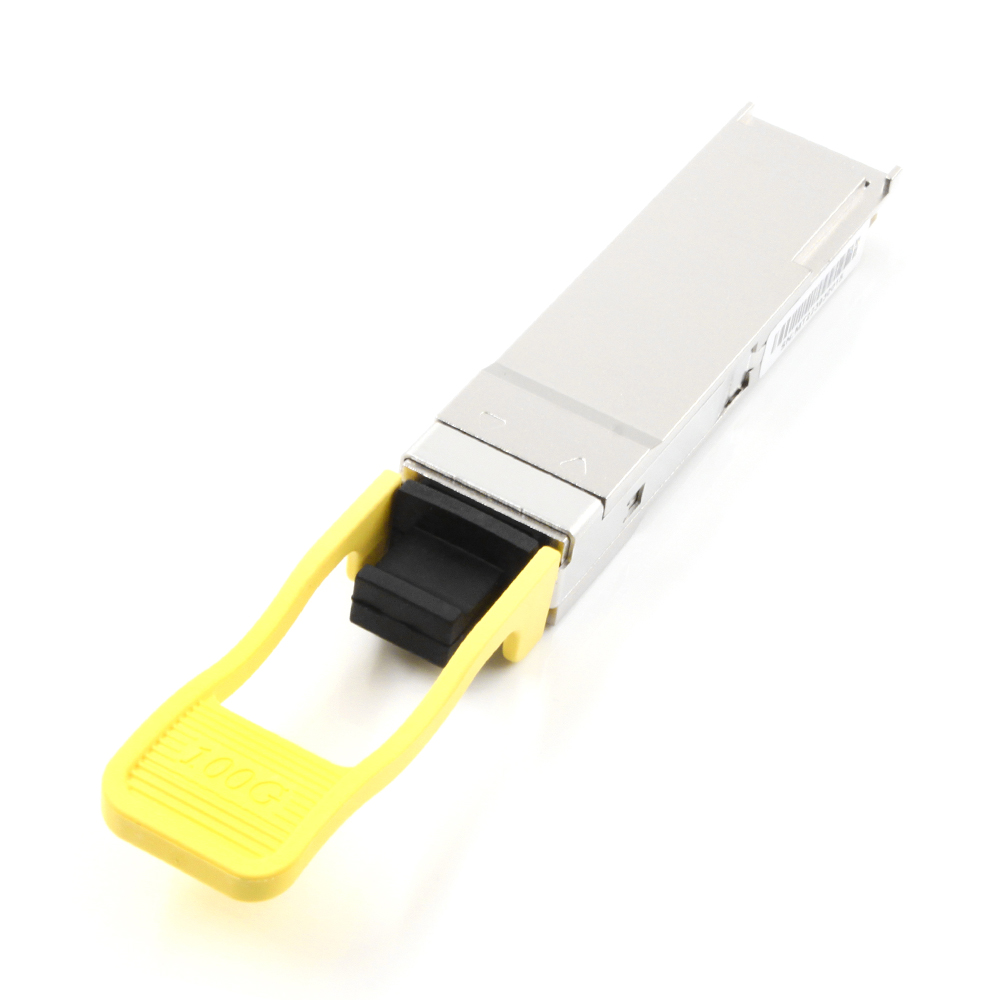
Utilizes 50G PAM4 technology to achieve higher bandwidth within limited fiber resources.
Lower cost than single-mode solutions, ideal for short-reach connections within data centers.
High port density, compatible with next-generation 200G switches.
Supports large-scale deployment in data center environments.
The 200G QSFP56 SR4 is currently one of the most mature and cost-effective short-reach optical transceiver solutions in 200G data center networks. It is particularly suitable for multimode fiber interconnections within 100 meters, making it the mainstream choice for smoothly upgrading from 100G to 200G.
The Role of 200G QSFP56 SR4 in Accelerating InfiniBand HDR Networks
InfiniBand HDR is a high-performance computing (HPC) networking standard led by NVIDIA, supporting 200Gb/s full-duplex bandwidth. It is primarily used in AI, supercomputing, cloud computing, and data center interconnects. The technology employs 50G PAM4 modulation, achieving 200G rates per port through 4 lanes.
The 200G QSFP56 SR4 is a multimode optical transceiver module specifically designed for InfiniBand HDR. Its core role is to provide short-distance, high-bandwidth, low-latency optical interconnects, thereby significantly accelerating the deployment and performance improvement of HDR networks.

-
Enabling End-to-End 200G HDR Connectivity
The QSFP56 SR4 is the standard short-reach optical module for HDR networks, used for connections within a rack (Top-of-Rack) or between adjacent racks. It directly interconnects switch ports with servers or GPU adapters, forming a complete end-to-end HDR system that supports ultra-low latency (<600 ns) and high message rates (>200 million messages/sec).
-
Enhancing Network Bandwidth and Overall Performance
The 200G QSFP56 SR4 uses 4 × 50G PAM4 modulation combined with multimode fiber, providing twice the bandwidth compared to the previous-generation InfiniBand EDR (100G), effectively alleviating network bottlenecks in AI and HPC clusters. In highly parallel computing scenarios, it accelerates GPU Direct RDMA communication, reducing data synchronization and gradient exchange times between GPUs, thereby improving model training and inference efficiency.
Additionally, the 200G QSFP56 SR4 supports port splitting (Splitter) applications, such as dividing 1 × 200G HDR into 2 × 100G HDR100, allowing greater deployment flexibility across different network scales and topologies.
-
Meeting Ultra-Low Latency Requirements for AI/HPC Clusters
In InfiniBand networks, latency is often more critical than transmission distance. As a short-reach multimode module, the 200G QSFP56 SR4 offers extremely low optical processing latency and does not require complex DSP compensation like long-reach or coherent solutions. This makes it ideal for intra-rack or adjacent-rack interconnections. Such low-latency characteristics are particularly important for GPU-to-GPU communication, All-Reduce operations, and model parallel training, significantly enhancing the overall computational efficiency of the cluster.
-
Reducing Latency and Cost
In HDR network deployments, the 200G QSFP56 SR4 offers clear advantages in both performance and cost-effectiveness:
Compared with copper cables (DAC, limited to 2–3 m), the SR4 supports longer distances up to 100 m, making it suitable for in-data-center wiring.
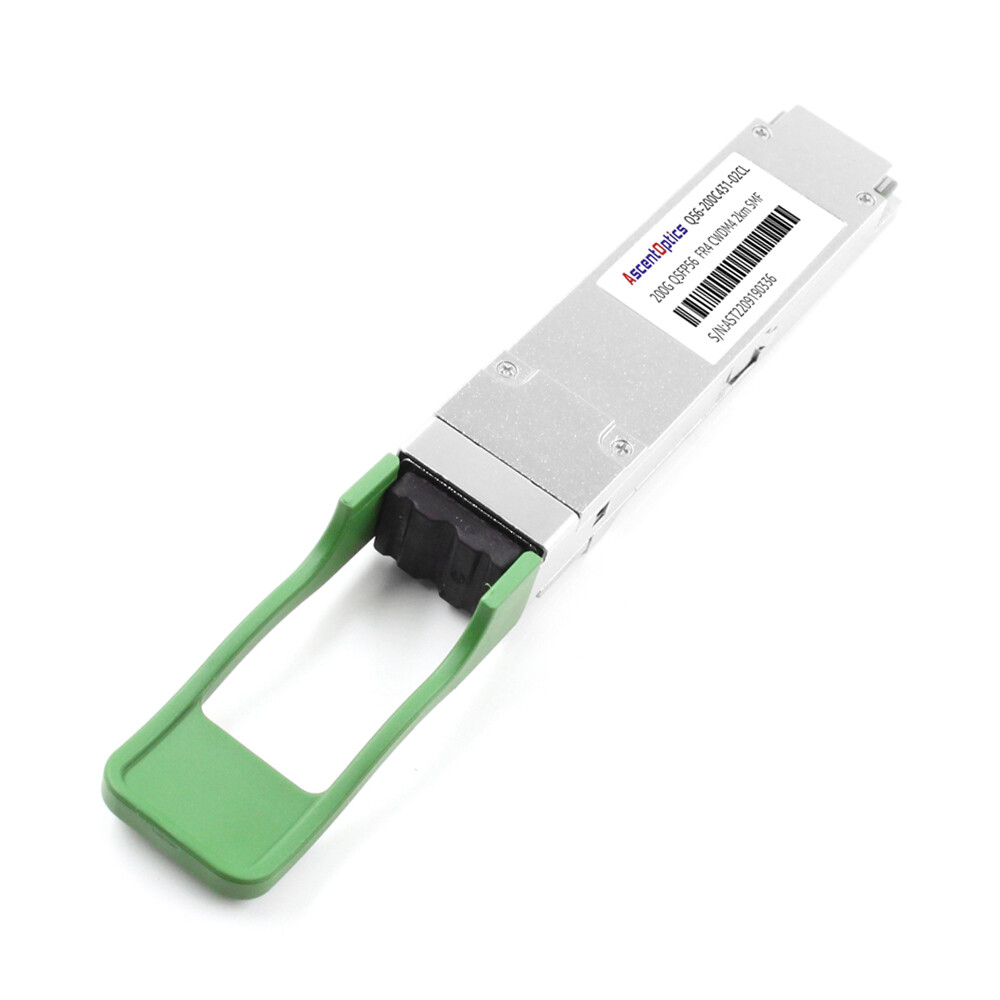
Compared with long-reach modules (e.g., FR4, 2 km), the SR4 has lower cost, lower power consumption, and is easier to deploy and maintain, making it the most common choice for HDR interconnects in data centers.
Furthermore, the InfiniBand protocol is optimized for low latency, and the SR4 module adheres to strict BER testing standards, ensuring error-free transmission.
-
Acceleration Effects in Application Scenarios
Supercomputing and AI clusters: Seamlessly integrates computing and storage infrastructure, improving overall throughput.
Cloud data centers: Supports topologies such as Fat-Tree and Leaf-Spine, accelerating large-scale parallel computing.
Ethernet compatibility: Some modules also support 200G Ethernet (RoCE), enabling hybrid deployment.
The 200G QSFP56 SR4 is one of the most critical short-reach interconnect modules in InfiniBand HDR networks. By providing reliable short-reach 200G optical connectivity, it directly increases network bandwidth, reduces latency, and optimizes performance for HPC and AI applications. Within NVIDIA’s end-to-end solutions, it is an indispensable component for building high-performance InfiniBand networks.
Typical Application Scenarios of 200G QSFP56 SR4
The 200G QSFP56 SR4 is primarily used for short-distance (≤100m) high-speed interconnections in data centers. Below are its most common typical application scenarios:

AI and GPU Cluster Interconnects
In large-scale AI training/inference clusters (e.g., NVIDIA DGX/HGX systems), it provides high-bandwidth, low-latency interconnections between GPU servers, supporting GPUDirect RDMA to significantly accelerate distributed training.
High-Performance Computing (HPC) and Supercomputers
In InfiniBand HDR networks, it connects compute nodes, storage, and switches to form Fat-Tree or Dragonfly topologies, delivering ultra-high throughput for scientific simulations, weather forecasting, and similar applications.
Cloud Data Center Intra/Inter-Rack Interconnects
Used in Leaf-Spine architectures for Top-of-Rack (ToR) switch-to-server links, supporting 200G Ethernet or InfiniBand, ideal for backbone network upgrades in hyperscale cloud providers.
Storage Networks and Big Data Processing
Connects high-performance storage arrays (e.g., NVMe-oF) to accelerate big data analytics, database queries, and similar scenarios.
These scenarios fully leverage the advantages of its short-reach multimode fiber, low power consumption, and compatibility with the NVIDIA/Mellanox ecosystem, making it the mainstream choice for data centers in the current 200G era.
Conclusion
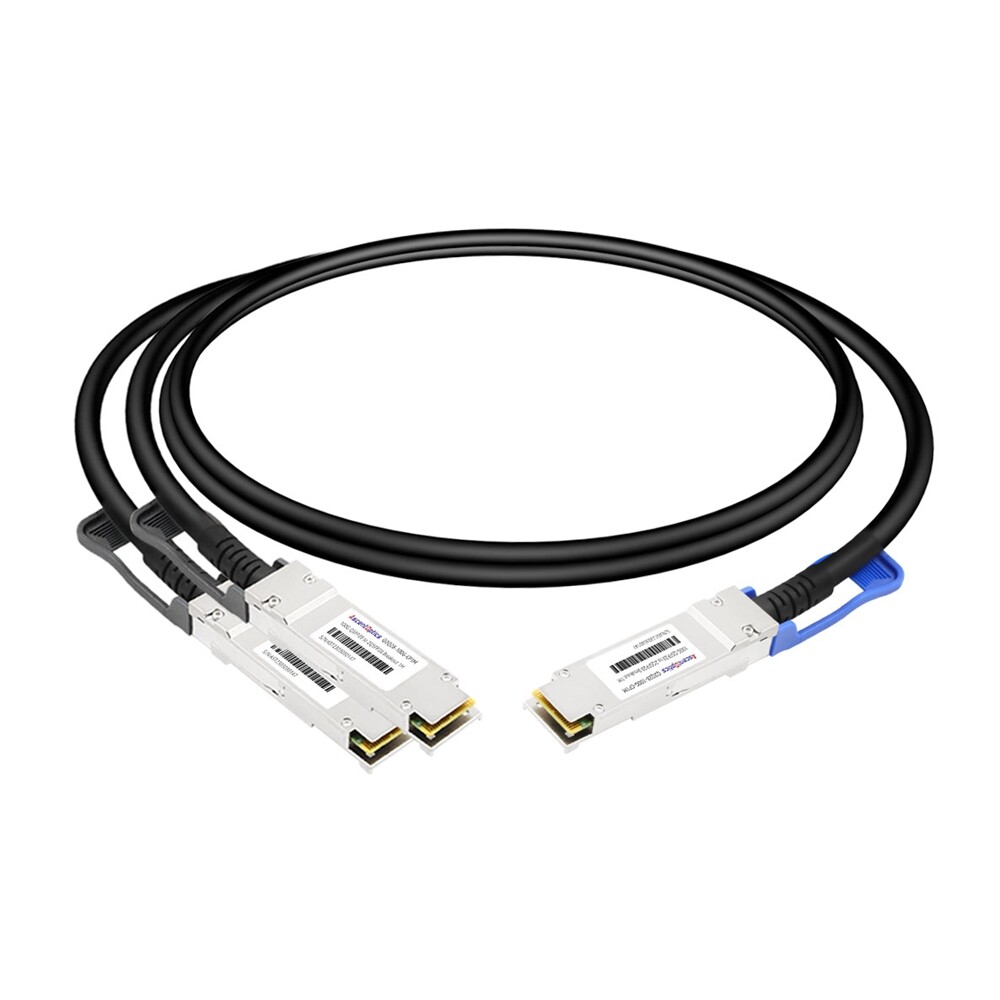
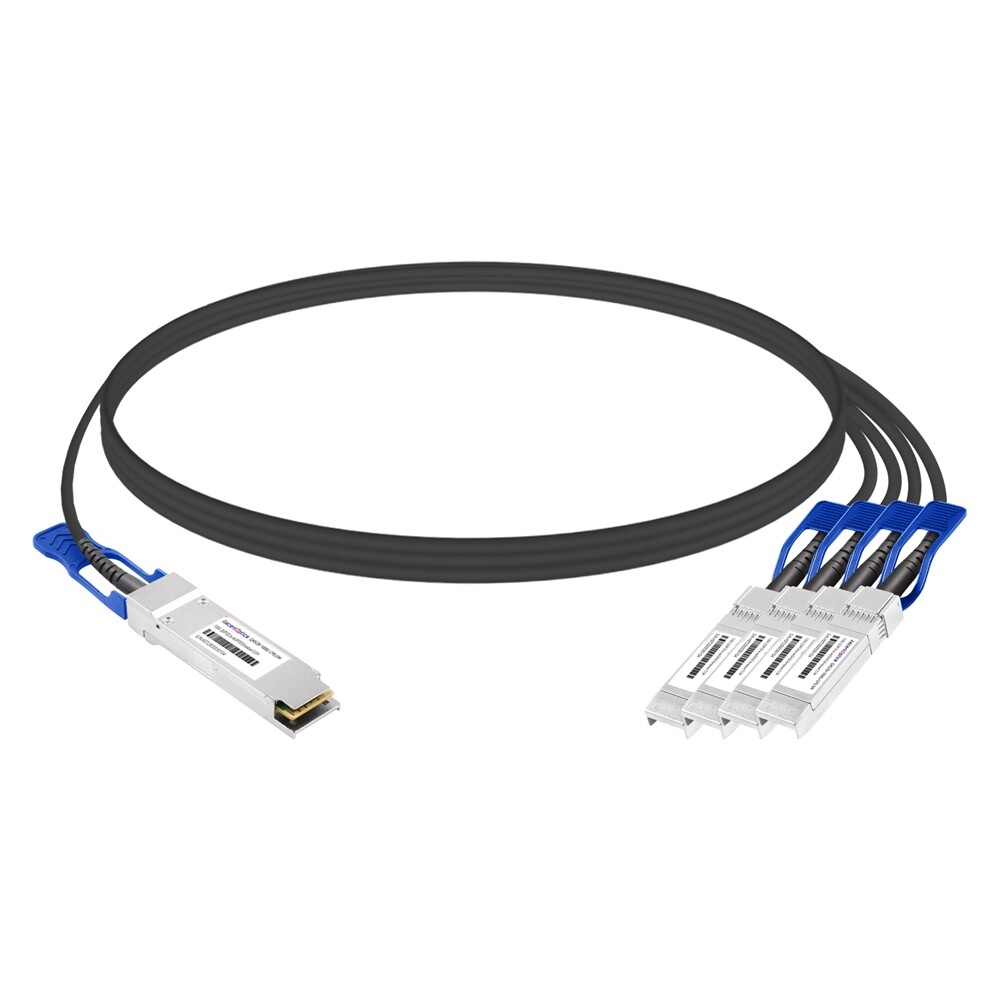
In summary, the 200G QSFP56 SR4 module, with its high bandwidth, low power consumption, and short-reach multimode fiber transmission advantages, has become an indispensable accelerator for InfiniBand HDR networks, driving significant performance improvements in AI training, HPC simulations, and cloud data centers. Meanwhile, the 100G QSFP28 Breakout DAC further optimizes costs and cabling complexity in high-density deployments through flexible breakout connections. As networks evolve toward higher speeds, these interconnect solutions will continue to support innovation in data-intensive applications.
Post Views: 3,585