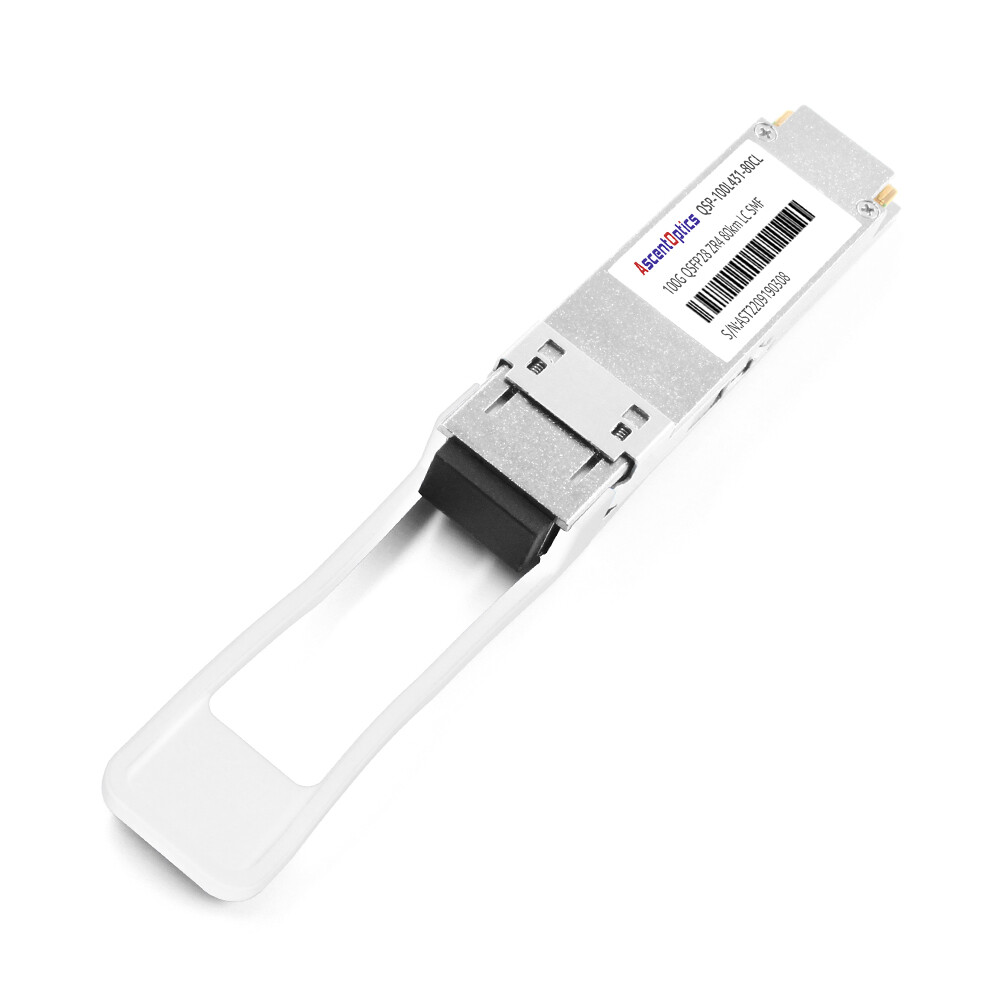
As data center interconnect (DCI) links continue to extend beyond metro distances, choosing the right 100G optical solution becomes increasingly important. 100G ER4 and 100G ZR are two widely used options for long-haul DCI, offering very different approaches in terms of distance, cost, and network complexity.
This article compares 100G ER4 vs. 100G ZR from key perspectives such as transmission reach, optical architecture, power consumption, and deployment cost, helping network designers select the most suitable solution for their DCI scenarios.
What Is 100G ER4?
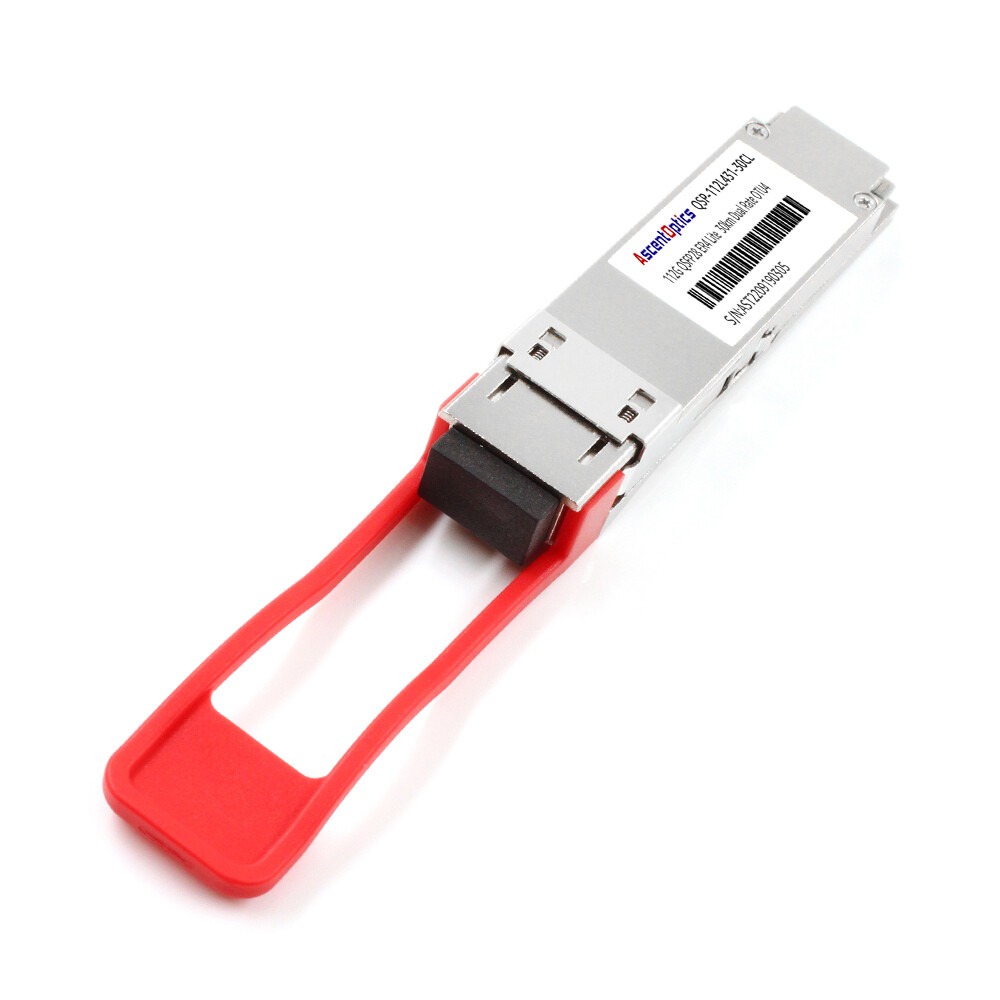
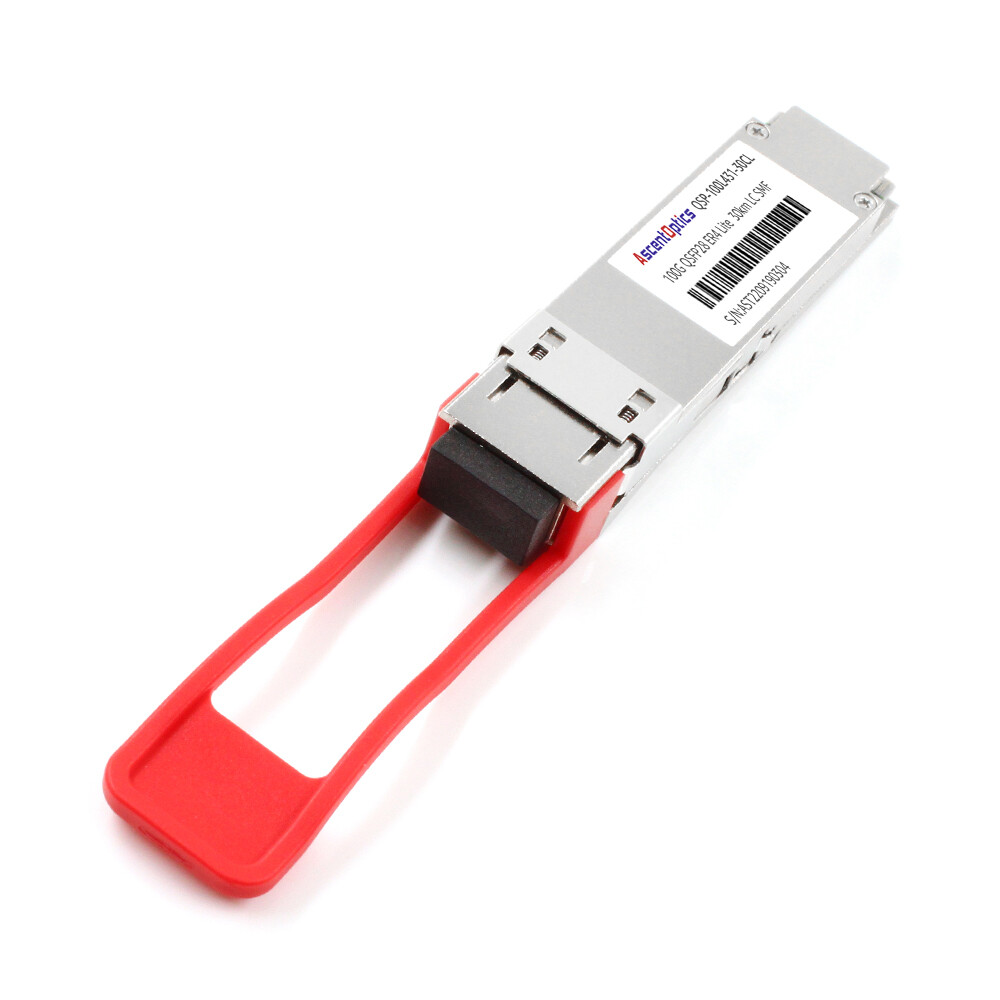
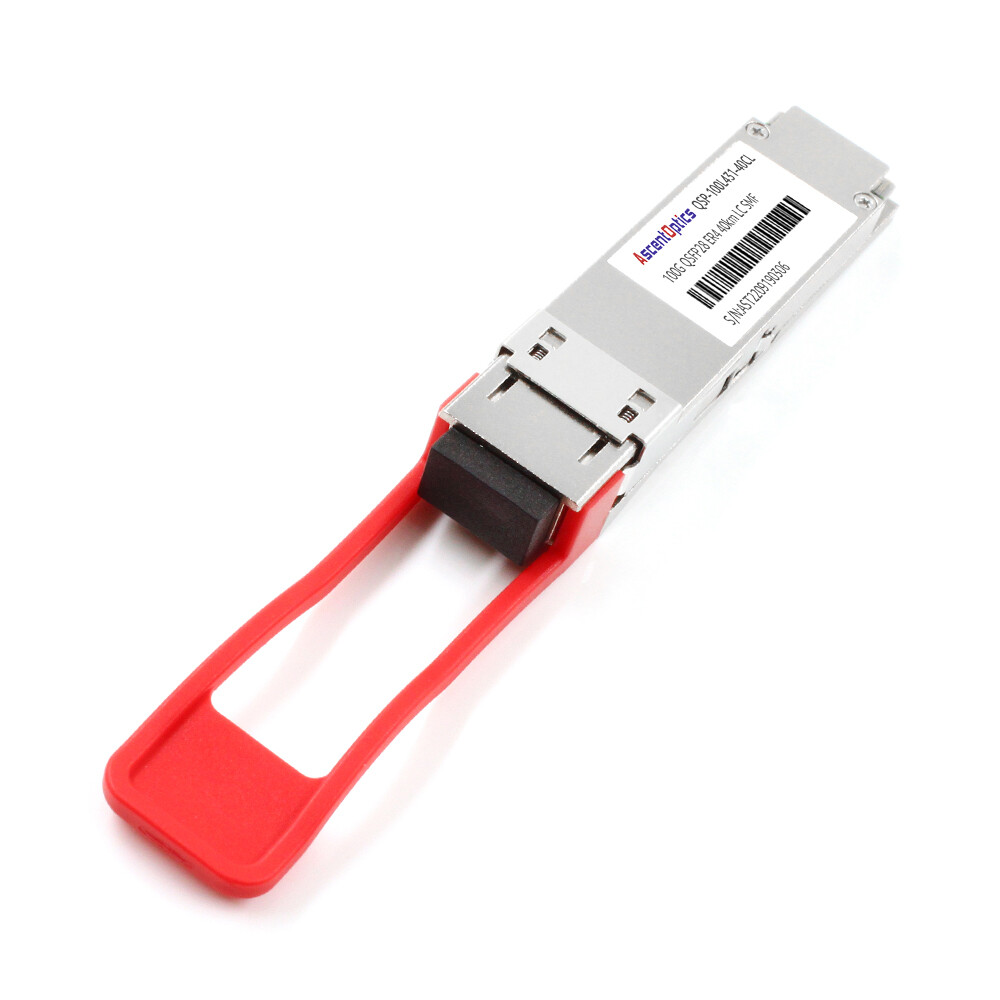
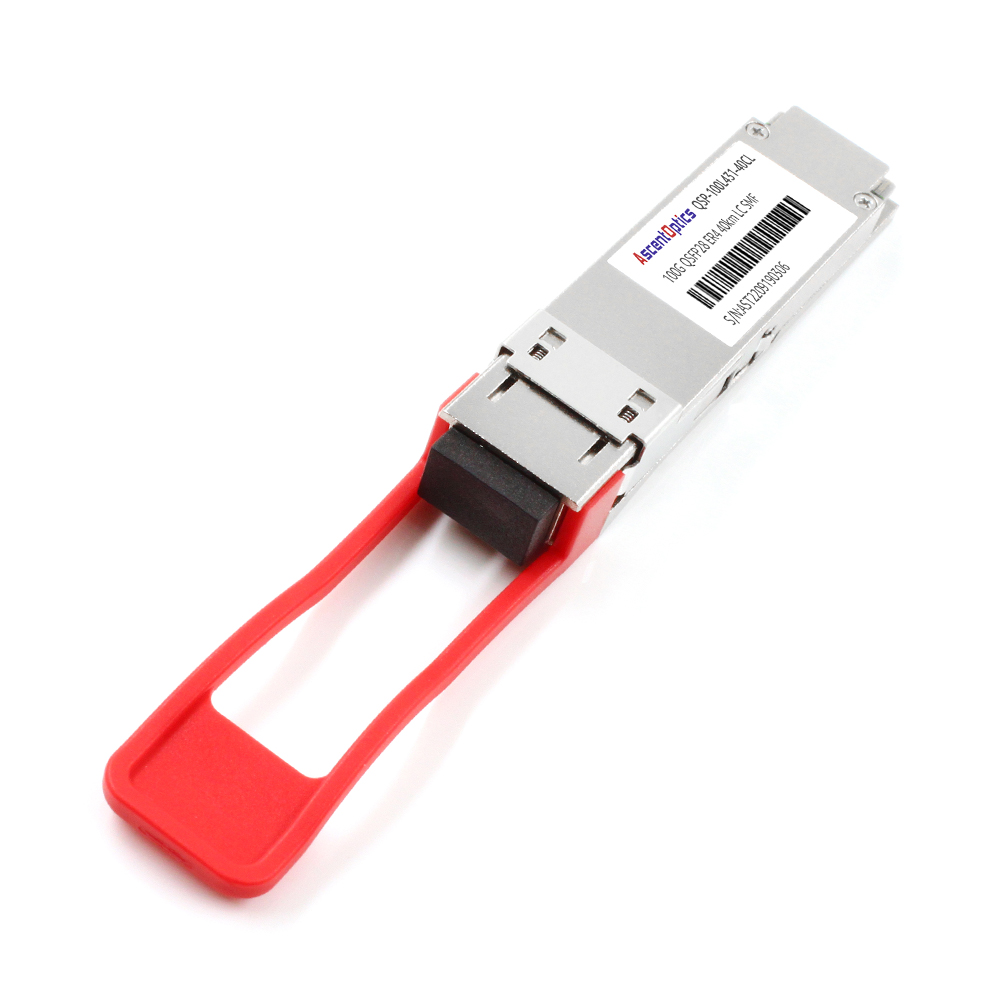
100G QSFP28 ER4 is a 100GbE optical transceiver designed for medium- to long-distance transmission, and is widely used in data center interconnect (DCI) and metro networks. It enables long-reach 100 Gigabit Ethernet transmission over single-mode fiber (SMF), with a typical maximum distance of up to 40 km when host FEC is enabled, without the need for external optical amplifiers.
The module is packaged in the QSFP28 form factor and is based on 4×25G LAN-WDM wavelengths. Using dual-fiber single-mode fiber with an LC connector, it supports 100G Ethernet transmission over distances of up to 40 km. The 100G ER4 transceiver is compliant with the IEEE 802.3ba 100GBASE-ER4 standard and is compatible with mainstream switches and routers.
Key Features:
Compliant with IEEE 802.3ba 100GBASE-ER4 standard
Uses 4×25G LAN-WDM technology with LC duplex single-mode fiber
Supports medium-to-long-distance transmission up to 40 km
Low power consumption (approximately 4–6 W), no need for DWDM optical layer equipment
Mature technology, excellent compatibility, high cost-effectiveness, ideal for intra-city DCI and metro networks
Application Scenarios
100G ER4 is particularly suitable for:
Long-distance data center interconnect (DCI): Such as connections between data centers across campuses or cities.
Metro and regional telecom networks: Carrier backbone links supporting high bandwidth and low-latency transmission.
Point-to-point long-reach links: Providing plug-and-play convenience and cost-effectiveness without requiring traditional coherent systems or external amplification equipment.
In practical deployments, the 100G QSFP28 ER4 offers advantages such as low power consumption (approximately 4–6 W), simple deployment, and no need for DWDM optical layer equipment. It is ideal for intra-city data center interconnects, metro backbone extensions, and networks smoothly upgrading from 40G to 100G. Balancing distance, cost, and reliability, 100G ER4 delivers a mature and cost-effective 100G long-reach solution.
Introduction to 100G QSFP28 ZR4
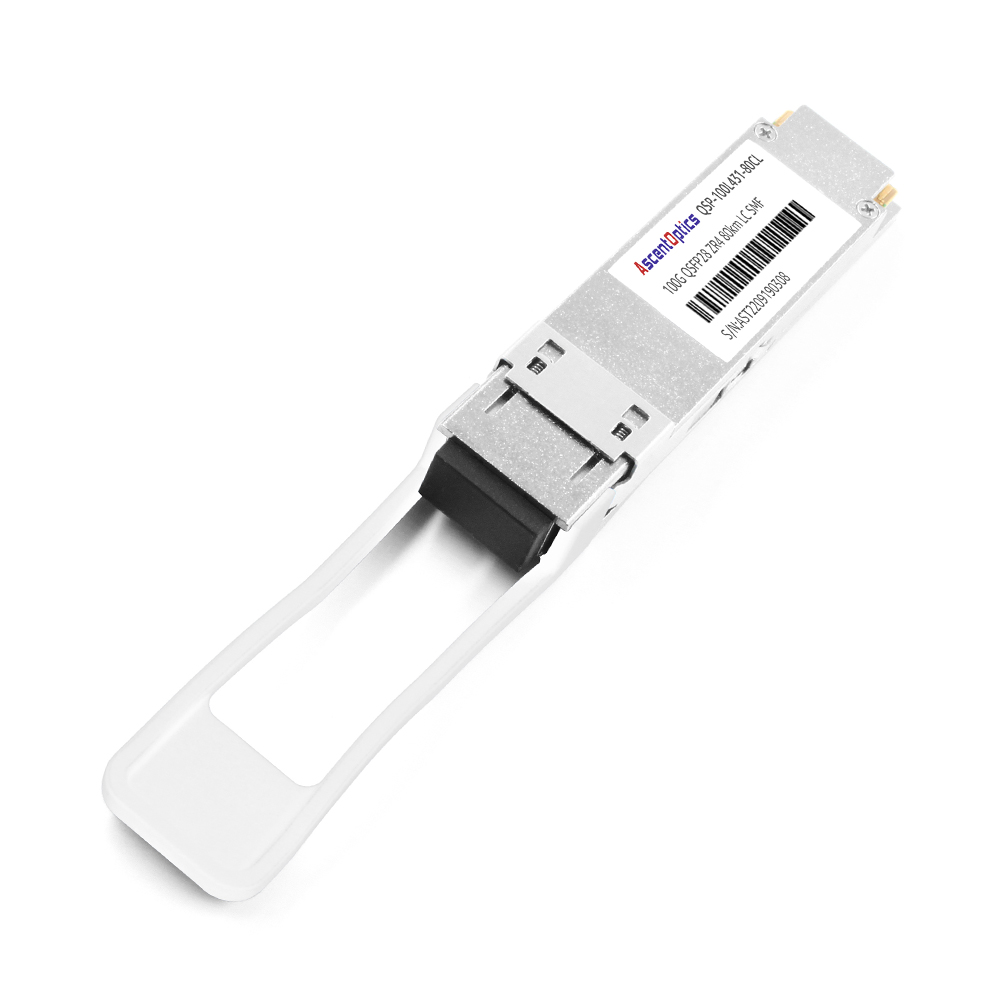
The 100G QSFP28 ZR4 is a high-performance 100GbE optical module designed for ultra-long-distance data center interconnect (DCI).
This module employs coherent optical (Coherent) technology and operates in the DWDM C-band, enabling ultra-long-distance transmission of ≥80–120 km over single-mode fiber (with the potential for even greater distances on optimized links or with amplifier support). The QSFP28 ZR4 is compatible with mainstream switches and routers, supports optical amplification, wavelength multiplexing, and high fiber utilization—making it ideal for cross-city or regional DCI networks, as well as evolutionary scenarios toward future 400G/800G upgrades.
Typical Applications of 100G QSFP28 ZR4
Cross-City Data Center Interconnect (DCI)
Connecting data centers in different cities with transmission distances exceeding 100 km, ensuring high-speed, low-latency communication between large-scale data centers.
Cross-Regional / Cross-Provincial Backbone Networks
Leveraging DWDM and coherent optical technology to carry multiple 100G channels on a single fiber, improving fiber utilization and reducing operational costs.
Large-Scale Cloud Services and Internet Backbone Interconnect
Meeting the high-bandwidth and reliability requirements of services such as cloud computing, video streaming, and content delivery networks (CDN).
Data Center Upgrade and Evolution Path
Providing a smooth transition to 400G ZR / 800G ZR networks, offering technical assurance for future high-speed network expansion.
In summary, ZR4 is primarily used in ultra-long-distance, high-density, and high-reliability DCI as well as metro and backbone network scenarios.
100G ER4 vs 100G ZR4: Which Is Better for Ultra-Long-Distance DCI?
As data centers continue to grow in scale, the demand for high-speed, long-distance optical communication in data center interconnect (DCI) keeps increasing. In the 100G era, 100G ER4 and 100G ZR are two solutions frequently compared. However, they differ fundamentally in technical approach, transmission reach, and application scenarios. This article analyzes from the perspective of real DCI requirements to determine which solution is more suitable for ultra-long-distance deployments.
100G ER4: Gray Optics Ethernet Solution for Medium to Long Distances
The 100G ER4 is based on IM-DD (Intensity Modulation – Direct Detection) technology. It uses 4 LAN-WDM wavelengths to achieve 100G Ethernet transmission over single-mode fiber for up to 40 km. In some high-quality link environments, the 100G ER4 can be extended to approximately 60 km, but it is not designed for ultra-long-distance scenarios.
In DCI (Data Center Interconnect) scenarios, the advantages of 100G ER4 lie in its simple structure, low deployment cost, and low power consumption. It requires no additional DWDM optical layer equipment, making it suitable for metro or intra-city data center interconnections where fiber resources are abundant but distance is limited.
100G ZR: Coherent Optical Module Truly Designed for Ultra-Long-Distance DCI
The 100G ZR employs coherent optical communication technology (Coherent) and operates in the DWDM C-band. It natively supports optical amplification, optical layer multiplexing, and ROADM networks. Its typical transmission distance exceeds 300 km, and in actual inter-city DCI networks, it can even support multi-hop deployments over longer distances.
Compared to traditional gray optics modules, the 100G ZR can carry multiple 100G channels on a single fiber, significantly improving fiber utilization. It is the ideal choice for ultra-long-distance DCI scenarios where fiber resources are scarce or leasing costs are high.
Transmission Distance and Fiber Utilization Comparison
In terms of reach, 100G ER4 is primarily suited for medium- to long-distance interconnects in the 40–60 km range, while 100G ZR is designed for ultra-long-haul DCI links beyond 100 km.
From a fiber utilization perspective, ER4 typically delivers 100G per fiber pair, whereas ZR leverages DWDM to achieve multiple terabits per second over a single fiber, offering clear advantages in large-scale DCI deployments.
Cost and Power Consumption Considerations
In terms of module cost and power consumption, 100G ER4 is significantly lower than 100G ZR. However, as DCI distances increase and fiber costs rise, 100G ZR provides better long-term efficiency in terms of cost per bit. As a result, shorter links tend to prioritize module cost, while ultra-long-haul deployments should focus more on overall network TCO.
Key Differences Between ER4 and ZR
Overall, 100G ER4 can be seen as an extension of long-reach Ethernet, whereas 100G ZR is purpose-built for ultra-long-distance DCI. When planning a DCI network, factors such as transmission distance, fiber availability, scalability requirements, and total cost should be carefully evaluated to select the most suitable 100G interconnect solution.
Summary
There is no universal best choice between 100G ER4 and 100G ZR. The right solution depends on factors such as transmission distance, network scale, budget, and operational capabilities.
100G ER4 is ideal for links within 40 km, offering a simple, low-power, and cost-effective solution without the need for DWDM systems or complex optical layer planning.
100G ZR supports ultra-long-distance transmission and wavelength-division multiplexing, making it better suited for inter-city or regional DCI scenarios, while significantly improving fiber utilization and scalability.
By understanding the strengths and limitations of both technologies, network planners can design a DCI architecture that balances performance, cost, and operational efficiency, while laying a solid foundation for future upgrades.
Post Views: 1,562