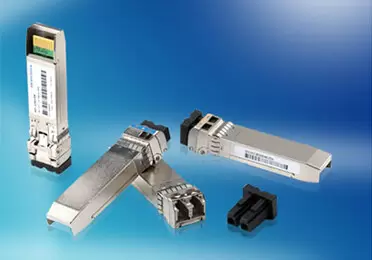
As AI clusters scale to tens of thousands or even hundreds of thousands of GPUs, intra-data-center interconnects are rapidly entering the 1.6T (1600G) era. As the core form factors supporting 1.6T optical modules, OSFP (Octal Small Form-factor Pluggable) and its enhanced variant OSFP-XD (eXtra Dense) have become focal points in the industry.
This article provides a systematic comparison between OSFP and OSFP-XD across key dimensions—form factor structure, power handling, thermal design, application scenarios, and evolution potential—to help network planners and equipment vendors make more informed technical choices.
Overview of OSFP and OSFP-XD
Both OSFP and OSFP-XD are high-speed pluggable optical module / electrical interface form factors designed for high-bandwidth data centers, AI training clusters, and HPC environments. They are defined and managed by the OSFP MSA (Multi-Source Agreement) organization.
Both belong to the “Octal” family (starting with 8 channels), but OSFP-XD is an extended version specifically developed for 1.6T and future higher speeds. It primarily addresses the challenge of balancing port density and power consumption under the constraints of existing SerDes lane rates.
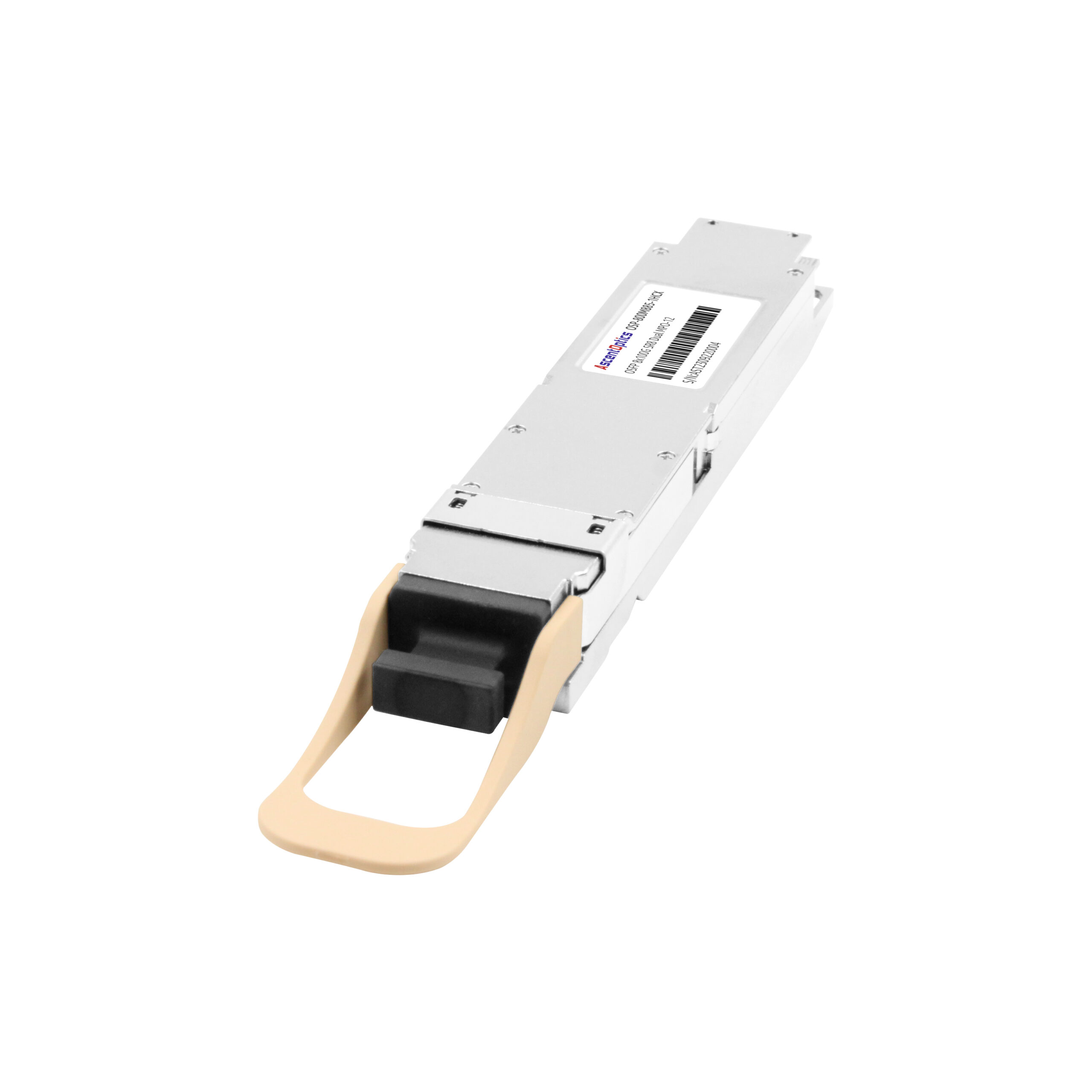
OSFP (Octal Small Form-factor Pluggable)
OSFP is a high-density optical module form factor originally designed for 400G and higher speeds, initially targeting 800G applications. It provides significantly improved power delivery and thermal dissipation capabilities thanks to its larger physical size.
Typical Characteristics:
Targeted at 800G / 1.6T optical modules
Supports 8×100G or 8×200G PAM4 electrical lanes
Power consumption capability: approximately 15–25W (depending on specific implementation)
Widely adopted in AI / HPC switch platforms
OSFP-XD (OSFP eXtended Density)
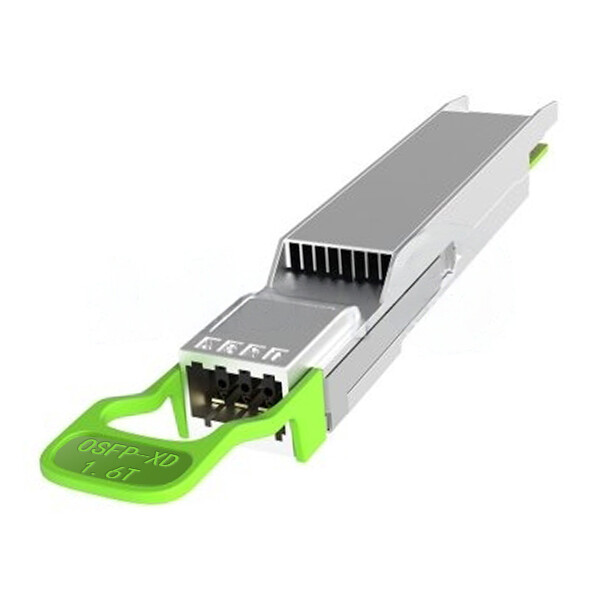
OSFP-XD is an enhanced and evolved version of the OSFP form factor, specifically designed for 1.6T ultra-high-speed optical modules. It focuses on increasing port density, electrical capability, and thermal performance to meet the extreme requirements of next-generation AI data centers.
Design objectives include:
Support for higher power budgets (25W+, targeting 30W and beyond)
Improved compatibility with 200G-per-lane electrical interfaces
Enhanced system-level port density and overall reliability
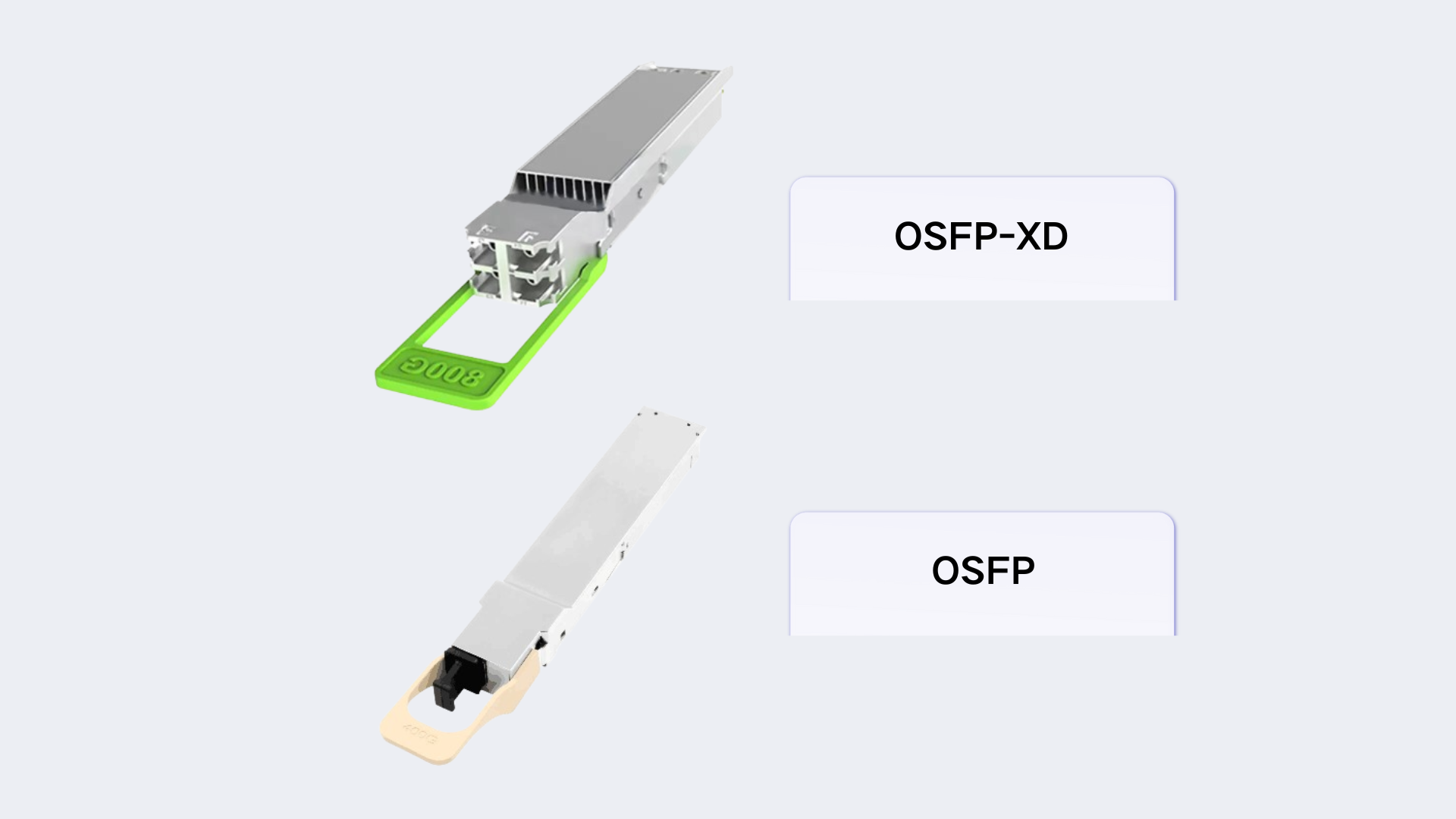
Core Differences Between OSFP and OSFP-XD
| Comparison Dimension |
OSFP |
OSFP-XD |
| Primary Positioning |
800G / early 1.6T |
Natively designed for 1.6T |
| Lane Data Rate |
8×100G / 일부 8×200G |
8×200G PAM4 |
| Power Support |
~15–25W |
25W+ (targeting 30W+) |
| Thermal Capability |
Strong |
Stronger (optimized airflow and structure) |
| Port Density |
High |
Higher (optimized front-panel utilization) |
| Electrical Interface |
Supports 112G |
Native support for 224G SerDes |
| Typical Applications |
800G AI switches |
1.6T AI / HPC switches |
Thermal Management and Power Consumption
With the transition to the 1.6T era, optical modules have seen significant increases in data rates, integration levels, and signal processing complexity, making the continuous rise in per-module power consumption unavoidable. In particular, 8×200G PAM4 architectures place much higher demands on thermal performance due to high-speed DSPs, opto-electronic components, and more advanced packaging technologies.
Against this backdrop, OSFP-XD delivers greater thermal headroom for high-power optical modules through improved mechanical design and optimized thermal management, including more efficient heat dissipation paths and airflow structures better aligned with high-speed switch ASICs. In comparison, traditional OSFP form factors operate closer to their thermal limits when supporting 1.6T modules, while OSFP-XD provides a larger safety margin for long-term, stable operation.
Port Density and System Design Impact
In large-scale AI and HPC clusters, front-panel port density directly affects not only the switching capacity of individual devices, but also rack-level compute density and overall network topology complexity. As per-port speeds increase to 1.6T, balancing port count, power consumption, and thermal performance within limited physical space has become a critical system design challenge.
While maintaining a pluggable form factor, OSFP-XD improves front-panel resource utilization through optimized interface and mechanical design, enabling system vendors to achieve more efficient port layouts under high-bandwidth conditions. This advantage is particularly evident in Spine–Leaf architectures and hyperscale AI networks, where it helps reduce device counts, simplify cabling, and enhance overall network scalability.
Will OSFP-XD Replace OSFP?
OSFP-XD will not replace the standard OSFP form factor; instead, it will exist as a parallel, future-oriented variant. Between 2025 and 2030, the two are expected to coexist, each serving different application scenarios, deployment timelines, and SerDes technology paths.
From the current industry perspective, OSFP-XD is unlikely to fully displace OSFP in the short term, and the two will continue to coexist in a complementary manner. Having been validated through years of deployment, OSFP has developed a mature ecosystem and retains advantages in cost and compatibility for 800G and certain low-power 1.6T applications.
At the same time, as AI data centers place increasing demands on bandwidth density and power headroom, OSFP-XD aligns more closely with the native design requirements of 1.6T optical modules, particularly for switching platforms with high port density and higher power budgets. In the mid-to-long term, OSFP-XD is expected to play a dominant role in next-generation 1.6T AI switches, while OSFP will continue to serve an important role in existing architectures and transitional deployments.
Conclusion
In the 1.6T optical interconnect era, the choice of form factor is no longer merely a matter of physical size, but a comprehensive consideration of power consumption, thermal performance, port density, and system architecture capability. OSFP-XD is not a simple upgrade of OSFP, but a critical piece of infrastructure purpose-built for 1.6T and next-generation AI networks.
Driven by the explosive growth in AI bandwidth demand, the two form factors are expected to coexist beyond 2026: OSFP will continue to emphasize density and a mature ecosystem, while OSFP-XD will target ultra-high-bandwidth and high-power applications. In practice, the optimal choice should be determined by a holistic evaluation of switch ASIC SerDes rates, power budgets, port density requirements, and migration strategies.
Post Views: 1,978