An efficient and reliable network infrastructure stands as the foundation of today’s seamless communications and data transfer in the interconnected global digital world. One of the core technologies advancing these networks is Active Optical Cables (AOCs). From data centers to cloud computing, AOCs play a crucial role in achieving operational flexibility, scaling, and high-speed data throughput along with low latency. AOCs have transformed the interconnection and management of high-performance systems by merging the advantages of optical fiber and traditional copper cabling into one with formidable speed and bandwidth.
In this guide, we will explain the AOC network cables by looking at their technical characteristics, primary uses, and how they outdo other conventional solutions. This article will enable informed decisions whether you manage enterprise systems as an IT professional, design the future of bulk data transfers as a network architect, or have an inquisitiveness pertaining to the integration of optical transceivers and Ethernet with networking technology.
What is an Active Optical Cable (AOC), and How Does it compare to Direct Attach?
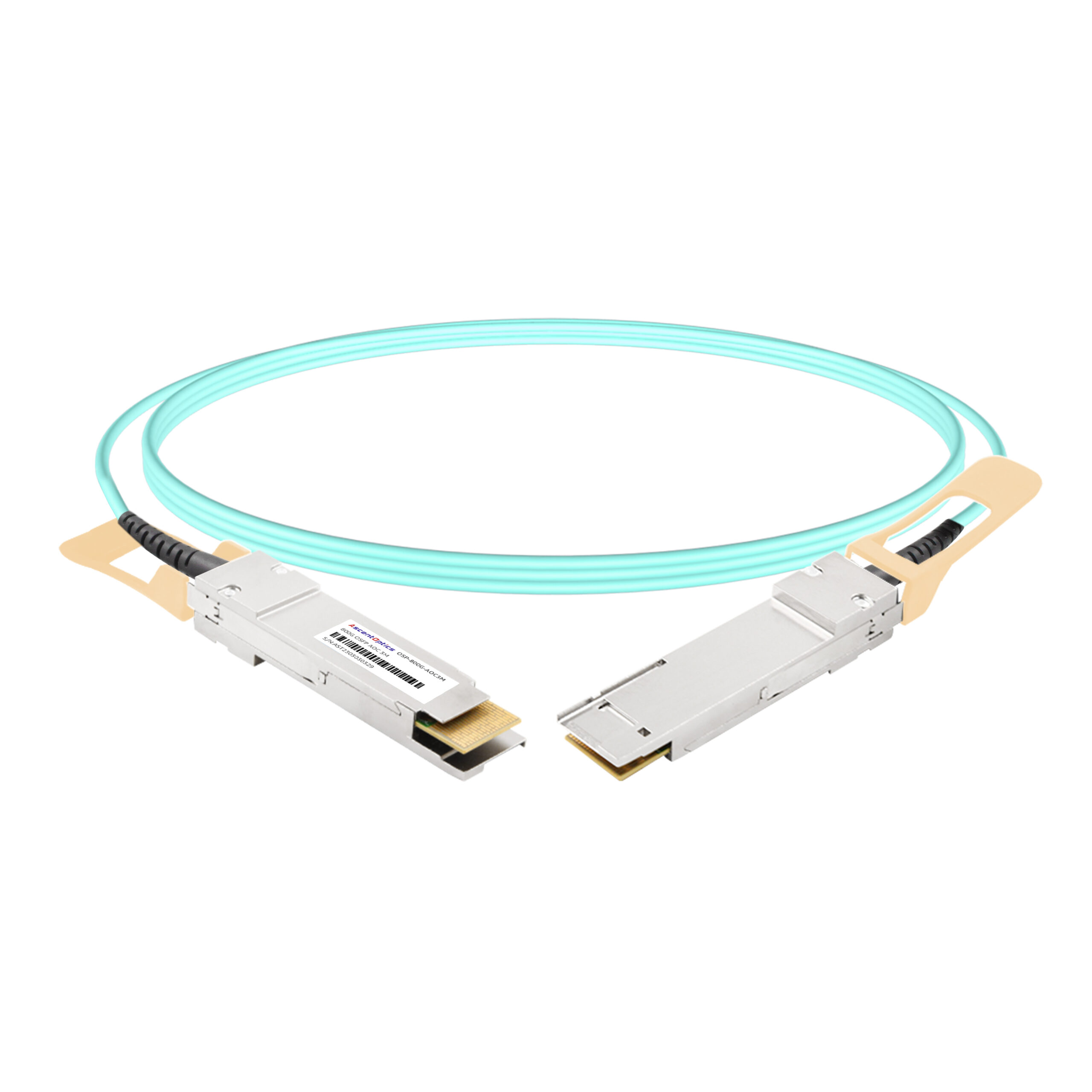
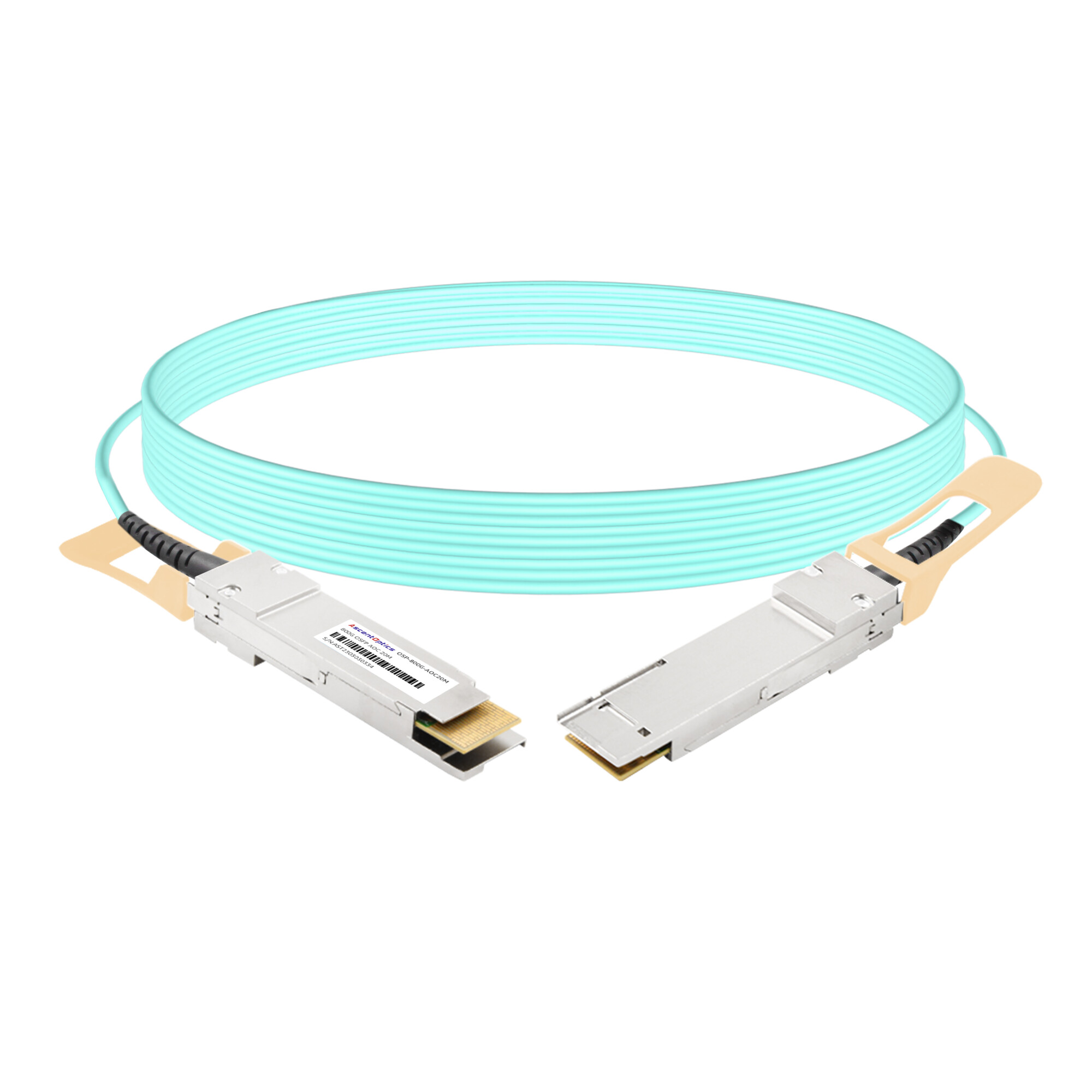
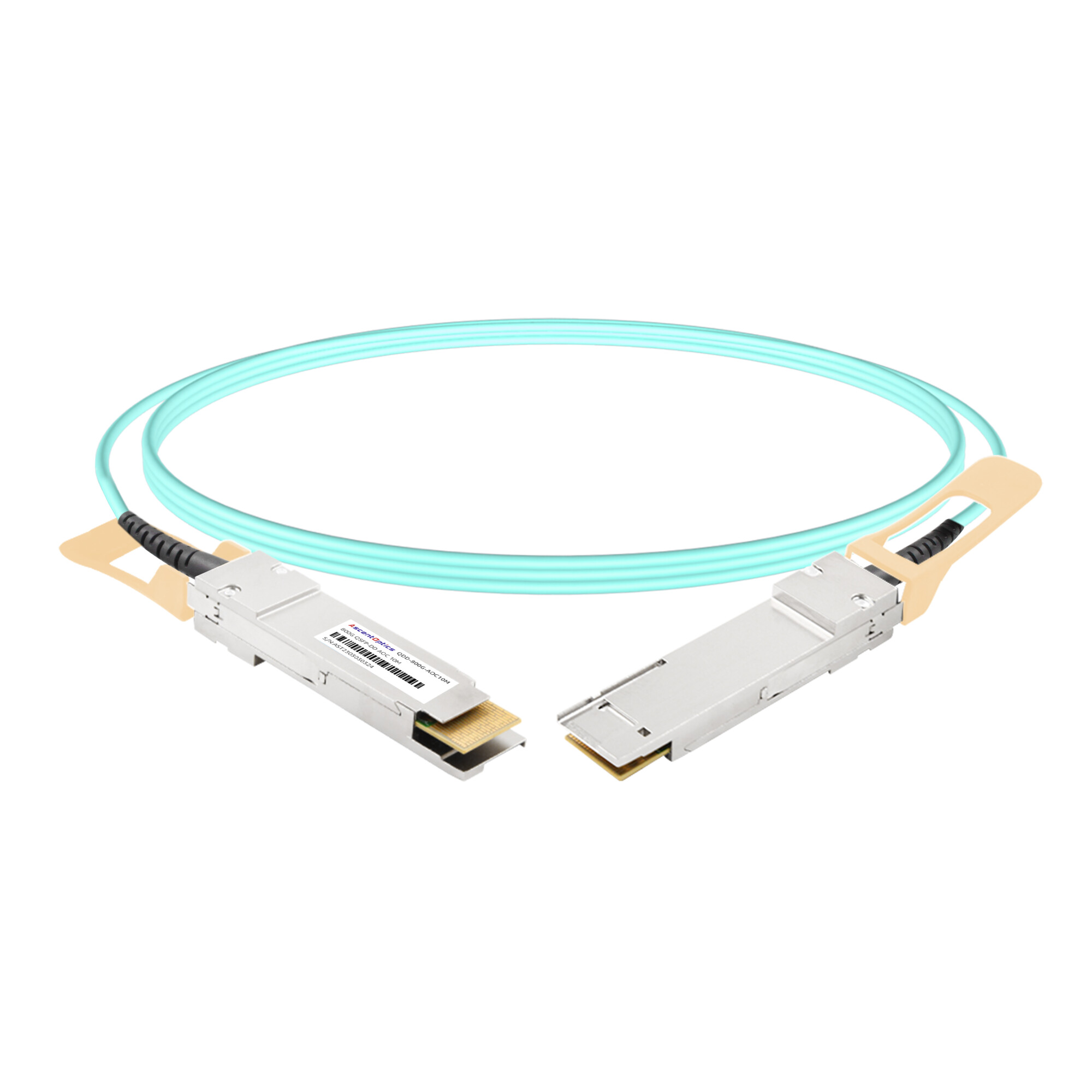
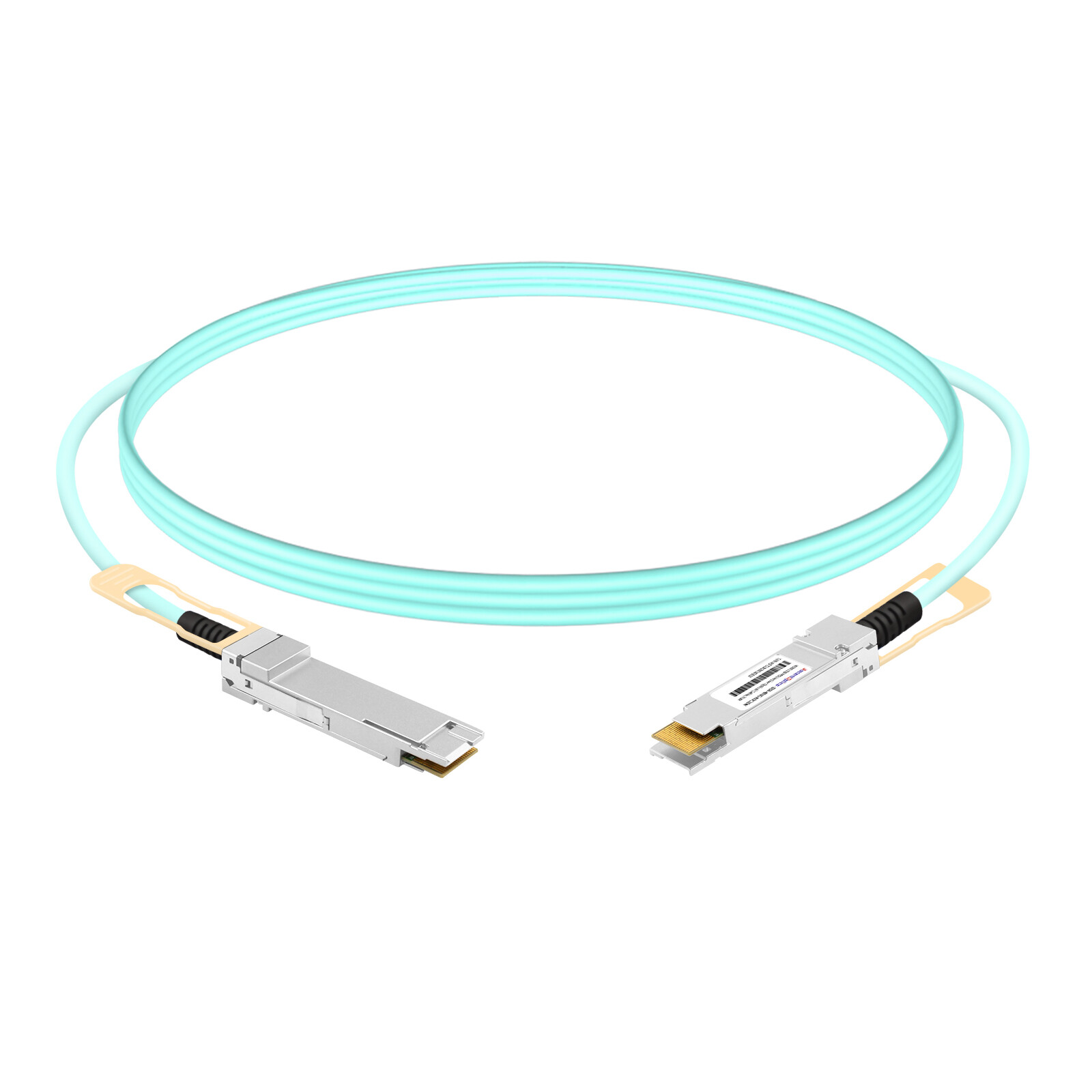
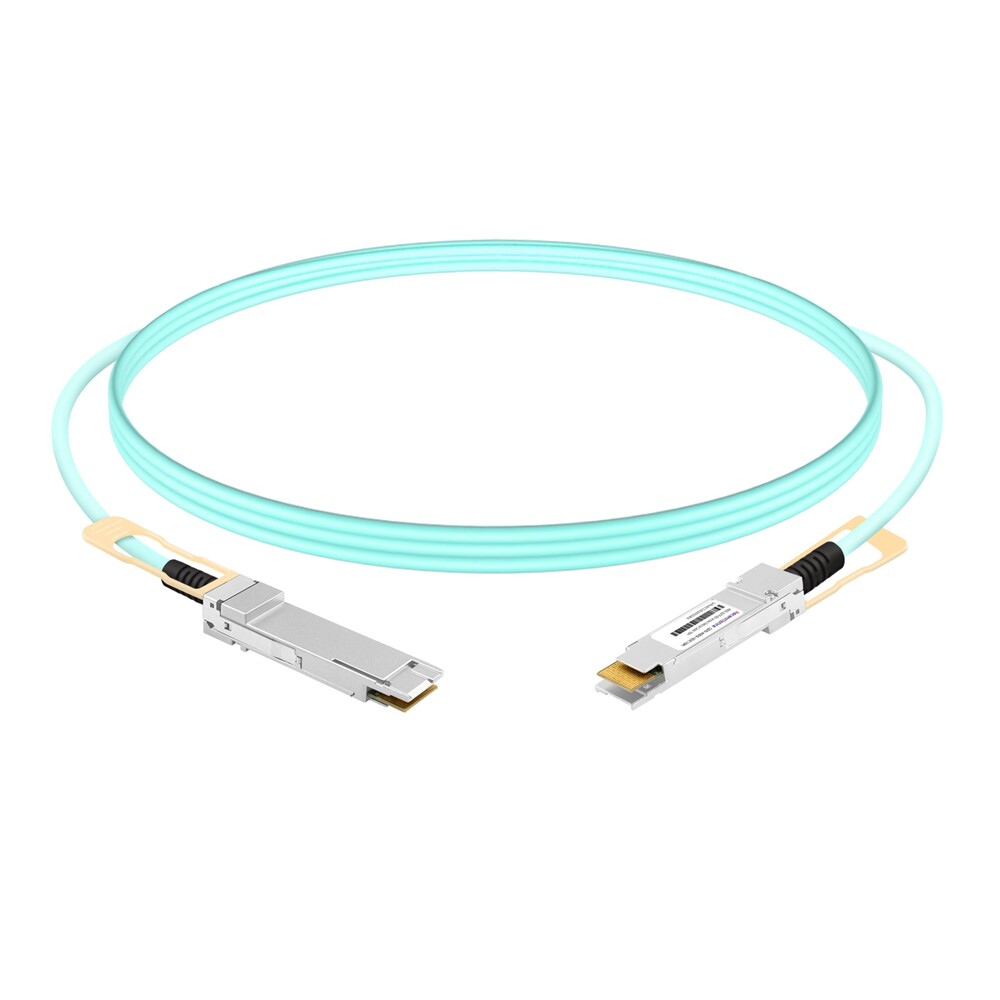
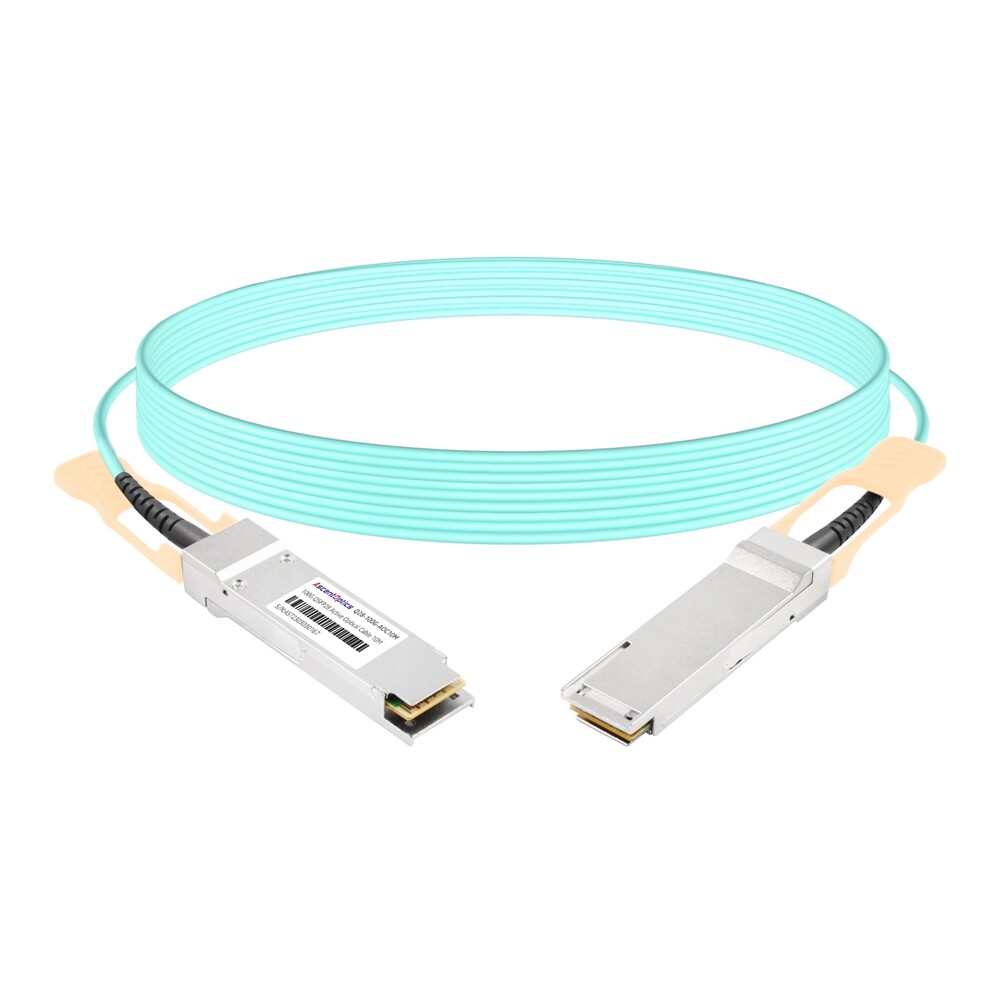
An Active Optical Cable (AOC) is a high-speed data transmission cable assembly type. It combines electronics transceivers with fiber optics, surpassing the speed and reliability of copper-based connections. AOCs are flexible, lightweight, and nonbulky, making them ideal for use in data centers, high-performance computing, and networking applications. They also support greater bandwidth over a distance.
Relative to Direct Attach Copper (DAC) connections, AOCs have more benefits. While DAC cables are cheaper for short distances, they can only reach up to five to seven meters in length. AOCs are able to exceed 100 meters in length while maintaining performance, signal strength, and other metrics. These advantages position AOCs as the go-to solution for high-speed data transmission over long distances.
Understanding AOC Technology
Active Optical Cables (AOCs) stand as one of the most significant achievements in data communication technologies. Their use ensures high-speed transmission with minimal losses over long distances, making them well-suited for data centers, cloud computing, and high-performance computing. In addition, AOCs are lightweight, highly flexible, and immune to electromagnetic interference, which simplifies cable management in complex setups. The ability of AOCs to provide reliable performance along with scalable and efficient data transfer enhances the overall performance and reliability of the systems and networks.
Key Differences: AOC vs DAC
- Transmission Range: An AOC can extend several hundred meters in range, which is greater than what a DAC can offer, which is limited to around 10 meters.
- Signal Quality: AOCs outperform the rest when it comes to signal quality, as well as being unaffected by electromagnetic interference. This makes AOCs better for high data rates. DAC cables, on the other hand, powered by copper, have lower quality signals and are interfered with by other signals.
- Weight and Flexibility: Managing dense networks becomes simpler because the lightweight AOCs are easier to manage. Heavier and less flexible DACs make managing complex installations harder.
- Pricing: In terms of pricing, AOC has a greater price range while offering advantages for long-distance use, as compared to DAC, which is cheaper but only useful for short ranges.
- Power Usage: Since AOC uses active parts, more power is required than passive DACs.
When to Use Optical Fiber Over Copper Cable
Optical fiber outpaces copper cables when it comes to performance, scalability, and reliability. It is critical to understand situations where optical fibers are intended to optimize performance.
- Requirements of High Bandwidth: Optical fibers possess an upper hand when they are deployed to achieve greater bandwidth as compared to copper cables. While fiber optics can achieve speeds of 100 Gbps or more, copper connections can only handle speeds up to 10 Gbps within minute distances. Hence, for data centers, enterprise networks, and high-performance computing, optical fibers would serve the purpose best.
- Long Distance Connections: Fiber optics can transmit signals far beyond the distance of copper cables and without the loss of quality. Single-mode optical fiber, for instance, can span distances of up to 40 kilometers without the need for amplification of the signal, whereas copper cables are limited to 100 meters.
- Environments with Extreme EMI: Employing light instead of electrical signals makes optical fibers immune to EMIs, which copper is always susceptible to. This allows optical fiber to be the best option when it comes to industrial areas, hospitals, or other areas with a lot of electrical devices.
- Security Benefits: Compared to other methods, transmitting data using optical fibers is relatively easier. Due to the fact that fiber cables are hard to access without detection, it greatly minimizes the risks of data breaches, making it easier for industries such as finance and healthcare that deal with sensitive information.
- Anticipating Network Requirements: Increasing technological innovations have resulted in an unparalleled demand for elevated speeds and expanded capacities. Optical fibers possess the potential for scalable infrastructure that can sustain expansions and advancements in telecommunications, like 5G deployment.
- Decreased Latency: Lags are noticeably lower for fiber-optic networks than for traditional copper-based systems, especially for time-sensitive applications such as video calls, stock exchanges, and live broadcasts.
In order to remain competitive in the market, industry standards and technological benchmarks show that businesses are increasingly switching to optical fiber due to its advantages over copper cables on network architecture. While the initial cost of investment may be higher, the ROI is better over time when considering the performance, network durability, and scalability.
Benefits of Using Fiber Optic Active Cables in Data Center Environments
Why Choose Fiber Optics for High-Speed Data Transmission?
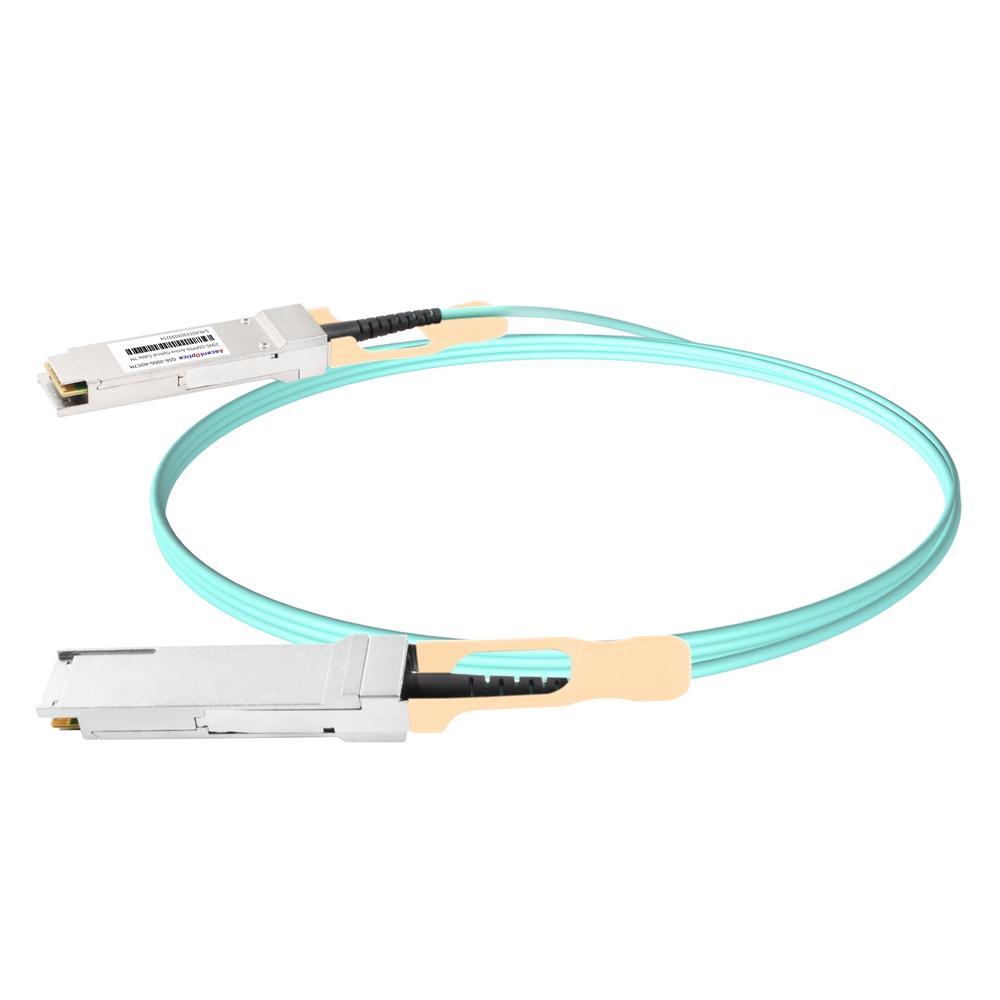
Due to unparalleled reliability and performance, fiber optics are the preferred choice for high-speed data transmission. Unlike copper wires, fiber optics offer greater bandwidth, which is essential for modern data center operations. In addition, fiber optics have greater resistance to electromagnetic interference, which guarantees consistency in signal quality regardless of distance covered. Their lightweight structure and durable design make it easier to maintain and install, providing a flexible structure for network developments. These factors make fiber optics critical in achieving data transmission that is efficient and adaptable for the future.
The Role of Active Optical Cable in Modern Data Centers
Active Optical Cables maintain their importance as components of modern data centers by providing high-speed data transfer, reliability, and efficiency. In my opinion, AOCs are ever so useful when considering their combination of the benefits of fiber optics and the ease of integration and plugging in. They are a lightweight, compact, and low-power option that meets the ever-growing bandwidth requirements of networks within data centers, thereby enabling scaling and performance optimization.
Exploring Different AOC Cable Options: From 10m to 200g QSFP56 to QSFP56
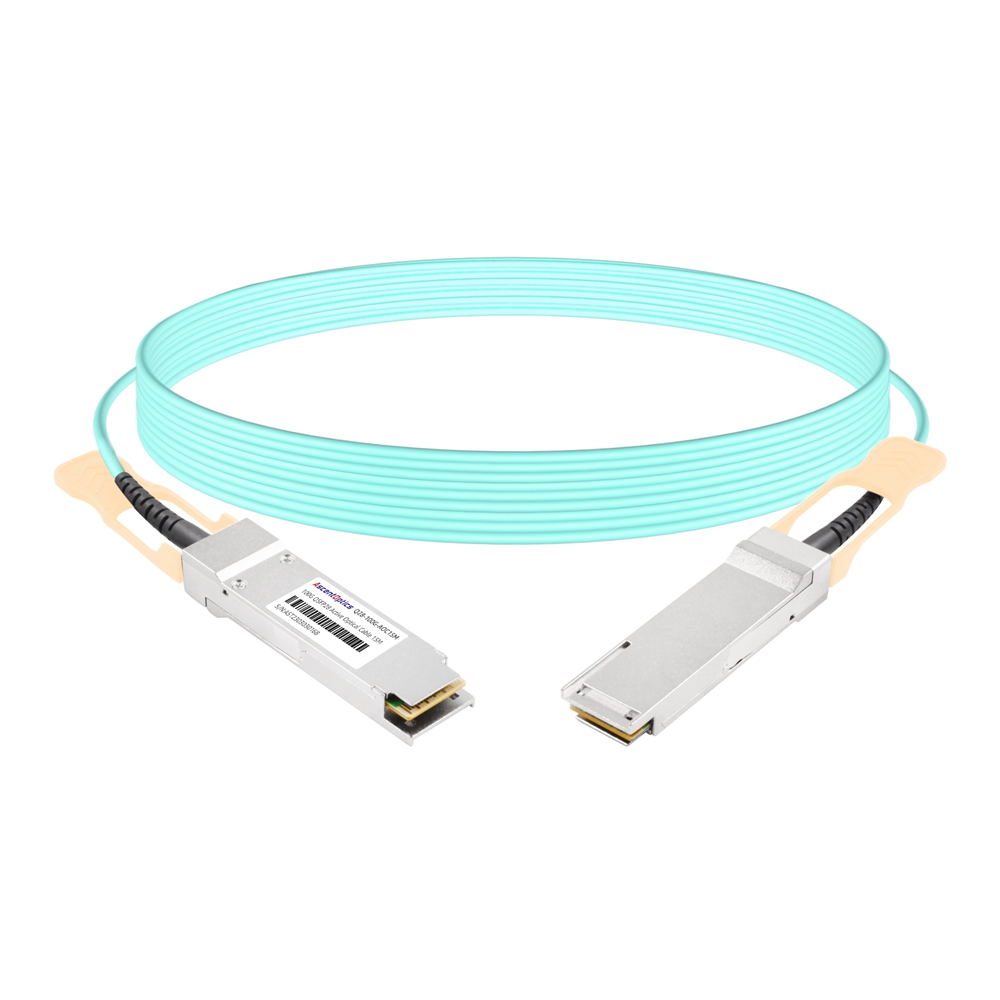
Understanding 200g QSFP56 to QSFP56 Connections
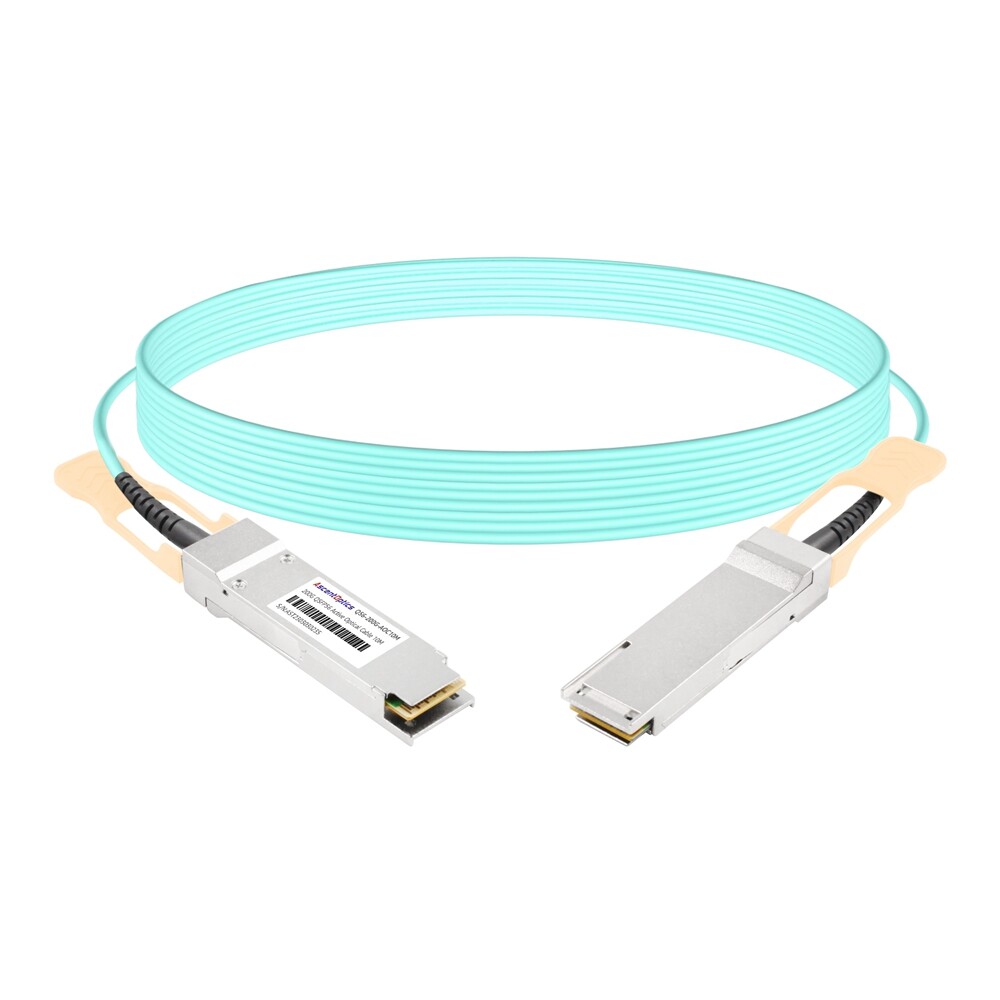
The 200G QSFP56 to QSFP56 connection is a robust solution catering to the ever-increasing data transfer needs of contemporary networks. With Quad Small Form-factor Pluggable (QSFP56) modules, this connection enables 200 Gbps of data transmission through four high-speed lanes of 50 Gbps each. The QSFP56 standard provides alignment with the modern networking environment for auxiliary bandwidth-powered communication within databases and cloud systems pertaining to data centers. This solution stands out in the industry for its dependability, low latency, and ease of use in high-density applications.
Applications of 10m and Other Lengths in Networking
Appropriate cable lengths, like 10m, are flexible to deploy in various networking construction scenarios. Cables of differing lengths provide versatility when applying them in the modern world. Several approaches regarding cables and their corresponding applications with differing sectors are provided below:
Data Center Interconnects
- 10m Cables: Used extensively in attaching top-of-rack (ToR) switches to other switches or aggregation layers in the communication paths to mid-sized data centers. Helps to maintain low latency and high-speed communication within the data center.
- Longer Lengths: Used typically in intra-data center links or with larger installations where the distance between racks exceeds 10m. A good example is the use of 30m to 50m cables for extended spine-leaf network topologies.
Storage Area Networks (SANs)
- 10m and Shorter: Works well with small-scale SANs. Connects the servers and the storage arrays to ensure efficient input/output in a small-scale SAN.
- 20m and Longer: Useful for large SANs where considerable distances between the storage devices and the hosts are a reliable signal loss mitigator.
High Performance Computing (HPC)
- 10m Cables: Preferable when clustering HPC nodes within the same rack or extreme proximity to rack thereby enabling low latency and high bandwidth for the extremely parallel computation workloads.
- Longer Lengths: Used when different data hall HPC clusters need to be integrated into one coherent structure.
Telecommunications Infrastructure
- 10 m Length – Used for base station, router, and switch connections in a confined space in metro and campus network installs.
- Longer Cables (30 m- 100 m) – Important for backhaul networks extending connections between telecommunication towers and the central offices.
Broadcasting and Media Production
- 10m Cables – Commonly used in studio settings for interconnecting cameras with editing and control units.
- Extended Lengths – Optimal for outdoor media setups or for connecting different systems located far away from production facilities.
Campus Area Networks (CANs)
- 10m or Shorter – Used within a single building or several contiguous buildings to connect different devices.
- Up to 50m – Inter-building connections across campus networks are performed for limited distance spans to eight faster-connect mid-accuracy networks.
IoT and Smart Systems
- Shorter Lengths (1 m- 10 m) – Very important for local area networks with IoT devices and sensors like gateways for real-time data collection and management.
- Longer Lengths – Useful in cases where there is a considerable distance to the sensors or devices, such as in industrial automation environments or in large-scale environmental monitoring.
Utilizing suitable cable lengths for certain tasks allows an organization to improve the network’s efficiency, resource utilization, and overall reliability. The physical layer can be adjusted to local and wide enterprise setups, and everything in between, due to the adaptability of these cables.
Comparison of SFP Interfaces
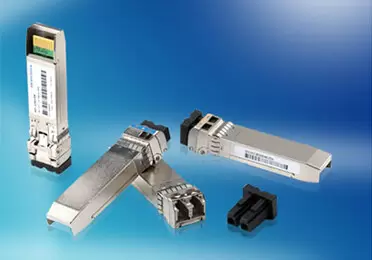
Interfaces SFP (Small Form-factor Pluggable) are categorized according to the data rate, range of transmission, and type of media. The main differences are indicated below:
- SFP vs SFP+: SFP supports data rates of up to 1 Gbps, and SFP+ supports up to 10 Gbps. This means that SFP+ will be used in high-speed networks.
- Single mode vs Multi-mode: SFP single-mode is meant for long-distance transmission (more than 10 km) with a narrow wavelength of light. SFP multi-mode is used for short-distance transmission up to 550 meters.
- Copper vs Fiber Optics SFP: Copper SFP modules are designed for shorter ranges and use Ethernet cables (RJ45) for transmission of signals. The distance of transmission is 100m. Fiber optic SFP modules are used for longer distances, higher bandwidth, and make use of optical cables.
For decision making on other SFP interface alternatives, network specifications such as speed, distance for connection, and use environment have to be taken into consideration first.
How to Integrate AOC with Optical Transceivers and Network Adapters
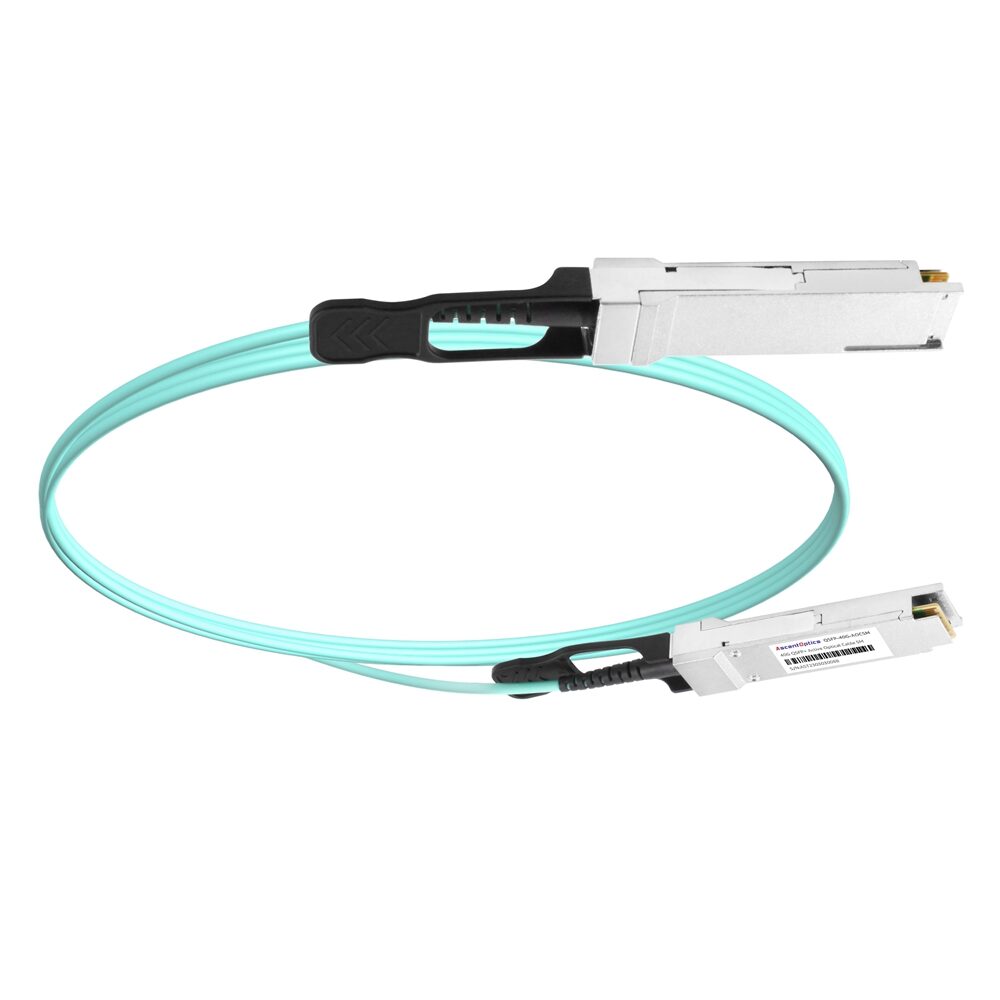
Step-by-Step Guide to Connecting AOC with Optical Transceivers
Inspect All Components
- Inspect the Active Optical Cable (AOC) and the optical transceivers to make sure they are both clean and devoid of dust and scratches. Also, confirm that the transceivers plugged in are compatible with the network adapters and devices in hand.
Insert the Optical Transceivers
- Carefully insert the optical transceivers into the corresponding ports on the network switches, routers, and servers. Cross-check whether they are seated and secured fully.
Connect the AOC
- Gently attach one end of the AOC cable to the first transceiver and the other end to the second transponder. With the application of gentle pressure, the connectors must click to confirm secure connections.
Verify the Connection
- Test powering other devices, enabling the transceivers, and network hardware devices to work check their indicators. Mostly the green or active LED lights on passive ports indicate a successful establishment of nodes or links.
Test the Network
- Perform an elementary network check to establish the arrangement and confirm the data flows through it. Make use of the available checking equipment so as the status of the connection can check with the performance standards.
Understanding the Role of Network Adapters in AOC Setup
Network adapters serve an important purpose within Active Optical Cable (AOC) configurations since they facilitate effortless communication between devices within a network. These adapters perform the critical function of changing the digital signal from a device into an optical signal suitable for transmission by the AOC. This change guarantees dependable, high-speed data transfer over greater distances than those achievable with conventional copper cables. Proper compatibility, especially the form, supported protocols, and network adapter AOC constituents, between the network adapter and the AOC is critical in achieving optimal performance while minimizing interconnect problems.
Frequently Asked Questions (FAQs)
Q: What is an AOC network cable, and how does it differ from a direct-attach copper cable?
A: An AOC (Active Optical Cable) network cable employs optical fibers for data transmission, offering increased data transfer rates along with longer distances in comparison to a direct attach copper cable, which is often employed for shorter distances and is less expensive.
Q: How does a QSFP AOC network cable work, and what are its applications?
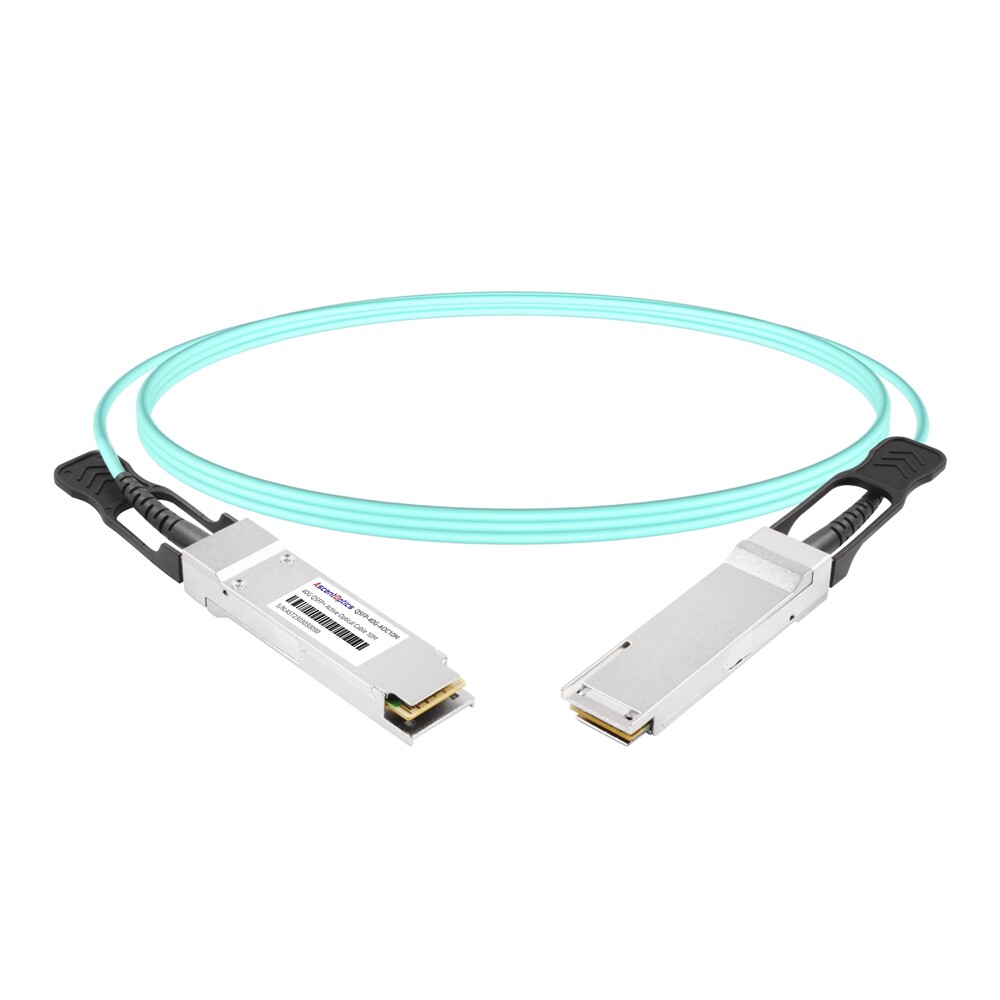
A: A QSFP AOC network cable, for example, a 40GBase-AOC QSFP, two optical transceivers are integrated into one head, which permits data transfer at high speeds across the Optical fiber cable. It finds great application in data centers for linking switches, servers, storage, and other peripherals in the network.
Q: What is the difference between MMF and SMF in AOC network cables?
A: MMF (Multi-Mode Fiber) is designed for short-range communications with AOC network cables, while SMF (Single-Mode Fiber) corresponds to long-range applications. MMF is more cost-efficient than SMF when used with 10 G aoc cables because it works better for short connections.
Q: Why use a compliant QSFP to QSFP AOC network cable? What are the advantages?
A: Using a compliant QSFP to QSFP AOC network cable eliminates risks because it flows with the industry benchmarks, allowing integration into the existing infrastructure, while providing high-speed data transfer over fiber optics to withstand mechanical stress.
Q: In what ways does a fiber media converter accelerate the overall performance of a network?
A: A fiber media converter facilitates the conversion of the electrical signals over copper to optical signals over fiber, increasing the physical range of the network and advancing the data transfer rate. It is especially helpful when trying to connect older systems based on copper technology to modern fiber optic ones.
Q: What factors must be looked at when choosing an Ethernet 40G AOC for a 400G network?
A: When choosing an Ethernet 40G AOC for a 400G network, check the compliance of the cable with the multi-source agreement (MSA) optical standards, the data rate of the multiplexed streams on the optical fiber cable, and the length, for example cable 5m, as per your network requirements.
Q: In what manner does a QSFP to QSFP connection support rapid data exchange in networks?
A: A QSDP to QSDFP connection supports rapid data exchange at high rates over both ports as it uses two bidirectional optical transceivers that form a point-to-point connection with two network devices. It provides superhigh-speed data traffic provision without any blockage.
Q: What is the function of direct-attach copper cables in network configurations?
A: Direct-attach copper cables connect to telecommunications and computer networking equipment within the same rack or between racks, requiring short-distance connections. They are supplied with an attached cable system that has a high data transmission efficiency for fast-paced network devices.
Reference Sources
1. Title: The State-of-the-art Developments of Optical Transmission Equipment and Modules
- Authors: Y. Ando
- Publication Year: 2013
- Citation Token: (Ando, 2013)
- Summary: This paper reviews the most innovative optical transmission systems, including the 40 Gbit/s RZ-DQPSK transponder for Optical Transport Network (OTN) and AOCs used in data centers. Their role in improving the overall capability of data transmission in contemporary communication systems is emphasized.
2. Fiber-optic cable
3. Network switch
4. Transceiver
Post Views: 4,003