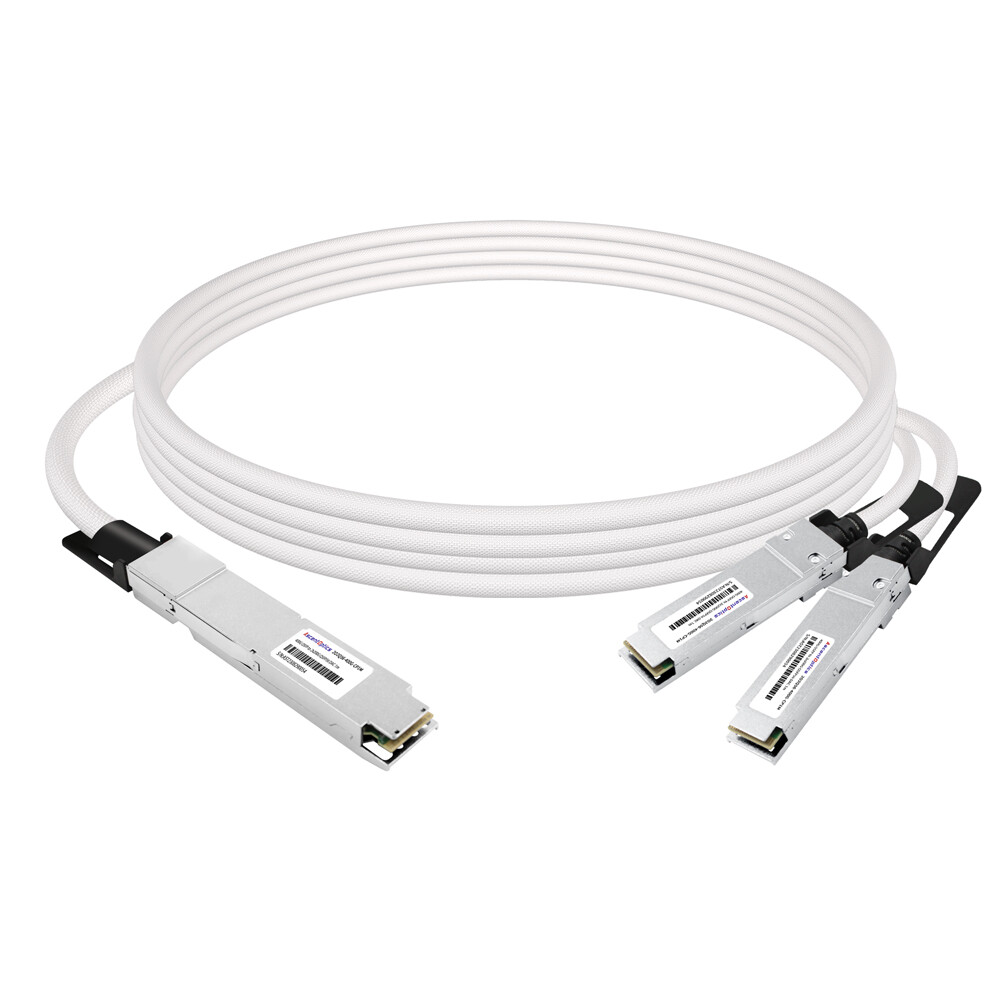
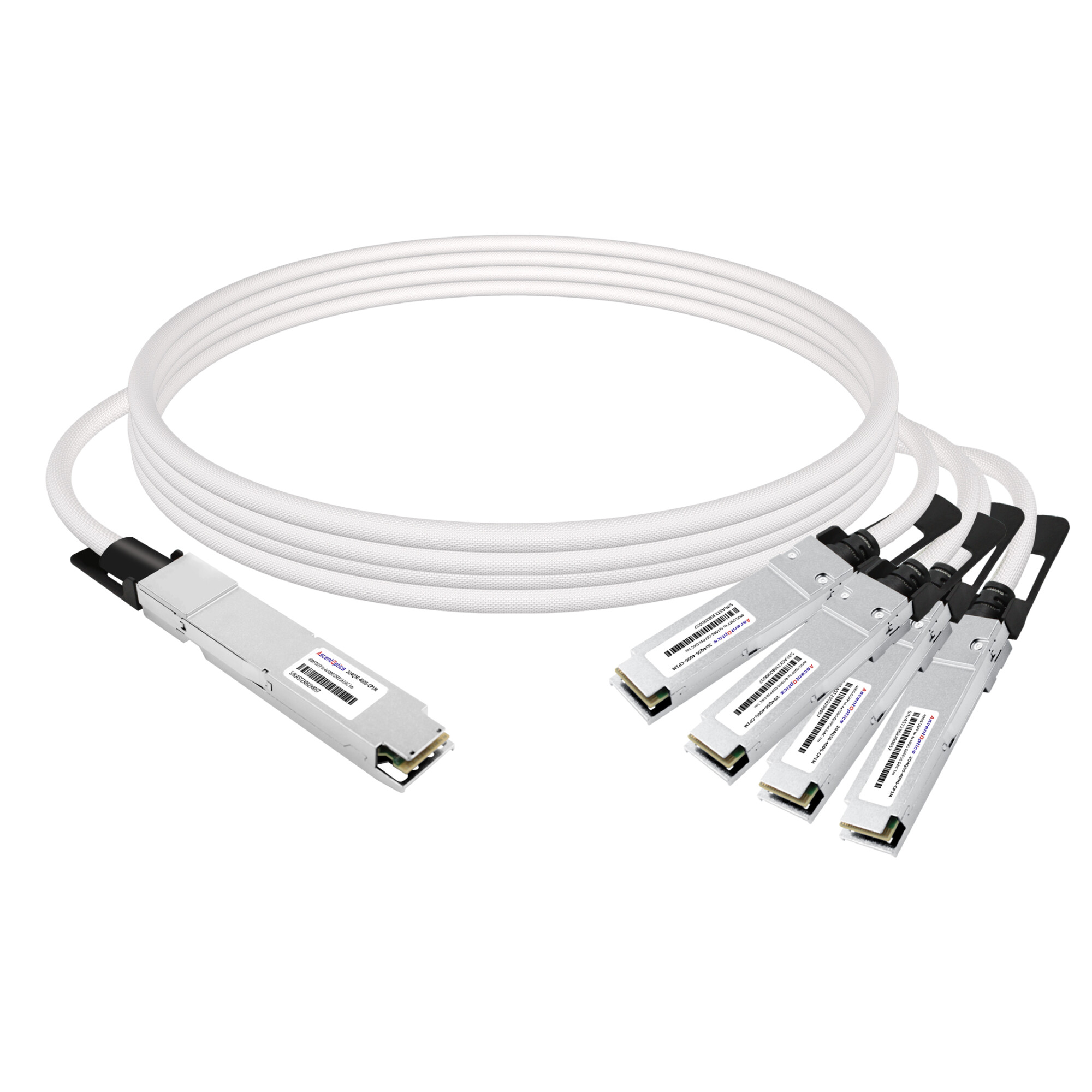
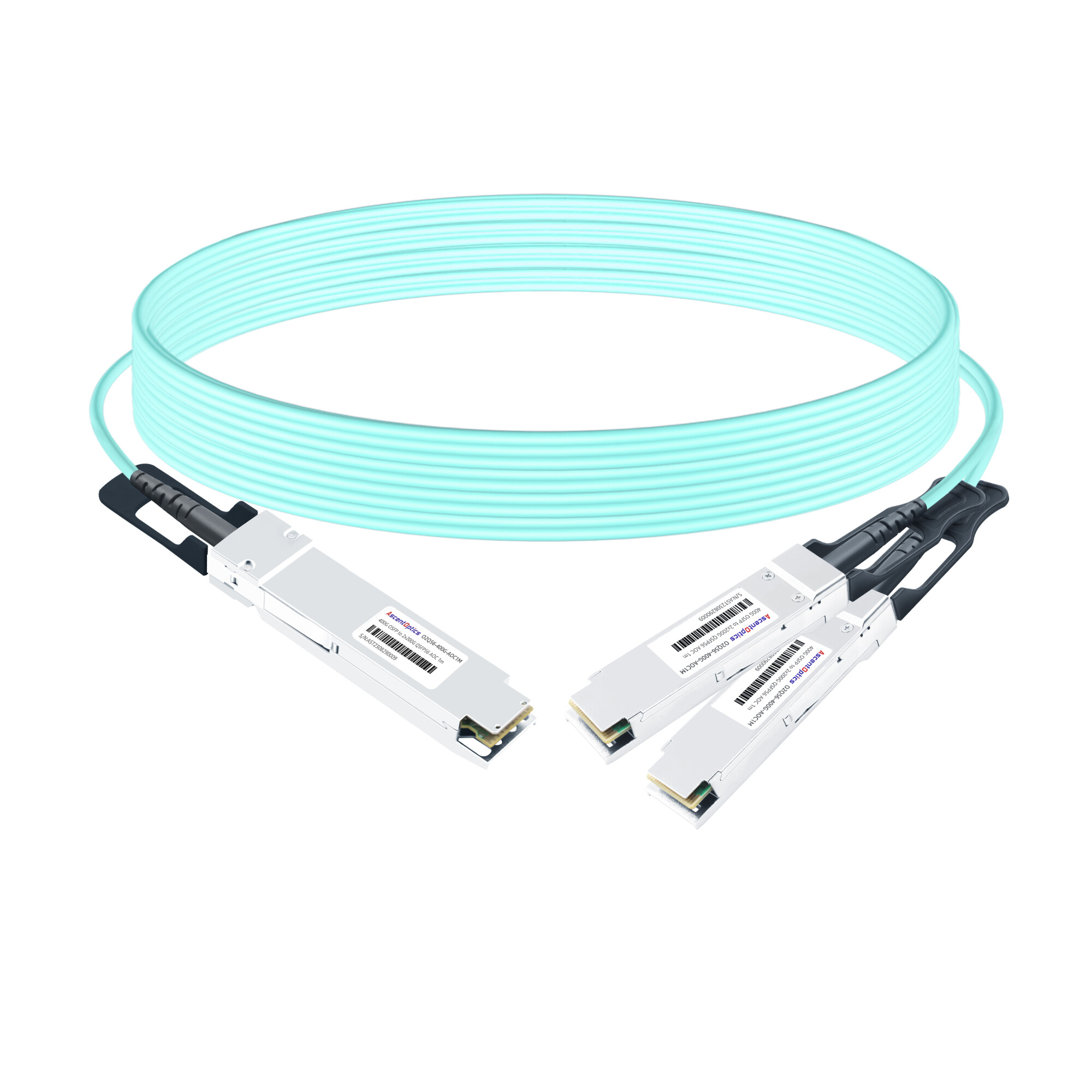
In the context where 400G networks have become mainstream, how to control power consumption, cost, and cabling complexity while ensuring performance has become a key challenge in network architecture design. Among various short-reach interconnect solutions, 400G OSFP DAC and 400G OSFP AOC are widely used inside AI data centers.
Both are based on the OSFP interface and support 400Gbps data rates, but they differ significantly in transmission medium, reach capability, and deployment approach. Understanding these differences is crucial for building efficient and scalable AI networks.
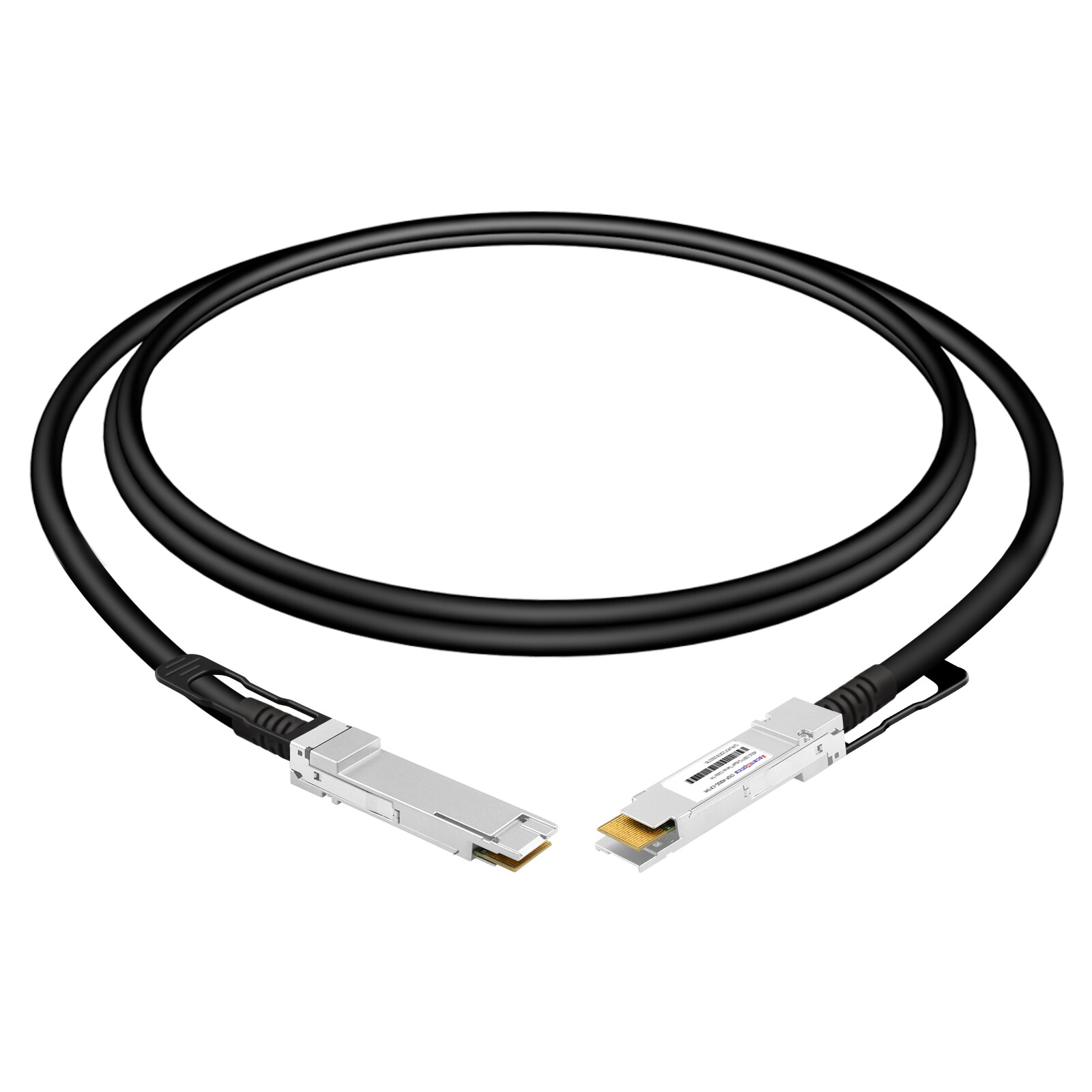
What is 400G OSFP DAC?
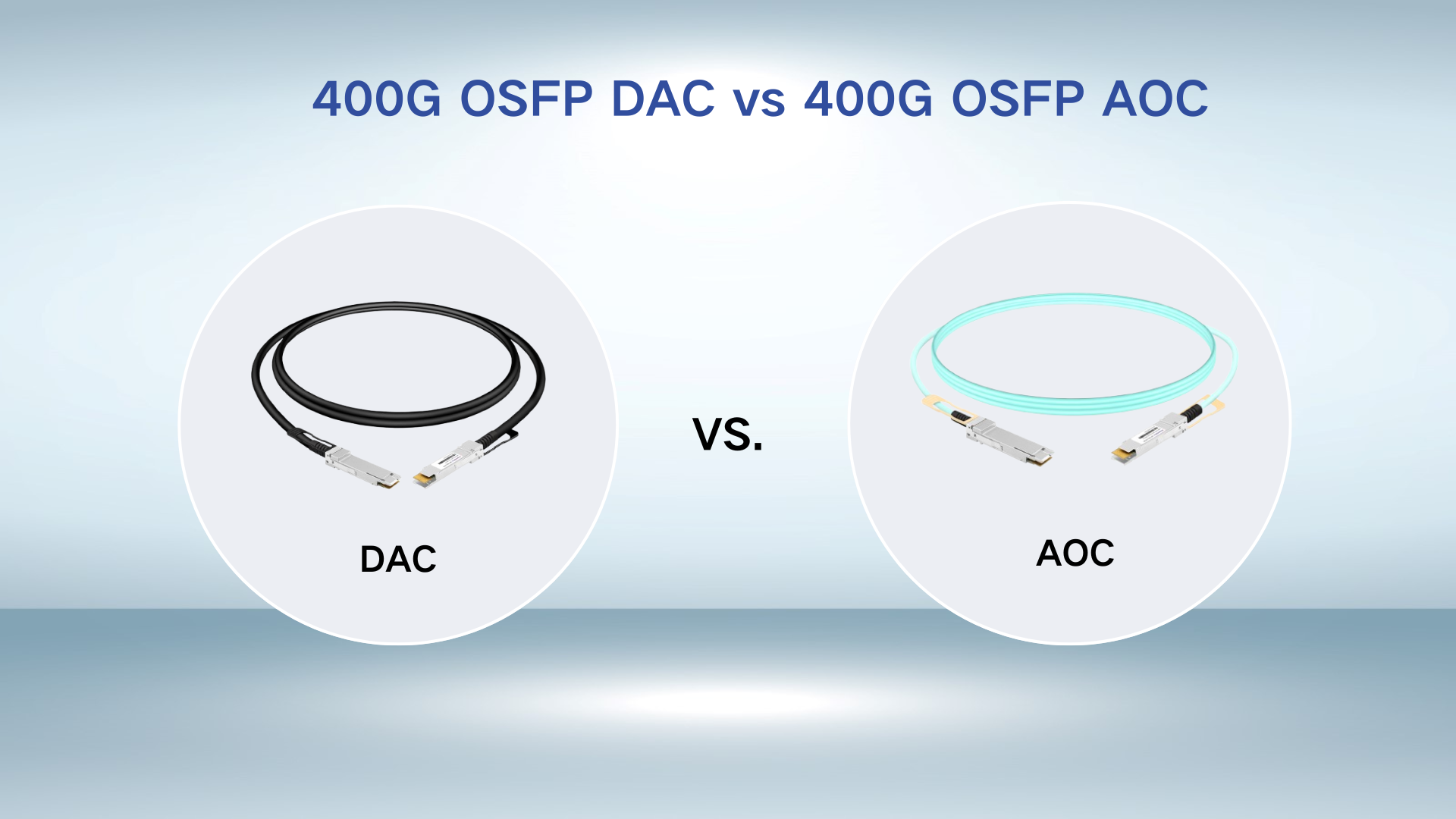
400G OSFP DAC is a high-speed direct-attach copper cable solution based on the OSFP form factor, designed for ultra-short-reach 400G interconnects within data centers. It transmits high-speed electrical signals directly through copper cables and is available in two types: passive DAC and active DAC (AEC/ACC).
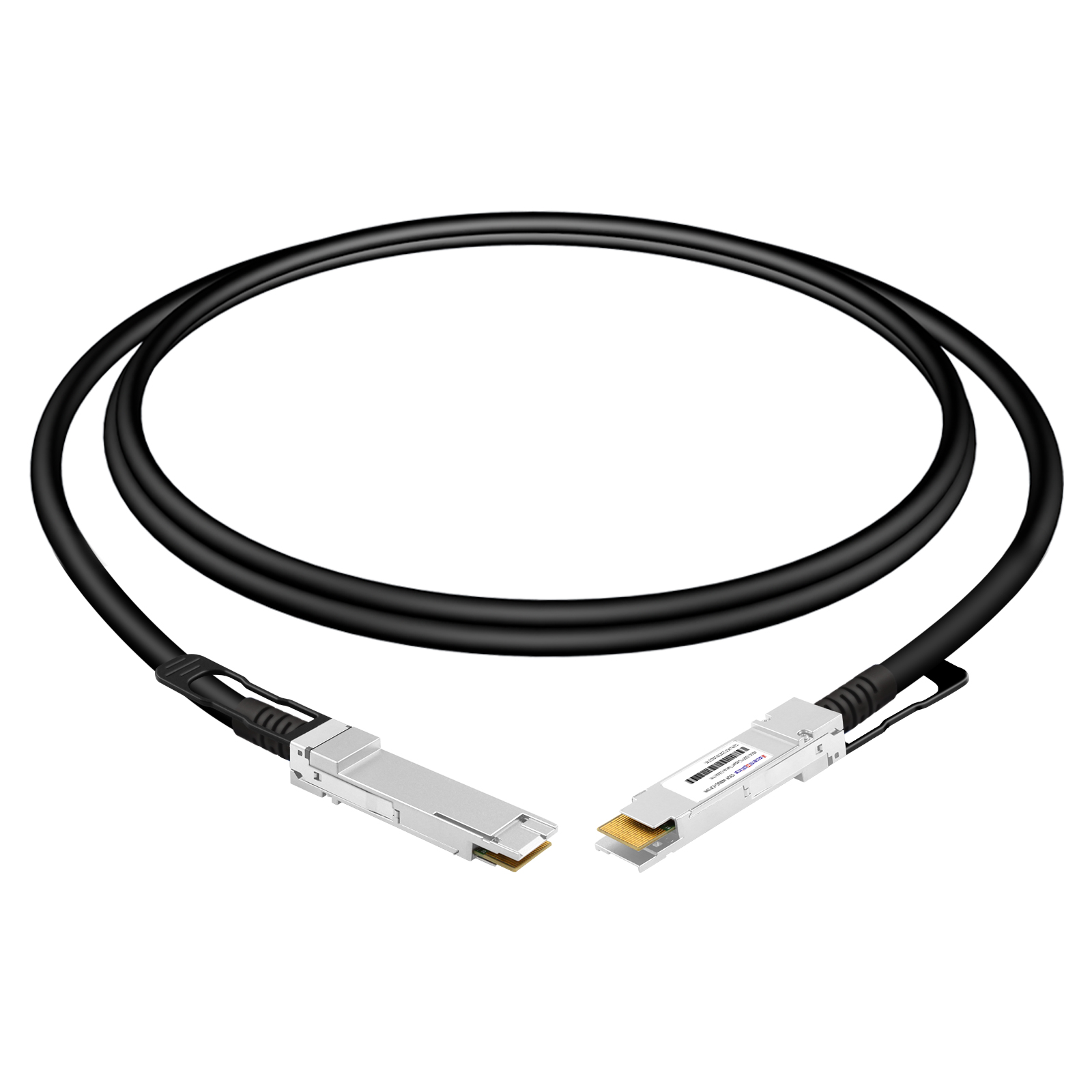
Typical transmission distance: 1–3 meters (passive) Up to 5–7 meters (active)
Signal type: Direct electrical connection
Key advantages: Ultra-low latency, very low power consumption, and the lowest cost
Typical applications: Intra-rack connections, adjacent ports, and between servers and Top-of-Rack (ToR) switches
Since DAC does not involve optical-to-electrical conversion, it features a simple structure and high reliability, making it a foundational solution for short-reach interconnects in AI data centers. This cable is commonly used as a cost-effective alternative to traditional optical modules + fiber solutions, delivering excellent performance in short-distance scenarios with limited budgets.
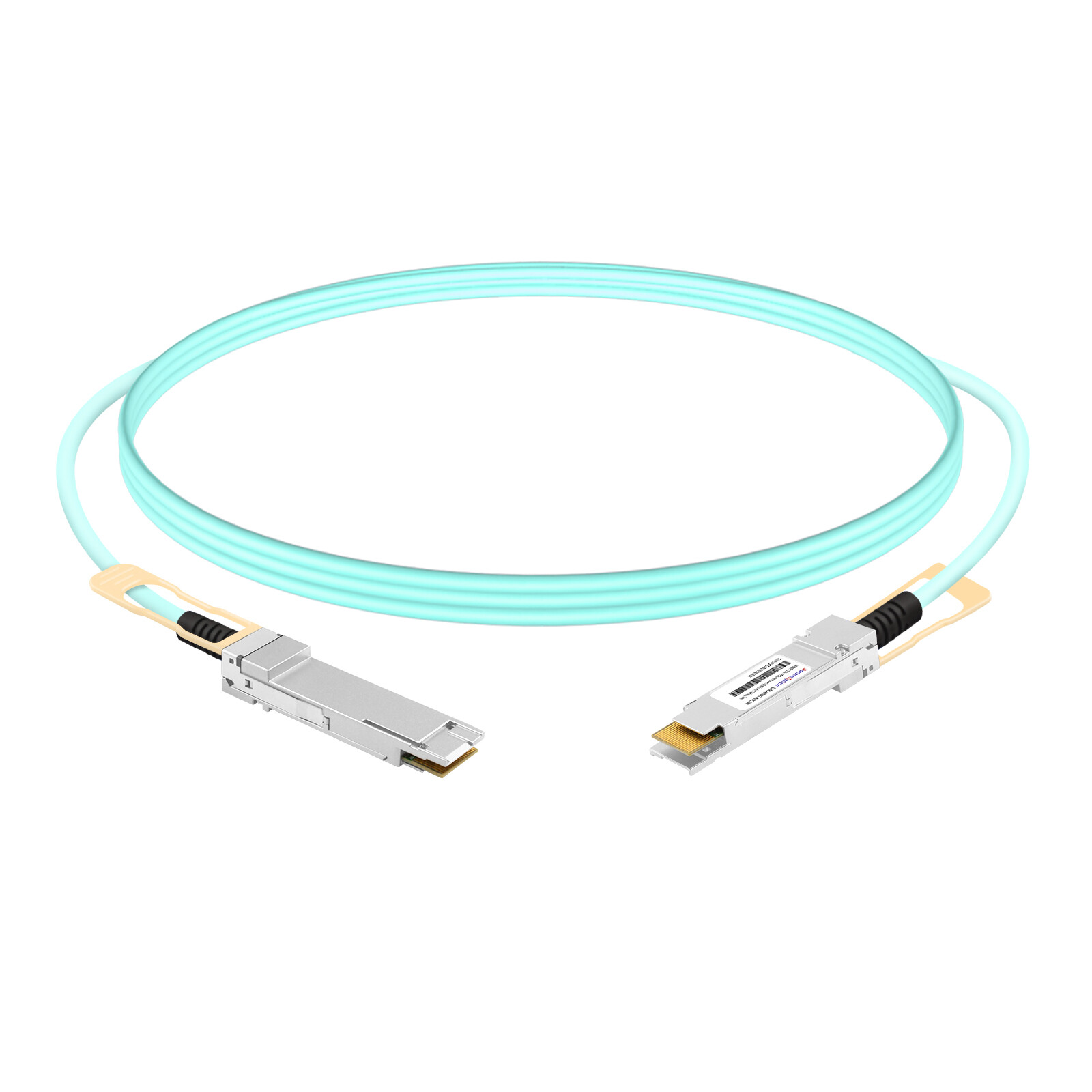
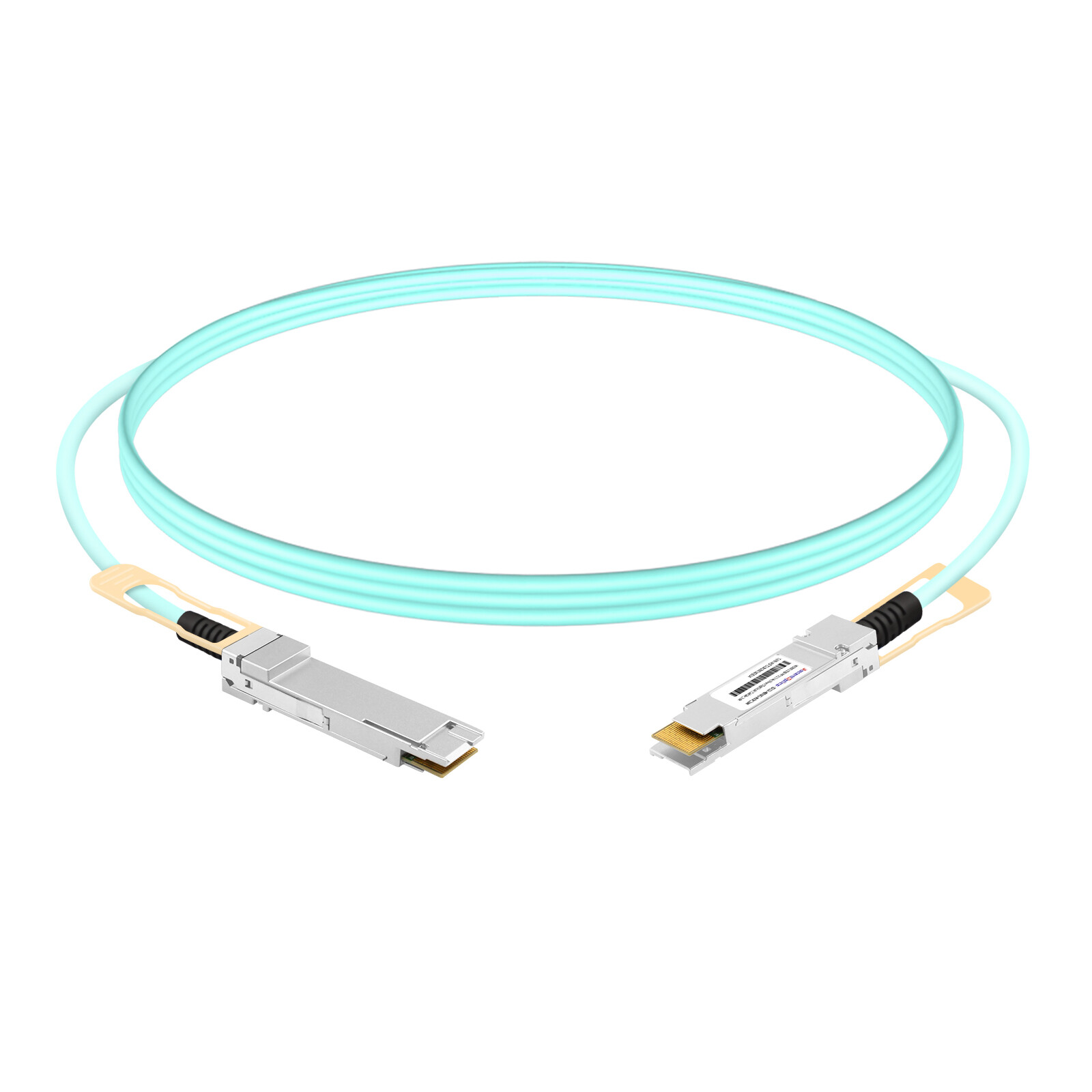
What is 400G OSFP AOC?
400G OSFP AOC is an active optical cable that integrates optical transceivers with optical fiber. It uses the OSFP form factor and performs electrical-to-optical-to-electrical conversion inside the cable, transmitting 400G signals via optical fiber.
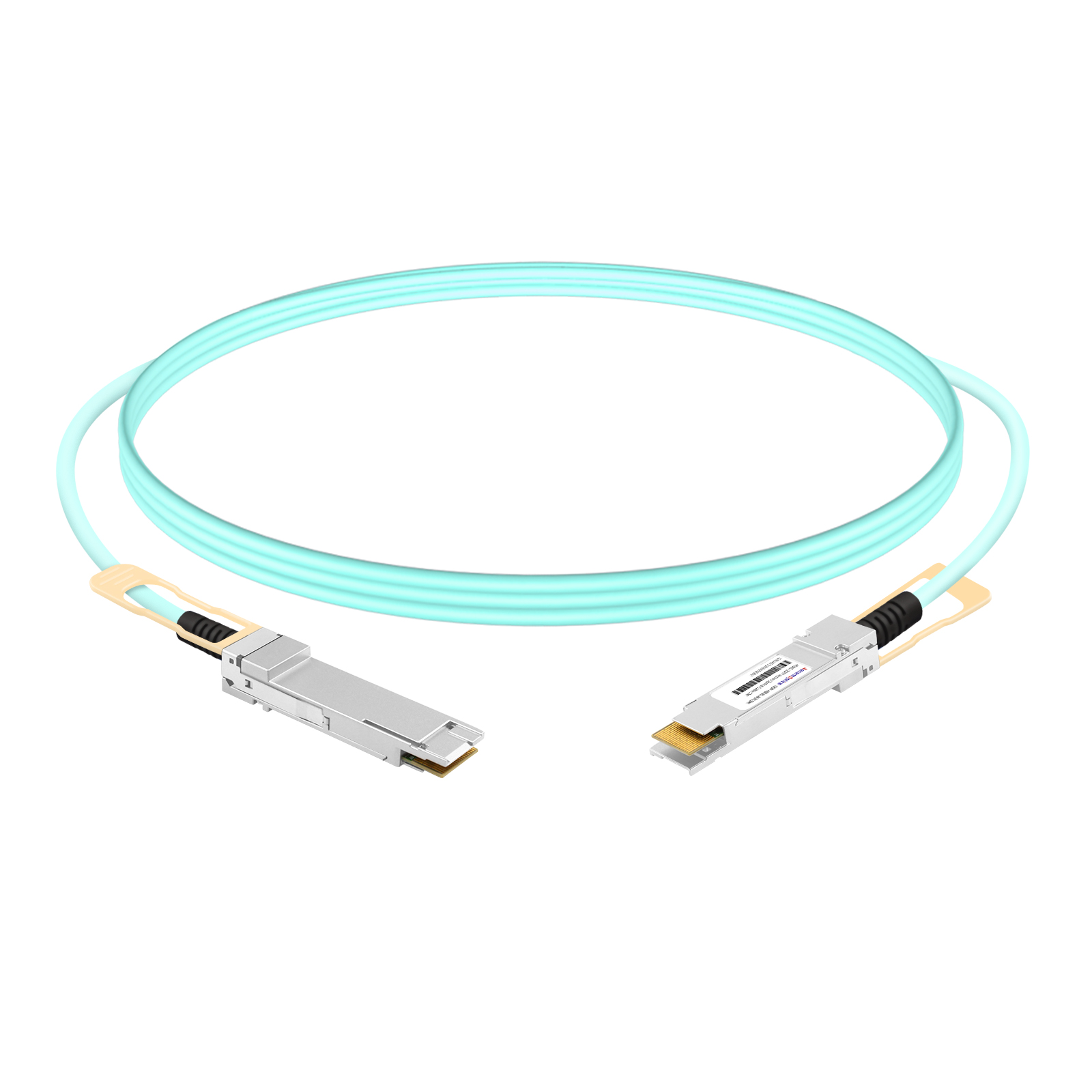
Typical transmission distance: 10–30 meters (some models can reach longer distances)
Signal type: Electrical signal → Optical signal → Electrical signal
Key advantages: Longer reach, superior signal integrity, and more flexible cabling
Typical applications: Inter-rack connections, dense cabling environments, and AI clusters with high signal quality requirements
While maintaining the plug-and-play convenience of DAC, AOC significantly extends the distance range that DAC cannot cover.
Key Differences Between 400G OSFP DAC and AOC
Transmission Distance
400G OSFP DAC is designed for very short-reach connections, typically within a rack or between adjacent devices. Passive DACs usually support up to 2–3 meters, while active DACs can extend to around 5–7 meters.
In contrast, 400G OSFP AOC supports longer distances, commonly 10–30 meters or more, making it suitable for cross-rack or row-level interconnects.
Signal Transmission Method
DAC transmits electrical signals directly over copper cables, without optical conversion.
AOC converts electrical signals into optical signals within the cable, transmits them over fiber, and then converts them back to electrical signals at the receiver.
Power Consumption
DAC generally consumes less power, especially passive DACs, since no optical components are involved.
AOC requires additional power for optical transceivers and signal processing, resulting in higher power consumption compared to DAC.
Latency
Because DAC uses direct electrical transmission, it delivers ultra-low latency, which is critical for latency-sensitive AI and HPC workloads.
AOC introduces slightly higher latency due to optical-electrical conversions, though the impact is minimal in most practical deployments.
Cabling and Flexibility
DAC cables are thicker and less flexible, which can make cable management challenging in high-density racks.
AOC cables are thinner and lighter, offering better flexibility and easier cable routing, especially in dense AI data center environments.
Summary
400G OSFP DAC and AOC are complementary rather than competing solutions. DAC excels in ultra-short, low-cost, low-latency connections, while AOC is better suited for longer reach, higher flexibility, and improved signal integrity in AI data centers.
Use Cases in AI Data Centers
GPU Scale-Up Scenarios (In-Server / In-Rack Interconnects)
In GPU scale-up architectures, multiple GPUs are tightly coupled within a single server or within the same rack to maximize compute density and minimize communication latency. These connections carry frequent, latency-sensitive traffic such as parameter synchronization and collective operations.
In this scenario, 400G OSFP DAC is typically the optimal choice. The short link lengths (usually within a rack) allow DAC to deliver ultra-low latency, minimal power consumption, and the lowest cost per link. Passive or active DAC cables are widely used for GPU-to-switch and switch-to-switch connections inside racks, where signal integrity can be reliably maintained without optical conversion.
GPU Scale-Out Scenarios (Cross-Rack Interconnects)
GPU scale-out focuses on expanding AI clusters horizontally across multiple racks, enabling thousands of GPUs to work together on large-scale training and inference tasks. These links span longer distances and often face more complex cabling paths.
In scale-out environments, 400G OSFP AOC becomes more advantageous. Its optical transmission provides better signal integrity over longer distances (typically 10–30 meters), making it well suited for cross-rack and row-level connections. AOC also offers thinner and lighter cabling, which simplifies cable management in dense AI data centers.
Typical Deployment in Spine–Leaf Architectures
Modern AI data centers commonly use a Spine–Leaf architecture to support massive east-west traffic. In this topology:
Leaf (ToR) to GPU servers:
Short, high-density connections within racks are best served by 400G OSFP DAC.
Leaf to Spine links:
These links often span multiple racks and require higher reliability and reach. 400G OSFP AOC is frequently deployed to ensure stable performance and manageable cabling.
By combining DAC and AOC at different layers, operators can optimize both performance and total cost of ownership (TCO).
Summary
In AI data centers, 400G OSFP DAC and AOC are deployed side by side to address different interconnect requirements. DAC excels in scale-up, short-reach, and latency-critical links, while AOC enables reliable scale-out connectivity across larger AI clusters. A balanced combination of both ensures optimal performance, scalability, and cost efficiency.
Selection Guide: 400G OSFP DAC vs. 400G OSFP AOC
When choosing between 400G OSFP DAC and 400G OSFP AOC, it is essential to weigh their advantages and limitations based on your specific application scenario.
Both solutions support 400 Gbps transmission rates and are compatible with OSFP interfaces (such as NVIDIA, Cisco, and other equipment). However, they differ significantly in transmission distance, cost, power consumption, and deployment flexibility.
How to Choose?
Evaluate Transmission Distance:
If the connection distance is within 3–7 meters (e.g., same rack or adjacent racks), prioritize DAC to save on cost and power consumption. If the distance exceeds 7 meters (e.g., cross-area connections inside the data center), AOC is the better choice to avoid signal degradation.
Consider Budget and TCO (Total Cost of Ownership):
DAC has a lower initial cost, making it ideal for budget-constrained projects.
However, for large-scale networks that require frequent expansion, AOC may offer better long-term value due to higher reliability and lower maintenance costs (even though its power consumption is slightly higher). Be sure to factor in energy costs and replacement frequency when calculating TCO.
Power Consumption and Thermal Management:
In high-density AI or cloud computing environments, DAC’s ultra-low power consumption helps reduce cooling requirements. AOC is more suitable for applications where heat is less of a concern but longer reach is needed.
Compatibility and Future-Proofing:
Both DAC and AOC support PAM4 modulation and IEEE standards, ensuring excellent compatibility with equipment. When upgrading to 800G in the future, DAC reach will be further reduced (≤2 meters), while AOC remains more future-proof for longer distances.
Future Trends: From 400G to 800G and Beyond
As AI workloads drive network speeds from 400G to 800G and toward 1.6T, the OSFP form factor is emerging as a key enabler thanks to its higher power budget, better thermal performance, and scalability for higher lane rates. At these speeds, DAC and AOC face clear technical boundaries: DAC will remain dominant for ultra-short-reach, low-latency connections, while AOC will continue to serve short- to mid-reach links as optical and DSP technologies improve.
Despite the move to higher bandwidth, AI data centers will maintain strong long-term demand for short-reach, high-density interconnects, making DAC and AOC essential components of future AI networking architectures.
Conclusion
In general, 400G OSFP DAC and 400G OSFP AOC are not mutually exclusive substitutes; rather, they are highly complementary short-reach interconnect solutions.
DAC stands out as the preferred choice for intra-rack and ultra-short-distance AI interconnects due to its ultra-low latency, extremely low power consumption, and lowest cost. AOC, on the other hand, plays a critical role in scenarios that require longer distances, more complex cabling layouts, and higher signal integrity.
As network speeds evolve from 400G to 800G and eventually 1.6T, the demand for high-density, short-reach interconnects in AI data centers will remain strong for the long term. Strategically mixing DAC and AOC deployments at different tiers not only helps optimize performance and cost, but also provides greater flexibility for future network upgrades.
In AI data centers, the truly “better” choice is always the one that best fits the specific application scenario.
Post Views: 3,086