Bandwidth Challenges Facing AI Data Centers
With the rapid growth of artificial intelligence and large-scale model training, AI data centers are facing unprecedented network bandwidth pressure. 800G QSFP-DD, as a new generation of high-speed optical modules, is becoming a key technology for supporting massive AI clusters and upgrading compute networks.
In AI data centers, large numbers of GPU nodes operate in parallel, driving a sharp increase in east-west traffic. Model parameter synchronization, distributed training, and high-speed storage access place higher demands on network bandwidth, latency, and stability.
Although 400G networks remain the mainstream today, in ultra-large AI cluster deployments, limitations in port density, increased network layers, and link congestion are becoming more apparent, accelerating the transition toward 800G network architectures.
What Is 800G QSFP-DD?
Definition and Data Rate
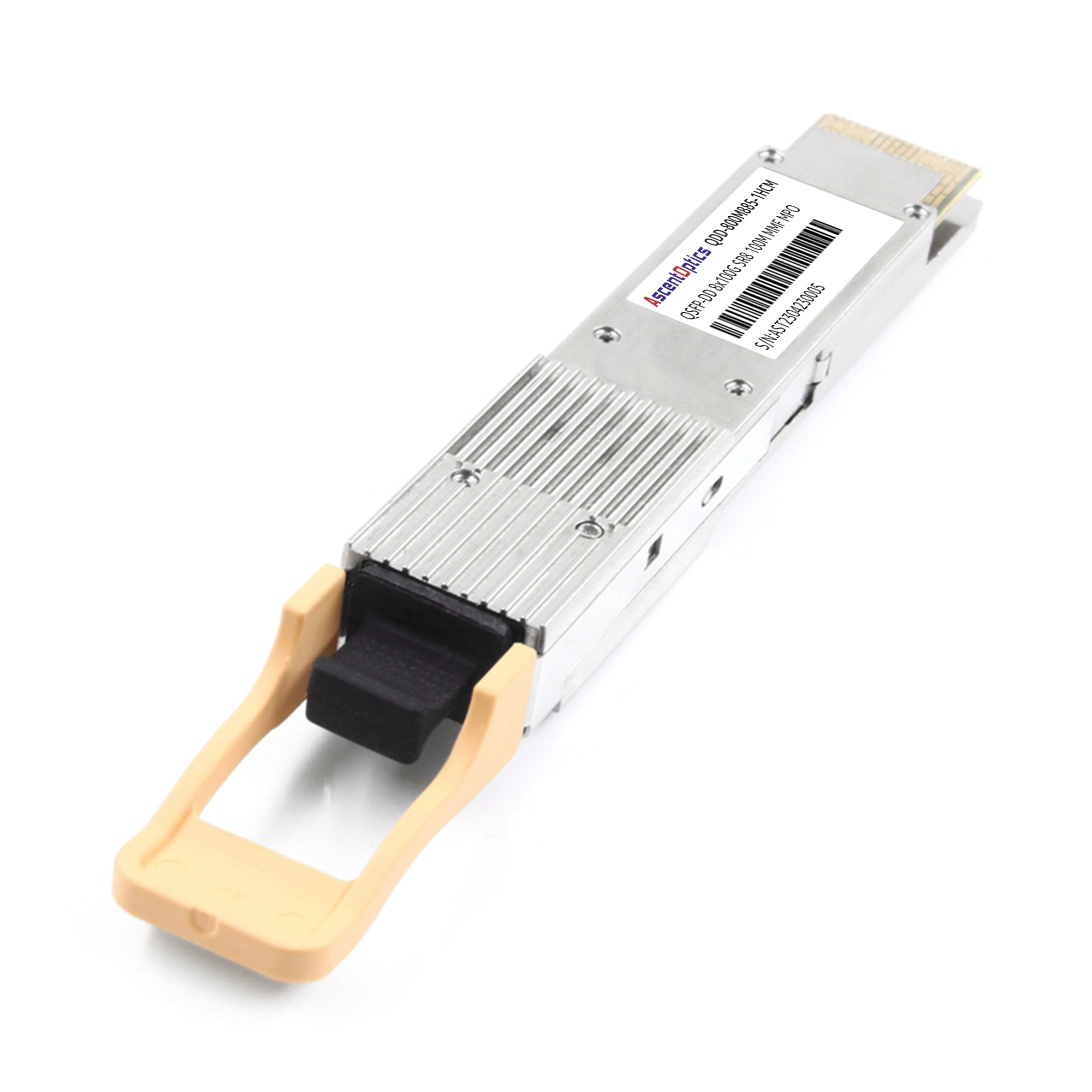
800G QSFP-DD is a next-generation optical transceiver that supports up to 800 Gbps Ethernet connectivity for high-speed data center networks. It is designed to meet the growing bandwidth demands driven by AI workloads, cloud computing, and large-scale data processing.
Form Factor and Design
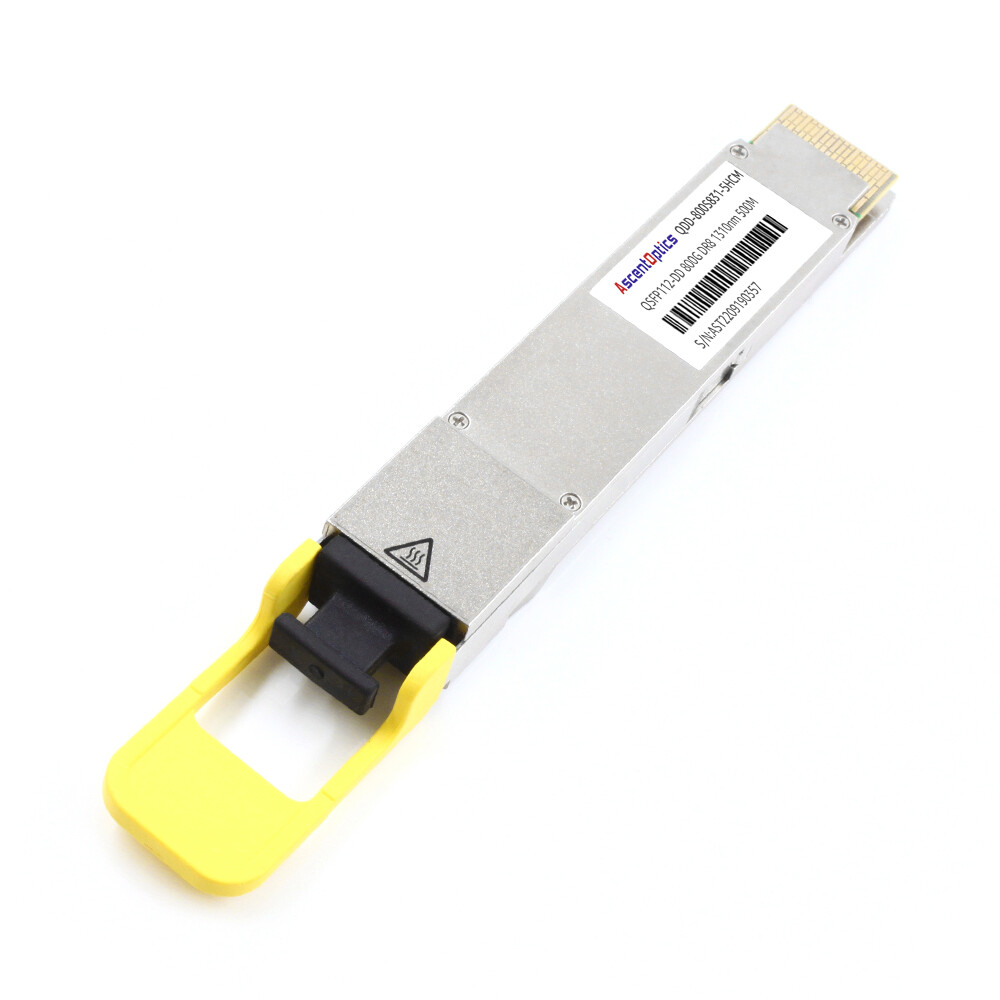
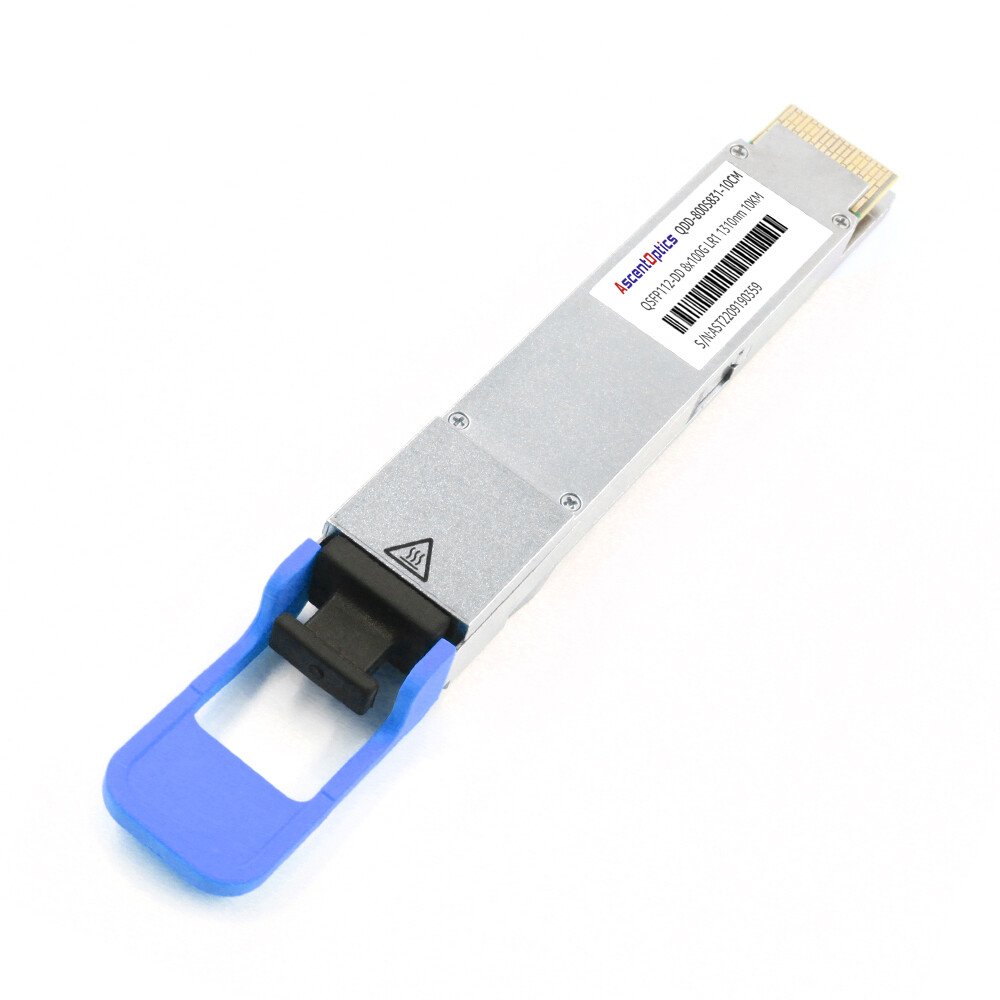
800G QSFP-DD uses the QSFP-DD (Quad Small Form-factor Pluggable Double Density) form factor, which supports eight high-speed electrical lanes in the same compact footprint as traditional QSFP modules. This design enables higher port density without increasing switch size or complexity.
Relationship to 400G QSFP-DD
800G QSFP-DD is a direct evolution of 400G QSFP-DD. Both share the same form factor and ecosystem, allowing data centers to double bandwidth while maintaining backward compatibility and existing infrastructure. This makes 800G QSFP-DD a natural upgrade path for data centers moving beyond 400G.
How 800G QSFP-DD Optical Modules Work
800G QSFP-DD optical modules receive high-speed electrical signals from the switch using 8 × 100G or 4 × 200G lanes and leverage PAM4 modulation to achieve 800G data rates within limited bandwidth. An onboard DSP handles signal equalization, clock recovery, and FEC (Forward Error Correction) to ensure reliable high-speed transmission.
On the optical side, data is transmitted using parallel optics (SR8 / DR8) or wavelength-division multiplexing (FR4 / LR4). At the receiver, the optical signals are converted back into electrical signals and processed by the DSP to deliver stable end-to-end 800G connectivity.
Main Types of 800G QSFP-DD Optical Modules
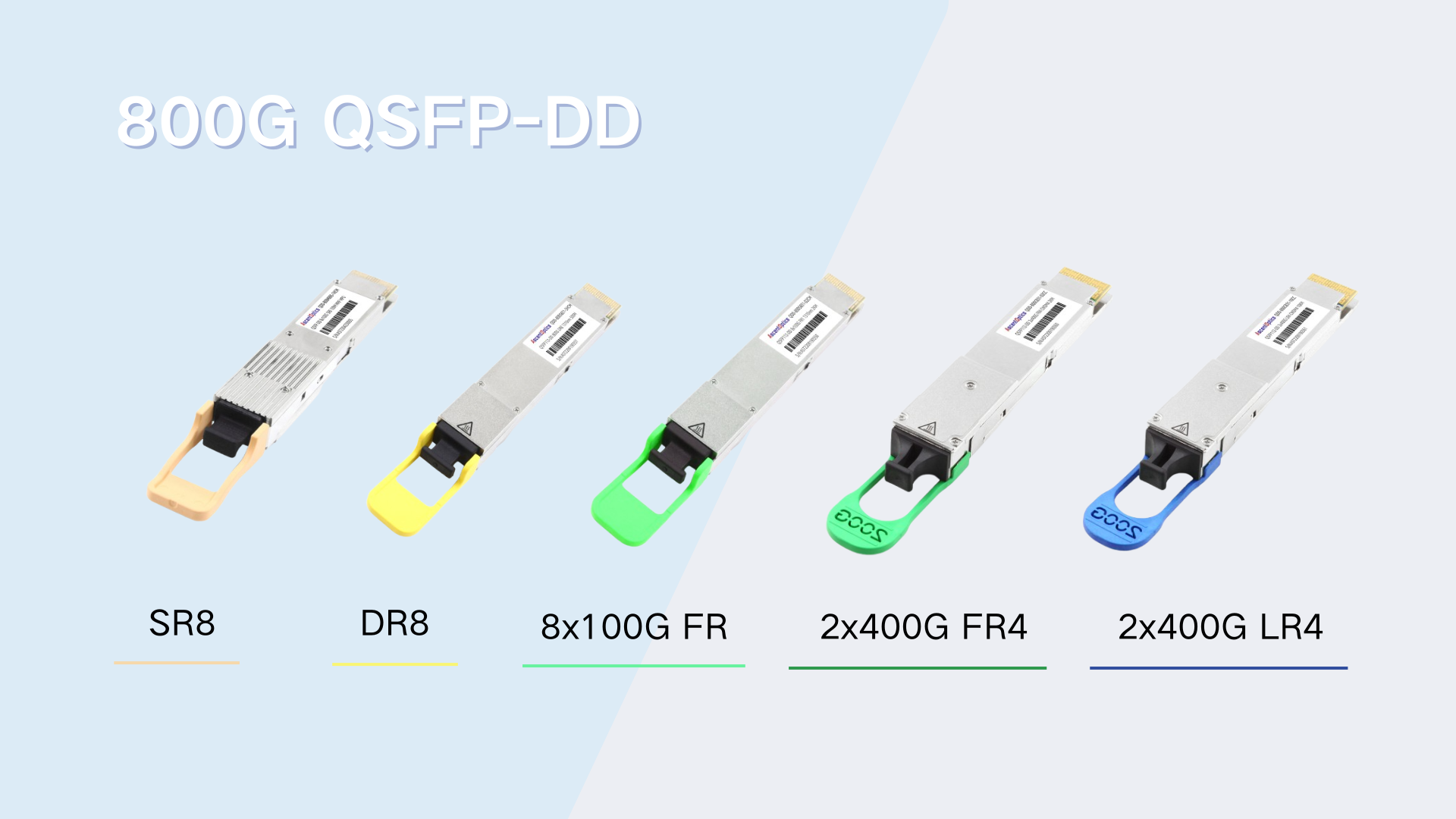
Depending on transmission distance and application scenarios, 800G QSFP-DD optical modules are mainly categorized as follows:
800G SR8
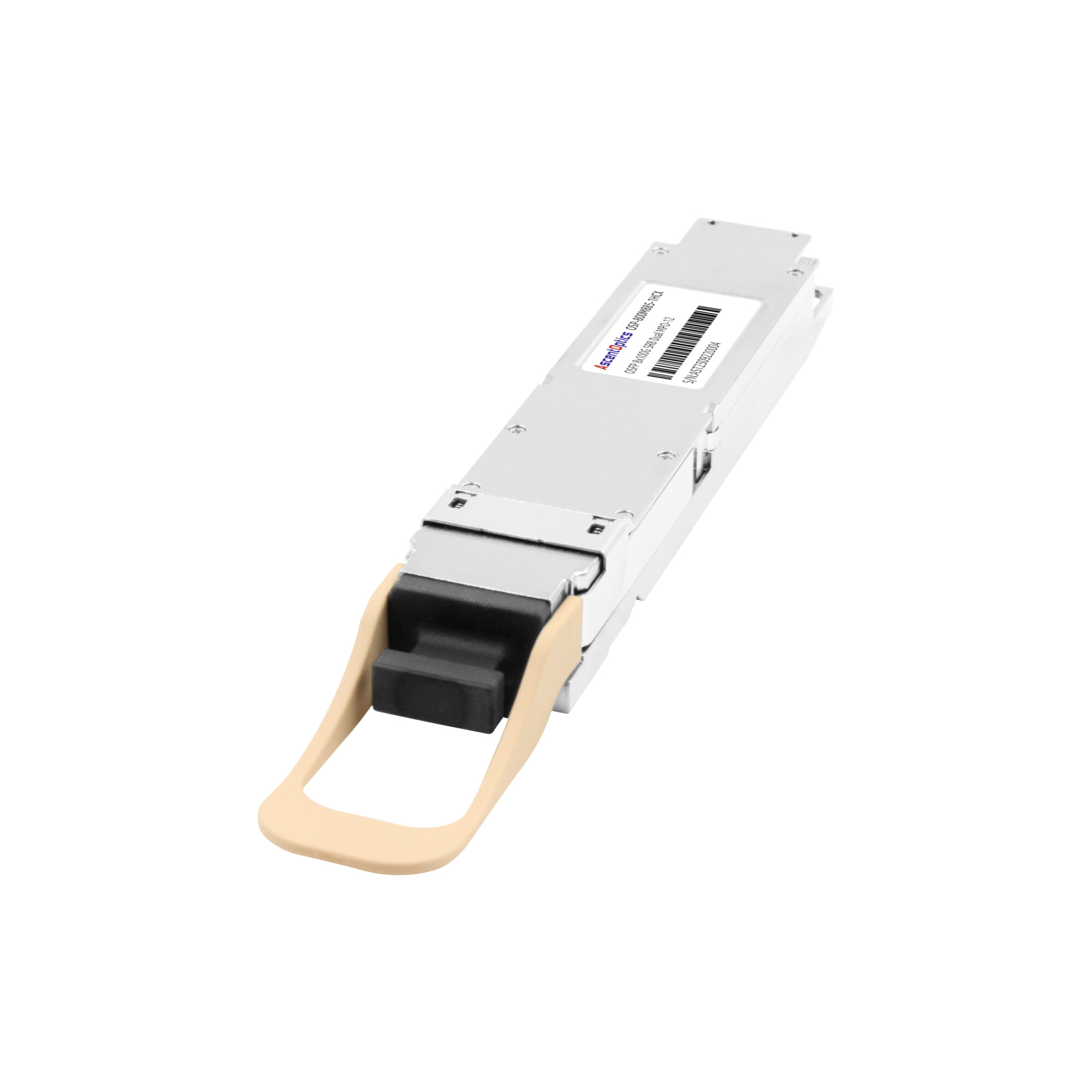
Designed for ultra-short-distance interconnects within data centers, using multimode fiber. Ideal for high-speed connections within a rack or between adjacent racks.
800G DR8
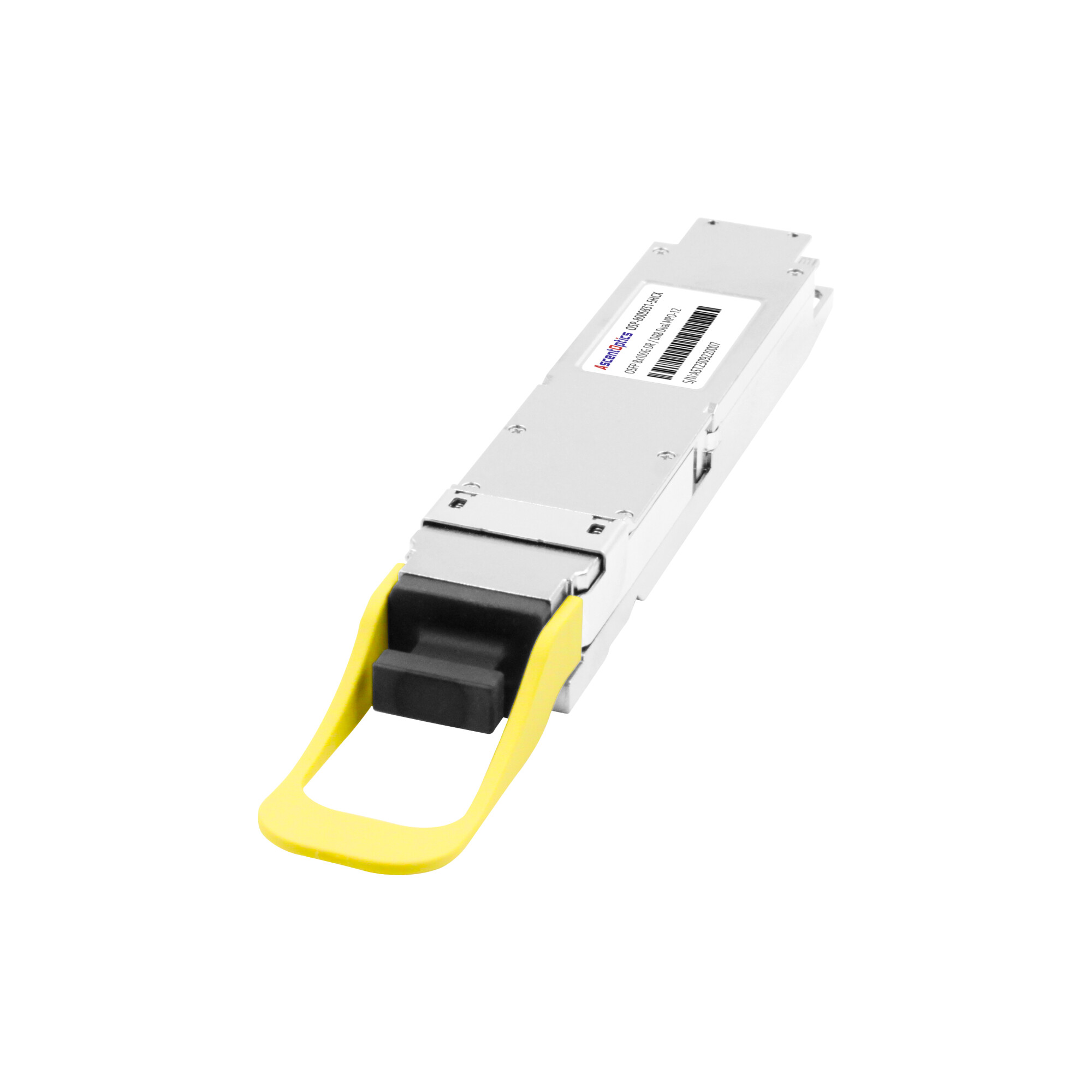
Based on single-mode fiber, supporting transmission distances up to 500 meters. Commonly used for high-density AI cluster interconnects, balancing power consumption and cost.
800G FR4 / LR4
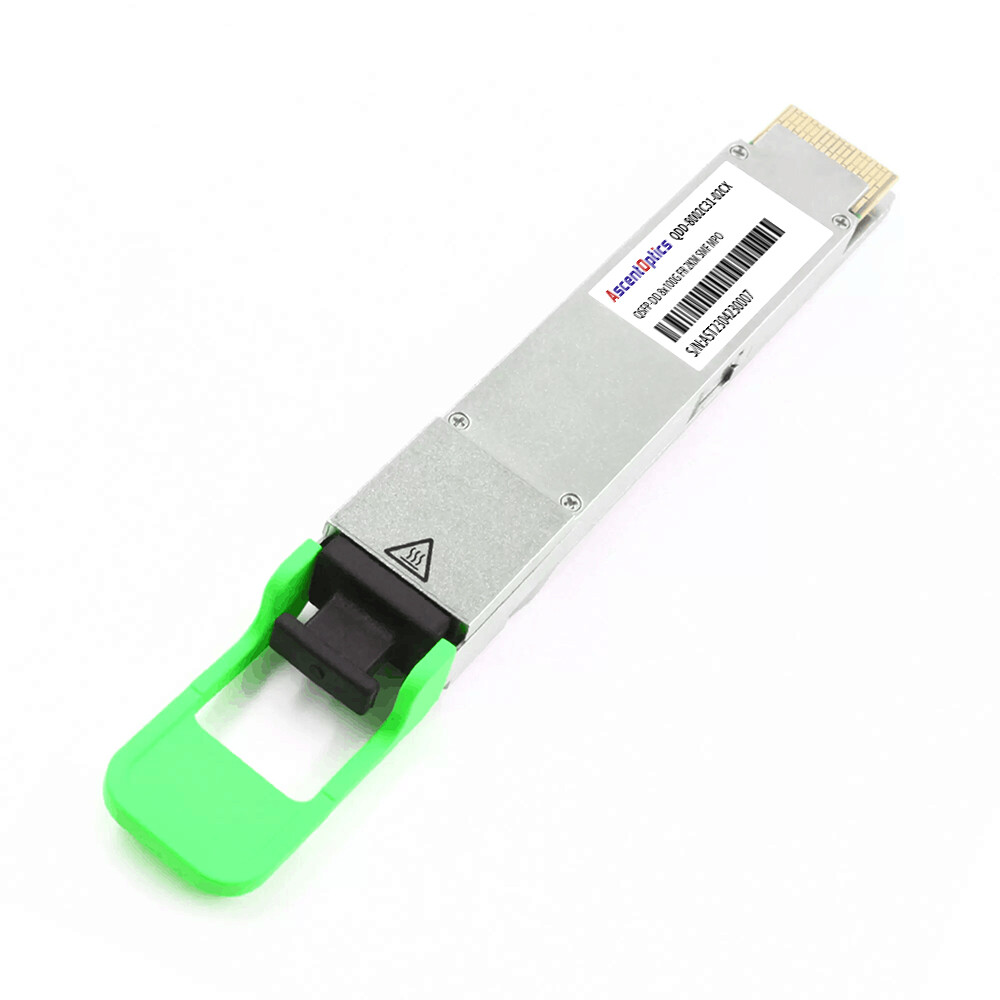
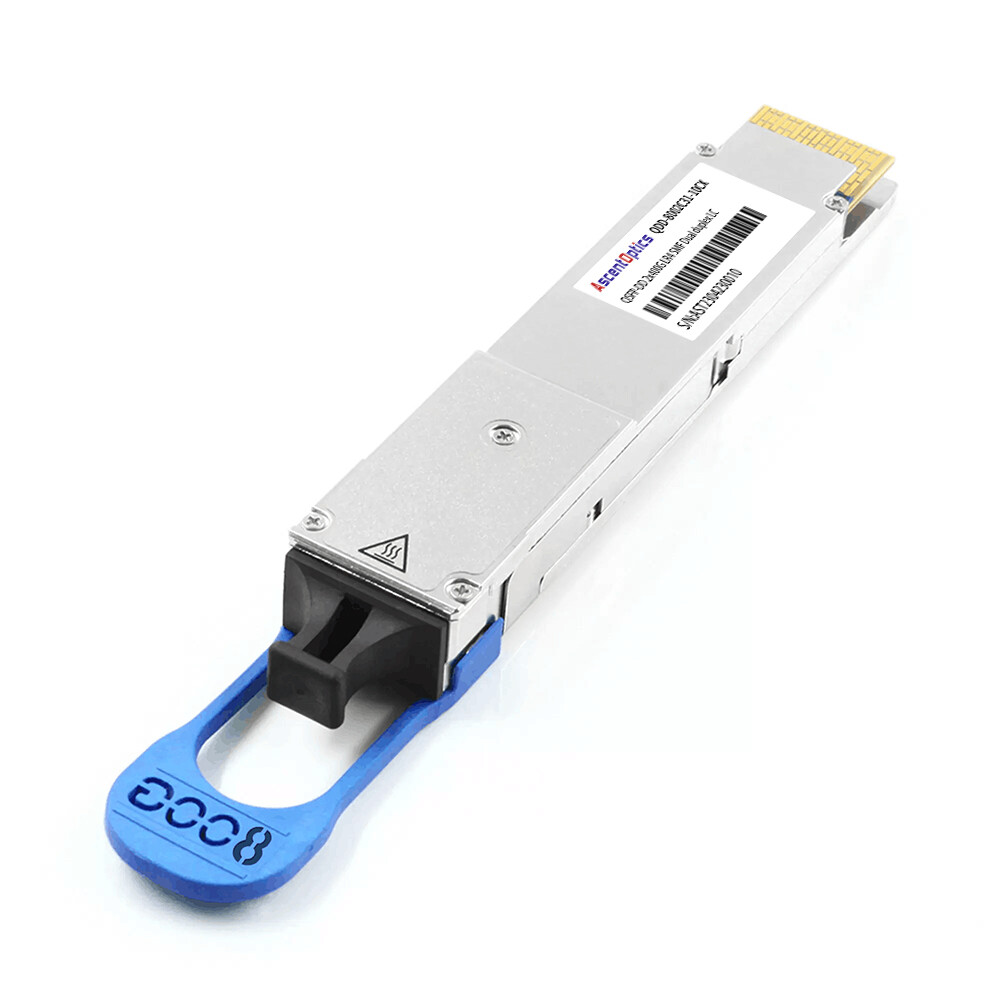
Utilize wavelength-division multiplexing (WDM) for longer-distance transmission. FR4 supports up to 2 km, while LR4 supports up to 10 km, suitable for intra-building, campus, or mid-range interconnect scenarios.
800G ZR
Designed for Data Center Interconnect (DCI) applications, supporting long-distance metro-level transmission and meeting high-bandwidth interconnect requirements across data centers.
| Module Type |
Maximum Transmission Distance |
Fiber Type |
Typical Application Scenarios |
Key Advantages |
| 800G SR8 |
~100 m |
Multimode Fiber (OM4/OM5) |
In-rack or adjacent-rack short-reach interconnects |
Ultra-short reach, low power consumption, high port density |
| 800G DR8 |
500 m |
Single-mode Fiber |
Internal interconnects in high-density AI clusters |
Balanced power consumption and cost, ideal for short to mid-reach |
| 800G FR4 |
2 km |
Single-mode Fiber |
In-building or campus short-to-mid-reach links |
Lower cost, easy deployment, high-density switching layers |
| 800G LR4 |
10 km |
Single-mode Fiber |
Inter-building, campus, or mid-range interconnects |
Reliable long-reach transmission, higher link budget |
| 800G ZR / ZR+ |
40–80 km |
Single-mode Fiber |
Data Center Interconnect (DCI), metro networks |
Ultra-long reach, high reliability, ideal for cross-campus interconnects |
Why AI Data Centers Need 800G
The biggest network challenge for AI training and inference lies in the massive east-west traffic generated by large-scale parallel computing. As the number of GPUs continues to grow, networks require higher bandwidth and lower congestion to prevent communication delays from slowing down overall training progress.
800G QSFP-DD increases per-port bandwidth, allowing switches to connect more GPU nodes within the same space and significantly improving port density. This supports the scale-out of AI clusters. Higher bandwidth also reduces the number of switch tiers and simplifies network architecture, helping to lower latency and complexity.
Ultimately, 800G networks effectively alleviate communication bottlenecks, improve compute utilization, and accelerate large-model training and inference, making them a key foundation for the next phase of large-scale AI data center development.
Application Scenarios of 800G QSFP-DD

AI Data Centers and GPU Cluster Interconnects
800G QSFP-DD provides high-bandwidth, low-latency east-west connectivity for large-scale AI training and inference, enabling fast data synchronization between GPU nodes. It significantly enhances intra-data-center interconnect capacity while maintaining high port density, making it the preferred choice for modern AI clusters.
Cloud Data Center Upgrades
In hyperscale cloud platforms, 800G QSFP-DD supports Spine-Leaf architecture upgrades, doubling switch port density and link bandwidth. This reduces network tiers, optimizes cabling, and improves rack and data center space utilization.
Data Center Interconnect (DCI)
For cross-building, campus, or metro-level connections, FR4, LR4, or ZR modules enable stable transmission over distances ranging from 2 km to 80 km, meeting the high-bandwidth interconnect requirements of multi-site deployments.
High-Performance Computing (HPC) and Generative AI
HPC and large-scale AI platforms require extremely high bandwidth for model training and data exchange. 800G QSFP-DD offers a low-power, highly reliable solution suitable for high-density rack deployments, helping handle sudden surges in traffic.
Future Outlook
Evolution Toward Higher Bandwidth
As GPUs, AI accelerators, and large-scale models continue to grow, data centers are beginning to demand 1.6T and even higher-speed networks. 800G QSFP-DD serves as a foundation for a smooth transition to the next generation of high-speed optical modules.
Higher Density and Lower Power Design
Power consumption and thermal management will remain key considerations. Future 800G and higher-speed modules will further optimize PAM4 modulation, circuit design, and DSP algorithms to increase bandwidth while reducing power usage.
Accelerated AI and Cloud Network Integration
800G QSFP-DD will see widespread deployment in AI data centers, cloud service provider (CSP) networks, and HPC platforms, driving network architectures toward high bandwidth, low latency, and strong scalability.
Conclusion
800G QSFP-DD is not just an incremental upgrade—it’s a necessity for the AI-driven future. With mass adoption in 2026, early adopters will gain significant advantages in training speed and cost efficiency. As AI models continue to scale, 800G will power the next wave of innovation.
Post Views: 3,250