As 400G Ethernet rapidly gains adoption in data centers and backbone networks, 400G QSFP-DD FR4 and LR4 emerge as the two most frequently compared single-mode optical module solutions. Both utilize a 4×100G WDM architecture, but they exhibit clear differences in transmission distance, cost structure, and application scenarios.
Introduction to 400G FR4 and LR4
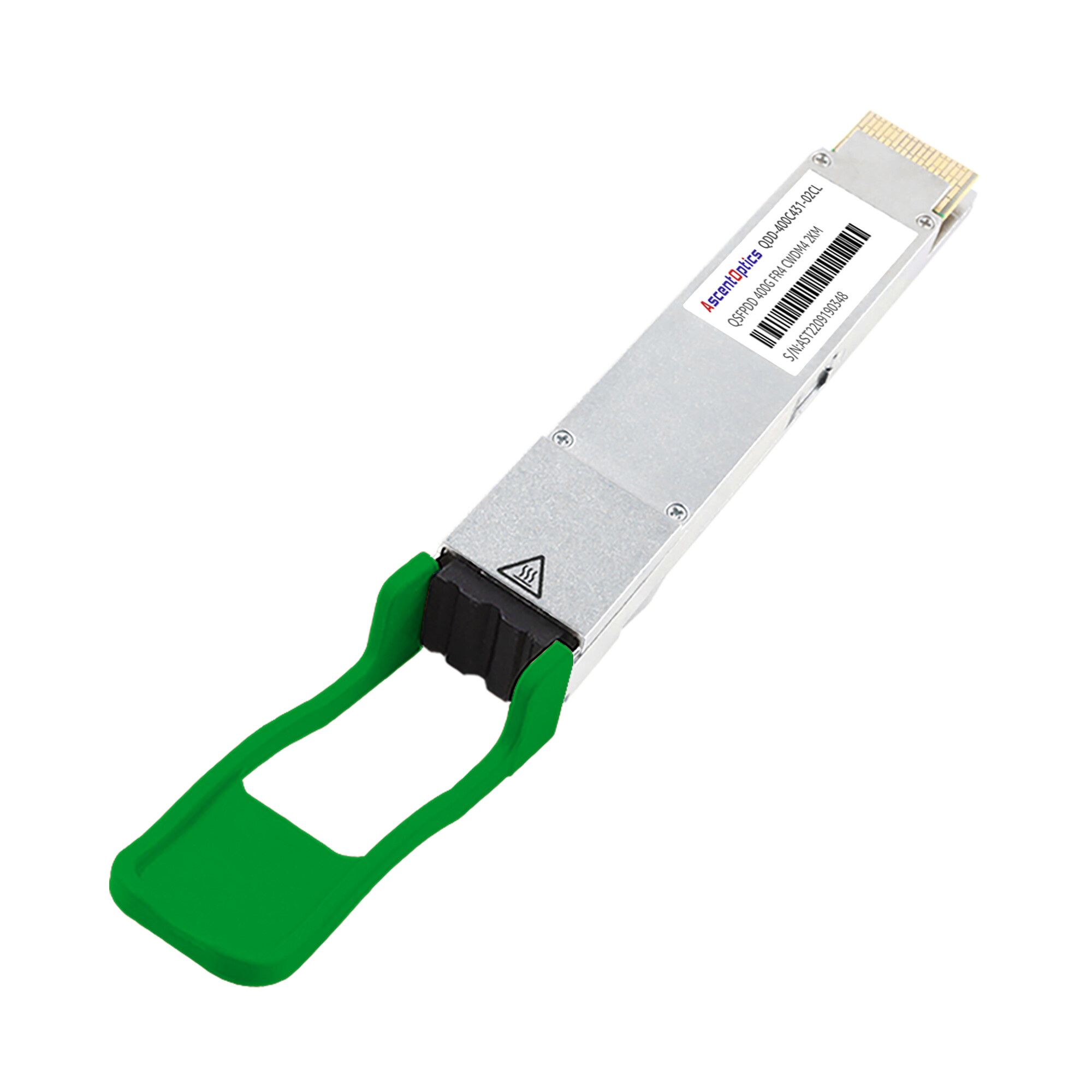
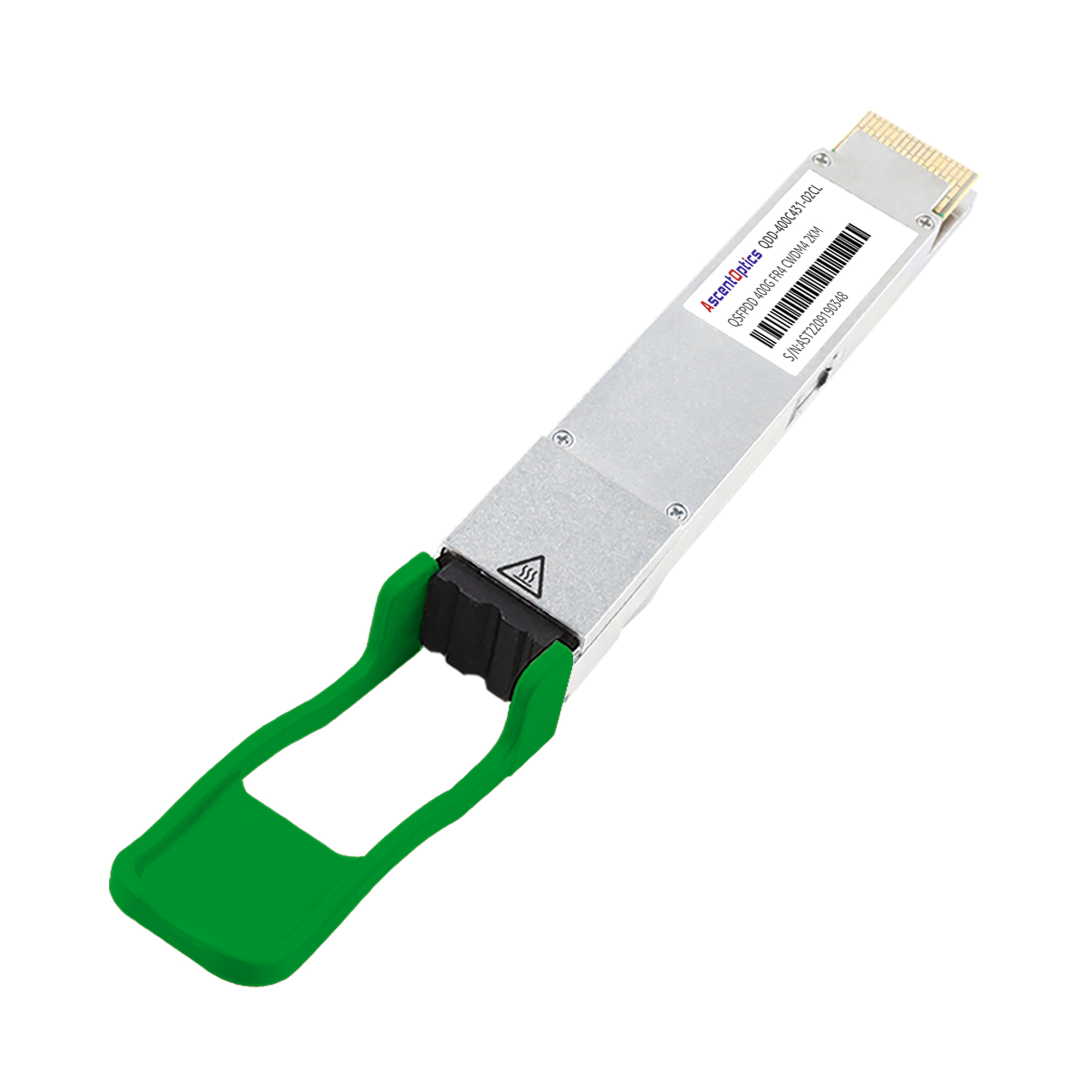
400G QSFP-DD FR4 is a high-performance 400Gbps optical transceiver module designed specifically for data centers, AI clusters, and cloud infrastructure. It is the mainstream single-mode optical module type for current 400G Ethernet interconnects, particularly suited for short-to-medium distance transmission within 2km.
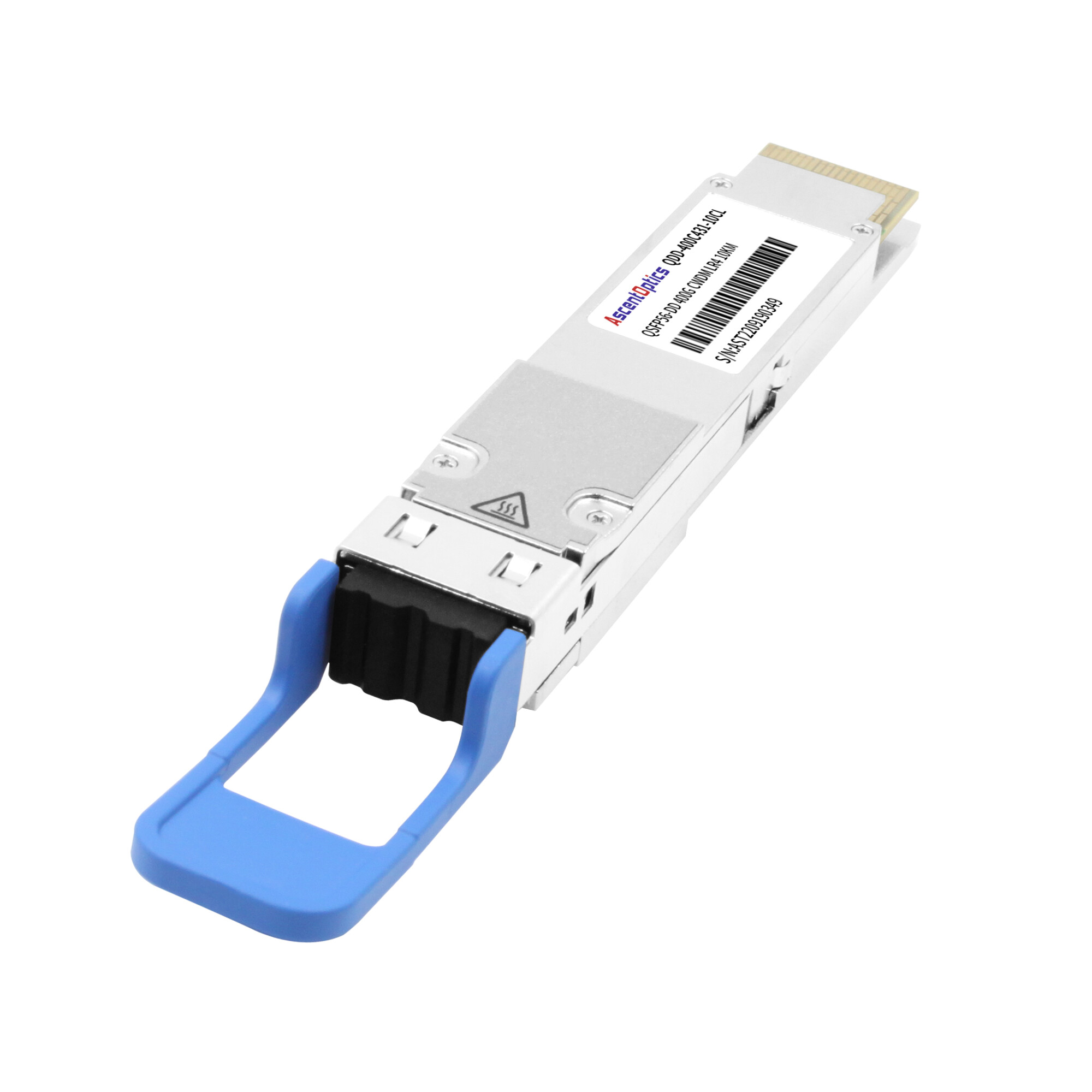
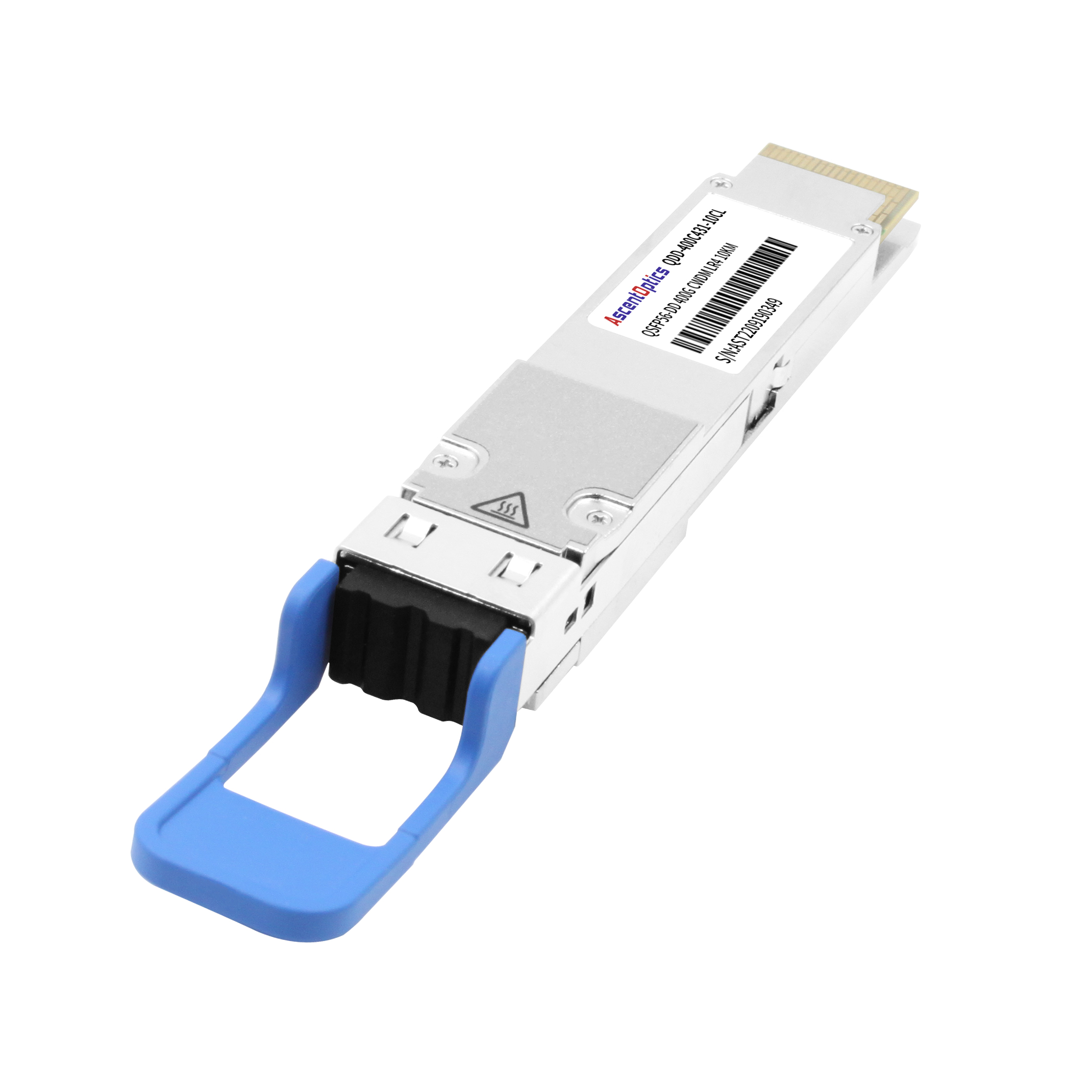
400G QSFP-DD LR4 is designed for long-distance transmission (up to 10km). It is the ideal choice for data center interconnect (DCI), metropolitan area networks (MAN), and telecom backbone networks, especially for high-bandwidth scenarios requiring longer spans.
Both 400G QSFP-DD FR4 and LR4 utilize the QSFP-DD form factor, PAM4 modulation, 4-wavelength CWDM multiplexing technology (100G per wavelength), and duplex LC connectors, supporting transmission over single-mode fiber (SMF). Their primary differences lie in transmission distance, power consumption, and application scenarios.
| Parameter |
400G QSFP-DD FR4 |
400G QSFP-DD LR4 |
Key Differences |
| Transmission Distance |
Up to 2km (over SMF, with host KP4 FEC) |
Up to 10km (over SMF, with host KP4 FEC) |
LR4 supports longer reaches |
| Wavelengths |
CWDM4: 1271nm, 1291nm, 1311nm, 1331nm |
Same CWDM4 grid |
Identical, enabling short-distance interoperability |
| Connector/Fiber |
Duplex LC, single-mode fiber (SMF) |
Duplex LC, single-mode fiber (SMF) |
Identical, easy reuse of existing infrastructure |
| Modulation |
PAM4 (106.25Gbps per lane) |
PAM4 (106.25Gbps per lane) |
Same |
| Power Consumption |
Typically 10-12W (latest versions ~8-9W) |
Typically 12-15W (higher due to stronger lasers/DSP) |
FR4 is more power-efficient |
| Cost |
Lower (30%-50% cheaper than LR4) |
Higher (due to advanced EML lasers and dispersion compensation) |
FR4 offers better cost-effectiveness |
| Standards |
IEEE 802.3cu, 100G Lambda MSA, QSFP-DD MSA |
IEEE 802.3cu extended, 100G Lambda MSA, QSFP-DD MSA |
Similar compliance |
| Typical Vendors |
AscentOptics, Cisco, Arista, etc. (mass production) |
AscentOptics, Cisco, etc. |
FR4 has broader supply |
How to Choose Between 400G QSFP-DD FR4 and LR4?
Start with Distance
Transmission distance is the primary and non-negotiable factor when choosing between 400G FR4 and LR4.
If all links are within 2 km—which covers the vast majority of modern data centers and AI training clusters—FR4 should be the default choice. Within this distance range, FR4 offers the lowest power consumption, lowest cost, the most mature supply chain, and the simplest deployment. Today, leading manufacturers, including AscentOptics, have achieved large-scale mass production of FR4. In AI clusters deployed by top global CSPs such as AWS, Meta, and Google, FR4 dominates 400G optical module deployments.
Once there is a requirement for links beyond 2 km, or approaching 10 km, LR4 becomes mandatory. At these distances, the link budget of FR4 is no longer sufficient to ensure stable transmission, and signal attenuation and bit error risks increase significantly, failing to meet engineering reliability requirements.
Consider Power Consumption and Data Center Cooling
In AI data centers, switch port density is extremely high—a single switch may deploy 64 to 128 400G ports. At this scale, even an additional 1 watt per port can translate into a significant increase in overall power consumption and cooling costs.
Compared with LR4, FR4 typically consumes 20%–30% less power. In large-scale deployments, this difference not only reduces the power draw of the optical modules themselves, but also significantly eases cooling and operational pressure on the data center. This is one of the key reasons why FR4 is preferred for high-density AI clusters and cloud data centers.
Budget and Total Cost of Ownership (TCO)
From a total cost of ownership (TCO) perspective, FR4 offers the best value for 400G deployments. Its advantages include lower module price, lower power consumption, and the use of LC single-mode fiber, which simplifies cabling and eliminates the need for additional MPO adapters or complex fiber management.
In contrast, LR4 typically costs 30%–50% more than FR4. This higher cost comes primarily from higher-specification optical components and a larger link budget. As a result, LR4 is better suited for applications where long-distance transmission is unavoidable, rather than for general-purpose deployment.
LR4 is the appropriate choice in the following scenarios:
- Interconnecting data centers across campuses or buildings, where link distances range from 5 to 10 km
- Metro edge networks or ISP aggregation networks, which require stable mid-range transmission
- Network plans that foresee future expansion beyond 2 km, where current links may eventually need longer reach
In these cases, LR4 provides a larger link budget and higher engineering tolerance, ensuring long-term network stability and reliability.
Application Scenarios for 400G FR4 and LR4
400G FR4 (maximum reach 2 km) is currently the mainstream choice for data centers and AI infrastructure, particularly suited for short-to-medium distances, high-density, and low-power deployments.
Intra-Data Center Connectivity: Used for Spine-to-Leaf connections in Leaf-Spine architectures, supporting high-bandwidth east-west traffic.
AI Compute Clusters and Large Model Training: Provides low-latency, low-power, high-speed interconnects for GPU server clusters (e.g., NVIDIA DGX/HGX systems). This is a key scenario for large-scale deployments by vendors like AscentOptics.
Hyperscale Cloud Data Centers: Short-distance connections within or between buildings, leveraging existing LC duplex single-mode fiber infrastructure for the best cost efficiency.
High-Performance Computing (HPC) and Cloud Platforms: Low power consumption (8–12 W) makes FR4 ideal for high-density rack deployments, supporting the surge in generative AI workloads.
400G LR4 (maximum reach 10 km) is suitable for scenarios requiring longer-distance transmission. It has slightly higher power consumption but provides reliable and stable performance.
Data Center Interconnect (DCI): Connects across buildings, campuses, or metro areas (e.g., 5–10 km links) without the need for additional optical amplifiers.
Metro Area Networks (MAN) and Telecom Backbones: Supports mid-to-long distance transmission, enabling interconnection of multiple sites for carriers or enterprises.
AI Infrastructure Expansion: Ideal for large AI clusters deployed across campuses or long-distance backbone links in hyperscale cloud data center campuses.
Regional Network Upgrades: Suitable for CSPs or enterprise networks requiring stable 10 km transmission.
Summary
400G FR4 and LR4 are not competing technologies but complementary solutions. FR4 serves as the mainstay for large-scale, high-speed intra-data center interconnects, while LR4 plays a critical role in scenarios requiring longer distances and higher link budgets.
Post Views: 1,482