With the rapid development of AI data centers, cloud computing, and high-performance computing (HPC), 400G networks are becoming the mainstream speed for the new generation of data centers. In short-distance interconnection scenarios, how to ensure bandwidth and performance while reducing power consumption and deployment costs is a key consideration for network upgrades.
The 400G QSFP-DD DAC (Direct Attach Copper cable), with its low latency, low power consumption, and high cost-effectiveness, has become a mainstream choice for internal interconnections in 400G data centers.
Introduction to 400G QSFP-DD DAC
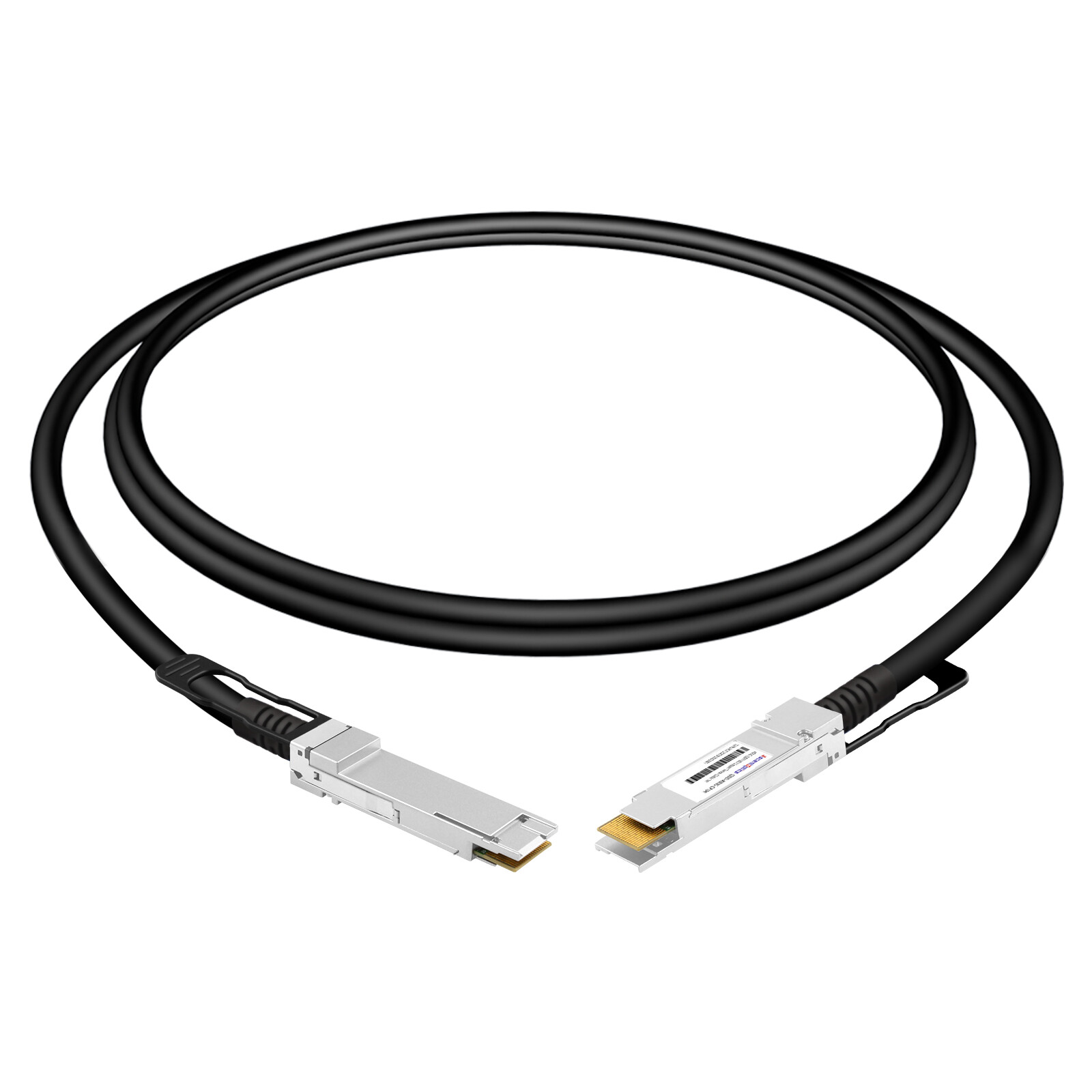
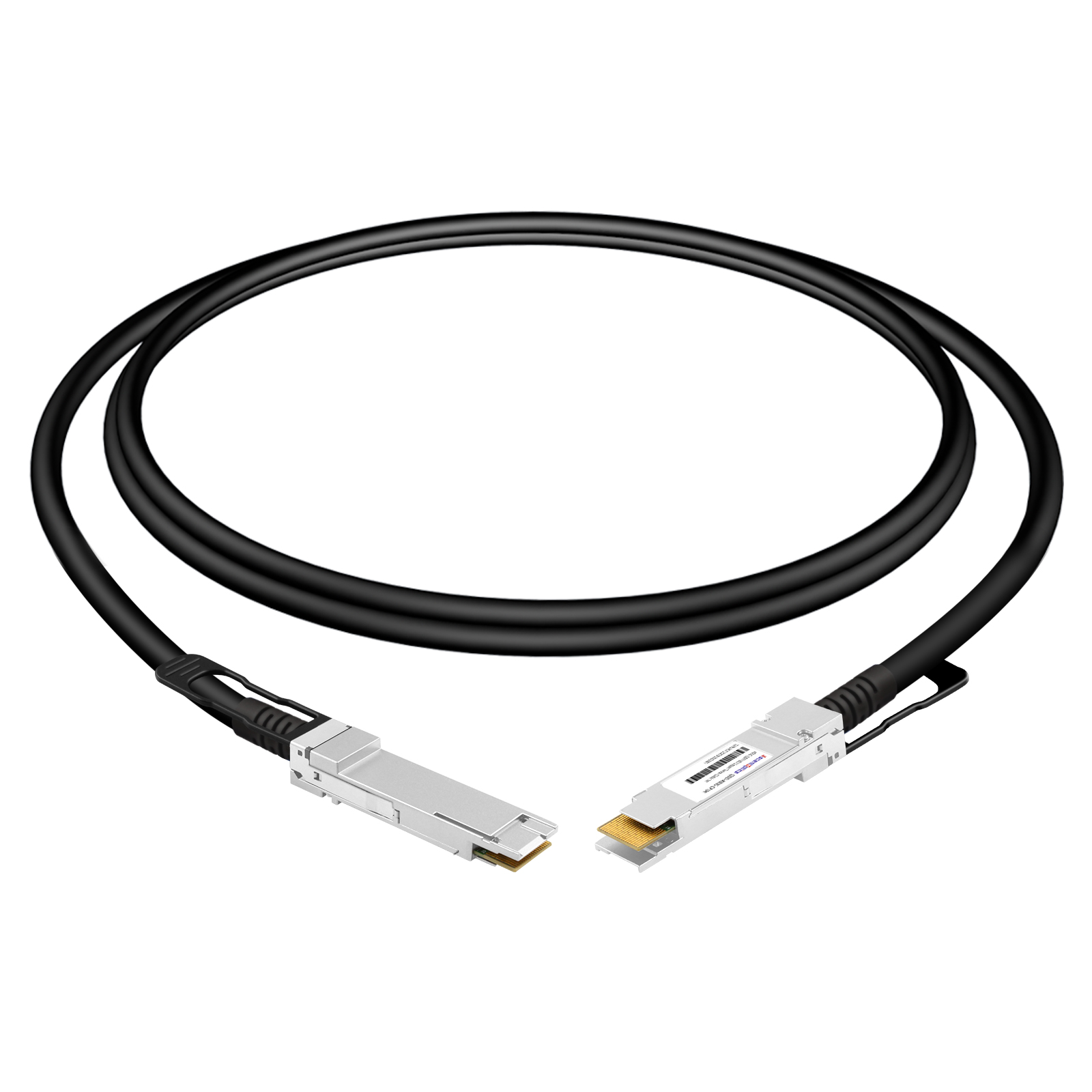
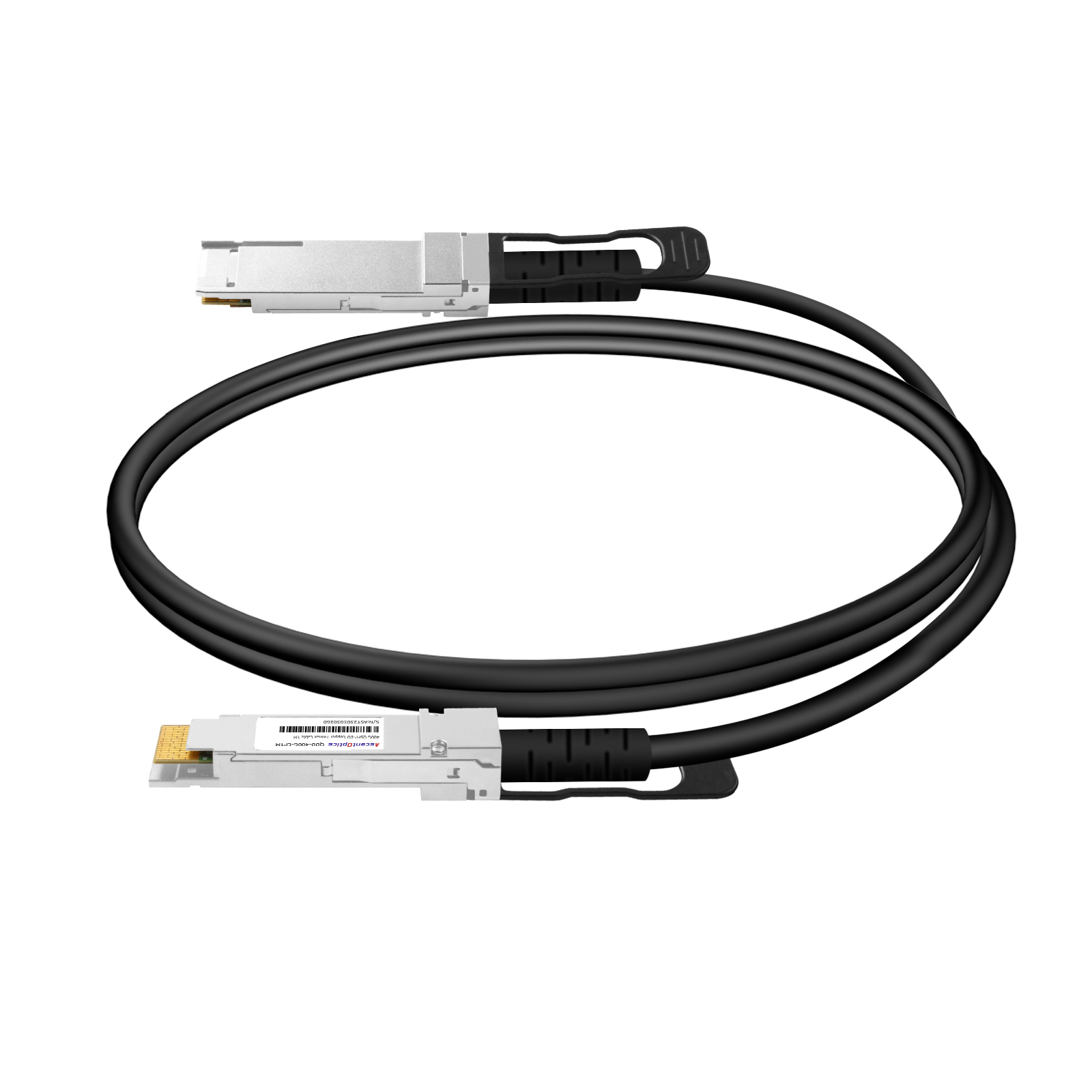
The 400G QSFP-DD DAC (Direct Attach Copper Cable) is a passive high-speed copper cable assembly featuring integrated QSFP-DD (Quad Small Form-factor Pluggable Double Density) connectors at both ends and utilizing Twinax (twinaxial copper cable) as the transmission medium in between.
The 400G QSFP-DD DAC is a high-speed interconnect solution based on the QSFP-DD interface, primarily used for ultra-short-distance 400Gbps connections within data centers. It integrates high-speed transceiver chips with twinaxial copper cable into a single unit, providing a low-cost, low-power-consumption, and low-latency point-to-point connection method.
Operating Principle
The 400G QSFP-DD DAC employs 8-channel electrical signals (8 × 50Gbps PAM4) to achieve direct 400G Ethernet connection via copper cable without any optical-to-electrical conversion. Since the signal transmission is purely electrical, the structure is simpler, with lower latency and higher energy efficiency.
The 400G QSFP-DD DAC utilizes a high-speed electrical interconnect architecture based on the QSFP-DD interface. Through high-speed signal processing circuits integrated at both ends of the connectors, it directly transmits electrical signals output from the switch or server ASIC over twinaxial copper cable, enabling point-to-point direct communication at 400Gbps.
In passive DACs, signal integrity primarily depends on the quality of the copper cable material and the interface design, so the transmission distance is typically limited to within 1–2 meters. In contrast, active DACs integrate Retimer or Redriver chips at both ends of the cable to compensate for high-frequency attenuation and crosstalk, allowing stable signal transmission over distances of 3–5 meters.
Overall, the 400G QSFP-DD DAC combines high-speed PAM4 electrical signaling, short-distance copper cabling, and precise signal conditioning technology to deliver an ultra-low-latency, low-power-consumption, and cost-effective 400G interconnect solution while ensuring stability. It is ideally suited for short-range, high-bandwidth connection requirements within data centers.
Advantages of 400G QSFP-DD DAC
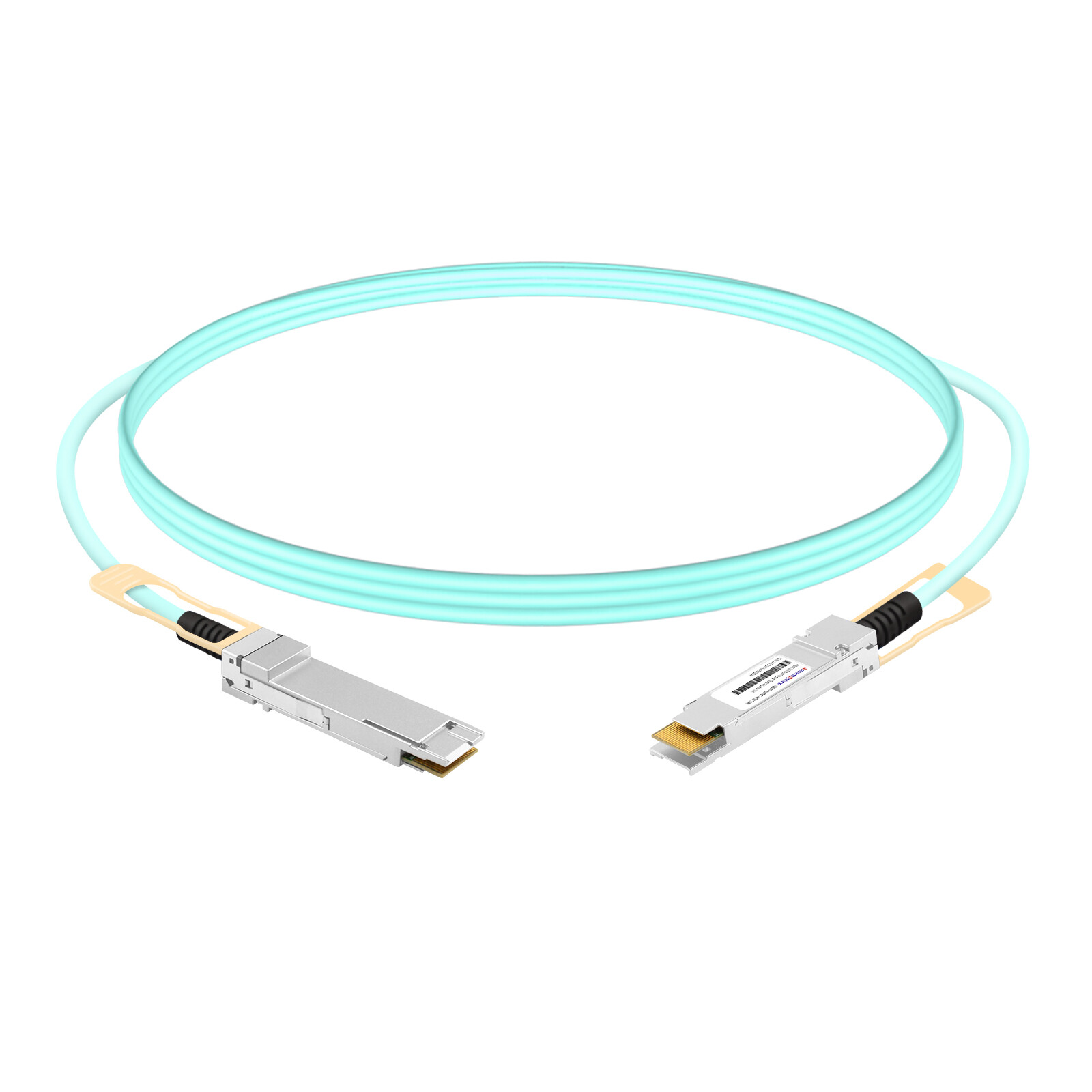
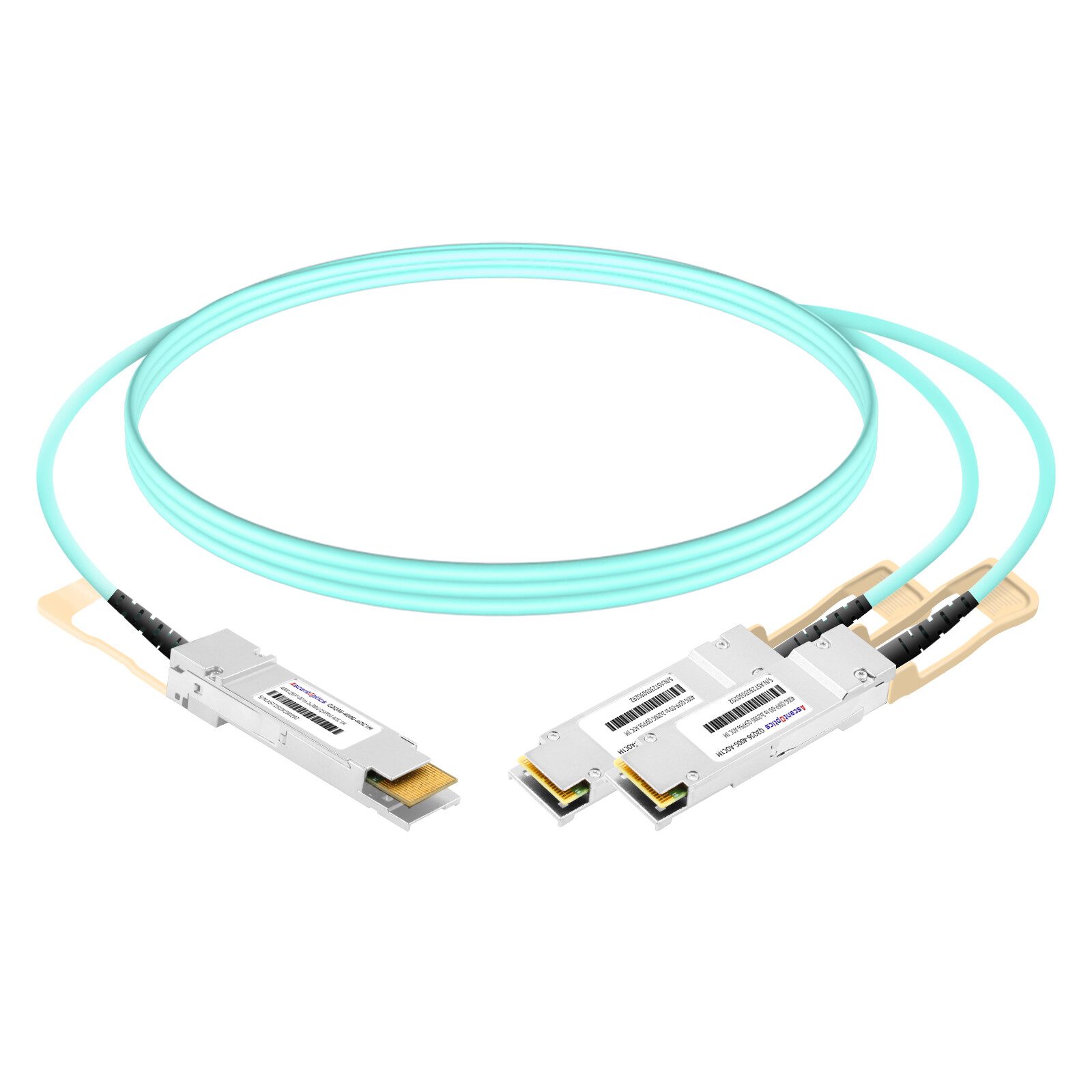
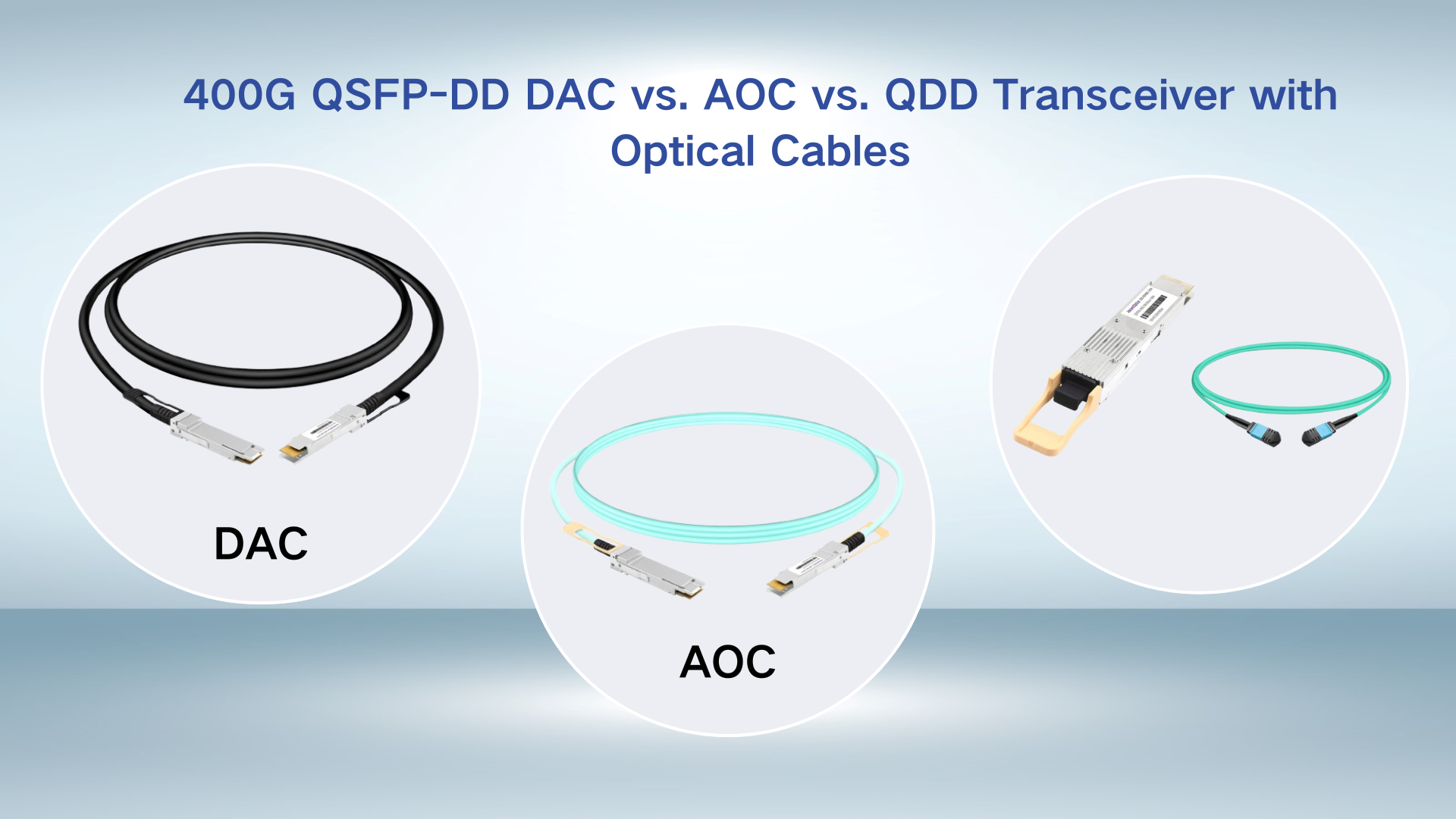
Compared to 400G AOC (Active Optical Cable) or optical transceiver + patch cord solutions, DAC offers significant advantages in ultra-short-distance scenarios:
Extremely Low Power Consumption: Passive design with near-zero power consumption (<0.1W), far lower than AOC (approximately 7-12W) or optical transceivers, helping data centers reduce overall energy usage and cooling requirements.
Low Cost: Simple copper cable manufacturing without expensive optical components; pricing is typically 1/3 to 1/2 that of AOC, providing high cost-effectiveness.
Low Latency: Direct electrical transmission with no electro-optical conversion process, resulting in extremely low latency (nanosecond level). Ideal for AI/GPU clusters, high-performance computing (HPC), and low-latency trading scenarios.
High Reliability and Ease of Management: Integrated all-in-one design for plug-and-play operation; no need to clean fiber optic interfaces; copper cable is robust and resistant to dust contamination; slightly heavier but with reasonable bend radius, facilitating cabling within racks.
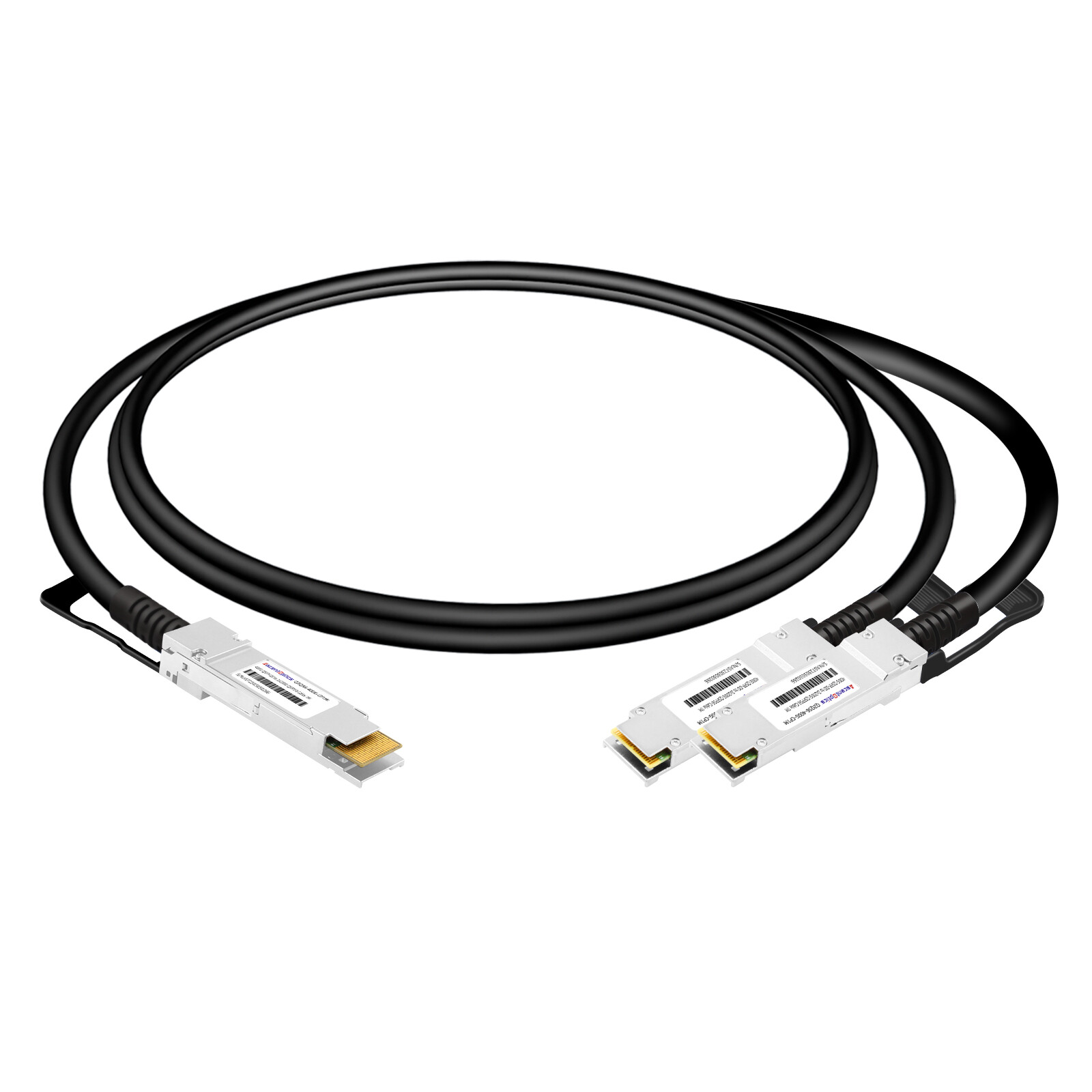
Excellent Signal Integrity: Low insertion loss and low crosstalk; supports breakout configurations (e.g., 1×400G to 4×100G or 2×200G), enabling smooth network upgrades.
Strong Compatibility: Compliant with Multi-Source Agreement (MSA) standards; supports multi-vendor equipment (e.g., Cisco, Arista, NVIDIA); backward compatible with lower-speed QSFP modules.
With its advantages of ultra-low latency, low power consumption, high cost-effectiveness, and simple deployment, the 400G QSFP-DD DAC has become the preferred solution for short-distance 400G interconnects within data centers, particularly suited for AI data centers, HPC clusters, and high-density switching networks.
Comparison with AOC/Optical Transceivers
| Item |
400G QSFP-DD DAC |
400G QSFP-DD AOC |
Optical Transceiver + Patch Cord |
| Transmission Distance |
≤3 meters (limited by passive) |
3–100 meters |
100 meters+ (multimode/single-mode) |
| Power Consumption |
<0.1W |
7–12W |
10–15W |
| Cost |
Lowest |
Medium |
Highest |
| Latency |
Lowest |
Low |
Medium |
| Applicable Scenarios |
Ultra-short distance within rack / adjacent racks |
Medium distance between racks |
Long distance / cross-floor |
| Manageability |
Simple (no interface cleaning required) |
Good (lightweight, EMI-resistant) |
Complex (requires interface cleaning) |
Preferred for DAC: Data center ToR (Top-of-Rack) switches to servers, intra-rack interconnections, AI training clusters (e.g., NVIDIA DGX/HGX systems), and budget-sensitive short-distance 400G deployments.
Not Suitable for DAC: When distance exceeds 3 meters, signal attenuation becomes severe, requiring a switch to AOC; for even longer distances, optical transceivers should be used.
Overall, in modern data centers pursuing low-cost, low-power, and low-latency upgrades for short-distance 400G connections, QSFP-DD DAC is the most economical and efficient choice, particularly well-suited for large-scale, high-density deployments.
Main Application Scenarios of 400G QSFP-DD DAC
The 400G QSFP-DD DAC (Direct Attach Copper Cable) is primarily used in scenarios that demand strictly limited distances (typically ≤3 meters) while prioritizing ultimate cost-effectiveness and energy efficiency, thanks to its ultra-short reach, low cost, near-zero power consumption, and minimal latency. The following are its main application scenarios:
High-Speed Interconnects Within the Same Rack in Data Centers
The most typical application for 400G QSFP-DD DAC is high-speed connections within the same rack, such as:
ToR / Leaf switches ↔ Servers / GPU nodes
Leaf ↔ Spine (short-distance) switch interconnects
In environments where distances are usually 0.5–2 meters, DAC delivers 400G bandwidth with extremely low latency and the lowest cost. It avoids the additional expenses and operational complexity associated with optical transceivers and fiber cabling, making it the preferred solution for intra-rack interconnects.
AI Training Clusters and GPU Server Interconnects
As the scale of AI training continues to grow, GPU nodes require frequent large-scale data exchanges, placing extremely high demands on network latency and stability. With no electro-optical conversion involved, the 400G QSFP-DD DAC offers deterministically ultra-low latency, making it ideal for short-distance high-speed interconnects between GPU servers and switches, as well as among AI compute nodes. This helps improve overall training efficiency and cluster throughput.
Internal Interconnects in High-Performance Computing (HPC) Clusters
In high-performance computing (HPC) environments, applications often rely on numerous parallel compute nodes working in coordination, where any network latency or jitter can directly impact results and efficiency. The 400G QSFP-DD DAC provides stable, low-jitter high-speed electrical connections, suitable for short-distance node interconnects within HPC clusters, ensuring high-bandwidth communication while maintaining the reliability required for long-term operation.
High-Density Switch Port Connections
As the port density of 400G switches continues to increase, the number of short-distance connections between switches has also risen significantly. In Spine, Aggregation, or Leaf layers, 400G QSFP-DD DAC is commonly used for short-distance interconnects between switches in the same row or adjacent racks. By using DAC, the number of optical transceivers and associated power consumption can be significantly reduced, while simplifying cabling structures and improving overall network maintainability.
Rapid Deployment and Testing Environments in Data Centers
In new data center builds, network PoC (Proof of Concept) validations, or testing environments, deployment speed often takes priority over transmission distance. The 400G QSFP-DD DAC offers plug-and-play convenience, requiring no fiber cleaning, power testing, or complex configuration, enabling rapid network connectivity. It is highly suitable for temporary deployments, phased expansions, or 400G connections in experimental environments.
Cost-Sensitive 400G Network Upgrades
For data centers and enterprise networks that require large-scale 400G deployments with transmission distances concentrated in short ranges, cost control is particularly critical. The 400G QSFP-DD DAC meets bandwidth and performance requirements while offering clear advantages in cost and energy efficiency, enabling enterprises to achieve economical and efficient 400G network upgrades without increasing rack count or power burden.
| Scenario |
Typical Distance |
Reasons for Choosing DAC |
| Intra-Rack Interconnects |
0.5–2 m |
Low latency, low cost |
| AI / GPU Clusters |
≤3 m |
High bandwidth, deterministic latency |
| HPC Clusters |
≤5 m |
Stability and reliability |
| Short-Distance Switch Interconnects |
1–5 m |
Low power consumption, high density |
| Testing / PoC |
Short distance |
Rapid deployment |
Overall, the 400G QSFP-DD DAC is highly suitable for short-distance, high-bandwidth, and low-latency application scenarios within data centers, serving as an indispensable high-speed interconnect solution in AI, HPC, and high-density switching networks.
As the core solution for short-distance 400G interconnects in data centers, the 400G QSFP-DD DAC continues to play a vital role in AI training clusters, HPC networks, and high-density switching architectures. Its stable and reliable performance, outstanding energy efficiency, and superior cost advantages make it an essential key component in 400G network deployment and upgrades, while also laying a solid foundation for future evolution toward higher-speed networks.
Post Views: 1,718