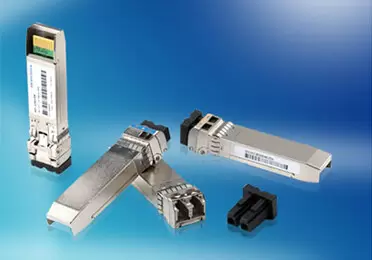
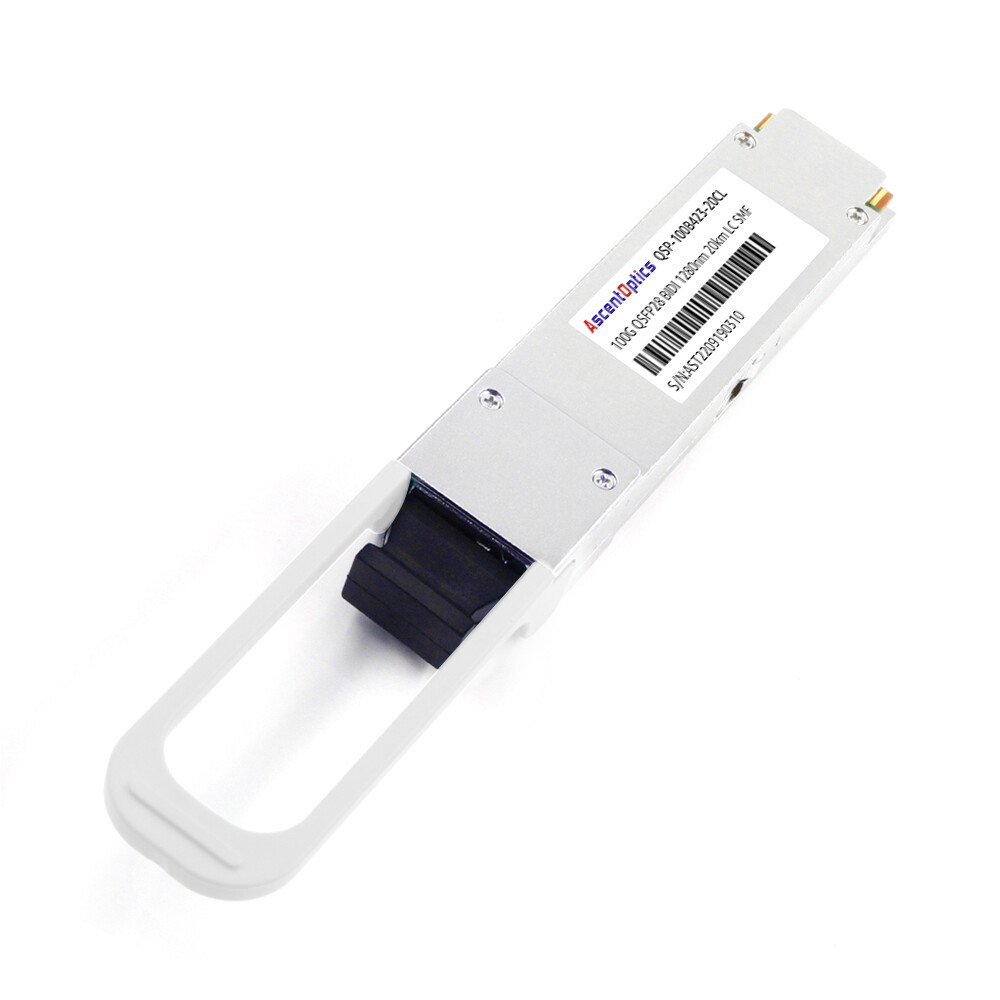
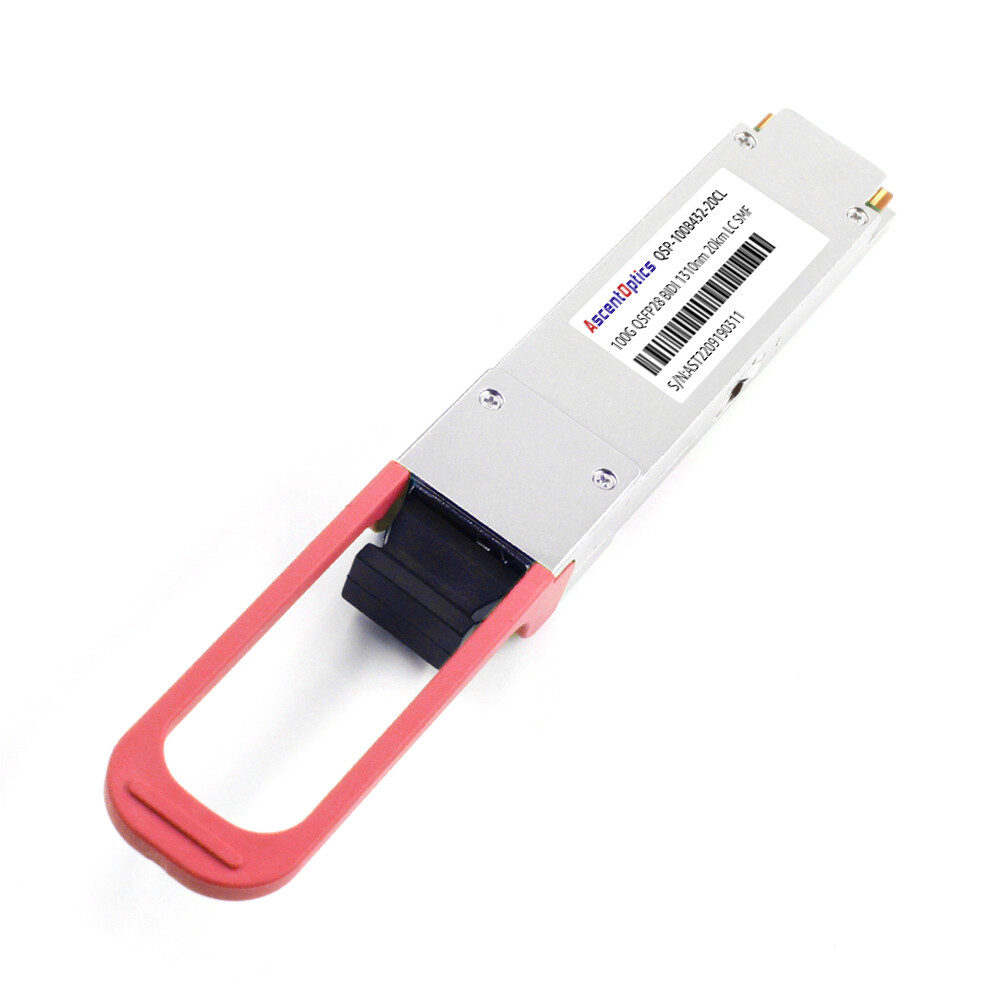
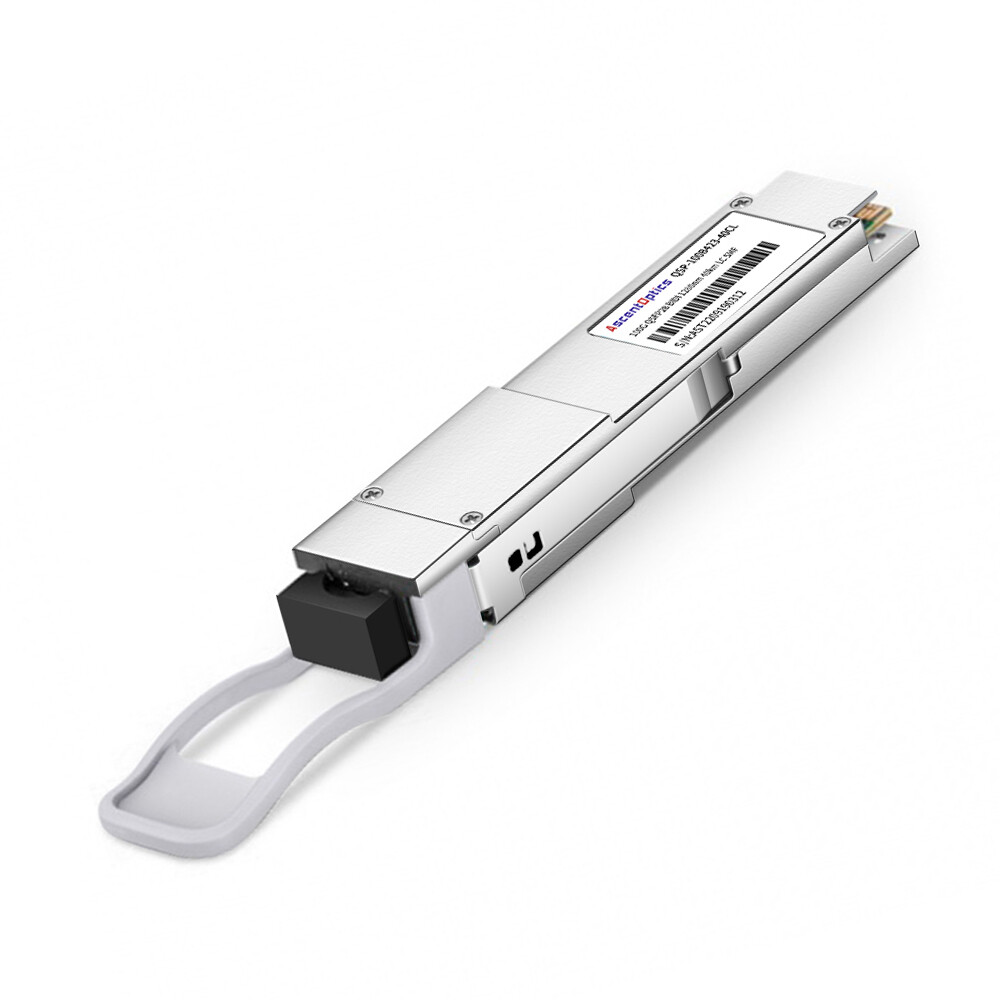
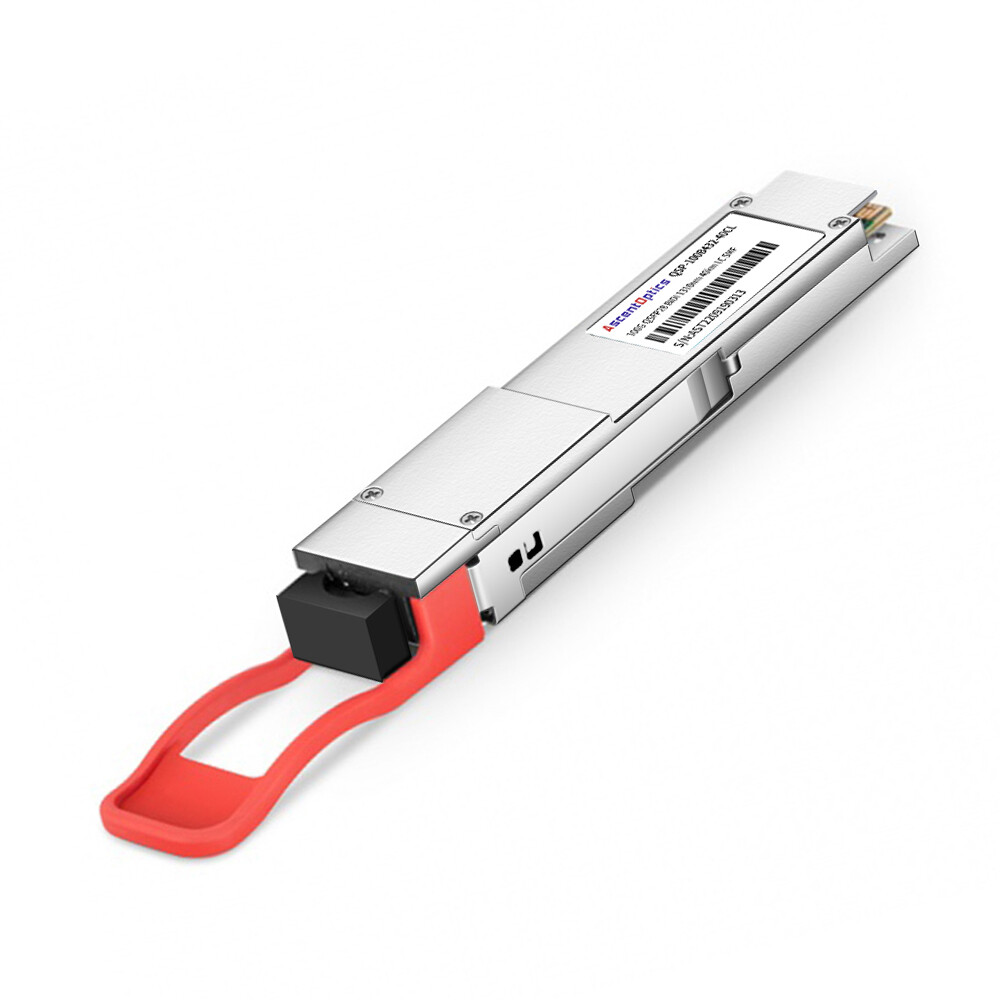
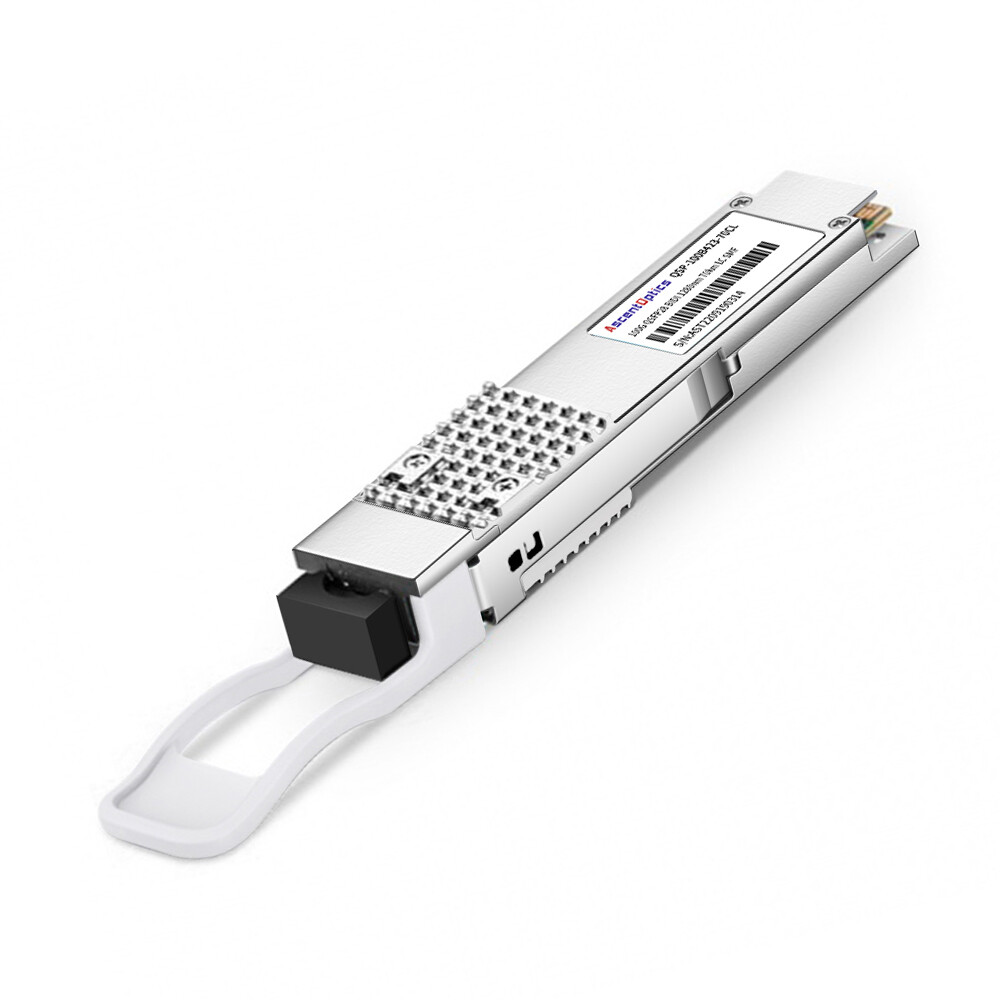
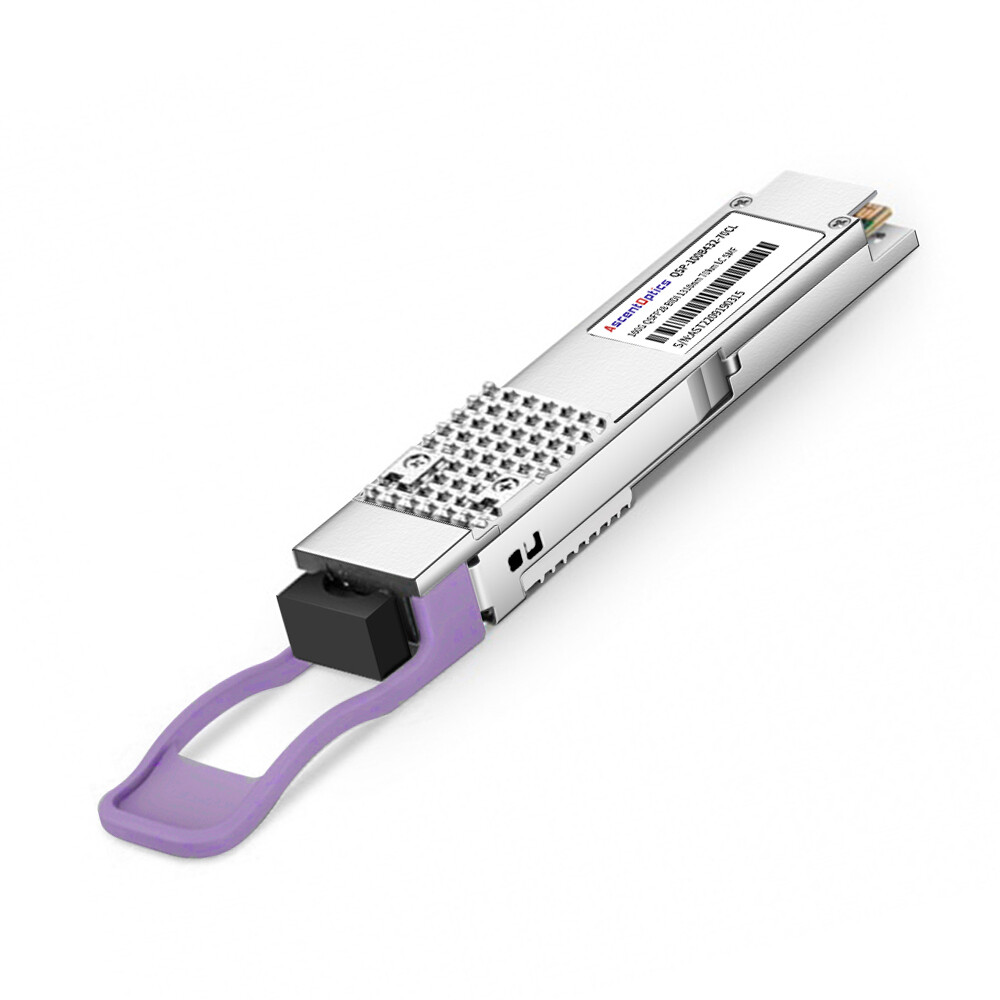
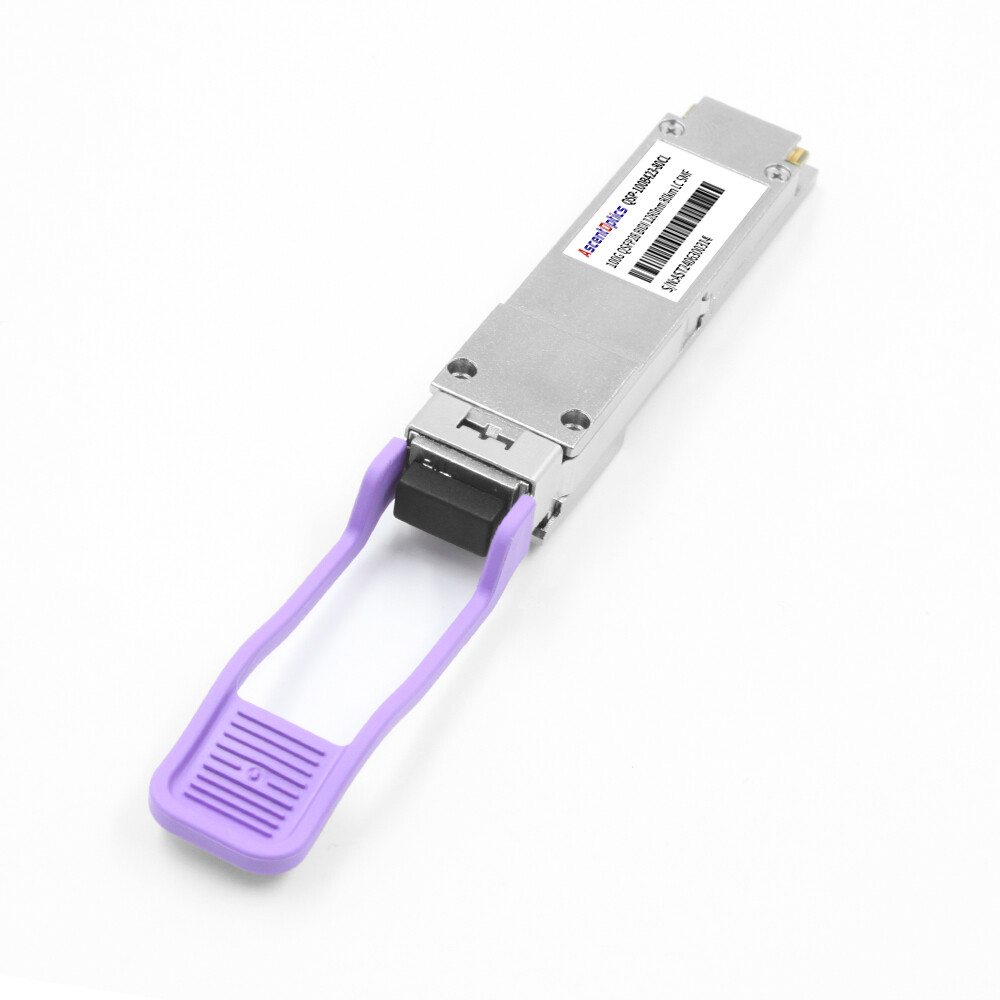
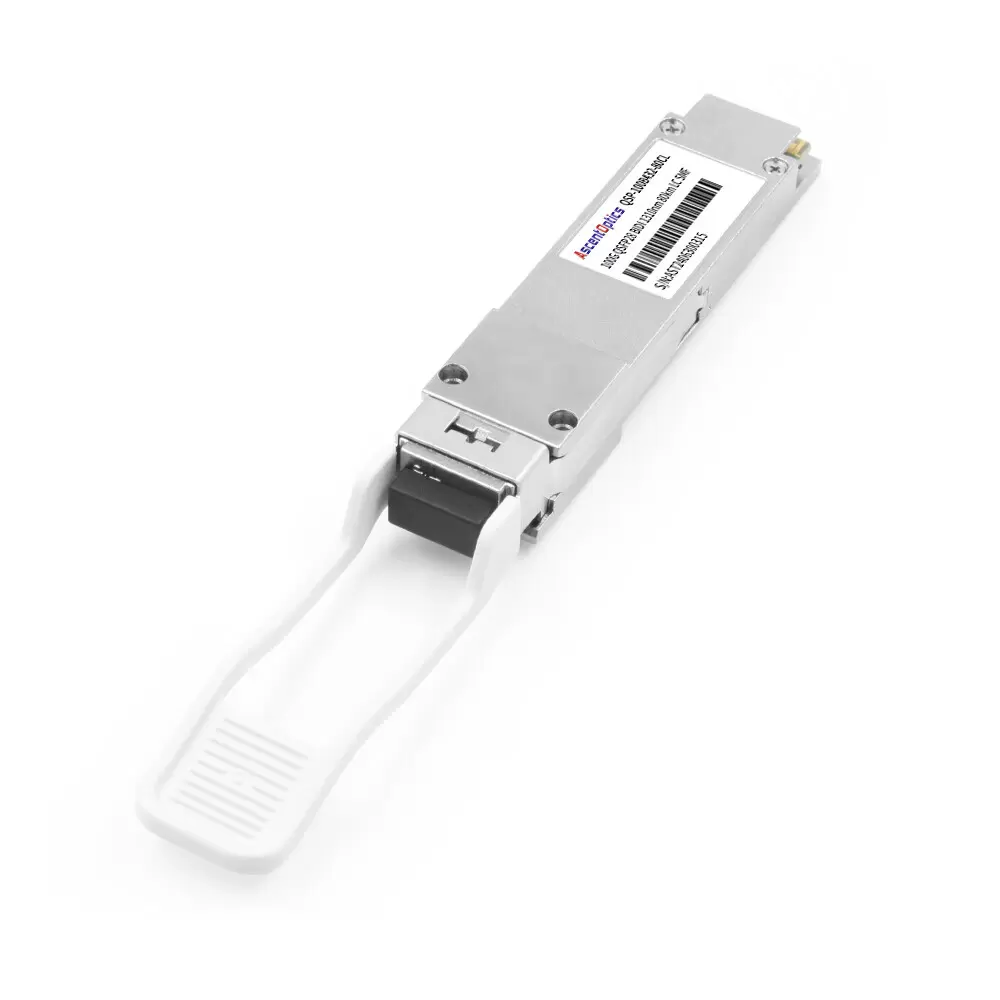
As data centers and metro networks evolve toward 100G speeds, fiber resource constraints and rising cabling costs have become common challenges. The 100G QSFP28 BiDi optical module enables 100G high-speed interconnects via single-fiber bidirectional transmission without adding more fibers, making it an ideal solution that balances performance and cost. This article briefly introduces the key features and core advantages of 100G BiDi modules.
Introduction to 100G QSFP28 BiDi
The 100G QSFP28 BiDi optical module is a transceiver that supports 100Gbps rates with single-fiber bidirectional transmission. It uses the QSFP28 standard package and is designed for high-bandwidth interconnects under limited fiber resources.
It employs WDM (Wavelength Division Multiplexing) technology to achieve full-duplex 100G communication by transmitting and receiving on different wavelengths over a single single-mode fiber (SMF). Compared to traditional dual-fiber solutions (e.g., 100G LR4/ER4), it reduces fiber usage by half, significantly conserving fiber resources.
These modules typically support transmission distances of 10 km, 20 km, or 40 km. They feature plug-and-play simplicity, easy deployment, and compatibility with mainstream switches and routers. They are widely used in data center interconnects (DCI), metro networks, and data center upgrades where fiber resources are constrained.
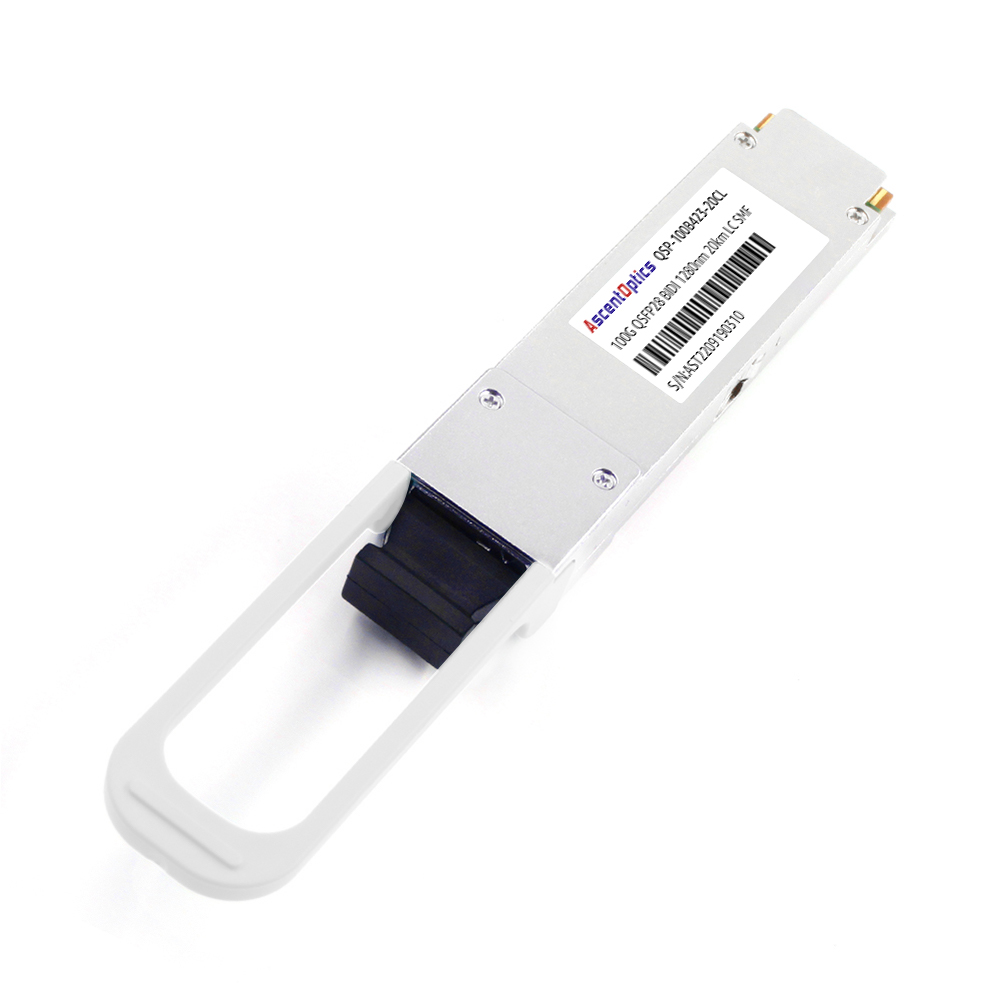
Features and Advantages of 100G BiDi Optical Modules
The 100G QSFP28 BiDi optical module significantly improves fiber utilization while maintaining 100G bandwidth through single-fiber bidirectional transmission technology. It is widely used in data centers and metro networks. This article briefly introduces its core features and key advantages:
Key Features
Single-Fiber Bidirectional 100G Transmission
BiDi modules perform both transmit and receive functions on a single single-mode fiber, achieving full-duplex 100G communication by separating upstream and downstream signals using different wavelengths (WDM). The interface is typically duplex LC (instead of traditional MPO multi-core).
Modulation Technology
Commonly uses PAM4 (4-level Pulse Amplitude Modulation) or NRZ, supporting per-channel rates of 50Gbps (2×50G) or 4×25G aggregated to 100G.
Support for Medium- and Short-Range Interconnects
Typical transmission distances include 10 km, 20 km, and 40 km, covering intra-data center interconnects and metro-level DCI requirements.
Compatibility
Compliant with QSFP28 MSA and IEEE 802.3 standards, deployable on mainstream switches, routers, and data center equipment. Supports hot-plug and digital diagnostic monitoring (DDM/DOM) for real-time monitoring of temperature, power, and signal quality.
Plug-and-Play, Simplified Deployment
No external wavelength division devices (e.g., Mux/DeMux) are required—the module integrates WDM functionality internally, enabling fast deployment and easy scalability.

Key Advantages
Fiber Resource Savings
Compared to traditional dual-fiber modules (e.g., SR4 requiring 8-12 cores with MPO connectors), BiDi uses only half the fibers (single fiber or duplex LC), reducing fiber usage by 50% and significantly lowering cabling and infrastructure costs.
Reuse of Existing Cabling
Ideal for data center upgrades from 10G/25G/40G to 100G. It directly reuses existing duplex LC multimode or single-mode fiber infrastructure without the need to relayout cables or replace MPO jumpers, resulting in low upgrade costs and simple deployment.
High Cost-Effectiveness
In environments with scarce fiber resources (such as data center interconnects, metro networks, and 5G fronthaul/backhaul), it delivers lower overall system costs while maintaining high-performance transmission.
High Utilization and Flexibility
Single-fiber transmission allows more 100G links within the same fiber resources, improving switch port utilization and overall rack density. It enhances fiber efficiency, supports high-density deployments, and is suitable for data centers, cloud computing, telecom backbone networks, and enterprise networks.
Flexible Deployment and Easy Maintenance
No complex optical layer planning or separate DWDM systems required, making it ideal for rapid deployment in enterprise data centers, metro networks, and cloud infrastructures.
In summary, the 100G BiDi optical module is an economical and efficient solution for data center and high-speed network upgrades. It is particularly effective in fiber-constrained environments, enabling significant bandwidth increases without major infrastructure overhauls.
What Types of 100G QSFP28 BiDi Optical Modules Are Available?
Main Types and Specifications
Below are the common types of 100G QSFP28 BiDi optical modules, classified by transmission distance:
| Specification |
SR BiDi |
LR BiDi |
ER BiDi |
ZR BiDi |
| Typical Designation |
100GBASE-SR BiDi / SR1.2 BiDi / SWDM4 BiDi |
100GBASE-LR BiDi / LR1 BiDi |
100GBASE-ER BiDi / ER1 BiDi |
100GBASE-ZR BiDi |
| Transmission Distance |
70 m (OM3)100 m (OM4)150 m (OM5) |
10–20 km |
30–40 km |
Up to 80 km |
| Fiber Type |
Multimode (MMF) |
Single-mode (SMF) |
Single-mode (SMF) |
Single-mode (SMF) |
| Wavelength (Tx/Rx) |
850/910 nm or 850–940 nm (multiple wavelengths) |
1271/1331 nm or 1291/1311 nm |
1304/1309 nm |
LAN-WDM multiple wavelengths |
| Modulation Format |
PAM4 or NRZ |
PAM4 |
PAM4 |
NRZ |
| Connector Type |
Duplex LC |
Simplex LC or Duplex LC |
Simplex LC |
Simplex LC |
| Typical Applications |
Intra-rack and short-reach data center links;reuse existing 10G/40G LC cabling |
Data center interconnect (DCI);metro networks |
Long-haul backbone networks;telecom transmission |
Ultra-long-distance interconnects(less common) |
SR BiDi: The most common type, widely used for data center upgrades. It helps reduce fiber costs and supports hot-plug capability and DDM/DOM monitoring.
LR/ER BiDi: Based on single-wavelength PAM4 technology with FEC support, suitable for scenarios requiring long-reach single-fiber transmission.
Some models support industrial-grade operating temperatures (-40°C to 85°C).
Advantages Summary
Fiber savings: Requires only half the fiber (single-fiber bidirectional transmission), ideal for fiber-constrained environments.
High compatibility: Reuses existing duplex LC cabling, enabling smooth upgrades from 10G/40G to 100G.
Low power consumption: Typically 4–6 W, suitable for high-density deployments.
Cost efficiency: Reduces cabling, deployment, and maintenance costs.
Application Scenarios of 100G BiDi Optical Modules
100G QSFP28 BiDi optical modules are designed for high-speed 100G Ethernet interconnects and perform particularly well in environments where fiber resources are limited. Below are the main application scenarios:
Data Center Interconnect (DCI)
In metro-area or campus-level data center interconnects, 100G QSFP28 BiDi modules enable high-bandwidth transmission over distances of 10 km, 20 km, or 40 km while using only a single fiber, effectively alleviating fiber shortages.
Typical use cases:
Active–active data centers within the same city
Primary–backup data center interconnections
Cloud data center expansion and scaling
Medium- to Long-Reach Data Center Interconnects
Typical scenarios: Regional data center interconnections, inter-building links within a campus, and connections between edge data centers and core data centers.
Advantages: Single-fiber transmission saves up to 50% of fiber resources and supports single-mode fiber (SMF), making it ideal for long-reach, fiber-constrained environments.
Applicable environments: Enterprise data center expansion and DCI (Data Center Interconnect) deployments for cloud service providers.
Telecom and Metro Network Transmission
Typical scenarios: 5G fronthaul and midhaul transport networks, metro backbone interconnections, and links between regional routers and core network equipment for telecom operators.
Advantages: Low latency and high bandwidth with long-reach single-fiber bidirectional transmission, reducing overall infrastructure investment.
Applicable environments: Telecom operator networks and wide area network (WAN) expansion.
Network Upgrade and Migration Scenarios
Typical scenarios: Smooth upgrades from 10G/25G/40G to 100G without replacing existing duplex LC cabling infrastructure.
Advantages: High cost efficiency, reduced cabling complexity and maintenance effort, and support for incremental upgrades (gradual equipment replacement).
Applicable environments: Existing data center retrofits and enterprise network modernization.
Overall, 100G BiDi optical modules are particularly well suited for fiber-constrained and high-density deployment environments, such as modern data centers and telecom networks. They not only improve bandwidth utilization but also significantly reduce CAPEX (capital expenditure) and OPEX (operational expenditure).
Conclusion
In summary, 100G QSFP28 BiDi optical modules, with their single-fiber bidirectional transmission, high fiber utilization, and flexible deployment, are ideal for data center and metro network upgrade scenarios where fiber resources are limited. By lowering cabling and operational costs while efficiently delivering 100G bandwidth, they represent one of the most cost-effective options for today’s 100G network deployments.
Post Views: 1,379